



Will a VR Sword pass a quick test where you check whether the controller locks in during wide swings?

Tired of your VR sword flying away during a big swing? You're in the middle of a great fight, and suddenly your weapon glitches. A VR sword attachment feels like the solution.
A VR sword attachment provides a solid physical lock, stopping the controller from slipping during wide swings. It does not fix the Meta Quest's internal tracking limitations. Your controller can still lose tracking if it moves too fast or goes outside the headset's camera view.
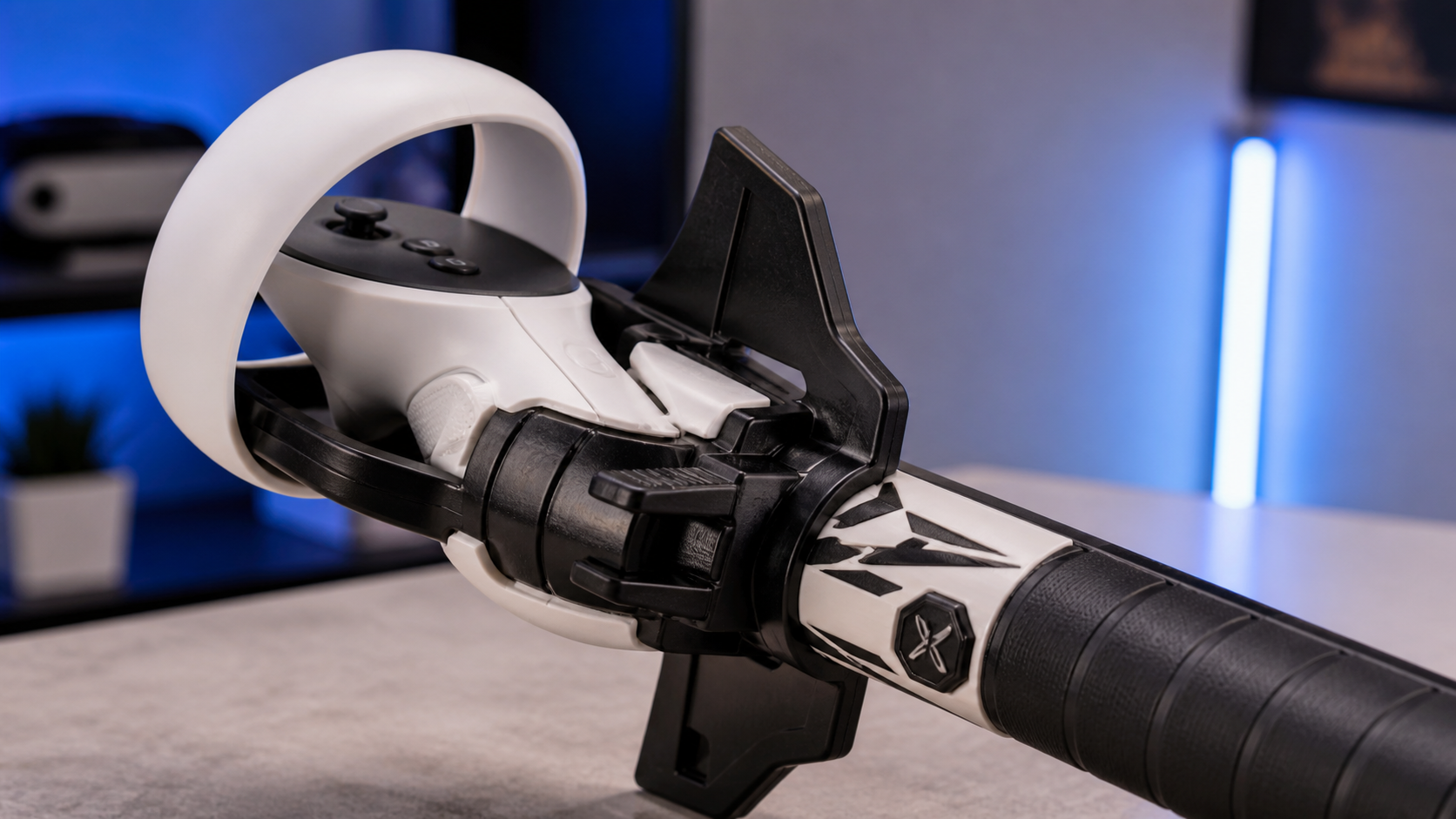
I spend most of my VR time in Beat Saber. My gameplay is all about quick, efficient wrist flicks. So when I decided to try a VR sword attachment for a melee game like Battle Talent, I knew it would be a big adjustment. I was worried about fatigue from dual-wielding, but my biggest concern was tracking. The experience made me question how these accessories really perform for different people and what they actually fix. I wanted to find some real answers.
Does tracking during swings affect beginners and experienced users in the same way?
You're a VR veteran who knows how to move, but your sword still glitches. It's frustrating when your skill can't overcome a hardware limit. Experience doesn't always solve tracking problems.
No, tracking issues affect users differently. Experienced players often use faster, more optimized swings that can exceed the Quest's tracking speed, causing glitches. Beginners tend to make slower, broader arm movements that are easier for the cameras to follow, but they struggle more with the accessory's weight.
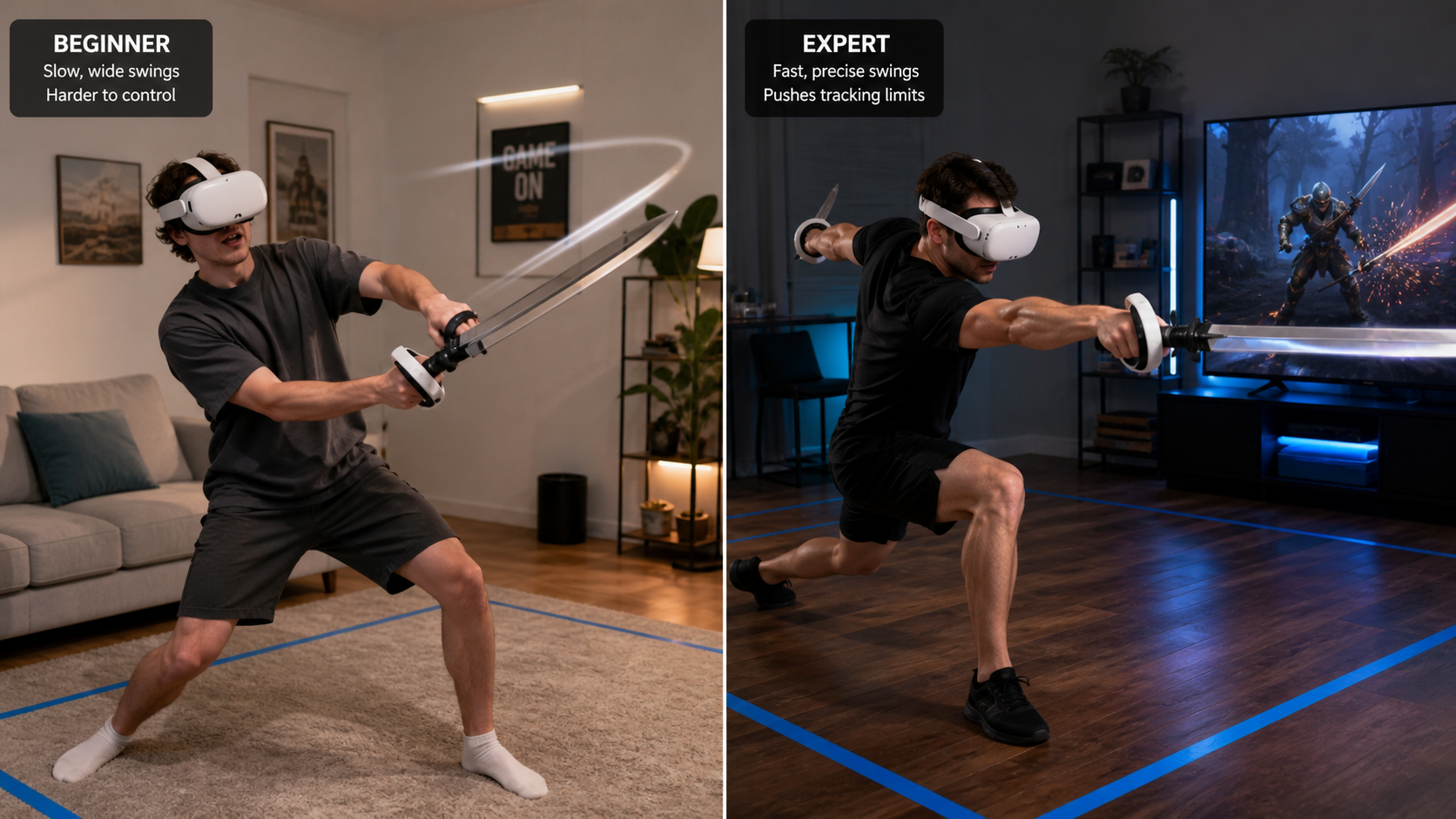
As a long-time Beat Saber player, my movements are trained for speed and precision, mostly from the wrist. When I strapped the VR sword on to play Battle Talent, my muscle memory was a problem. I wanted to flick the controller, but the game and the accessory demanded big, powerful swings from the shoulder. This created a controller mismatch between my expectation and the physical reality. An experienced player tries to be efficient. We push the limits. This is exactly where the Quest s inside-out tracking can fail. The cameras on the headset just can't keep up if the controller moves too fast. A beginner, on the other hand, usually moves their whole arm in a slower, wider arc. This motion is much easier for the headset to track. Their challenge is not tracking loss but adapting to the new weight and balance of the longer controller.
User Experience Comparison
| Aspect | Beginner User | Experienced User |
|---|---|---|
| Swing Style | Slow, wide arm swings | Fast, efficient, often wrist-based |
| Main Challenge | Adapting to weight and balance | Controller mismatch and tracking speed limits |
| Tracking Sensitivity | Less prone to tracking loss | More likely to experience tracking glitches |
| Fatigue | High, due to inefficient movement | High, due to added weight on fast swings |
What should be measured before claiming VR Sword fixes tracking during swings?
A product promises to "fix" tracking. You buy it, hoping for a solution, but the glitches continue. You need a clear way to test these claims for yourself to avoid disappointment.
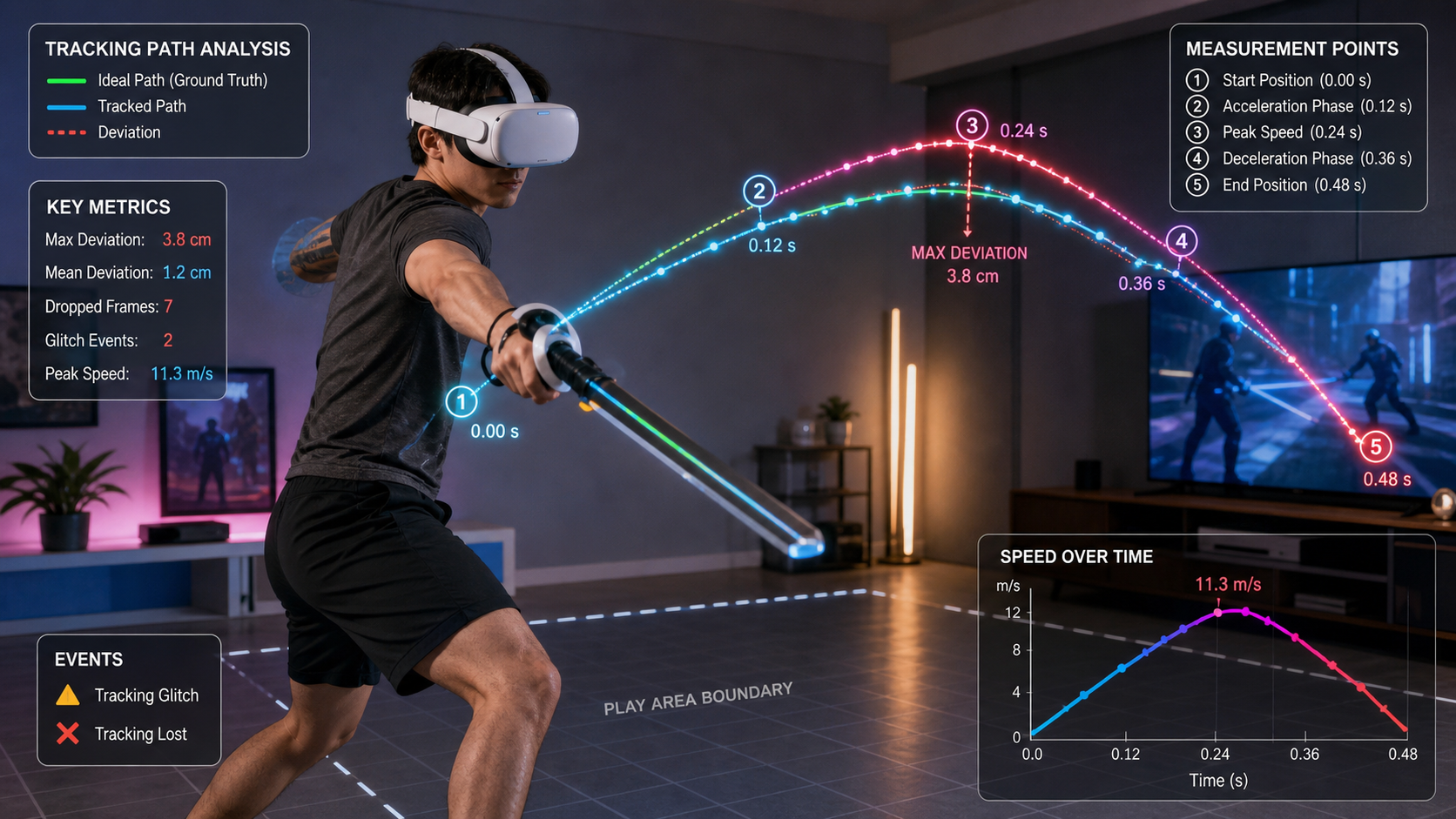
To validate such claims, you must measure objective data. This includes checking the controller's positional accuracy at various swing speeds, counting the frequency of tracking glitches, and looking for rotational drift. Subjective feeling isn't enough; you need concrete proof of performance improvement.
My testing process was simple but revealing. The first thing I checked was the physical connection. Does the controller rattle or shift inside the sword handle? In this case, it was locked in tight. So, the accessory does fix the problem of the controller physically slipping in your hand. That's a pass. But the claim of fixing tracking is about software and sensors, not just plastic. The VR sword has no electronics. It fully depends on the Quest 3 controller's own tracking system.
This led to my failure case. I went into Battle Talent and swung the sword as fast as I could. The controller still flew away. The glitch happened every time my swing was too fast or when my hand went just outside the view of the headset's cameras. This proves the accessory cannot fix the fundamental limitations of inside-out tracking. A proper test would need special software to log the controller's 3D position frame by frame. We could then compare the logged path to the real-world path. Without that tool, we have to rely on careful observation, and my observation is clear: the accessory helps with grip, not with tracking speed.
Is kids' play value versus safety supervision acceptable for Beat Saber players?
The VR sword looks like a cool toy, perfect for kids. But one excited swing could easily hit a wall, a pet, or another person. Is the added fun worth the increased risk?
For most Beat Saber players, the trade-off is not worth it. The game's quick wrist movements make the long, heavy attachment feel clumsy and slow. The added length greatly increases the risk of hitting something, making the accessory impractical and unsafe for that style of play.
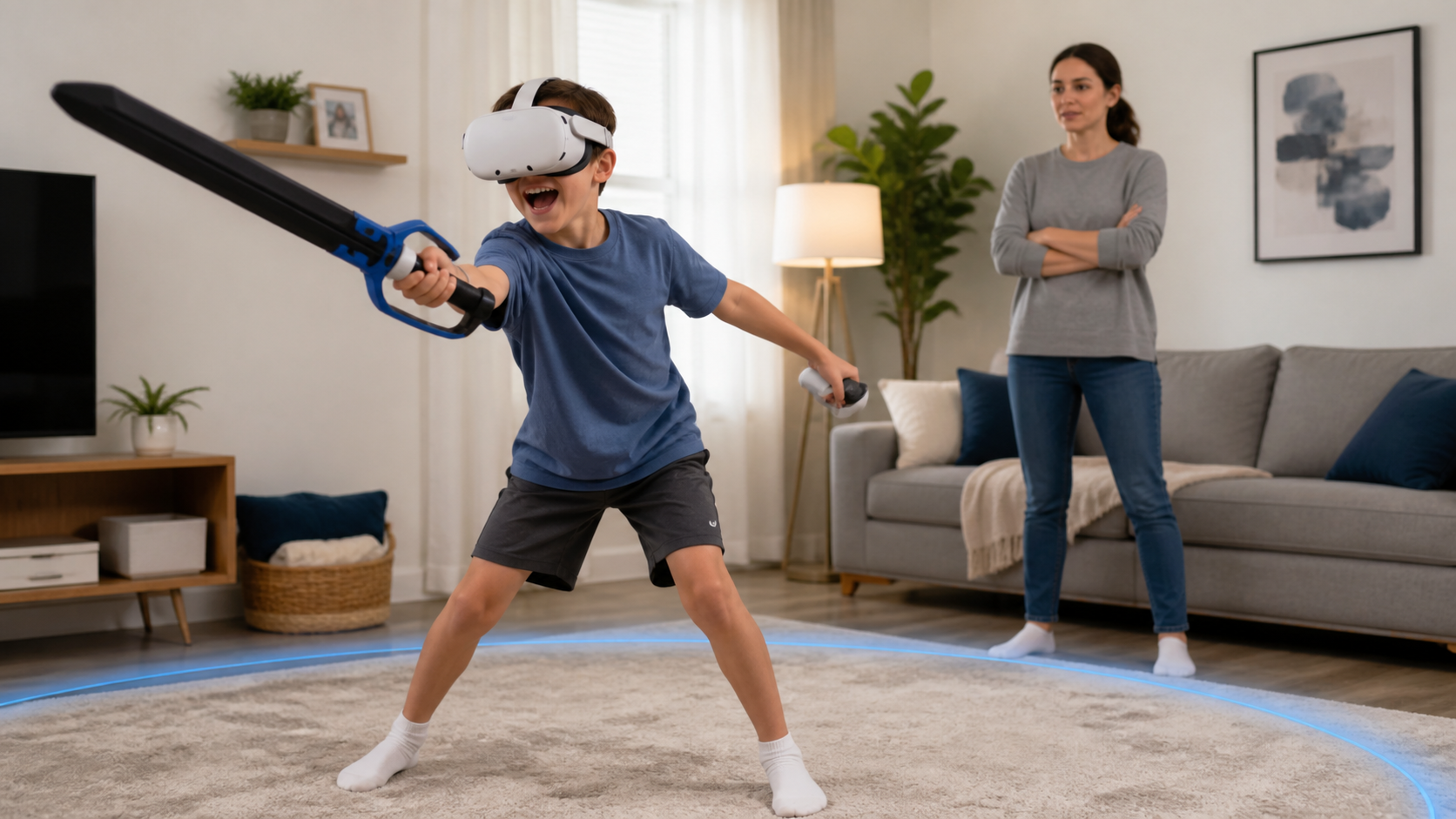
Let's be honest: this accessory feels like a toy. And that's not necessarily a bad thing. For a child playing a fantasy adventure game, the added weight and length can make the experience incredibly immersive. It boosts the "play value" because it makes them feel like they are holding a real sword. The problem is that it also makes the controller a real hazard. The standard controller boundary is no longer accurate. I have a decent-sized playspace, and I still came close to hitting my furniture several times. For a child, who is less aware of their surroundings, constant supervision is an absolute must.
As someone who primarily plays Beat Saber, I found the attachment to be a complete downgrade. It ruined my game. The weight threw off my timing, and the length made my precise wrist flicks impossible. It felt like trying to write with a broomstick. For this game, there is no added play value, only added risk. The accessory is simply not designed for high-speed, precision-based rhythm games. The balance between fun and safety is completely skewed toward unacceptable risk for this specific use case.
Should VR Sword be recommended for Battle Talent only if users accept kids' play value versus safety supervision?
You want that epic sword-fighting feel in Battle Talent. This accessory seems like the perfect tool for the job. But you need to know if it's a serious upgrade or just a toy.
Yes. This accessory is best for Battle Talent players who prioritize immersion over competitive performance. Users must accept its toy-like qualities, have a large, clear playspace, and understand the increased safety risks involved. For players focused on high scores or with limited space, it's not a good fit.
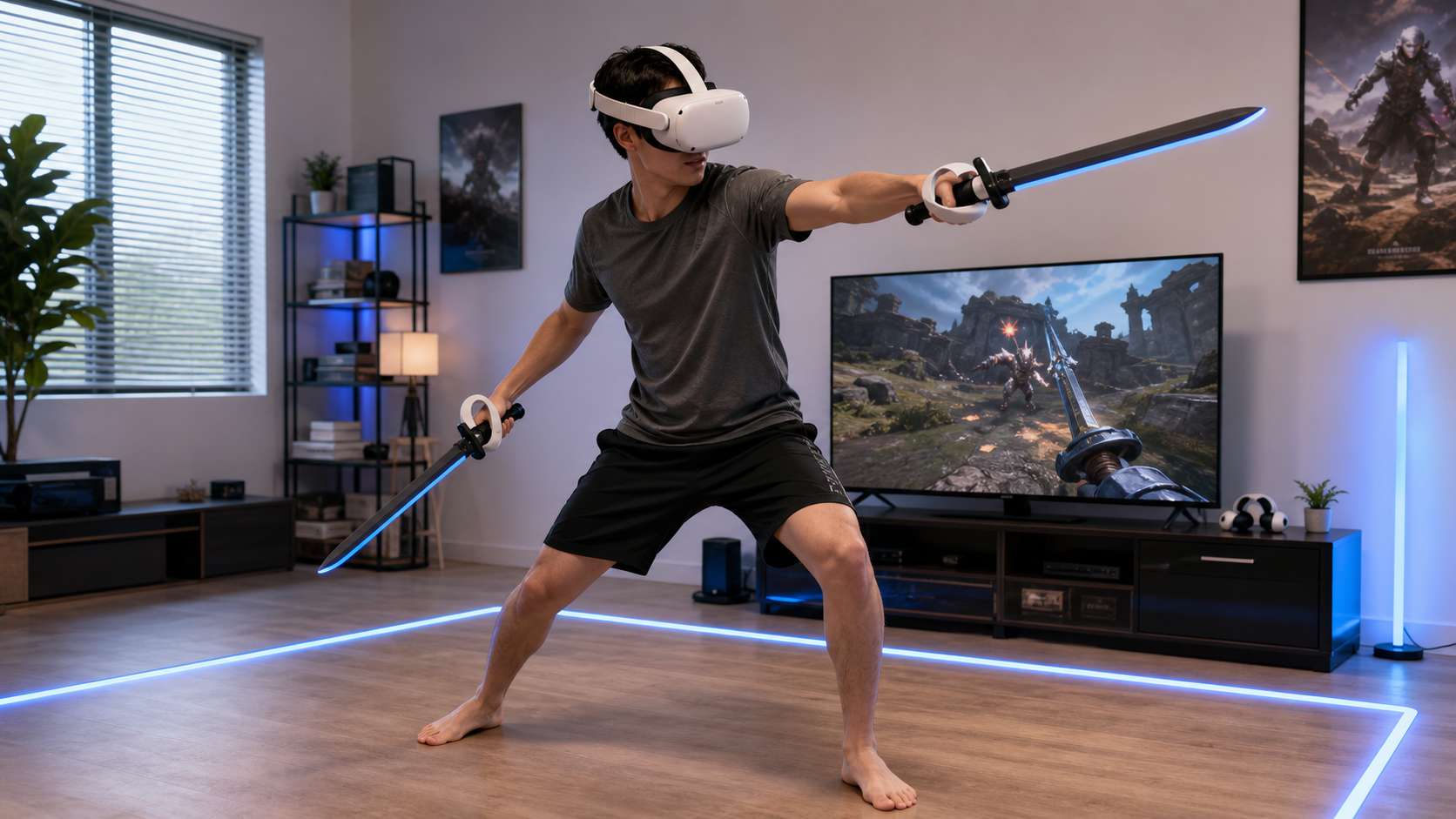
After trying the VR sword in different games, my final verdict is very specific. In Beat Saber, it was a definite no. The controller mismatch and fatigue made it unplayable for me. It felt annoying and counterproductive. However, my experience in Battle Talent was the complete opposite. Swinging the weighted, longer handle felt fantastic. It made parrying and attacking feel more realistic and satisfying. Dual-wielding two of them was tiring but incredibly fun. The immersion was a solid 10 out of 10.
But that recommendation comes with big warnings. The tracking issues did not disappear. Fast, wild swings still caused my virtual sword to glitch out. And the safety concern is real. I had to be hyper-aware of my surroundings. So, who should buy this? You should buy it if you play melee games like Battle Talent, you want to feel more immersed, and you have a very large, safe area to play in. You must accept that you are buying it for the fun, the "play value," not for a competitive edge. If you are a competitive player or have a small room, you should skip this accessory.
Conclusion
The VR sword secures the controller perfectly but can't fix tracking. It's great for immersive fun in melee games with a big playspace, but Beat Saber players should pass.
Leave a comment