



Will a VR Mat work if room-scale VR is played in a shared living room?

Watching a friend drift toward the TV in VR is stressful. You constantly check their position. It breaks the fun for everyone.
Yes, a VR mat works very well in a shared living room. It provides a physical center point you can feel with your feet. This helps you stay oriented without constantly checking the Guardian boundary, making room-scale VR safer and more immersive for everyone in a family setting.
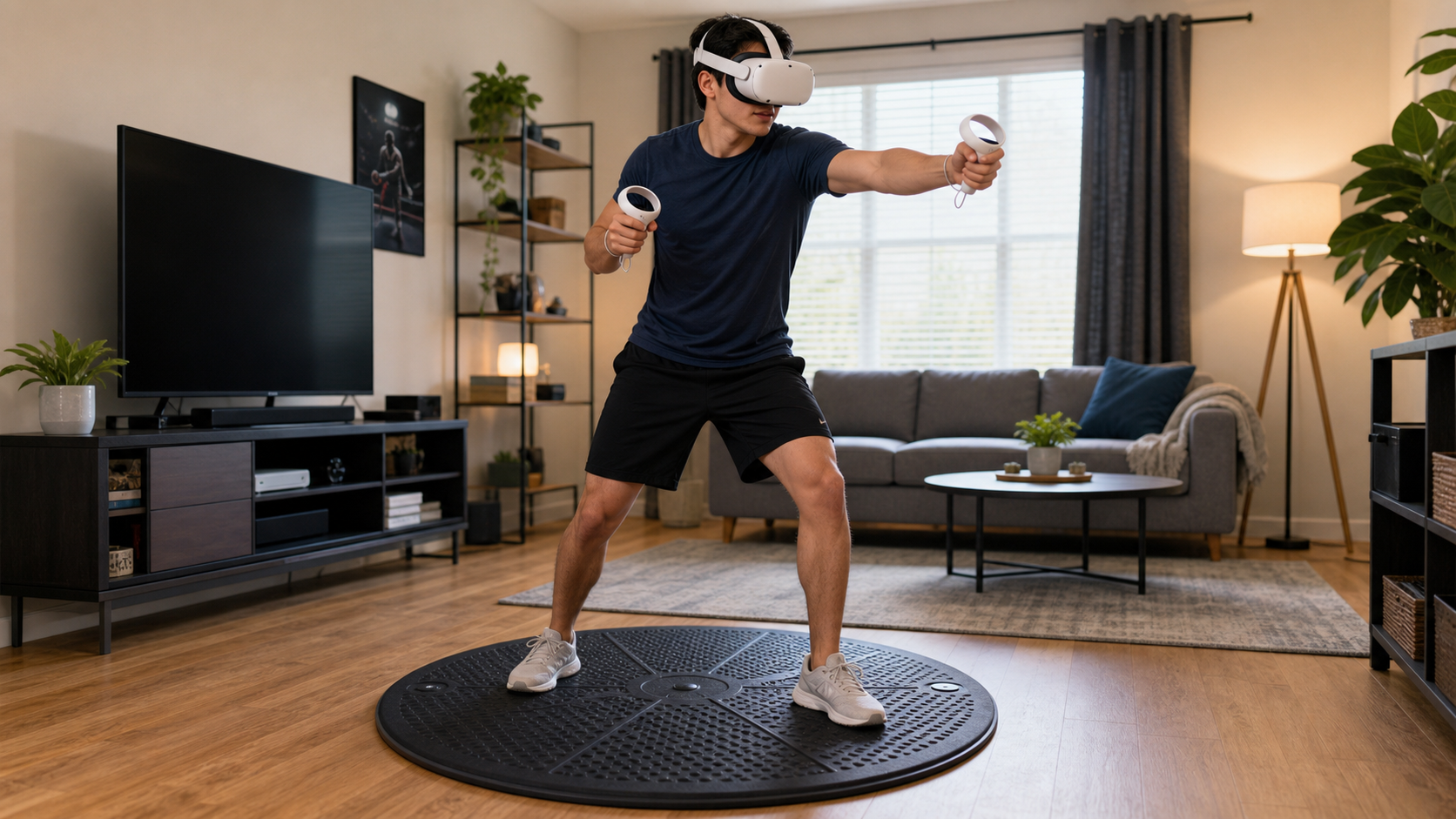
I bought a VR mat because my family and friends kept getting too close to the furniture when they tried my Quest 2. I play a lot of VR boxing, so safety is a big deal. I wanted to see if this simple accessory could solve a real problem in our shared space. It was a first-person case study for me. I wanted to know if it was just a gimmick or a genuinely useful tool. Here is what I learned from using it for short and long VR sessions.
Does a center-finding test without looking answer the buyer's main doubt about floor noise in room-scale VR?
You're deep in a VR game, but a nagging thought persists. "Am I still in the center?" You peek through the headset's nose gap, breaking the immersion.
Yes, a simple center-finding test proves the mat solves "floor noise." The mat's textured surface and raised markers let you feel your position with your feet. You can reset to the center without looking, which keeps you focused on the game, not the boundary.
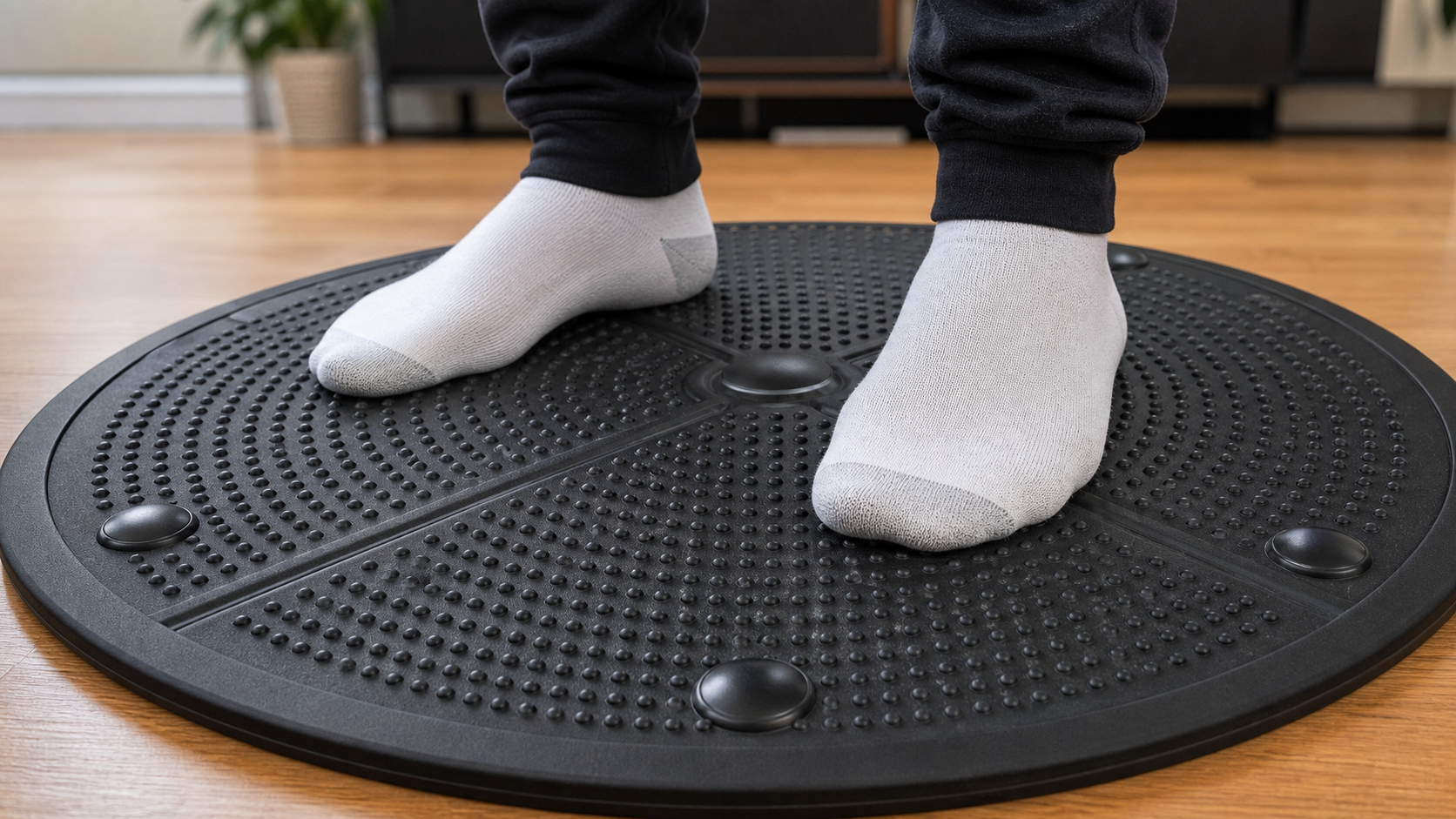
The biggest reason I wanted a mat was to solve what I call "floor noise." This is the slow, unconscious drift that happens during intense games. New VR users are the main source of this problem. I would let a friend play, and I’d spend more time watching them slowly inch toward my bookshelf than watching the game. It was distracting for me as a spectator and broke their immersion when I had to warn them. The mat promised a physical cue to stop this. I tested it by closing my eyes (in real life, with the headset on), shuffling around, and then trying to find the dead center of my play space with just my feet. Without the mat, I was always a foot or two off. With the mat, the raised bumps and different texture made it instant.
How a Mat Reduces Mental Load
This simple physical feedback loop changes how you play. You stop dedicating a part of your brain to your physical position. It frees you up to focus completely on the virtual world. For new users, it gives them confidence that they are safe.
| Feature | Experience Without Mat | Experience With Mat |
|---|---|---|
| Center Finding | Requires peeking or waiting for Guardian to appear. | Instant and tactile, using your feet. No peeking needed. |
| Immersion | Frequently broken by position anxiety and Guardian alerts. | Maintained for longer periods. You trust your position. |
| New User Safety | High risk of drifting. Requires constant supervision. | Lower risk. Users can feel when they stray from the center. |
Could floor noise be solved by setup changes before buying VR Mat?
You want to fix your VR drifting problem without spending more money. Can a simple setup change do the trick? It seems like an easy fix.
Sometimes, but they are not dedicated solutions. Adjusting Guardian sensitivity or using a small rug can help, but a VR mat is designed for this specific problem. It offers consistent tactile feedback that DIY methods often lack, especially during fast-paced games.
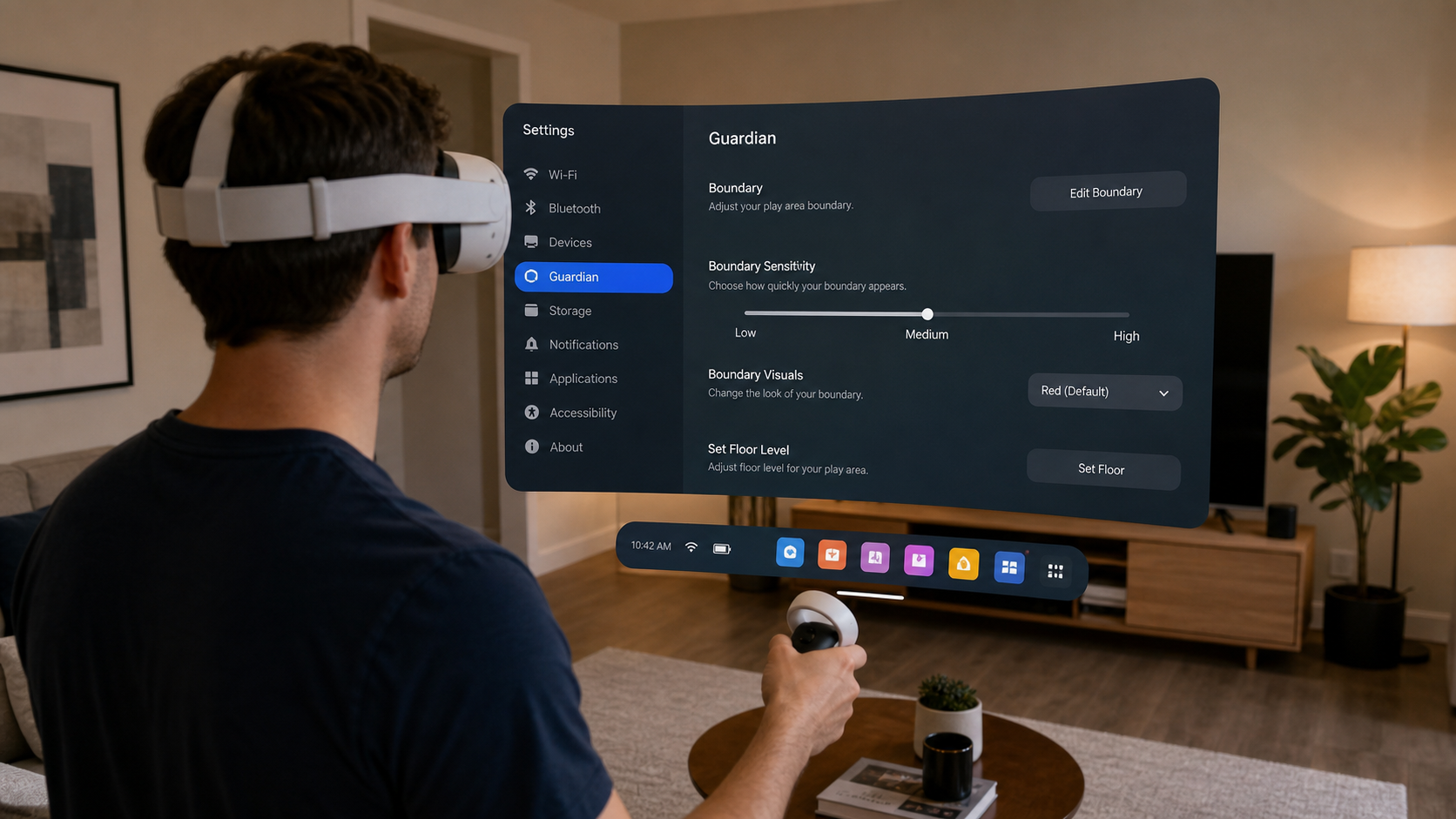
Before spending money, I tried to solve the drifting problem myself. My first idea was to change the Guardian settings on my Quest 2. I made the boundary much more sensitive, so it would appear sooner. The problem was that it appeared constantly. During a boxing match, any slight lunge would trigger the bright red grid. It was just as annoying as worrying about my position. My next idea was to use a small bathroom rug as a physical marker. This worked a little better. I could feel the edge of the rug with my feet. But during an intense game, the rug would slide around on my hardwood floor. It became its own hazard. I was worried I would slip on it. A dedicated VR mat is designed to fix these issues. It has a non-slip bottom and is heavy enough to stay in place. The textures are also made for you to feel with your feet, which is not true for a normal rug.
Would a photo of the mat edge after storage answer the searcher faster than a buying guide?
You are excited about your new VR mat, but after storing it, the edge curls up. Now it is a real trip hazard in your living room.
Yes, a single photo of a curled mat edge is more powerful than a long buying guide. It immediately shows a real-world problem: trip risk. This visual proof highlights the importance of material quality and how the mat behaves after being rolled for storage.
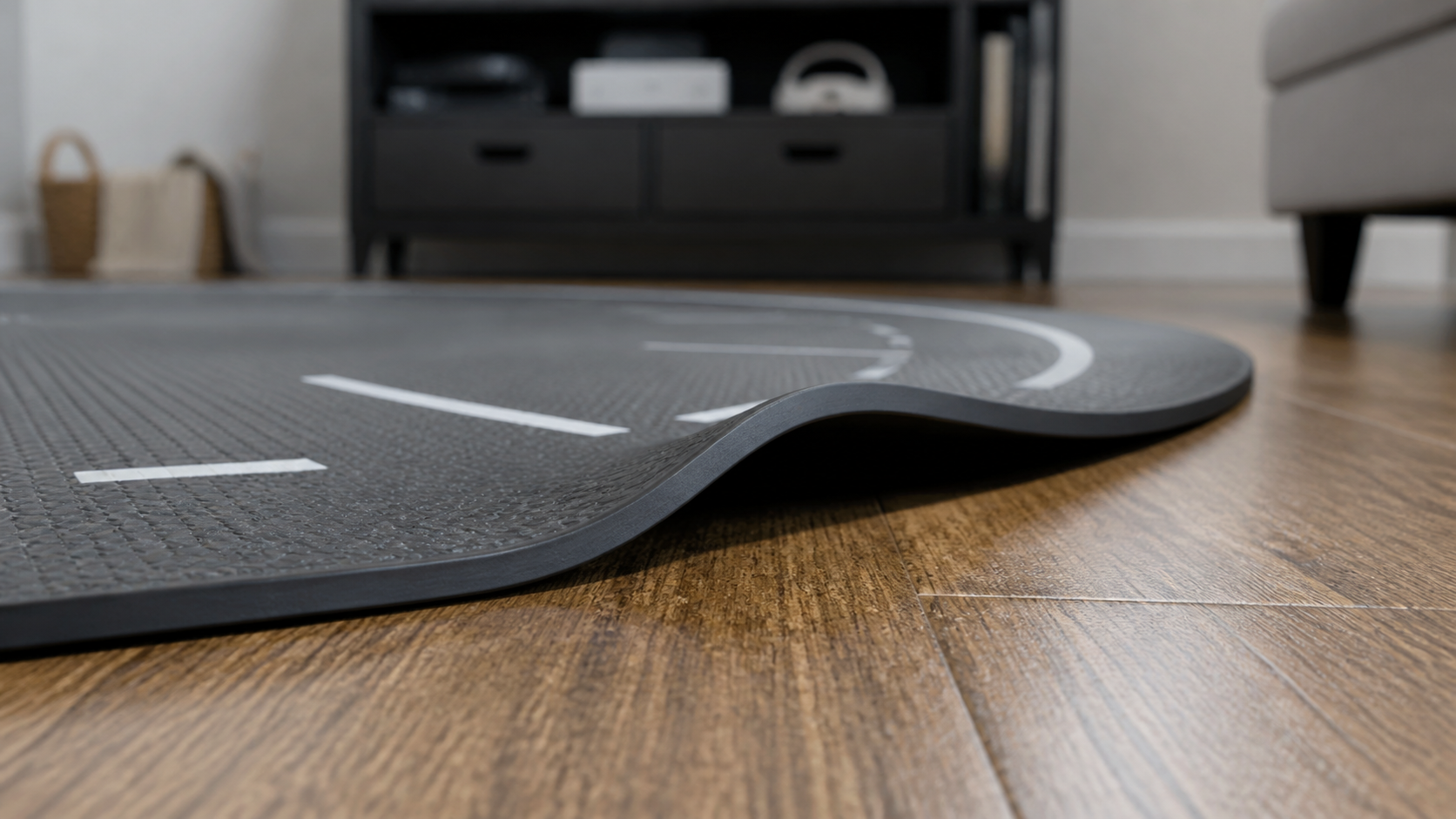
This was my single biggest complaint about the VR mat I tried. I live in a shared space, so I cannot leave the mat on the floor all the time. After each use, I have to roll it up and put it in a closet. When I unrolled it for the next session, the edge would not lie flat. It created a small but very real lip that I could catch my foot on. I nearly tripped a couple of times during a quick game of Beat Saber. A picture shows this problem instantly. You can see the gap between the mat edge and the floor. No amount of text in a review can communicate that danger as quickly as one photo. This is a very important detail to look for. If you plan to store your mat often, you need one made from a heavy, flexible material that unrolls completely flat every time. Otherwise, you are just trading one safety problem for another. This practical issue should be at the top of any buying guide.
Should the article warn boxing players about room layout and distance from furniture on Meta Quest 2?
You are in the zone, throwing punches in a VR boxing game. You feel centered on your mat, but you completely forget about the couch right behind you.
Absolutely. A VR mat helps you find the center of your play space, but it does not define your total reach. Boxing games involve lunging and wide arm swings. Players must be warned to map their room layout and ensure there is clearance from all furniture.
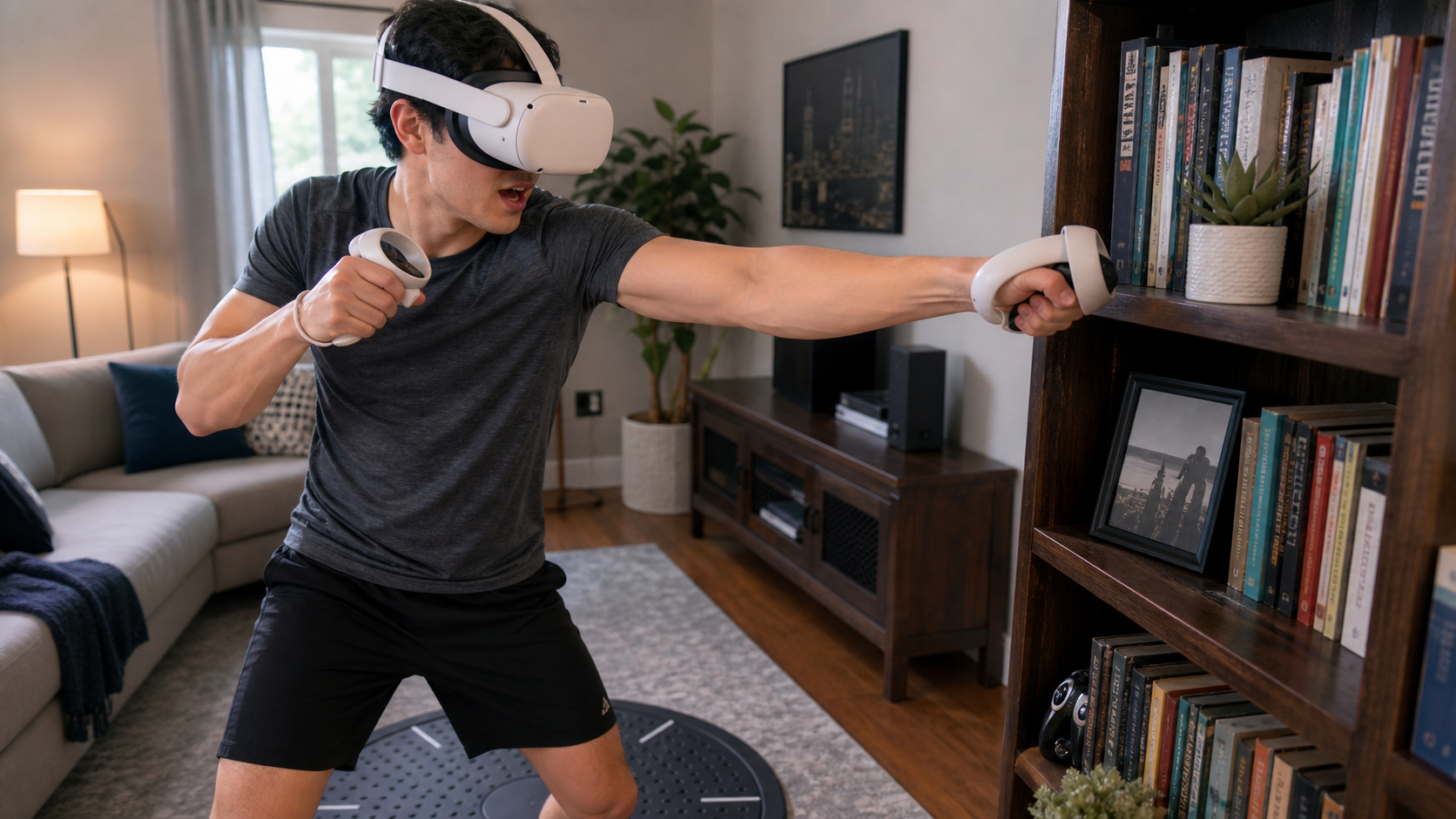
I learned this lesson the hard way. I was playing Thrill of the Fight, one of my favorite boxing games. I felt perfectly centered on my VR mat. I knew exactly where my feet were. But then my virtual opponent moved in, and I lunged forward to dodge a punch and throw a counter. My real hand slammed right into the edge of my wooden coffee table. The pain was sharp and real. It was a stupid mistake. The mat told me where my feet were, but it could not tell me where my fists were going. A VR mat is a tool for orientation, not a force field. This is especially true for games with big, fast movements like boxing or even Gorilla Tag. You still need a Guardian boundary that respects your full arm span. The mat and the Guardian must work together. One does not replace the other. My advice for any boxing player is to clear more space than you think you need, even if you have a mat.
Conclusion
The VR mat was great for keeping me centered and for helping new users. But its curled edge was an annoying trip hazard. It's best for a dedicated VR space.
Leave a comment