



Will a VR Gunstock make Meta Quest 3S easier to use or harder to manage?

Your aim is all over the place in competitive VR shooters. You know a gunstock could help, but you worry that it will be too complicated and slow you down.
A VR gunstock can make aiming on the Meta Quest 3S much easier by providing a stable physical frame. However, it can also make tasks like reloading harder and requires careful setup. The benefit depends on the stock's design and your personal play style.
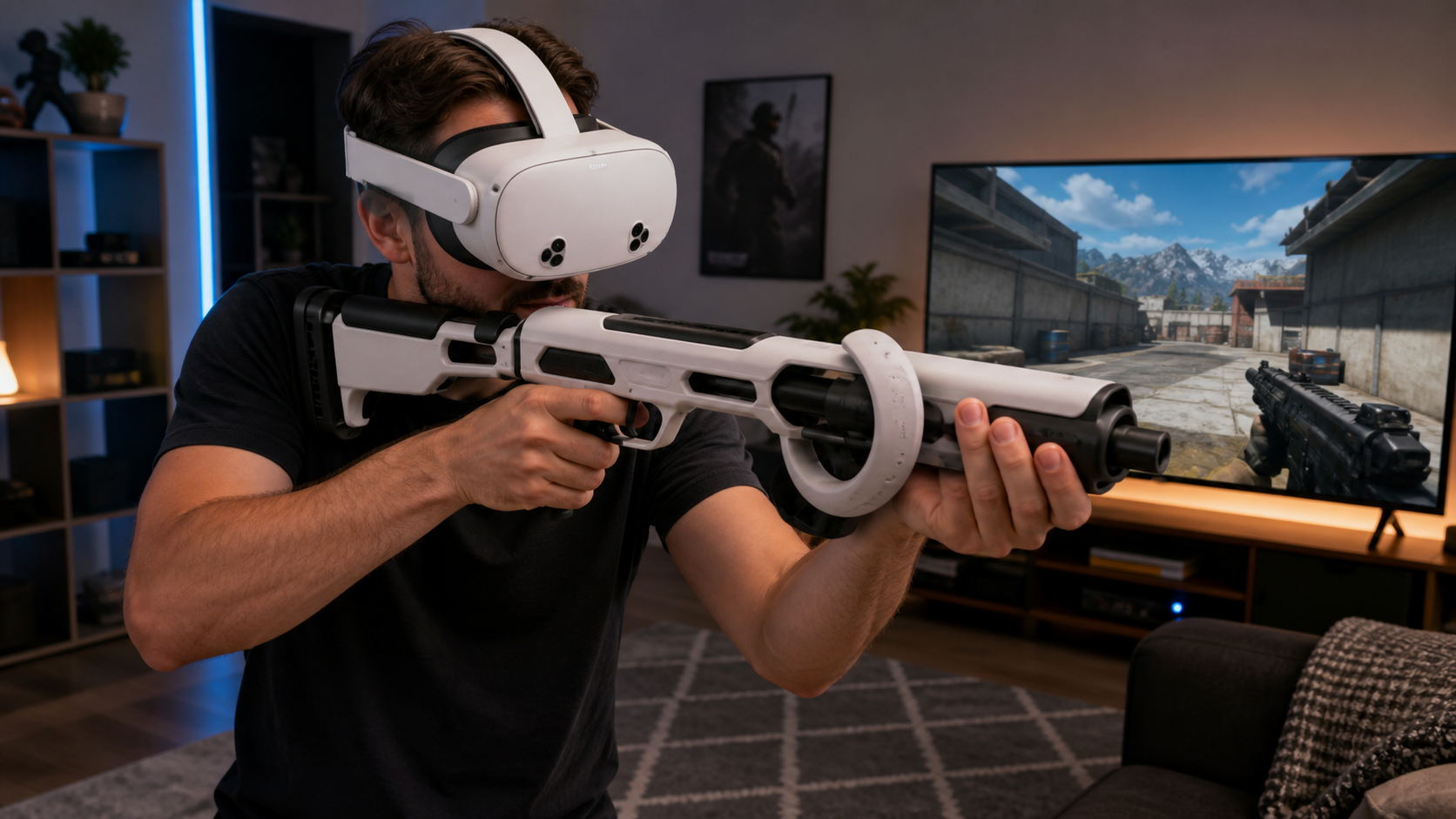
I felt this exact conflict when I first started playing Pavlov Shack. My hands would shake in long-range fights, but the thought of strapping my controllers into a big rig seemed like a hassle. The community is full of questions about whether these accessories are worth it. So, I decided to run a personal case study. I used a gunstock for a week of competitive matches on my new Meta Quest 3S to see what really happens. Let's break down the real questions players ask, starting with the most frustrating physical problem.
On Meta Quest 3S, does whether the stock hits the headset during close aiming change the result?
You line up the perfect shot, bring the rifle up to your eye, and smack. Your rear controller hits your headset, throwing off your aim and breaking your focus.
Yes, controller collision is a game-breaker. If the gunstock forces your controller to hit the headset when you aim down sights, it is fundamentally flawed. A good design for the Quest 3S must provide enough clearance for comfortable, close-quarters aiming.
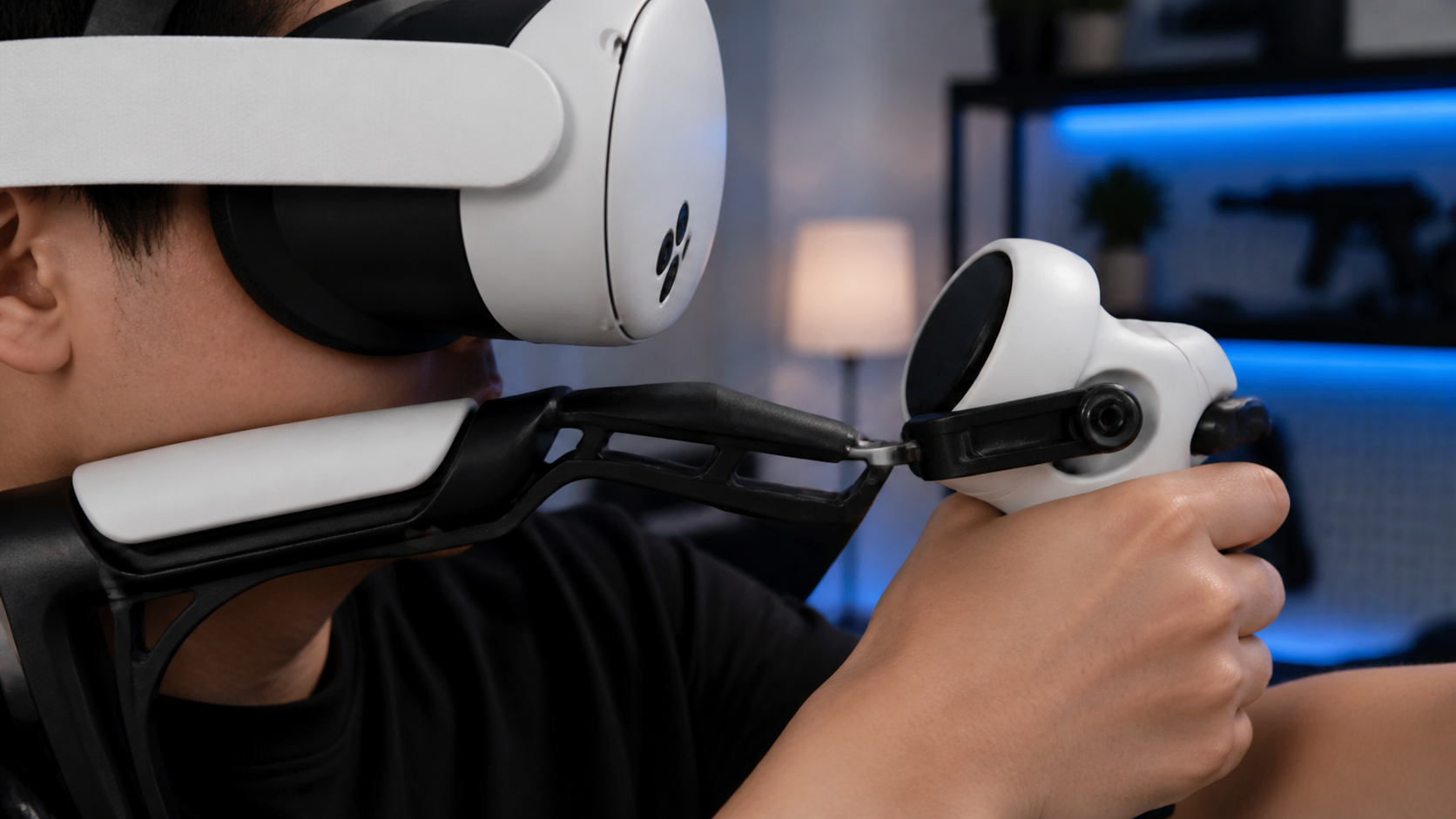
This was the very first thing I checked. In games like Pavlov Shack, aiming down sights (ADS) is not optional. You have to bring the rear controller right up to your face to use a scope or iron sights. The Meta Quest 3S has a different shape and size than previous headsets, so this interaction is critical. If your hand or the stock's cup collides with the headset, you can't aim properly. It's that simple. During one of my first matches, the stock I was testing had a bulky rear cup. Every time I tried to use a red dot sight, I felt the plastic knocking against the headset. It was impossible to hold a steady sight picture.
Stock Type and Headset Clearance
Different stock designs handle this problem in different ways. A fully rigid frame might offer the most stability, but it also creates a fixed path for your controller that might not match your body. Magnetic cups offer a great compromise. They let you quickly detach your hands, which solves the collision problem entirely. You can bring your hand to your face without a frame getting in the way.
| Stock Type | Pros | Cons | Headset Collision Risk |
|---|---|---|---|
| Fully Rigid Frame | Maximum stability, feels like a real rifle. | Inflexible, can be slow for reloads, higher collision risk. | High |
| Magnetic Cups | Flexible, fast reloads, easy to detach for aiming. | Slightly less stable than a rigid frame. | Low |
| Sling-Style | Simple, lightweight, provides tension for stability. | Less rigid support than other types. | Medium |
After trying a rigid frame and getting frustrated, I switched to a magnetic cup design. The difference was immediate. I could snap my rear controller into the magnetic holder for stability when moving, then pop it off instantly to aim down my sights without any fear of hitting my headset.
Does Meta Quest 3S compatibility change the answer for this VR Gunstock question?
You just upgraded to the Meta Quest 3S. You're ready to jump into a match, but you realize your old gunstock might not even work with the new controllers.
Absolutely. The Meta Quest 3S uses new Touch Plus controllers that do not have tracking rings. Gunstocks designed for the Quest 2 controllers will not fit. You need a gunstock made specifically for the Quest 3S to get a secure lock.
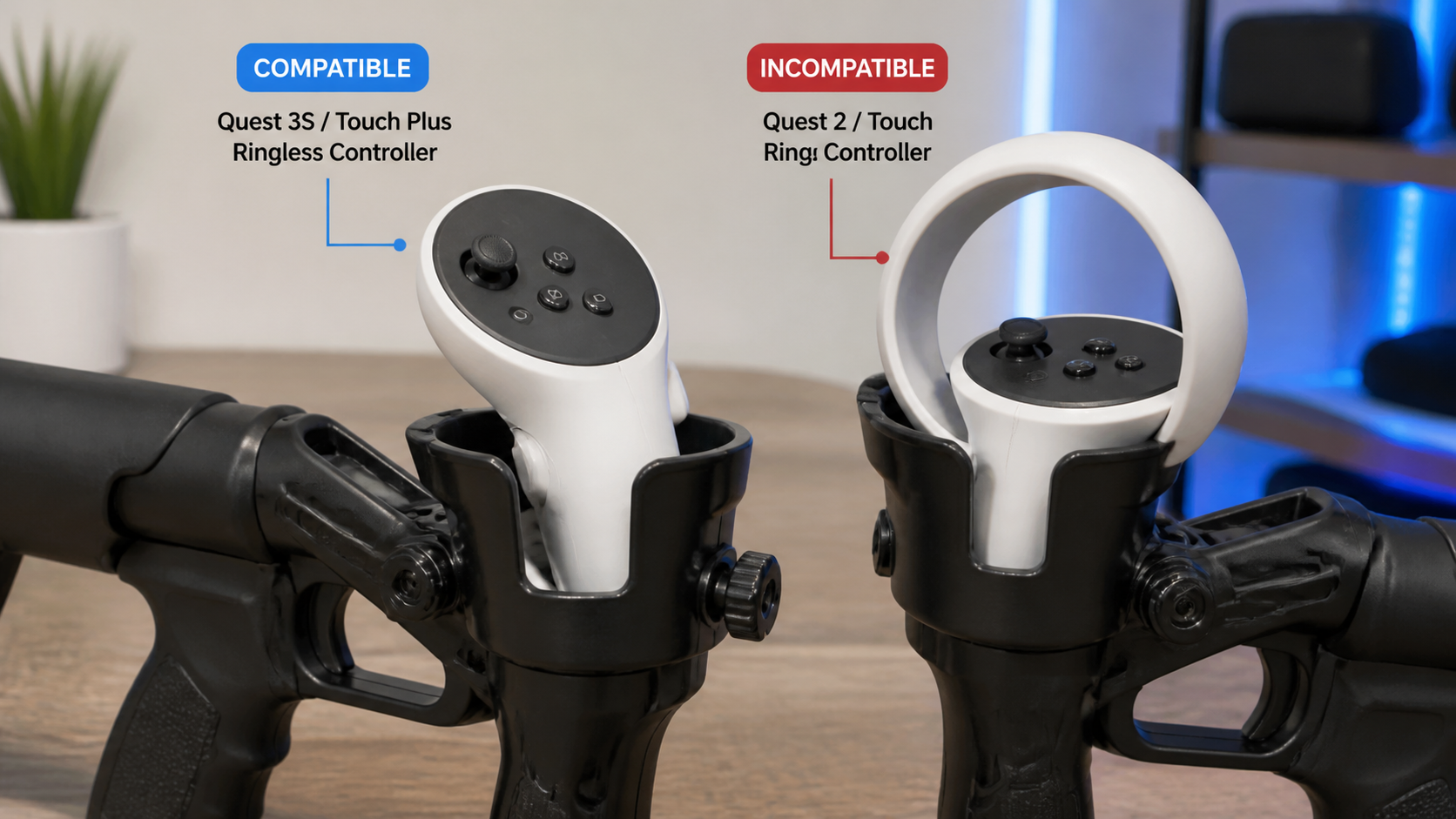
This is not a small detail. The entire mounting system for a gunstock depends on the controller's shape. The Quest 2's Touch controllers had large tracking rings that many gunstocks used as an anchor point. The Quest 3S's Touch Plus controllers are sleek and ringless. My old Quest 2 stock was completely useless. The cups were shaped for a controller that I no longer used. Some companies sell adapters, but I was skeptical. The whole point of a gunstock is to eliminate wobble and instability. Adding an adapter seemed like introducing a new point of failure.
I tested a friend's setup that used an adapter, and my fears were confirmed. There was a tiny bit of play between the controller and the adapter, and another bit of play between the adapter and the stock. During a fast-paced game, those tiny wobbles added up. It felt cheap and unreliable. A native gunstock designed for the Quest 3S, on the other hand, provides a satisfying click. The controller feels like it's part of the stock. This solid connection is what translates into better aim. Don't compromise on compatibility; a bad fit will make your experience worse, not better.
Is the biggest issue setup, fit, safety, or fatigue?
You want better aim, not a new chore. Is a gunstock just another complicated gadget that will create more problems than it solves with adjustments, tired arms, or broken furniture?
For most new users, the biggest challenge is getting the fit right. A proper fit is directly tied to setup and fatigue. An poorly adjusted stock is hard to set up, feels unnatural, and causes arm strain. Safety is a separate issue managed by your play space.
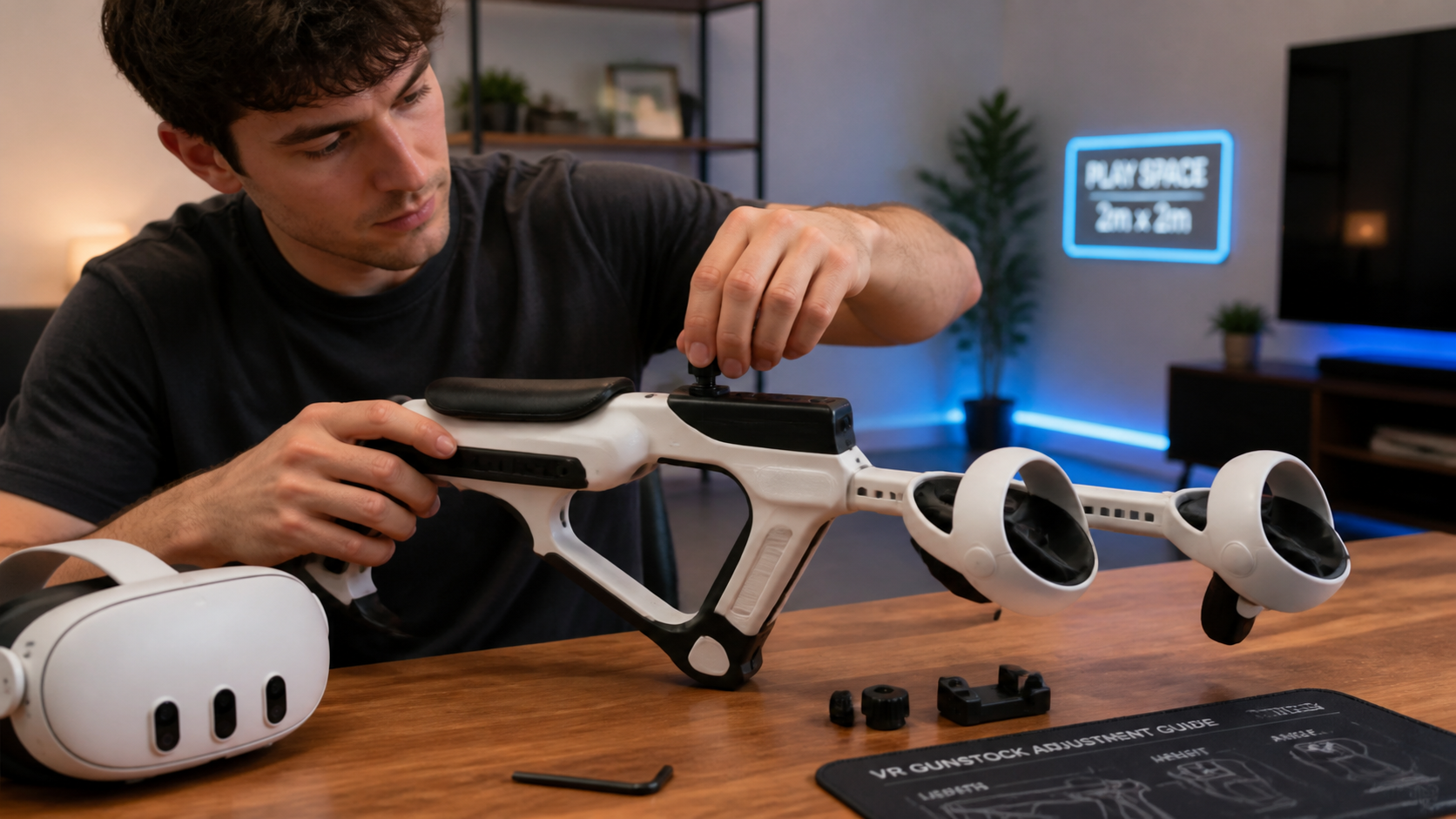
The first time I put my gunstock together, it took me a solid 20 minutes to get it dialed in. This is not a plug-and-play accessory. You have to adjust the length of the stock to match your arms, set the angle of the controller mounts to match your natural grip, and position the shoulder rest for comfort. If any of these are wrong, the whole thing feels awkward. This initial setup is a barrier for some, but it's essential.
Once it's set up, fit becomes the main factor. A good fit means the stock feels like an extension of your body. A bad fit means you're fighting against it. I had the shoulder rest too high at first, and my neck started to ache. After I lowered it, the fatigue went away. The weight of the stock also contributes to fatigue, but fit is more important. A well-balanced, perfectly fitted stock can feel lighter than it is.
As for safety, that's on you. You are holding a rigid object and moving it around quickly. I made sure to clear extra space in my play area. I would never use a gunstock in a small, cluttered room. It's too easy to swing around and hit a wall, a TV, or another person.
Does VR Gunstock deserve a buy, maybe, or skip verdict for Pavlov Shack when reload speed is the issue?
Your aim is finally steady with the gunstock. But you keep losing firefights because you're fumbling with your magazine, unable to reload fast enough. Is the stability worth the slowness?
For Pavlov Shack, a VR gunstock gets a firm "Maybe." It provides a massive improvement to aiming stability, making it a "Buy" for snipers and long-range players. For aggressive, run-and-gun players, the slower reload speed can make it a "Skip."
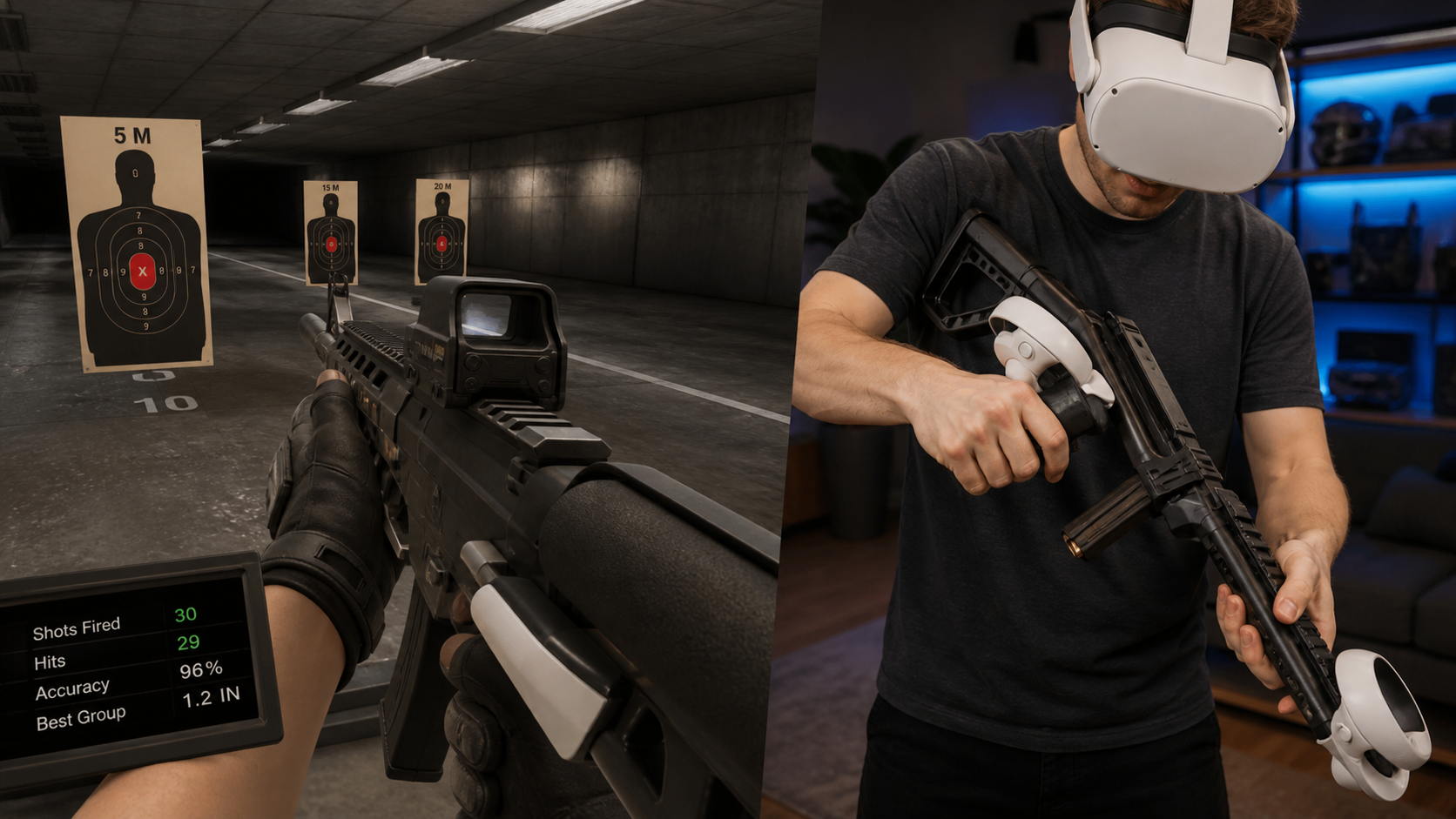
This is the ultimate trade-off. The concrete proof of the gunstock's value came at the shooting range. My target groupings without the stock were decent, but with the stock, they were a single tight cluster. The physical connection between my two hands and my shoulder made my aim incredibly stable. In long-range battles, I was winning fights I would have previously lost.
But then came the failure case: reloading under pressure. In Pavlov, you have to physically grab a new magazine from your vest and insert it into the weapon. With free-hand controllers, this is a quick, natural motion. With a gunstock, especially a rigid one, your hands are locked in position. It becomes a clumsy, awkward process. I have a gameplay clip where I get an enemy down to one shot, but I run out of ammo. I fumble the reload, and his teammate comes around the corner and finishes me. It was deeply frustrating. Magnetic cups help a lot, as you can detach your off-hand to grab a mag. Even so, it requires learning new muscle memory. After a week, my reloads were faster, but still not as fast as my free-hand speed.
So, who should get one? If you prefer to play a support role, use DMRs, or snipe, a gunstock is a fantastic tool. The aiming stability is a huge advantage. If your play style is all about fast-paced SMG action in close quarters, the reload speed penalty might not be worth it.
Conclusion
A gunstock improves aim on the Quest 3S but adds complexity. It is best for players who value stability and are willing to practice new muscle memory for reloading.
Leave a comment