



Will a VR Fishing Rod make Quest Touch Plus Controllers easier to use or harder to manage?

I thought my new VR fishing rod accessory would be a game-changer. But family game night proved it was more complicated than I expected. Is it helpful or just another gadget?
A VR fishing rod makes casting feel more immersive, but it makes menu navigation and storage much harder. The accessory is great for solo players with space, but can be difficult to manage during family game nights, especially in smaller rooms or with shared headsets.
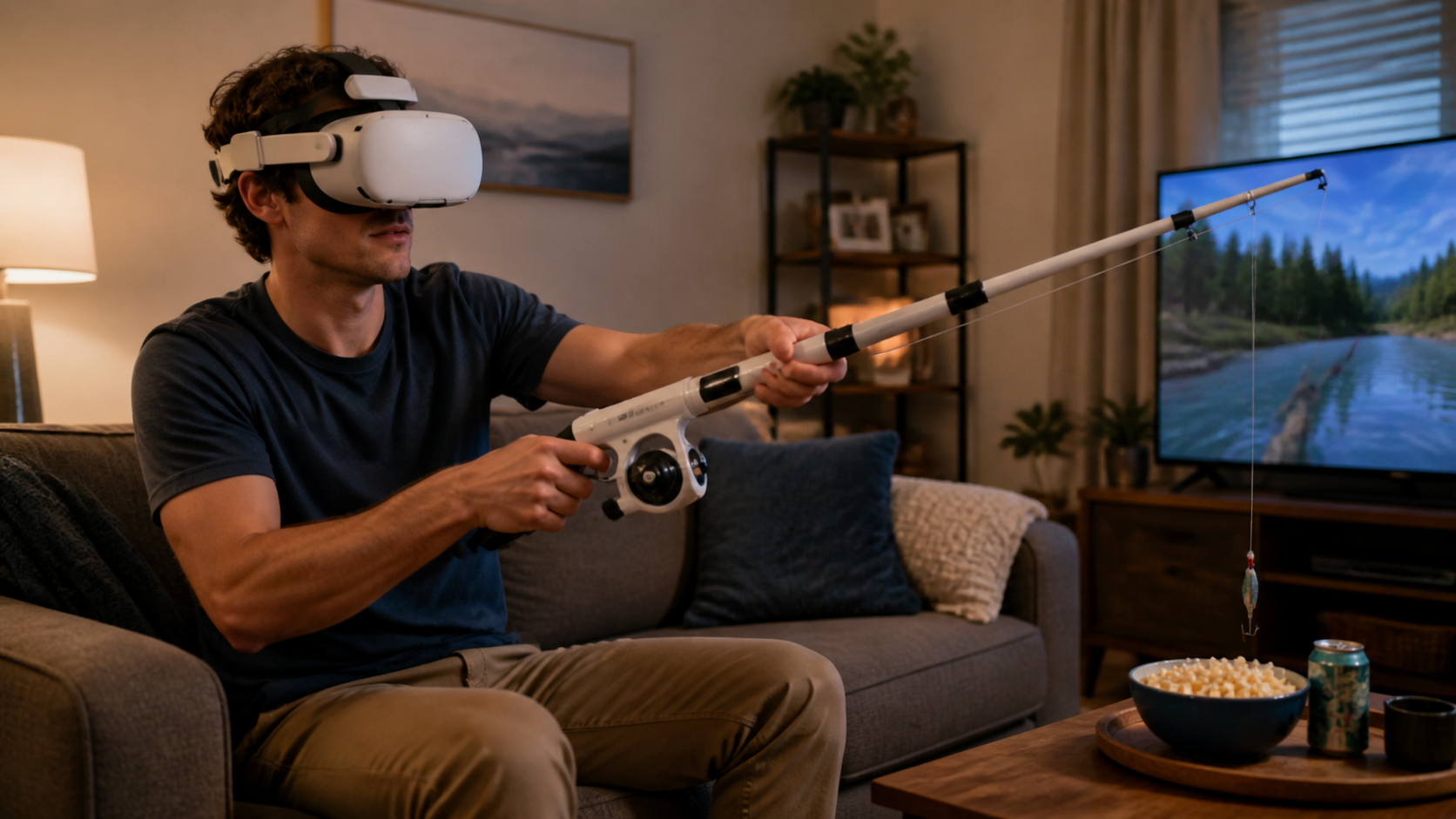
When I first unboxed the fishing rod attachment, I was excited. The idea seemed perfect. It promised to turn my lightweight Quest Touch Plus controller into a tool that felt real. But the true test of any VR accessory isn't a quick five-minute demo. The real test happens when the novelty wears off, when you have to live with it. For me, that test was a family game night. It’s one thing to try something by yourself, but it’s completely different when you’re swapping the headset between people in a busy living room. That’s where the small problems start to look a lot bigger.
Does family game nights expose storage faster than a casual demo would?
You just got a new VR accessory and it feels great. But when you pass the headset to your friend, where does the bulky attachment go? Suddenly, it’s just awkward clutter.
Yes, absolutely. A family game night makes storage an immediate problem. During a solo demo, you just set it down. When sharing, the accessory becomes a clumsy object on the couch or floor, creating clutter and a potential tripping hazard between each person's turn.
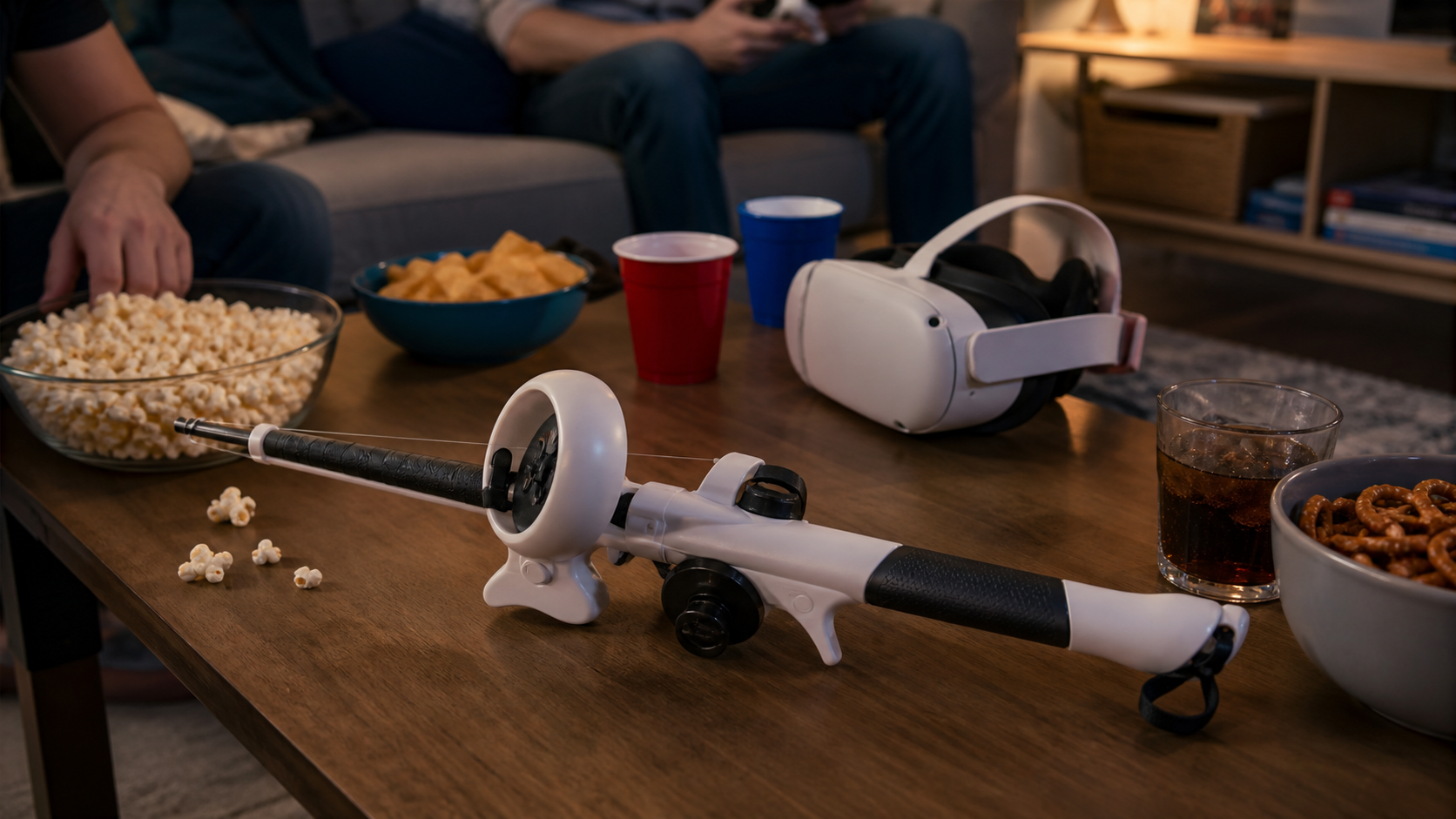
When I play VR alone, managing accessories is easy. I have my desk and my routine. I finish playing, I put the controller attachment back in its box or on a shelf. There is no mess. But family game night is chaotic. We were passing the Quest headset around for a fishing tournament. After my turn, I’d take off the headset and hand it to my brother. But what about the controller with the long rod attached? I couldn't just hand him the whole thing because he needed the controller free to navigate the main menu first. So I had to detach it. Now I’m holding a piece of plastic. I put it on the coffee table, where it took up too much space. Later, it ended up on the couch, and someone almost sat on it. The problem isn't the accessory itself, but the "in-between" moments that only happen when you share the experience.
Solo Play vs. Family Game Night Storage
| Scenario | Accessory Handling | Storage Issue |
|---|---|---|
| Solo Demo Session | Set aside on a dedicated desk or shelf after use. | Low. The accessory is put away once, at the end of the session. |
| Family Game Night | Passed between players or detached and left nearby. | High. It becomes clutter on tables, couches, or the floor. |
Could VR Fishing Rod feel helpful at first but annoying after repeated use?
That first cast with the rod attachment feels incredible. Then you need to change your lure, and suddenly the rod is just in the way. The immersion breaks.
Yes. The rod is great for the physical actions of casting and reeling. But it becomes a major annoyance for everything else. Navigating in-game menus, selecting items, or pressing small buttons feels clumsy and frustrating with a long attachment on the controller.
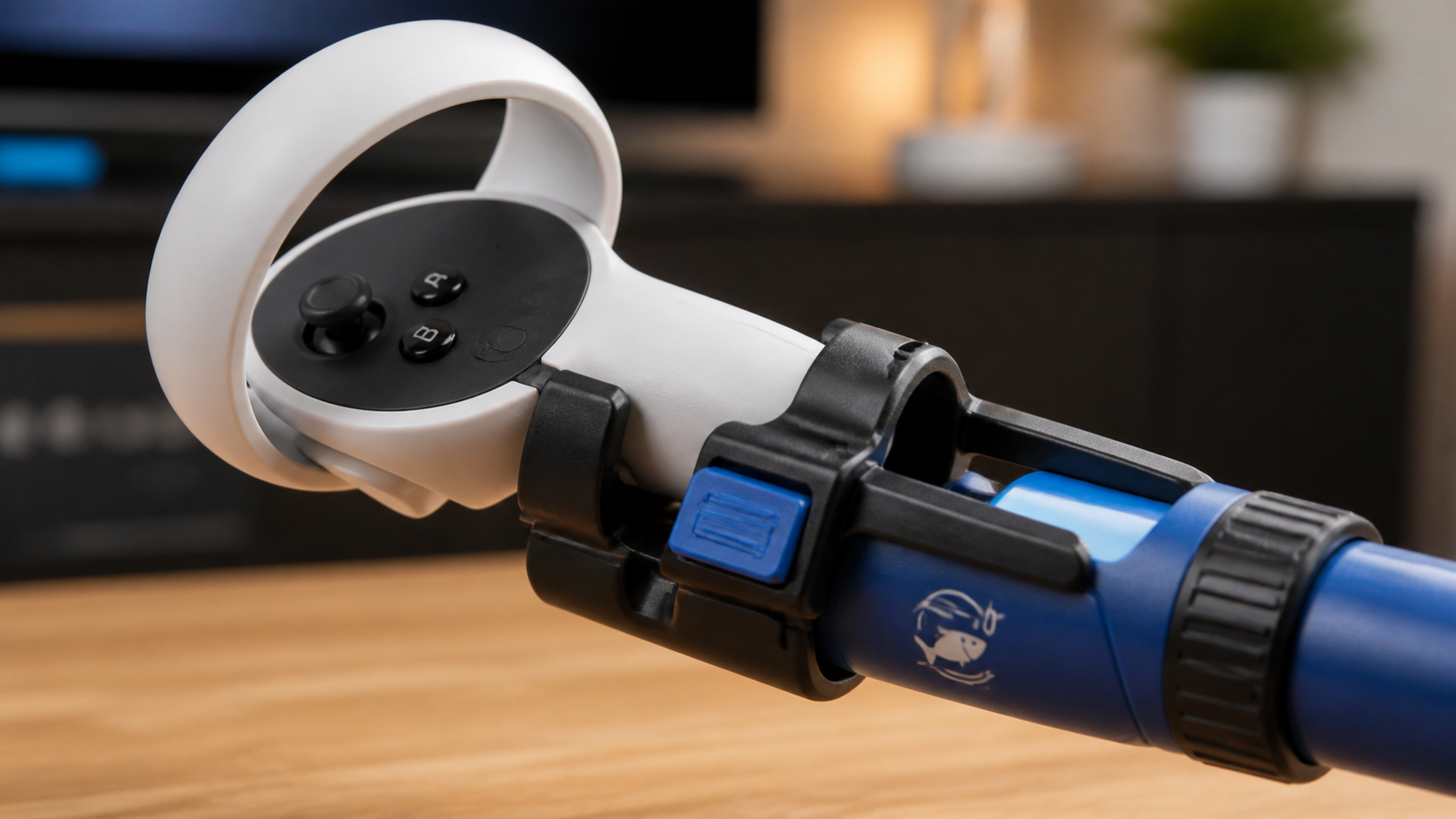
I have to be honest, the first time I cast the line with the rod, I smiled. It felt so much more satisfying than just flicking my wrist with a bare controller. The little reel on the attachment even clicked as I turned it. This is the "wow" factor everyone hopes for. The problem started about ten minutes later. I needed to open my tackle box in the game to switch bait. This required me to use the thumbstick and press the 'A' button. With the bulky rod attached, my hand was in an awkward position. I had to stretch my thumb to reach the stick, and it felt unnatural. My immersion was instantly gone, replaced by frustration. Most fishing games involve a lot of menu navigation. You’re constantly checking maps, managing inventory, or selling your catch. The accessory made the core gameplay loop (casting and reeling) feel 10% better but made all the menu management feel 50% worse. The controller is locked in securely, which is good, but that solid lock makes it a pain to do anything but fish.
Does the title need a warning for people with small rooms or shared spaces?
You are ready to cast your line deep into a virtual lake. You wind up for a big throw and hear a loud crash. You just hit the lamp.
Yes, a warning is necessary. The fishing rod adds a foot or more to your controller's length, dramatically increasing your swing radius. In a small room or a crowded space, it’s very easy to hit walls, furniture, or other people. The Guardian system can't warn you.
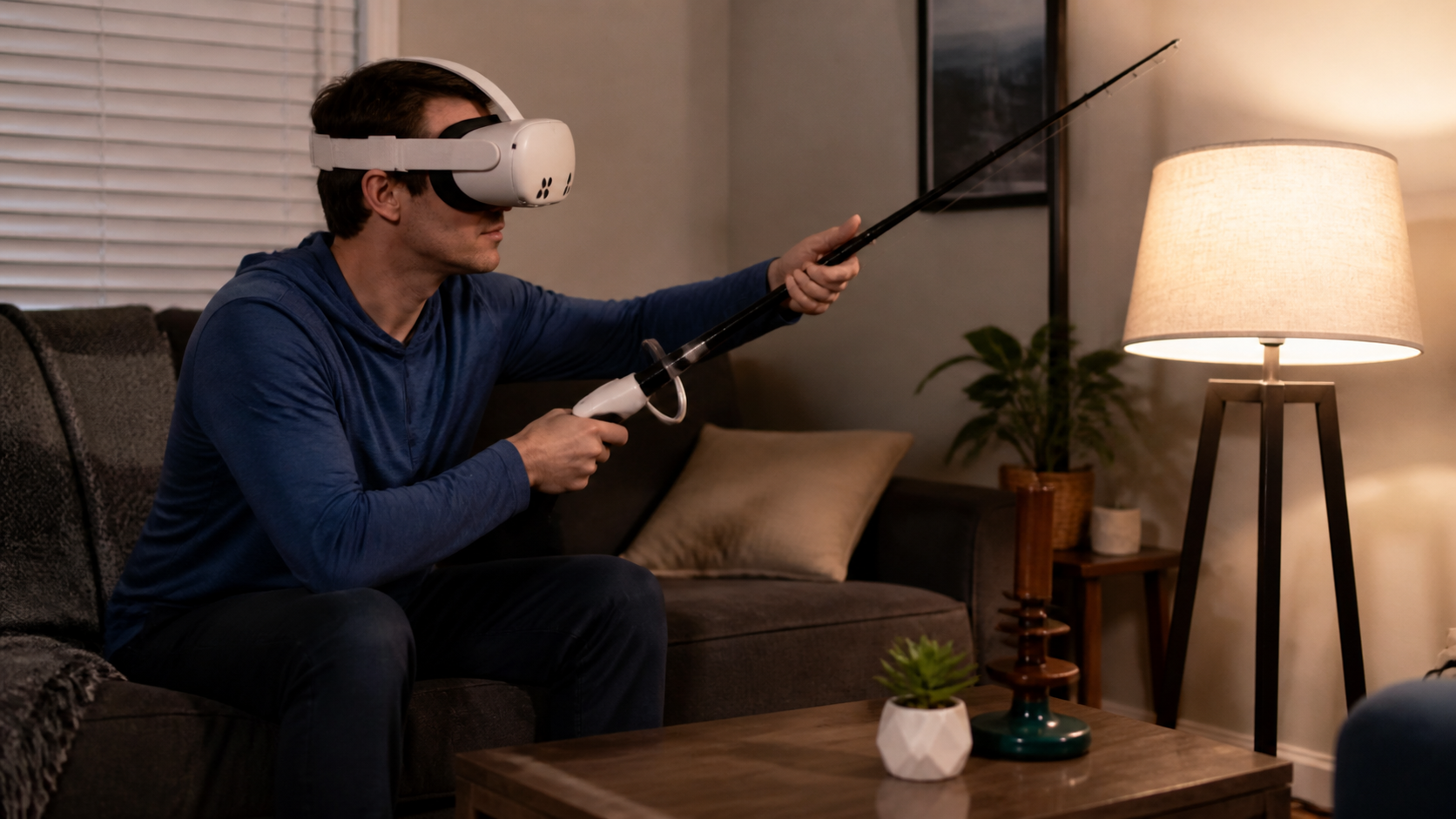
I play from my couch, so I am a seated VR user. My living room is an average size, but it's not a wide-open, empty space. I have a coffee table in front of me and a lamp to my side. Normally, this is fine. I know my space. But with the fishing rod attachment, my reach was completely different. The first time I tried a big, overhead cast, I nearly hit my ceiling fan. I quickly realized I had to change my motion to a weak little side-flick. This completely defeated the purpose of the accessory, which was to make the motion feel more real. It got worse during our family game night. With people sitting on the couch next to me, I was terrified I was going to smack them with the plastic rod every time I cast. The Meta Quest's Guardian boundary is great for warning you about your hands, but it has no idea you’re holding a long stick. This makes the accessory a genuine hazard in any space that isn't large and empty.
Does the final advice change for shared headsets, kids, or small rooms during family game nights?
You want to know if this accessory is a good buy. But you have kids, a small apartment, and you share your headset with your partner. The answer isn't so simple.
Yes, the advice changes completely based on the situation. The rod is a poor choice for kids, shared headsets, and small rooms. It’s too complex, tedious to swap between users, and unsafe in tight spaces. It’s best for a solo adult with a dedicated, large VR room.
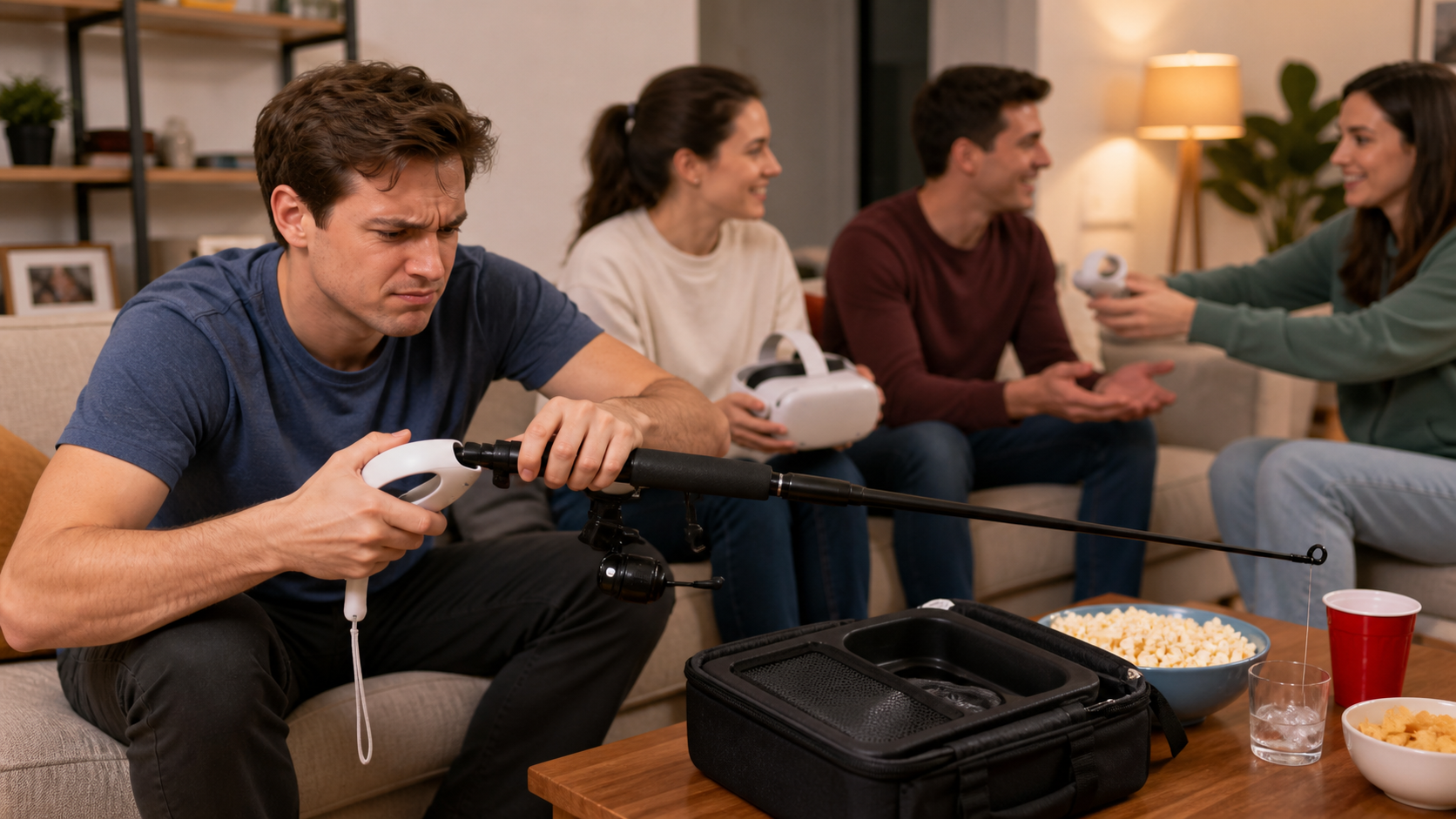
After our game night, my final opinion on the VR fishing rod became very clear. It is not a one-size-fits-all accessory. For a solo VR enthusiast who loves fishing games and has a big, empty room to play in, it can be a really fun toy that adds a nice touch of immersion. For anyone else, I would say skip it. If you have kids, they will likely swing it around carelessly, and the difficulty with menus will frustrate them. If you share your headset, the process of clipping the controller in and out for every person’s turn is a hassle that slows down the fun. And if you play in a small or cluttered room, it's a safety risk. The accessory solves one small problem (making casting feel better) but creates several bigger problems related to usability, storage, and safety. For a chaotic, fun family game night, you want things to be as simple as possible. This accessory is the opposite of simple.
Conclusion
The VR fishing rod is a niche accessory. It's great for solo players with lots of space but creates more problems than it solves for family game nights in smaller rooms.
Leave a comment