



Will a Silicone Head Strap for Meta Quest make Beat Saber sessions feel more realistic or more annoying?

Feeling your Quest 3S slip during a fast Beat Saber song? That constant readjustment kills your flow. A simple silicone strap might be the surprising fix you need.
For active Beat Saber sessions, a silicone head strap feels more realistic by improving stability and reducing headset slip. It can be slightly annoying if it pulls your hair, but the added immersion from a secure fit outweighs the minor inconvenience for most players.
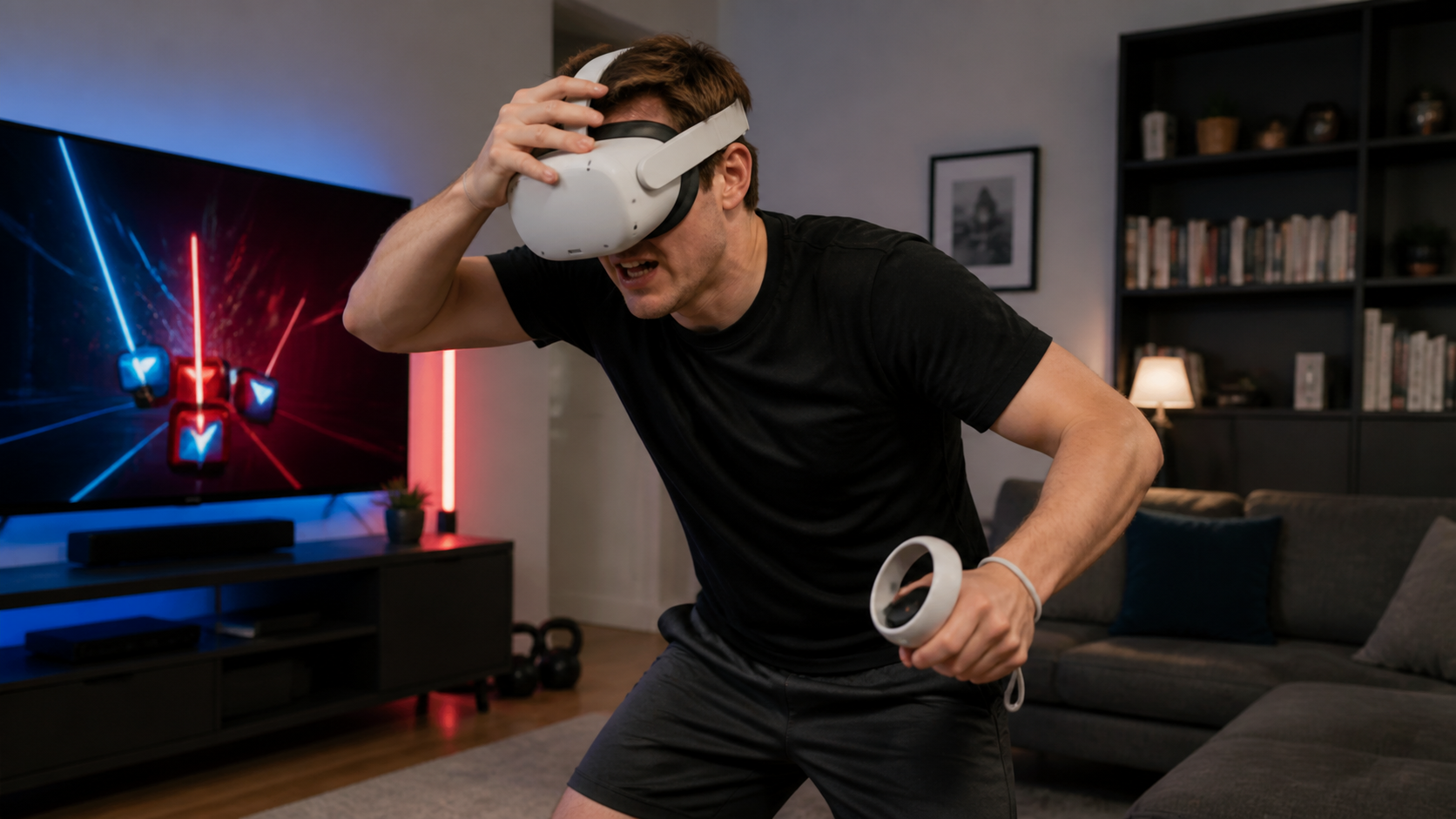
I have a pretty large head, and the standard cloth strap has always been my enemy in rhythm games. I decided to put a budget-friendly silicone strap to the test during some intense Beat Saber sessions. My goal was simple: find out if this cheap upgrade is a game-changer or just another piece of plastic. Let's break down my experience, starting with the big question of money versus comfort.
Does Beat Saber sessions make budget comfort versus premium halo support worth accepting?
Premium halo straps feel great but cost a lot. The free cloth strap is uncomfortable. Is there a middle ground that gives you stability without emptying your wallet?
Yes. For high-movement games like Beat Saber, a budget silicone strap provides much-needed grip that the cloth strap lacks. It's a massive improvement in stability for a low cost, making it a worthy compromise over bulky, expensive premium halo straps.
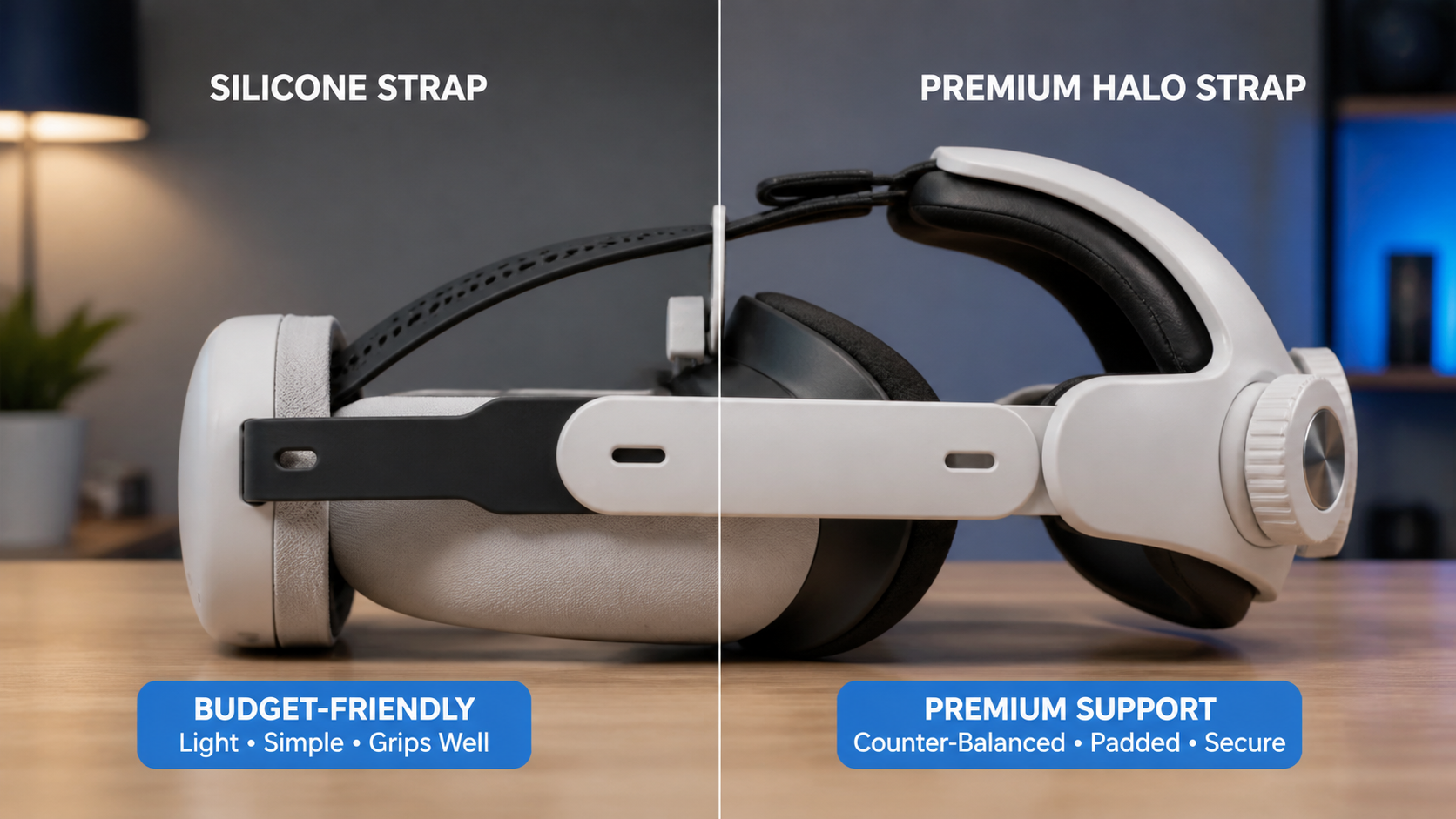
As someone with a larger head, the default cloth strap that came with my Quest 3S was a constant source of frustration. During a fast-paced game like Beat Saber, it would slowly slide down my face, forcing me to choose between missing a block or pushing the headset back up. I looked at premium halo straps, but the price and added bulk seemed like overkill. I just wanted the headset to stay put. This is where the silicone strap enters the picture. It’s not a full replacement system; it's more like an upgrade to the existing strap. It's a simple, low-cost solution that focuses on one thing: grip. It adds a grippy texture to the back of the strap that holds onto your head much better than plain cloth.
Key Differences in Feel
The biggest change is stability. The headset feels more locked in place. I can swing my head around a lot more aggressively without the view shifting. This is crucial in Beat Saber, where you need to look around quickly to catch blocks coming from different angles.
Value Proposition Breakdown
Here's how I see the three options stacking up for active gameplay:
| Feature | Standard Cloth Strap | Silicone Strap Upgrade | Premium Halo Strap |
|---|---|---|---|
| Price | Free (Included) | Budget-Friendly | Expensive |
| Beat Saber Stability | Poor (slips often) | Good (grips well) | Excellent (locked in) |
| Weight | Lightest | Very Light | Heaviest (can add balance) |
Does a glasses-fit photo from the side make the recommendation more trustworthy?
Buying VR gear as a glasses-wearer is a gamble. Most reviews don't show how accessories fit with glasses. Seeing it in a photo builds instant trust.
Absolutely. A clear side-view photo showing the head strap worn with glasses is the most trustworthy evidence for a glasses-user. It proves the design avoids pressing on the glasses arms, which is a critical comfort factor that product descriptions often ignore.
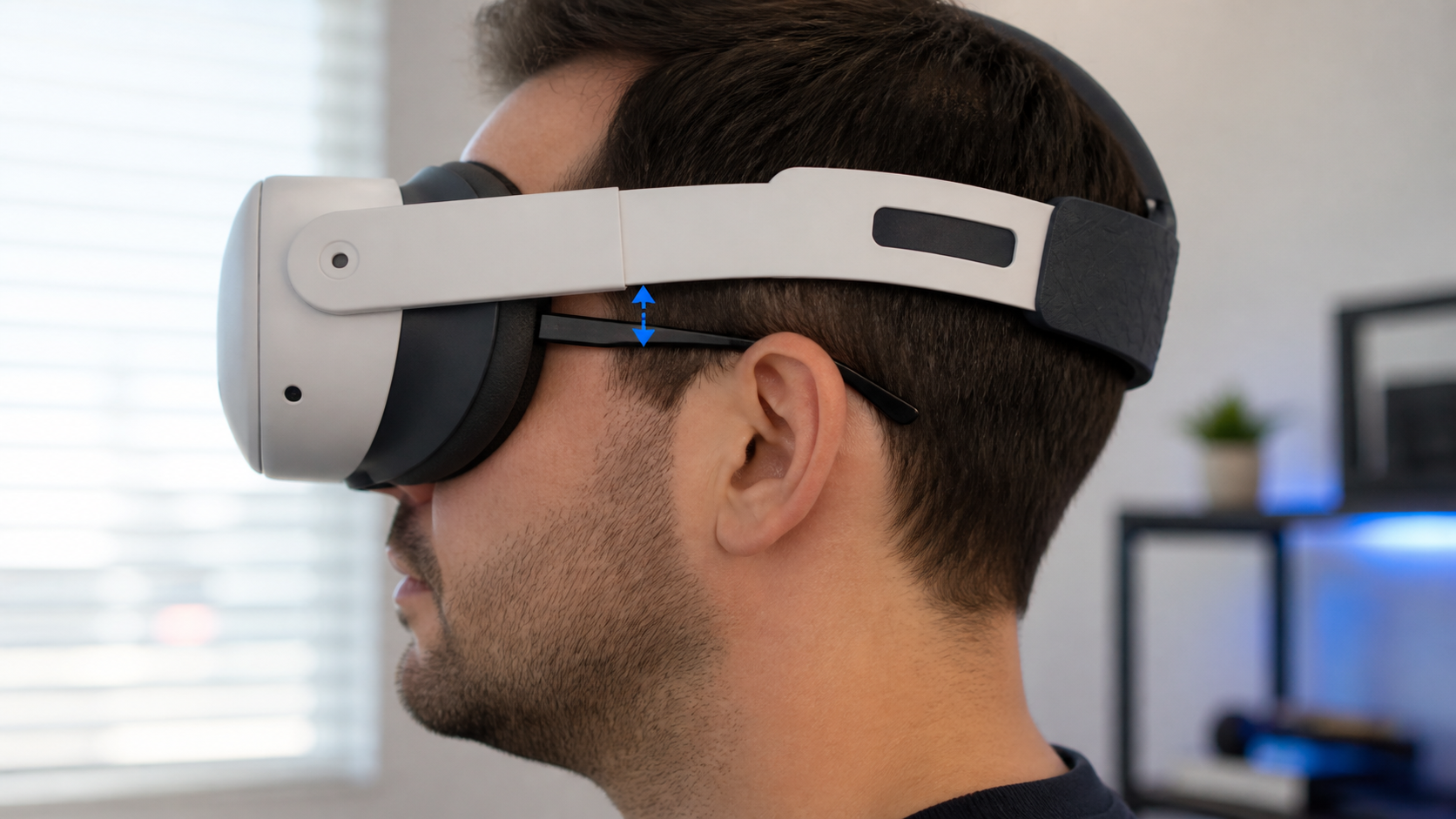
As a lifelong glasses wearer, I've learned to be skeptical of any "one-size-fits-all" claims, especially with head-worn tech. The wrong pressure from a headset strap can turn an immersive VR session into a headache-inducing nightmare. The arms of my glasses get pressed into the side of my head, and it becomes painful very quickly. That's why I always hunt for real-world photos from users, not just polished marketing shots. A simple side-profile picture is worth a thousand words of marketing copy. It immediately answers my biggest questions: Does the strap sit above my glasses? Does it leave enough room so the arms aren't being crushed against my skull? When I was looking at this silicone strap, seeing that side-view photo was the moment I decided to give it a try. It clearly showed how the strap's shape was designed to curve up and over the ear, leaving a gap where my glasses arms sit. This visual proof is far more convincing than a bullet point list of features. It shows the designer actually thought about glasses users, which builds a lot of trust.
Does cloth strap pressure appear immediately or only after the player relaxes into the session?
Your headset feels fine at first. Then, 20 minutes into a game, a dull ache starts. This delayed pressure can ruin long VR sessions before you realize it.
The pressure is not immediate. For me, the focused pain from the standard cloth strap only becomes noticeable after about 15-20 minutes. That's when I'm deep into a game and my body has relaxed, allowing the pressure points to settle in.
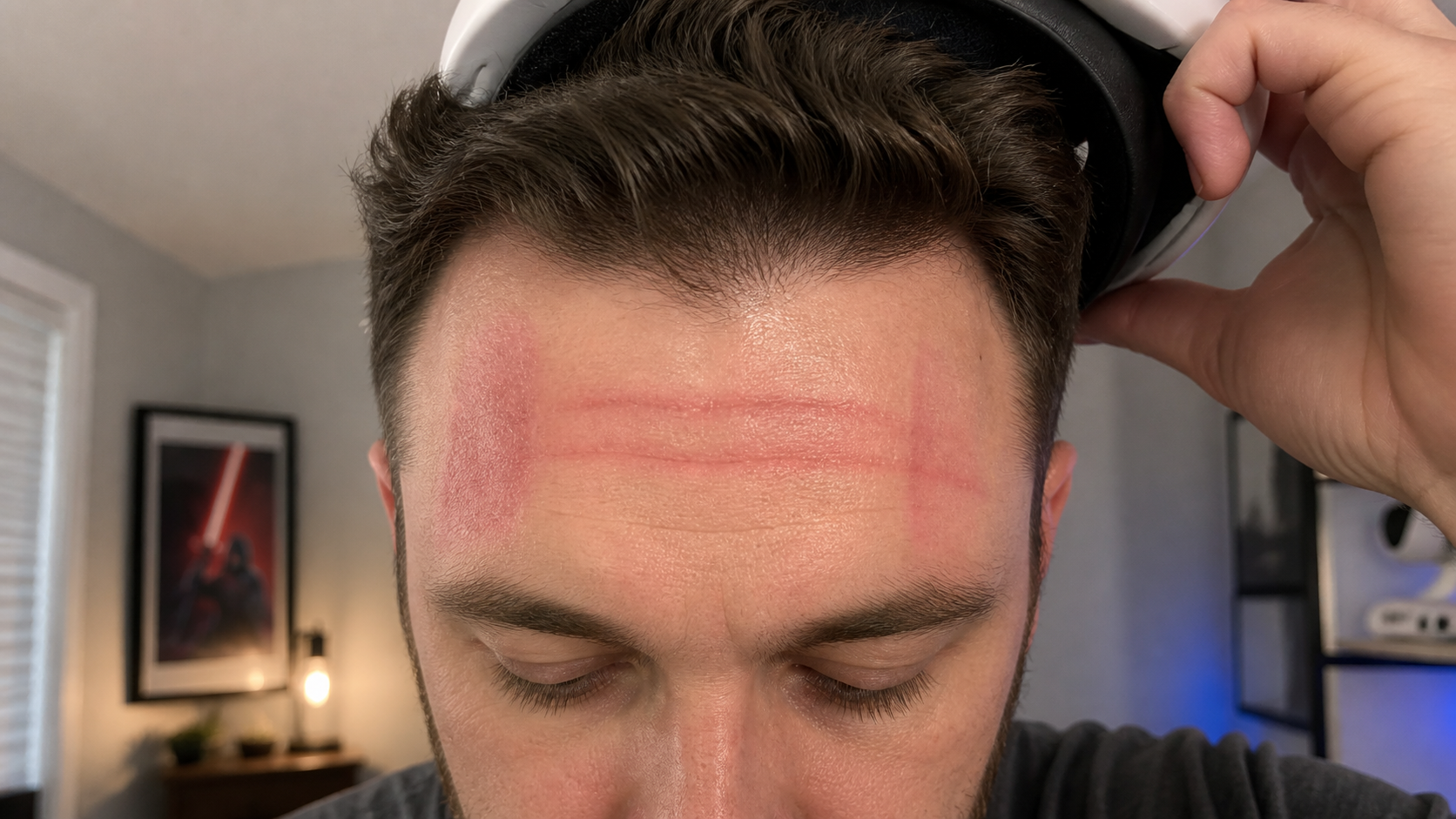
It's a strange feeling. When I first put on the Quest 3S with its default cloth strap, it feels okay. I tighten it, get the focus right, and jump into Beat Saber. For the first few songs, I don't notice anything wrong. I'm focused on the flying blocks and the music. But then, somewhere around the 20-minute mark, my awareness shifts. I start to notice a concentrated pressure on my forehead and a digging sensation at the back of my head where the strap cups it. It’s a slow creep. You don't realize it's happening until it's already uncomfortable. Once the session is over and I take the headset off, the proof is in the mirror: bright red marks on my skin. This is where the silicone strap made a noticeable difference. Because it provides more grip, I don't have to tighten the straps as much to keep the headset stable. The wider, softer silicone surface at the back also distributes that rear pressure over a larger area. After a long session, I still have faint marks, but they're not the deep, painful-looking lines I got from the cloth strap alone.
After testing Beat Saber sessions on Meta Quest 3S, should large-head users buy Silicone Head Strap for Meta Quest for cloth strap pressure or skip it?
Have a large head and a slipping headset? You're tired of accessories that don't work. You need a clear yes or no on if this strap is for you.
Large-head users should buy it if their main problem is the headset sliding down during active games like Beat Saber. It's a great, cheap stability fix. However, skip it if you want to eliminate all facial pressure; you'll need a premium halo strap for that.
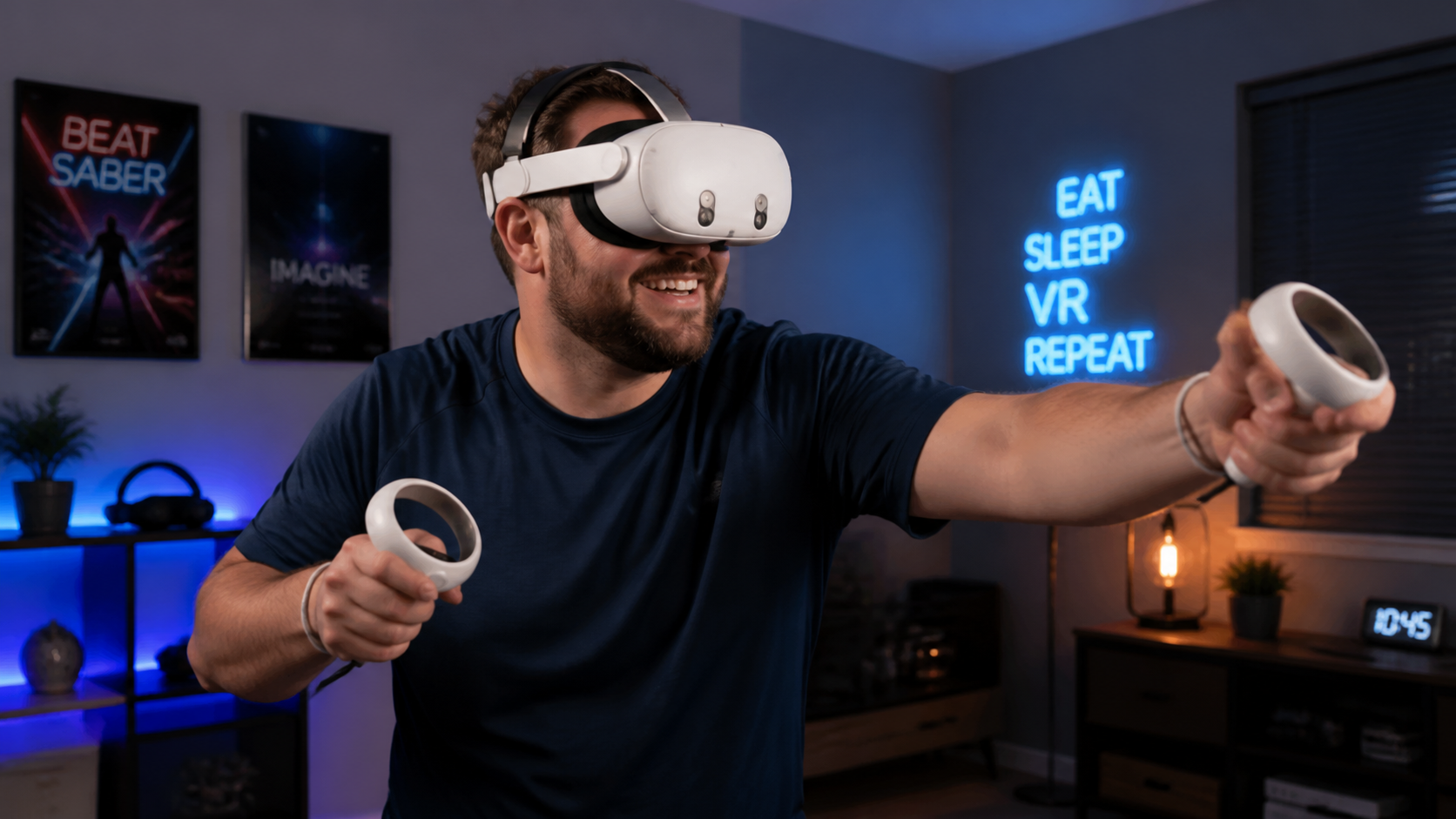
After spending several hours in Beat Saber with this silicone strap, I have a very clear verdict for my fellow large-headed VR players. This accessory is a problem-solver, but it's not a miracle worker. Let me explain where it shines and where it falls short. It was incredibly helpful for stability. Before, the headset would droop during intense songs, blurring my vision and forcing me to pause. With the silicone strap, the headset stays firmly in place. This alone made my gameplay feel more immersive and less frustrating. The pressure distribution on the back of my head was also an improvement. On the other hand, it was occasionally annoying. The silicone material grips my hair more than the cloth, so I have to be more careful when putting it on and taking it off to avoid pulling strands. It doesn't magically make the headset feel lighter or remove all the pressure from my face—that's the job of a much more expensive counter-balanced halo strap. So, here’s my final take: if you’re like me and your biggest complaint is the headset slipping and creating focused pressure points, buy this. It's an affordable and effective fix. But if your main goal is ultimate comfort and getting the weight off your cheeks, you should save your money and invest in a full halo-style replacement strap.
Conclusion
This silicone strap is a fantastic budget upgrade for stability in active games. It won't give you premium comfort, but it will stop your headset from slipping.
Leave a comment