



Why does kids' play feel worse when haptic feel shows up, and can a VR Sword help?

You get a VR Sword for your kids, hoping for more fun. Instead, you hear complaints about a weird buzzing feeling. Now you wonder if you made the game worse.
The worse haptic feel comes from how the VR Sword handle dampens and changes the vibration from the Quest Pro Touch Controllers. This effect is more noticeable during chaotic kids' play, where unexpected contact and controller feedback are common, especially when attaching and removing the accessory.
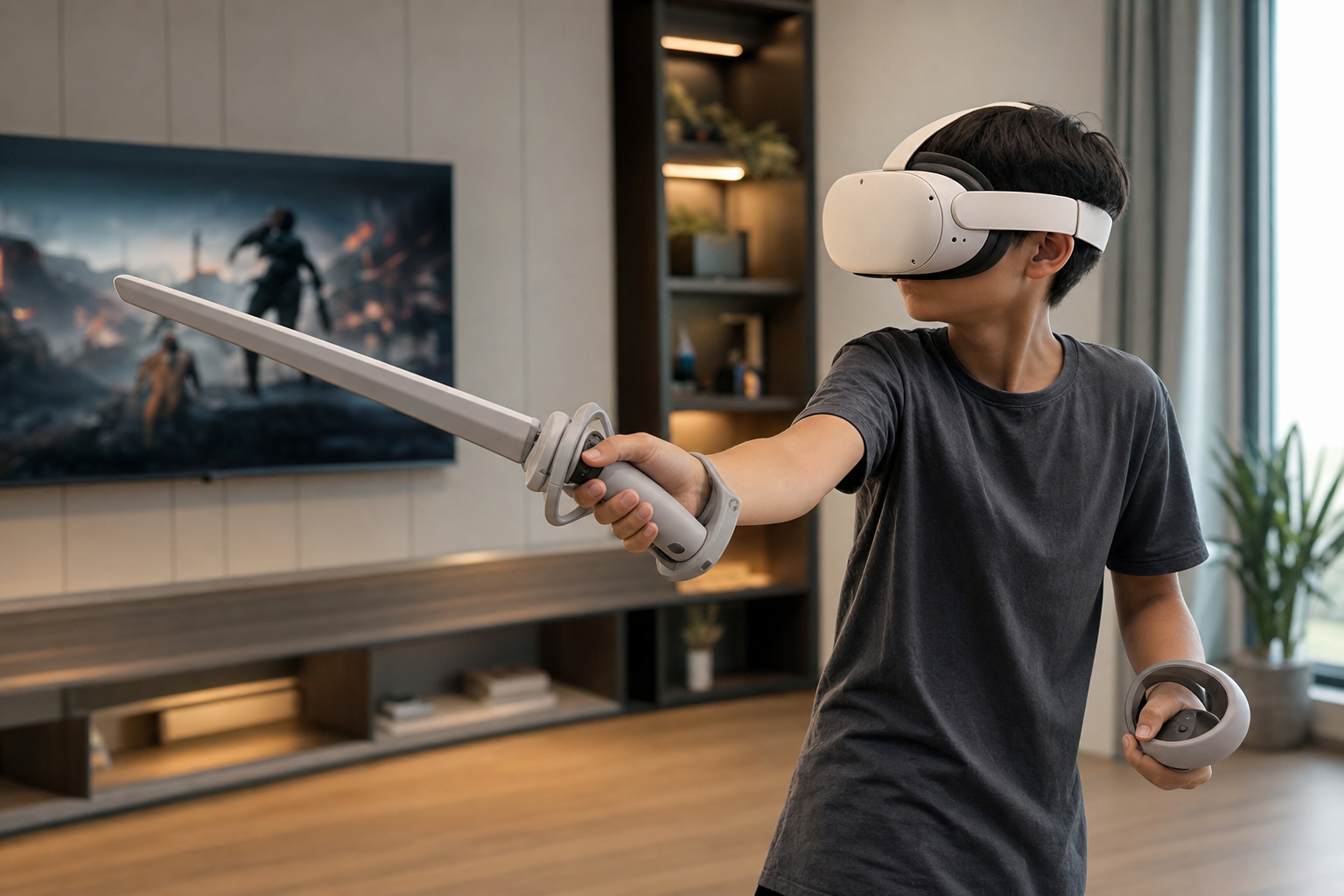
I was excited to get the VR Sword attachment for our Quest Pro controllers. My kids love games like Beat Saber, and I thought a real sword handle would make it cooler. But the first thing they said was, "It feels buzzy and weird." I thought they were just being picky. But then I tried it myself. The haptic feedback felt... off. It wasn't the clean, sharp feedback I was used to from the Quest Pro controllers. It was a dull, spread-out vibration that felt cheap. This discovery led me down a rabbit hole. I needed to figure out if this was a problem with the accessory, the high-end controllers, or just how kids play VR games. The answer was more complex than I expected and revealed a lot about what makes a VR accessory truly great or just a gimmick.
Does haptic feel come from VR Sword, Quest Pro Touch Controllers, or the way kids' play is played?
Do you notice a strange, weak vibration when using a VR accessory? It can ruin the immersion and make a fun game feel cheap, leaving you wondering what went wrong.
The poor haptic feel is a combination of all three. The Quest Pro controllers provide strong feedback, the VR Sword handle dampens it, and the unpredictable nature of kids' play makes you notice these strange vibrations more, especially during setup and removal of the controller.
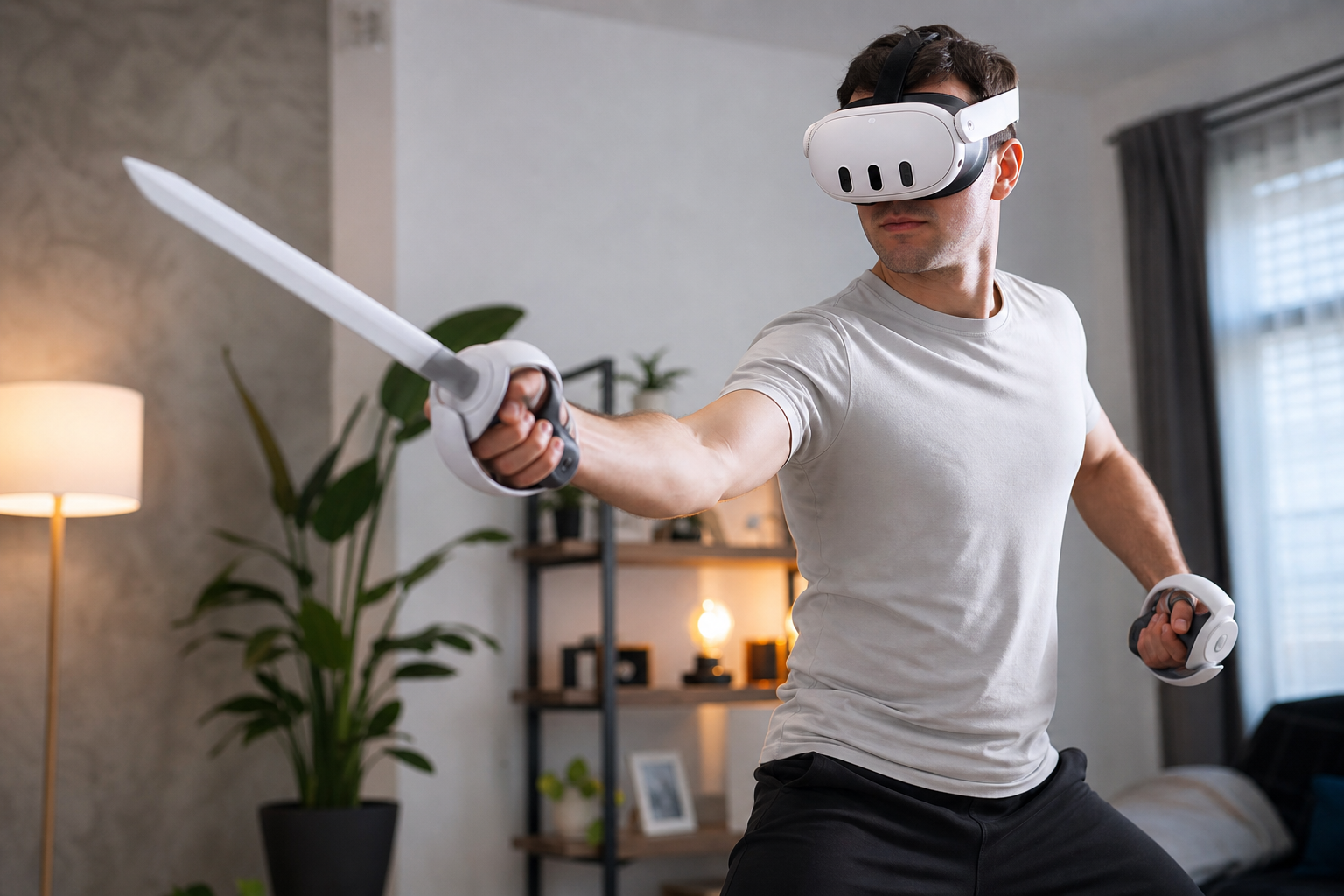
When I started testing, I tried to isolate the problem. The Quest Pro controllers on their own are fantastic. The haptics are precise. You can feel the soft thump of hitting a block in Beat Saber perfectly. But as soon as I put the controller inside the VR Sword handle, that feeling changed. The plastic handle acts as a buffer. It absorbs some of the vibration and spreads the rest out. So, the sharp feedback becomes a dull buzz. This is made worse because of the setup process. Getting the controller in and out of the grip sometimes triggers the haptics, and you feel that dampened vibration right away, which creates a bad first impression. Then, during kids' play, which is often full of fast, wild swings, the controller might shift slightly inside the handle, changing how the vibration transfers and making it feel inconsistent.
Haptic Feedback Source Breakdown
Here is a simple breakdown of how each part adds to the problem.
| Component | Haptic Contribution | How It Feels |
|---|---|---|
| Quest Pro Controller | Generates strong, precise haptic feedback. | Sharp, clean, and localized. You feel exactly where the action is. |
| VR Sword Handle | Dampens and disperses the controller's vibration through its plastic body. | Dull, buzzy, and spread out. The feedback feels weak and indirect. |
| Kids' Play Style | Wild swings and unpredictable movements can cause the controller to shift in the handle. | Inconsistent and annoying. The feedback changes from moment to moment. |
Does Beat Saber angle control versus sword-like feel matter more than haptic feel for Beat Saber players?
You want to improve your Beat Saber game, but the new sword accessory just made your scores worse. You feel the cool sword-like grip but can't hit the blocks right.
For serious Beat Saber players, precise angle control from the wrist is far more important than a sword-like feel or haptic feedback. The added weight and different grip of the VR Sword can interfere with the quick, precise movements needed for high scores, making it a disadvantage.
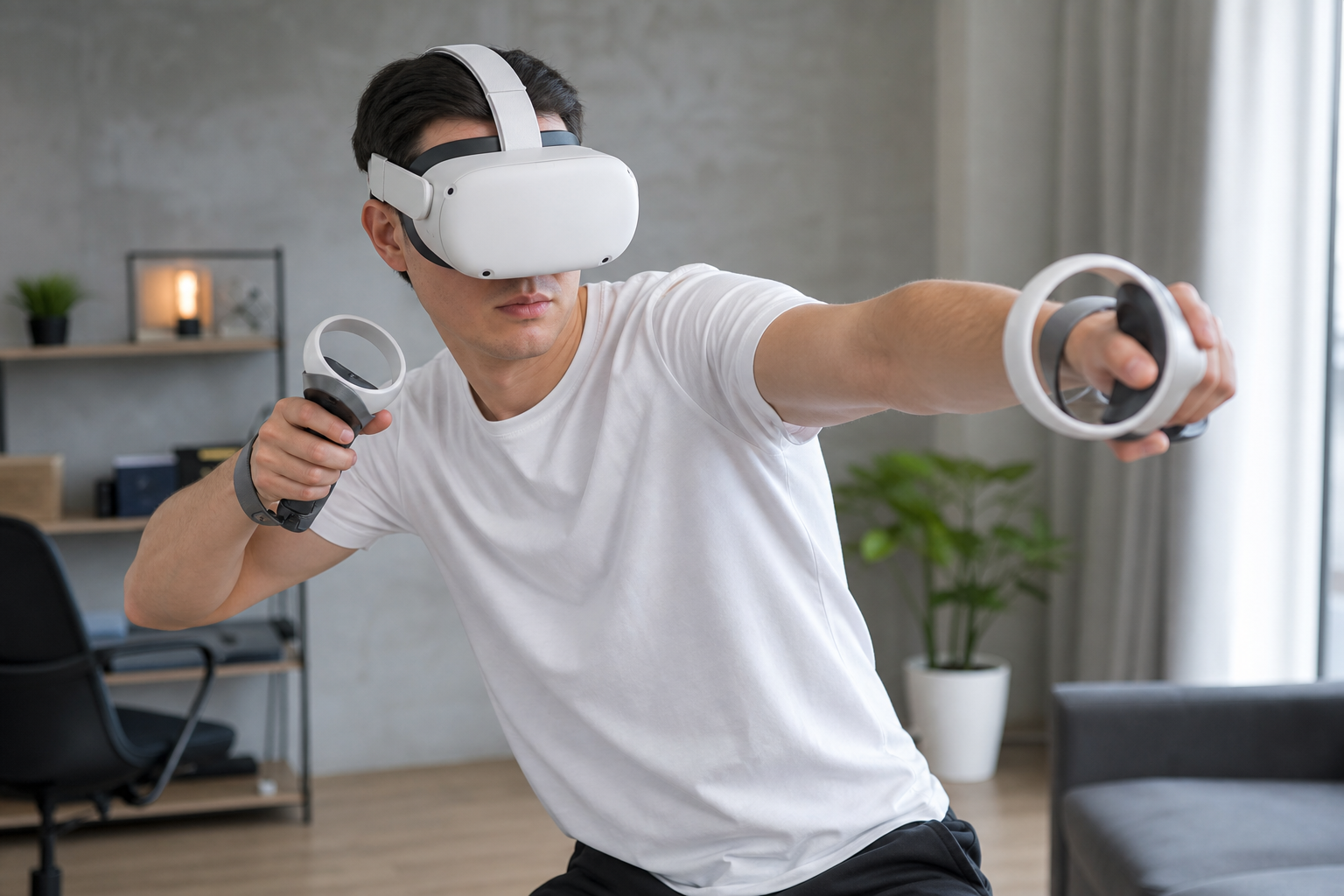
I am a regular Beat Saber player, and I can pass most songs on Expert. For me, the game is all about muscle memory and tiny wrist flicks. The standard Quest Pro controller is light and balanced, which allows for that speed and precision. The VR Sword attachment completely changes the dynamic. It adds weight and extends the length, shifting the center of balance away from my hand. This forced me to use more of my arm instead of my wrist. My swings became slower and less accurate. While holding a "sword" felt immersive for a few minutes, that novelty wore off as soon as I saw my score drop and my combo break. The dampened haptics were a secondary annoyance. The real problem was that the accessory fought against the very skills needed to play the game well. It's designed for the feeling of holding a sword, not for the mechanics of playing Beat Saber at a high level.
Is the biggest issue setup, fit, safety, or fatigue?
You're excited about your new VR accessory, but it's just sitting in a drawer. The hassle of using it is more than the fun it provides, and your wrist hurts afterward.
The biggest issues are setup and fatigue. The initial frustration of getting the controller to fit securely is a major barrier. Once in the game, the added weight and awkward balance cause noticeable wrist fatigue, especially during longer play sessions, overshadowing any other concerns.
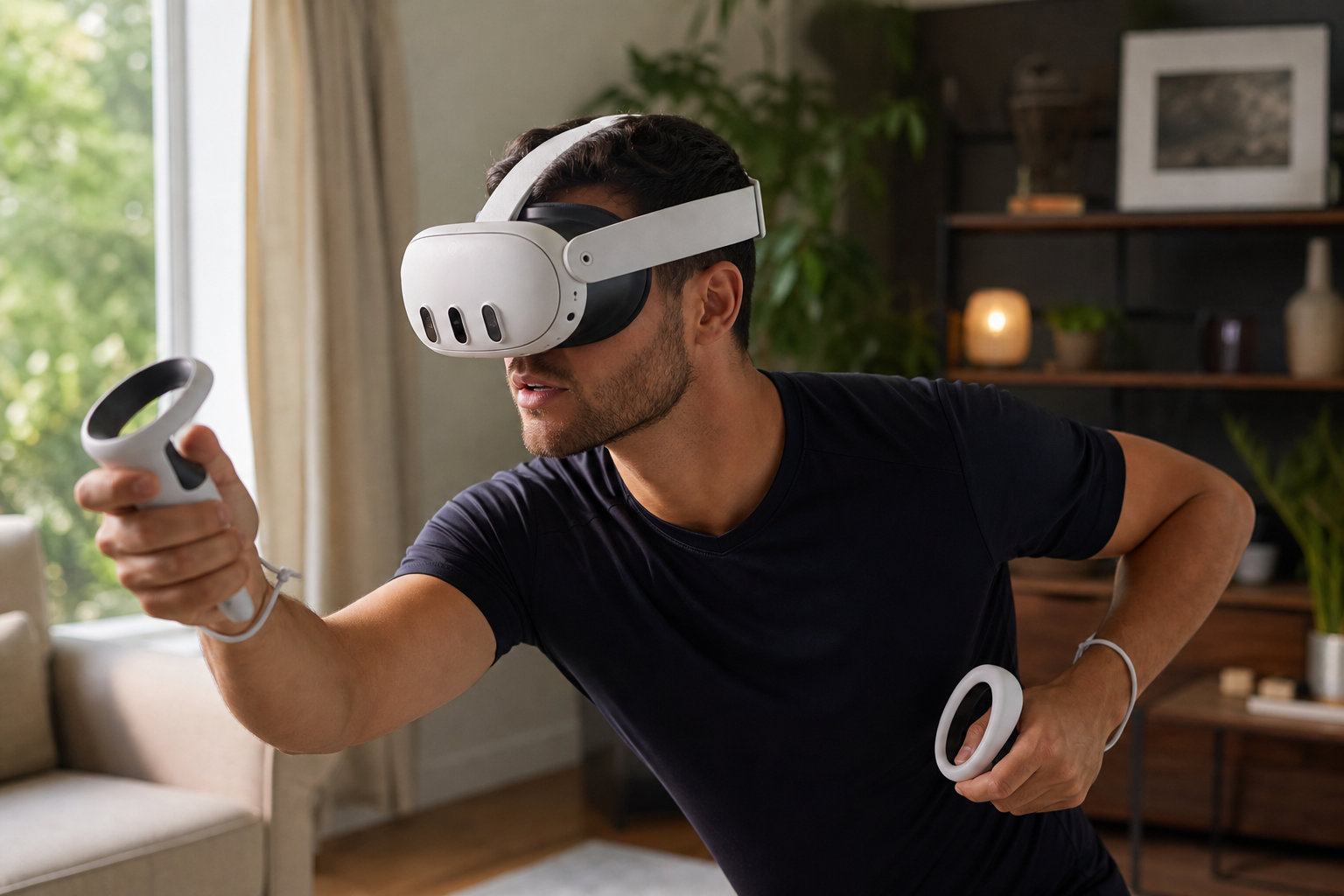
My experience proved this point clearly. The first time I tried to put the Quest Pro controller into the VR Sword, it took a few minutes of careful alignment. It wasn't a quick click-and-go system. That initial patience wears thin, especially when kids just want to jump into a game. Safety was a minor concern; the handle has a wrist strap, which is good. But the real killer was fatigue. I decided to play a full round of the song "crystallized" on Expert+, a track that's almost four minutes long and very demanding. With a standard controller, my arm gets tired. With the VR Sword, my wrist was aching before the song was even halfway over. The extra weight at the end of the lever puts a lot of strain on the wrist joint. This isn't just about comfort; it directly impacts performance and how long you can play. The setup is the gatekeeper, but fatigue is the reason you won't come back.
Does VR Sword deserve a buy, maybe, or skip verdict for kids' play when haptic feel is the issue?
You want to buy a fun accessory for your kids' VR games, but you're worried it will be a waste of money if the haptics and setup are frustrating.
It's a "Maybe." For casual kids who want immersion and are playing games that are not score-focused, it can be fun. But if your kids are impatient with setup or are serious Beat Saber players, the dampened haptics and wrist fatigue make it a definite "Skip."
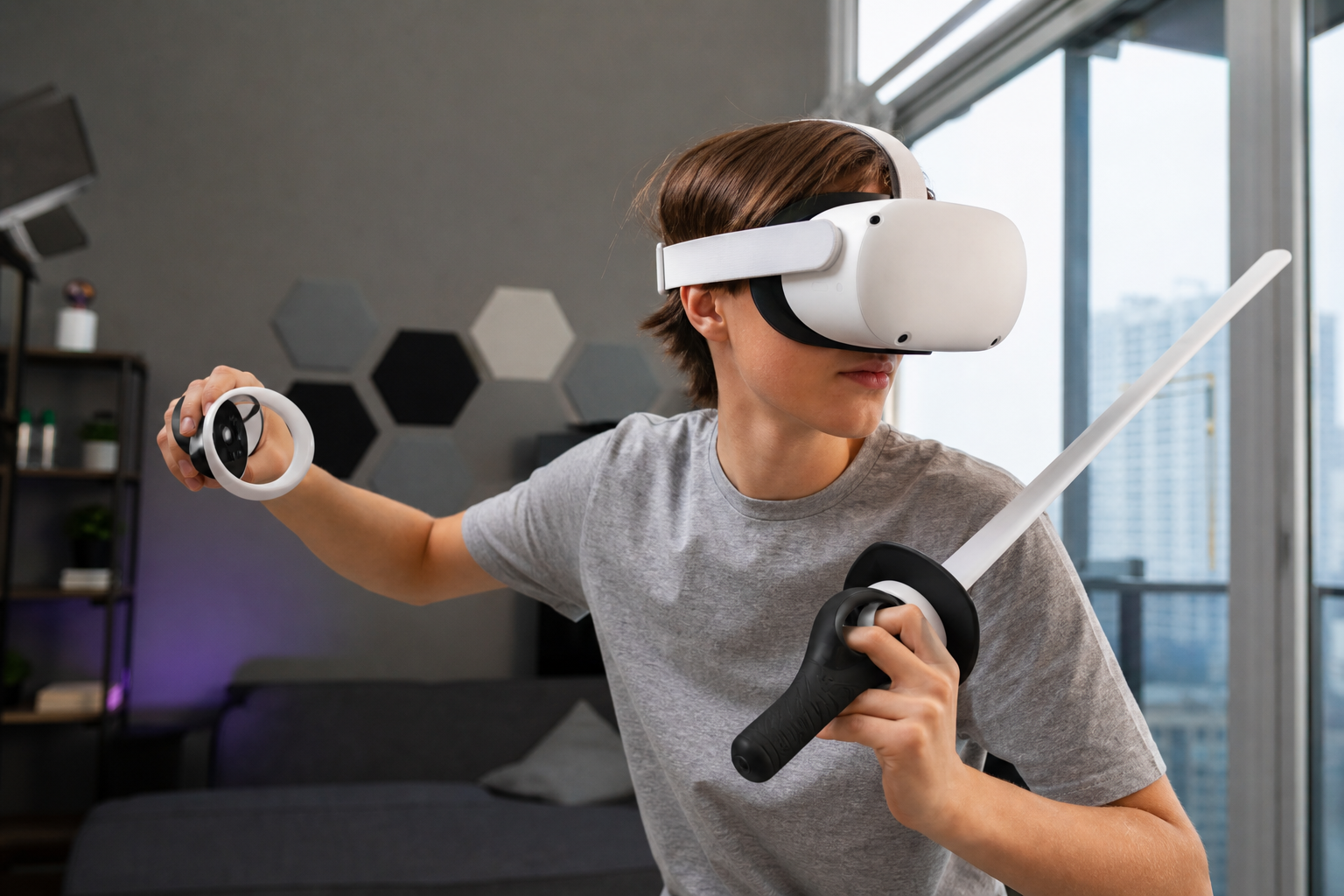
After all my testing, my verdict is split. I handed the VR Sword back to my younger kid, who mostly plays casual games and loves pretending. For him, the "sword" feel was more important than anything else. He didn't care about the haptics or his score. He was just having fun swinging a sword in a fantasy world. In that context, the accessory is a success. It's a "Buy" if the goal is pure imaginative play. However, for my older child who is competitive about his Beat Saber scores, it was a "Skip." The frustration of lower scores and the annoying buzzing feel outweighed the cool factor. He used it once and went right back to the standard controller. So, the final decision depends entirely on the user. If haptic feel, setup patience, and performance matter, skip it. If it's just a fun prop for casual play, it might be worth a look.
Conclusion
The VR Sword is a fun toy for immersion but creates real issues with haptics, setup, and fatigue. It's a "maybe" for casual kids but a "skip" for serious gamers.
Leave a comment