



When does a VR Sword stop feeling helpful in fitness sword workouts for Melee Fans?

You love the idea of a VR sword for your fitness workouts. But attaching a big accessory for a quick game feels like a hassle. I tested one to see when it's helpful and when it's just annoying.
A VR sword stops being helpful when the setup and removal time is longer than the immersion benefit. This happens in short play sessions, with shared headsets, or in small spaces. The tedious process of assembly and storage makes it a chore rather than a fun upgrade.
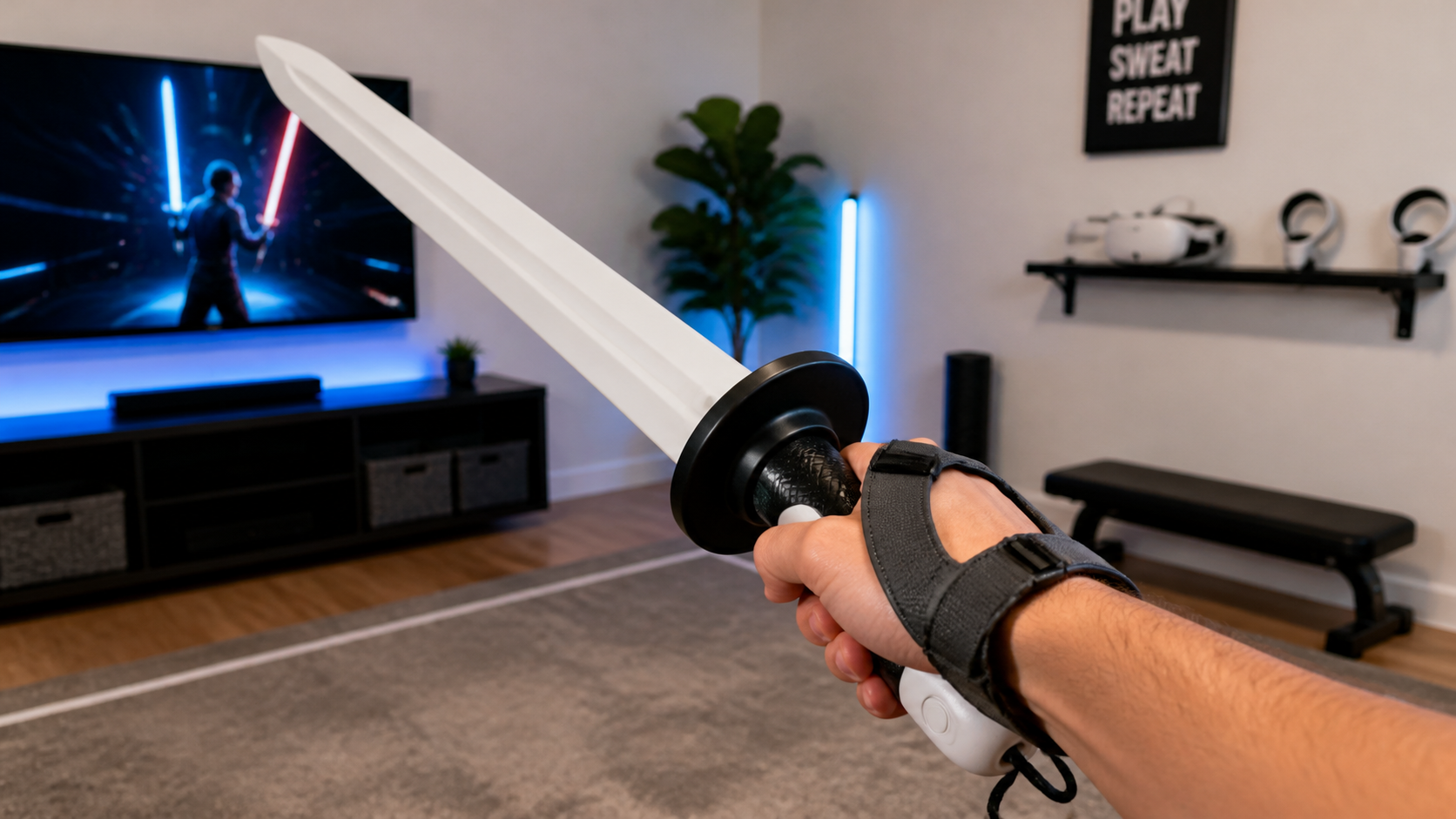
I’m a big fan of melee games in VR. Games like Until You Fall and Beat Saber are a core part of my fitness routine. So, I was excited to try a VR sword accessory. I thought it would make my workouts more immersive and fun. The idea of feeling a real hilt and blade weight was very appealing. But after using it for a few weeks, I found that the experience wasn't always better. The accessory was great in some situations, but it became a real problem in others. This isn't a simple "good or bad" review. It's a look at my real experience to help you decide if a VR sword fits your play style, because for many people, it just won't be worth the trouble.
In a shared headset, does VR Sword create a different storage and travel problem after fitness sword workouts?
Sharing a VR headset with family is common. But adding a big sword attachment for one person creates a new problem for everyone else. It quickly becomes a storage and swapping headache.
Yes, a VR sword causes major storage issues for a shared headset. You have to remove it after every use, which makes switching between players slow and annoying. The long attachment won't fit in a standard case, so you need a separate, awkward place to keep it.
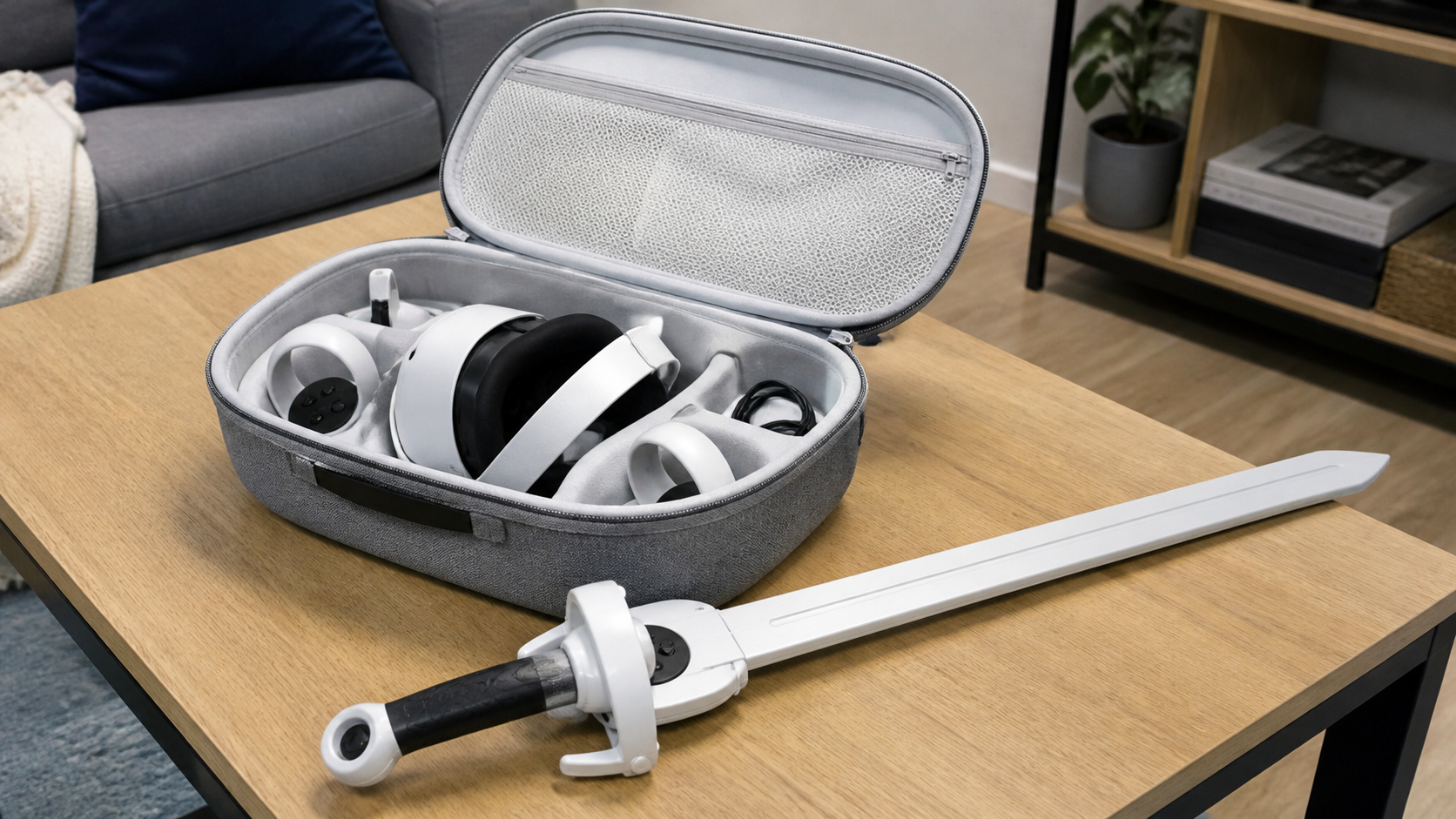
My partner and I both use the same Meta Quest 3. I love sword games, but she prefers puzzle games. The first time I used the sword attachment, I finished my workout and left it on the controller. When she went to play later, she couldn't. She had to figure out how to take the attachment off. It wasn't hard, but it was an extra step that broke her flow. After that, I had to take it off every single time. This small task started to feel like a chore. It made me less likely to use the sword for a quick 15-minute session. The problem got worse when we tried to pack the headset for a trip. The sword just didn't fit in our carrying case. I had to carry it separately, which was clumsy.
The Daily Hassle of Attachments
The main issue is the time and effort it takes to switch between a setup with the sword and one without. It adds friction to what should be a simple process.
| Aspect | Standard Controller Setup | VR Sword Setup |
|---|---|---|
| Storage Method | Fits in any standard VR case | Requires separate storage, won't fit in case |
| Player Swap Time | Instant (just hand over the headset) | 1-2 minutes (unscrew, detach, store accessory) |
| Travel Friendliness | Very high, compact and protected | Low, bulky and awkward to pack |
What would a real VR Sword test in fitness sword workouts on Meta Quest 3 reveal about storage and travel?
You imagine swinging a cool sword in VR. But the reality of setting it up and putting it away after a single song can ruin the fun. I tested this exact scenario.
A real test shows that a VR sword is not practical for quick, repeatable fitness workouts. The time spent attaching, detaching, and storing the long blade makes spontaneous sessions feel tedious. It is especially annoying when you have limited space or want to take your headset with you.
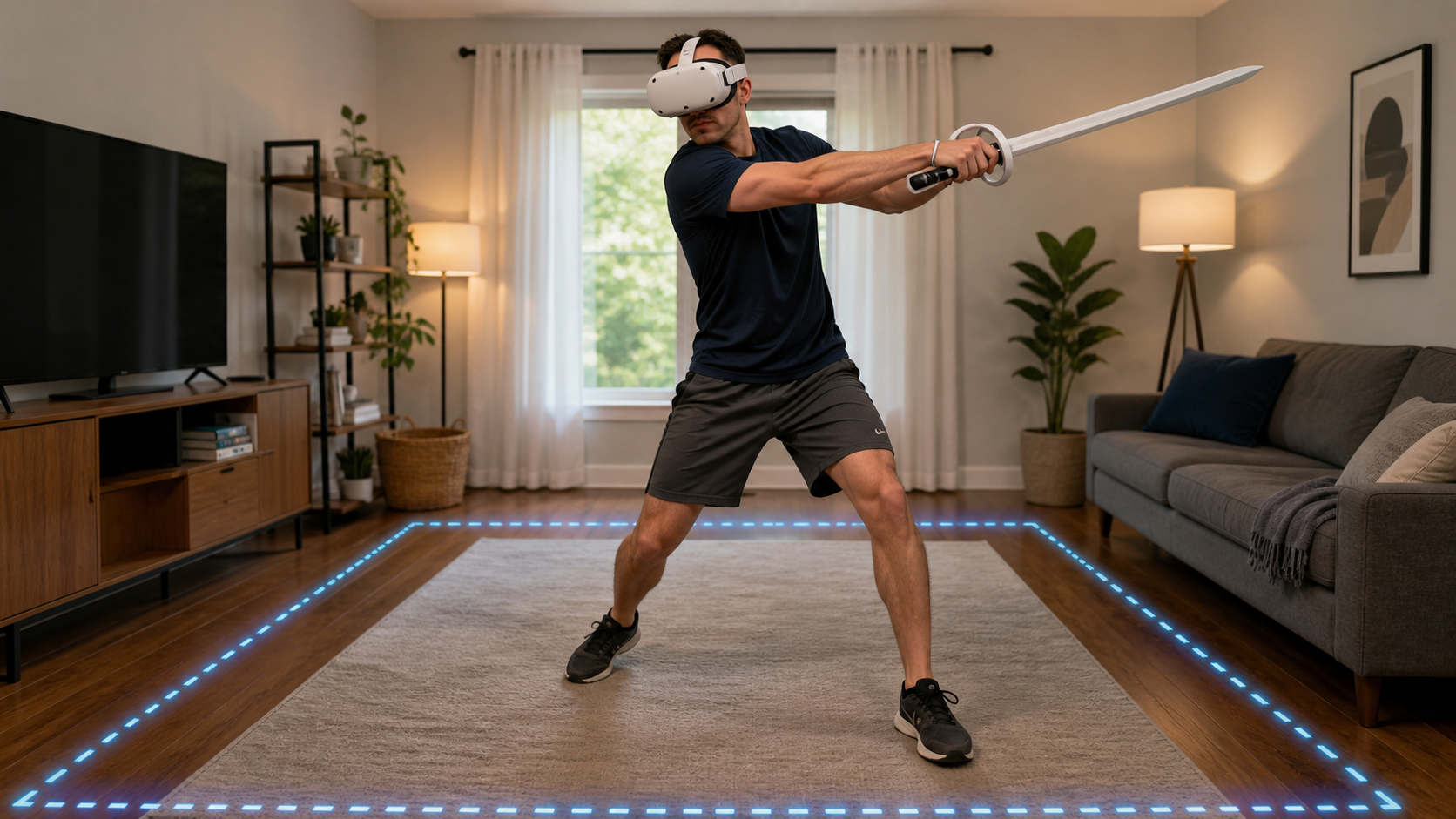
I decided to run a simple test. I played one intense round in a sword fighting arena. First, I played with the standard Meta Quest 3 controllers. It was fun and I got a good workout. I finished, put the controllers down, and was done. The whole process was seamless. Then, I tried the same thing with the VR sword accessory. I spent about a minute getting the controller secured inside the hilt and making sure it was tight. The round itself felt amazing. The weight and length made my swings feel more powerful and realistic. But as soon as the round ended, I faced the teardown process. I had to unscrew the attachment, pull the controller out, and then find a place to put the long blade. For one five-minute round, I spent almost two minutes on setup and teardown. This ratio felt completely wrong. For a beginner, the cool factor might hide this problem. But as an experienced player who just wants a quick and effective workout, the friction was a dealbreaker for short sessions. It made me realize the sword is only for long, dedicated playtimes.
Is the pain caused by the game, the controller shape, or the accessory fit?
Your hand starts to hurt after a long VR sword session. You wonder if it's the game, the controller, or this new accessory you added. I looked closely to find the source.
The pain is usually from the accessory's fit and weight distribution. While intense games cause fatigue, the sword attachment adds new stress. It changes the balance point and can create pressure points on your hand, straining your wrist and palm in ways the bare controller does not.
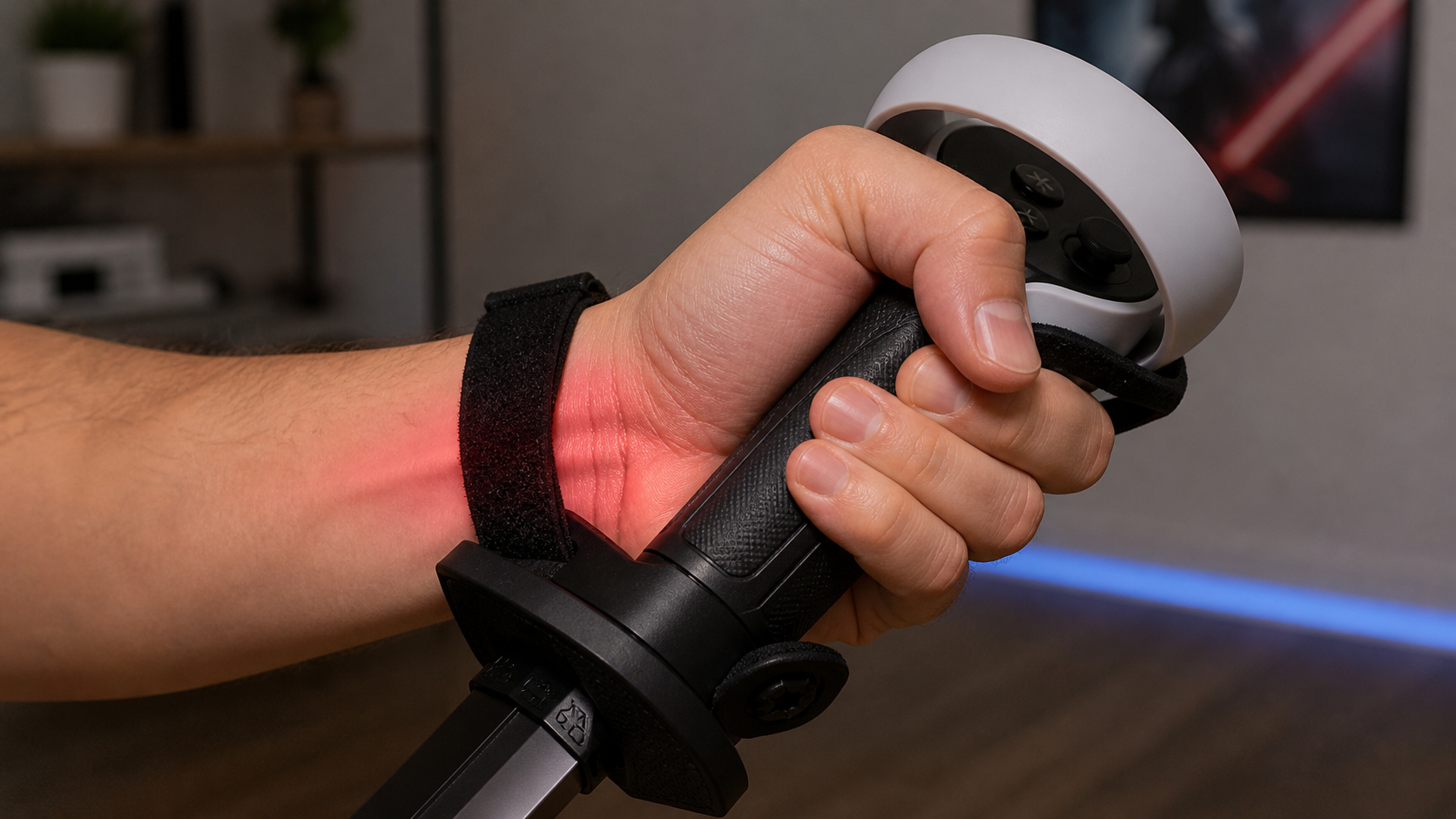
I started feeling a dull ache in my wrist and the palm of my hand after a 30-minute workout. At first, I thought I was just swinging too hard. But I played the next day with just the controller and felt no pain. The difference was the accessory. The standard Quest 3 controller is light and balanced. Your hand grips it centrally. The sword attachment adds a long blade that shifts the center of gravity far forward. This creates leverage that puts constant strain on your wrist to keep the "blade" up. Also, the plastic hilt I was using had a different shape than the controller. It forced my hand into a slightly different grip, and I could feel a hard edge pressing into my palm during fast swings. So while the game's intensity is a factor, the accessory was the direct cause of this new, specific type of pain. It wasn't designed with the same ergonomic research as the controller itself, and my hand paid the price. It's a trade-off: you get more immersion, but you might also get more discomfort.
Who should avoid this VR Sword setup even if it looks useful for fitness sword workouts on Meta Quest 3?
A VR sword looks like the perfect upgrade for any melee fan. But it can be a frustrating waste of money for certain types of players. Here is who I think should skip it.
You should avoid a VR sword if you have a small play area, share your headset, or prefer short workout sessions. The hassles of storage, setup, and space requirements will outweigh the immersion benefits. People with sensitive wrists should also be careful due to the added strain.
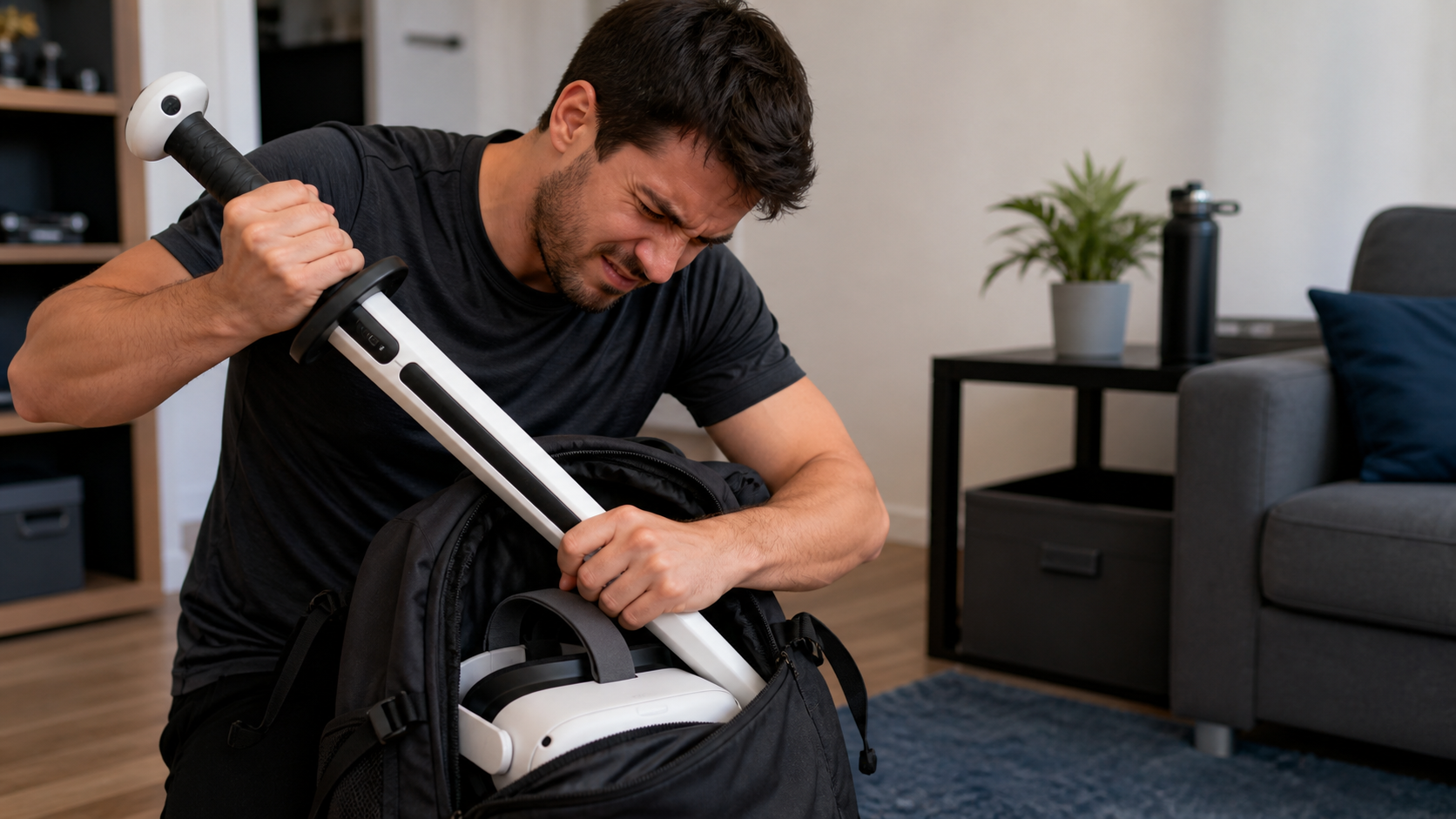
Based on my experience, this accessory is not for everyone. If you fit into one of these groups, I would think twice before buying one. First is the player with a small room. The blade extends your reach significantly. I almost hit my desk and a lamp several times before I got used to it. You need a lot of clear space to swing freely and safely. Second is anyone in a family or household that shares the headset. The constant need to attach and detach the accessory for different players is a real pain. It discourages spontaneous play for everyone. Third is the quick-session fitness user. If you play for just 15-20 minutes at a time, the setup and teardown will feel like a waste of your limited workout time. Finally, if you travel with your Quest, leave the sword at home. It’s bulky, awkward, and doesn't fit in any normal case. This accessory is best for a solo player with a dedicated VR space who enjoys long, immersive gaming sessions. For everyone else, the standard controller is more practical.
Conclusion
The VR sword is immersive for long, dedicated sessions. But it creates real problems with storage, setup, and comfort. It's best for solo players with lots of space, not for casual or shared use.
Leave a comment