



When does a VR Sword stop feeling helpful in fitness sword workouts?

A VR sword attachment looks cool, but is it just a gimmick? I tested one during my fitness workouts to see if the added weight and hassle were actually worth it.
A VR sword stops being helpful when the extra weight causes wrist fatigue before your workout ends. It also becomes a burden if the setup and removal process feels tedious, especially on a shared headset where cleaning becomes a chore between users, discouraging you from even starting a session.
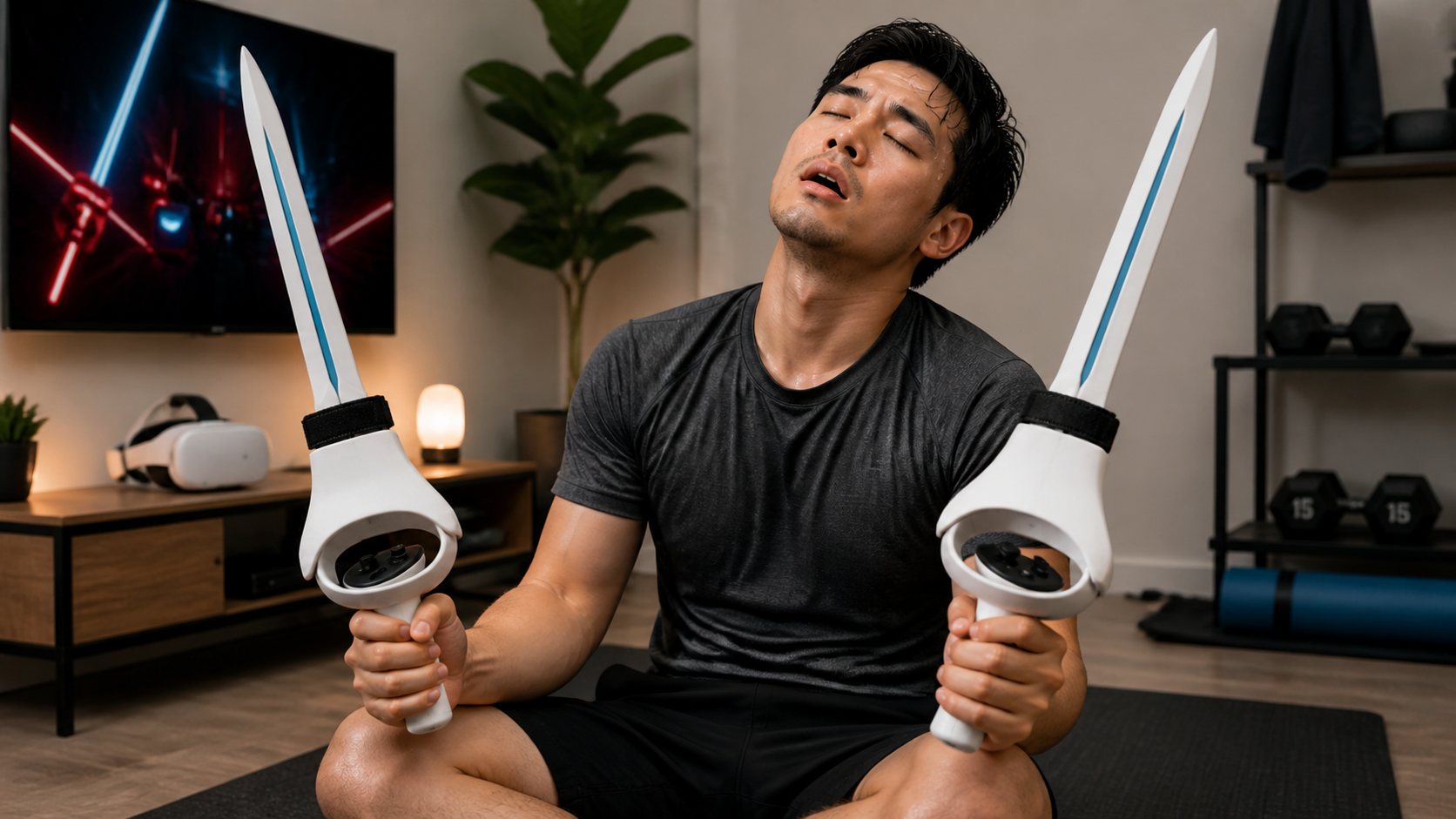
The promise of feeling like a real sword master in a VR fitness game is powerful. It feels like it should make the workout more immersive and maybe even more effective. But I learned that once you bring an accessory like this into a real home, with real-world problems like sharing, cleaning, and just feeling tired, the cool factor fades fast. The moment an accessory adds more work than fun, it starts gathering dust. I wanted to find that exact tipping point. For me, it all started with the simple act of sharing the headset with my roommate. That's when the first cracks in the experience started to show.
In a shared headset, does VR Sword create a different wrist fatigue problem after fitness sword workouts?
Sharing a VR headset is already a bit of a hassle. Adding a sweaty sword handle to the mix makes it even worse. I found it created a whole new problem.
Yes, in a shared headset, a VR Sword creates a "hygiene fatigue" problem. The hassle of removing the controller, cleaning the sword handle, and reattaching it for the next person adds mental work and discourages use. This is a separate issue from the physical wrist strain during gameplay.
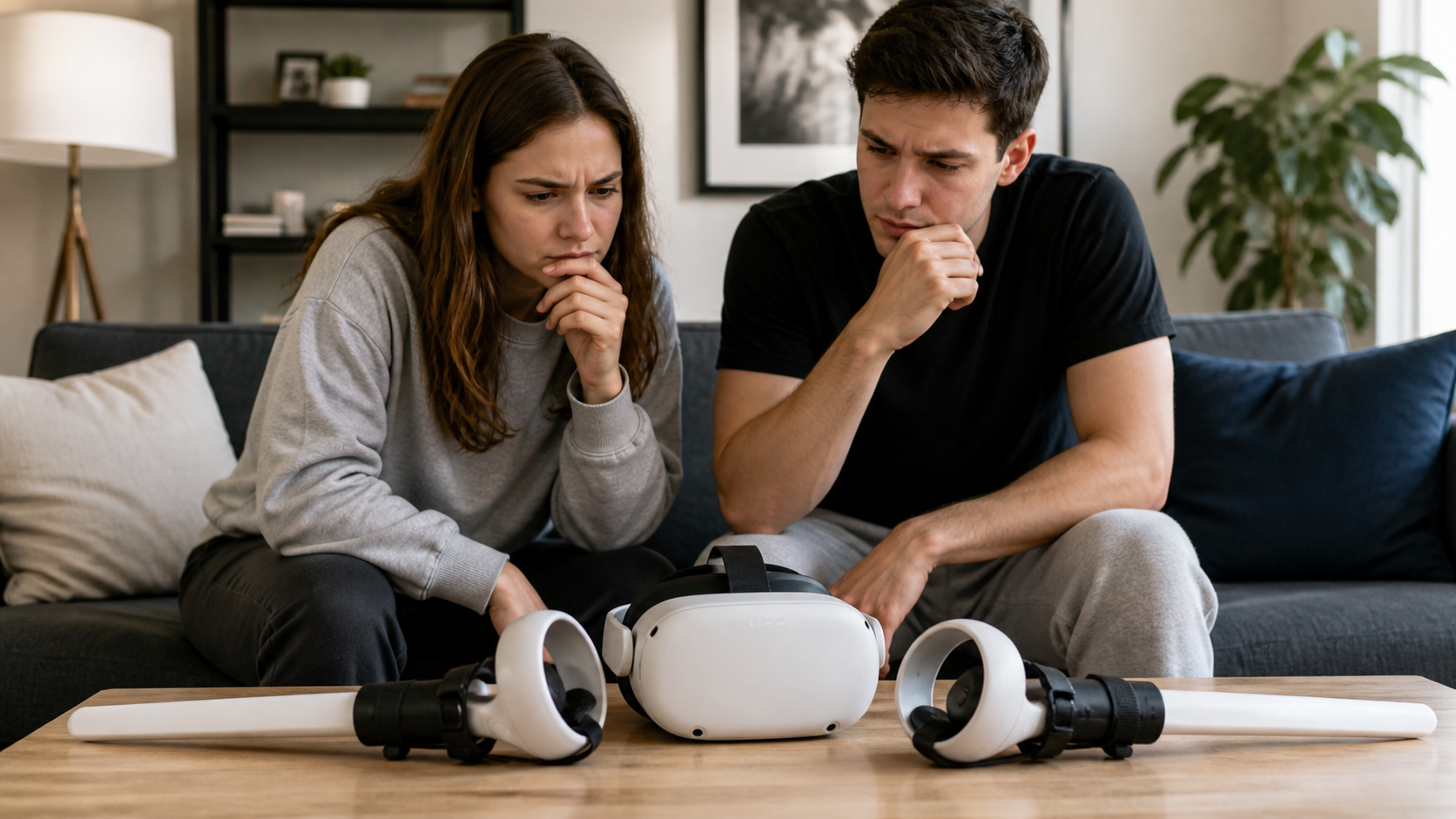
My own experience with this was pretty clear. After a 30-minute session of Supernatural, the grip on the sword handle was damp with sweat. My roommate was waiting to play next. Normally, I would just wipe down the headset's facial interface and the controllers. But now, I had a new multi-step process. I had to unstrap the Velcro, pry open the plastic casing, pull the controller out, wipe down both the controller and the inside of the sword handle, and then leave the pieces out for him. He then had to reverse the process. This added friction made me dread the end of my session. It wasn't physical fatigue, but a kind of mental exhaustion from the extra chores.
The Added Steps of Sharing
The extra work is easy to see when you break it down. It turns a simple handoff into a small project.
| Task | Without VR Sword | With VR Sword |
|---|---|---|
| End of Session | Set controllers down. | Dismantle sword from controller. |
| Cleaning | Wipe controller grips. | Wipe controller and sword handle separately. |
| Next Player Setup | Pick up controllers. | Re-assemble sword and controller. |
| Mental Effort | Low | High (annoying and tedious). |
This "hygiene fatigue" made me less likely to use the sword for shorter workouts. It just wasn't worth the setup and cleanup time.
What would a real VR Sword test in fitness sword workouts on Meta Quest 2 reveal about wrist fatigue?
You buy a weighted accessory to improve your workout. But I worried it might just be a fast track to an injury instead of a better fitness result. So I tested it myself.
A real test reveals that wrist fatigue from a VR Sword appears much faster in games with quick, repetitive flicks like Beat Saber. It's less of a problem in games with slower, deliberate swings. The handle acts as a lever, amplifying strain on the wrist during high-speed movements.
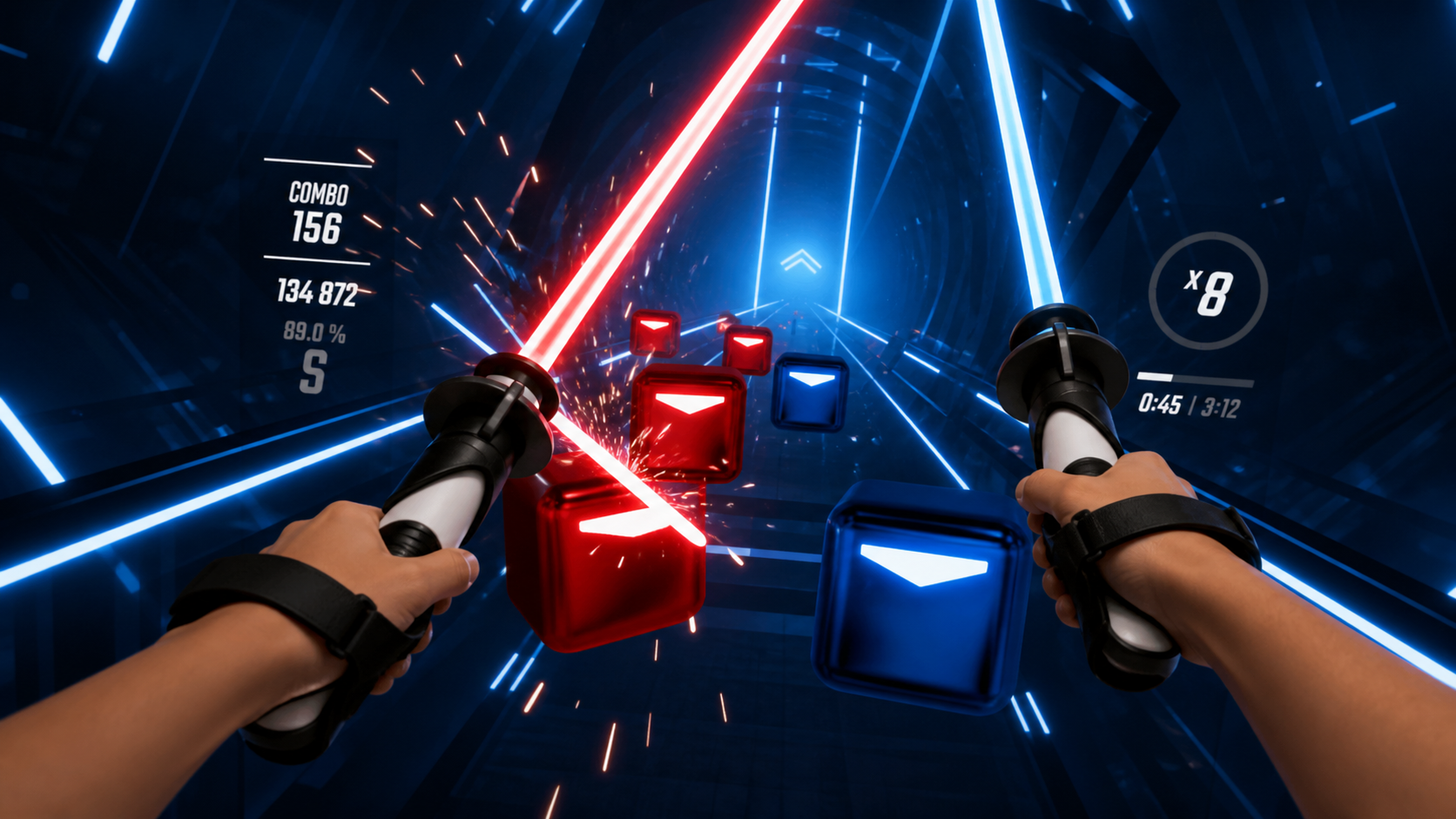
To figure this out, I played two very different sword games. First, I played Beat Saber on Expert difficulty, which requires a ton of fast wrist snaps. With the VR Sword attached, my wrist started to ache after about 15 minutes. The extra weight at the end of the controller made changing directions quickly feel sluggish and strained. The haptics also felt a little weaker, muffled by the thick plastic handle. Then, I switched to Until You Fall, a game that uses more deliberate, slower combat swings and blocks. Here, the sword felt amazing. It added a sense of weight and realism that made the game more immersive. I played for 45 minutes and felt no unusual wrist pain. The problem isn't the weight itself; it's the physics. The long handle creates leverage, and that leverage multiplies the force on your wrist with every fast flick. For a beginner playing slower songs, it might feel fine. But for an experienced player trying to master fast-paced levels, it quickly becomes a liability.
Can the accessory be installed without making the next session feel like work?
An accessory is supposed to add fun to your VR experience. But if setting it up is a chore every single time, you'll eventually stop using it.
Installation itself is quick, but the repetitive cycle of attaching and detaching it for charging or sharing makes it feel like work. If you have to remove the controller from the grip every time, the small hassle adds up and creates a barrier to even starting a session.
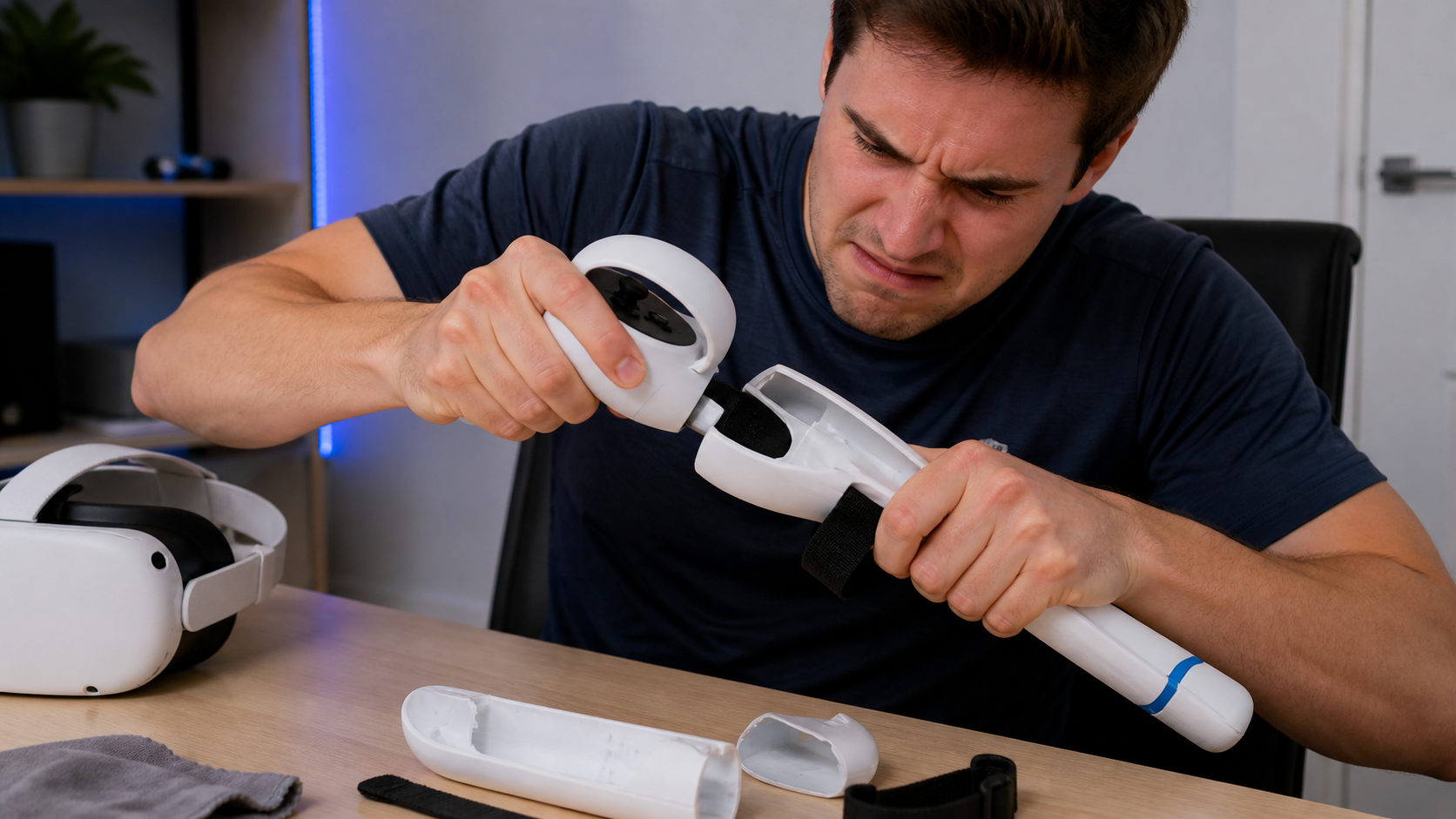
The first time I put the controller in the sword handle, it took maybe a minute. It wasn't hard. You open a plastic latch, slide the controller in, close it, and secure a strap. The problem isn't that it's difficult; it's that you have to do it over and over again. My charging dock requires the bare controller to make contact, so I had to take the swords off after every single session. Then, I'd have to put them back on the next day. After a week, I found myself hesitating before playing. If I only had 20 minutes, did I really want to spend two of those minutes on setup and teardown? I started grabbing the bare controllers for quick games. The sword accessory became reserved for "long weekend sessions," which meant I used it much less. It accidentally turned spontaneous fun into a planned event that felt more like a chore.
Who should avoid this VR Sword setup even if it looks useful for fitness sword workouts on Meta Quest 2?
This accessory looks cool and seems like a great idea for everyone. The truth is, it's not a one-size-fits-all tool and can even be unsafe for some people.
Players with small rooms, children, or pre-existing wrist issues should avoid this setup. The extended length increases the risk of hitting walls. The added weight can also worsen wrist strain for those already prone to it or for younger players with developing joints.
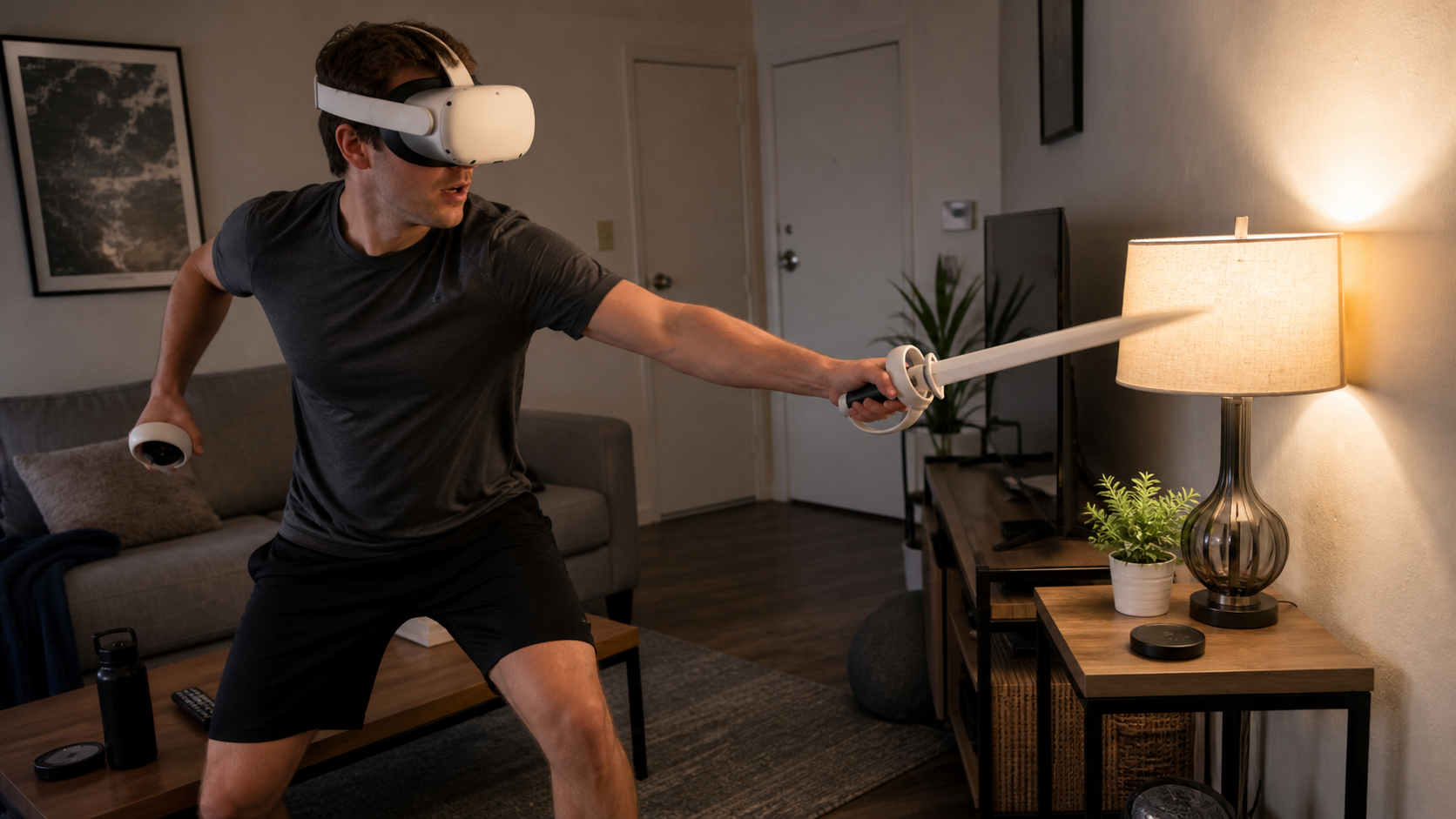
Based on my testing, I came up with a clear list of people who should probably skip this accessory. First, if you play in a small room, be very careful. The sword extends your reach by nearly a foot. I almost smashed a lamp on my end table because my brain was used to the length of my own arm, not my arm plus a plastic sword. Your Guardian boundary warns you about your hands, not the tip of your accessory. Second, I would not recommend this for children. Their joints and muscles are still developing, and adding leveraged weight during fast, repetitive motions is a bad idea. It's a recipe for a strain injury. Third, if you already have wrist pain, carpal tunnel, or tendonitis, stay away. The entire point is to add weight and resistance, which is the exact opposite of what you need. Finally, if you're a casual player who likes to jump in for quick 15-minute sessions, the setup friction will likely annoy you more than the immersion will help you.
Conclusion
A VR sword is great for immersion in slower-paced games. But for fast fitness workouts, it can cause wrist strain and becomes a hassle with setup, cleaning, and sharing.
Leave a comment