



When does a VR Fishing Rod stop feeling helpful in seated play?

You want to make VR fishing more real, but just using controllers feels off. You got a fishing rod accessory for that immersive feel, but does it even help when sitting?
For seated play, a VR fishing rod improves the feeling of reeling but becomes a hassle after about 20 minutes. It's great for immersion during the actual fishing, but annoying for navigating menus. Its value depends entirely on how much you prioritize realistic motion over convenience.
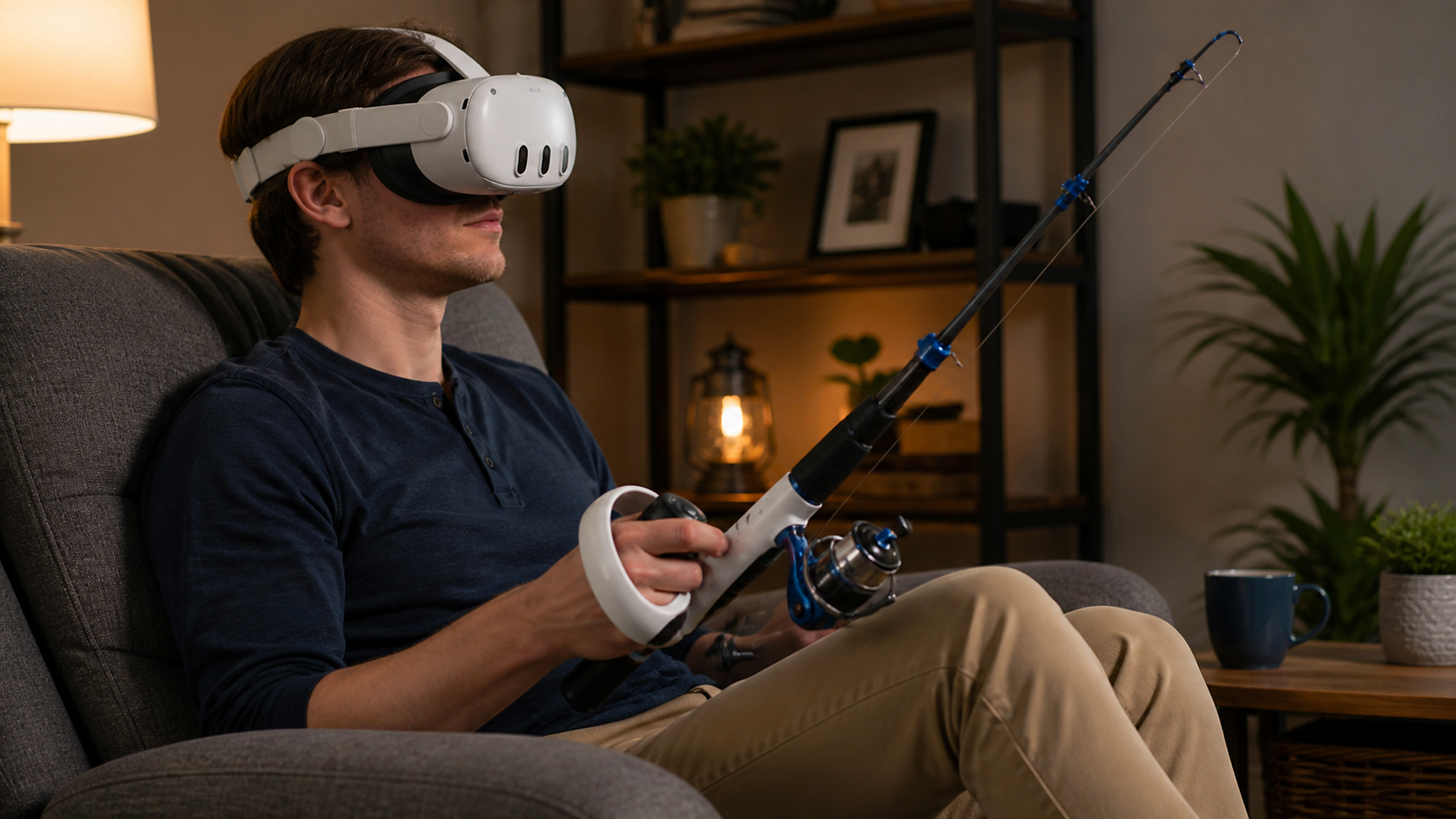
I’m left-handed, and I love settling into my chair for a long VR session. I wanted to know if a fishing rod add-on for my Quest 3 controller was worth it for this exact play style. It seems simple, but the experience changes a lot over time. I decided to track my experience, focusing on some key questions. Does the new feeling last, or does it get old fast? Is it actually better than using nothing? My goal was to find out where this accessory stops being helpful and starts getting in the way.
If the session lasts 20 minutes, does casting feel become more noticeable?
The first few casts with the rod feel amazing. But after playing for a while, you start to wonder if the novelty is wearing off. Let's see what really happens.
Yes, the casting feel becomes more noticeable after 20 minutes, but not in a good way. The initial fun turns into slight wrist fatigue. The extra weight and repetitive reeling motion start to feel more like a chore than an immersive upgrade.
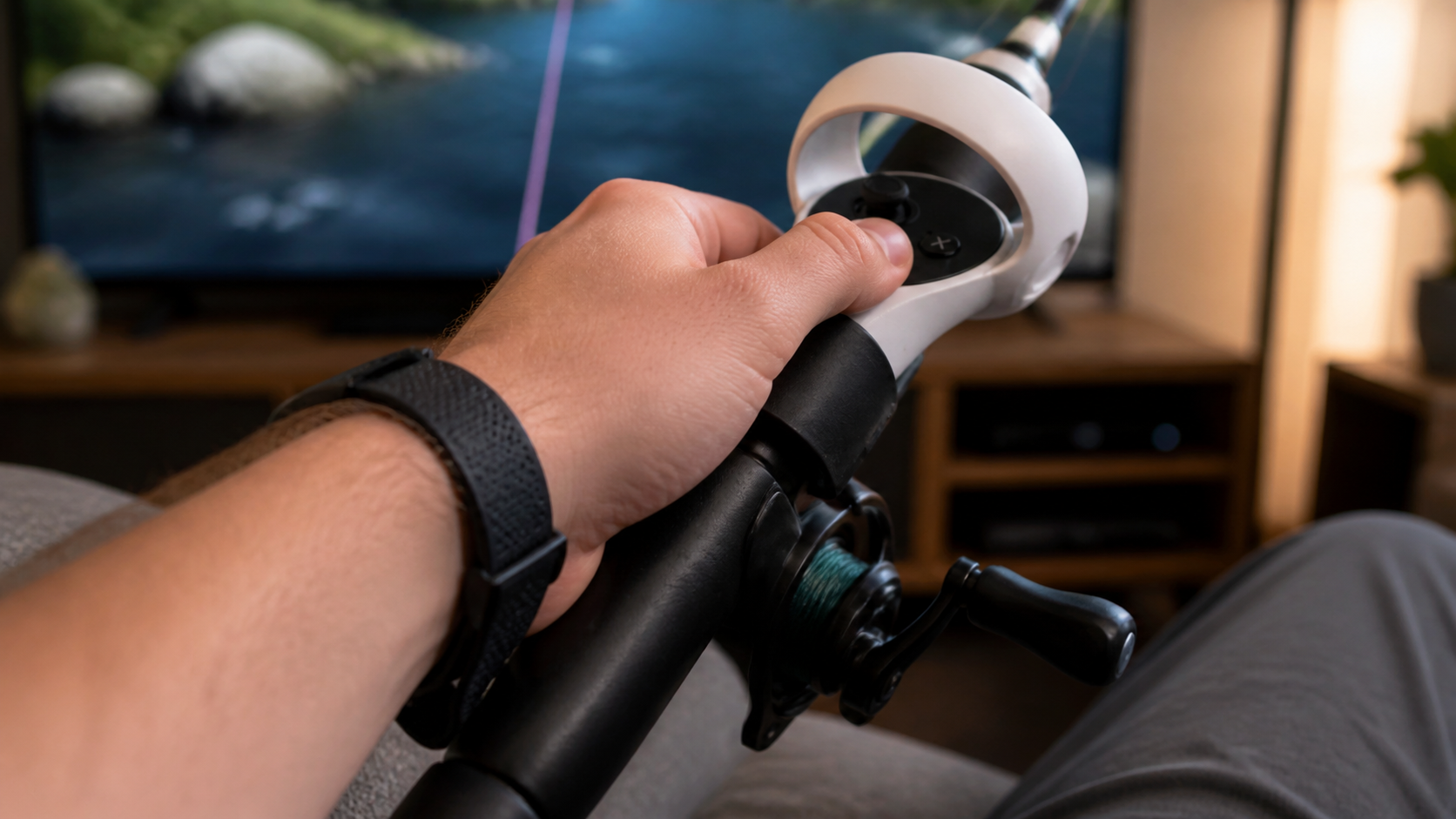
When I first attached the controller, I was impressed. The weight and length made casting feel much more authentic. But that feeling had a time limit.
Initial Feeling vs. Long-Term Fatigue
For the first 10 minutes, I was completely sold. The physical act of flicking my wrist and feeling the pole's momentum added a layer of immersion that the bare controller couldn't match. Reeling in a fish with a proper cranking motion was satisfying. But as I pushed past the 15-minute mark, I noticed my wrist getting tired. The accessory isn't heavy, but the repetitive motion of reeling and holding the controller at an angle creates a specific strain that I don't get with a bare controller.
My Play Session Breakdown
As a left-handed player, the ambidextrous design worked fine, but the balance felt a bit off-center. This became more obvious as my session went on. Here is a table showing how my feelings changed over time.
| Time | Casting Feel | Reeling Comfort | Overall Immersion |
|---|---|---|---|
| 0-5 Mins | Excellent, very realistic | Great, satisfying motion | High |
| 5-15 Mins | Good, still fun | Okay, starting to notice the weight | Medium |
| 15-20+ Mins | Okay, motion feels repetitive | Low, wrist feels strained | Low |
Can the article compare VR Fishing Rod with bare controllers during seated play?
You start to wonder if you made the right choice. Maybe just using the standard controllers is simpler and better for sitting on the couch. Here is a direct comparison.
A VR fishing rod gives you better reeling immersion but makes menu navigation much harder than a bare controller. The rod makes casting more fun, but the bare controller is way faster for hooking fish and managing your inventory without fumbling.
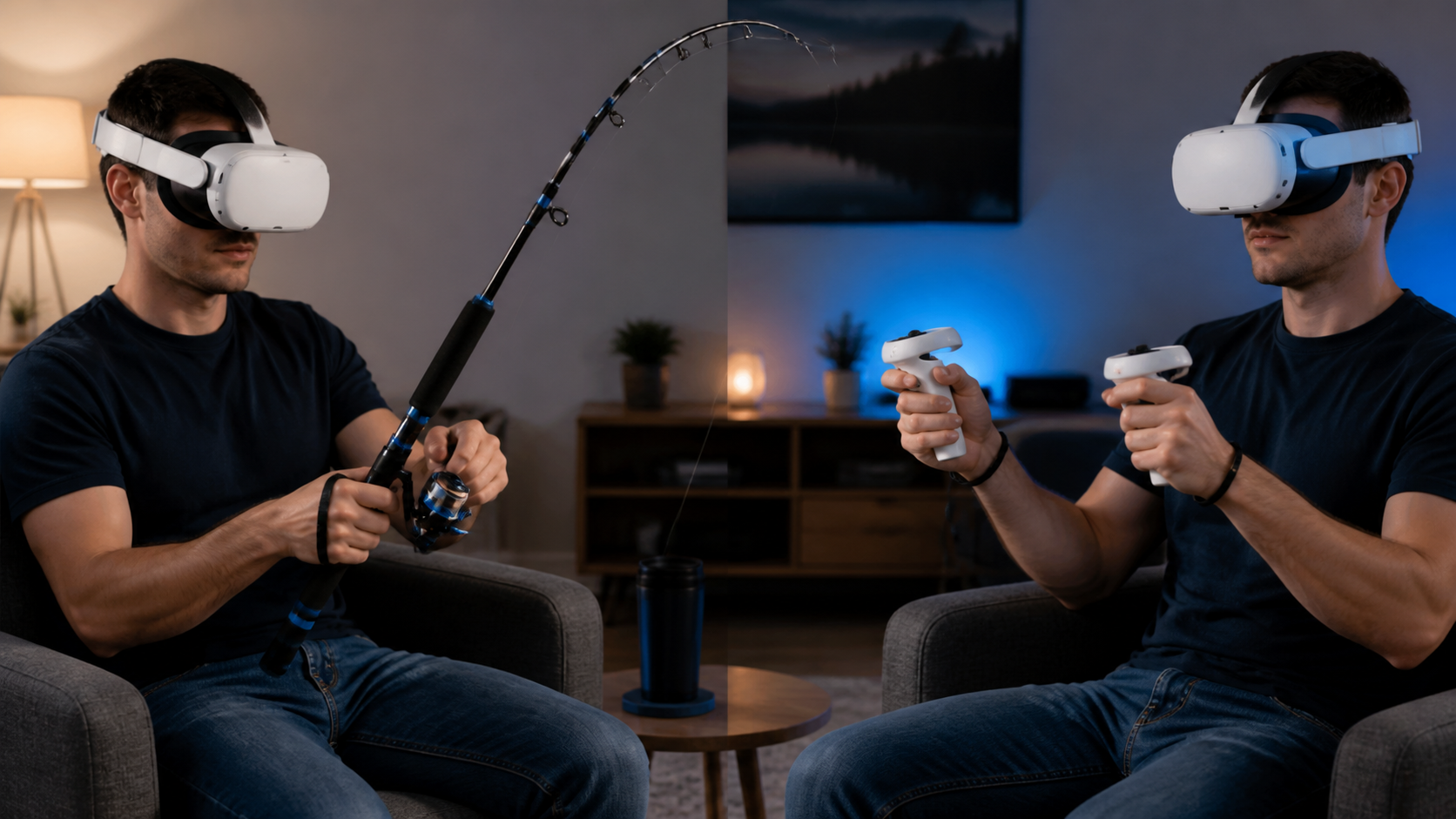
The choice between using the accessory and a bare controller comes down to a trade-off. You are trading convenience for immersion. From my seated position, I tested both on four key actions: casting, reeling, fighting a fish, and using menus.
With the rod, casting felt more natural. The arc and swing felt right. But with a bare controller, my casts were more accurate and I didn't have to worry about hitting the lamp next to my chair.
Reeling is where the accessory shines. The cranking motion is the whole reason to buy one. It feels great and connects you to the action. With a bare controller, you just move your hand in a circle, which feels disconnected and silly.
When a big fish was on the line, the rod helped a lot. It gave me something physical to brace and pull against, which made the struggle feel more real. The bare controller just doesn't offer that physical feedback.
But here’s the biggest problem: menus. To change bait, check my gear, or accept a quest, I need to press buttons. The rod attachment makes reaching the thumbstick and buttons a clumsy, frustrating experience. I had to change my grip completely just to navigate a simple menu. The bare controller is designed for this, so it wins easily. This constant interruption was a huge immersion-breaker.
Is comfort the main buying trigger, or is performance the real reason people search?
You see ads for VR accessories all the time. They promise better gameplay and a more comfortable experience. But what do people really want when it comes to VR fishing?
Performance is the real reason people search for a VR fishing rod. They want a more realistic motion to improve the game. Comfort is the reason they either keep using it or put it in a drawer. An uncomfortable accessory gets abandoned, no matter how cool it feels.
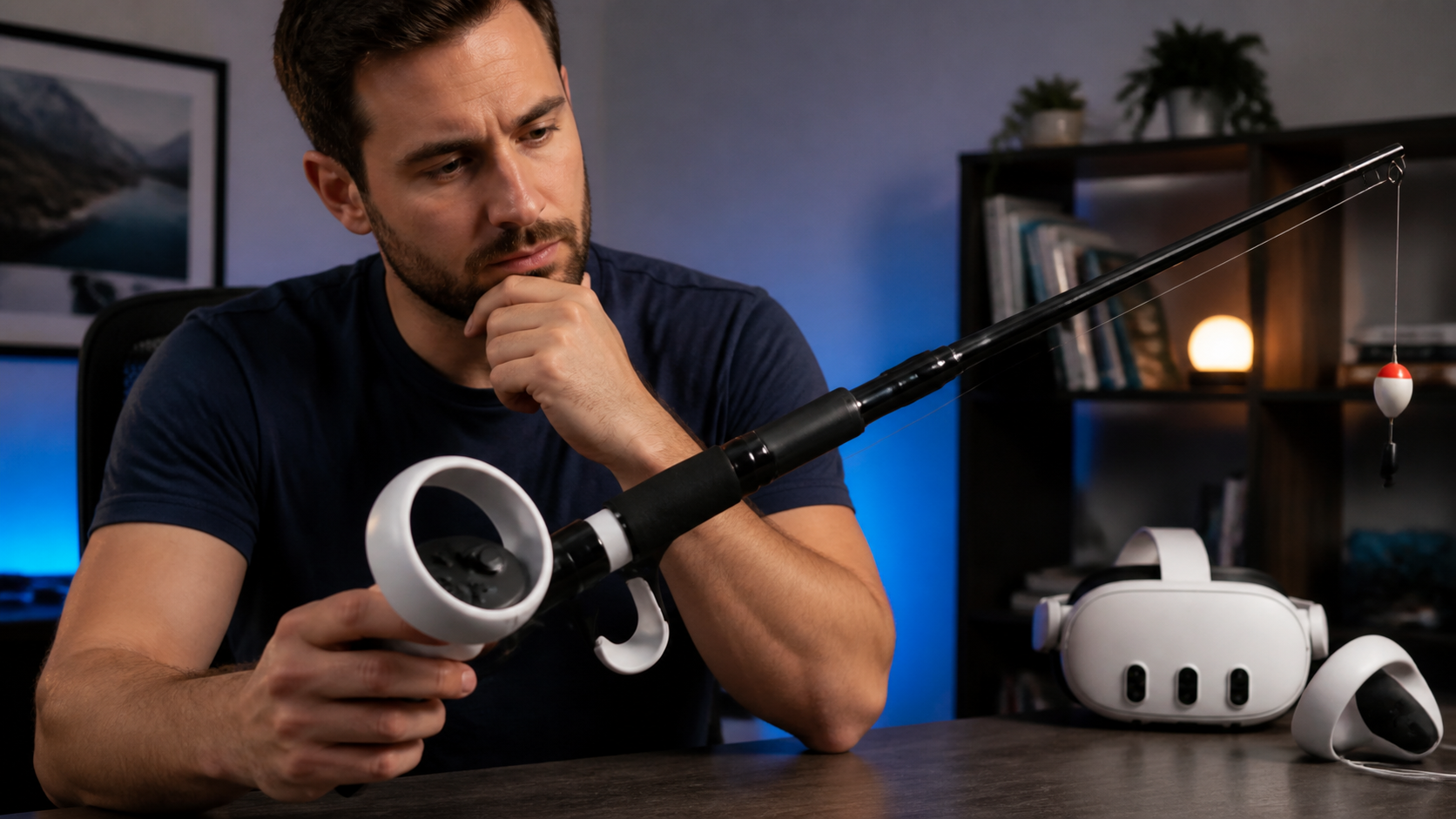
I believe most people, including me, start searching for a VR fishing rod because they want better performance. The initial thought is, "This would feel so much more real with a proper rod." That desire for improved immersion and a more realistic simulation is what gets you to click "buy." You're chasing a feeling. You want the game to perform more like its real-world counterpart.
However, comfort is what determines the accessory's lifespan in your home. The Quest controllers are designed to be held for hours. They are lightweight and ergonomic. When you clip on a plastic rod, you change the weight, the balance, and the grip. If that new setup causes wrist strain or makes it awkward to hold, you will stop using it.
For a beginner, the "cool factor" of a more realistic setup is the main appeal. But as an experienced player who might spend an hour or more in a game, I value comfort and efficiency. An accessory that causes fatigue or slows me down is a problem. The performance gain from the rod has to be worth the comfort loss, and after 20 minutes, that trade-off started to feel like a bad deal.
What real-life caveat should appear before recommending VR Fishing Rod for seated play?
You're ready to buy a fishing rod accessory. But since you mostly play sitting down, you want to avoid a purchase you'll regret. Here is the single biggest warning.
The biggest caveat for seated play is menu navigation. You are constantly switching between active fishing and using menus, and the rod makes this clumsy. You must be willing to sacrifice the convenience of easy button access for those moments of immersive reeling.
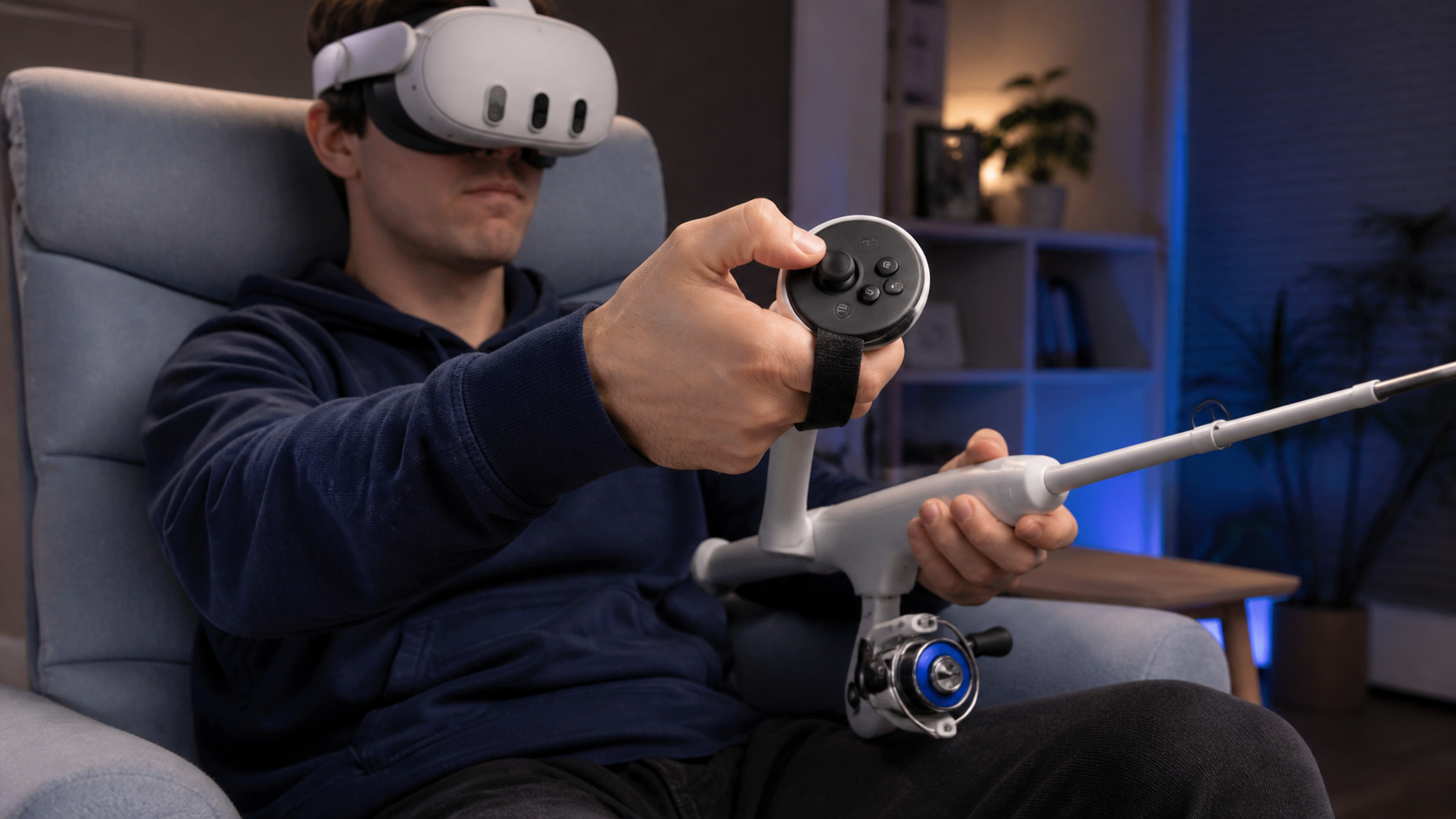
Before you buy a VR fishing rod for seated play, you need to understand one thing. The accessory is designed for the action of fishing, not the management of the game. Most fishing games are not just casting and reeling. You have to navigate complex menus to change lures, manage your inventory, buy new gear, and track missions.
This is where the accessory fails. While I was sitting comfortably, trying to quickly swap to a different type of bait became a chore. I had to awkwardly shift my grip to reach the thumbstick and A/B buttons, or use my other hand to stabilize the whole thing. It felt clunky and slow. This completely broke the immersion the rod was supposed to create.
So, here is my honest takeaway. The rod was helpful and fun for the first 15 minutes when I was just casting and reeling. It became annoying the moment I had to do anything else.
Who should skip it? I would not recommend it for players who prioritize efficiency or play fishing games with deep, complex menu systems.
Who should buy it? It might be for you if you only play simple, arcade-style fishing games where you rarely need to access menus. If you only care about that satisfying reeling feeling for short sessions, it can be a fun toy.
Conclusion
The VR fishing rod boosts reeling immersion but makes menu use a pain. It is best for short sessions focused only on fishing, but becomes a hassle for longer, complex gameplay.
Leave a comment