



What would make dual-wield players return VR Sword after trying Battle Talent?

You want to feel like a true swordsman in VR, but dual-wielding often feels weightless and disconnected. Attachments promise immersion but usually create more problems than they solve.
For dual-wield players, a VR Sword is only worth it if the immersion in Battle Talent outweighs significant drawbacks. Wrist fatigue, awkward menu navigation, and difficult storage can make players return to standard controllers, especially when controller mismatch becomes a concern during intense gameplay.
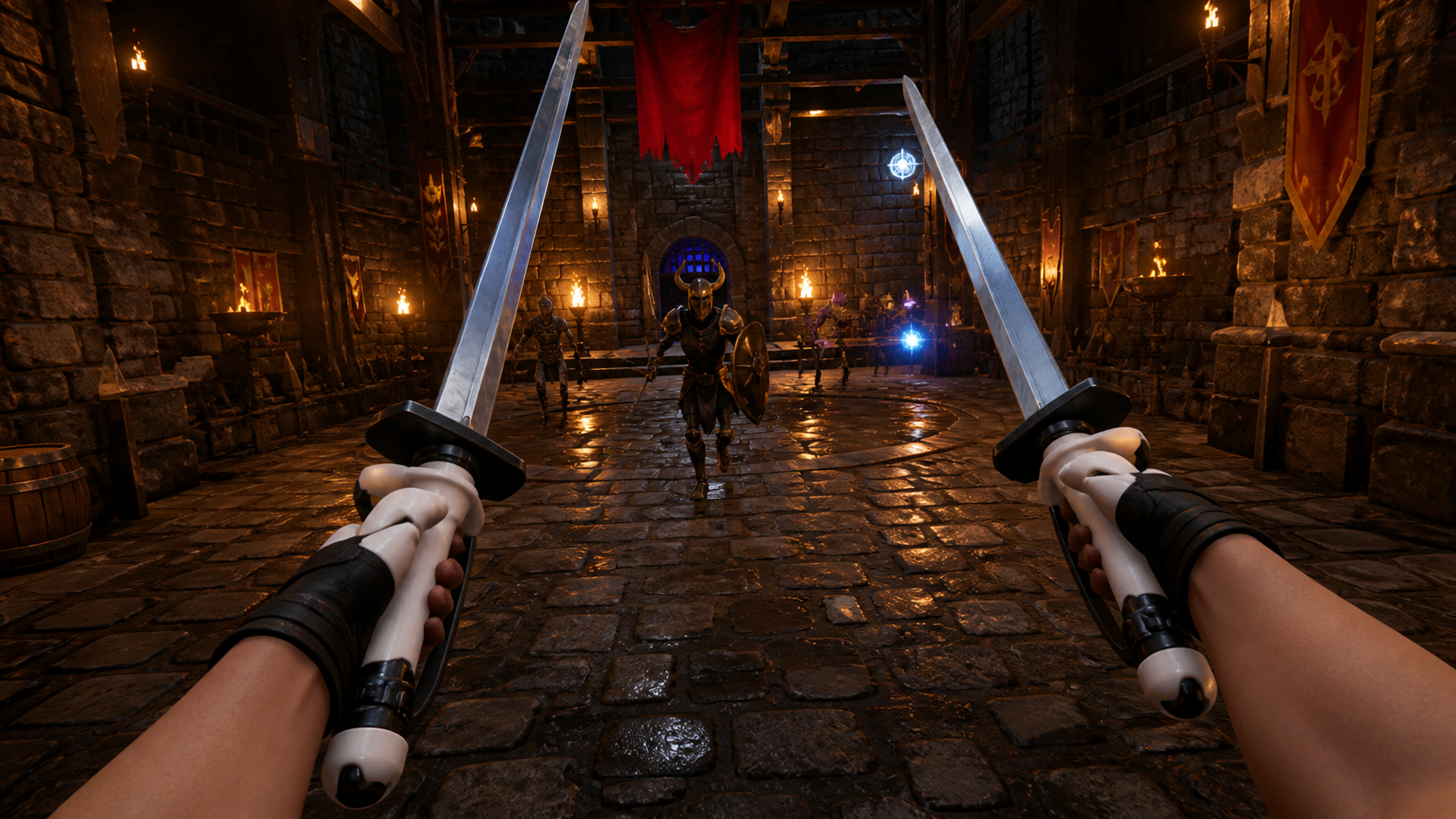
I've always been a dual-wield player at heart. In games like Battle Talent, the fantasy of fighting with a sword in each hand is the ultimate power trip. But the standard Meta Quest 3S controllers, while great, feel too light. They lack the heft that sells the illusion. So, I grabbed a set of VR Sword attachments, hoping to finally get that missing immersion. My goal was simple: put them through a real-world test as a dual-wield player. Does this accessory actually make the game better, or is it just another piece of plastic that will end up in a drawer? I wanted to find out if the trade-offs were worth it.
Does Battle Talent make melee-game immersion versus menu awkwardness worth accepting?
VR sword accessories look great in videos, but they can make simple menus a nightmare to navigate. Is the trade-off worth it? I found a very conditional answer.
Yes, for short, intense combat sessions, the immersion is worth it. The VR Sword’s weight makes swings feel powerful. But this comes at a high cost: fumbling through menus breaks the spell and can ruin the experience if you need to make frequent adjustments.
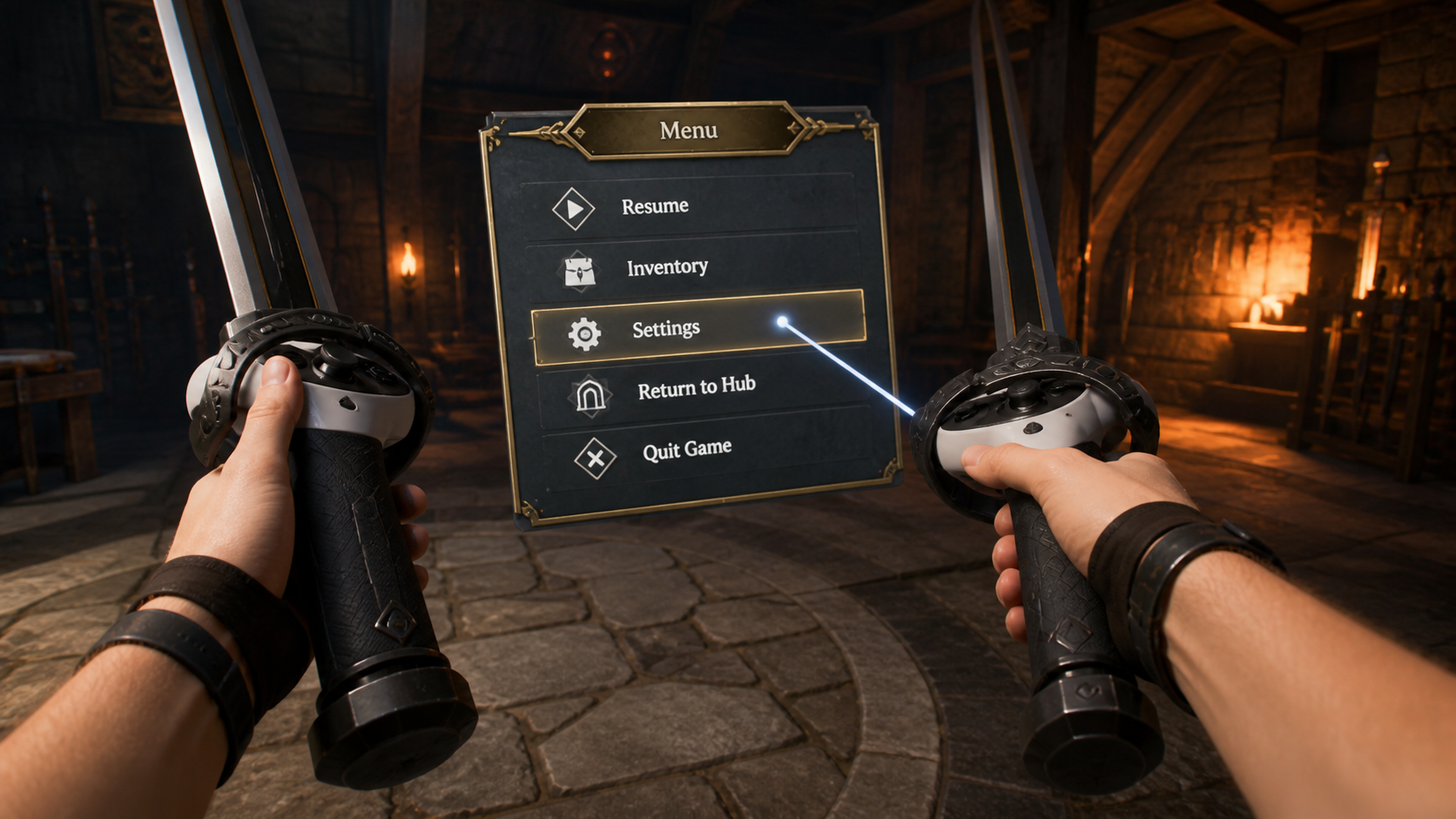
The moment I stepped into Battle Talent’s arena with the VR Swords attached, the difference was huge. The added length and weight made my swings feel deliberate and impactful. Blocking an enemy's attack had a satisfying sense of force behind it. This is where the accessory shines. It turns flimsy controller waggling into something that feels closer to actual sword fighting. But my excitement faded the first time I had to open the game menu to change weapons.
The Trade-Off: Feel vs. Function
The core problem is that the attachments are designed for one specific action: swinging. They are not designed for the precise, delicate movements needed for user interfaces. Pointing at small buttons became a clumsy chore. My hands felt locked into a grip that was great for holding a sword but terrible for everything else. I put together a simple table to show my experience.
| Action | Immersion (With VR Sword) | Practicality (With VR Sword) |
|---|---|---|
| Swinging & Blocking | Excellent. Weight adds realism. | Good. The intended use works well. |
| Menu Navigation | Poor. Breaks immersion instantly. | Terrible. Pointing is inaccurate. |
| Grabbing Items | Fair. Can be clumsy. | Poor. Hard to be precise. |
For a player who just wants to jump into the arena and fight for 15 minutes, the immersion might win. But for anyone who likes to tweak settings or frequently switch loadouts, the menu awkwardness is a major drawback.
What would a real VR Sword test in Battle Talent on Meta Quest 3S reveal about storage and travel?
You just finished an intense VR session. You feel like a hero. But now, where do you put these long, clunky sword handles? My test revealed a serious issue.
A real test shows these attachments are terrible for storage and travel. They are too long to fit in a standard Quest 3S case, forcing you to disassemble them after every use. This adds significant setup and teardown time, making quick play sessions feel like a chore.
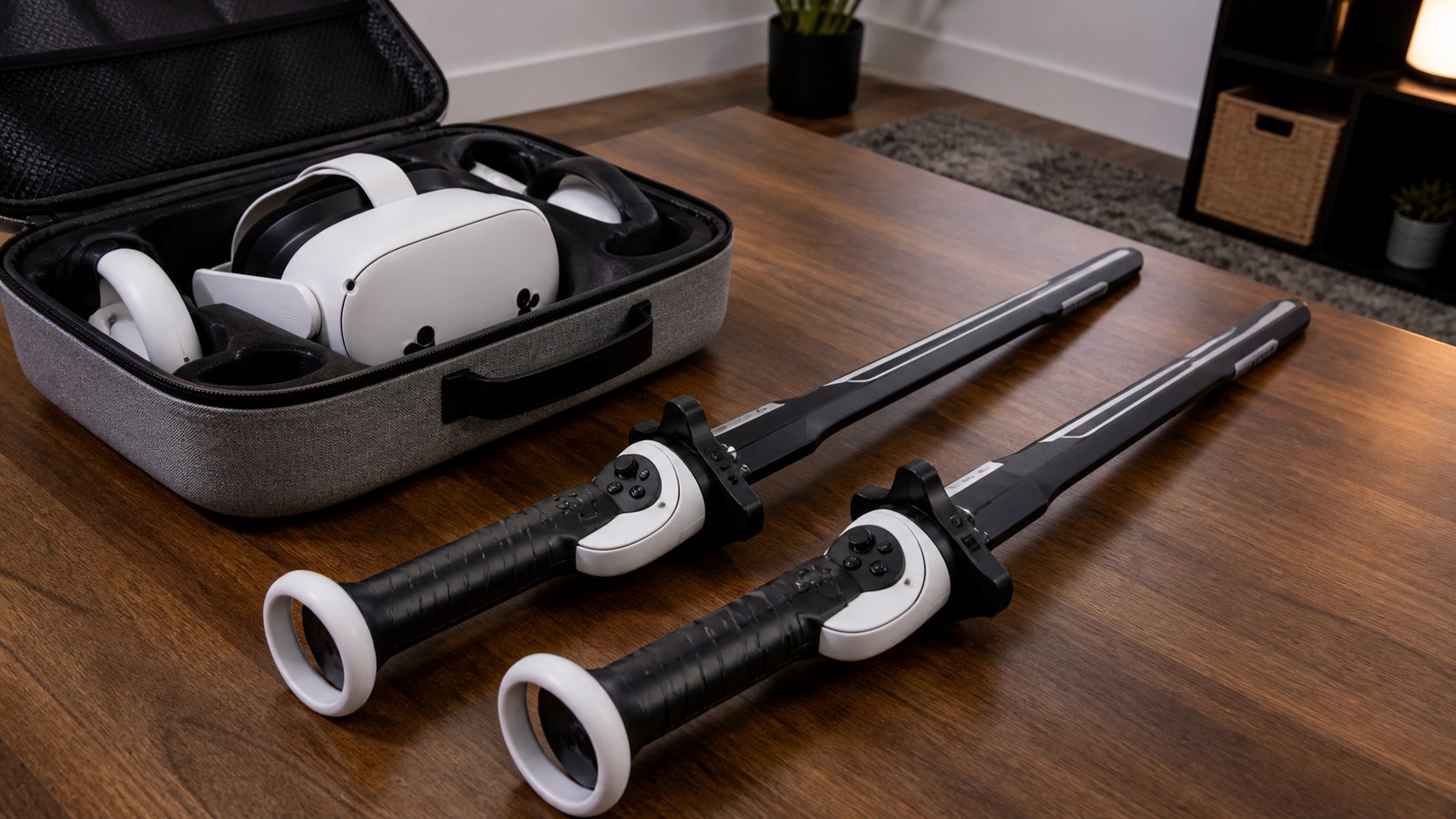
As an experienced player, I protect my gear. I have a hard-shell case for my Quest 3S that fits the headset and controllers perfectly. After my first session with the VR Swords, I went to put everything away and immediately hit a wall. The attachments are simply too long. There was no way to make them fit without taking them completely apart. This contrasts sharply with a beginner's setup, where you might just leave everything lying on a desk. For anyone who values their equipment or needs to keep their play space tidy, this is a big problem.
The process of attaching and detaching the controllers isn't instant. It involves unscrewing a lock, fitting the controller in, and screwing it back securely. Doing this twice for a dual-wield setup before and after every single game is tedious. It kills the desire for a quick, spontaneous 10-minute match. Worse, after just ten minutes of playing, I could already feel the strain in my wrists. The weight is not balanced like a real sword; it's just heavy at the end, which leads to fatigue quickly. This makes me question its value even for short sessions.
Does the accessory make menus, charging, or controller removal harder?
Your controller batteries are low, and the game is over. But your final boss fight is against the accessory itself, just to plug in a charging cable.
Yes, the VR Sword makes almost every basic function harder. It blocks the charging port, makes some menu buttons hard to press, and turns controller removal into a clumsy process. You absolutely cannot charge the controllers while they are inside the sword attachments.
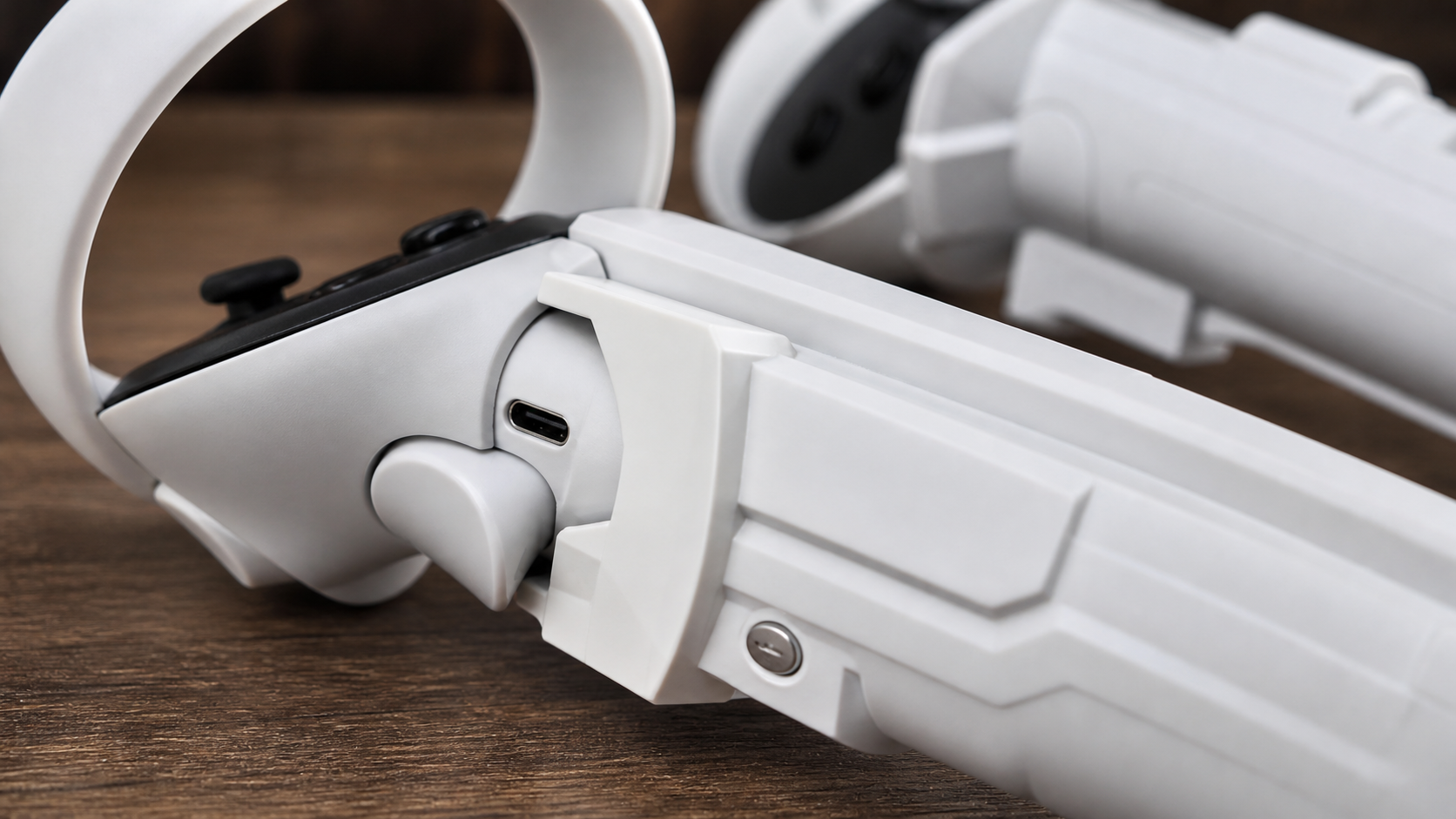
This was the point where the accessory went from being a cool novelty to a genuine annoyance. My controllers needed a charge, but the plastic housing of the sword grip completely covered the USB-C port. There was no little cutout or pass-through. The only solution was to fully remove the controller. As a dual-wield player, that meant disassembling both setups just for a routine charge.
The Daily Hassle
This isn't a one-time issue; it's a daily one. I documented the process to show how it complicates things.
The Removal Process
First, you have to find and unscrew the plastic locking ring at the base of the handle. It's a bit stiff, so it takes some effort. Then, you slide the controller out of the shell. It's a snug fit, which is good for preventing wobble during play but bad for quick removal. The whole process takes about a minute per controller if you're efficient.
The Charging Problem
Once the controller is out, you can charge it. But this means you have four separate pieces lying around: two controllers and two empty sword hilts. After charging, you have to reassemble everything. This constant removal and re-insertion cycle introduces wear and tear. It also raises the risk of a controller mismatch or a loose fit over time, a major concern for any serious player who depends on reliable tracking.
What real-life caveat should appear before recommending VR Sword for Battle Talent?
You see the cool ads and want to buy the VR Sword. But the marketing only shows the epic swings, not the downsides. Here is the honest warning I must give.
The biggest caveat is the unbalanced weight, which causes significant wrist fatigue in as little as ten minutes. This accessory is a novelty for very short sessions, not a practical tool for anyone who plays for extended periods or is sensitive to repetitive strain.
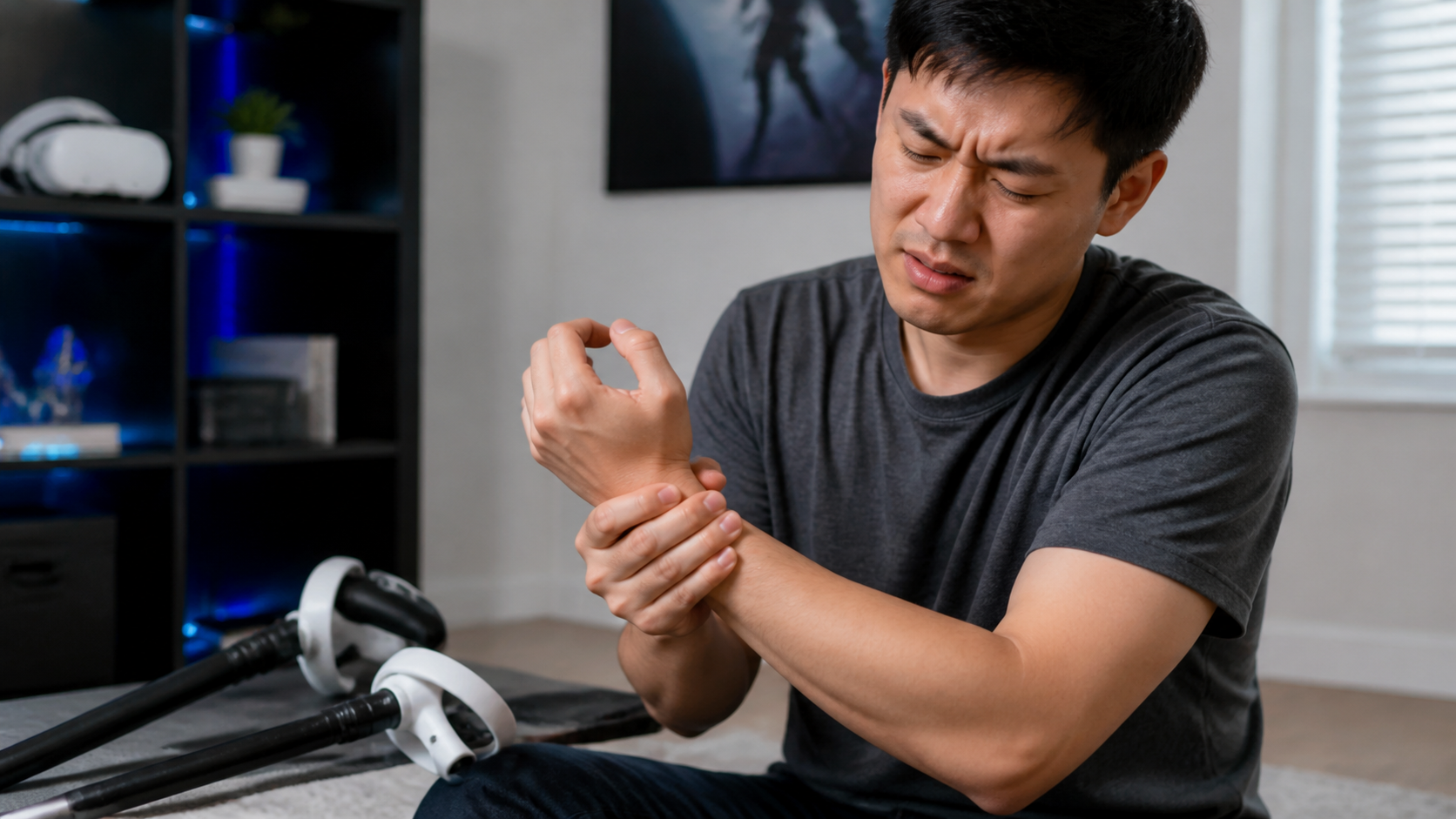
After several days of testing, my final takeaway is mixed, but it leans toward caution. The VR Sword is a product with a very narrow, specific appeal. It succeeds in one area: it makes the first few minutes of a sword fight feel heavier and more immersive. The initial "wow" factor of feeling that weight as you swing is real. But that feeling fades quickly, replaced by a list of annoyances.
The accessory felt most annoying in every moment I wasn't actively swinging it. Navigating menus, grabbing objects, storing the gear, and charging the controllers were all frustrating. The wrist fatigue was the deal-breaker. A good accessory should let you play longer, not force you to stop. As a dual-wield player, the strain was doubled.
So, who should skip it? I would say most serious gamers. If you play for more than 30 minutes at a time, value convenience, or care about your ergonomic health, this is not for you. Competitive players should definitely avoid it due to the fatigue. However, if you are a very casual player who wants a fun, different experience for 15 minutes and you don't mind the setup and storage hassle, you might enjoy it as a novelty item.
Conclusion
The VR Sword boosts immersion in Battle Talent for a few minutes but creates major problems with fatigue, menus, and daily use. It's a fun gimmick, not a serious upgrade.
Leave a comment