



What should left-handed users test before trusting a VR Fishing Rod in left-handed play?

VR fishing is fun, but holding a controller feels wrong. As a left-handed player, most accessories add frustration, not comfort. I tested a VR fishing rod to see if it fixes this.
Left-handed users should test a VR Fishing Rod for wrist angle during casting and reeling, button accessibility for menus, and overall balance. These factors determine if the accessory improves wrist comfort or just adds setup friction when used with Quest Touch Plus Controllers.
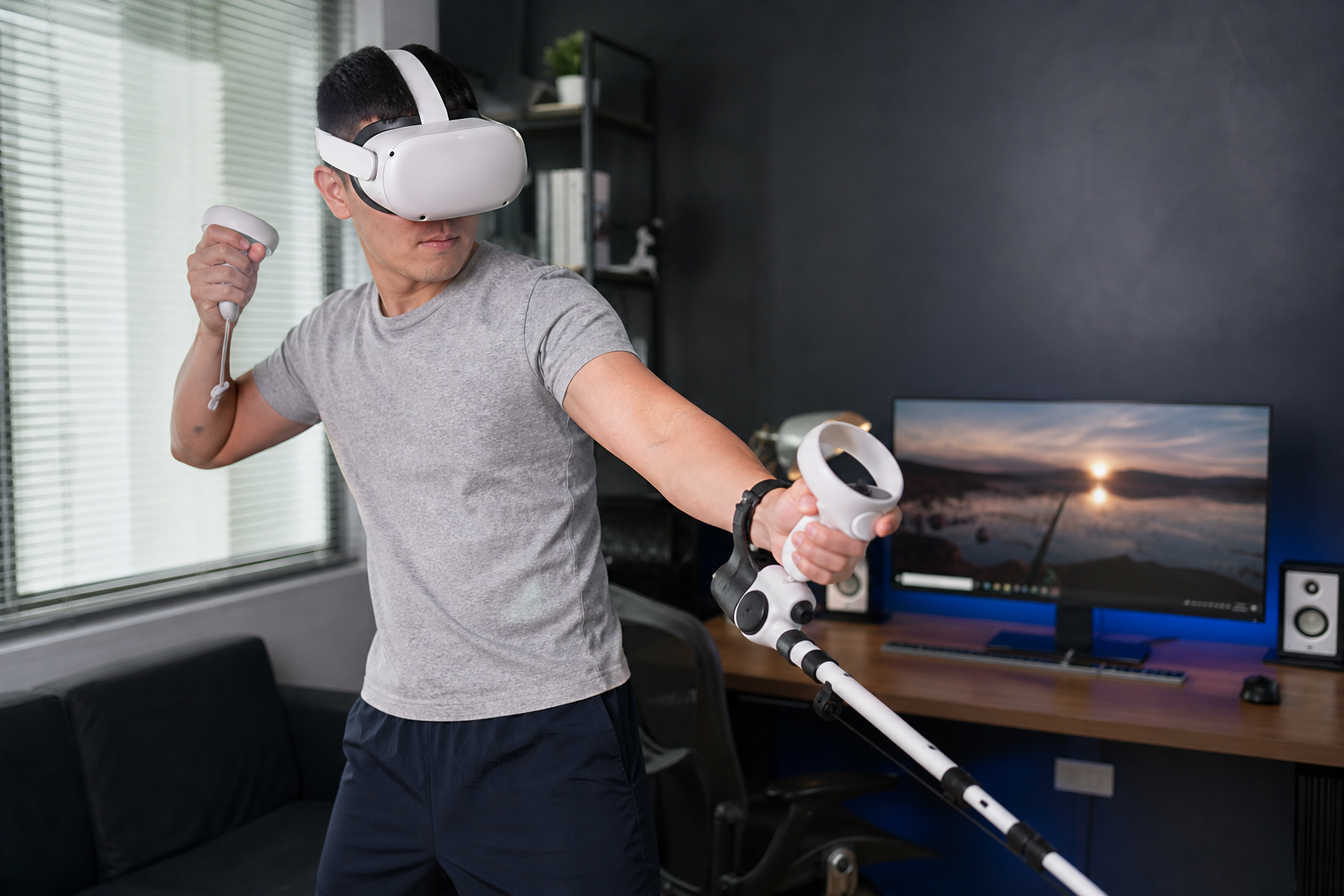
I’ve bought my fair share of VR accessories that ended up in a drawer. Many of them feel like cheap toys that get in the way more than they help. The biggest problem is often "setup friction." If I have to spend more time clipping my controller in and out than actually playing, the accessory has failed. This is especially true for fishing games where you need to cast, reel, and navigate menus constantly. My goal was to find out if this fishing rod was another piece of junk or a genuinely helpful tool for a lefty like me. I followed a simple testing process, asking the questions that mattered most to my actual gameplay experience. Let's dive into what I found.
When left-handed users use VR Fishing Rod in left-handed play, what feeling changes first about wrist comfort?
Holding a bare controller for VR fishing feels unnatural. The angle is all wrong, forcing your wrist into a tense position. This accessory immediately changes the weight distribution and grip.
The first feeling that changes is the weight distribution. The accessory shifts the balance forward, which mimics a real fishing rod. This makes the initial casting motion feel more natural but also introduces new pressure on the wrist during prolonged reeling motions.
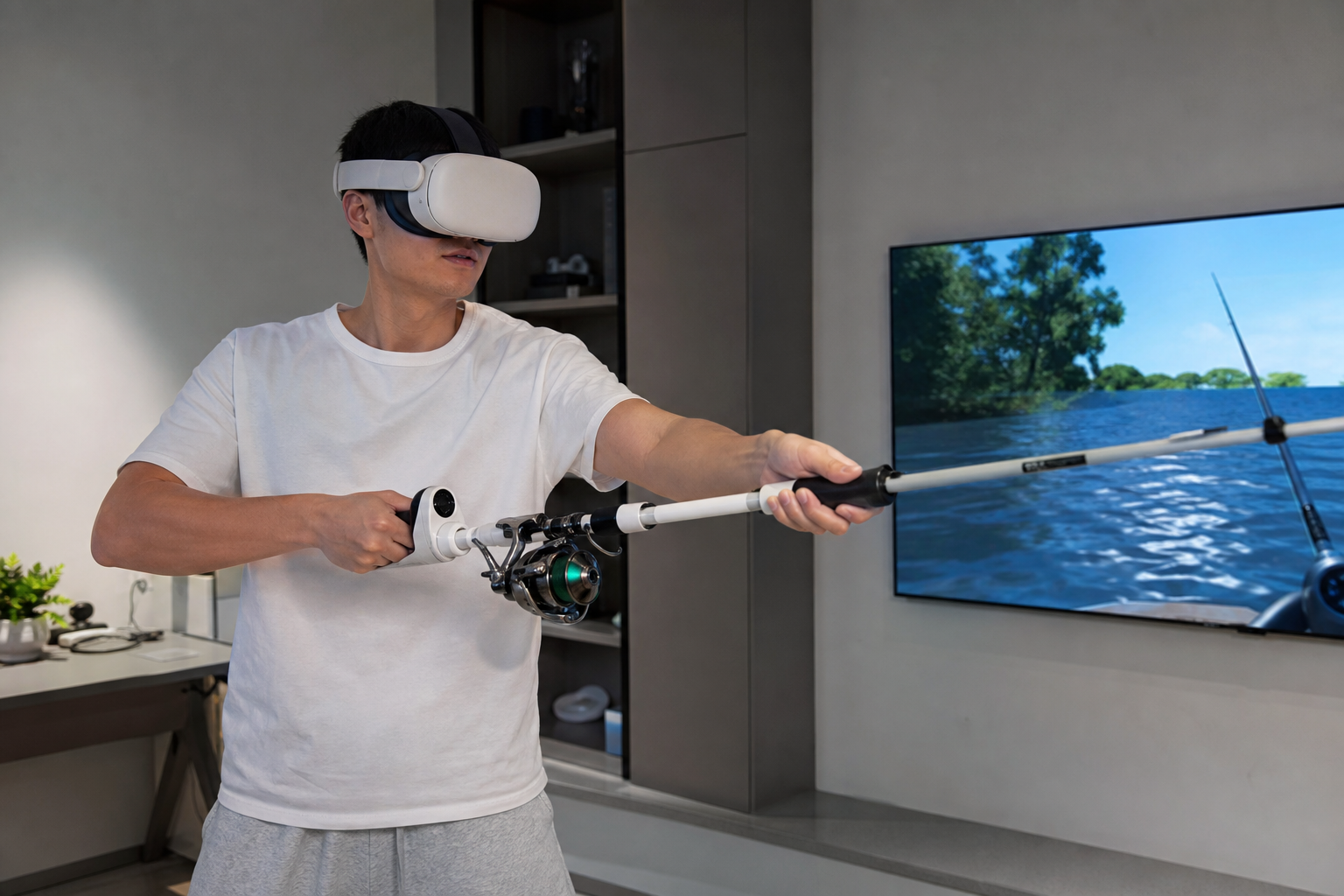
The moment I clipped my left Quest Touch Plus controller into the rod, the change was obvious. The center of gravity moved from the palm of my hand to a point several inches forward. This was a good thing, at first.
The Initial Casting Motion
Casting with a bare controller is a wrist-heavy flick. It doesn't feel right. With the rod attachment, I could use a more natural, arm-based motion, just like with a real fishing pole. The added length and forward weight made the flick-and-release feel much more intuitive. My wrist felt more relaxed during this specific action because the accessory encouraged better form. It took the strain off the smaller wrist muscles and let my arm do the work. This was an immediate improvement and got me excited about the potential.
Long-Term Holding and Reeling
The story changed when I had to hold the rod steady or reel in a fish. The forward weight that helped with casting now created a constant downward pull. My wrist had to work harder to keep the rod level. I found that my grip tightened, and a new kind of strain appeared. To show the difference clearly, here is a breakdown of how my wrist felt.
| Action | Bare Controller Wrist Feel | VR Fishing Rod Wrist Feel |
|---|---|---|
| Casting | Awkward, tense flick from the wrist. | Natural, relaxed arm motion. Much better. |
| Waiting for a bite | Easy to rest hand, low strain. | Constant forward pull, requires effort to hold level. |
| Reeling | No added strain, just button movement. | Noticeable strain from fighting the forward weight. |
So while the casting felt better, other parts of the experience introduced a different, and sometimes worse, type of wrist discomfort. The initial positive feeling was quickly balanced by a new negative one.
Can the review show both the best moment and the failure case for VR Fishing Rod?
Most reviews feel one-sided. They either love a product or hate it. This makes it hard to know if an accessory will work for your specific needs. Let's look at one amazing moment and one complete failure.
Yes. The best moment is hooking a large, fighting fish; the rod's leverage makes the struggle feel immersive and satisfying. The failure case is trying to quickly navigate menus, where the bulky plastic makes button access clumsy and breaks the experience.
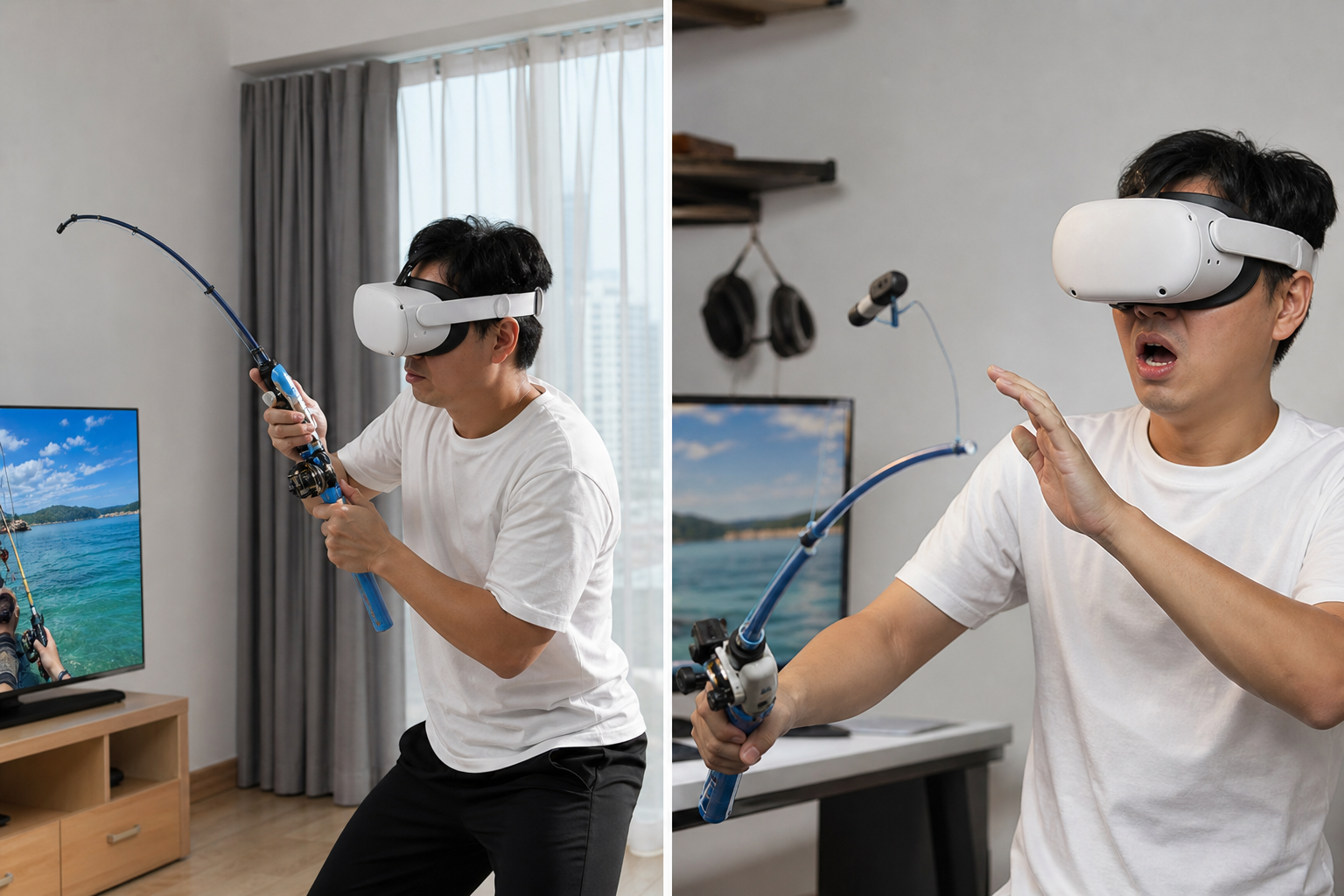
An accessory is never perfect. Its value depends on what you are willing to trade. With this VR fishing rod, you trade convenience for immersion. Sometimes that trade is worth it, and sometimes it's absolutely not.
My best moment with the accessory came in Real VR Fishing. I cast my line out into a beautiful mountain lake. After a few minutes, I got a huge bite. The haptic feedback on the controller rumbled, and the fish on the line started fighting hard. Holding the rod accessory, the struggle felt real. The length of the attachment gave me physical leverage against the virtual fish. Pulling the rod up and reeling down felt powerful and deeply immersive. I wasn't just pressing a button on a controller; I was fighting a fish. In that moment, the accessory was a complete success. It transformed a simple game mechanic into a physical experience.
The failure case happened just a few minutes later. I wanted to change my lure. I needed to press the Y button to open my tackle box. With a bare controller, this is a simple thumb movement. But with the controller inside the fishing rod, my thumb couldn't reach the button easily. The plastic housing of the accessory blocked my hand. I had to shift my grip completely, turning the rod into an awkward club. It was clumsy, broke the immersion completely, and made me feel like I was fighting the accessory, not playing a game. This is the setup friction I was worried about. It turned a simple action into a frustrating chore.
What subjective feeling should the reviewer record first: control, comfort, or trust?
When you test a new accessory, it's easy to get confused. Should you focus on performance? Or how it feels? To make a good decision, you need to know what to look for first.
A reviewer should record comfort first. If the VR Fishing Rod feels uncomfortable or causes wrist strain from the start, you will never develop a sense of control or trust in it. Comfort is the foundation; without it, all other benefits are worthless.
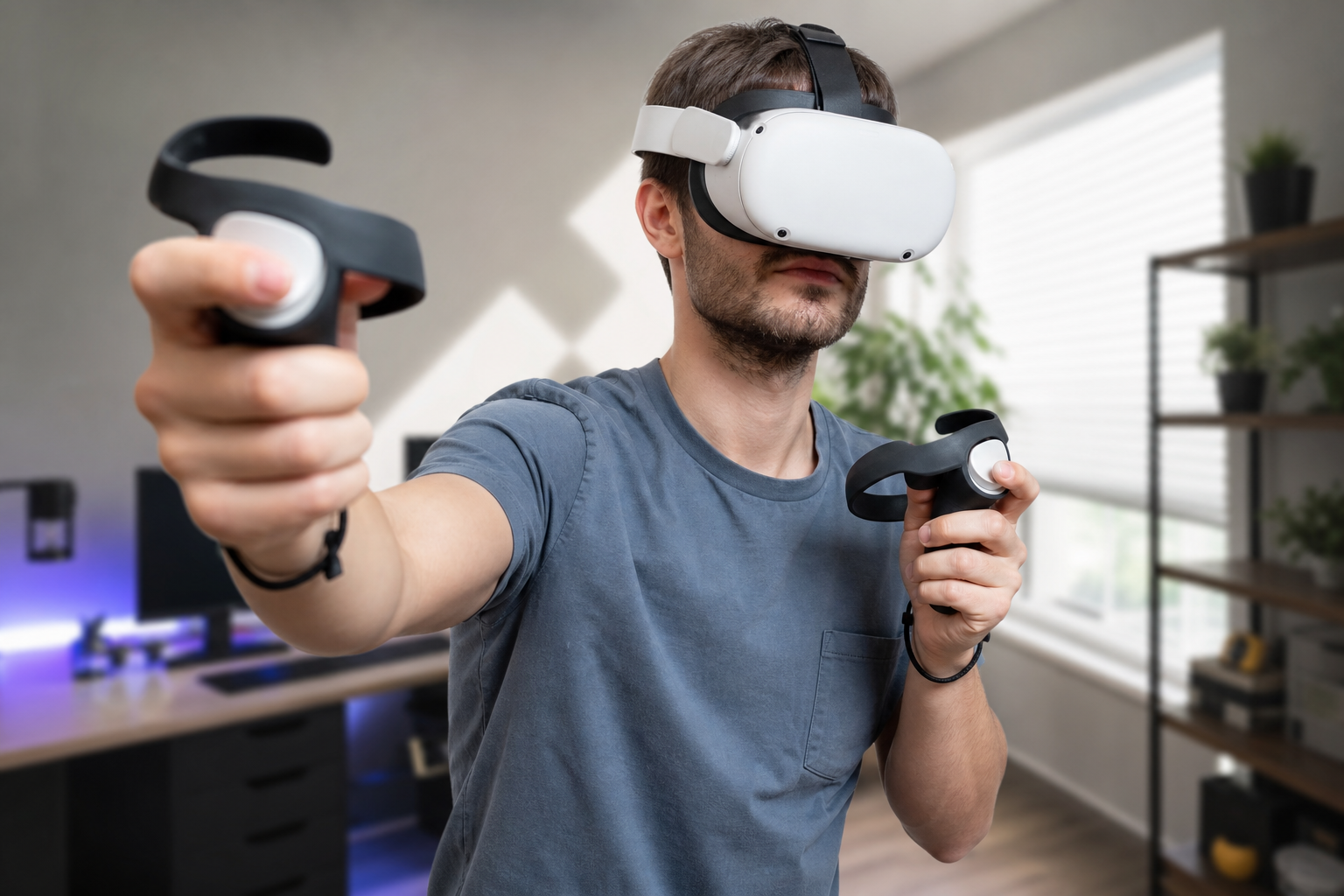
I believe there is a clear order of operations when evaluating a VR accessory like this. It’s a simple hierarchy: Comfort, then Control, then Trust. If the accessory fails at the first step, the other two don't matter.
Think of it like a new pair of shoes. If they give you blisters the moment you put them on (bad comfort), you won't care if they are designed for professional athletes (great control). You will never wear them long enough to find out. You certainly won't trust them for a long run. The same logic applies here. My first test was simple: I just held the rod for five minutes without doing anything. I paid attention to the pressure points, the balance, and the strain on my wrist.
Once I established a baseline for comfort, I moved to control. Could I do what I wanted to do? Could I cast accurately? Could I reel smoothly? Could I access all the buttons I needed? As I noted earlier, control was mixed. I had great control over casting but poor control over menu navigation.
Finally, I could evaluate trust. Do I trust this accessory to not break? Do I trust it to not let my controller fly across the room? More importantly, do I trust it to improve my game experience so much that I can forget it’s even there? For me, the answer was no. Because the comfort was questionable and the control was inconsistent, I could never fully trust the accessory. I was always aware of it, and that awareness is the enemy of immersion.
After testing left-handed play on Quest Touch Plus Controllers, should left-handed users buy VR Fishing Rod for wrist comfort or skip it?
So, here's the final question. You're a lefty, you have a Quest, and you like fishing games. Is this accessory worth your money, or is it another piece of plastic destined for a closet?
Left-handed users who play fishing games for very long sessions and care most about casting immersion should consider it. However, users who value quick menu access and get frustrated by clumsy design should skip it. The wrist comfort benefit is not a clear win.
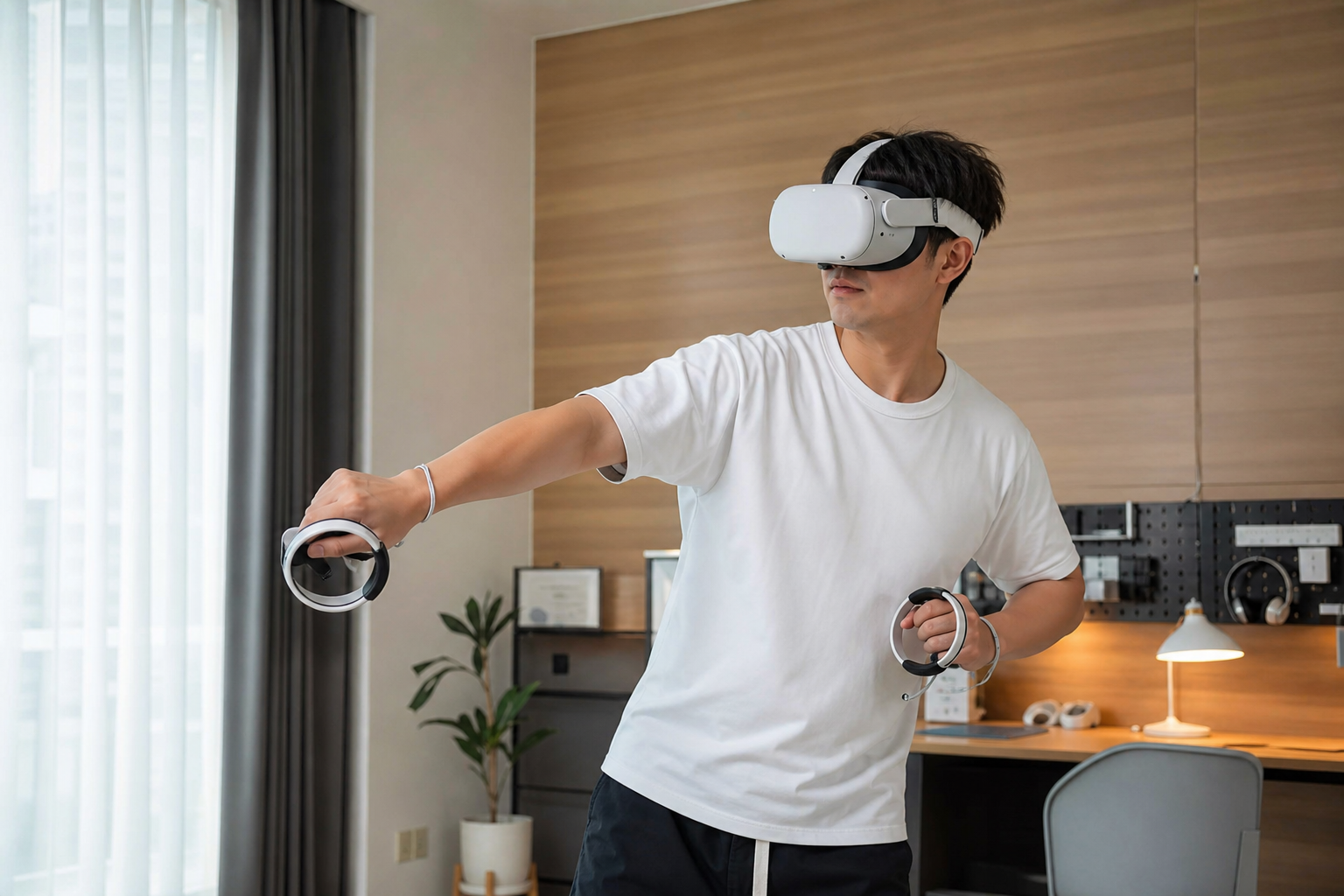
This isn't a simple yes or no answer. It completely depends on what kind of player you are. My experience shows that this accessory solves one problem but creates another. The decision to buy it comes down to which problem bothers you more.
You should buy this VR Fishing Rod if you fit this profile:
- You play one or two fishing games for hours at a time.
- The most important part of the experience for you is the feeling of casting and fighting a fish.
- You are a patient player and don't mind a little clumsiness when navigating menus.
- You want your VR experience to feel as much like a simulation as possible, and you're willing to trade some convenience for that feeling.
On the other hand, you should skip this accessory if you fit this profile:
- You switch between different types of games often and don't want the hassle of attaching and detaching an accessory.
- You get easily frustrated by small inconveniences, like not being able to press a button easily.
- You already have some wrist sensitivity, and the new pressure points from the rod's balance might cause pain.
- You value smooth, fast gameplay over realistic simulation.
For me, as a left-handed player, the trade-off wasn't worth it. The joy I felt from the improved casting motion was consistently erased by the frustration of using the menus. I found myself taking the controller out of the rod just to change my bait, which defeated the whole purpose. The promise of better wrist comfort was only partially true; it just changed the type of discomfort. Ultimately, it added more friction than it removed.
Conclusion
This VR fishing rod enhances the casting motion for lefties but makes menus clumsy. Your personal play style will decide if it's a helpful tool or just another piece of plastic.
Leave a comment