



What does a real 20-minute family game nights test reveal about VR Fishing Rod for Left-handed Users?

You want a VR fishing rod to feel real, but does it just create new problems? I tested one during family game night to find out for myself.
For left-handed users, the VR Fishing Rod is a mixed bag. It greatly improves seated comfort for the main reeling action by keeping your wrist straight. But, it makes navigating menus and controlling anything else much harder. It's only worth it if you play long, seated sessions.
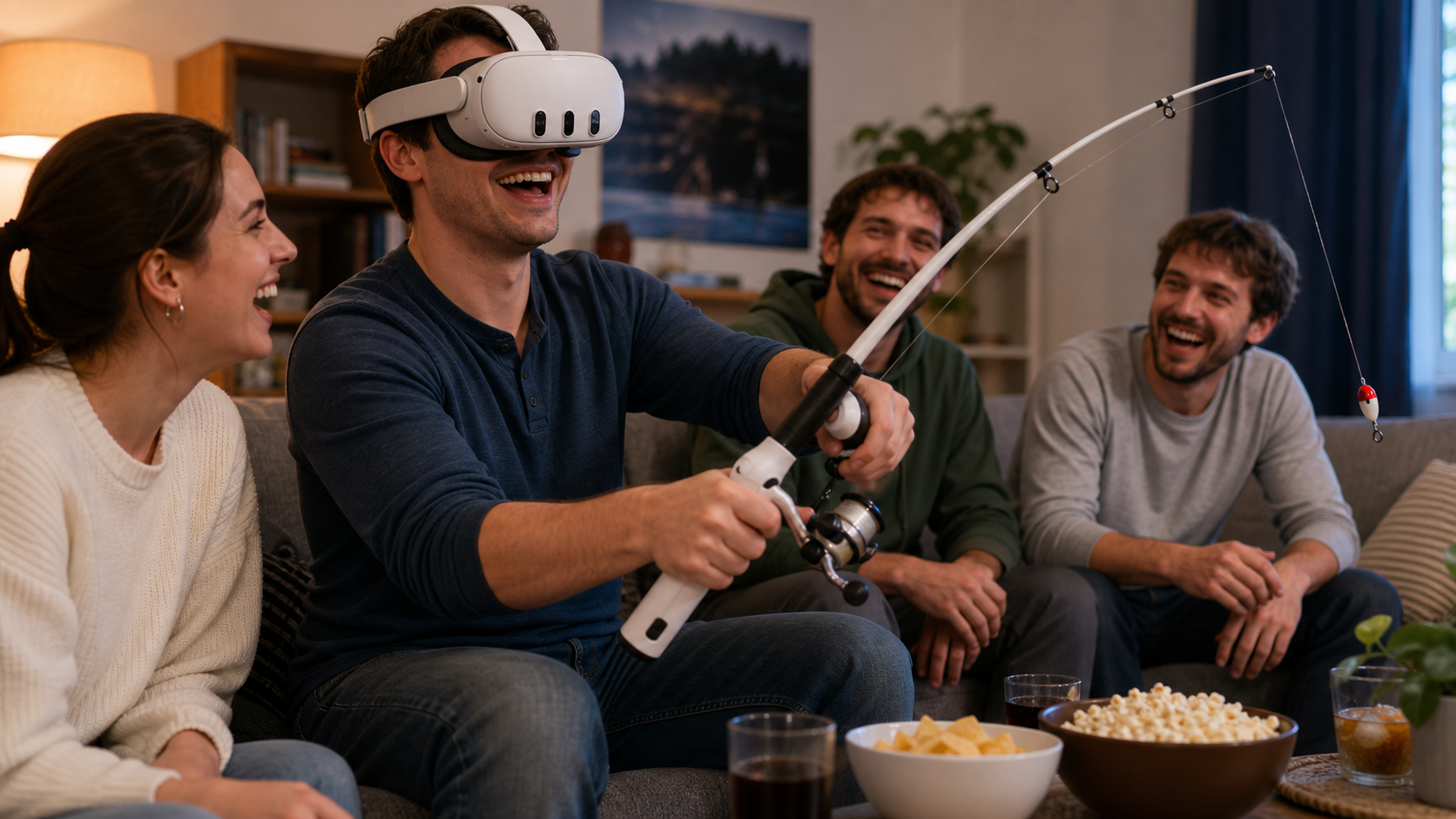
Our family loves a good VR game night. It’s our way of hanging out and getting competitive. Last weekend, we decided to host a fishing tournament on my Meta Quest 3. This was the perfect chance to test a new VR fishing rod accessory I bought. I’m left-handed, and I always found the reeling motion with a bare controller felt a bit weird, especially when sitting down. I wanted to see if this little plastic rod was just a silly gimmick or a real solution. The plan was simple: play for at least 20 minutes straight, just like a real game night, and see what happens when the initial fun wears off. Does it actually help, or does it just get in the way?
When the novelty fades, does VR Fishing Rod still solve seated ergonomics?
At first, any new VR toy is exciting. But what happens after the first ten minutes? Does it actually make the game better, or just more complicated?
Yes, it absolutely solves the core ergonomic problem for seated play. The rod attachment forces your reeling hand into a natural, comfortable grip. This prevents the wrist strain that comes from holding a bare controller sideways for a long time. The benefit remains long after the novelty is gone.
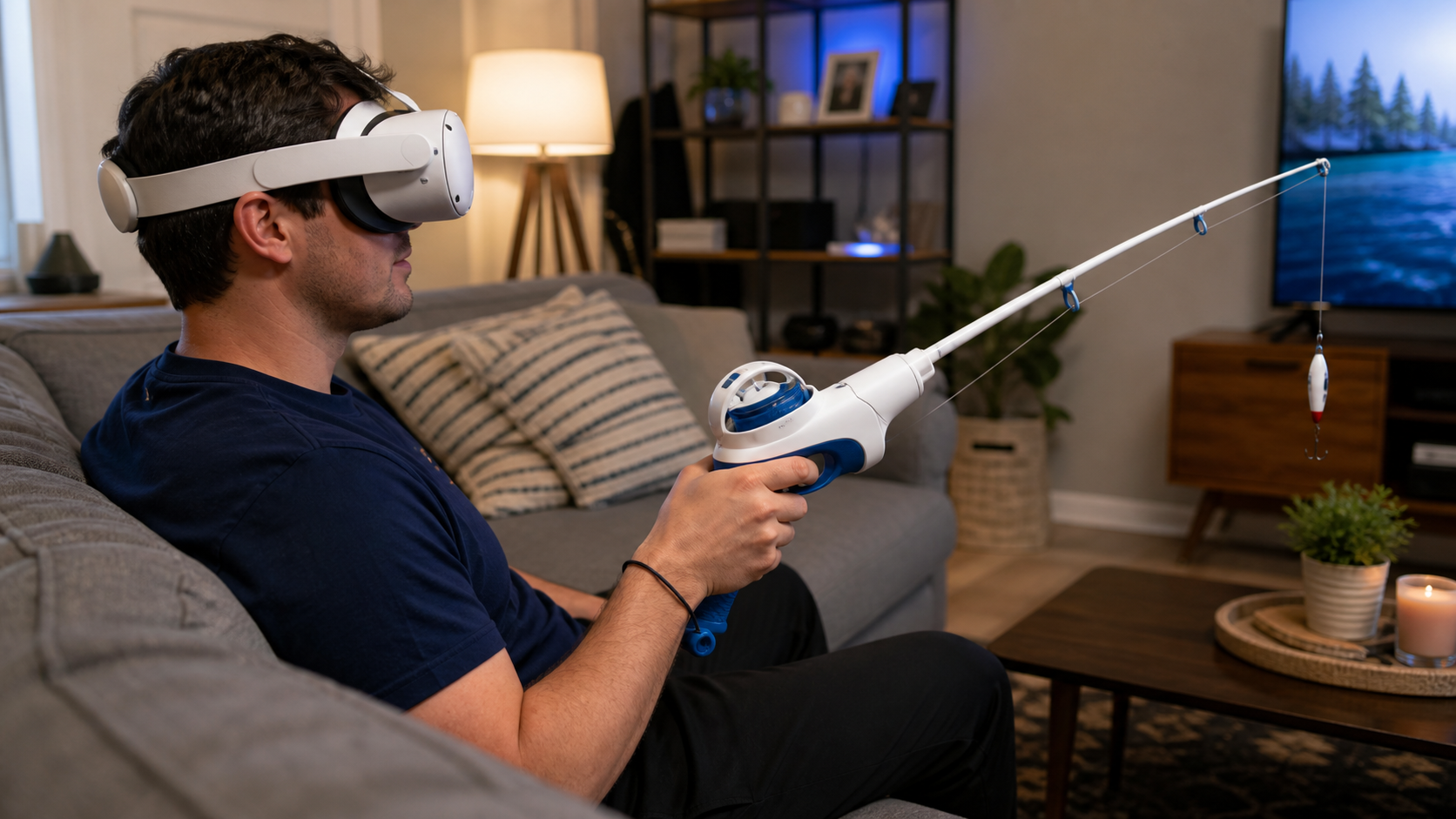
The first cast with the rod felt amazing. It added a sense of weight and realism that a bare controller just can't match. My nephew, who went first, loved it. But the real test for me began when I was five fish into the tournament, comfortably slouched on the couch. This is where the rod's true value appeared. Holding a bare controller sideways to mimic a reel forces your wrist into an unnatural angle. After a while, it starts to ache. The fishing rod accessory completely eliminates this issue. Your hand grips the handle naturally, and the reeling motion is smooth and painless.
Long-Session Comfort: Rod vs. Controller
I tracked how my wrist felt over a 20-minute session. The difference was clear. The rod isn't just for show; it's a real comfort upgrade for anyone who plans to play for more than a few minutes while seated.
| Time Elapsed | Experience with Bare Controller | Experience with VR Fishing Rod |
|---|---|---|
| 5 Minutes | Feels a little awkward but manageable. The motion is not intuitive. | Feels immersive and fun. The casting and reeling motions feel natural. |
| 15 Minutes | A noticeable strain is developing in my left wrist from the constant unnatural angle. | Still comfortable. My arm feels fine, and the focus is on the game, not my wrist. |
| 20+ Minutes | My wrist is genuinely tired and I need to take a break. The discomfort is distracting. | No wrist strain at all. I could easily keep playing for another hour. |
Can the writer show the exact moment seated ergonomics appears in family game nights?
It’s one thing to talk about "ergonomics," but it's another to feel it. So, when did the problem actually become real during our game night?
The moment of truth came after my third catch, about twelve minutes into my turn. While reeling in a tough fish, I felt a distinct ache in my left wrist from holding the controller sideways. The awkward angle was no longer just a weird feeling; it was uncomfortable.
I was sitting on the floor, leaning against the couch. The game started, and I cast my line using the bare controller. Everything was fine. I caught a small bass. Then another. The game required me to hold my left controller horizontally and rotate it to reel in the line. On the third fish, which put up a fight, I had to reel for about 30 seconds straight. That’s when it hit me. A dull, annoying pain started in my wrist. It was the classic sign of repetitive strain from a bad angle.
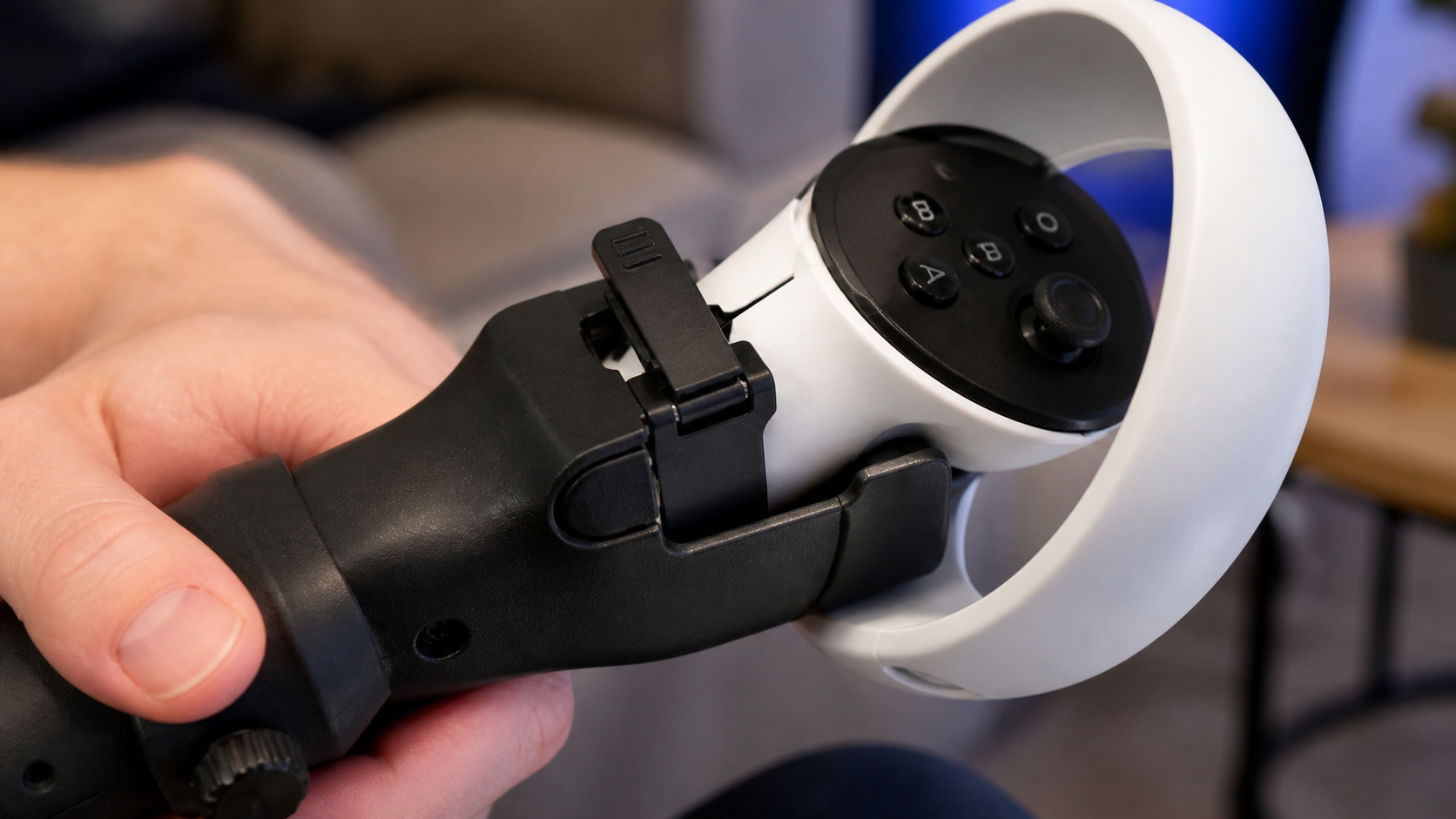
I paused the game right there. I grabbed the VR Fishing Rod accessory and took a moment to snap my left controller into it. The controller lock mechanism was surprisingly secure; a little plastic latch clicks into place, holding it firmly. I unpaused the game and cast again. The next fish I hooked felt completely different. My hand was now in a vertical, fist-like position, gripping a proper handle. The reeling motion was a simple, smooth rotation. The wrist pain was gone. Instantly. That was the moment—the direct, immediate relief from a specific, game-induced pain.
Can bare controllers still feel better for part of family game nights?
An accessory is supposed to make things better. But can it actually make some parts of the experience worse? I quickly found out the answer.
Yes, bare controllers are far superior for anything that isn't casting or reeling. Navigating menus, changing lures, or even checking the map is clumsy and slow with the rod attached. The accessory gets in the way of quick button access, making simple tasks frustrating.
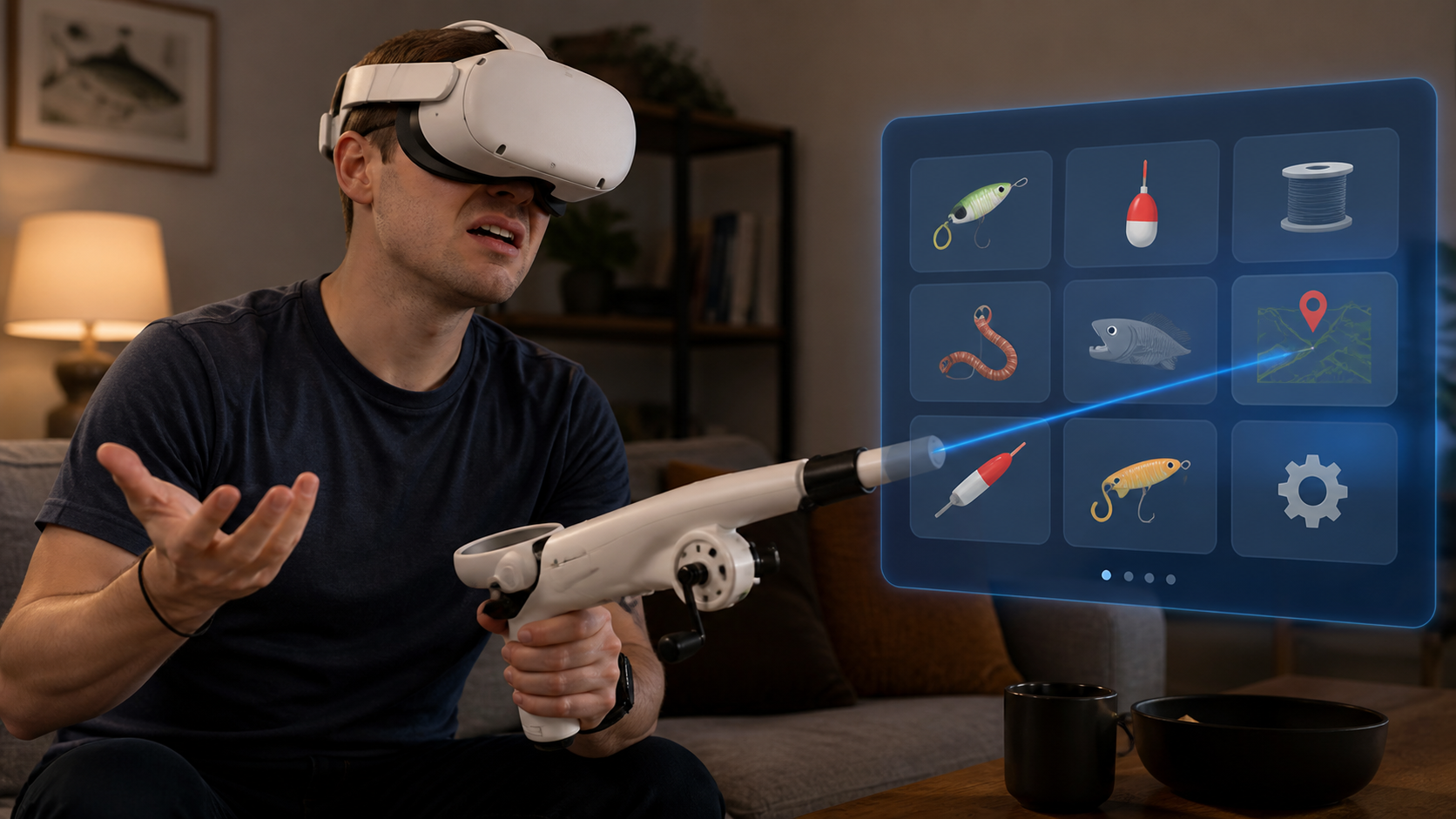
After celebrating my pain-free reeling, I needed to switch to a different type of bait. This is where the dream died a little. With the controller locked into the rod, my thumb couldn't easily reach the joystick or the menu buttons. I had to contort my hand into a weird claw shape to select the new lure. It took me three times as long as it would have with a bare controller. My family started getting impatient, and the flow of the game was broken.
This created a frustrating trade-off. For the core gameplay of fishing, the rod was a huge win. For the 20% of the game that involves menus and inventory management, it was a massive hassle. At one point, I almost took the controller out of the accessory just to change a setting, which defeats the whole purpose. So, if you're playing a game that requires constant menu interaction, the bare controller is faster and less annoying. The rod is a specialized tool for reeling, not an all-around improvement.
What would make the reviewer say VR Fishing Rod is not worth it for seated ergonomics in family game nights?
Every accessory has a target user. So who should avoid this one? Based on my test, I have a very clear idea of who would be wasting their money.
This accessory is not worth it if you play standing up, only play in short bursts, or frequently switch between different games. Its main value is solving a very specific problem: long-term wrist strain for seated players. If you don't have that problem, the rod is just a novelty gimmick.
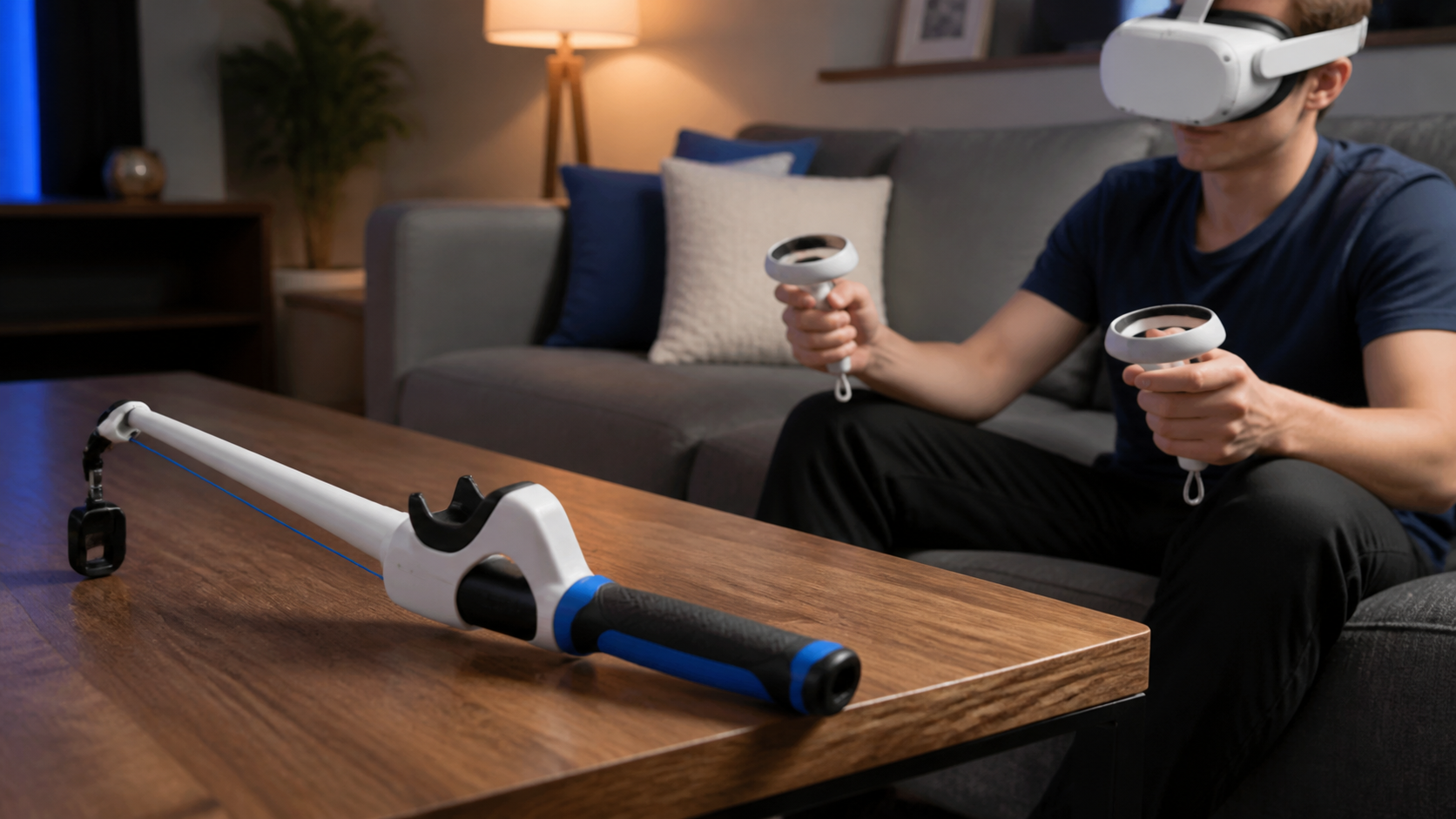
Let's break down who should pass on this. First, if you prefer to play VR fishing games while standing, you don't need this. When you're standing, your arm has a much wider range of motion, and you can naturally find a comfortable angle for your wrist without needing an accessory. Second, if your VR sessions are short and sweet, maybe 10-15 minutes at a time, don't bother. The time it takes to set up and take down the accessory isn't worth it, and you likely won't be playing long enough to feel the wrist fatigue it's designed to prevent.
Finally, if you're a "game hopper" who jumps from a fishing game to a shooter to a puzzle game in one session, this accessory will live in a drawer. The friction of constantly attaching and detaching it is a real fun-killer. The VR Fishing Rod is a solution for a dedicated, seated fishing enthusiast. For anyone else, the setup hassle outweighs the ergonomic benefit, and you're better off just using the controllers that came with your headset.
Conclusion
The VR Fishing Rod fixes seated wrist strain for left-handers but makes menus clumsy. It's great for long, dedicated sessions but skippable for short or standing play.
Leave a comment