



Should seated VR users buy VR Fishing Rod for casting practice or keep using bare controllers?

Want a more realistic VR fishing cast? A fishing rod accessory seems perfect, but the bulky design can be awkward. I tested if it's better than a bare controller for seated VR.
For seated VR fishing, the rod accessory adds immersion but creates problems with storage and multi-user comfort. Bare controllers remain more practical for casual, shared sessions. The rod is best for dedicated, single-player fishing fans who play for long sessions.
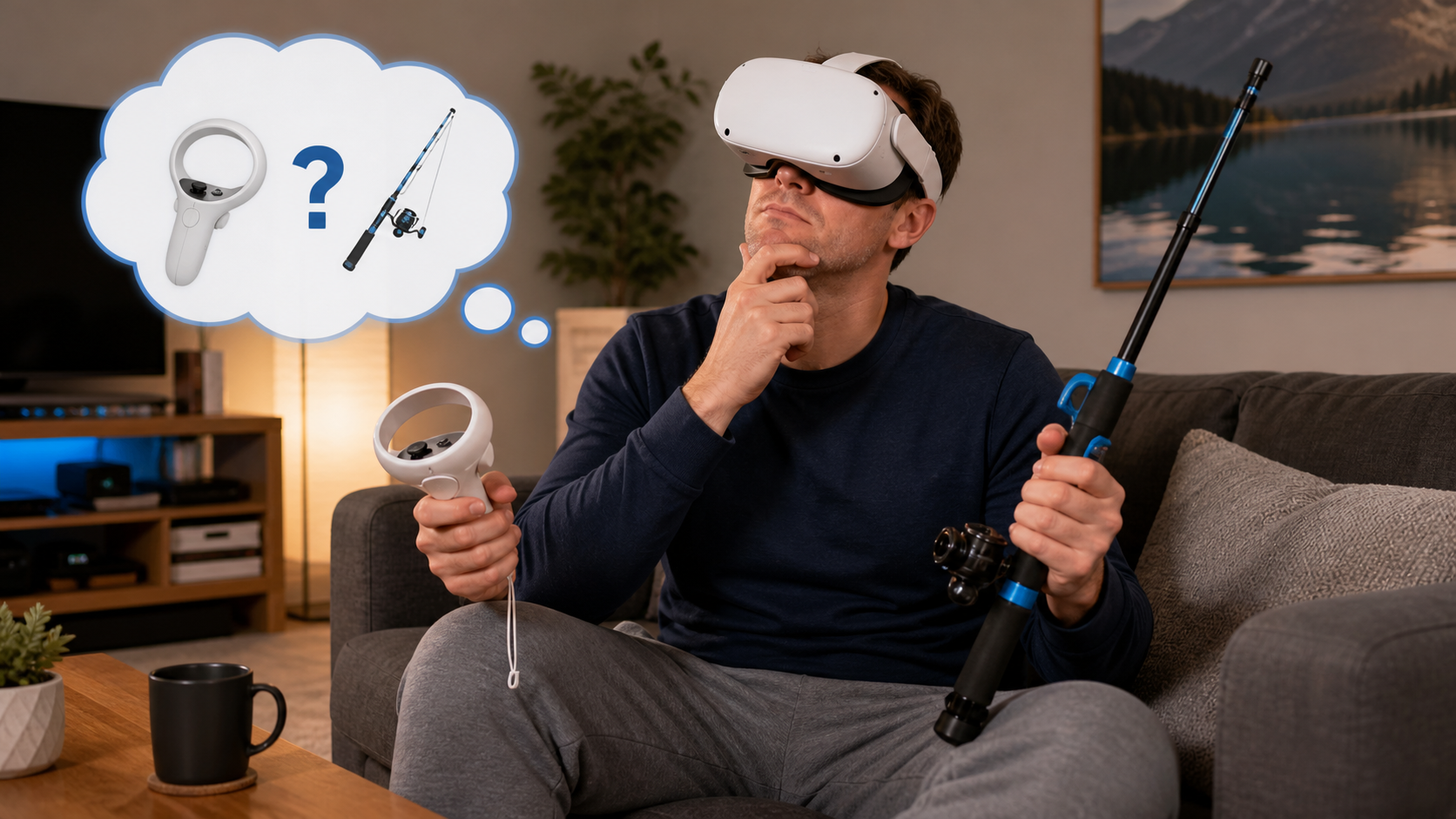
I love the idea of making VR feel more real. So when I saw a VR fishing rod attachment for my Quest controllers, I bought it immediately. I pictured myself relaxing on my couch, casting away in Real VR Fishing. The initial experience was fun. The weight and length of the rod made the casting motion feel more authentic. But the novelty wore off quickly when I started noticing the small problems. My headset is a shared device in our home, and what works for me needs to work for my family, too. This simple case study follows the real questions I asked myself as I decided whether to keep using this accessory or go back to the simple, bare controller. I wanted to know if this add-on really improved my experience or just added another layer of hassle.
In a shared headset, does VR Fishing Rod create a different seated ergonomics problem after casting practice?
Our family shares one headset, and we have left-handed and right-handed players. The fishing rod seemed fun, but swapping it between users quickly became a problem. I had to know if the hassle was worth the immersion.
Yes, a VR fishing rod creates new seated ergonomics problems. It makes handoffs between left and right-handed players difficult. The long shape is also awkward to rest on your lap or a side table between sessions, unlike a compact bare controller.
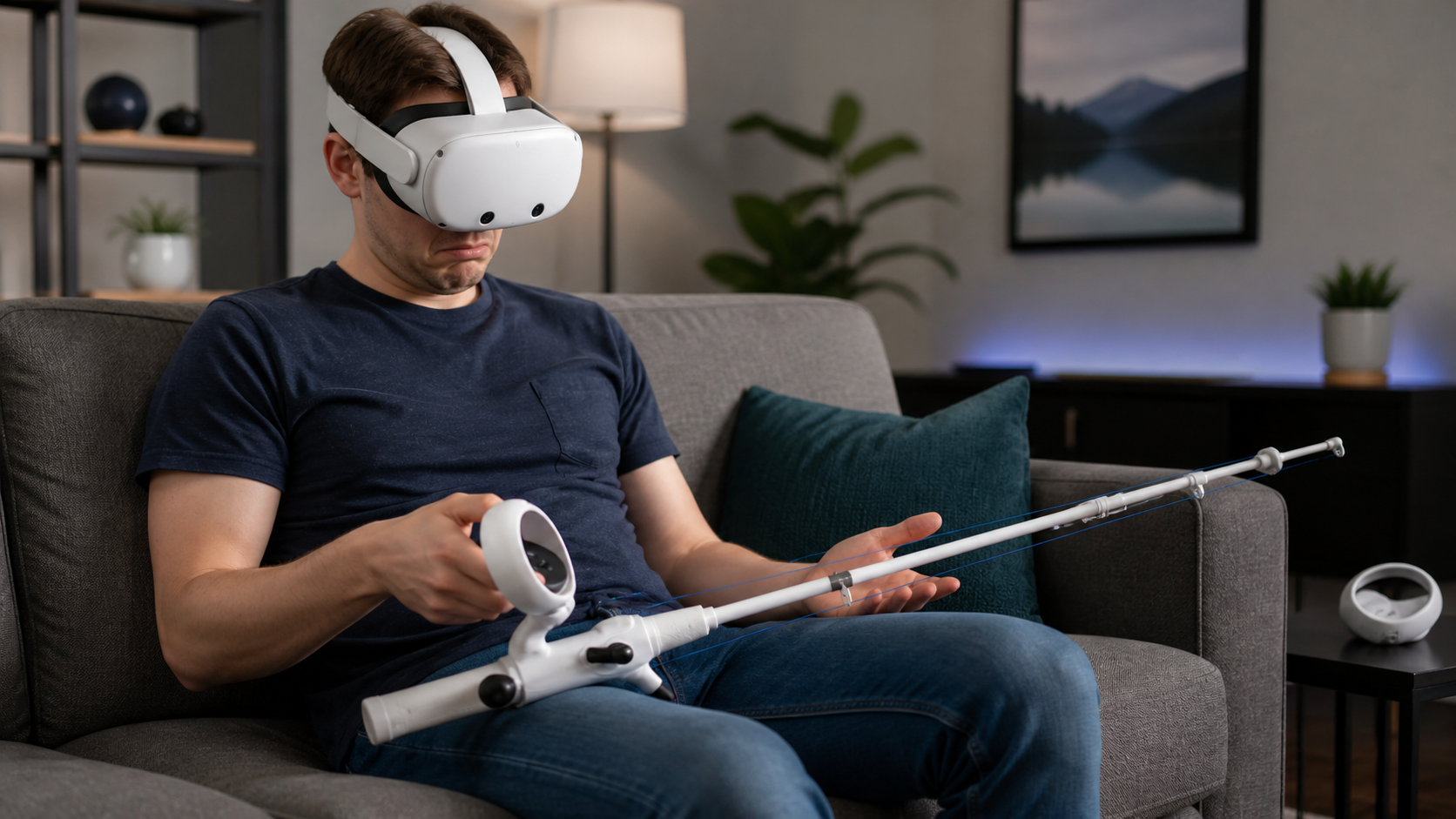
The first big issue I found was with hand orientation. I'm right-handed, and my partner is left-handed. The VR fishing rod I bought is molded for a right-handed grip. While you can switch hands in the game settings, the physical accessory itself feels backward and uncomfortable in a left hand. This immediately makes it a poor choice for a shared headset. Beyond that, the physical form factor became a nuisance when I was playing seated. After a few casts, I'd want to put the controller down to check a message or adjust my headset. A bare controller sits nicely on the couch cushion next to me. This long, thin rod accessory, however, is clumsy. It rolls off, pokes the furniture, and generally gets in the way. It turned a quick, casual gaming session into one that required conscious thought about where to put down my controller.
Seated Ergonomics: Rod vs. Bare Controller
I broke down the practical differences for a shared, seated environment.
| Feature | VR Fishing Rod | Bare Controller |
|---|---|---|
| Hand Switching (Right/Left) | Poor. The physical grip is often designed for one hand, making it uncomfortable for the other user. | Excellent. The controller is symmetrical and works perfectly for both left and right-handed players without any changes. |
| Resting on Lap/Couch | Awkward. The long, unbalanced shape makes it easy to roll off or get in the way. | Easy. It is compact, stable, and rests securely on almost any surface next to you. |
| Storage After Play | Difficult. It adds bulk and requires more space. It does not fit in most standard cases. | Simple. It fits perfectly in the original box or any compact VR carrying case. |
Can the article compare VR Fishing Rod with bare controllers during casting practice?
You want that perfect cast in your favorite fishing game. A bare controller feels okay, but you wonder if a rod accessory would improve your aim. I put them head-to-head from my couch.
Yes, the VR Fishing Rod makes casting feel more immersive and can help beginners understand the physical motion. However, an experienced player using a bare controller can achieve similar precision with less physical effort and no setup time.
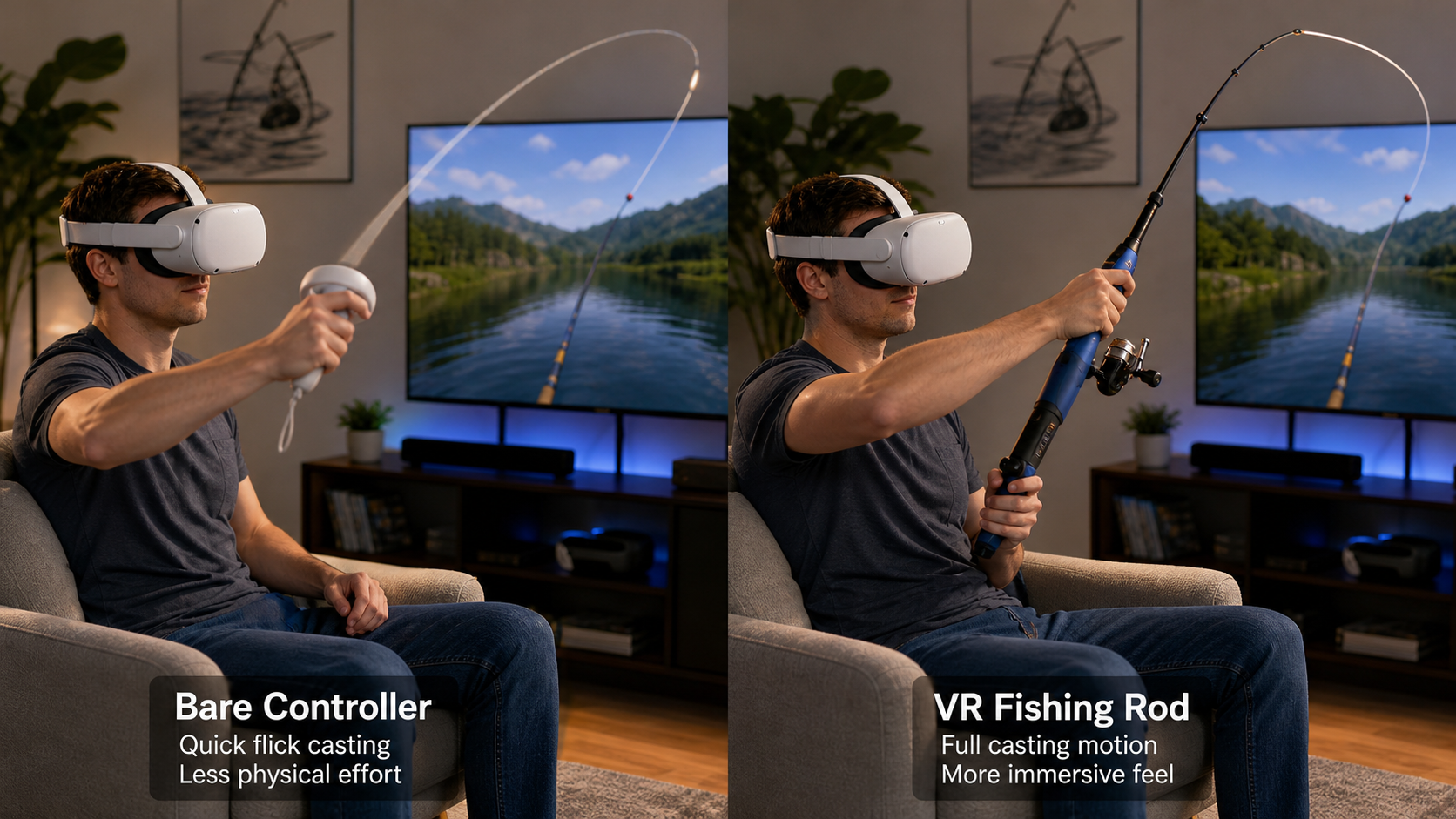
I spent an hour practicing my cast, switching between the fishing rod attachment and a bare Touch Plus controller. With the rod, the movement felt more authentic. The added length and slight weight guided my arm through a full casting motion, which was satisfying. For someone completely new to VR fishing, I can see this being a helpful teaching tool. It forces you to perform the correct physical action. However, after about 20 minutes, my arm started to feel a bit tired from the larger movements required, especially while seated. When I switched back to the bare controller, I was surprised. I could get the exact same distance and accuracy with just a simple, efficient flick of my wrist. The game is calibrated so well that it doesn't need the grand physical gesture. The bare controller was faster, required less energy, and let me get back to the core gameplay without the extra physical baggage. The rod adds a layer of simulation, but it doesn't necessarily make you a better virtual fisherman. It's about feel, not function.
Does the accessory make menus, charging, or controller removal harder?
You just finished a great fishing session and need to quit the game. But the menu button is hard to press with the rod on. Now you have to fight to get the controller out.
Yes, most VR fishing rod accessories make daily use harder. They can block menu buttons, make the controller difficult to remove, and prevent access to the USB-C charging port. You often have to disassemble it to charge the controller.
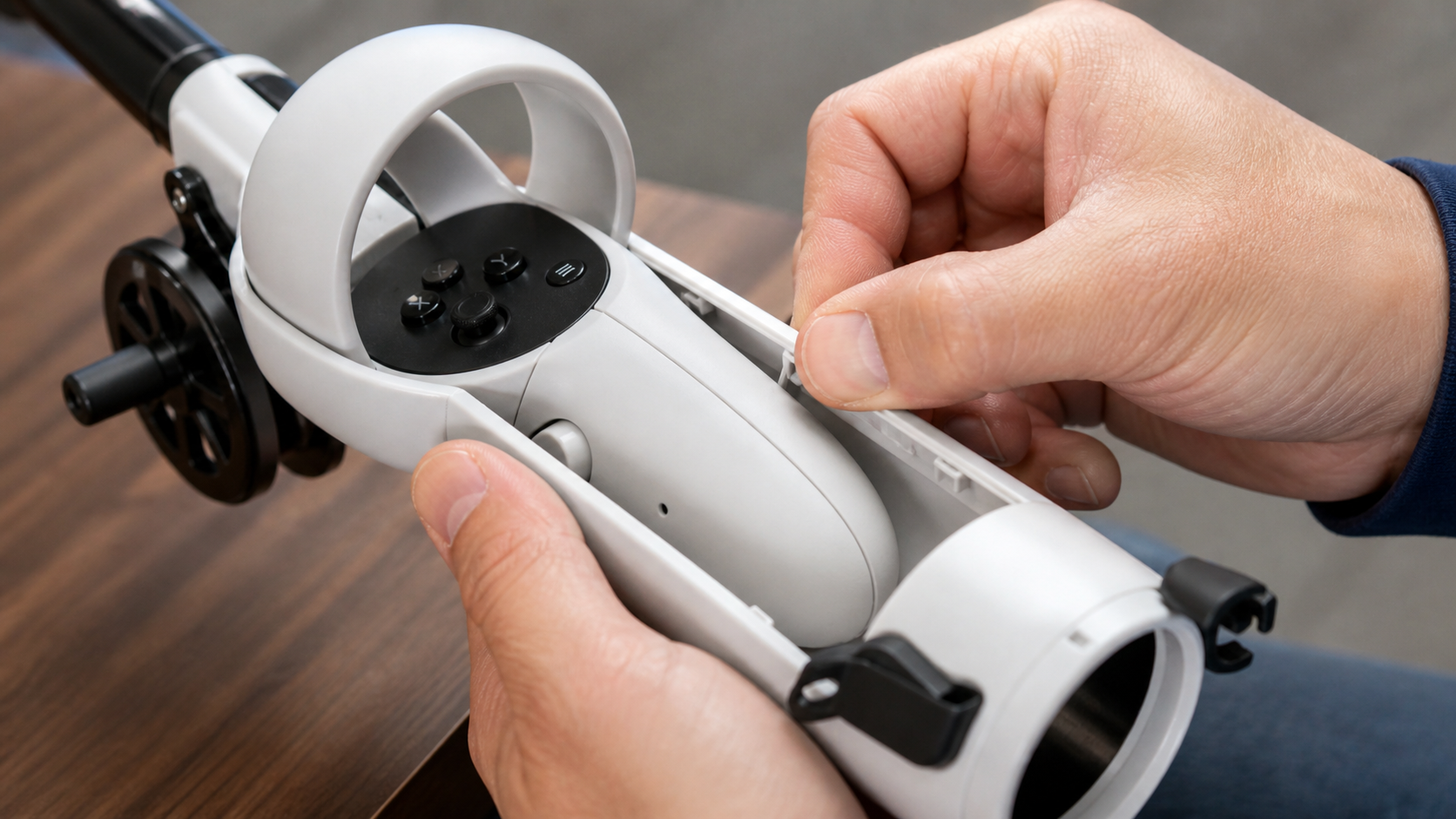
This was the part that annoyed me the most. The practical, everyday use of my controller became a chore. The plastic housing of the fishing rod covered the edge of the Oculus/Meta button. I had to jam my thumb into the gap to open the main menu. It was a small thing, but it broke the seamless experience I expect from VR. Then there was the issue of removal. The controller snapped in very tightly. While that's good for secure gameplay, it meant I had to pry it out carefully every time I wanted to switch to a different game. I was constantly worried I might scratch the controller or break the plastic clips on the accessory. The biggest deal-breaker was charging. The rod completely blocked the USB-C charging port. This meant that after every few sessions, I had to perform the difficult task of removing the controller just to charge it. A bare controller has zero of these problems. You just play, put it down, and plug it in when needed. The accessory added unnecessary steps to basic functions.
What would the reviewer keep using after the casting practice test if seated ergonomics improves?
You've weighed the pros and cons. The rod is fun but annoying. The bare controller is easy but less immersive. What's the final verdict for a seated player who just wants to relax?
After testing, I would stick with the bare Quest Touch Plus controllers for seated VR fishing. While the rod's immersion is fun initially, the ergonomic issues and setup hassle outweigh the benefits for casual, seated play.
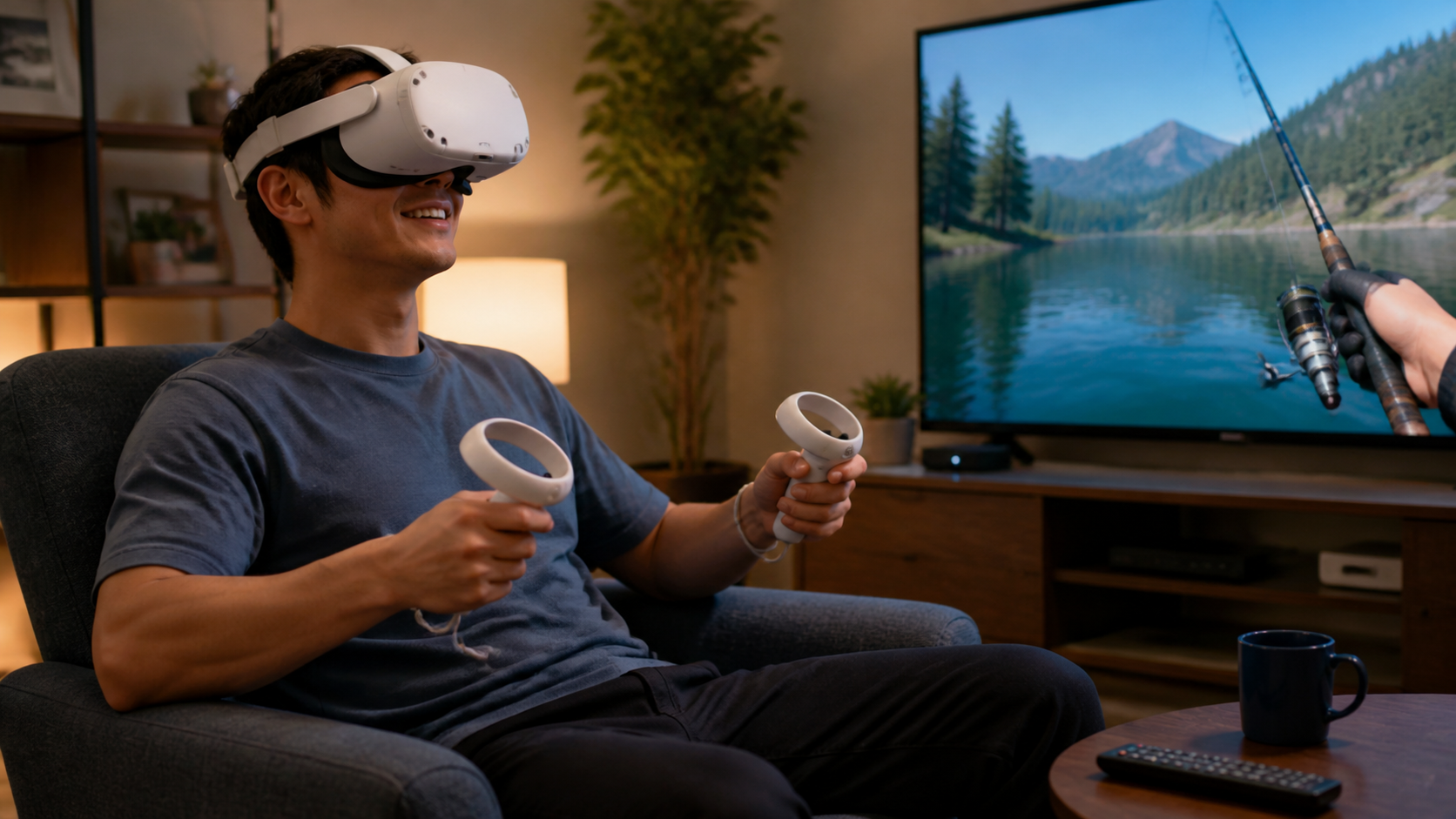
If my seated ergonomics get better, I would still choose the bare controller. My final decision comes down to one word: convenience. The VR fishing rod is a novelty accessory. It's fun for a few minutes and it does make the experience feel different. But it's not better in any practical way for my situation. As a seated player in a home with a shared headset, the rod introduces more problems than it solves. It's not comfortable for left-handed users, it's a pain to store between sessions, and it makes basic controller functions like charging a hassle. Most importantly, it's a one-trick pony. This accessory is only useful for one type of game. The moment I want to play Beat Saber or Gorilla Tag, I have to take it off. The bare controller is a master of all trades. It works perfectly for every game, is comfortable for everyone, and requires no setup. The rod is an interesting idea, but I'd only recommend it to a hardcore, right-handed fishing game enthusiast who plays standing up and has a dedicated VR setup. For everyone else, especially seated players, save your money and stick with the controllers you already have.
Conclusion
For seated VR, a fishing rod adds temporary fun but long-term hassle. Bare controllers are more practical, comfortable, and convenient for most players, especially those who share a headset.
Leave a comment