



Should Real VR Fishing players buy VR Fishing Rod for casting practice or keep using bare controllers?

Your casting in Real VR Fishing feels inconsistent, and you wonder if a rod accessory is the answer. Will it be a game-changer or just another plastic gimmick gathering dust?
A VR Fishing Rod can improve casting immersion and muscle memory for dedicated players. However, it introduces new problems with reel simulation and menu navigation, especially for left-handed users or in shared-headset households. It's not a clear-cut upgrade and may frustrate casual players more than it helps.
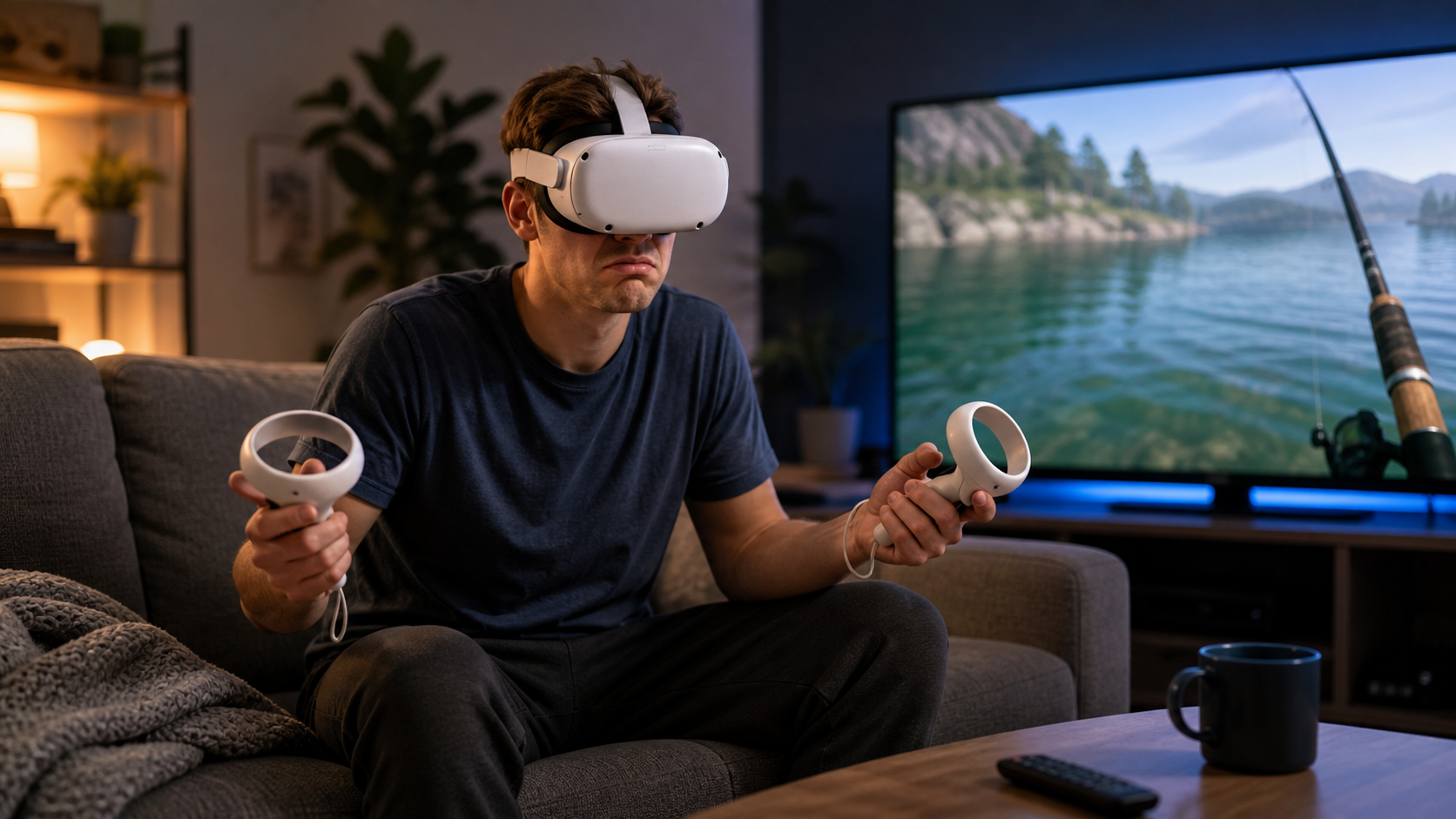
I've spent countless hours in Real VR Fishing, and I love it. But my casting always felt a little... off. Sometimes perfect, sometimes a wild miss. I saw a VR Fishing Rod accessory online and thought it might be the key to building real muscle memory and making my casts more repeatable. I wanted to know if a physical attachment could truly improve my in-game skill. So I bought one and put it through a real-world test, focusing on the problems I knew would matter to a regular player like me. This is what I found.
In a shared headset, does VR Fishing Rod create a different reel simulation problem after casting practice?
You share your headset with family and friends. An accessory that works for your right-handed setup might be a total nightmare for a left-handed player. I discovered this problem firsthand.
Yes, the VR Fishing Rod completely changes your hand posture, which creates a new reel simulation problem. The game misinterprets the new reeling motion. This issue is much worse for left-handed players, who need to physically reconfigure the accessory to even attempt to play.
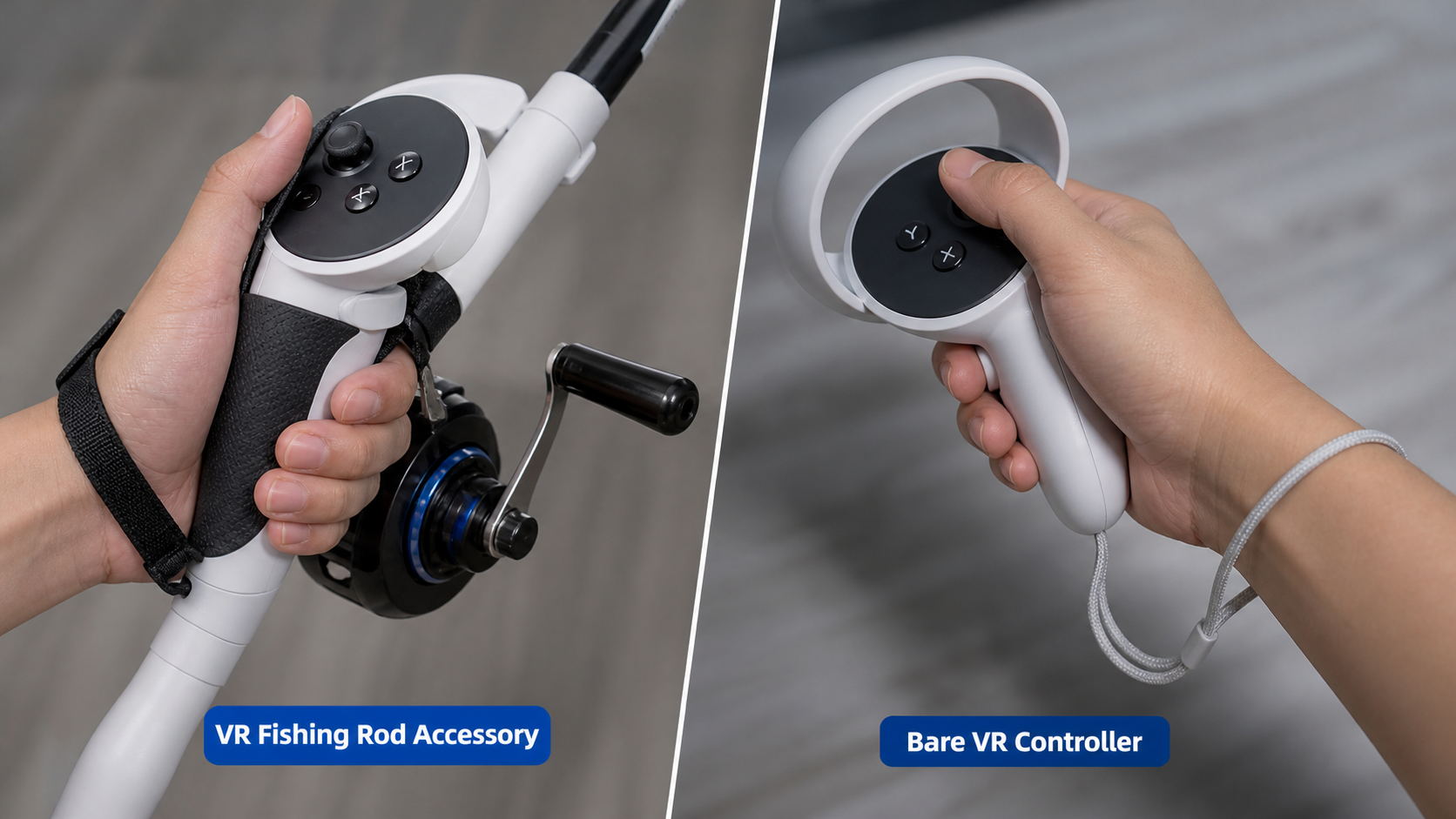
My experience turned into a case study on shared use. I'm right-handed, but my partner is left-handed. With bare Quest Pro Touch controllers, switching is simple. She just changes the setting in the game menu, and it works perfectly. The VR Fishing Rod destroyed that simplicity. The accessory forces you to lock the controllers into a specific orientation. For me, the right controller became the rod handle and the left became the reel crank. When my partner wanted to play, I couldn't just pass the headset over. I had to take the controllers out of the plastic housing and swap them. This was annoying and took a few minutes each time. The real issue, though, was the reeling. The rod forces your reeling hand to make a large, circular motion. The game, designed for the small wrist-flick of a bare controller, got confused. My reeling felt jerky and unresponsive. For my left-handed partner, it was unplayable.
Hand Orientation and Reeling Issues
| Scenario | Bare Controllers (Quest Pro Touch) | VR Fishing Rod Accessory |
|---|---|---|
| Right-Handed Reeling | Natural, small wrist rotation. Tracking is smooth and reliable. | Forced, large arm circle. Game often misreads the reeling speed. |
| Left-Handed Player (Shared Headset) | Simple in-game setting change. Takes five seconds. | Requires physically disassembling and reassembling the accessory. Reeling feels broken. |
Can the article compare VR Fishing Rod with bare controllers during casting practice?
You want to know if the accessory is actually better for casting. Does the added plastic really improve the core mechanic of the game? I did a direct, side-by-side comparison.
Yes. The VR Fishing Rod makes the casting motion feel more realistic and helps with repeatability. Bare controllers, however, are far superior for menu access and overall convenience. For pure casting practice, the rod has an edge, but this comes at a significant cost to gameplay fluidity.
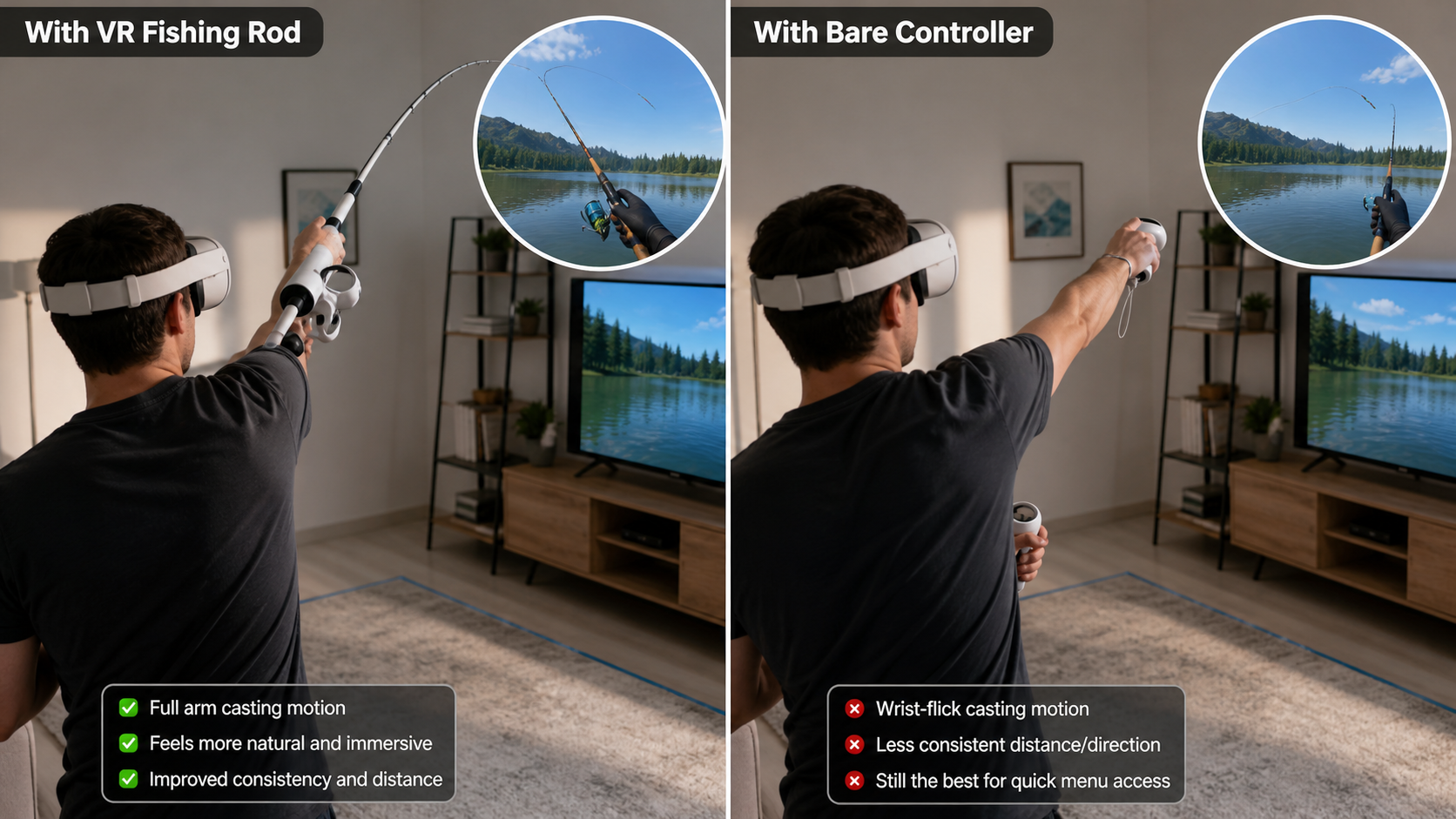
I dedicated a full session just to casting, switching back and forth between the two setups to feel the difference. With my bare controllers, the entire motion is in my wrist and a small flick of my arm. It's fast and easy, but also easy to be inconsistent. A slight change in my wrist angle could send the lure flying off course. Accessing my tackle box, map, or any other menu was instant. The controller is always ready to point and click. Then I switched to the VR Fishing Rod. The change was immediate. The casting motion now involved my whole arm, from the shoulder down. It felt much more like real fishing. The physical length of the rod attachment forced me to be more deliberate. My casts became more consistent in both distance and direction. The muscle memory felt more authentic. But this improvement came with a huge drawback. Any time I needed the menu, the experience fell apart.
Can the article show a failure case honestly?
You are skeptical of reviews that only praise a product. You know every accessory has flaws, and you want to know what they are before you buy. I'll tell you exactly where it failed.
Yes. The most significant failure of the VR Fishing Rod is menu interaction. Using the long, rod-attached controller to navigate in-game menus is incredibly clumsy and slow. This constant frustration breaks the immersion far more than casting with a bare controller ever could.
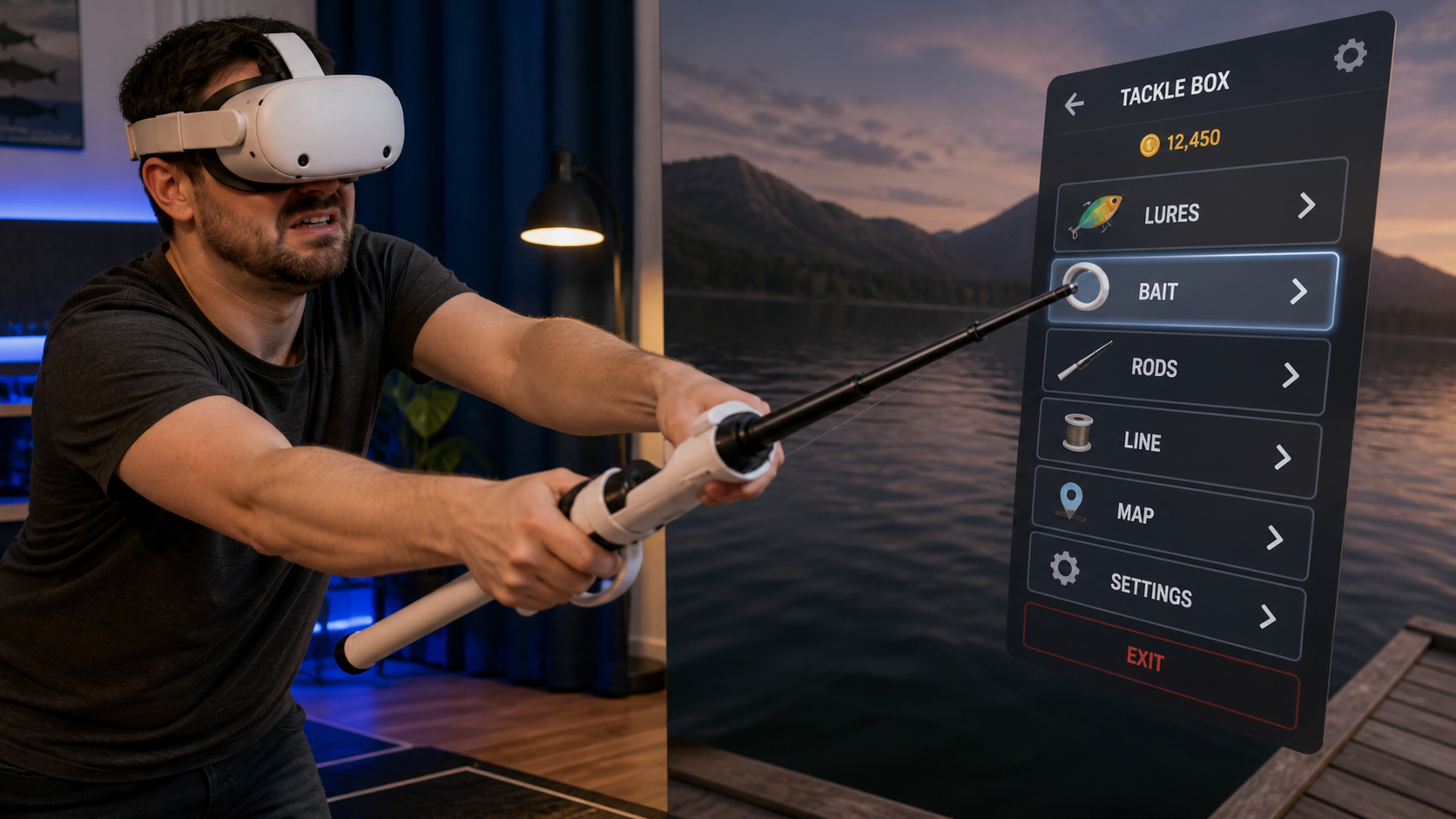
The moment I knew the accessory had a fatal flaw was during a fishing competition in the game. I spotted a rare fish and needed to swap my lure and bait quickly. With a bare controller, this is a subconscious action: point, click, and you're done in two seconds. With the VR Fishing Rod, it was a disaster. My right hand was locked into holding the rod. I had to tilt and angle the entire thing to aim the controller's pointer at the small UI buttons. It felt like trying to type on a keyboard with a broom handle. My aim was shaky, and I kept missing the icons. By the time I fumbled through the menus and got the right lure, the fish was long gone. This is the honest failure of the product. It improves one specific motion (casting) by severely compromising a constant, necessary action (UI navigation). For a game like Real VR Fishing, where you frequently manage your inventory, this is not just a small annoyance; it's a fundamental break in the gameplay loop.
What would the reviewer keep using after the casting practice test if reel simulation improves?
You wonder what the final verdict is. If the game developers could magically fix the reeling problem, would the accessory be worth it then? Here is what I would choose.
Even if reel simulation were perfected, I would still use bare controllers for most sessions. The VR Fishing Rod would be reserved for long, immersive fishing trips. For casual play, quick sessions, or sharing my headset, the convenience of bare controllers is unbeatable.
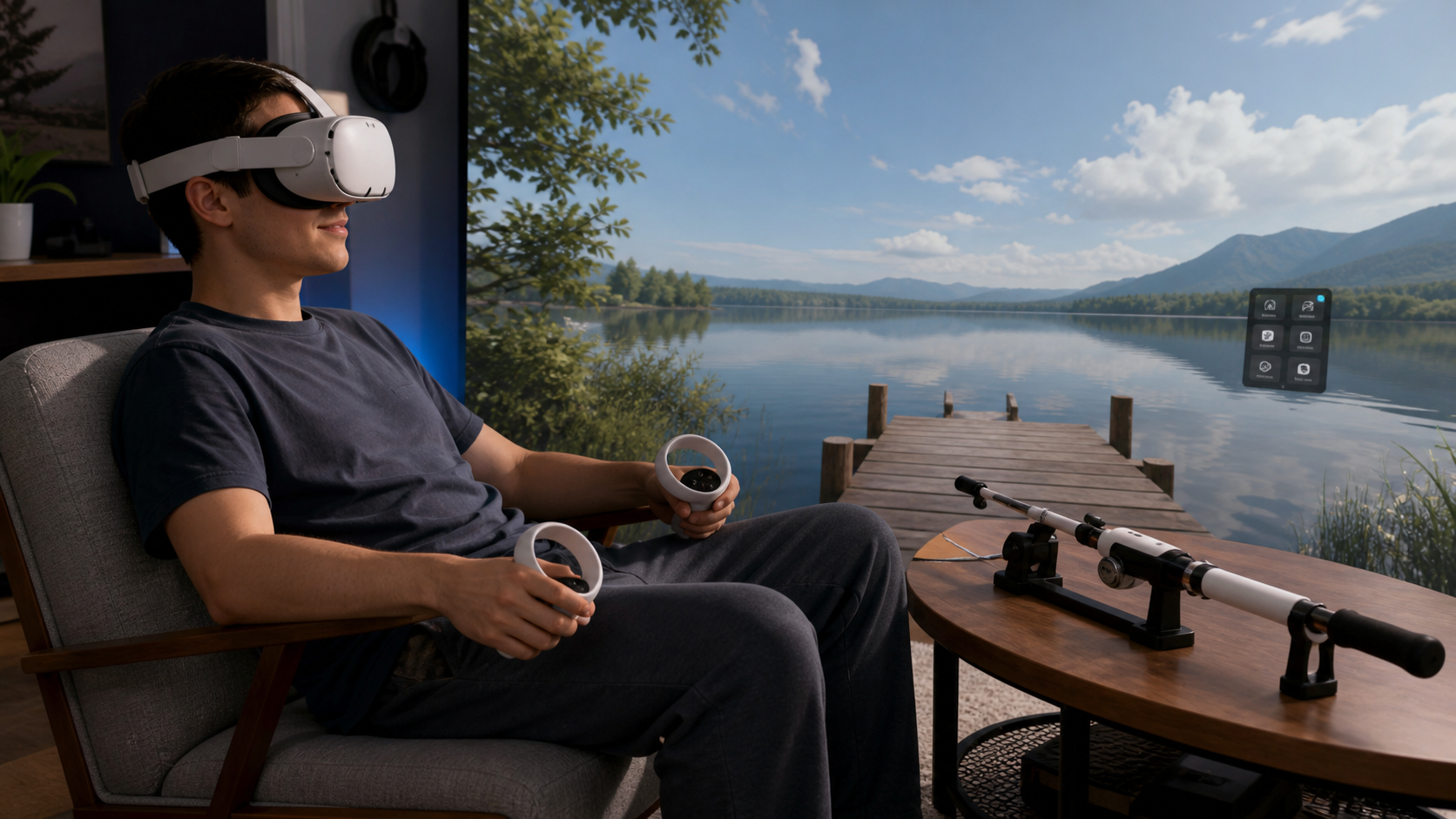
Let's step into an ideal world for a moment. Imagine Real VR Fishing gets an update with a dedicated "Accessory Mode." In this mode, the reeling is perfectly calibrated for a rod attachment, and the tracking is flawless. In that scenario, the VR Fishing Rod becomes a very compelling tool for immersion. I would definitely use it for my "serious" fishing sessions—when I plan to settle in for an hour or more and just focus on the pure experience of fishing. The realistic casting motion is satisfying and would make those dedicated sessions feel more special. However, the menu navigation issue would still exist. Because of that, the bare controllers would remain my go-to for daily play. For a quick 20-minute game after work or when my partner wants a turn, the ability to jump right in, easily navigate all the menus, and pass the headset over without any hassle is far more valuable. The accessory is a fun novelty, but it's not a replacement.
Conclusion
The VR Fishing Rod is a great idea for enhancing casting immersion. But its practical flaws in reel simulation and menu control make bare controllers the better all-around choice for now.
Leave a comment