



Should melee fans trust product claims about blade balance before seeing a real test?

VR melee fans want immersion, but clunky accessories often ruin the experience. Do expensive VR swords actually fix the awkward blade balance, or just create more problems for serious players?
No, you should not trust claims about blade balance without a real test. My experience shows that while a VR sword accessory can add a sense of weight, it often introduces significant wrist fatigue, tracking issues during fast swings, and makes simple menu navigation feel clumsy and top-heavy.
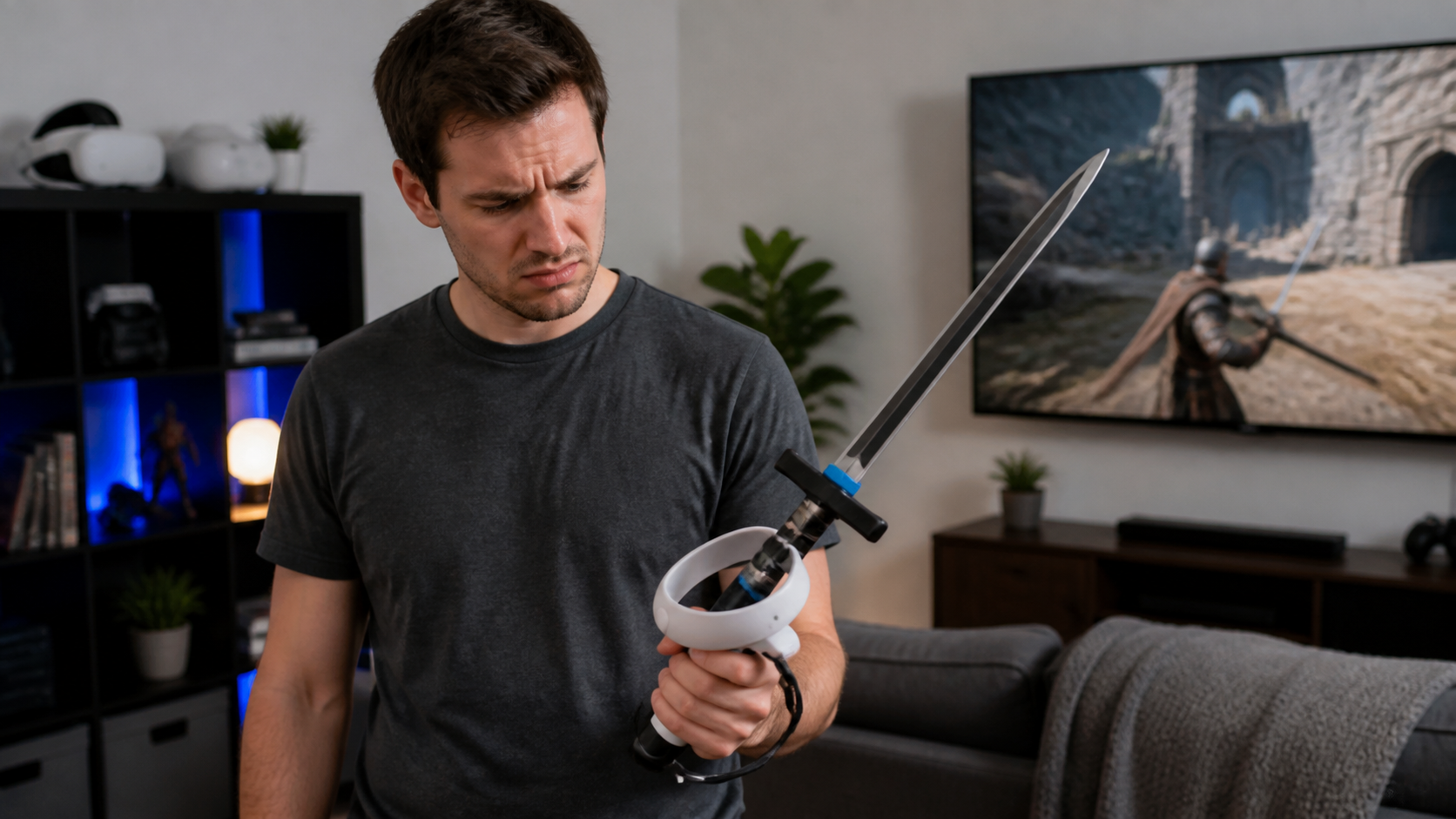
I'm a huge fan of melee games like Blade & Sorcery: Nomad on my Meta Quest 3. I chase that feeling of perfect immersion, where the controller in my hand feels like a real sword. So when I saw a VR sword accessory that promised to solve the weightless, unbalanced feel of a bare controller, I had to try it. The product page made big claims about perfect balance and a more realistic feel. But as I quickly learned, the marketing hype is very different from the reality of daily use.
I decided to put this accessory to the test over a few weeks of regular play. I wanted to see if it was a real solution for serious players or just another gimmick. This is my honest experience, warts and all, comparing the VR sword directly against using nothing but the standard controllers. Here is what I discovered.
When the novelty fades, does VR Sword still solve blade balance?
That first swing with a weighted VR sword feels incredible. You feel the momentum. But after an hour of intense combat, does your wrist ache and the magic completely disappear?
The novelty wears off very quickly. While a VR sword accessory does improve the initial feeling of weight, this benefit is soon overshadowed by significant wrist fatigue during long sessions. The added weight makes quick, precise movements much harder and feels very clumsy outside of actual combat.
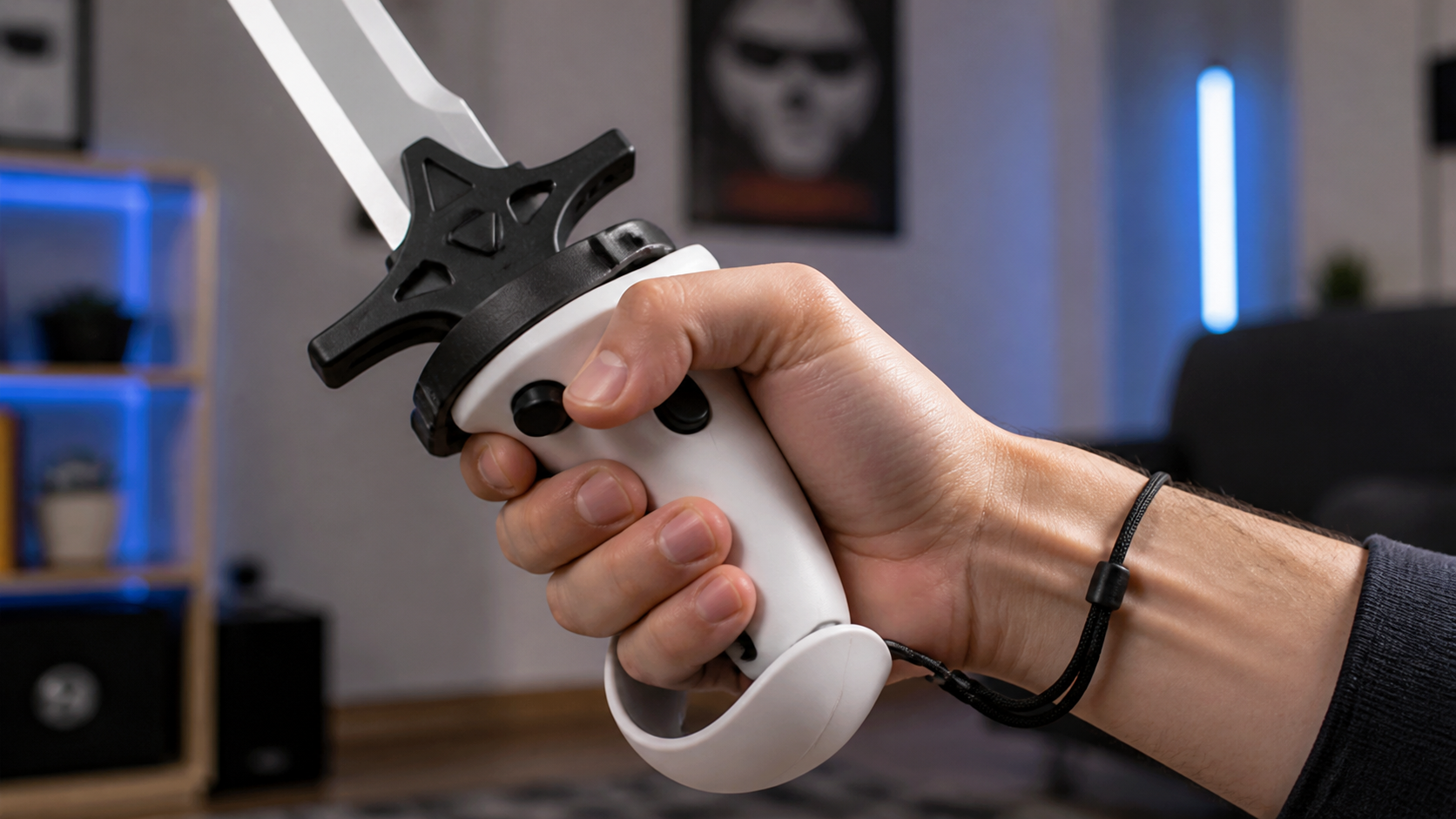
The first 15 minutes with the VR sword attached were great. Every swing in Blade & Sorcery felt more deliberate and powerful. The accessory acted as a counterweight, making the controller feel less like a plastic toy and more like a hilt with a blade attached. But then, I tried to open the game menu. The controller, now top-heavy with the sword attached, tried to tip forward in my hand. It was a small thing, but it was the first crack in the illusion. The problem got worse as I played on. My wrist started to ache from fighting against the extra weight, especially when trying to make fast, defensive moves.
Initial Feel vs. Daily Friction
The accessory feels great for slow, heavy attacks but becomes a problem in almost every other situation. The balance point is shifted so far forward that it creates a constant lever effect against your wrist.
In-Game Actions Compared
I broke down how the accessory changed the feel of common in-game actions compared to just using a normal controller. The difference between a fun first impression and a frustrating long-term experience became very clear.
| Action | Bare Controller | VR Sword Accessory |
|---|---|---|
| Heavy Swing | Feels weightless and lacks impact. | Feels weighted and more immersive. |
| Quick Parry | Fast, easy, and very responsive. | Slower and requires more wrist strength. |
| Menu Navigation | Effortless and feels completely natural. | Awkward, unbalanced, and top-heavy. |
| Wrist Fatigue (After 1 Hour) | Very low. I can play for hours. | Noticeably high. My wrist felt strained. |
Does Meta Quest 3 compatibility change the answer for this VR Sword question?
The Quest 3 has much better tracking than older headsets. Does this advanced technology mean that sword accessories that used to fail will now work perfectly during intense combat?
No, Quest 3 compatibility does not fix the main problems. While its improved inside-out tracking is more reliable, a heavy accessory can still cause tracking glitches during very fast swings. The physical weight remains the primary cause of fatigue and clumsiness, no matter how good the tracking is.
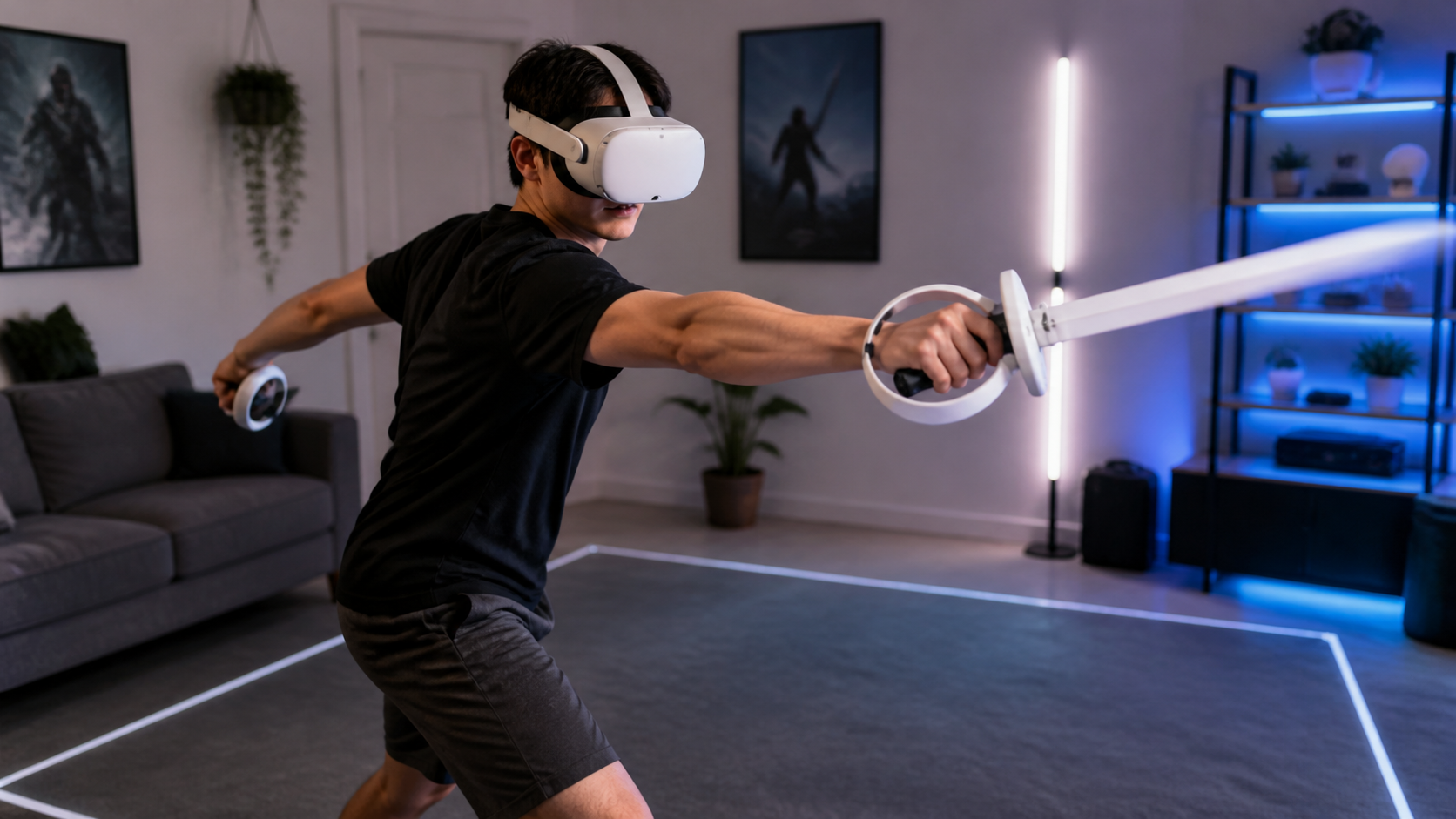
I had hoped the Quest 3's advanced tracking would make a difference. It's true that the headset is much better at keeping track of the controllers, even when your hands are moving quickly. To push it to its limit, I recorded myself doing a series of fast, aggressive swings with the sword accessory attached. For the most part, the tracking held up surprisingly well. The headset didn't lose my controller completely.
However, on the fastest swings, I could see the in-game blade stutter for a split second. My guess is that the plastic from the accessory was briefly blocking the controller's tracking LEDs from the headset's cameras. It was a minor glitch, but in a fast-paced fight, a minor glitch can get you killed. The bigger issue wasn't the tracking, but the physics. The momentum from the heavy accessory would pull my hand, causing me to overshoot my target or making it harder to recover for a parry. It felt like I was fighting the accessory itself, which constantly reminded me that I was just holding a weighted stick.
Can the verdict be different for casual play and daily use?
You might only play on weekends for fun. Does the friction that bothers a daily player even matter if you just want a quick, immersive experience once in a while?
Yes, the verdict is completely different depending on your play style. For a casual player who wants a fun, immersive thrill for 30 minutes, a VR sword can be a great novelty. For daily players, the setup time, wrist strain, and awkwardness make it an impractical chore.
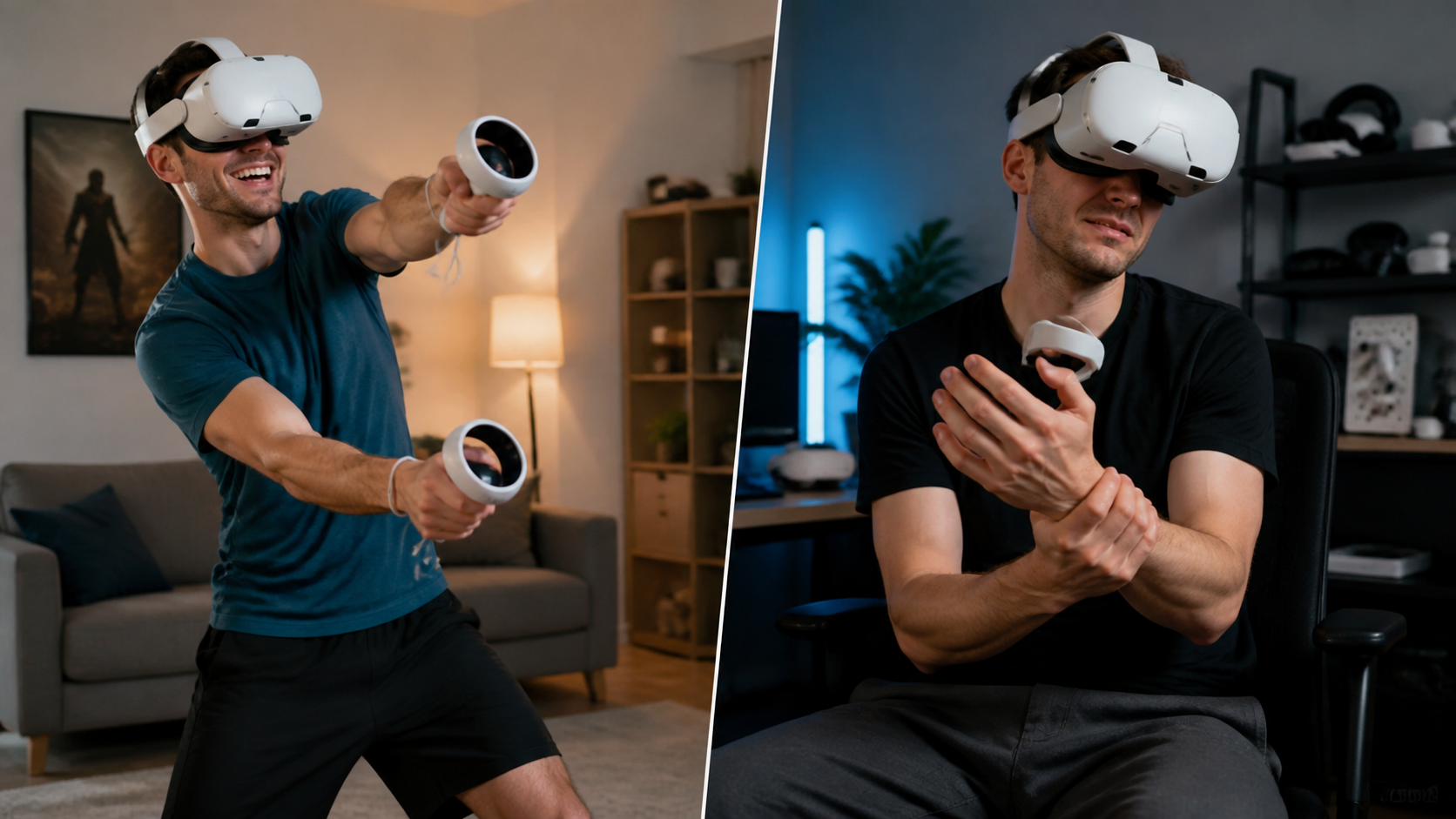
Thinking about it from two different perspectives really cleared things up for me. If I were a casual player, my experience would be much more positive. Jumping into a game for a quick session, the process of attaching the sword would be part of the fun of "gearing up" for battle. The added weight would feel new and exciting, and I would probably stop playing long before my wrist started to hurt. In that case, the accessory definitely adds to the fun.
But I'm a daily player. For me, the little annoyances add up. Having to attach and detach the accessory every time I play is a hassle. It's only useful for one type of game, so switching to something else means I have to take it off. The wrist fatigue becomes a real problem that builds up over the week. The awkward menu navigation stops being a small issue and becomes a constant source of frustration. After a while, I found myself avoiding the accessory and just grabbing my bare controllers to get into the game faster and play more comfortably.
Could a cheaper or simpler setup answer this Blade & Sorcery: Nomad and blade balance problem just as well?
You want better balance but don't want a heavy, expensive, and clunky accessory. Is there a simpler trick or a different approach that works just as well or even better?
Yes, a simpler setup is almost always better. Using just the bare controllers provides the best combination of speed, control, and low fatigue. For those who absolutely need more weight, a simple weighted wristband offers a sense of heft without the major balance and tracking issues.
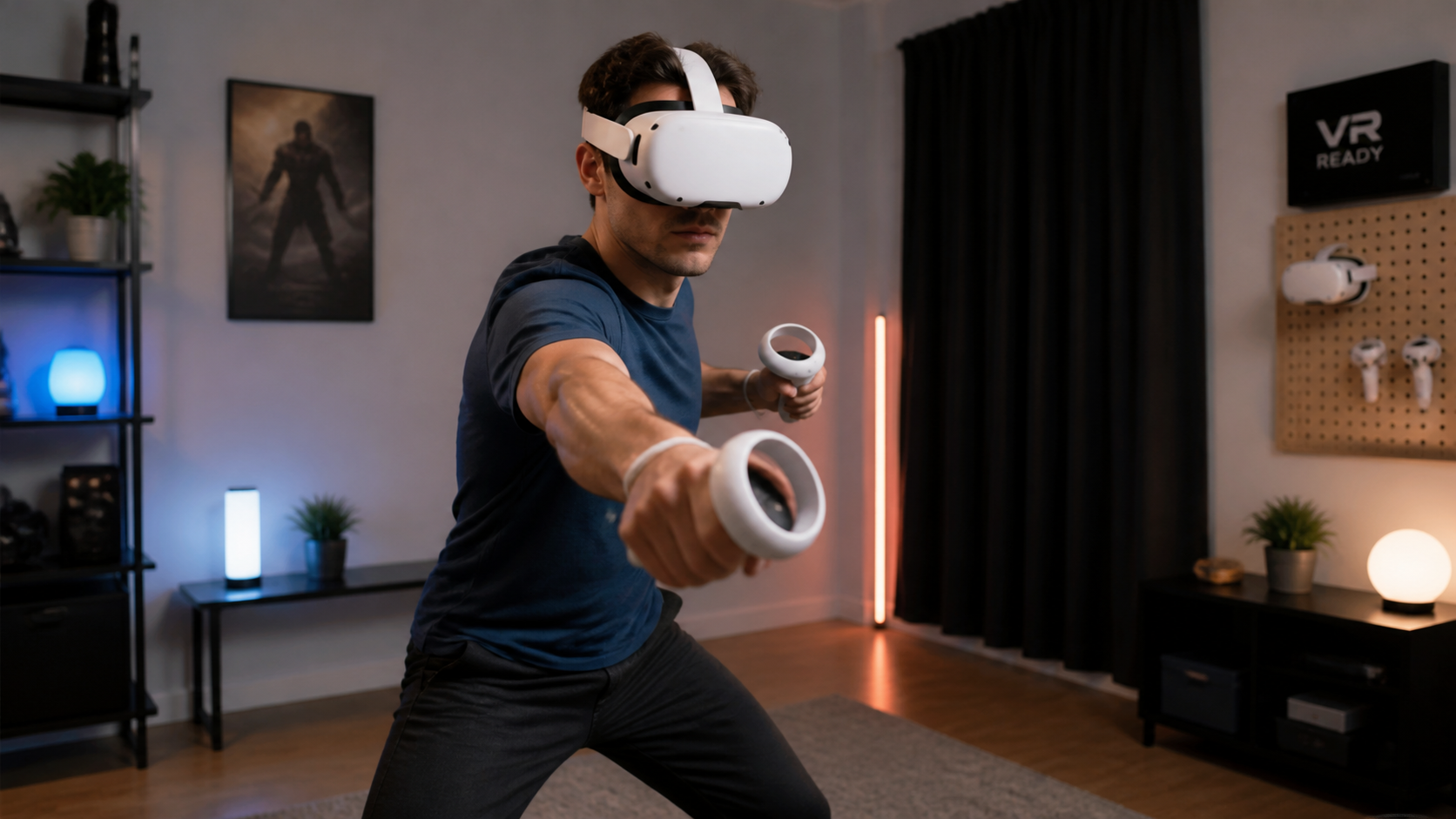
After weeks of testing, I decided to compare the fancy VR sword to the simplest alternative: nothing. I went back to using just my bare Meta Quest 3 controllers, and the difference was immediate. The game was designed around these controllers. They are lightweight, they are tracked perfectly, and all the buttons are easy to reach. The feeling of "blade balance" is something your brain creates, and it adapts very quickly.
I realized that real skill in the game comes from your own arm and wrist movements, not from a weight strapped to your controller. Without the accessory, my swings were faster and much more accurate. I could parry, dodge, and change the direction of my attack with almost no effort. For anyone looking for a middle ground, a pair of light wrist weights could add that sense of heft without creating the top-heavy lever effect that makes sword attachments so awkward. But for me, the bare controller proved to be the best tool for serious, daily play.
Conclusion
The VR sword is a fun novelty for short, casual sessions. However, for daily players, it creates more problems than it solves. Stick with bare controllers for the best performance.
Leave a comment