



Should glasses wearers worry more about cloth strap pressure or budget comfort versus premium halo support?

That sweaty cloth strap after a workout is the worst. It feels gross, and for me, the pressure on my glasses becomes unbearable. Is a cheap silicone strap the answer?
For glasses wearers, a simple silicone strap is a fantastic budget upgrade. It solves the sweat absorption and pressure point problems of the stock cloth strap without the high cost of a premium halo support system, making it great for mixed fitness and movie watching.
The real test for any VR accessory isn't just a quick game. It's how it feels after an hour of use. I often end my day with a VR fitness session, and wiping down the headset is part of my routine. I always noticed that the damp cloth strap felt tighter and created a nasty pressure point on the back of my head. This got me thinking about comfort during less active use, like watching a movie. Would a new strap fix that nagging pressure, or was it just a problem with my head shape? I decided to put a basic silicone head strap to the test, starting with the most stationary activity I could think of: watching a long video.
Does Silicone Head Strap for Meta Quest still help when watch a long video while sitting still to test pressure points?
The default strap feels fine for a quick game. But an hour into a movie, you feel that one spot digging into your skull. Is a new strap the simple fix?
Yes, the silicone head strap made a huge difference for watching long videos. It distributes pressure more evenly across the back of the head. The single, sharp pressure point from the cloth strap disappeared completely, replaced by a wider, more gentle grip that felt much better for a long session.
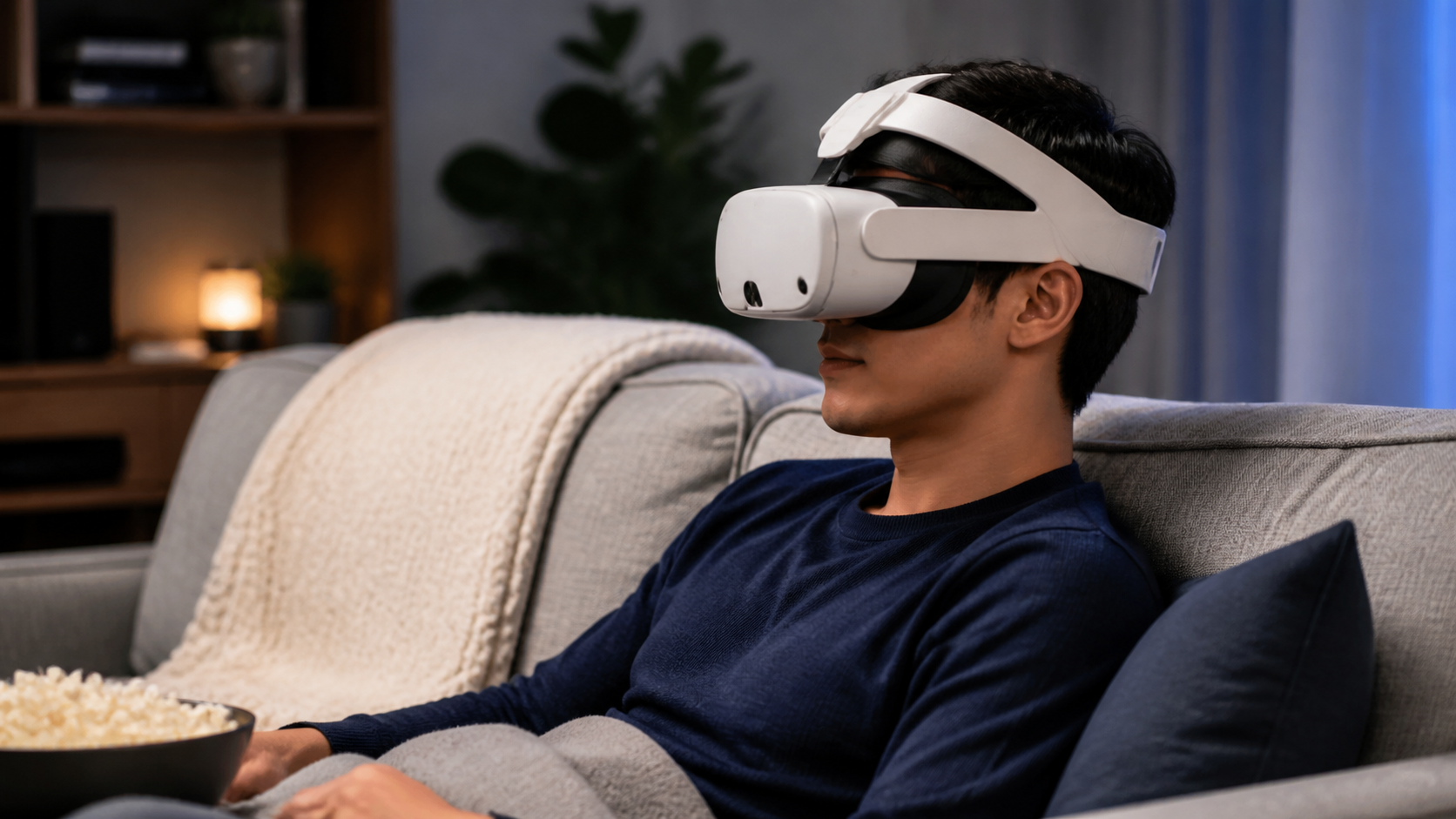
My experiment was simple. First, I watched a 20-minute YouTube video with the original cloth strap. Around the 15-minute mark, I started to feel it. A specific spot on the back of my head began to ache. It’s the same spot that gets sore after a long gaming session. I found myself trying to shift the headset to relieve the pressure, which is distracting when you're trying to relax. My glasses also felt like they were being pushed into my face by the tension of the side straps.
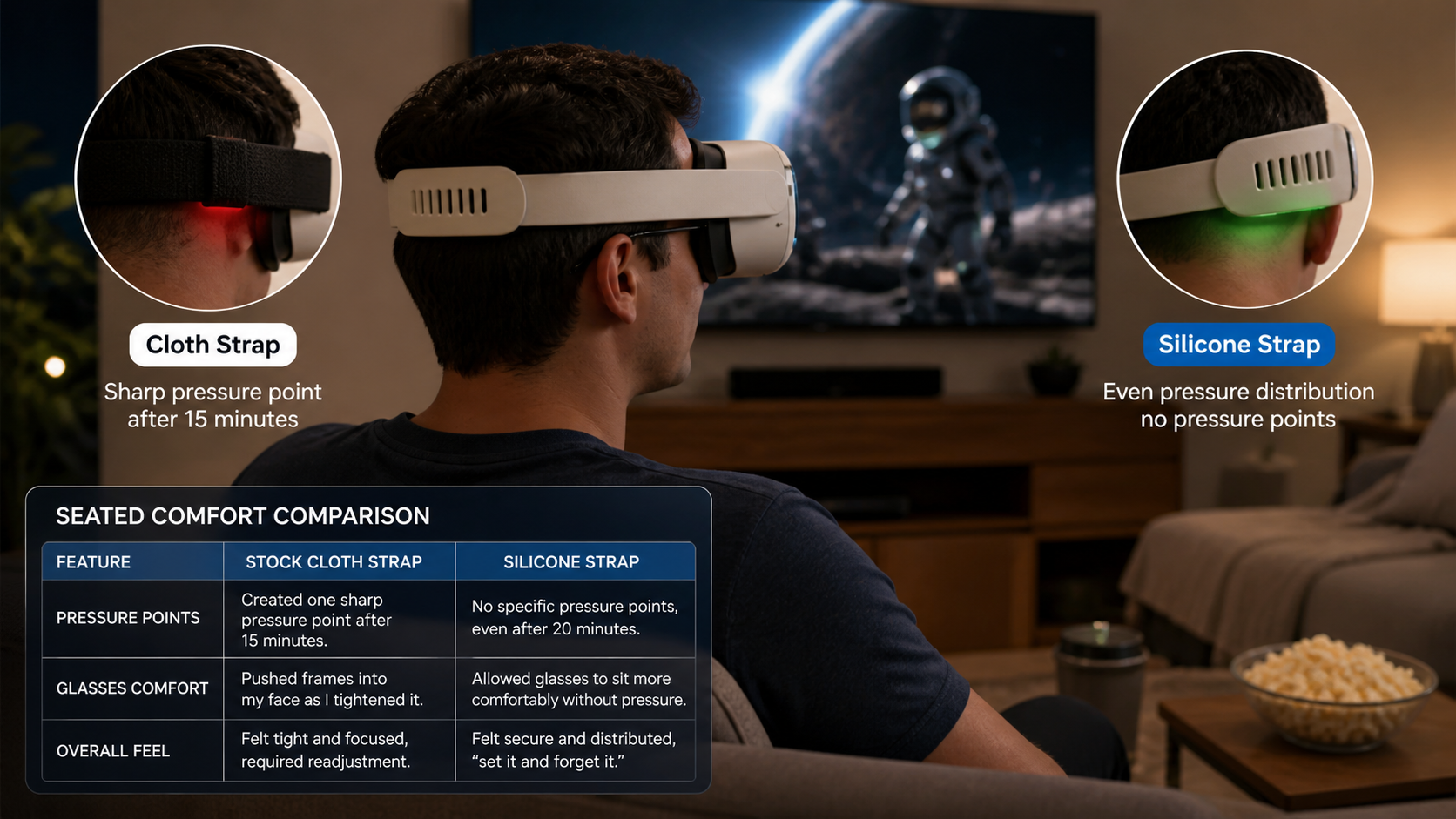
Then, I swapped to the silicone strap and re-watched the video. The change was immediate. The wider, more flexible material cupped the back of my head instead of just pressing on one point. There was no single point of pressure. The whole experience felt more secure but less intense. My glasses also sat more naturally. To break it down, here’s a simple comparison of my seated movie test.
Seated Comfort Comparison: Cloth vs. Silicone
| Feature | Stock Cloth Strap | Silicone Head Strap |
|---|---|---|
| Pressure Points | Created one sharp pressure point after 15 minutes. | No specific pressure points, even after 20 minutes. |
| Glasses Comfort | Pushed frames into my face as I tightened it. | Allowed glasses to sit more comfortably without pressure. |
| Overall Feel | Felt tight and focused, required readjustment. | Felt secure and distributed, "set it and forget it." |
For just watching movies or other seated experiences, the silicone strap was a clear winner. It turned the headset into something I could wear for an extended period without constantly thinking about how it felt on my head.
Does a family adjustment test with two head sizes prove enough for Quest Pro Touch Controllers users?
Sharing your headset is a hassle. The straps are always wrong, and readjusting them takes forever. Can a simple strap fix this big family problem?
Absolutely. The silicone strap proved far superior for family use. Adjusting between my larger head and my partner's smaller head took about five seconds. The simple buckle system is much faster and more intuitive than fiddling with the two cloth sliders, making sharing the headset painless.
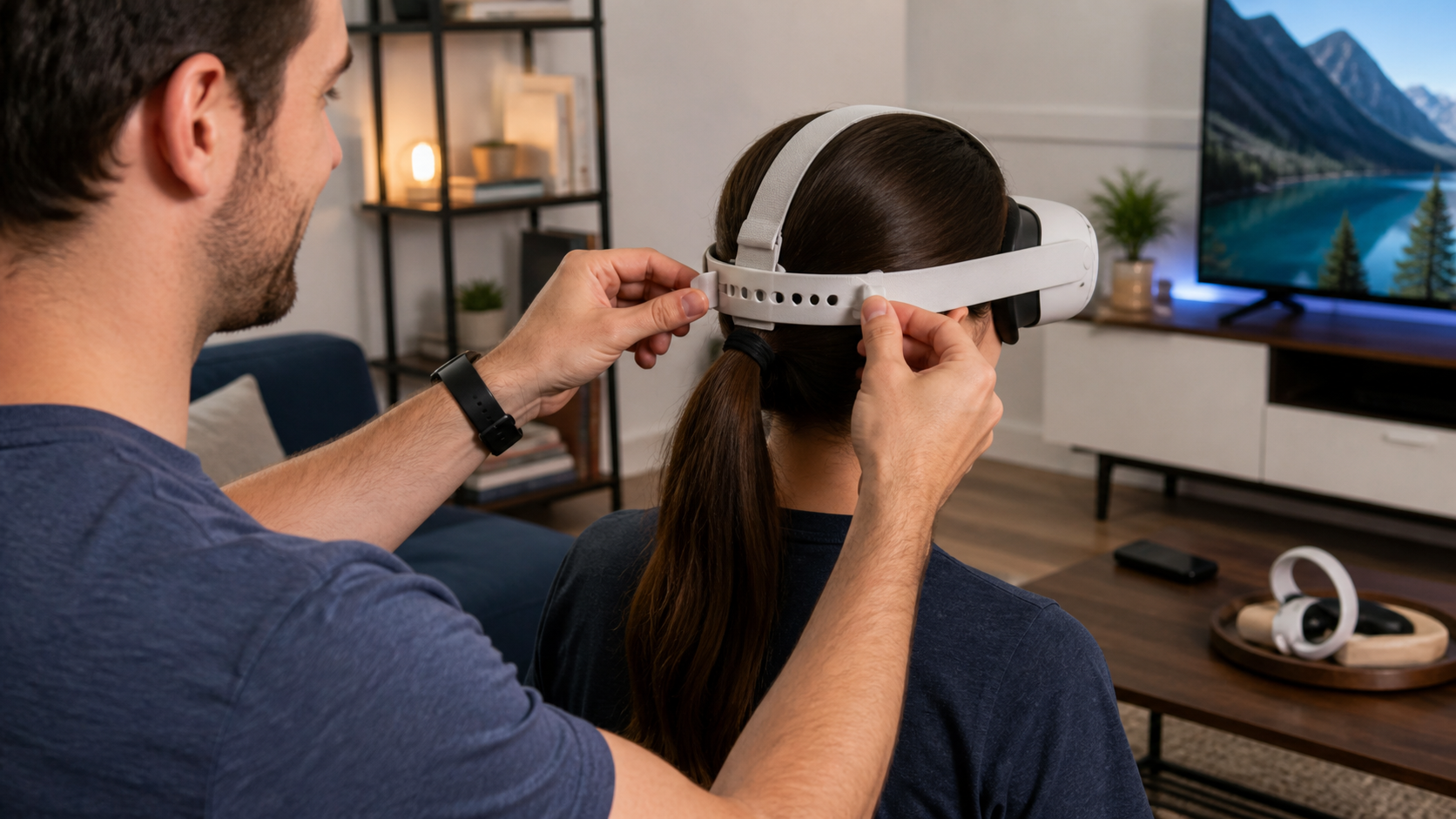
A VR headset is a fun device to share, but the stock strap makes it a chore. Every time I handed my Quest to my partner, we had to go through the adjustment ritual. I would loosen the two sliders, they would put it on, and then we'd spend a minute trying to get the tension right again. It’s not hard, but it’s annoying enough to discourage quick, spontaneous sharing. This is a big deal in our house, where we’ve invested in accessories like the Quest Pro Touch Controllers and want everyone to enjoy the setup easily.
The silicone strap completely solved this. It has a single, notched strap at the back. To adjust, you just pull the tab to the right notch. When I passed the headset to my partner, they just had to pull it a few notches tighter. The whole process took seconds. When they passed it back, I just loosened it again. This quick-swap ability is a game-changer for households with multiple VR users. It held securely on both of our heads without any slipping, proving that the simple design works well for different sizes. It makes the headset feel more like a shared appliance and less like a personal item that’s been calibrated just for one person.
Can the article show a failure case honestly?
Every product review online seems perfect. You buy it and then discover the one flaw nobody mentioned. So, what is the big catch with this silicone strap?
Yes, there is a clear failure case: it pulls my hair. The grippy silicone material that holds the headset so securely also grabs onto hair when you take it off. It’s not a deal-breaker for me, but it is a consistently annoying and sometimes painful flaw.
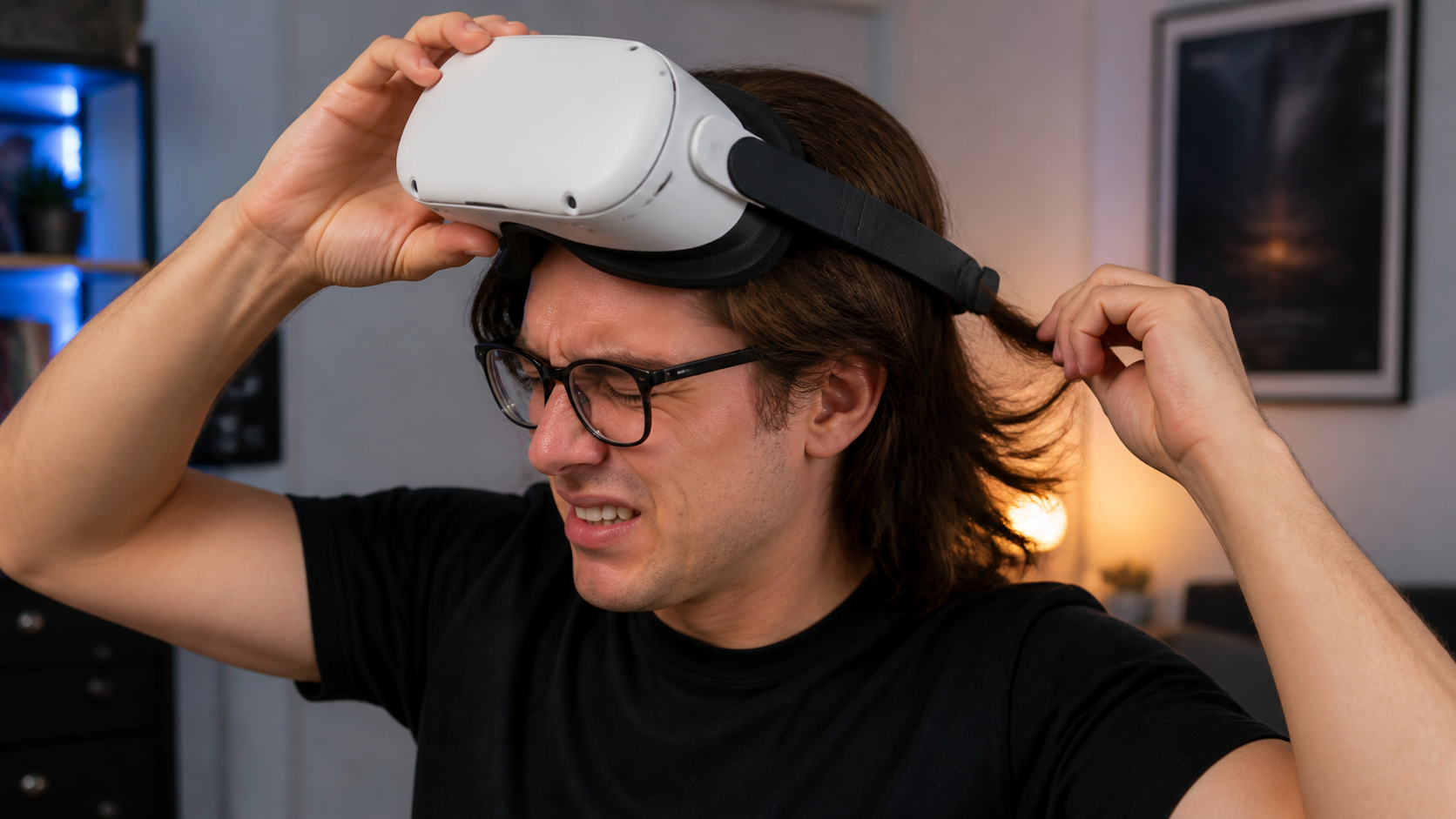
I want to be completely honest here. While the silicone strap solved my pressure point and sweat problems, it introduced a new one. I have relatively short hair, and even I notice it. Every time I take the headset off, I have to do it slowly and carefully. If I pull it off quickly, the silicone strap catches a few strands of hair and gives a sharp tug. It’s a minor but very real annoyance. I imagine for someone with long hair, this could be a much bigger problem.
This is the trade-off. The material is grippy by design, which is why it feels so secure and distributes weight well. But that same property makes it stick to hair. The original cloth strap, for all its faults, glides off your head smoothly every single time. It never once pulled my hair. So, while the silicone strap is more comfortable during use, it is less comfortable during removal. This is the kind of detail that often gets left out of five-star reviews, but it's crucial for making an informed decision. The strap is better in many ways, but it is not perfect. This is its honest failure.
Who should avoid this Silicone Head Strap for Meta Quest setup even if it looks useful for movie watching on Quest Pro Touch Controllers?
This strap seems like a great, affordable upgrade. But no product is for everyone. Who should stick with the cloth strap or save up for something else?
Users with long or fine hair that tangles easily should avoid this strap. The constant hair-pulling will likely outweigh the comfort benefits. Also, VR enthusiasts seeking perfect weight balance should look at premium halo or battery straps instead of this minimalist upgrade.
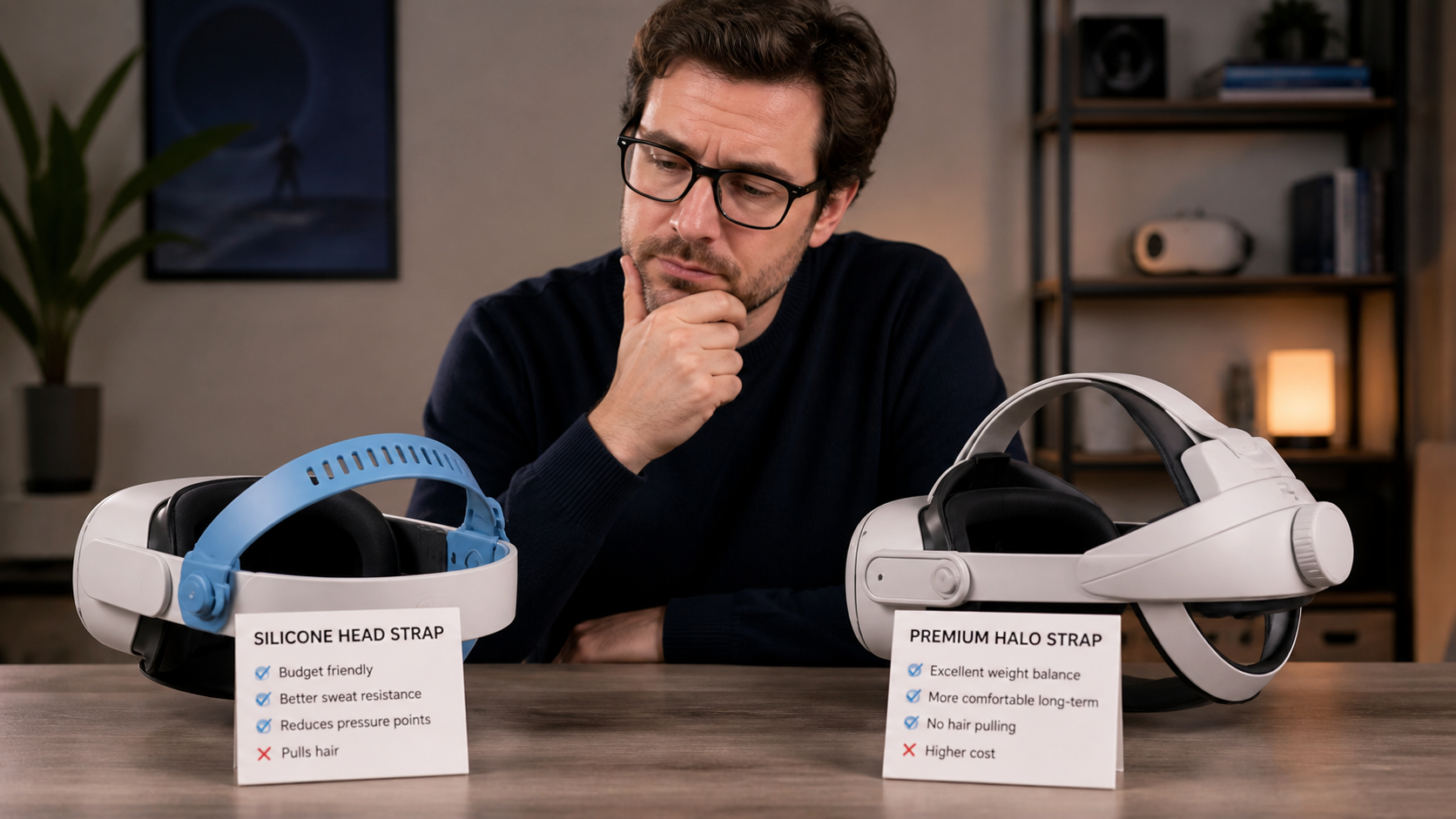
This silicone strap is not a universal solution. Based on my experience, there are two main groups of people who should probably skip it. The first is anyone with long hair. As I mentioned, it tugs my short hair, so I can only imagine how frustrating it would be for someone with a lot more hair to get caught. The daily annoyance of untangling your hair from the strap would quickly ruin the experience. For these users, the smooth, non-grippy default cloth strap is a better choice, or they should look for a premium strap that uses foam pads instead of silicone.
The second group is the comfort purist. These are users who want the most comfortable, balanced experience possible and are willing to pay for it. A simple silicone strap is a lightweight upgrade, but it doesn't change the fundamental front-heavy nature of the Quest headset. It just makes the back more comfortable. A true halo strap or a battery strap adds a counterweight, lifting the device off your face and balancing the load. For someone playing for three or four hours at a time, that balanced design is far more important. This silicone strap is a budget comfort fix, not a premium ergonomic overhaul.
Conclusion
This silicone strap is a solid, cheap fix for sweat and pressure points from the default strap. But beware of hair pulling, and know that it isn't a premium halo strap.
Leave a comment