



Should Blade & Sorcery players choose VR Sword if they hate setup friction?

You love the weight of a sword in Blade & Sorcery but hate the setup. A VR Sword seems like the fix, but will it just create new problems?
For players who hate setup friction, the VR Sword is a mixed bag. It improves immersion in sword-fighting games but makes storage, travel, and even menu navigation much harder. The extra setup and teardown time can easily outweigh the in-game benefits for many users.
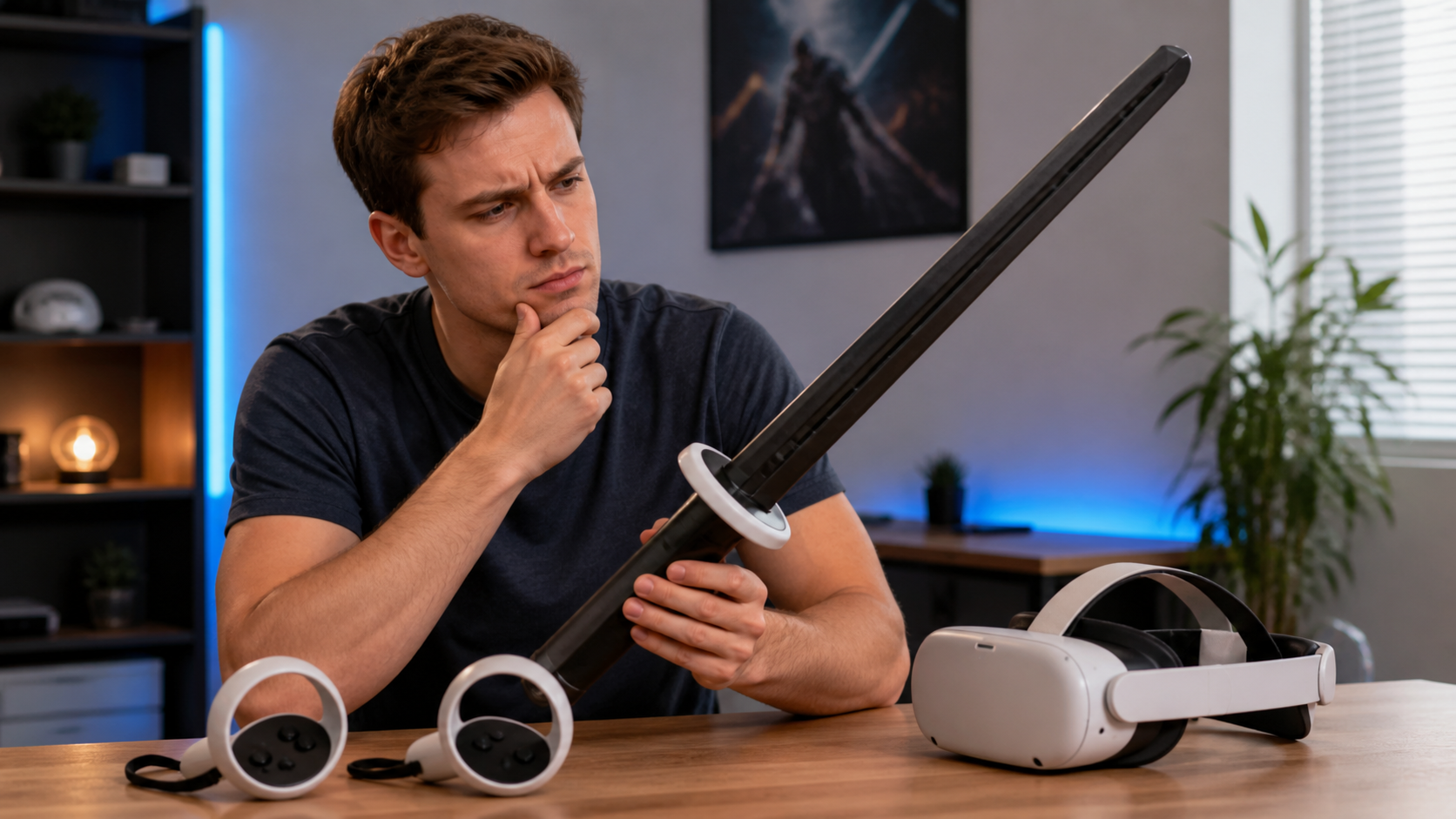
I'm a huge Blade & Sorcery fan. The physics are incredible, but I always felt something was missing with the standard Quest Pro controllers. They feel light and disconnected from the heavy swings I'm making in the game. So, I picked up a VR Sword accessory, hoping to close that gap. I expected to jump right into a more realistic sword-fighting experience. Instead, I decided to test it in Beat Saber first to check tracking and feel. The very first thing I noticed had nothing to do with gameplay. It was about everything around the game, and it made me question if the trade-off was worth it. This is my experience, from the first moment of frustration to the final verdict.
When Blade & Sorcery players use VR Sword in Beat Saber, what feeling changes first about storage and travel?
You mount your controller and suddenly realize you have a new problem. This long, awkward object doesn't fit anywhere, and taking it apart after every session feels like a chore.
The first feeling that changes is a sense of clumsiness. The controller is no longer a compact device you can set down anywhere. It becomes a long, unbalanced accessory that makes simple actions like navigating menus, storing the headset, or packing a travel case feel awkward and difficult.
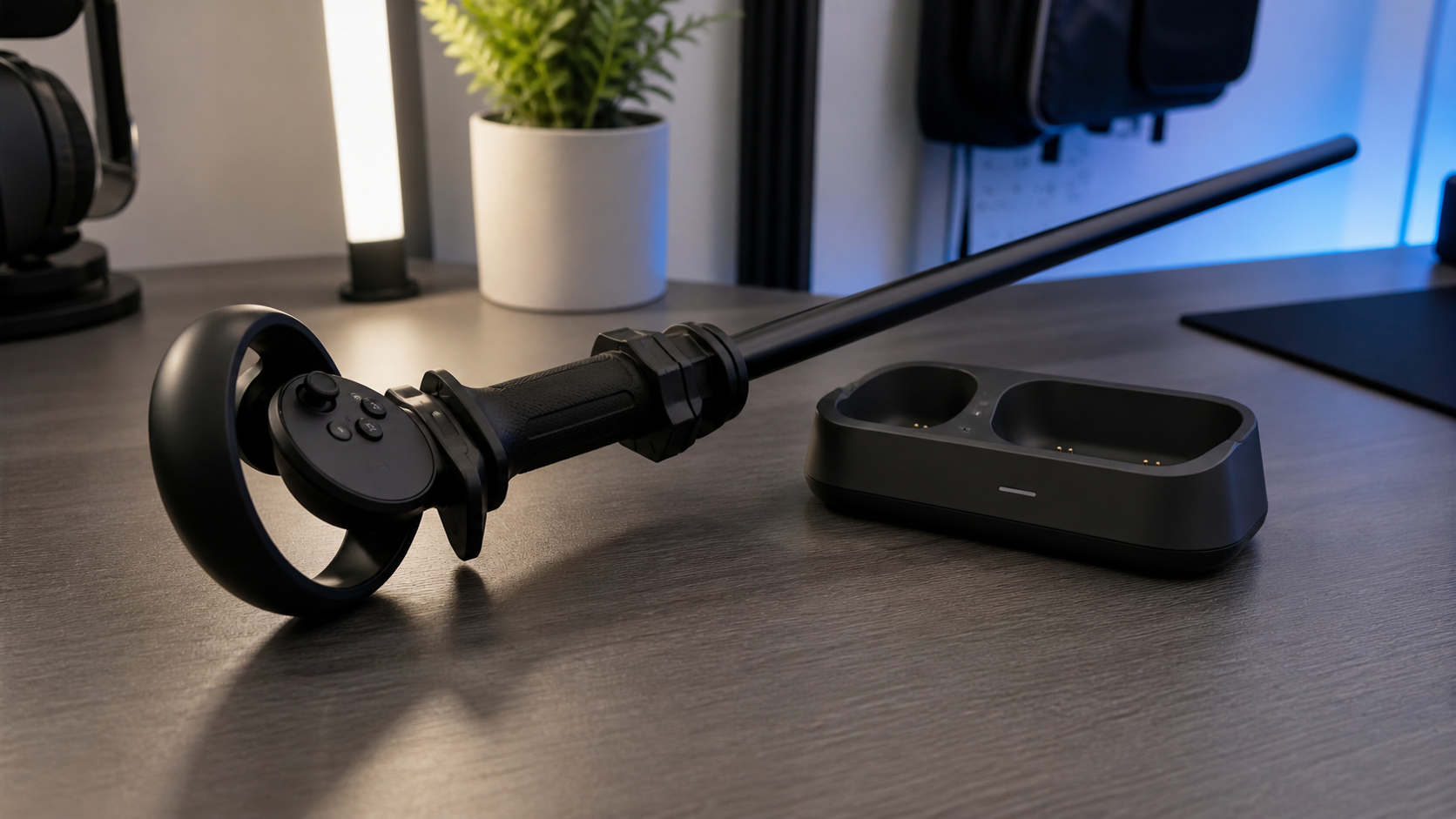
Before I even launched a game, the problem was obvious. I put my headset down to grab a drink, and I had to find a special spot for the controller with the sword attached. It couldn't just rest on the desk; it would roll off or knock something over. This clumsiness extends to every part of the experience outside of the game itself. When you are in VR, you sometimes need to adjust your headset or check a notification. With a standard controller, this is easy. With the VR Sword attached, you are holding a 1.5-foot stick. I found myself bumping into my desk and chair just trying to get comfortable. The failure case for storage is simple: it doesn't fit. My carrying case is molded for the controllers, and this accessory makes that impossible.
Daily Task Friction Comparison
Here is a quick breakdown of how simple tasks changed for me.
| Task | Without VR Sword | With VR Sword |
|---|---|---|
| Setting Down Controller | Easy, fits anywhere | Awkward, needs a large flat space |
| Navigating Menus | Quick and natural | Clumsy, pointer feels long and wobbly |
| Storing in Case | Fits perfectly | Impossible, must be disassembled first |
What should be measured before claiming VR Sword fixes storage and travel?
You think an accessory will solve a problem, but you haven't measured the new problems it creates. Vague feelings are not enough; you need real numbers to see the truth.
Before claiming a fix, you must measure the physical dimensions of the accessory, the extra time required for setup and teardown, and the available space in your storage or travel case. These concrete numbers reveal the true "friction" cost of using the accessory daily.
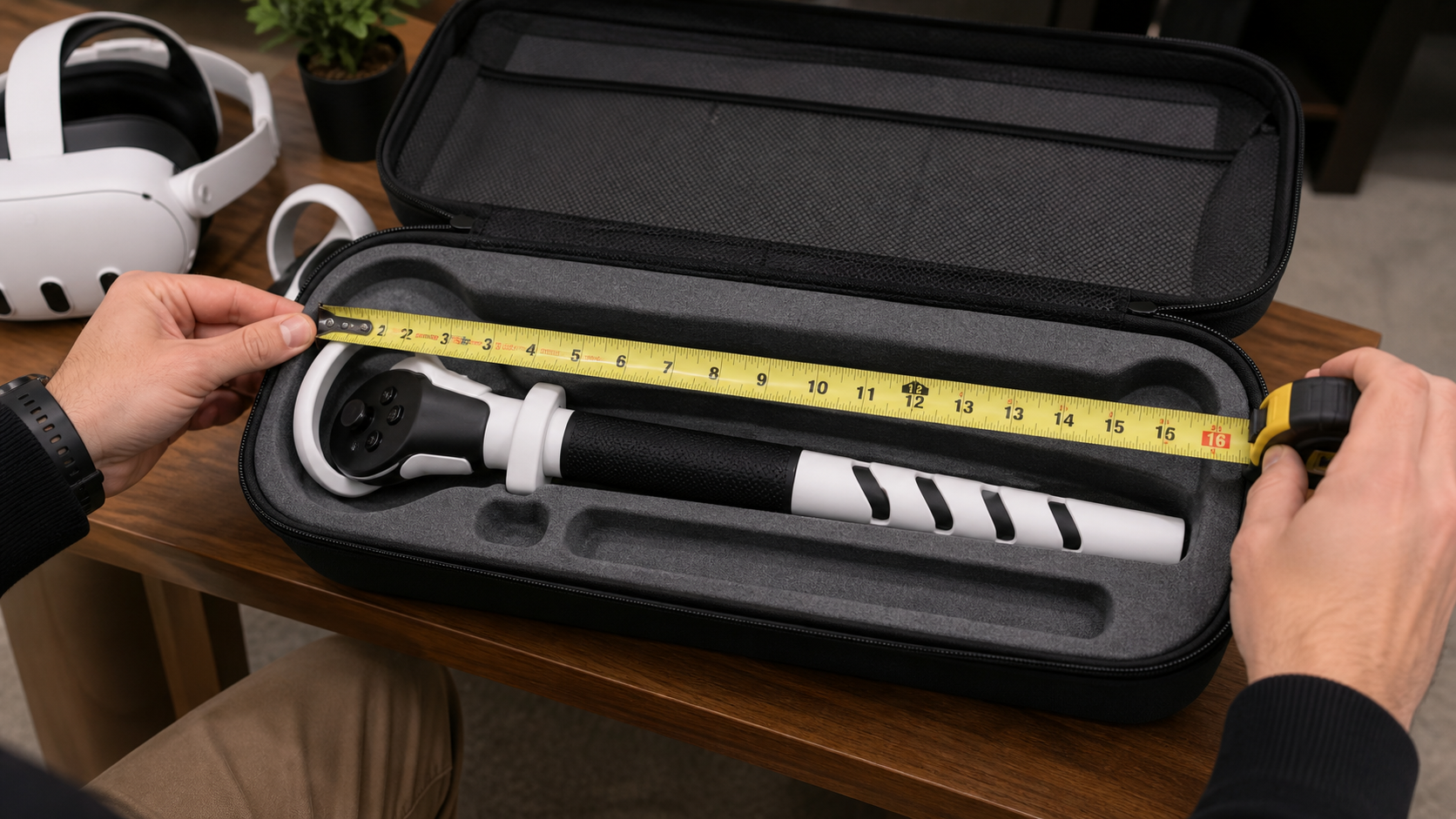
"Friction" is just a feeling until you measure it. So, I did. My VR Sword attachment adds 14 inches to the controller's length. My travel case has exactly enough space for two controllers side-by-side, with about half an inch of clearance. The sword makes it impossible to store without taking it apart. Next, I timed the setup. It takes about 45 seconds to securely attach the Quest Pro controller into the sword handle and lock it in place. It takes another 30 seconds to remove it. That’s over a minute of setup and teardown every single time I want to play. If I play three times a day, that's almost five minutes lost to just handling an accessory. This might sound small, but it breaks the magic of just jumping into VR. The convenience of a self-contained headset is one of its best features. Adding a mandatory setup ritual damages that feeling of freedom. It feels like a step backward.
Does VR Sword need a cleaning or maintenance note in this article?
You just finished an intense session and your hands are sweaty. Now you have to think about cleaning your gear. It's another small task that adds to the overall friction.
Yes, a cleaning note is important. The handle, often made of textured plastic or foam, collects sweat and dust. Regular cleaning is needed to maintain grip and hygiene, adding another maintenance step to your VR routine that you don't have with standard controllers.
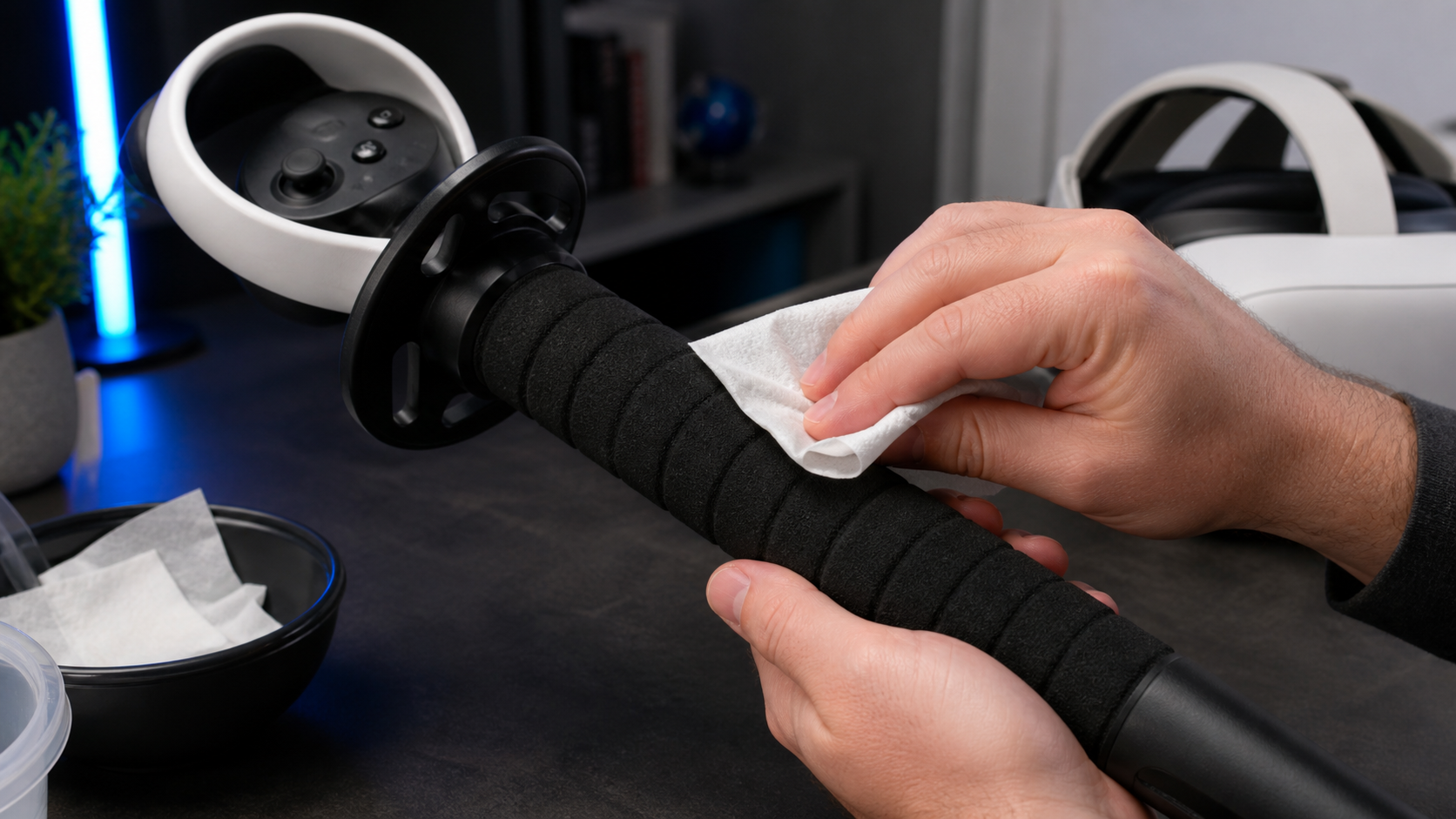
I learned this pretty quickly after a few intense Beat Saber sessions. My hands were sweaty, and the textured grip on the sword handle felt sticky. Unlike the smooth plastic of the Quest Pro controllers, which is easy to wipe down, the grip on the sword accessory has lots of little grooves. These are great for holding on tight but are also perfect for trapping sweat, skin oils, and dust. I realized I couldn't just put it away. I had to wipe it down with a slightly damp cloth or an electronics-safe wipe after every major session. If I didn't, it would start to feel gross and I worried about bacteria buildup over time. This isn't a huge deal, but it is one more chore. The whole point of VR for me is to escape chores, not create new ones. It’s part of the hidden "cost of ownership" that isn't on the box. You aren't just buying an accessory; you are buying a new maintenance routine.
Should Blade & Sorcery players try adjusting blade balance, handle length, and controller lock before buying VR Sword?
You want a better sword feel but are hesitant to buy more hardware. What if the solution is already in the game's settings menu, waiting for you to find it?
Absolutely. Before buying a VR Sword, players should first explore their game's controller settings. Adjusting the virtual saber angle, offset, and position can dramatically change the feel of a sword, often providing a better sense of balance and length without any physical hardware or setup friction.
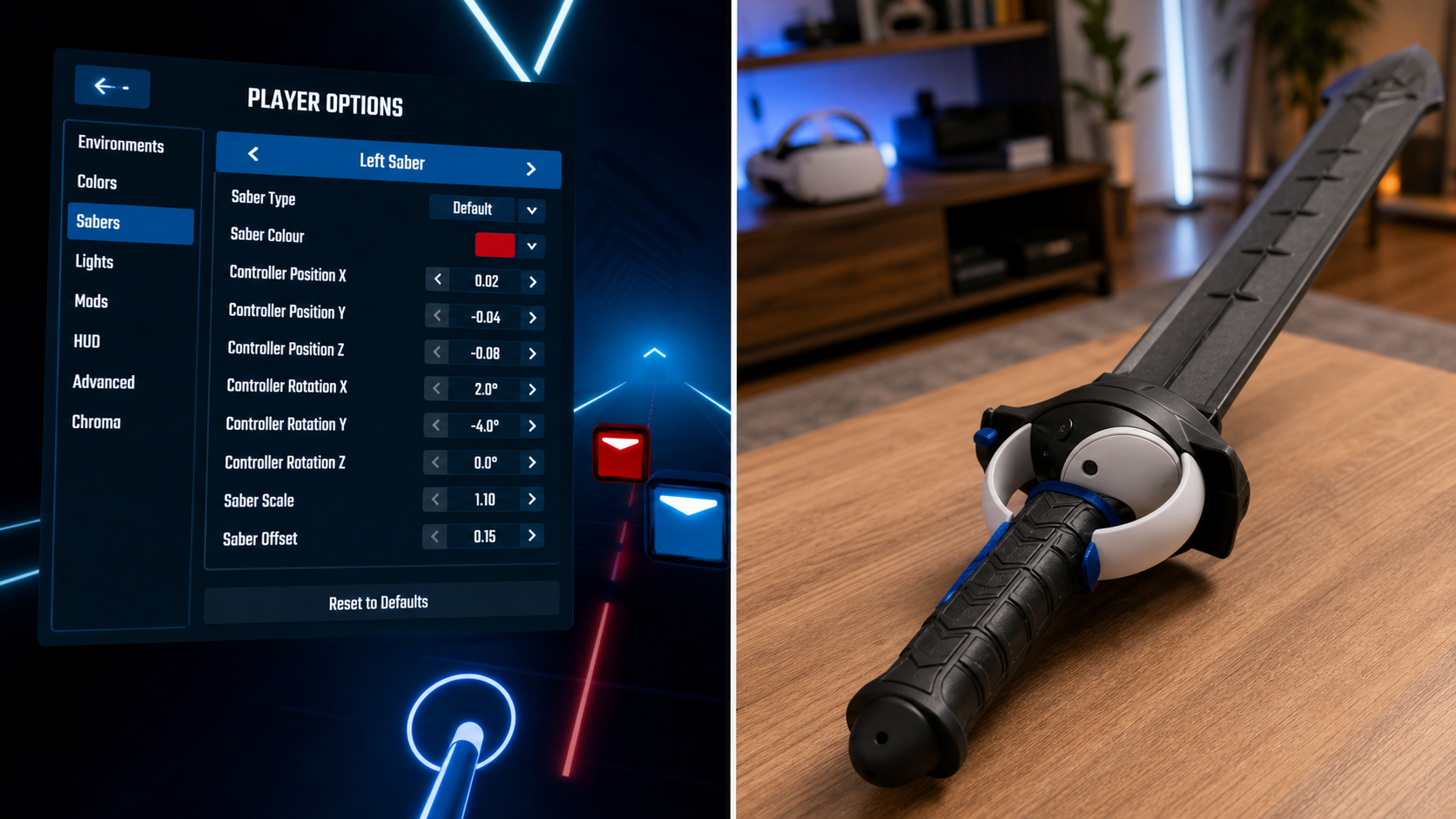
This was the biggest lesson for me. After getting frustrated with the physical clumsiness of the VR Sword, I went back to basics. In both Blade & Sorcery and Beat Saber, there are detailed settings to change how the game interprets your controller's position and rotation. By adjusting the X, Y, and Z offset and rotation, I was able to make the in-game sword feel longer and more balanced. It mimicked the feeling of holding a hilt, pushing the virtual blade forward from my hand. It wasn't a perfect 1:1 replacement for the physical weight, but it was surprisingly effective. Most importantly, it had zero setup friction. My controllers still fit in their case, and I didn't have to assemble anything. As for tracking, I recorded a fast-swing clip in Beat Saber and saw no difference in performance between the standard controller and the VR Sword. The honest takeaway for me is this: the VR Sword was helpful for initial immersion, but it felt annoying in every other way. Storage and travel never got easier. For players who value convenience and hate setup, I would recommend skipping it.
Conclusion
The VR Sword adds immersion but comes with significant setup, storage, and maintenance friction. For many, adjusting in-game settings offers a better balance of feel and convenience without the extra hardware.
Leave a comment