



Is whether the mat stays flat on carpet the hidden reason VR Mat disappoints buyers?

You buy a VR mat for a stable, safe play space, but it keeps curling up on the carpet. It’s a trip hazard that completely breaks your immersion.
Yes, the mat failing to stay flat on carpet is a huge reason for buyer disappointment. It creates a trip hazard that directly contradicts its purpose of enhancing safety and immersion. This physical annoyance often outweighs the subtle benefit of noise reduction, making the user experience a net negative.
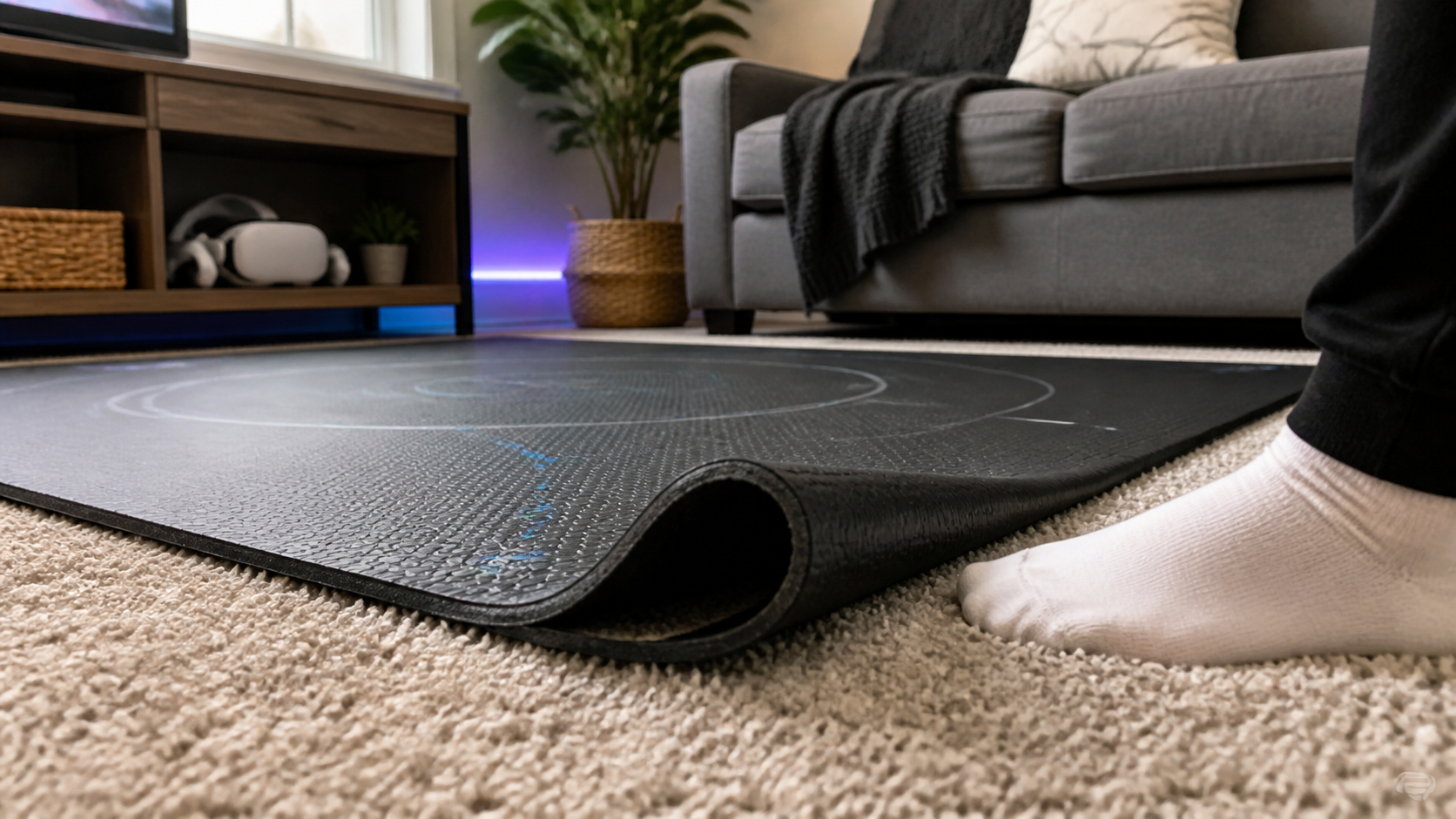
I got a VR mat hoping to solve a few problems, mainly the noise I make stomping around during intense sessions. But I quickly realized that the marketing claims don't always match the real-world experience. The first thing I noticed wasn't the quiet, but the frustration of trying to get the thing to lie flat on my living room carpet. This experience made me ask some hard questions. I decided to document my journey as a Beat Saber player using a Meta Quest 3, testing the mat in games like Gorilla Tag to see if the benefits are real or just hype. What follows is my honest, first-person case study on whether this accessory is worth the space it takes up.
Would Beat Saber players describe the Gorilla Tag change as comfort, control, safety, or immersion when floor noise changes?
You're deep in a game, but the thumping of your feet on the floor is a constant reminder of the real world. This background noise can pull you right out.
Beat Saber players using the mat for a game like Gorilla Tag would mainly describe the change as an increase in immersion. The muffled sound of footsteps helps tune out the real world. It doesn't really add comfort or control, but it does make the virtual environment feel more present.
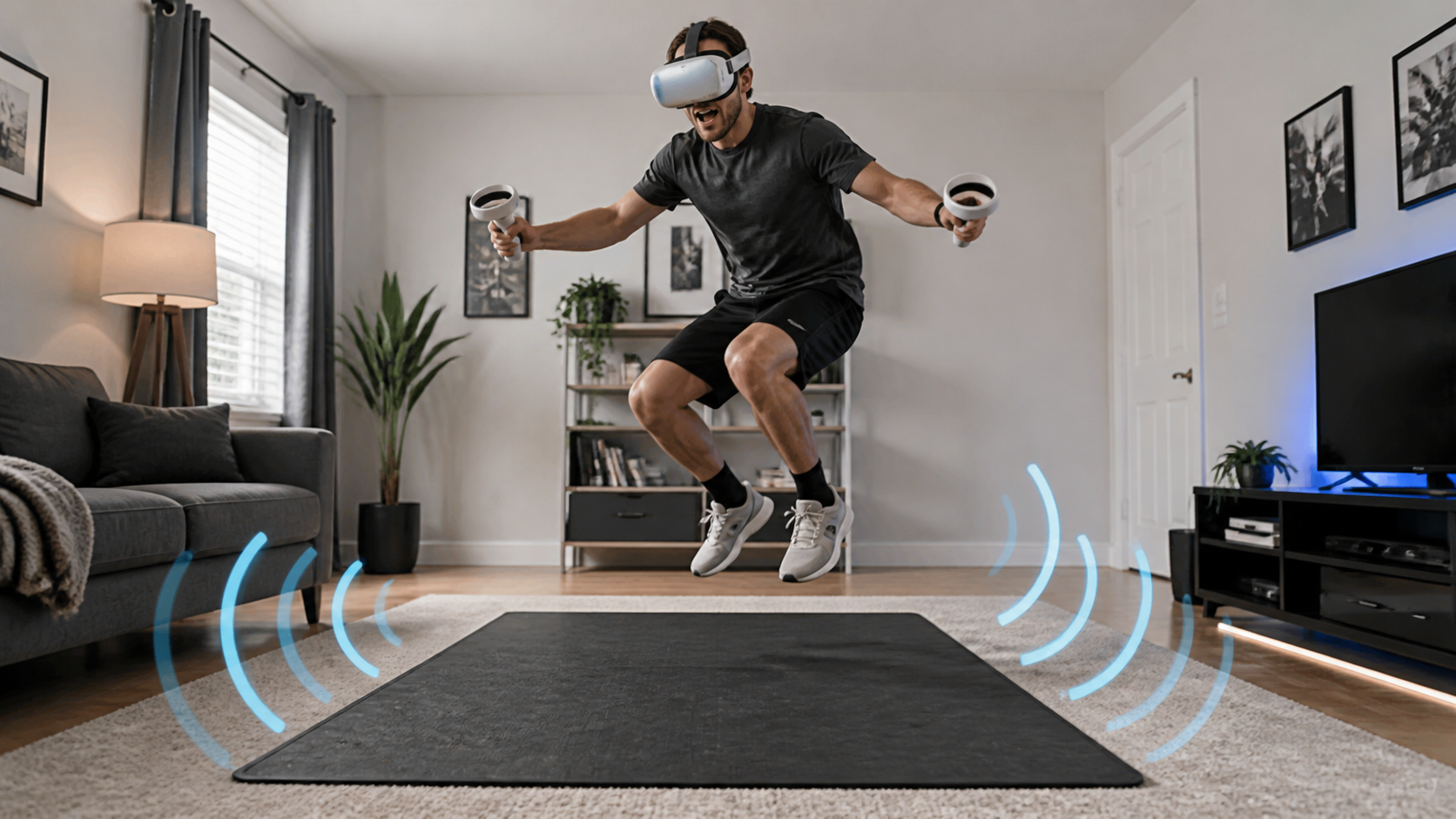
As a Beat Saber player, most of my movement is in a fixed spot. But to really test floor noise, I fired up Gorilla Tag on my Quest 3. This game involves a lot of jumping and frantic movement, which creates a ton of noise on my apartment floor. The first thing I did was play for ten minutes without the mat. I could clearly hear the thud of my feet on the carpet with every leap. Then, I rolled out the mat. The difference was noticeable. It wasn't silent, but the sharp thuds became duller, lower-frequency sounds. This small change had a surprising effect. It wasn't about making my feet more comfortable. The mat is thin, so the comfort boost is minor. It also didn't give me more control. My grip and balance felt the same. For me, the real win was immersion. The less I hear my real-world self, the more I feel like I'm actually in the game.
How the Mat Impacts Gameplay Feel
| Factor | My Observation |
|---|---|
| Comfort | Minimal. The cushioning is too thin to make a big difference during a long session. |
| Control | None. My movements felt just as precise with or without the mat. |
| Safety | Negative, due to the curled edge. It became a trip hazard, defeating a key purpose. |
| Immersion | Positive. The dampened sound of my feet helped me forget my physical room. |
The key takeaway is that the mat’s primary benefit is auditory. By reducing a key real-world sensory input, it allows your brain to focus more completely on the virtual one.
Can Beat Saber players reproduce the test without special tools or paid software?
You see online reviews with decibel meters and fancy charts. It makes you wonder if you can even tell if a product works without special equipment. It feels out of reach.
Yes, absolutely. Any player can easily test this for themselves. You just need your headset, the mat, and a few minutes. The test is about your personal perception, not scientific measurement. Play with and without the mat, and simply listen for the difference in your own space.
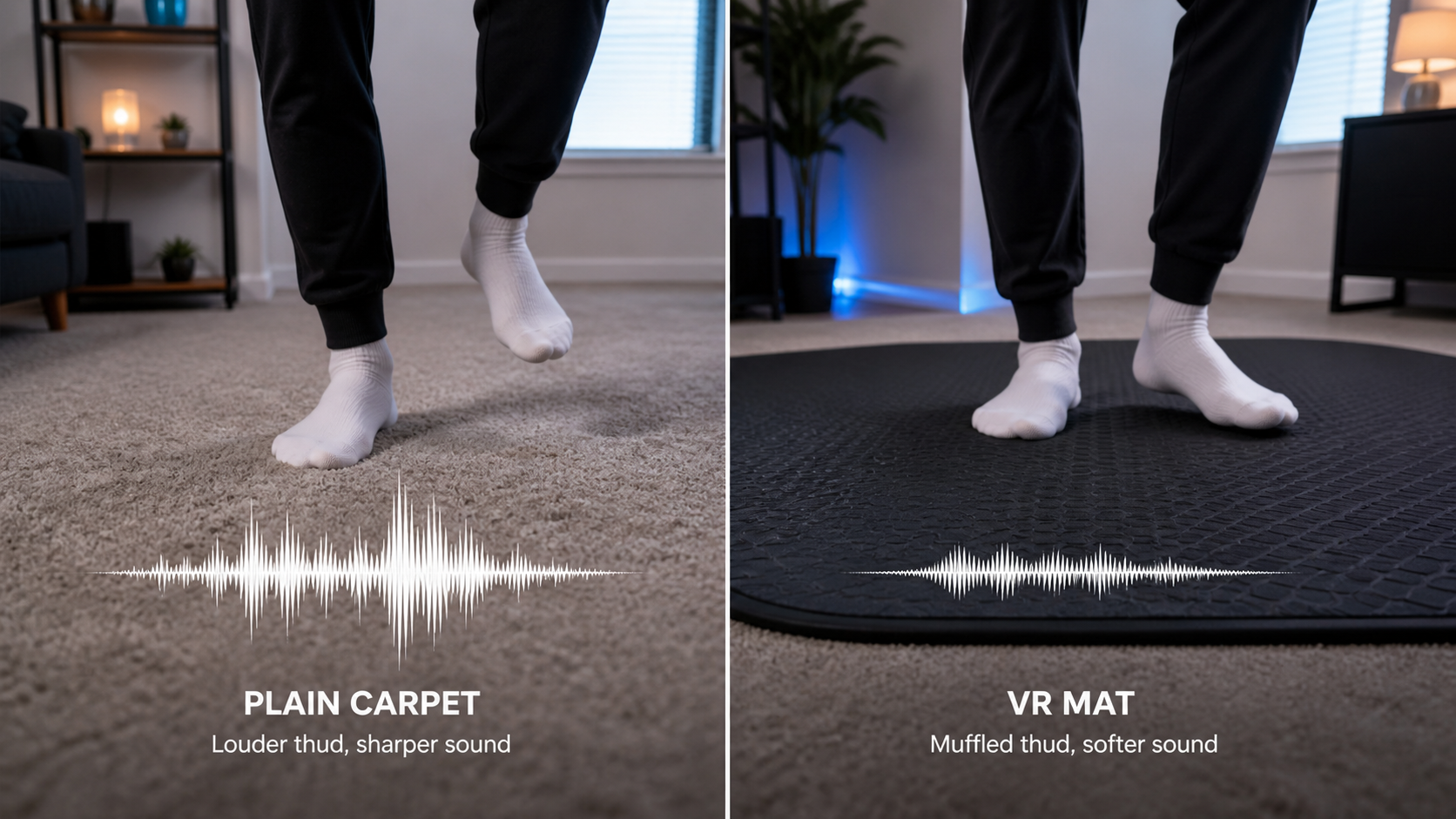
I wanted to make sure my findings weren't just a fluke, so I set up a simple test that anyone can do. You don't need a sound meter or any special software. The goal is to measure the subjective difference, because that's what actually matters for immersion. First, I picked a song in Beat Saber with a lot of movement and played it on my medium-pile carpet wearing just socks. I focused on the sound my feet made. It was a soft but distinct thumping sound. Next, I put the VR mat down and played the exact same song again. The thumping was still there, but it was muffled. The sound was less sharp. That's it. That's the whole test. The important thing is to keep the variables the same: same game, same intensity, same footwear. Your results will change depending on your floor. On hardwood, the difference would likely be much more dramatic than on my carpet. This isn't about getting a number; it's about answering one question: "Do I notice a positive change?" For me, the answer was a quiet "yes."
Would a user notice the benefit before they notice the extra bulk?
You get excited about a new VR accessory that promises to improve your experience. But when it arrives, it's a big, clumsy object that's a pain to handle and store.
No, a user will almost certainly notice the bulk first. The process of unboxing, unrolling, and placing a large mat is immediate and physical. The benefit of noise reduction is subtle and only becomes apparent once you are already deep into an intense game session.
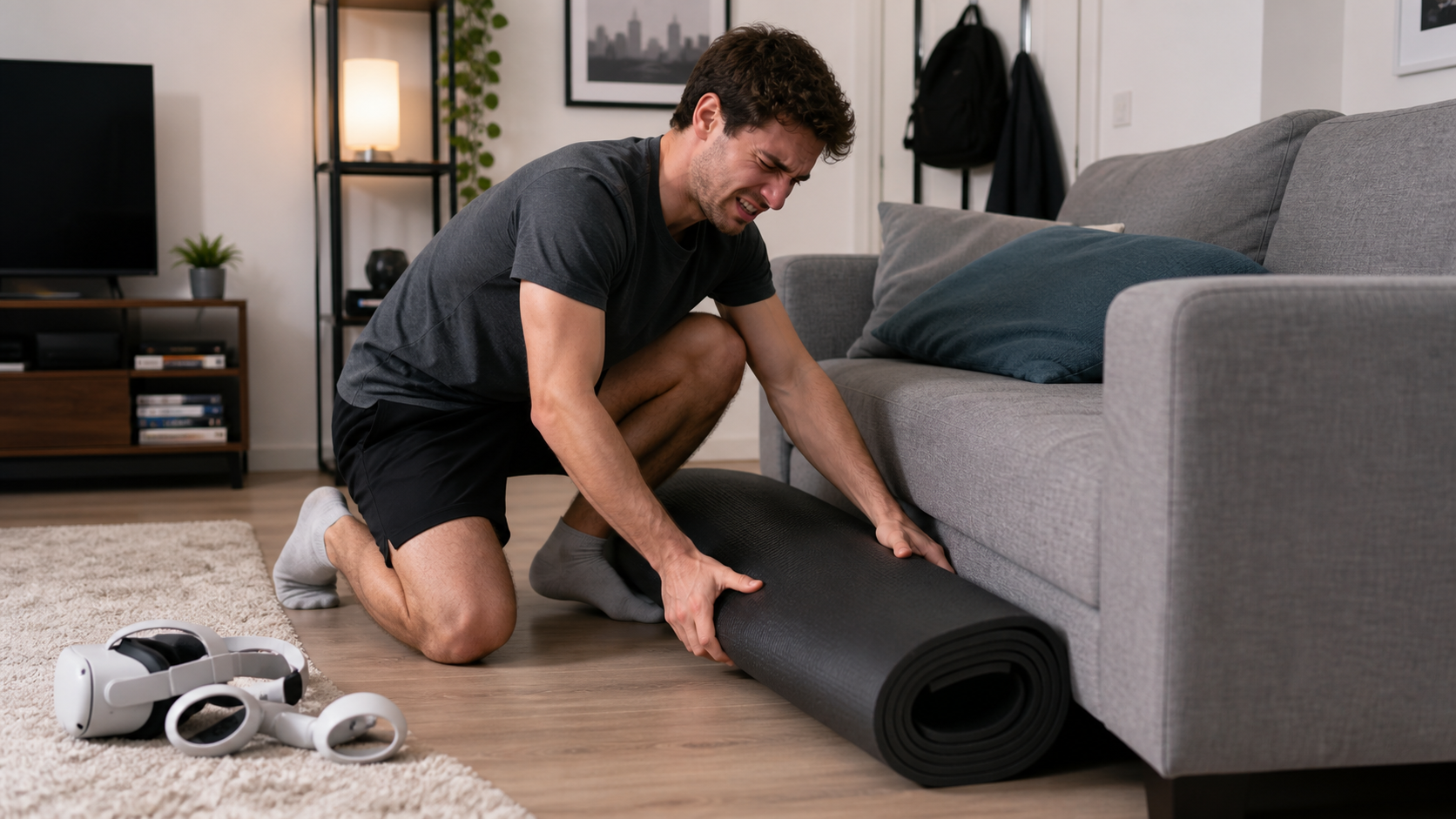
The moment I took the VR mat out of its box, the bulk was obvious. It's not heavy, but it's large and awkward. I live in a regular apartment, not a mansion with a dedicated VR room. Finding a place to unroll it meant moving my coffee table. This was the first hassle. The second, bigger hassle was that it wouldn't lie flat. After being stored in a roll, the edges curled up stubbornly. I spent a few minutes trying to flatten them, which was annoying. This all happened before I even put my Quest 3 on. The negative first impression was already setting in. In contrast, the benefit—quieter footsteps—is something I only noticed after I was already playing and actively listening for it. The inconvenience of the mat's physical form is a constant. You deal with it every time you set up and every time you put it away. The benefit is temporary and only exists during gameplay. For many, especially those in smaller spaces, this trade-off will be a losing one. The daily annoyance will easily overpower the subtle in-game improvement.
Can VR Mat earn trust for floor noise without proof such as a new-user observation during first play?
A company makes a claim about a product's performance. But when you use it for the first time, you don't immediately see or feel that promised benefit. You start to doubt.
It's very difficult. Trust requires a product to deliver on its core promise quickly and clearly. Since the noise reduction is subtle, the mat fails to provide an instant "wow" moment. Instead, a new user is more likely to notice negative aspects like a curled edge, eroding trust from the start.
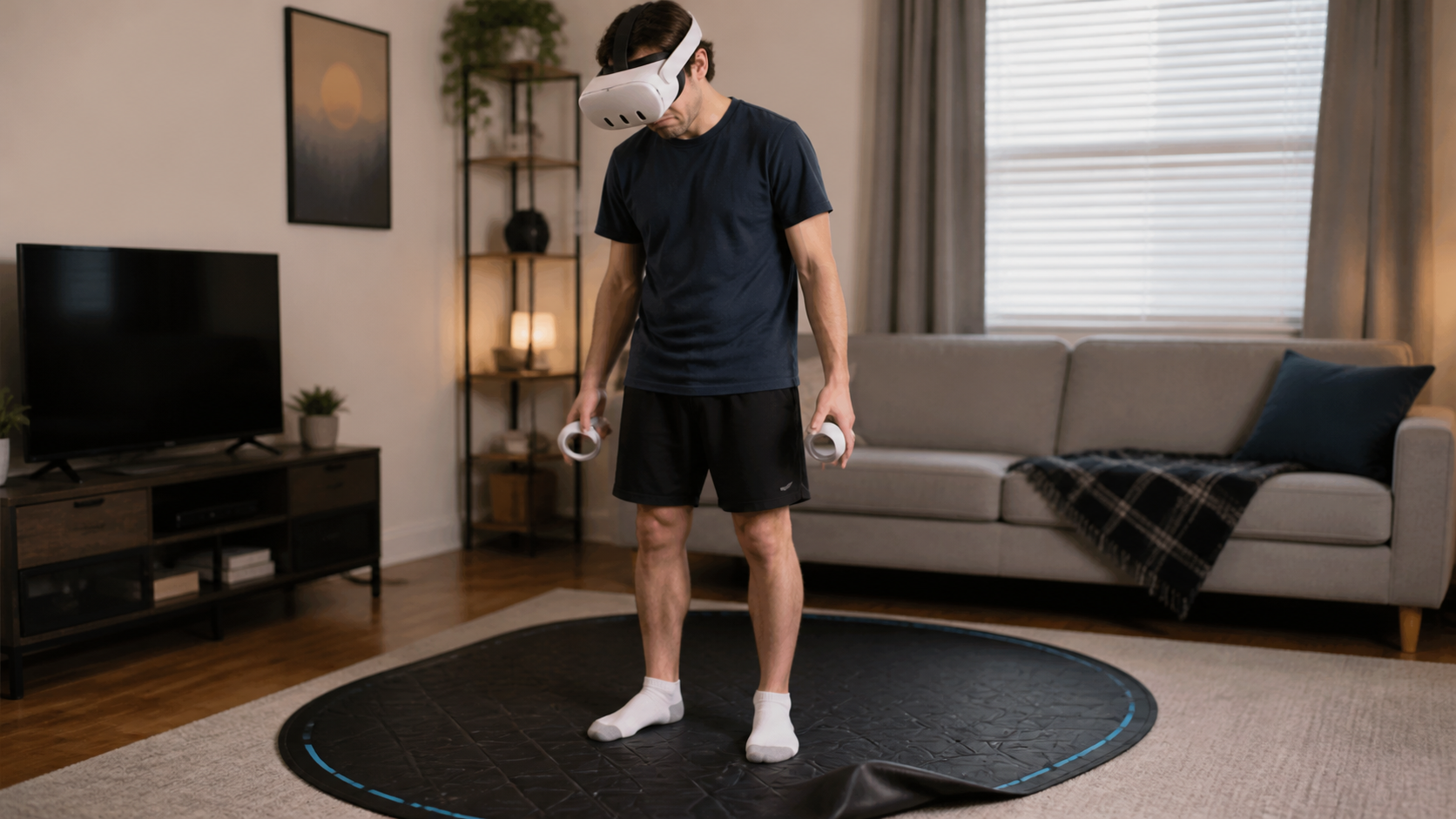
When I buy a new accessory, I'm looking for an immediate improvement. My first play session is critical. With this VR mat, the first thing I observed was a flaw: the curled edge that wouldn't stay down. This created a small but noticeable ridge that I could feel with my feet. It was a potential trip hazard, which is the opposite of what a VR mat should do. This initial negative experience colored my entire perception. I wasn't thinking, "Wow, this is so quiet." I was thinking, "Wow, this thing is annoying." A beginner VR user, who is likely focused on just getting their bearings, might not even be thinking about floor noise. They are more likely to be annoyed by the setup and the physical object on their floor. An experienced player might appreciate the subtle noise dampening, but only if the mat doesn't introduce new problems. To earn my trust, the mat needed to be perfect in its primary function of being a flat, safe surface. Since it failed that basic test, its secondary benefit of noise reduction felt less important.
Verdict by Game Type
- Rhythm (Beat Saber): I felt it was unnecessary. I'm focused on the notes, not my foot noise. The mat was more of a hassle to set up than it was worth.
- Boxing (Thrill of the Fight): It was somewhat helpful. The constant footwork in boxing games generates a lot of noise, and the mat did a decent job of muffling it, helping with immersion.
- Room-scale (Gorilla Tag): This is where the mat shined. The jumping and running make a racket. The noise reduction was most obvious and most valuable in this type of game.
Honestly, I'd tell most people to skip it. If you live in an apartment, play a lot of Gorilla Tag, and have plenty of storage space, it might be for you. Otherwise, the hassle of the bulk and the danger of curled edges outweigh the small improvement in immersion.
Conclusion
The VR mat's subtle noise benefit is often overshadowed by the practical issues of bulk, storage, and curled edges, making it a questionable purchase for many players.
Leave a comment