



Is room layout and distance from furniture more important than price for VR Mat?

Lost in VR? Hitting walls? A VR mat promises to keep you centered. But what if your room is the real problem and the mat is just a pricey placebo?
For a VR mat, your room layout and distance from furniture are more important than price. A cheap mat in a safe, open space is better than an expensive one crammed next to a desk. It's about safety and knowing your real-world position first.
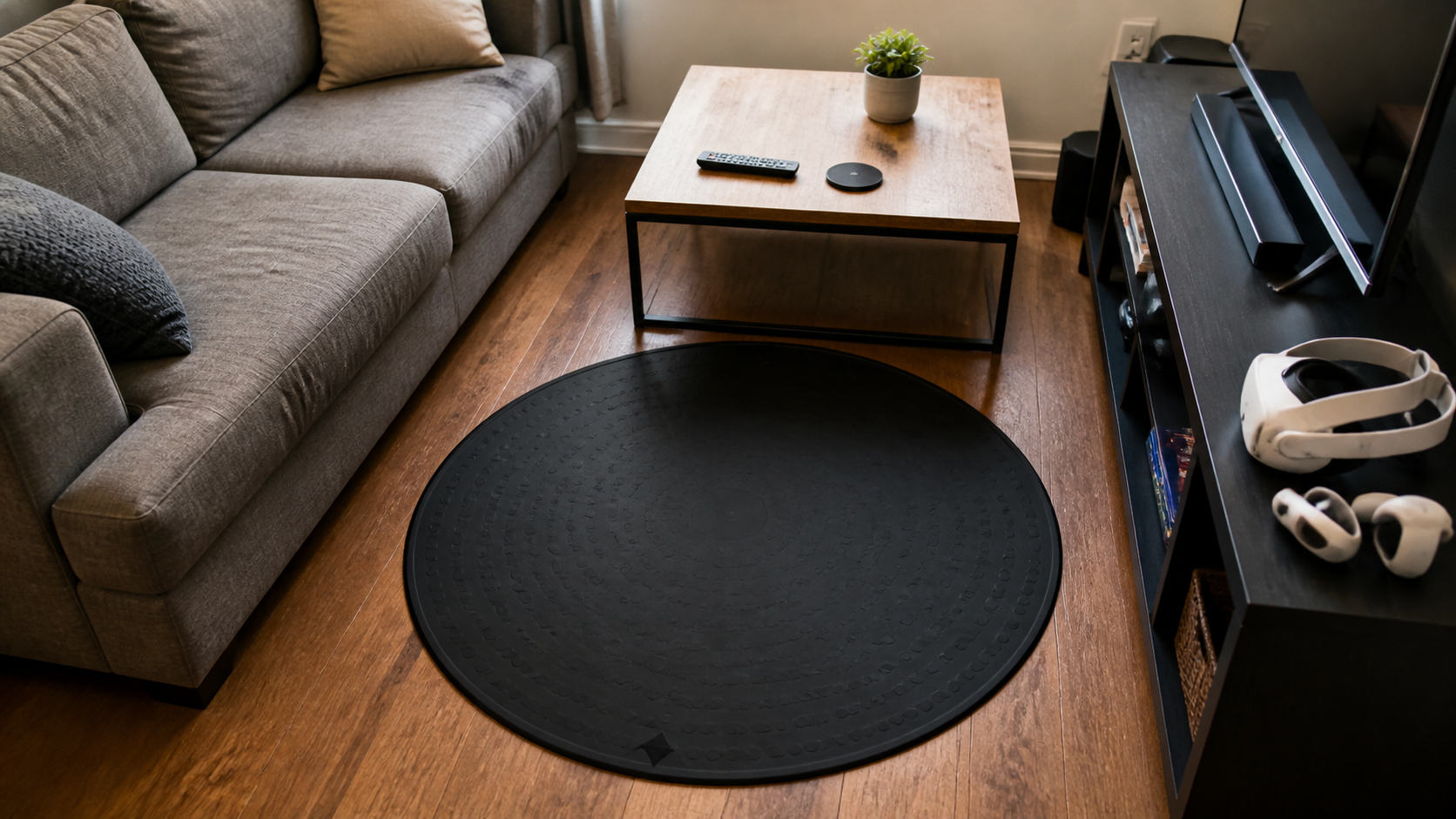
I kept bumping into my desk while playing. I read reviews about VR mats and how they help you stay centered. Most reviews felt generic, like they were just reading a product description. I wanted to know if it would work for a new player like me, in my actual, not-so-perfect room. So I bought one and decided to document my real experience, starting with the one game guaranteed to make you lose your bearings: Gorilla Tag. The journey from unboxing to sweaty workout revealed that the mat's value is deeply personal and depends entirely on the space you have.
Would new VR owners describe the Gorilla Tag change as comfort, control, safety, or immersion when center orientation changes?
Swinging wildly in Gorilla Tag, you lose track of your room's center. Suddenly, you're near a wall. A VR mat claims to fix this, but how does it feel?
New VR owners would describe the change primarily as a gain in safety. The mat's texture constantly reminds you of your safe zone's center. This physical cue is more about preventing collisions than enhancing comfort, control, or immersion, which come later with experience.
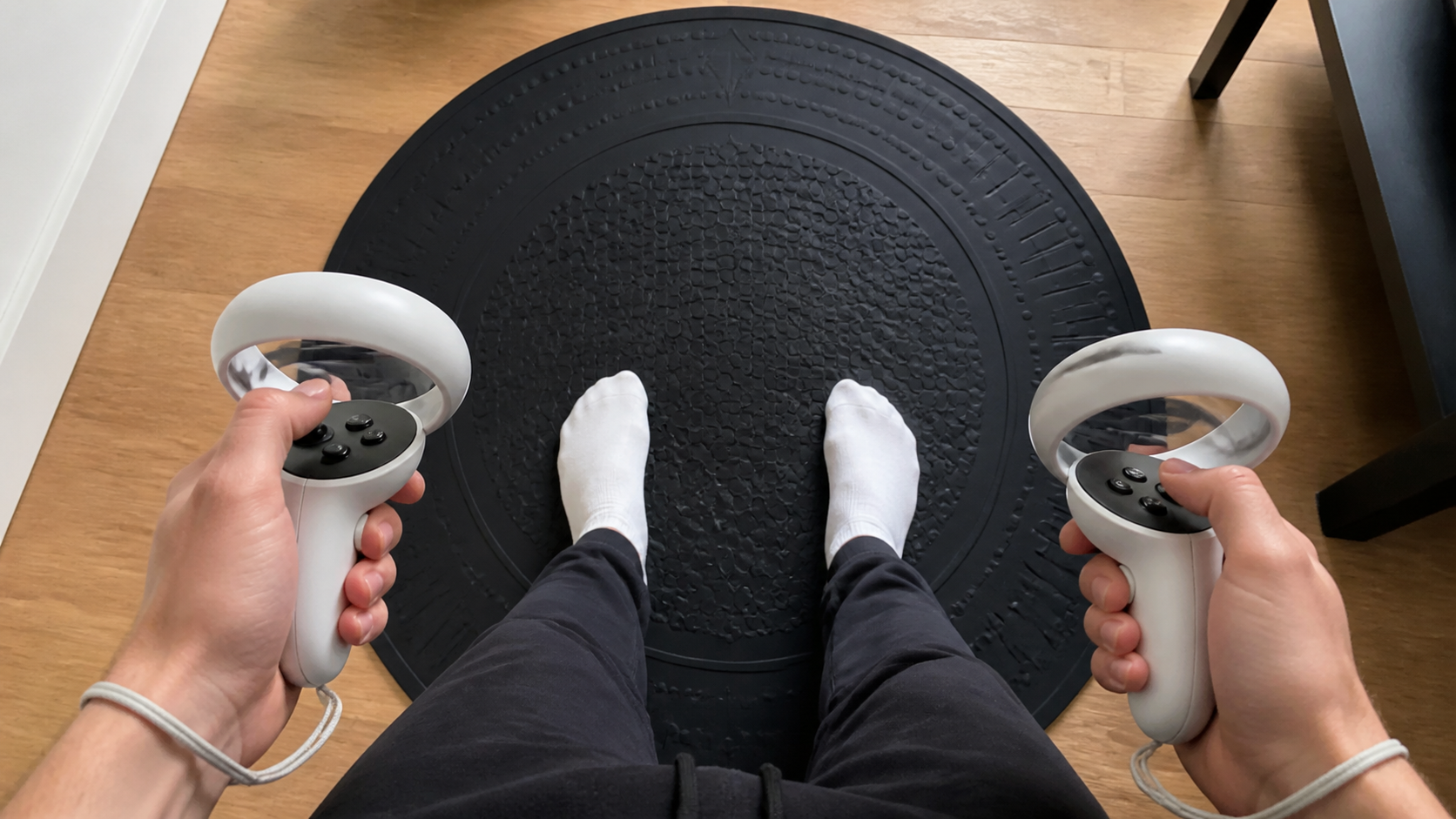
When I first jumped into Gorilla Tag with the mat, I didn't suddenly get better at the game. My movements were still clumsy. But something fundamental changed. My brain, which was always dedicating a small part of its processing power to "where is the wall?", could finally relax a little. The mat has these little raised bumps that tell you where the front is. My feet could feel my orientation without me needing to look down or peek through the headset's nose gap. The biggest change was a feeling of confidence. I wasn't afraid to make a large arm swing because I knew as long as my feet were on the mat, my hands were unlikely to hit my monitor. It wasn't about comfort; the floor was fine before. It wasn't about control in the game. It was about control of my body in my room.
How it Actually Felt: A Beginner's Breakdown
For a new player, the promises of "immersion" or "comfort" can be misleading. The immediate, noticeable change is much more practical. Here's how I would break down my first-hour experience.
| Feeling | My Beginner Experience |
|---|---|
| Safety | This was the number one benefit. I immediately felt more secure. The mat became a physical anchor for my Guardian boundary. It's a constant, subconscious reminder of my safe zone. |
| Control | I felt more in control of my real-world body, not my in-game avatar. Knowing my position allowed for bolder movements, which indirectly helps gameplay, but it's a secondary effect. |
| Comfort | The mat is slightly squishy and feels nice, but it didn't solve a pain point. My feet weren't sore before. This is a bonus, not the main reason to get it. |
| Immersion | This is where it gets tricky. In some ways, it broke immersion. Feeling the mat reminded me I was in my room. But by reducing my fear of hitting things, it allowed me to get *more* lost in the game. |
Can new VR owners reproduce the test without special tools or paid software?
You see reviews with fancy overlay software showing playspace. But can a regular person test a VR mat's effectiveness without buying extra apps or using developer tools?
Yes, absolutely. New VR owners can reproduce this test easily. The simplest method is to play an active game like a boxing game for five minutes and check if you've drifted off the mat. No special software is needed to feel your position.
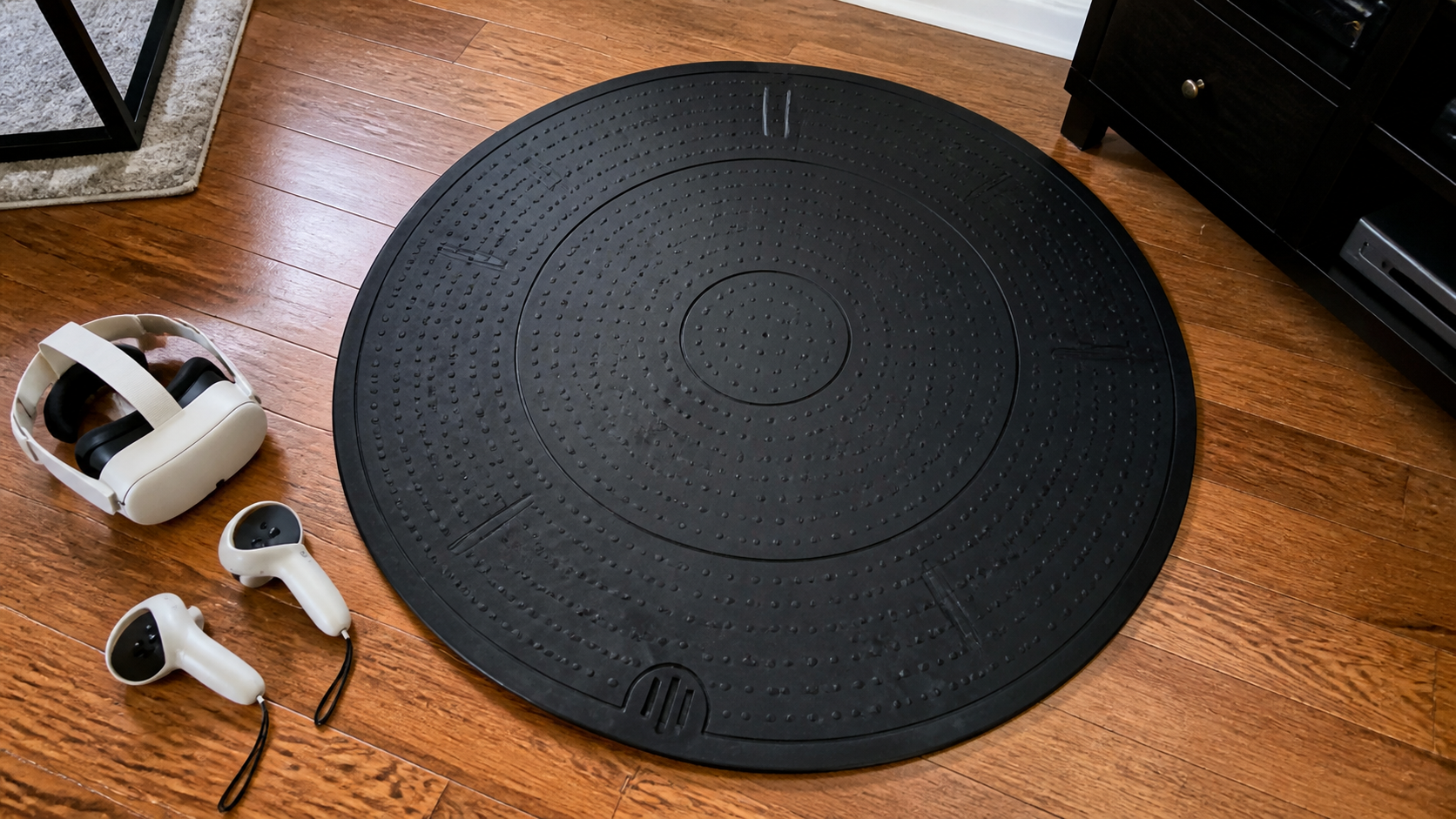
I wanted a simple, honest test. I didn't want to install software or mess with developer settings. My test was designed to mimic a real play session. First, I placed the mat perfectly in the center of my playspace. Then, I put on my headset and played five minutes of The Thrill of the Fight. This game is perfect for the test because it forces you to move your feet, dodge, and rotate your body constantly. You aren't just standing still and moving your arms. After the first round, I took off the headset and looked down. I was still mostly on the mat, but my feet were near the back edge. The mat itself had also slid about two inches on my hardwood floor. I was wearing socks. I repeated the test barefoot. This time, I stayed centered much better, and the mat didn't move at all. This simple test told me more than any software could: the mat works, but its effectiveness depends on your flooring and what you wear on your feet. Anyone can and should do this.
Would a user notice the benefit before they notice the extra bulk?
A VR mat sounds great until you realize it's another thing on your floor. Is the orientation benefit immediate, or will you just be annoyed by the clutter first?
A user will likely notice the benefit during an intense VR session first. The bulk is only noticeable before and after playing. When you're actively moving, the mat's physical feedback is immediate, while the thought of it being clutter fades away.
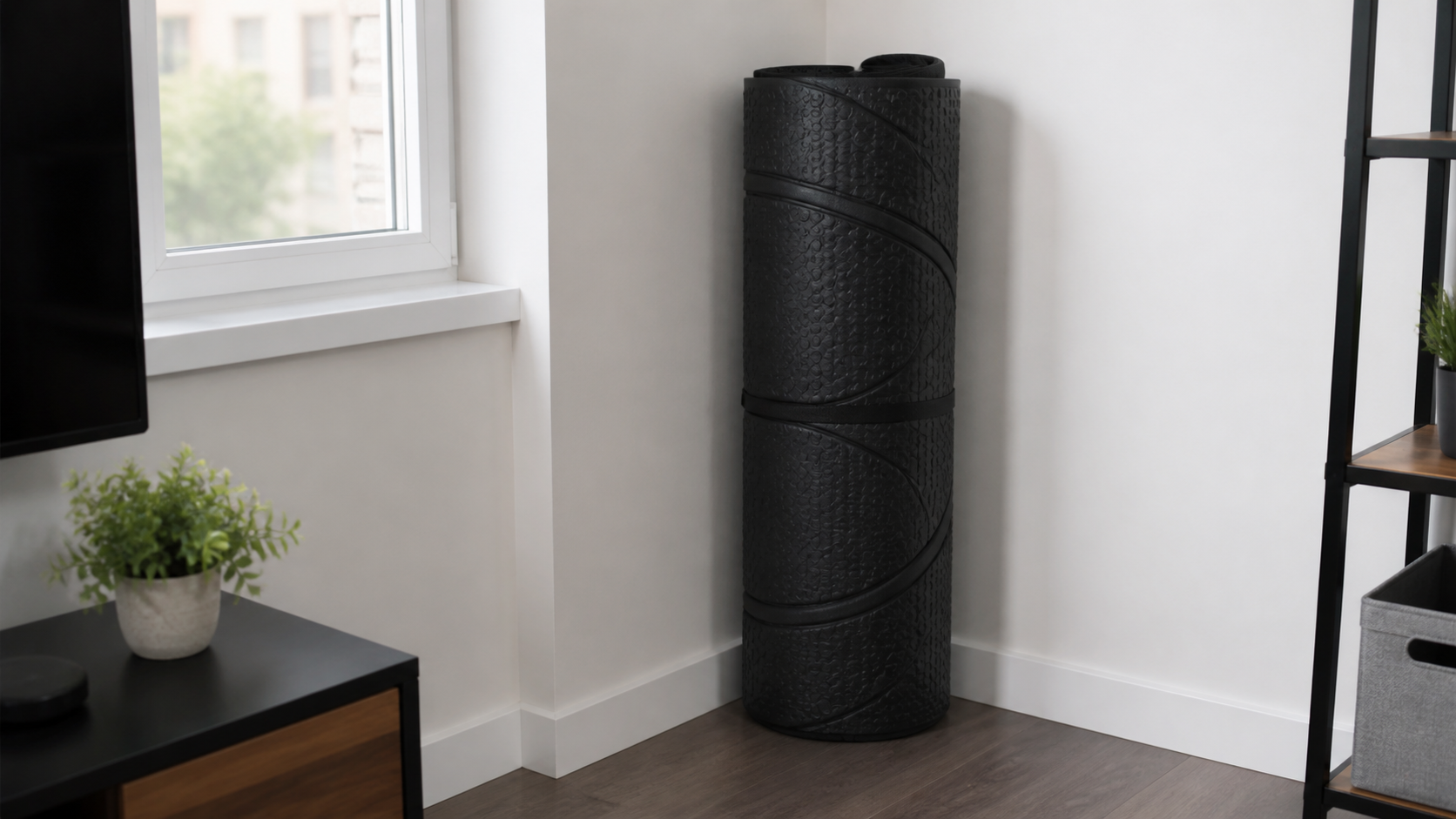
My first thought when I unrolled the mat was, "This is big." My apartment isn't huge, and this mat takes up a significant chunk of my living room floor. Setting it up and putting it away is a new step in my VR routine. Before I play, I have to move my coffee table, unroll the mat, and make sure it's centered. When I'm done, I have to roll it back up and tuck it away. This part is annoying. It's bulk. It's clutter. But the moment the headset goes on, that feeling vanishes. The benefit is immediate. In the middle of a game, when I sidestep to dodge an attack, my foot feels the edge of the mat. That physical cue is instant and powerful. I don't think about the mat's bulk at all while I'm playing. The value is present during the activity, while the annoyance is present before and after. For me, the trade-off is worth it because my space is small. If I had a dedicated, empty VR room, the mat would probably feel less beneficial and more like unnecessary bulk.
Can VR Mat earn trust for center orientation without proof such as a room-layout photo with boundary distance?
Brands show perfect, spacious rooms in their ads. But can you trust a VR mat will work in your messy, real-world apartment without seeing proof it works?
A VR mat brand can earn trust, but it is difficult without authentic proof. User-generated photos of real, imperfect room layouts are more convincing than sterile marketing shots. Showing how a mat performs in a tight space with furniture nearby builds more trust.
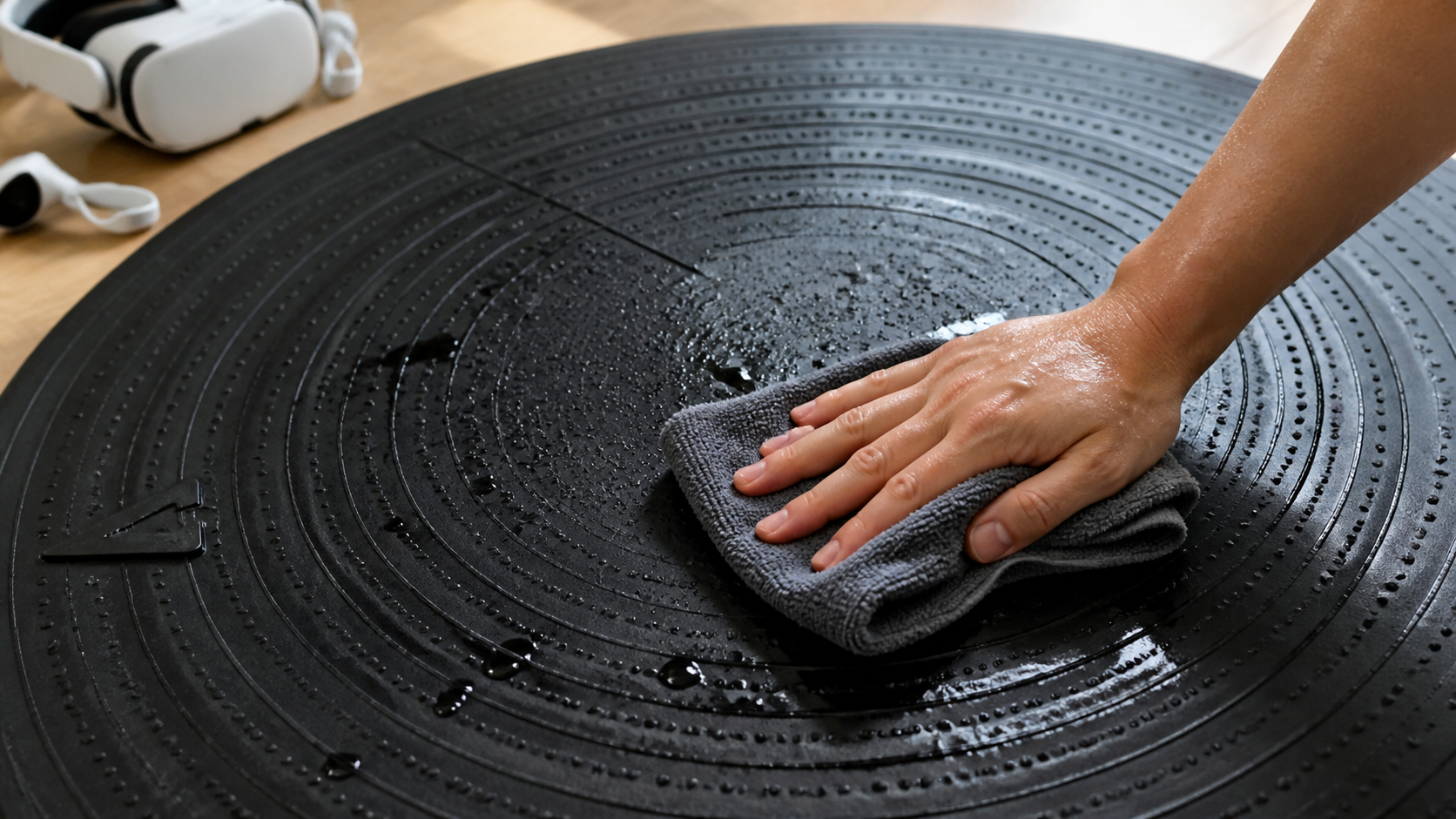
Looking at the product pages online, I saw the mat in huge, empty lofts. That's not my reality. My playspace is the bare minimum size recommended by Meta. I have a couch on one side and a TV stand on the other. It’s hard to trust a product will solve my problem when the marketing doesn’t show my problem. A brand could build massive trust by showing the mat in a dorm room or a small apartment bedroom. Show it crammed between a bed and a desk. That’s real. That’s proof. For me, trust was built after the purchase, through use. Another way brands can build trust is by showing practical, real-life use. For example, after a 30-minute fitness session, I was dripping sweat on the mat. I was worried it would be hard to clean. But it wiped down easily with a damp cloth and was dry in minutes. A photo showing this cleaning process is a powerful form of proof. It proves the product was designed for real, sweaty VR users, not just for a clean marketing photo. This kind of honesty about use and maintenance builds more trust than a perfect studio shot ever could.
Conclusion
A VR mat is a safety tool for tight spaces, not a magic immersion booster. Your room layout matters more. It's helpful if you hit walls, but skip it if you have space.
Leave a comment