



Is room clearance during overhead swings the hidden reason Long Arms for Gorilla Tag disappoints buyers?

You bought Long Arms for Gorilla Tag to get an edge, but now your swings feel clumsy and you keep hitting the wall. Is it you, or the accessory?
Yes, a lack of room clearance is a huge hidden reason Long Arms for Gorilla Tag disappoint. The added length often extends beyond the safe play area of a normal room, creating a serious safety risk. This problem, combined with in-game arm length limits, makes them frustrating for many players.
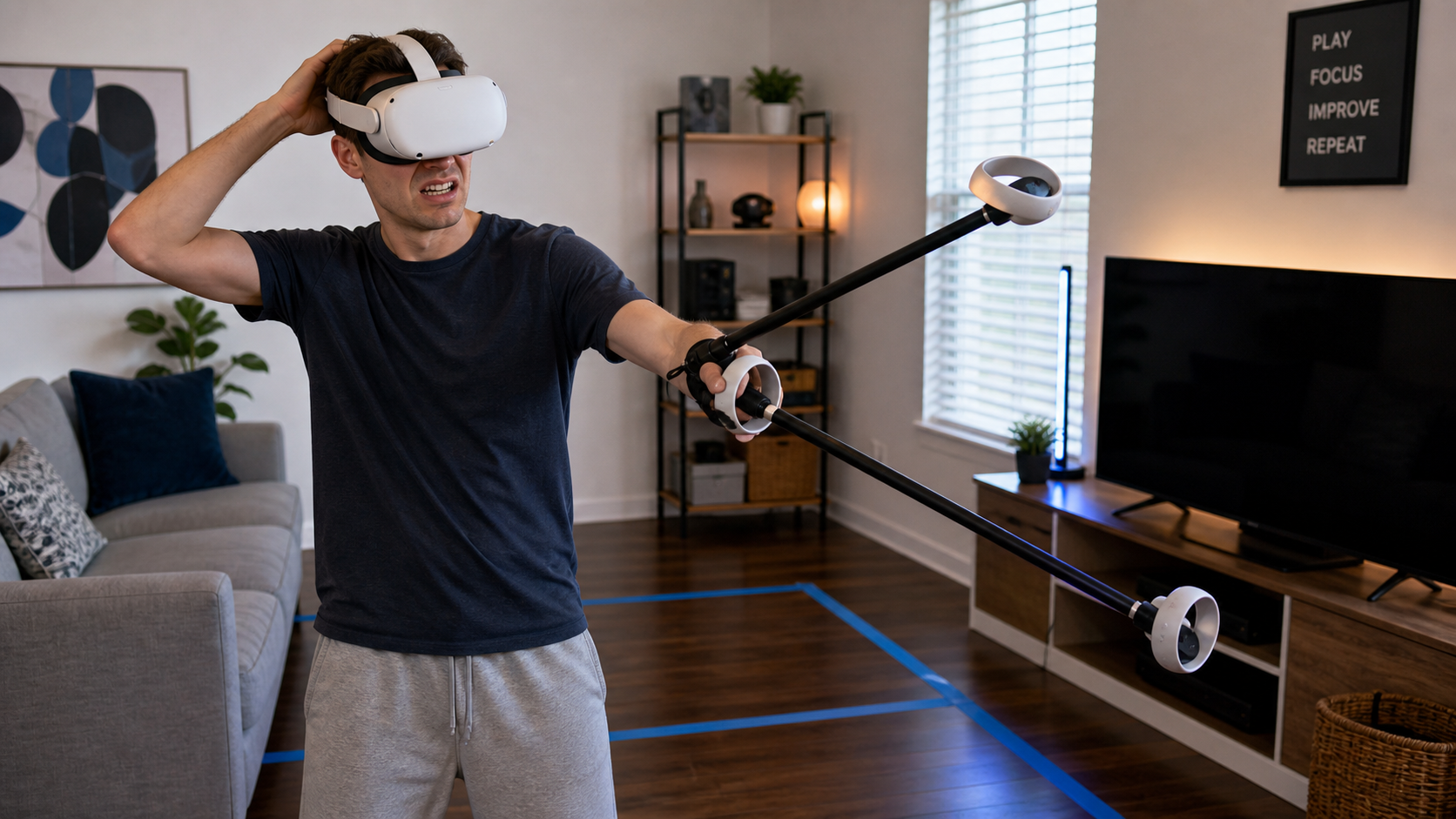
I was really excited to try these extenders. I play a lot of Gorilla Tag, and the idea of having a longer reach seemed like a game-changer. I use the Quest Touch Plus Controllers that came with my Quest 3, and I figured this accessory would give me a clear advantage. But as soon as I started playing, I realized it wasn't that simple. My experience quickly turned from excitement to a case study in why some VR accessories fail to live up to their promise. It wasn't just one problem, but a series of issues that started with my timing and ended with me almost breaking a lamp. I decided to break down my experience to see exactly where things went wrong, and the first issue was immediately obvious: my rhythm was completely gone.
On Quest Touch Plus Controllers, does whether the handles change movement timing too much change the result?
Your timing in fast-paced sports games feels off. The extra weight and length make every swing feel slow and clumsy. Let's look at why this is a real problem.
Yes, the handles significantly change your movement timing. The added weight and leverage disrupt your muscle memory, making quick reactions in games feel sluggish. This timing issue is a primary reason the accessory can hurt your performance more than it helps, especially with secure-fitting Touch Plus Controllers.
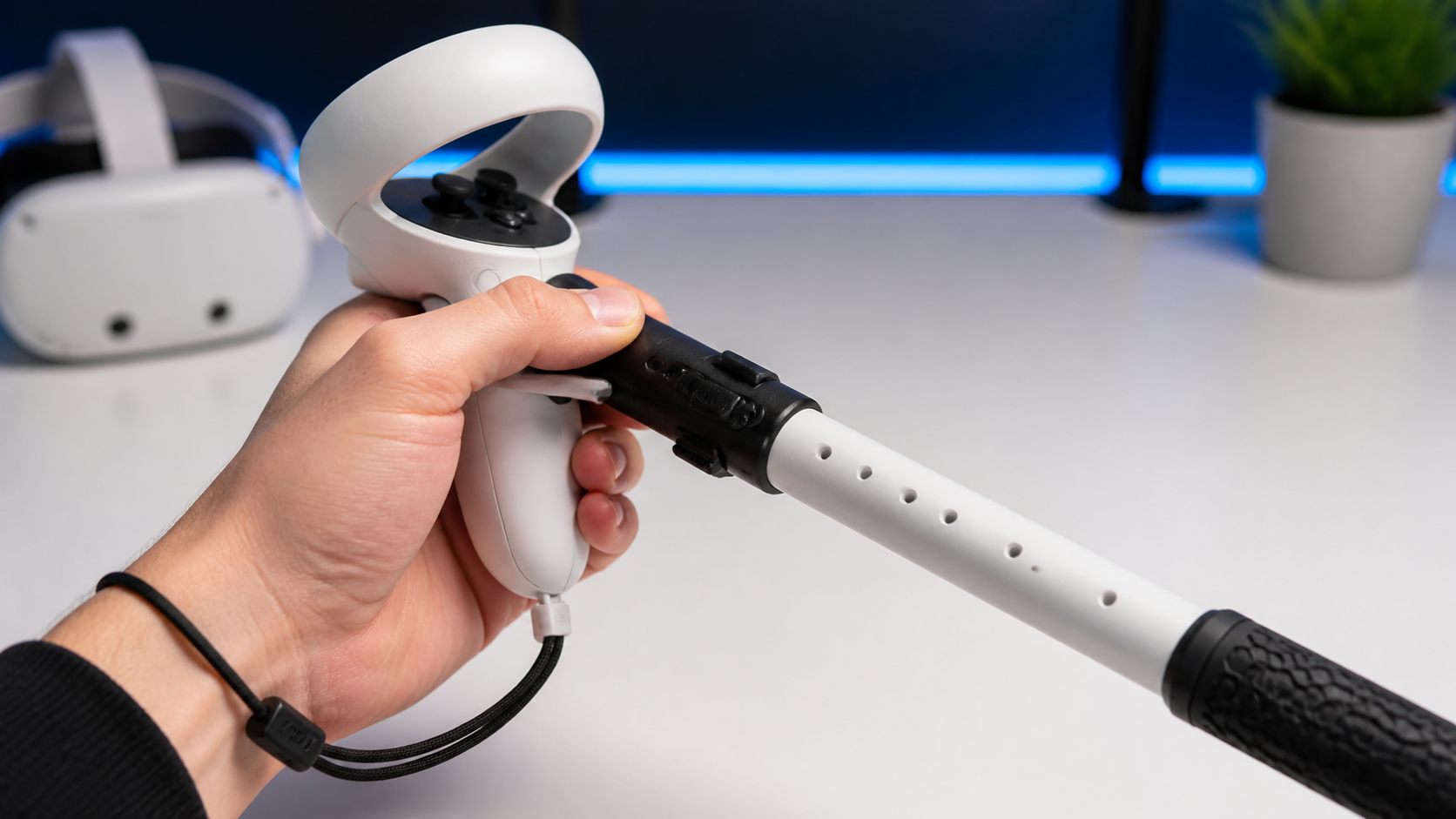
The first thing I noticed was the weight. It’s not that the handles are heavy on their own, but when you attach them to the Quest Touch Plus Controllers, they change the entire balance. The center of gravity shifts forward, away from your hand. This creates more momentum during a swing, which sounds good in theory. In practice, it meant my swings were harder to start and, more importantly, much harder to stop. In a game like Gorilla Tag, where you need to make fast, precise movements to grab onto surfaces, this added inertia was a disaster. I was constantly overshooting my targets. My brain knew where my hand needed to go, but the controller lagged behind because of the new physics I had to fight against.
How Added Weight Ruins Rhythm
Controller security is a trust issue. The Touch Plus controllers feel solid in my hands, but adding a long plastic stick introduces a point of flex and leverage. During a hard swing, I could feel a tiny bit of wobble. This slight insecurity made me hesitate, which is deadly in a fast game. The real problem is how this impacts your natural arm rhythm. I set up a table to show what I felt.
| Metric | Standard Controller | With Long Arms |
|---|---|---|
| Initial Speed | Fast and responsive | Noticeably slower to start |
| Swing Arc | Controlled and tight | Wider and harder to control |
| Recovery Time | Almost instant | Slow, feels sluggish |
| Perceived Effort | Low | High, arm gets tired faster |
This isn't just about Gorilla Tag. I tried a melee combat game, and parrying attacks became nearly impossible. My sword felt like it was moving through water. The change in timing and weight is a fundamental problem that affects any game requiring quick reflexes.
Can the writer show the exact moment child sizing appears in sports and melee games?
You feel like your reach isn't what it should be. Your in-game arms look strangely short, even with the extenders on. I can show you exactly why this happens.
Yes. The moment appears when you fully extend your arms in-game. Many games, like Gorilla Tag, cap the virtual arm length to keep the game fair. Your physical extenders hit a "virtual wall," revealing the game's child-sizing mechanic and making the accessory feel pointless.
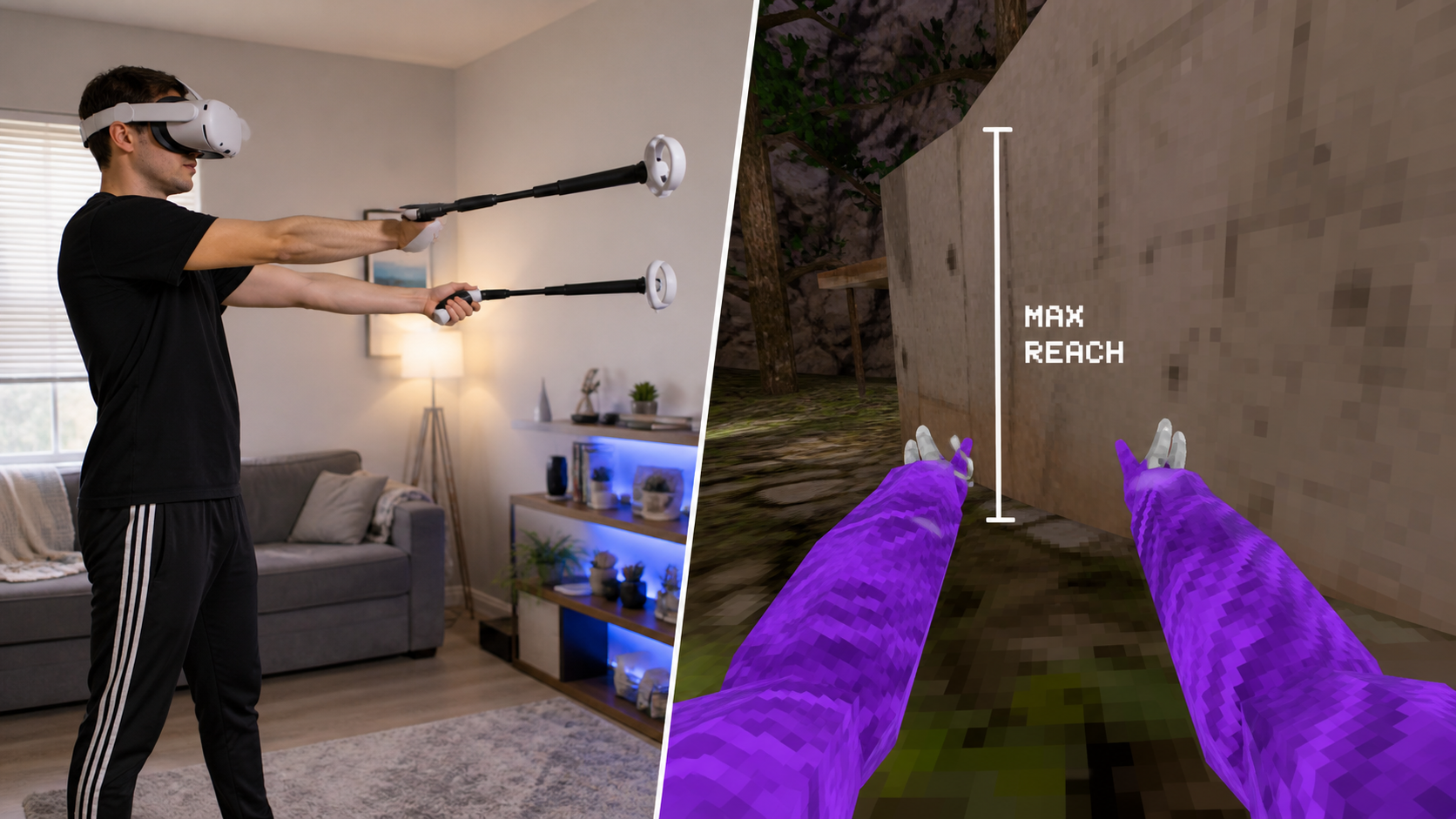
This was the most disappointing discovery. The entire reason I bought these handles was for extra reach. After struggling with the timing, I decided to do a simple test. I went into Gorilla Tag and stood next to a wall. First, with just the normal controllers, I reached out as far as I could and noted where my virtual gorilla hand touched the wall. Then, I attached the Long Arms and did the same thing. I extended my physical arms much further, but my virtual hand stopped in the exact same spot. It was a shocking moment. My real arms were fully stretched out, but my gorilla arms in the game were still slightly bent, refusing to extend any further. The game's software was actively preventing the accessory from working as intended.
This is a common feature in competitive VR games. It's a balancing mechanic to ensure that players with different body types or accessories don't have an unfair advantage. Developers cap the maximum arm length so that everyone is playing on a relatively level field. This is what I call "child sizing." The game effectively assumes everyone has the same, shorter arm length to keep things fair. While it's a good idea for game balance, it completely invalidates the core purpose of a long-arm accessory. I felt cheated, not by the accessory maker, but by a game mechanic I never knew existed. It's a failure case built directly into the game's code, and it means that for Gorilla Tag, these extenders offer zero extra reach.
Will Long Arms for Gorilla Tag work in a small apartment without creating a safety problem?
You play VR in a small room. You're worried about smashing your controllers, your TV, or your hands into the wall with every big swing you take.
No, Long Arms for Gorilla Tag are generally not safe for a small apartment. The extended reach dramatically increases your wingspan, making it incredibly easy to hit walls, furniture, or other people. You need a much larger play space than the standard Guardian suggests.
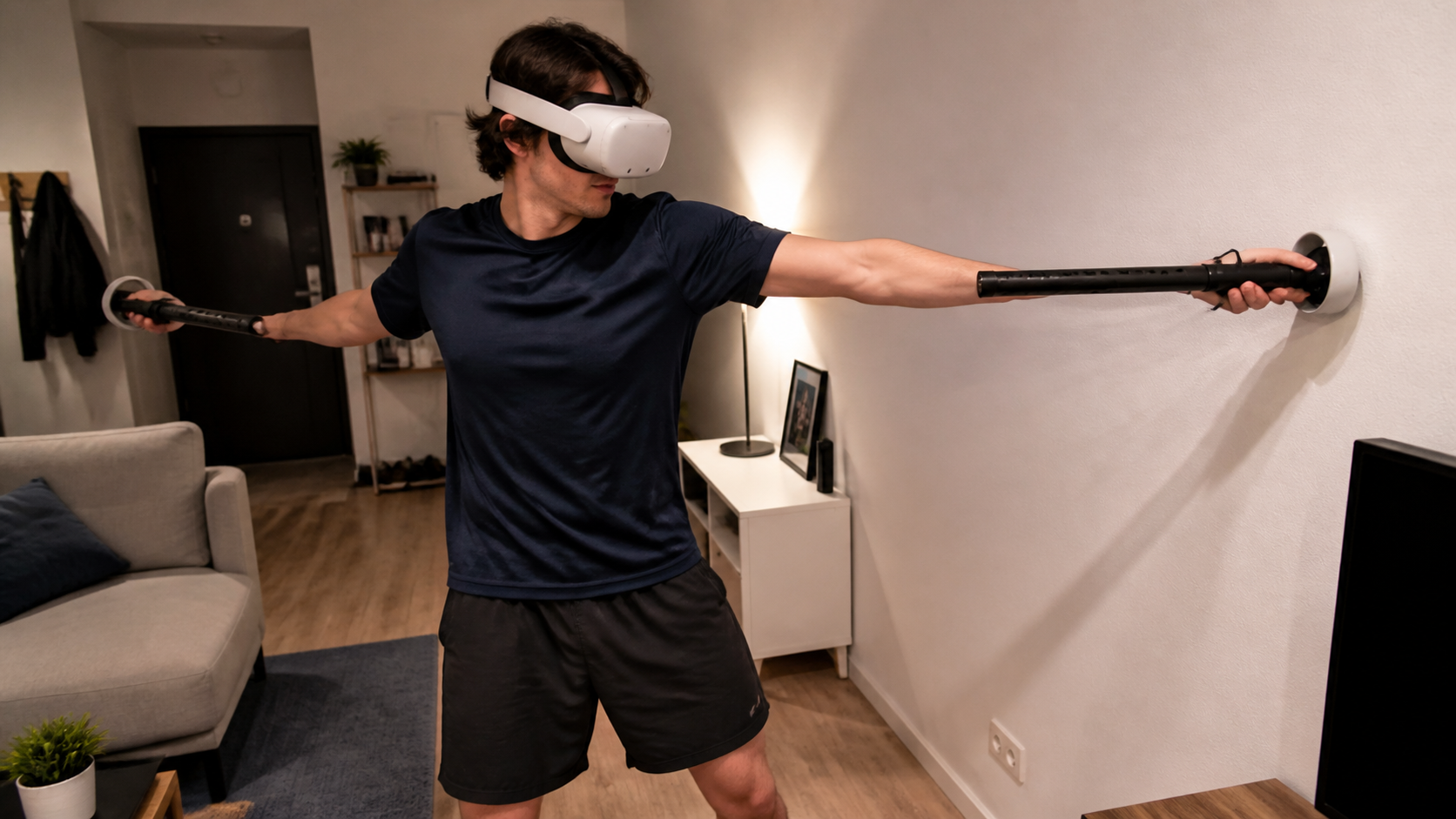
After realizing the timing was off and the reach was fake, the final nail in the coffin was safety. I play in my living room, which has a decent amount of space for VR, or so I thought. My Guardian boundary is about 2.5 by 2.5 meters. With standard controllers, I have enough room to swing my arms freely without worrying. But with the Long Arms attached, my reality changed. I did a simple test: I stood in the center of my play space and slowly extended my arms out to my sides. With the normal controllers, I had about half a meter of clearance before touching the Guardian wall. With the Long Arms, my controllers were already poking through the virtual wall and were just inches away from my real-life bookshelf and TV stand.
The photo I took shows this perfectly. One big, enthusiastic swing in Gorilla Tag would have resulted in a smashed controller and a broken picture frame. The game encourages wild, full-body movements, and this accessory makes those movements dangerous in any normal-sized room. The Guardian system is designed for your hands, not for long sticks attached to your hands. You would need to shrink your Guardian boundary so much to be safe that you'd barely have any room to move. It creates a constant sense of anxiety while playing. Instead of being immersed in the game, I was constantly worried about what I was about to hit. This isn't a minor inconvenience; it's a fundamental safety flaw for anyone who doesn't have a dedicated, empty garage to play in.
What final verdict should Quest Touch Plus Controllers users get for Long Arms for Gorilla Tag when sports and melee games is limited by child sizing?
So, are these extenders a total waste of money? You're probably confused about whether you should buy them, keep them, or just send them back for a refund.
For most Quest Touch Plus Controllers users, Long Arms for Gorilla Tag are not recommended. The combination of disrupted timing, useless reach due to child sizing, and major safety risks in small spaces far outweighs any potential benefit. They create more problems than they solve.
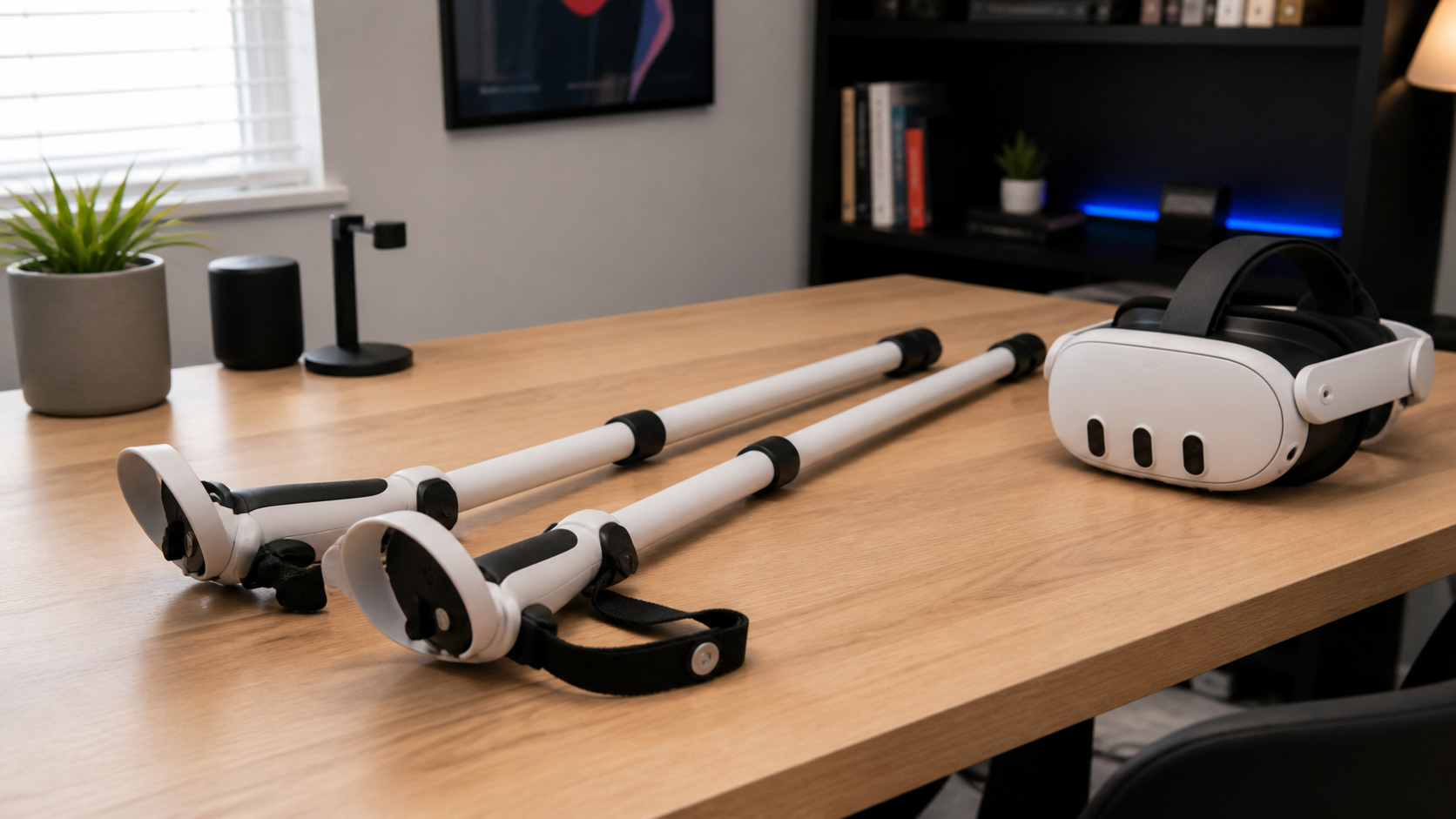
After my testing, I can't honestly recommend this type of accessory to the average player. The list of problems is just too long. The added weight and poor balance ruin your timing in any game that requires speed. The main selling point, longer reach, is completely negated by game developers' balancing decisions in titles like Gorilla Tag. And the safety hazard is the most serious issue of all; you are almost guaranteed to hit something or someone if you don't have a massive, empty room. The accessory felt annoying almost the entire time. I was fighting the weight, frustrated by the lack of results, and scared of breaking my stuff.
Is there anyone who should buy them? Perhaps. If you have a very large, dedicated VR space (think a two-car garage) and you want to use them for a slow-paced experience where immersion is more important than performance, maybe you could find some value. For example, in a simple fishing game or a slow-moving exploration title, the feeling of having longer arms might add to the experience. But for the games they are marketed for—Gorilla Tag, sports simulators, melee combat—they are a liability. My advice for most people, especially those using the excellent Quest Touch Plus Controllers, is to skip this accessory. Your money is better spent on something that improves comfort or solves a real problem, rather than creating three new ones.
Conclusion
Long Arms for Gorilla Tag promise a longer reach but deliver timing issues, fake advantages, and real safety hazards. They are a poor fit for most players in average-sized rooms.
Leave a comment