



Is a VR Sword the right fix when Until You Fall feels limited by quick setup?

You love the workout from Until You Fall, but the small controllers break the spell. A VR Sword handle could fix this. But is the extra setup worth it for short sessions?
For dedicated, long fitness sessions, the VR Sword is a fantastic immersion booster for Until You Fall. It makes swings feel more intentional. But for quick, spontaneous play, the setup time and space requirements make it less practical than the standard Quest Touch Plus Controllers.
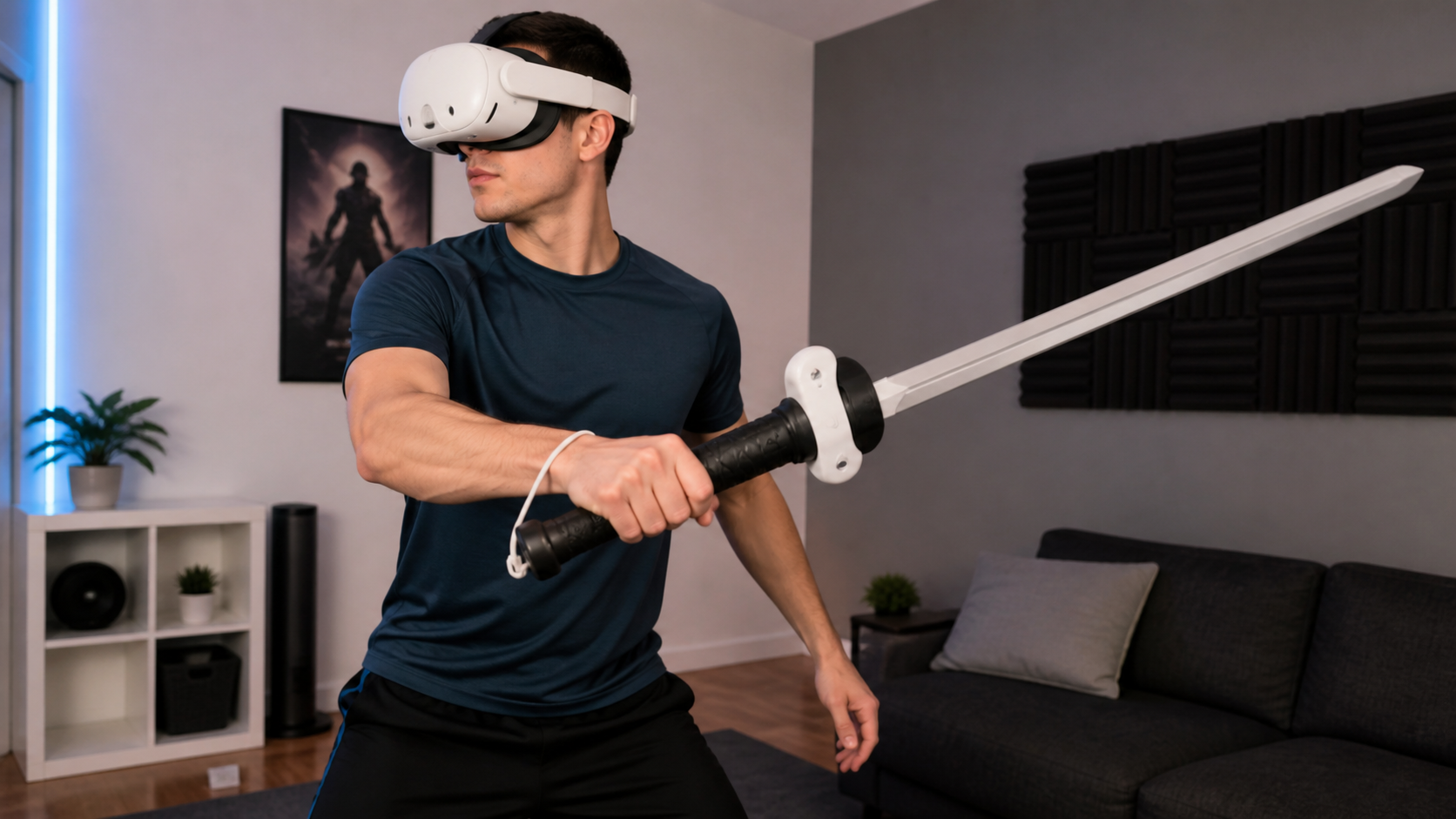
I've always used Until You Fall for a quick, intense cardio hit. It's my go-to when I only have 20 minutes. The problem was that the standard Touch Plus controllers felt like holding toys, not swords. It pulled me out of the game. I saw VR Sword attachments online and thought they could be the answer. They look like the handles of katanas or longswords, which is perfect. I wondered if the time spent clipping them on and off would ruin the "quick session" benefit. This is my experience trying to solve that problem. I wanted to know if this accessory truly enhances the game or just adds another layer of hassle before I can even start playing.
If room space is limited, does VR Sword still make sense for Until You Fall when quick setup matters?
Your play space feels big enough for VR. But will a long sword accessory make you punch a wall? You need to know if the extra reach creates a new safety problem.
No, the VR Sword does not make sense in a limited room if quick setup is your goal. The extra length forces you to constantly worry about your surroundings. This mental check slows you down and ruins the fast-paced nature of Until You Fall and quick gameplay.
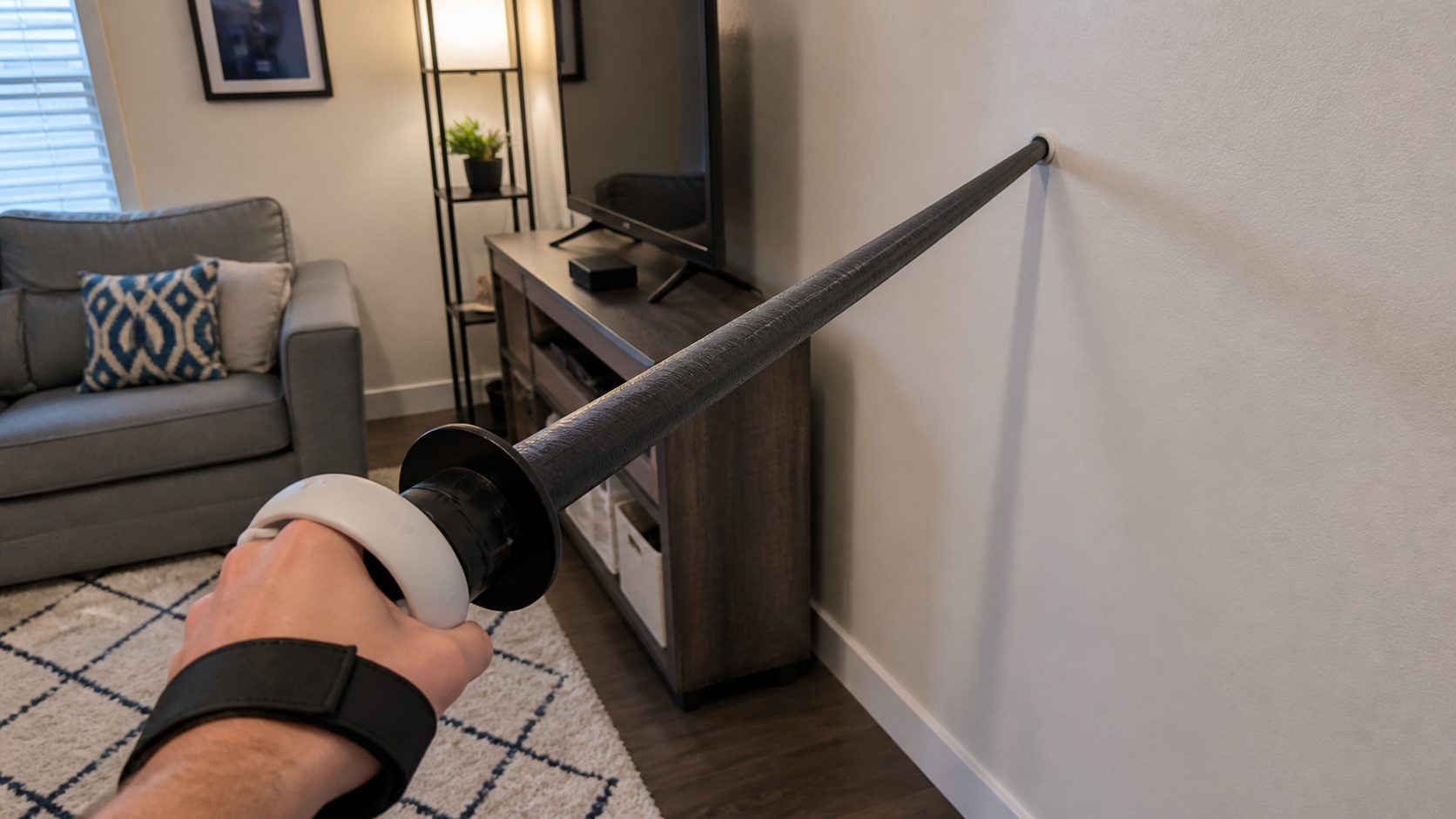
My play area is about 2 meters by 2 meters, which is usually fine for most VR games. The first thing I did after attaching the VR Sword was test my reach. I stood in the center of my guardian and slowly extended my arm. The tip of the sword attachment went past my guardian boundary. This was an immediate red flag. In a game like Until You Fall, you make fast, wide swings. You don't have time to think about whether you're about to hit a lamp.
Short-Session Impression
For a quick 15-minute round, this was a disaster. I spent the first five minutes just re-learning my swing distance. I had to make smaller, choppier movements. It felt less like sword fighting and more like I was trying to avoid breaking things in my own living room. The immersion I gained from the handle was completely lost to the anxiety about my space. The quick setup benefit was gone because I had to do a full safety check every time.
Long-Session Use
Over a longer session of an hour, I did start to adjust. I learned to use more wrist and elbow movements instead of full shoulder swings. But this changed the workout. It became less of a full-body cardio session. The table below shows the difference in clearance I needed.
| Controller Type | Required Swing Radius | Impact on Gameplay |
|---|---|---|
| Standard Touch Plus | Normal arm's length | Full, confident swings within guardian |
| VR Sword Attached | Arm's length + 20cm | Hesitant, smaller swings; risk of hitting objects |
Does heavier swings versus room safety matter more than quick setup for fitness players?
You want a better workout from VR. Heavier swings feel more effective. But is the risk of hitting your furniture or hurting yourself worth the extra burn? This is the core trade-off.
For serious fitness players, room safety must always matter more than heavier swings. A heavier swing feels great, but an injury or broken TV ends your workout routine completely. Quick setup becomes irrelevant if the game is unsafe to play with the accessory.
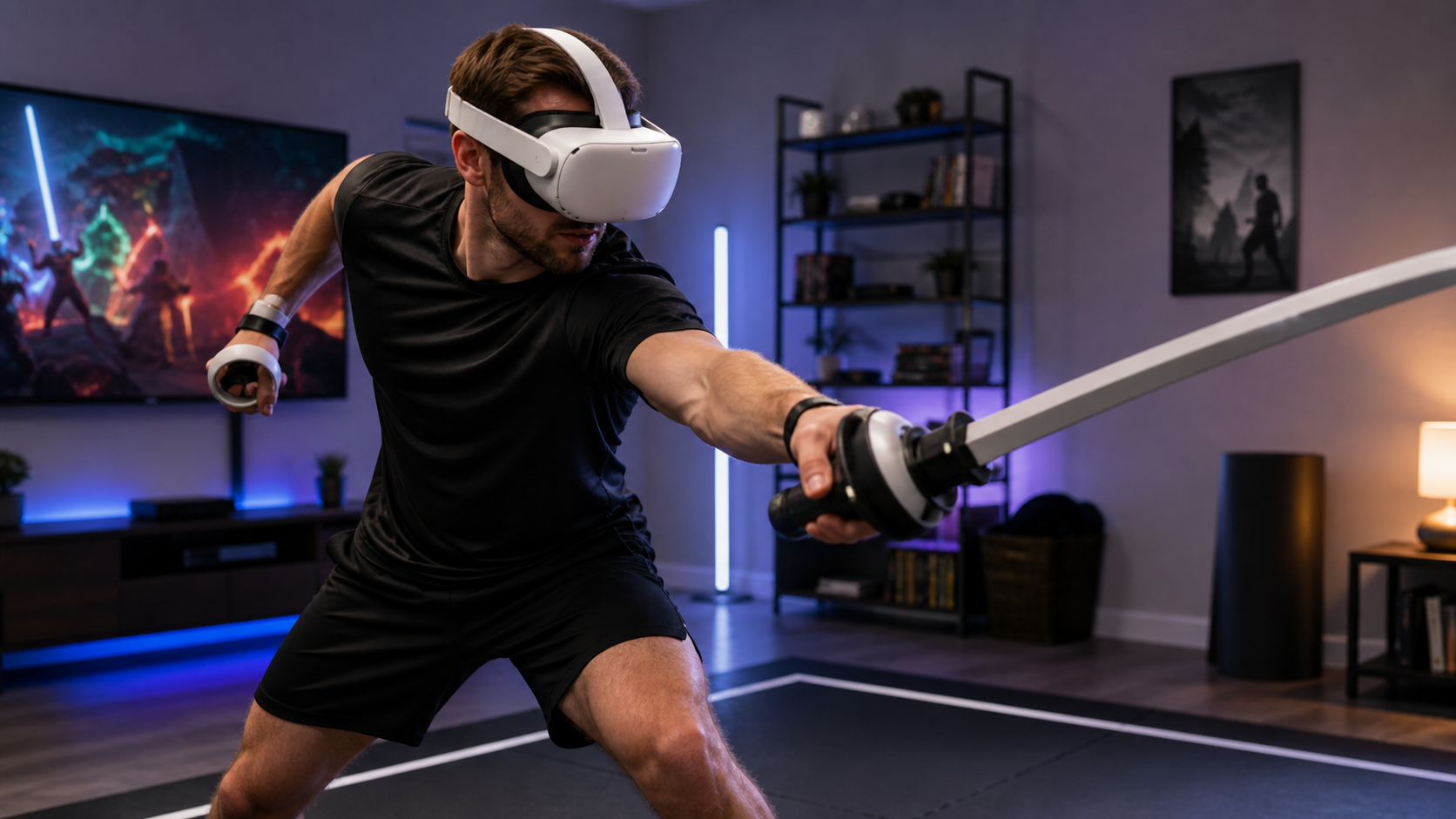
The VR Sword definitely adds a satisfying weight to the Quest Touch Plus controllers. My swings had more momentum. I could feel the pull in my shoulders and core, much like in Blade & Sorcery where weight and physics are key. This was exactly the fitness boost I was looking for. Blocking felt more solid, and attacks felt more powerful. From a pure workout perspective, the added weight was a huge win. But this weight came with a new danger. A heavier object moving at high speed is harder to stop. A light tap against a wall with a bare controller is no big deal. A full-speed swing with the weighted VR Sword could easily damage the controller or whatever it hits. I found myself hesitating on my most powerful swings, which is the opposite of what you want in a rhythm-combat game. The quick setup advantage of the game was lost, replaced by a mental debate between workout intensity and safety.
Is VR Sword still practical when another person uses the headset next?
You share your Quest with family or a roommate. An accessory is a great idea for your game, but it becomes a hassle if someone else wants to play something different right after.
The VR Sword is not practical for a shared headset scenario. The time it takes to securely attach and detach the accessory for each user ruins the grab-and-go convenience of the Quest. It creates a barrier to quick, multi-user play sessions.
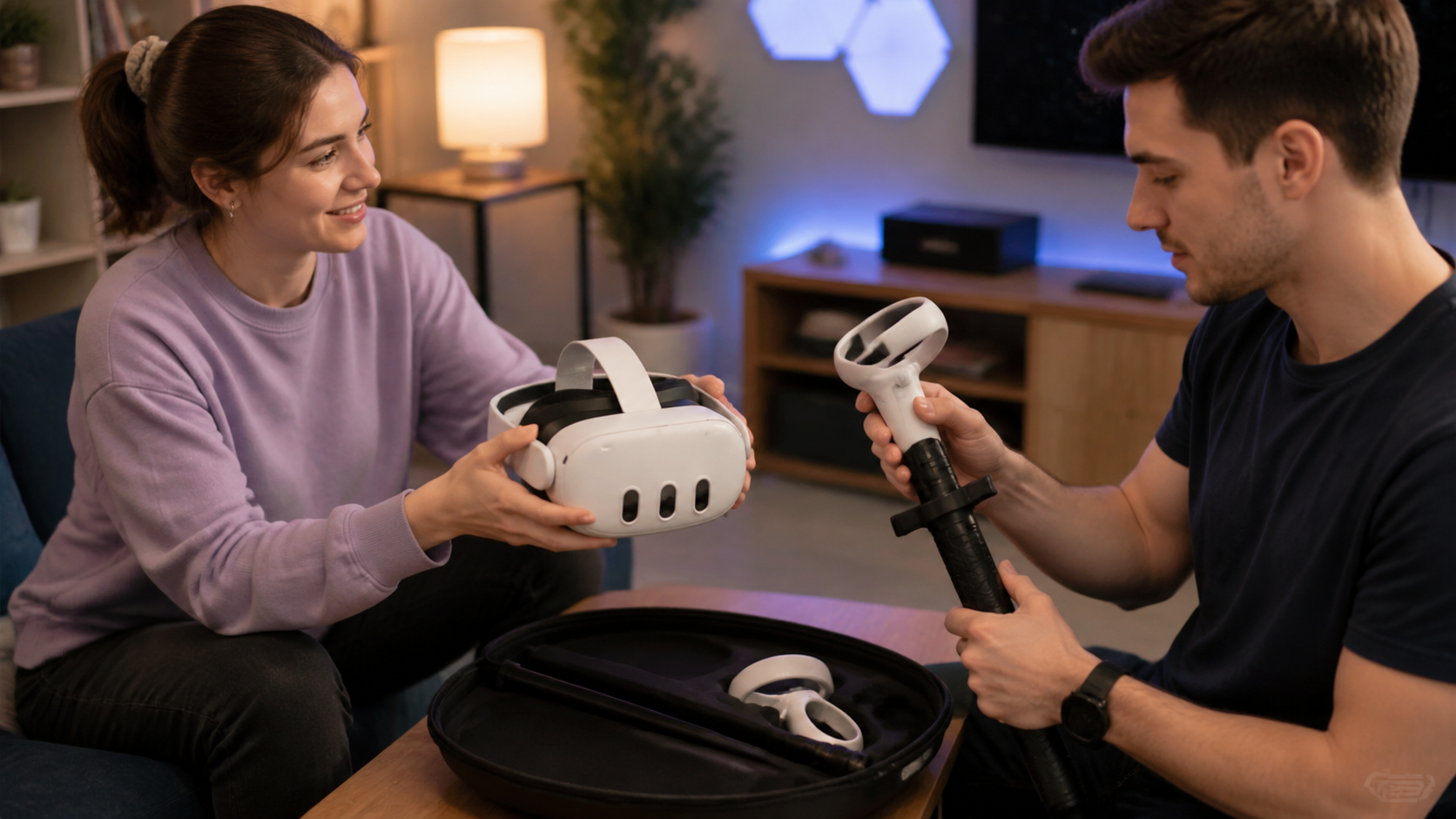
This became a real issue in my home. I finished a 30-minute session of Until You Fall and was feeling great. My partner then wanted to jump into a quick round of Beat Saber. With the standard controllers, this is a simple swap. But now, I had to stop and carefully unclip the VR Sword from each controller. The locking mechanism is secure, which is good during play, but it means it takes a minute or two to remove. Then, my partner had to wait. After their game, if I wanted to play again, I had to re-attach everything. This process adds friction to the experience. It turns the simple act of sharing a headset into a chore. For a device that we use for quick fun, this added setup time felt annoying. It made me less likely to use the accessory if I knew someone else might want a turn soon. The accessory is designed for a single user's dedicated play session, not for a household with multiple players and different games.
What final verdict should Quest Touch Plus Controllers users get for VR Sword when Until You Fall is limited by quick setup?
You bought the Quest for easy, fast VR. Until You Fall is a perfect quick game. Does an accessory like the VR Sword help or hurt this core experience for your Touch Plus controllers?
The VR Sword is a great accessory for a specific type of player: the solo fitness enthusiast with a large, dedicated play space who plans longer sessions. For them, it enhances immersion. But for the average user with limited space or a shared headset, it compromises the game's best feature: quick setup.
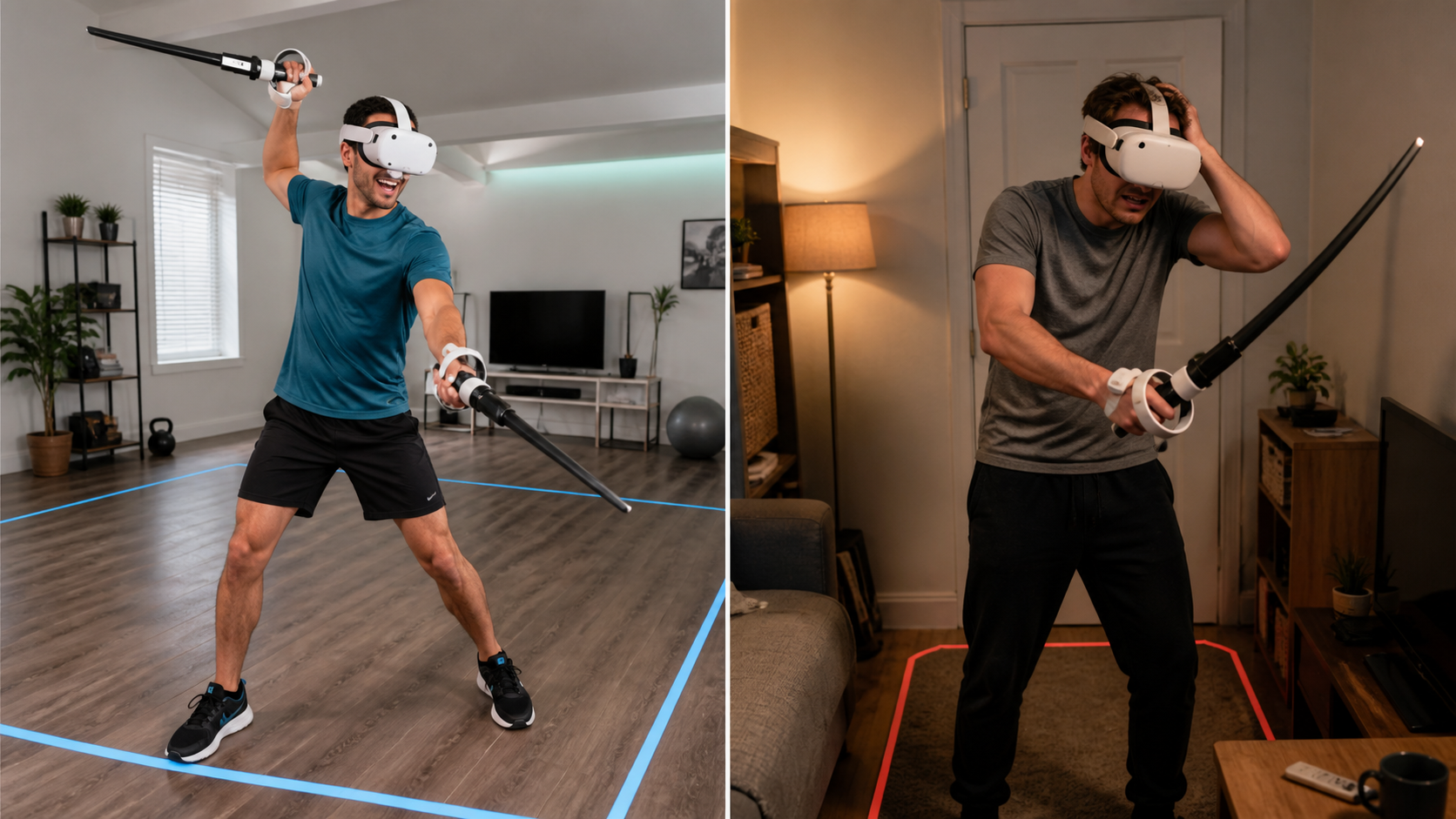
My final takeaway is mixed, and it really depends on who you are. The VR Sword absolutely made my swings feel more real. The weight and length transformed the Touch Plus controller from a simple remote into something that felt like a weapon hilt. During a planned one-hour workout in a cleared-out room, it was amazing. The immersion was on another level, and I felt like I was getting a better upper-body workout.
However, for my typical 20-minute burst of gameplay, it was more trouble than it was worth. The setup, the constant awareness of my surroundings, and the hassle of removing it for the next person all worked against the convenience that makes Until You Fall so appealing.
Who should skip it?
You should skip the VR Sword if you play in a small room, share your headset often, or primarily use VR for short, spontaneous sessions. The safety risks and setup time will just lead to frustration.
Who should buy it?
You should buy the VR Sword if you have a large, safe play area, you are the primary user of your headset, and you treat games like Until You Fall as planned, serious workouts. For you, the added immersion and satisfying weight will be a significant upgrade.
Conclusion
The VR Sword is a niche tool. It improves immersion for dedicated players with enough space but complicates the quick, easy fun that makes Until You Fall a great game for everyone else.
Leave a comment