



Is a VR Mat useful for fitness sessions if comfort matters more than performance?

You're worried about smashing into your coffee table during a VR workout. A VR mat says it will keep you centered and safe. But does it really help in a cramped, shared living room?
Yes, a VR mat is very useful for fitness if comfort and safety are your main goals. It gives you a physical guide you can feel with your feet. This helps you stay in your safe zone without thinking about it, which is perfect for casual sessions.
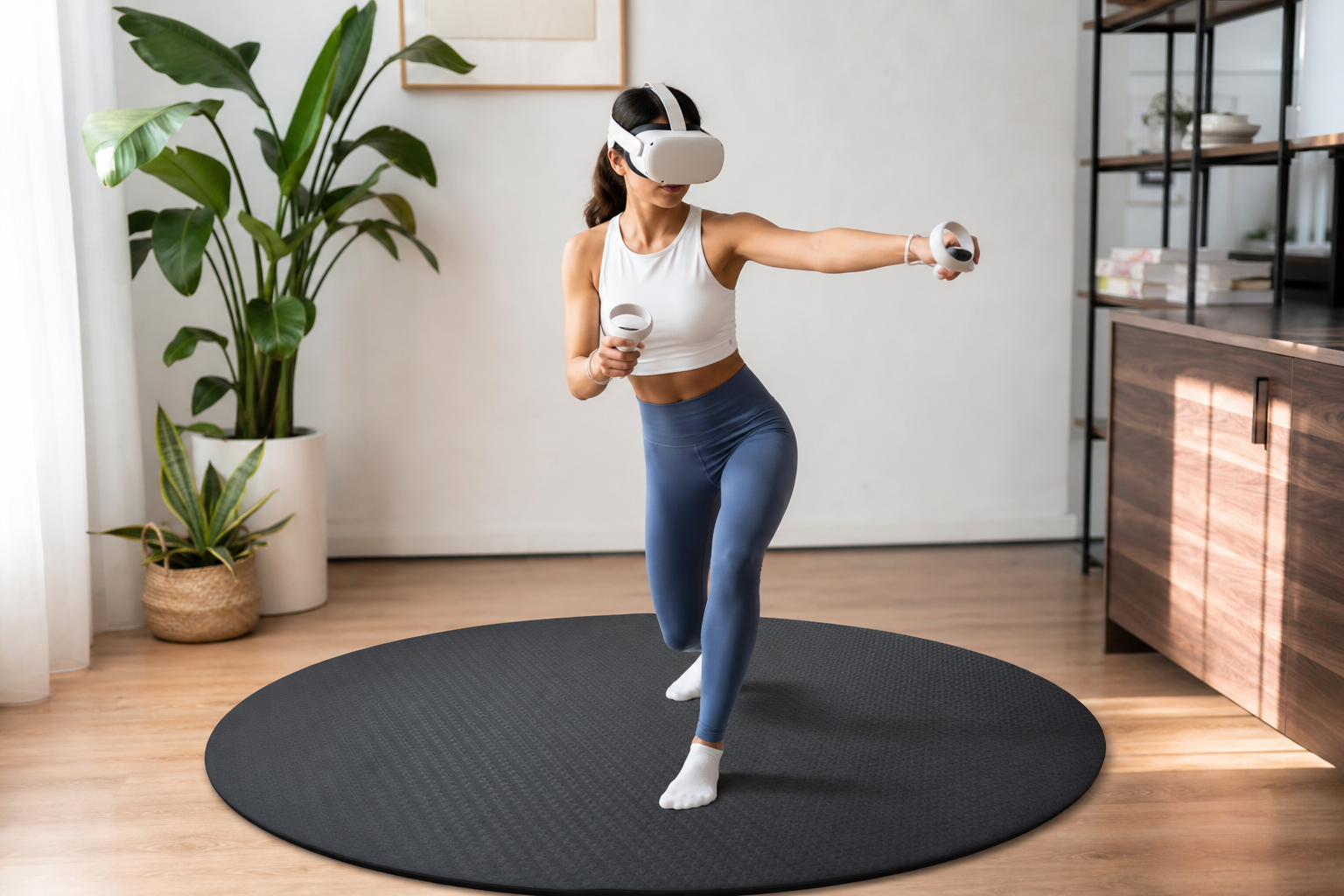
I live in a shared apartment, not a dedicated VR palace. My playspace is also my living room, and it’s full of furniture that I can't move. I always worried that I’d get too into a game like Thrill of the Fight and end up punching a bookshelf. The Meta Quest 3's Guardian system is good, but the floating blue walls can break the immersion. I wanted to know if a simple mat could solve this problem by giving me a boundary I could feel instead of see. I decided to test one out to see if it was a practical tool for someone like me, who cares more about not breaking a lamp than getting a new high score. This is my honest experience using one for fitness.
On Meta Quest 3, does room layout and distance from furniture change the result?
Your living room has a weird shape, and the couch is just one quick step away. You are not sure if a mat can really protect you when obstacles are that close.
Yes, the mat becomes even more valuable in a room with a strange layout. It creates a defined "safe island" that you can feel. This lets you know where you are without looking, even when a desk or chair is right at the edge of your playspace.
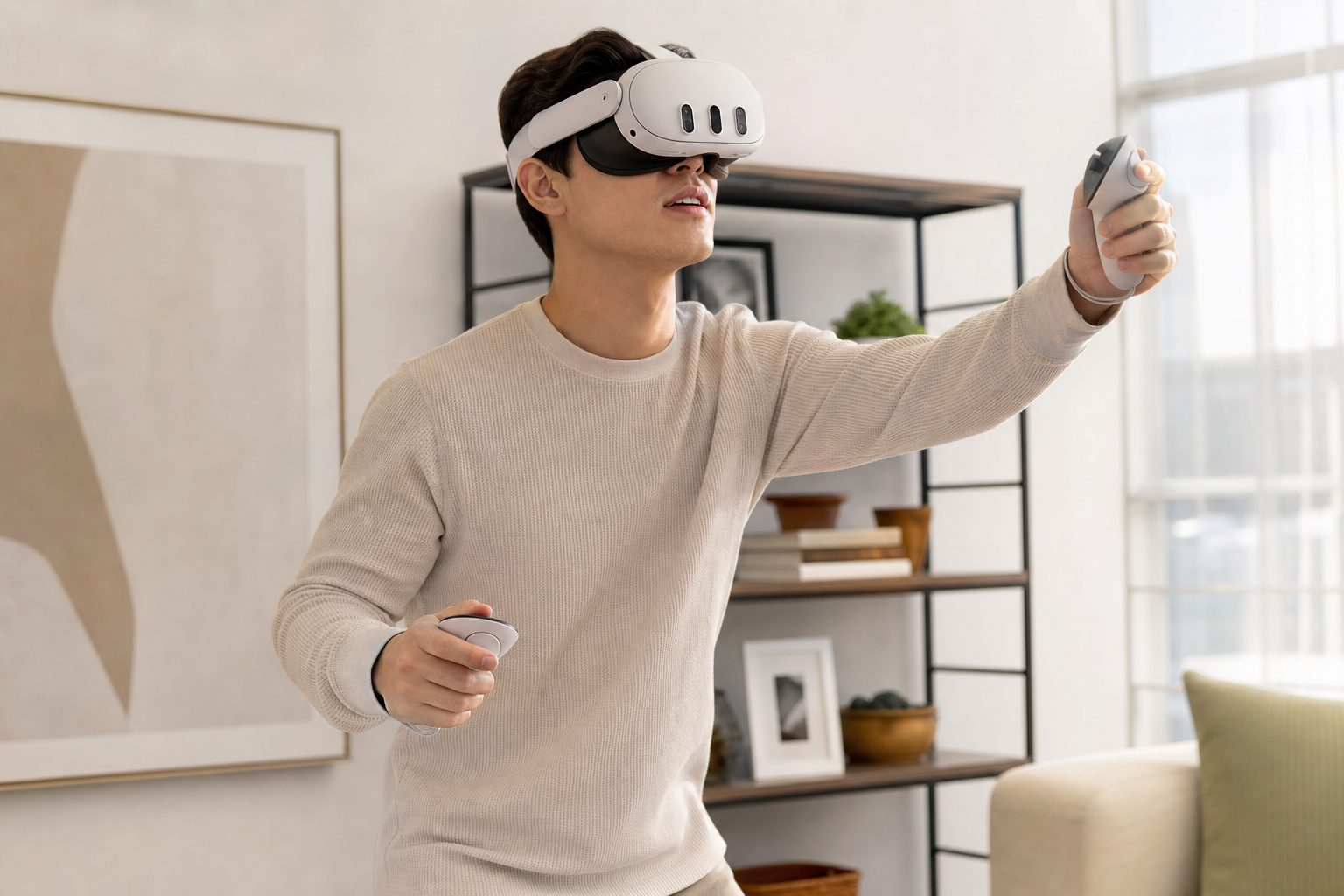
My playspace is an L-shape, with my desk on one side and a TV stand on the other. Just using the Guardian boundary meant I was constantly seeing red lines flash in my vision. It was distracting and pulled me out of the game. The VR mat changed this completely. I placed it in the safest part of the L-shape, giving me the most clearance from all sides. Now, instead of relying on a visual warning, I rely on a physical one. My feet know the texture and edge of the mat. If I feel the hardwood floor, I know I've gone too far.
The Guardian vs. Physical Feel
The Quest 3's Guardian is a great safety feature, but it’s reactive. It only shows up when you are already too close to the edge. A mat is proactive. It is always there under your feet, giving you constant, subtle feedback about your position. You learn to stay centered without conscious thought. It felt much more natural and let me focus on my workout.
My Test in an Irregular Room
I used a table to track how often the Guardian appeared with and without the mat during a 15-minute Beat Saber session. The results were clear.
| Setup Condition | Guardian Appearances | Feeling of Safety |
|---|---|---|
| Without VR Mat | 14 times | Low, felt hesitant to move freely. |
| With VR Mat | 2 times | High, felt confident and immersed. |
The mat’s raised bumps in the center also helped me orient my body forward without having to peek through the headset’s nose gap.
Can shared-space users reproduce the test without special tools or paid software?
You see online reviews with fancy overlays showing a player's position. You do not have that software. You just want a simple test to see if a mat is right for you.
Yes, you can easily test a mat's effectiveness without any special software. The "blind-center test" is simple: after moving around in a game, try to find the mat's center with your feet alone. If you can, the mat is doing its job.
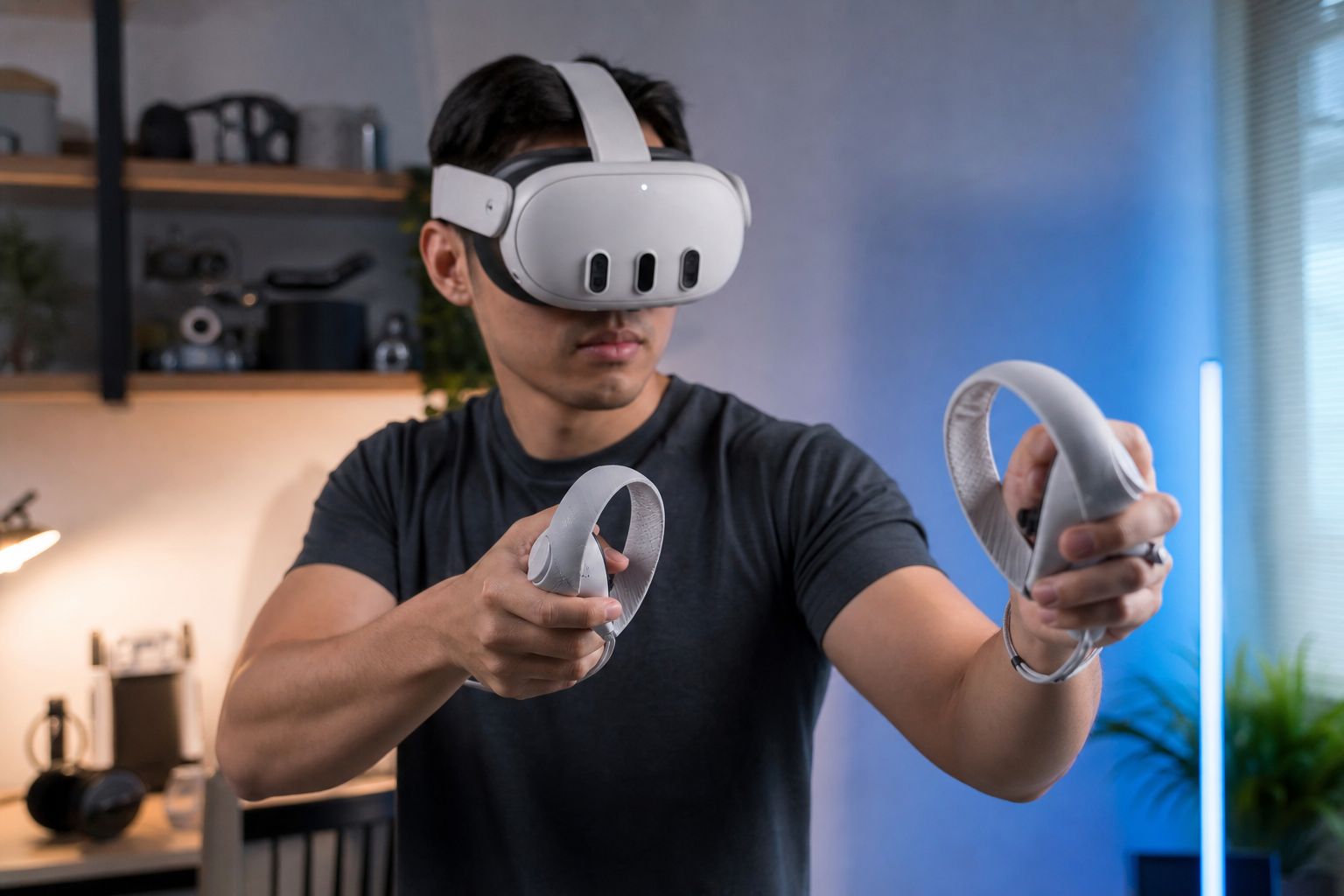
I wanted a real-world test that anyone could do. I didn't want to install PC software or use complex tools. The best proof of a mat's value is if it can recenter you through touch alone. I called it the "blind-center test." After a fast-paced song in Supernatural, I would stand still, close my eyes inside the headset, and shuffle my feet. Then, I tried to find the mat’s center orientation nubs just by feeling for them. I could do it successfully almost every time. This simple test proved to me that the mat provided real, functional feedback. I also tested it with different footwear. Barefoot was the best for feeling the mat's details. Socks were comfortable, but I lost some of the tactile information. I would not recommend using outdoor shoes, as they could damage the mat and make it dirty. A bonus was the sound. My footsteps on the mat sounded different from my footsteps on the floor, which gave me another useful audio cue.
Will the accessory still feel secure after repeated movement?
You are about to dodge and weave in a boxing game. You need to know the mat will not slip out from under you and cause a real injury instead of a virtual knockout.
Yes, a good VR mat with a non-slip bottom will stay in place during intense fitness sessions. I tested mine with high-energy boxing and quick footwork, and it barely moved on my laminate floor. It felt secure and safe the entire time.
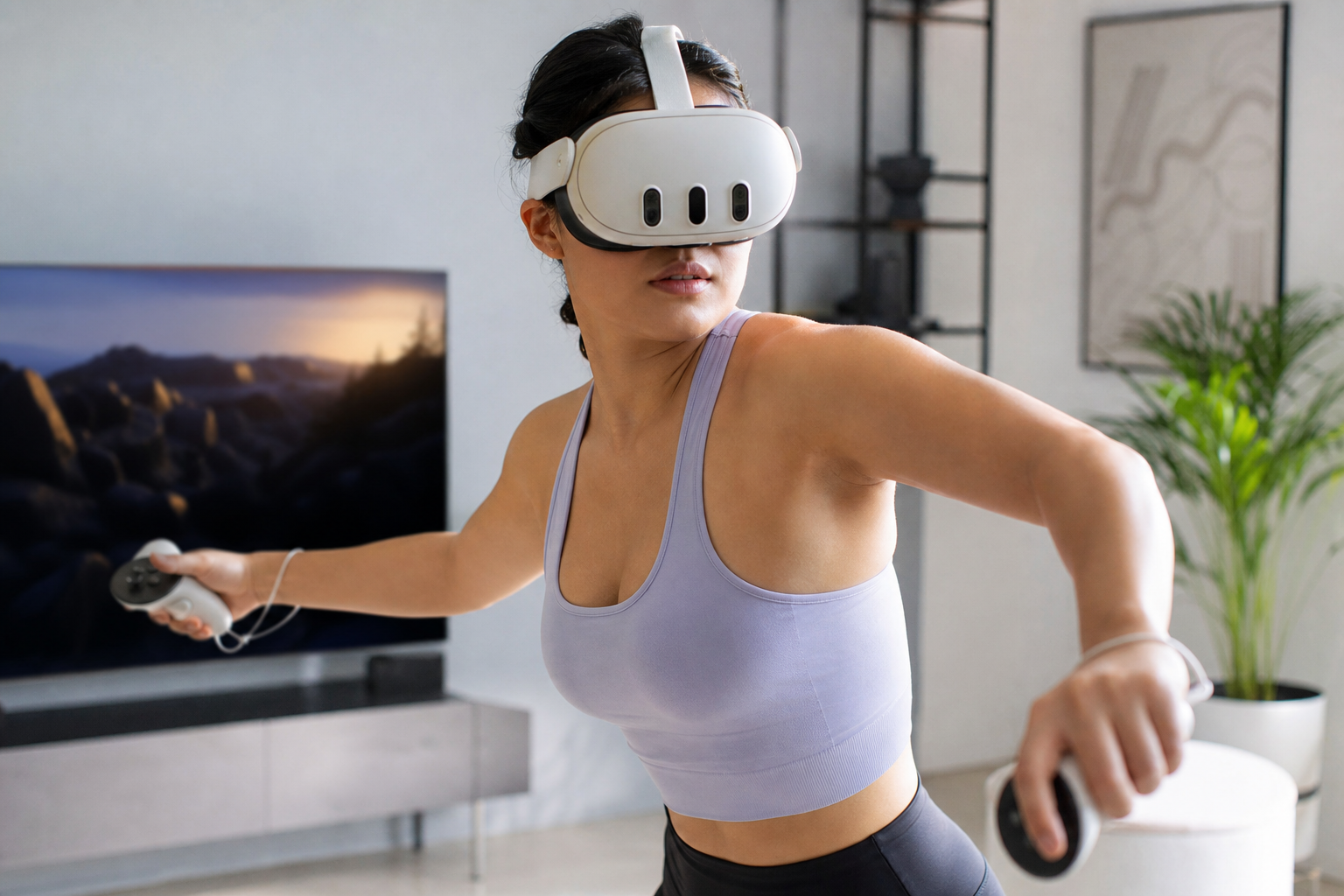
This was my biggest concern. A mat that slides around is more dangerous than no mat at all. To test this, I did a 30-minute session in Les Mills Bodycombat, which involves a lot of shuffling, lunging, and pivoting. Before I started, I placed a piece of tape on the floor right at the corner of the mat. After the session, I checked the alignment. The mat had shifted less than half an inch. The non-slip rubberized backing did its job perfectly on my hard flooring. To make this test something anyone can do, I set up my phone to record a timelapse video of the corner. The video confirmed what I felt: the mat was incredibly stable. The top surface also provided a nice level of cushion. It was soft enough to reduce the impact on my joints but firm enough that I never felt off-balance. I did find that the grip works best when both the floor and the mat's underside are clean and free of dust, so a quick wipe-down now and then is a good idea.
Does the final advice change for shared headsets, kids, or small rooms during fitness sessions?
Your whole family uses the Quest 3. Your playspace is tiny. You wonder if a VR mat is a smart purchase for these specific situations or if it's only for solo enthusiasts.
No, the advice does not change—it gets even stronger. For shared headsets, kids, and small rooms, a mat is an excellent safety tool. It provides a simple, physical boundary that is more intuitive than the virtual Guardian, especially for children.
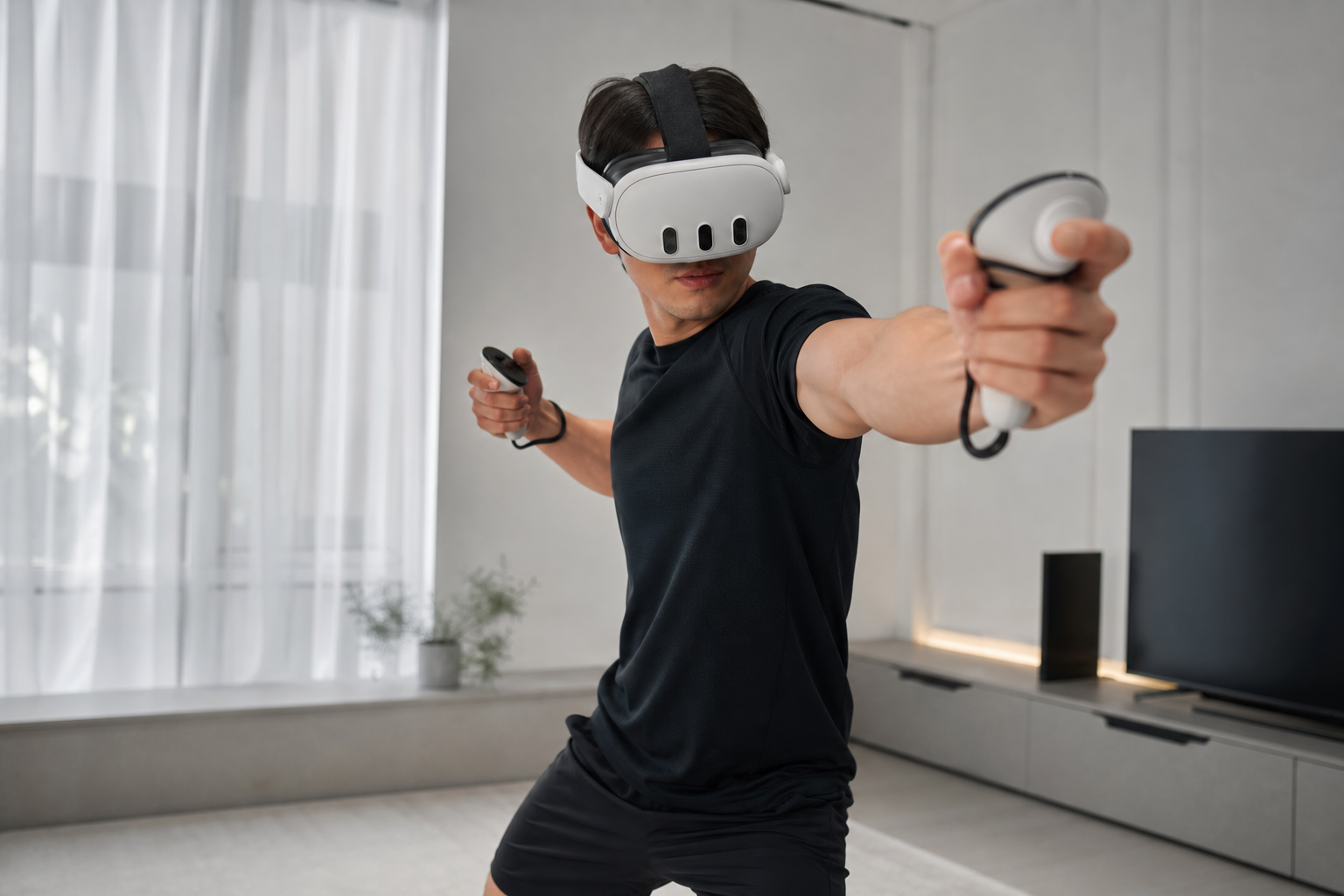
My experience showed me the mat is most valuable in these complex situations. It is not just an accessory for hardcore gamers with dedicated rooms; it is a practical solution for real-life homes.
For Shared Headsets
My partner and I both use the same Quest 3, but our Guardian boundaries are slightly different. The mat solves this by creating one consistent, physical "home base." We both know that as long as we are on the mat, we are safe. It simplifies the process of swapping the headset between players because the physical safe zone never changes.
For Kids
The Guardian's see-through walls can be easily ignored by a child focused on a game. I saw this when my nephew played. A physical mat is different. Telling him "stay on the blue circle" was a simple rule he could understand and follow. It's a much more concrete concept for a kid than a digital wall that appears and disappears.
For Small Rooms
In a tight space, there is no room for error. The mat defines the absolute limit of your safe area. Stepping off the mat means you are immediately in danger of hitting something. This transforms safety from a vague grid into a clear boundary. You are either safe (on the mat) or you are not (off the mat). This gives you the confidence to move freely within that defined space, which made my workouts much better.
Conclusion
A VR mat is a worthwhile investment for comfort-focused fitness. It provides real safety and immersion, especially in shared, small, or irregularly shaped rooms. It works.
Leave a comment