



Is a VR Mat the right fix when shared living rooms feels limited by wall strikes?

Hitting walls while in VR is painful and breaks immersion. You try to stay centered in your shared living room, but you always drift, risking your controllers and hands.
A VR mat provides a physical, under-foot reference to keep you centered, which helps reduce accidental wall strikes. However, it is not a foolproof solution. It won't stop you from lunging or reaching far outside your safe zone, especially in fast-paced games.
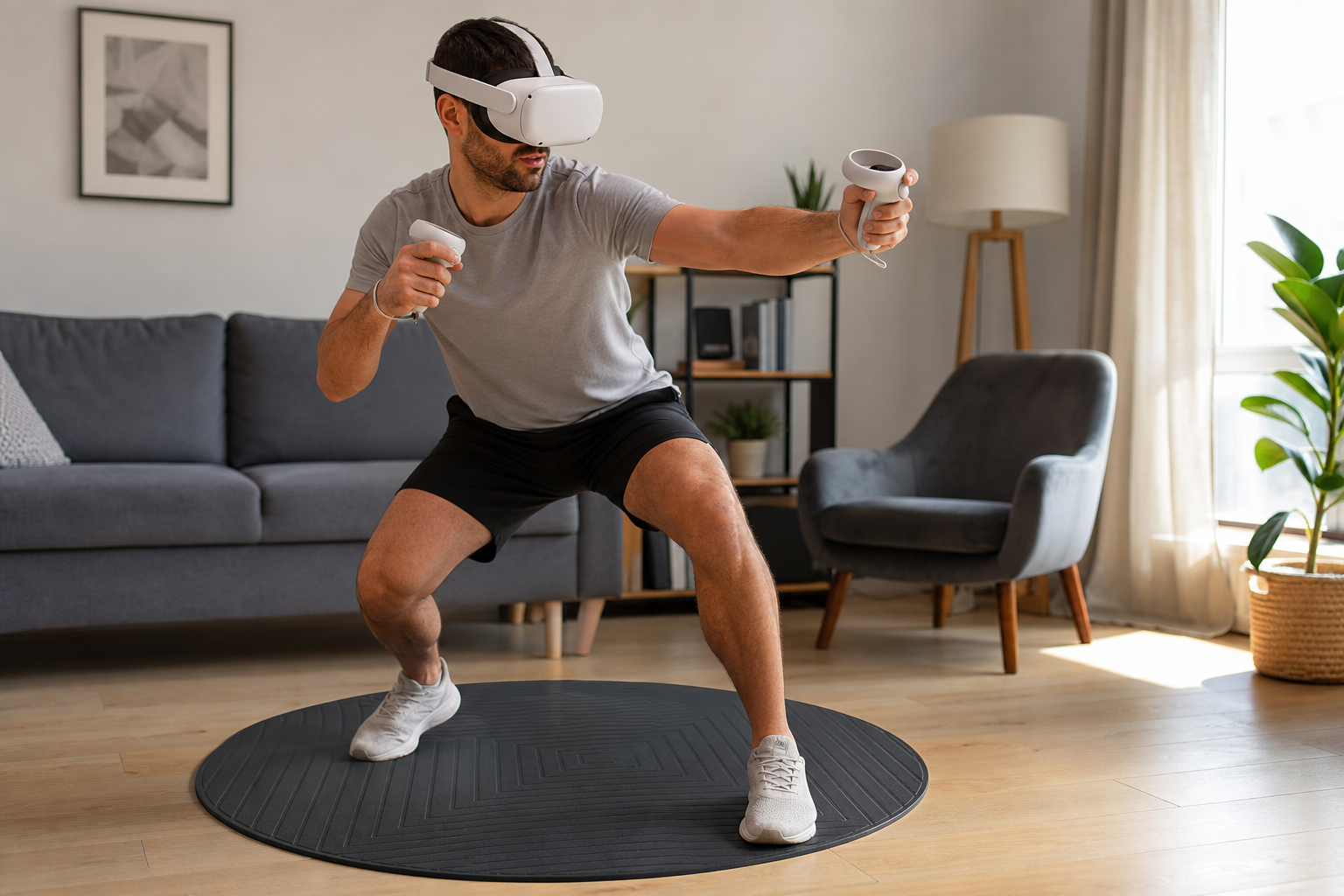
I was tired of smacking my Quest Touch Plus controllers against the wall. My living room isn't huge, and sharing the space means I can't just dedicate the whole room to VR. I hoped a VR mat would be the simple fix I needed to play with more confidence. I bought one to put it to the test, not just for a day, but for weeks of regular play. I wanted to see if it was a real solution or just another accessory that ends up in the closet. Here’s what I found from my first-person case study.
When the novelty fades, does VR Mat still solve wall strikes?
At first, a new VR accessory feels like the perfect fix. But after a few weeks, does it still do its job, or does it become just another thing on the floor?
Yes, the mat continues to help solve wall strikes, but in a different way over time. Initially, it's a constant physical reminder. Later, it builds muscle memory, so you learn to feel your position in the room even without actively thinking about the mat's edge.
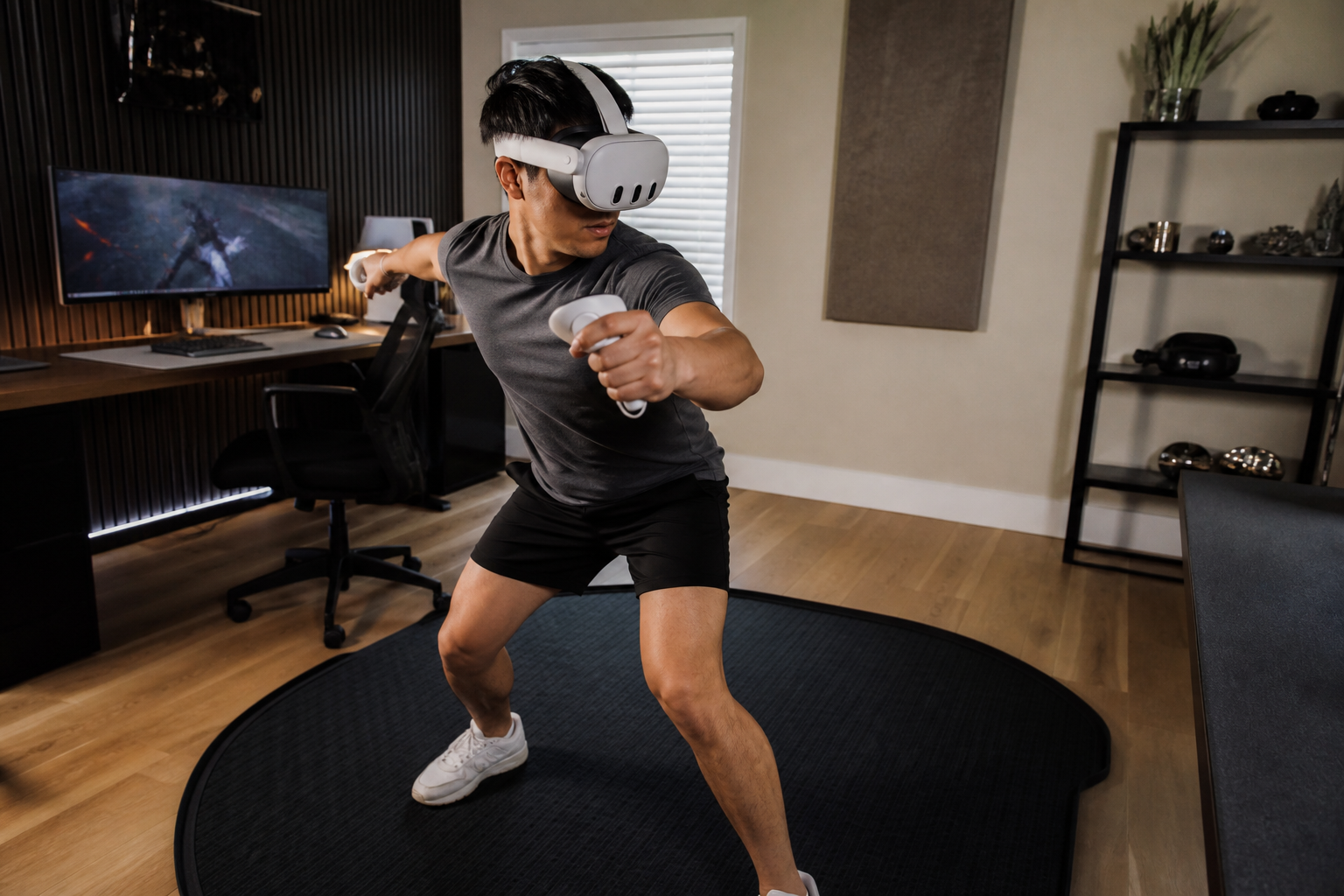
When I first got the mat, I was very aware of it. My feet felt the different texture and the raised edges, which constantly reminded me where I was. This was great for preventing me from slowly drifting into a wall. But after a couple of weeks, I stopped noticing it so much. The real test came when I let a friend who was new to VR try it out. I watched them completely ignore the mat's boundary during an intense game of Beat Saber. They were so focused on the game that they stepped right over the edge and I had to warn them. This showed me the mat's biggest weakness: it doesn't help much when a player is completely immersed and not paying attention to their feet. For me, an experienced player, the mat had trained my body to know its center. It became less of a conscious barrier and more of a subconscious anchor.
New User vs. Experienced User
Here is how the experience differed between someone new to VR and myself after a few weeks.
| Player Type | Behavior with VR Mat | Wall Strike Reduction |
|---|---|---|
| New VR User | Often steps over the edge when immersed in the game. Relies more on the visual Guardian system. | Minimal. The physical cue is easily ignored during high-action moments. |
| Experienced VR User | Uses the mat's edge as a subconscious cue to recenter. Muscle memory is a key factor. | Significant. The mat becomes a tool for maintaining spatial awareness without breaking immersion. |
Can safety-focused buyers reproduce the test without special tools or paid software?
Product reviews often show tests with fancy overlays and tracking software. I don’t have any of that. Can a regular person test the mat’s effectiveness in a real-world way?
Absolutely. You can easily test the mat's effectiveness with your headset and a friend. The key is to observe how a player’s body interacts with the physical mat versus the virtual Guardian boundary. No special software is needed, just your eyes.
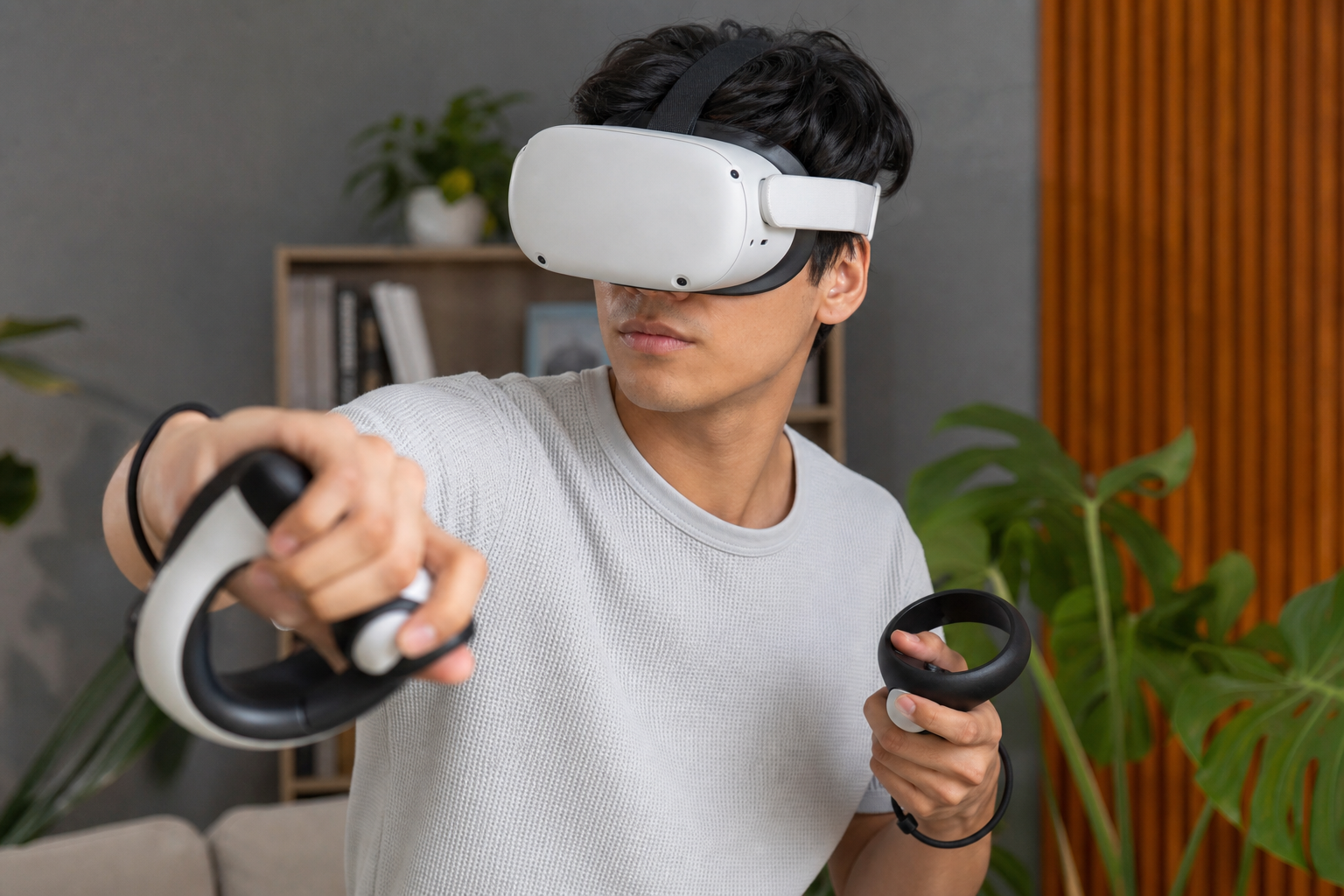
I wanted a simple, repeatable test to prove whether the mat was actually working. I didn't need any paid apps to do it. First, I placed the mat in the center of my play space. Then, inside my Quest headset, I drew my stationary Guardian boundary about six inches outside the physical edge of the mat. This created two safety zones: the physical one I could feel with my feet, and the virtual one I could see. The real test was watching a beginner play. I had them play a game that required a lot of movement. I watched their feet to see how often they stepped off the mat. Then, I listened for the sound or watched for the visual cue of the Guardian system triggering when their hands or head got too close to the wall. This simple observation showed the mat's true value and its limits. Their feet often stayed on the mat, but their hands and arms frequently reached past it, triggering the Guardian. The mat is for centering your body, not for containing your arm swings.
Where does whether the mat stays flat on carpet show up during real play?
A mat that bunches up is annoying and dangerous. I have carpet in my living room, so I was worried the VR mat would become a trip hazard during intense gameplay.
The mat stayed mostly flat on my low-pile carpet during normal use. However, during very active games with lots of shuffling and quick direction changes, the edge of the mat did sometimes lift slightly. This creates a real, though minor, trip risk.
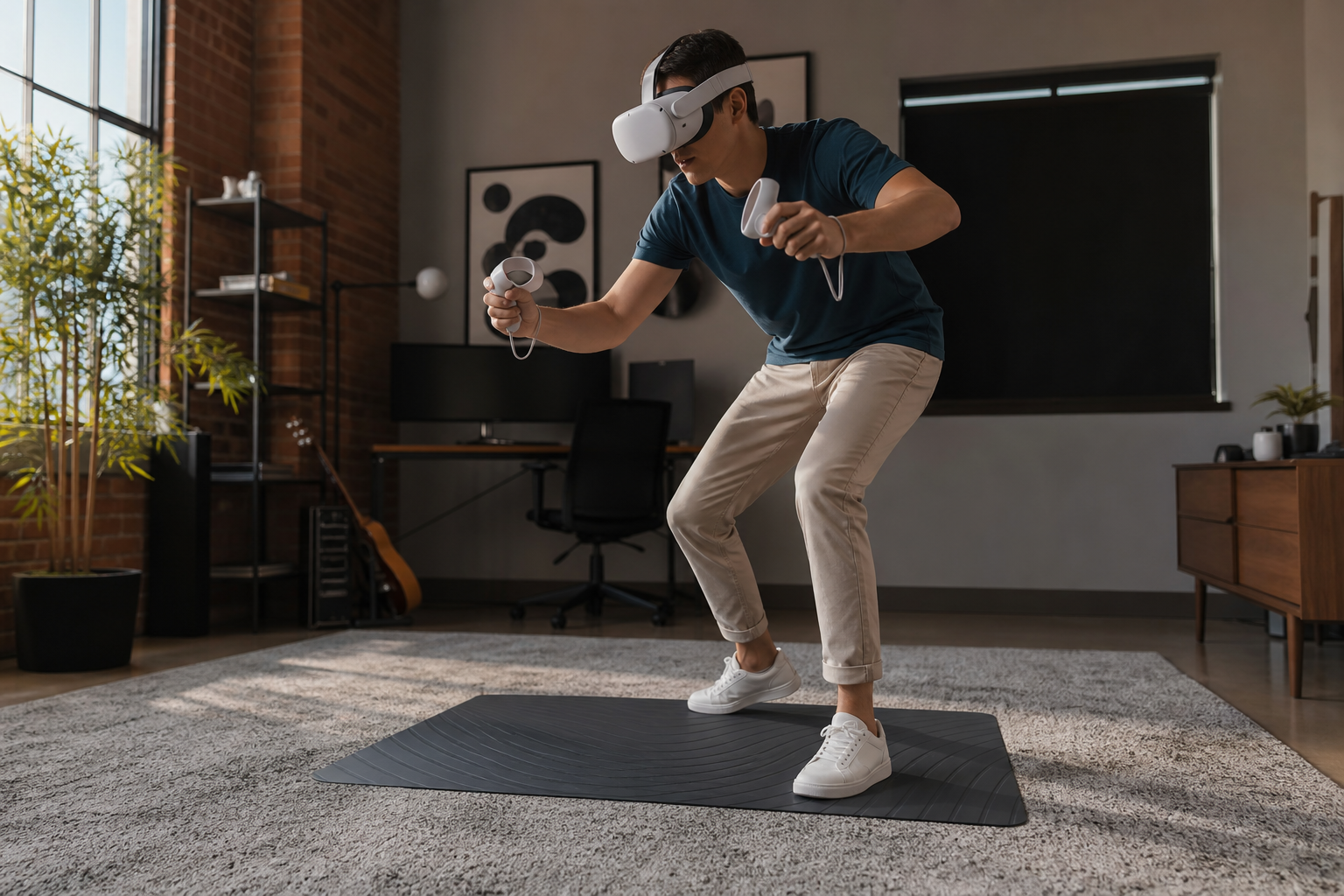
For most of my VR sessions, the mat was fine. It has a non-slip backing that held it in place reasonably well. When I was playing games that kept me more or less in one spot, it never moved. The problem appeared when I played games like SUPERHOT VR, where I was dodging and moving quickly. I noticed that if I shuffled my feet fast, the friction could cause one of the edges to peel up from the carpet just a little bit. It never bunched up completely, but it was enough to be a concern.
Trip-Risk Warning
One time, while stepping backward quickly, my heel caught this slightly raised edge. I didn't fall, but it was a jolt that completely broke my immersion. I immediately became very aware of my feet and the floor, which is the opposite of what you want in VR. This is a critical safety issue. While the mat is designed to improve safety by preventing wall strikes, it can introduce a different kind of risk if it doesn't stay perfectly flat. On a hardwood or tile floor, I suspect the grip would be much better and this would not be a problem. But for carpet users, it's something to be very mindful of.
Does VR Mat solve enough of wall strikes in shared living rooms to justify another accessory?
VR accessories can pile up fast. In a shared space, every item takes up room. Is a VR mat worth the cost and the floor space, or is it just another gadget?
A VR mat justifies its place if you are a beginner who struggles to stay centered. For experienced players, it is more of a comfort and training accessory than an essential safety device. It solves some, but not all, of the wall-strike problem.
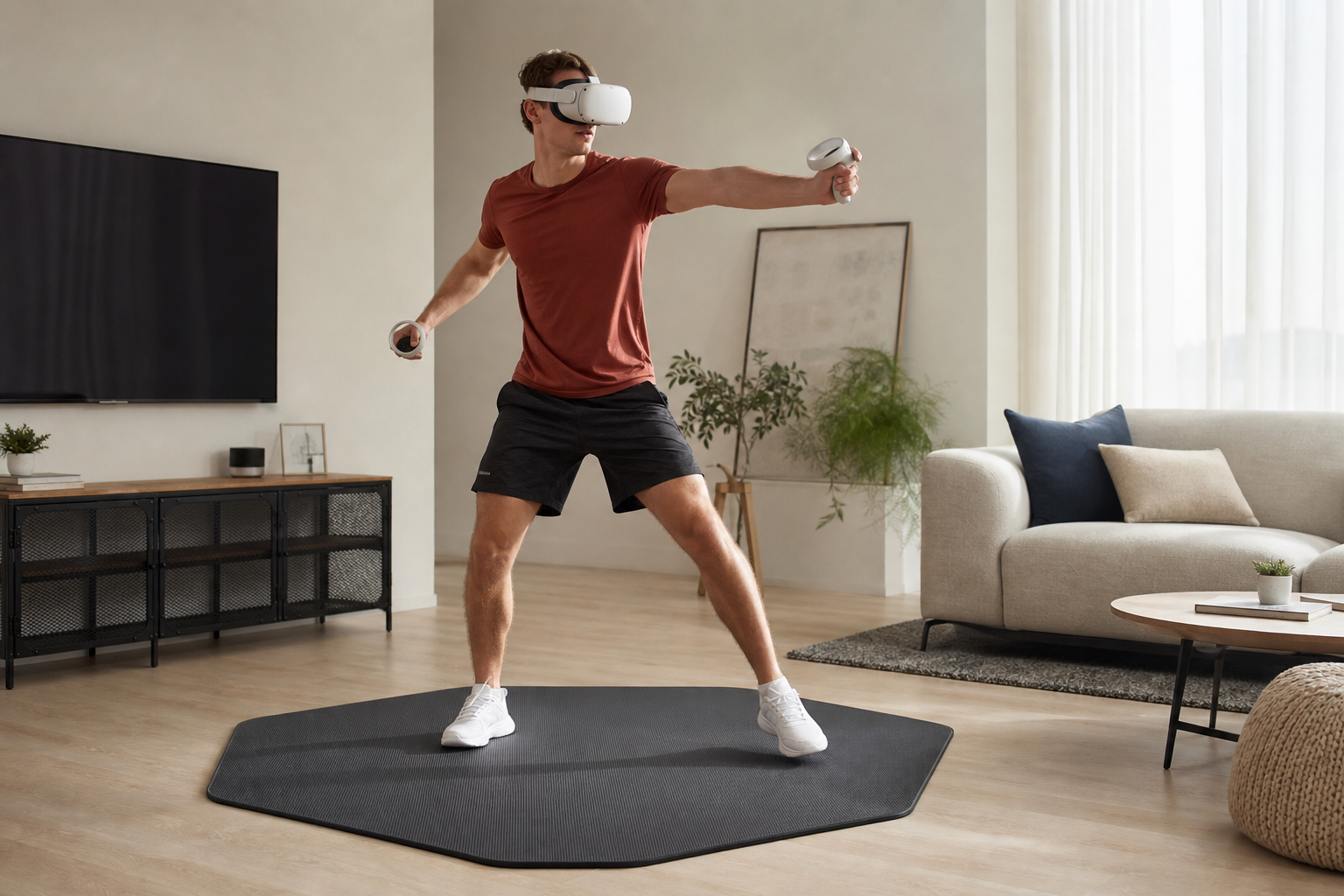
After using the mat for a month, my verdict is mixed, and it really depends on who you are. The mat is not a magic shield. You can and will still hit a wall if you lunge or reach out too far. Its main job is to stop the slow, unconscious drift that happens during long play sessions. For a new VR user, this is incredibly helpful. The physical feedback is more intuitive than the abstract virtual Guardian. It helps them build a mental map of their space.
For an experienced player like me, the benefit is smaller. I already have a good sense of my room. The mat felt more like a comfort upgrade—a dedicated, soft spot to stand on. It did help me stay perfectly centered, but I was already pretty good at that. So, is it worth it? If you have hit a wall more than once and feel nervous when you play, yes. The confidence it gives you is worth the price. If you are an expert player with great awareness and a tight budget, you can probably skip it. It's a helpful tool, not a mandatory one.
Conclusion
A VR mat is a useful physical guide to help you stay centered. It reduces slow-drift wall strikes but won't stop a lunge. It's a good training tool, not a perfect fix.
Leave a comment