



Is a VR Fishing Rod compatible with the way Real VR Fishing players actually play relaxing VR sessions?

You want to relax with Real VR Fishing, but wonder if a rod accessory is more hassle than it's worth. Will setting it up ruin the chill vibe?
A VR Fishing Rod is not ideal for relaxing, casual sessions, especially if you share your headset. The added setup time and difficulty swapping for left-handed players create friction that disrupts the game's peaceful flow. For pure convenience, bare controllers are better for relaxing play.
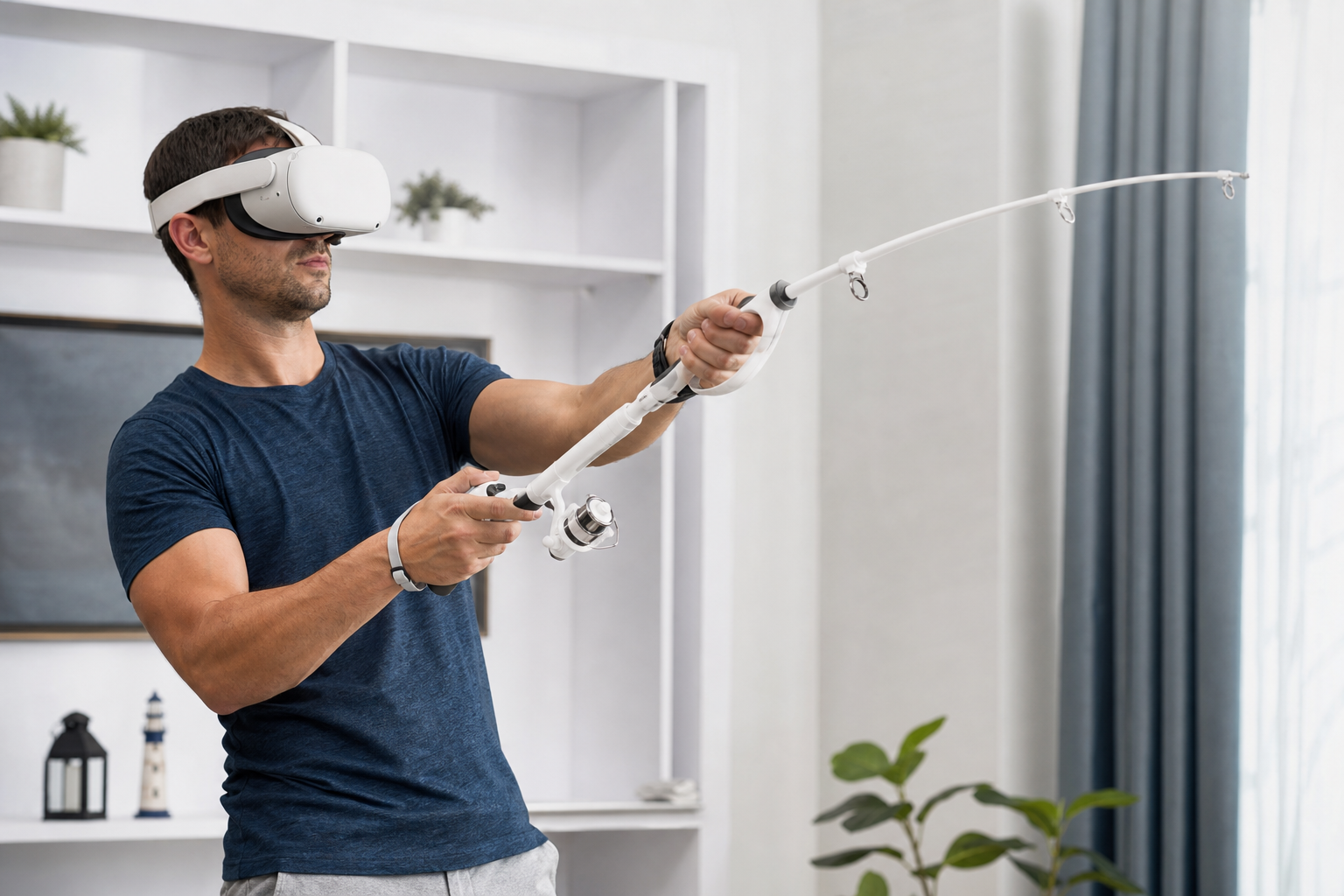
I love Real VR Fishing for its calm, drop-in-and-play nature. It's my go-to game for unwinding after a long day. But I’m always curious about accessories. Could a VR fishing rod make it even better? The big question for me was about convenience. My family and I often pass the headset around. An accessory is only good if it doesn't get in the way of that simple, shared fun. So, I spent a week with a VR fishing rod and my Meta Quest 2, focusing only on short, relaxing sessions to see if the accessory helped or hurt the experience. This isn't a review for hardcore simulation fans; it's a real-world test for the casual player who just wants to chill.
Is left-handed setup still a problem after adjusting whether menu controls stay convenient?
Swapping the headset to a left-handed friend feels clunky. You worry the setup process will kill the relaxed mood. I tested this specific scenario to see if a rod helps.
Yes, left-handed setup is a bigger problem with a VR fishing rod. You have to physically disassemble the accessory, swap the controllers, and reassemble it. This is far more disruptive than just having a player switch the controllers in their hands, ruining the easy-going session.
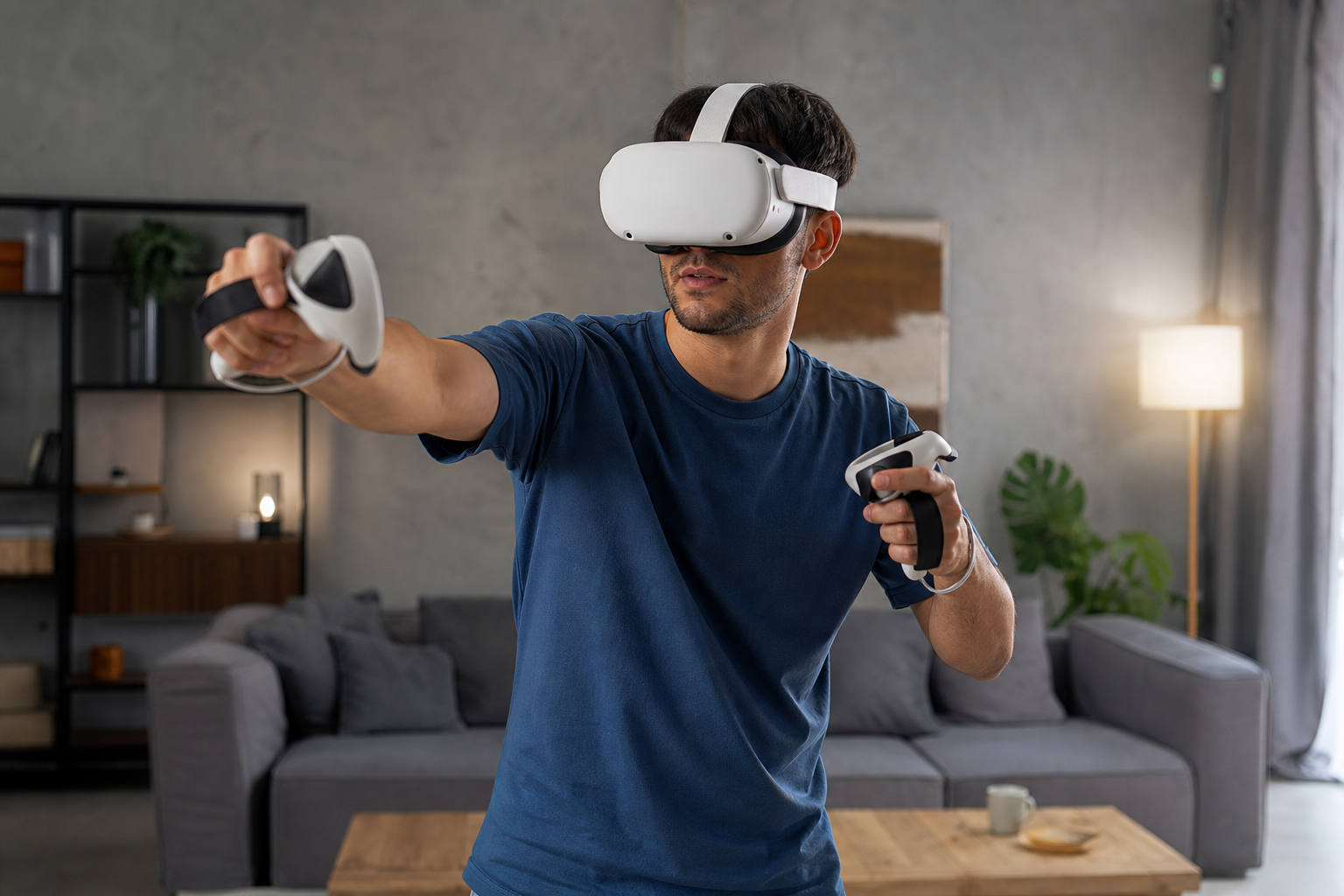
The core of a relaxing VR session is low friction. You want to jump in, play, and jump out. When someone else wants to play, you want the transition to be seamless. A VR fishing rod adds a significant physical barrier to this, especially between right-handed and left-handed players. It's not just a menu setting. You have to stop everything and perform a hardware change. I found this to be the single biggest drawback for family or group play. The game itself makes left-handed mode easy, but the physical accessory makes it hard. Here is a direct comparison of the steps involved.
| Action | Bare Controllers | With VR Fishing Rod |
|---|---|---|
| Hand-off to Lefty | Hand headset and controllers over. Player swaps them in their hands. | Hand headset over. Pause. |
| Controller Setup | Done. | Unlock/unclip the right controller from the reel position. |
| Physical Change | None. | Unlock/unclip the left controller from the rod handle. Swap them. Re-secure both controllers. |
| Time to Play | ~5 seconds | ~1-2 minutes |
### The Flow-Breaking Moment
With bare controllers, the conversation is, "Hey, can I try?" and the answer is, "Sure, here you go." With the VR fishing rod, the answer is, "Sure, but give me a minute to change it over for you." That small change in language signals a huge change in the experience. It turns a spontaneous, shared moment into a planned, technical task. For relaxing sessions, this added step is a major negative.
Can the writer show the exact moment left-handed setup appears in relaxing VR sessions?
You're chilling by a virtual lake, and the vibe is perfect. Then your friend asks for a turn, and you dread the interruption. I can show you exactly how that feels.
The moment happens right after you say "sure." You take off the headset, and the peaceful audio is replaced by the real-world sounds of you fumbling with plastic clips and swapping controllers. The shared fun pauses, and you become a technician instead of a fellow player.
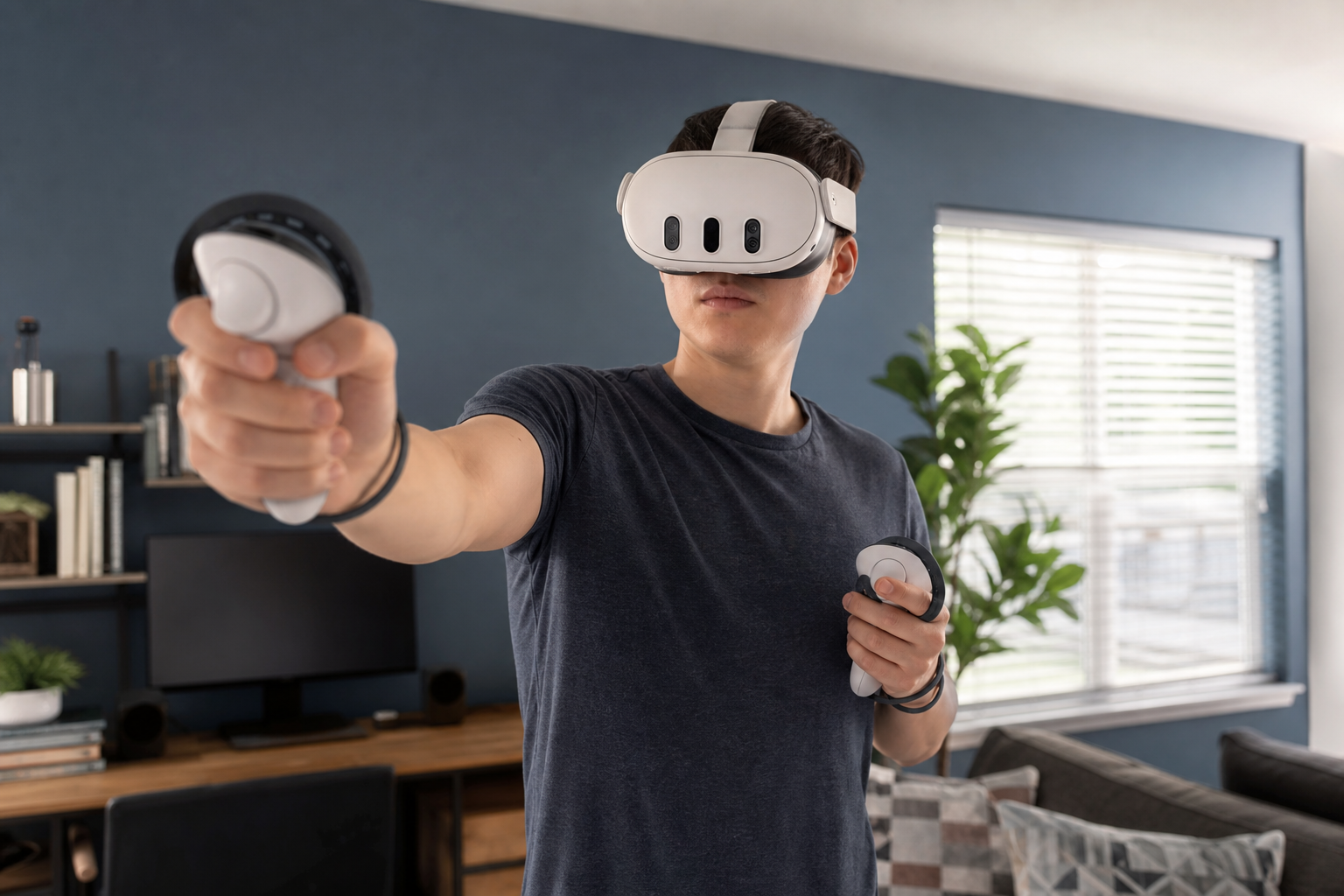
Let me paint you a picture. I was sitting on the dock in the Korea level of Real VR Fishing. The sun was setting. The music was calm. I had just cast my line. It was peak relaxation. My partner, who is left-handed, walked in and asked if she could try to catch one. With bare controllers, I would have just taken off the headset and handed it to her. The game would continue.
Instead, the moment went like this. I said, "Of course," then took off the headset. The peaceful world vanished. I placed the headset down carefully and picked up the rod. I had to pop open the clasp holding my right controller, which acts as the reel. Then I had to unscrew the clamp holding my left controller in the handle. I pulled both controllers out, swapped their positions, and then had to secure them both again. The whole time, my partner was just standing there waiting. The relaxed, shared moment was gone. It was replaced by a minute of me fiddling with a plastic accessory. That's the exact moment the accessory gets in the way of a relaxing session.
Is the user looking for immersion, hygiene, safety, or measurable performance?
You're thinking about an accessory, but what problem are you actually trying to solve? Buying for the wrong reason leads to disappointment. Let's clarify what this rod actually does.
This accessory is almost entirely for immersion. It makes casting and reeling feel more authentic. It offers no real benefits for hygiene or safety and does not improve your in-game score or ability to catch fish. Buy it for the feeling, not for a practical advantage.
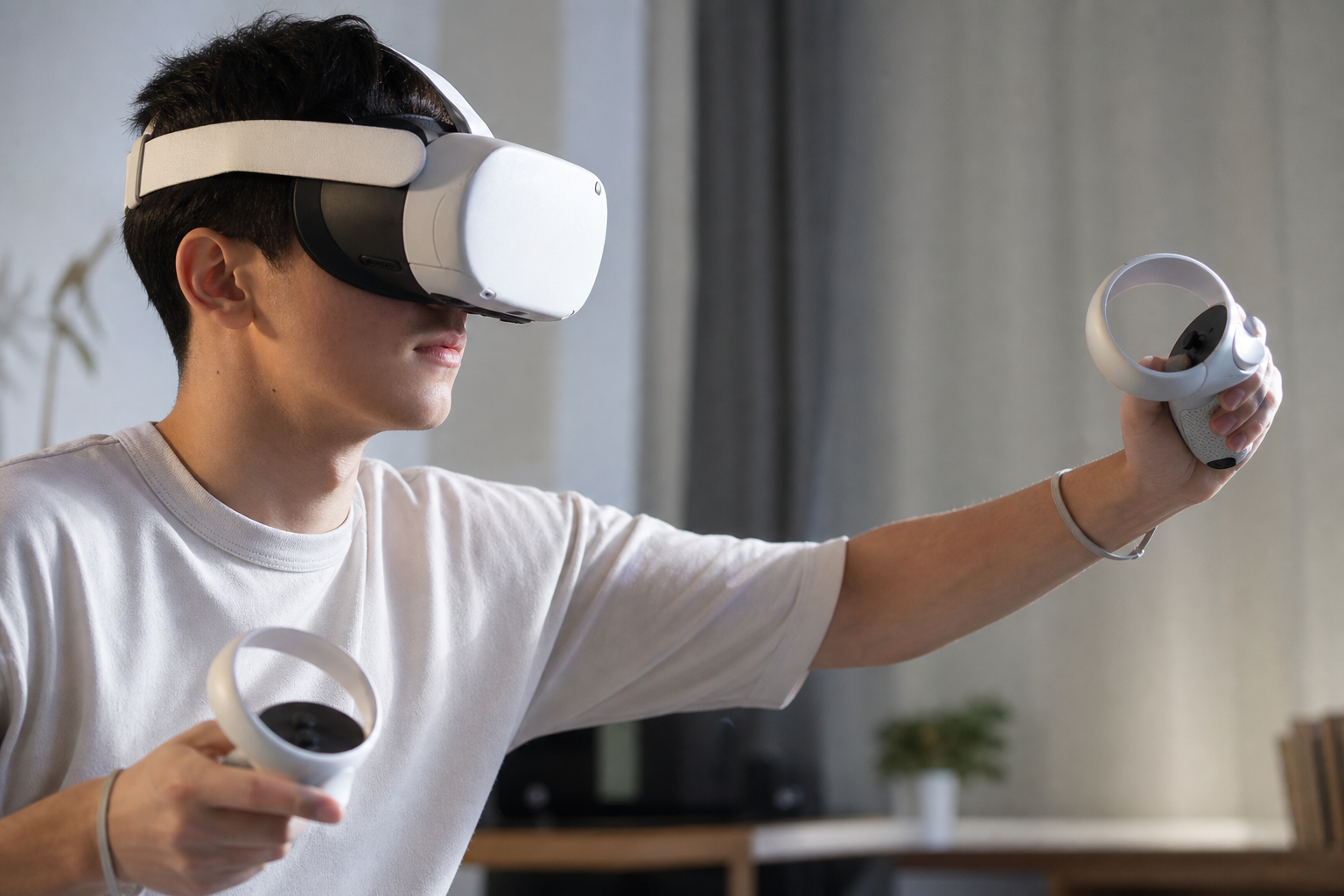
When you buy a VR accessory, it's important to know what you're optimizing for. A new head strap is for comfort. Controller grips are for safety and hygiene. But a fishing rod? Its purpose is more specific, and it's important to be honest about what it does and doesn't do. I broke down its value into four key areas based on my experience.
### Immersion
This is the rod's biggest strength. Holding a two-handed object that mimics the shape and general weight distribution of a fishing rod absolutely makes the game feel more real. The act of casting with two hands feels much more satisfying than flicking a single controller. When you get a bite, holding the rod steady and "reeling" with your other hand feels great. If your number one goal is to feel like you are actually fishing, the rod is a huge success.
### Hygiene & Safety
The rod doesn't add much here. It's another plastic surface to wipe down, and its nooks and crannies can actually make it harder to clean than two smooth controllers. For safety, it makes your controller setup longer, which could increase the risk of hitting walls or furniture if you're not careful. It doesn't improve safety in any meaningful way.
### Measurable Performance
This is a clear zero. The VR fishing rod had no impact on my ability to catch fish. The game's mechanics are based on wrist-flicking for casting distance and button presses for reeling. The accessory doesn't change those mechanics. You won't catch rarer fish or get higher scores because of it. It's a purely aesthetic and tactile upgrade.
Would the same VR Fishing Rod recommendation still hold after a week of relaxing VR sessions on Meta Quest 2?
An accessory can seem great on day one, but does the magic last? You want to know if it will end up in a drawer. I used it for a week to see.
No, my recommendation changed significantly after one week. The initial excitement for the immersion wore off, and the inconvenience of setup became more apparent. For quick, 15-minute relaxing sessions, I started avoiding the rod and just used the bare controllers for their speed and simplicity.
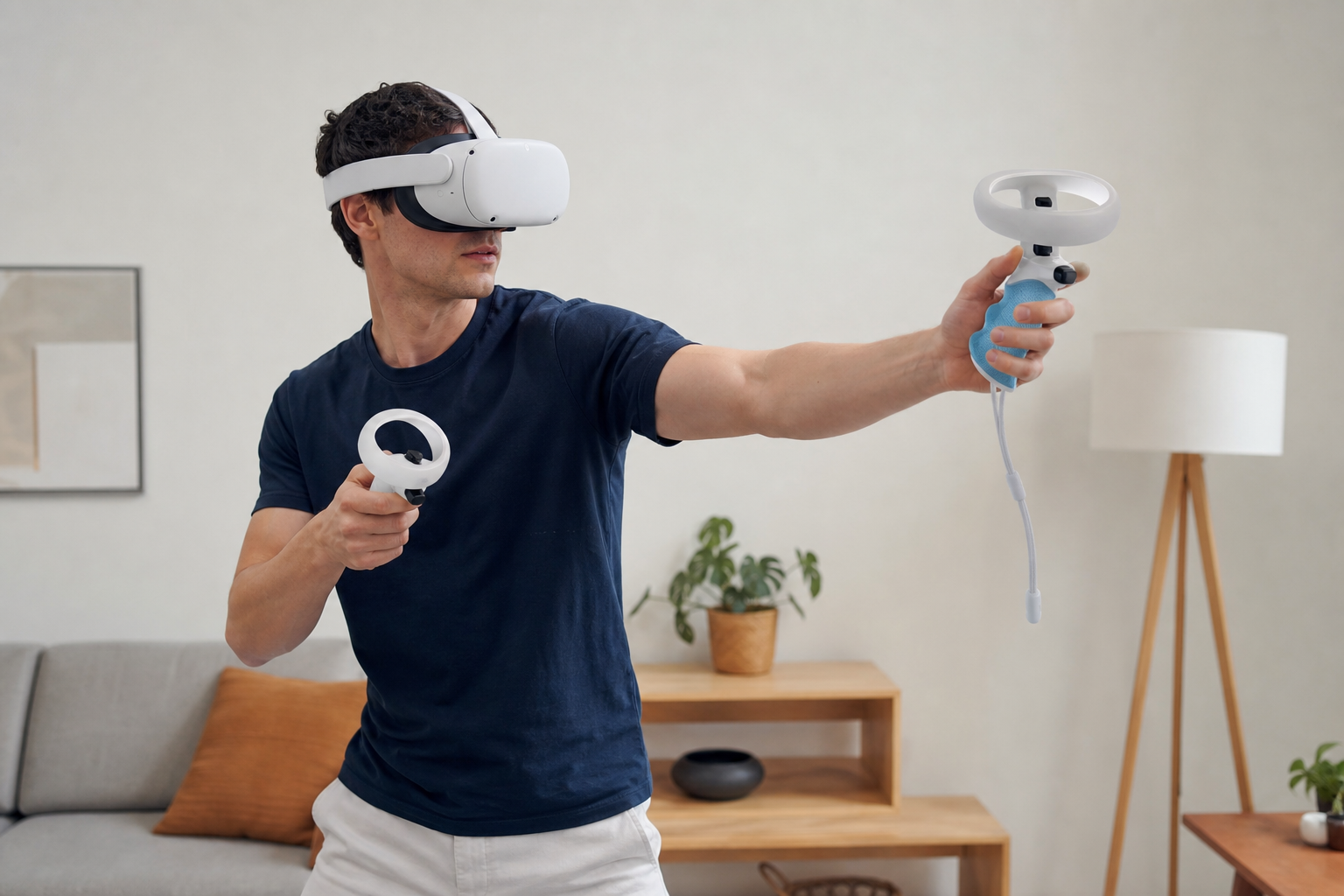
The first time I used the rod, I was impressed. The added weight and two-handed grip made the experience feel fresh and new. "This is how it's meant to be played," I thought. For the first two days, I used it every single time. It felt like a true upgrade, and the setup time seemed like a small price to pay for the boost in immersion.
By the fourth day, a crack appeared in the illusion. I had a busy day and only had about 20 minutes to unwind. I looked at the headset, then at the controllers, then at the rod accessory. The idea of getting the controllers, snapping them into the rod, and then starting my game felt like a chore. It was a small barrier, but it was enough to make me pause. I just wanted to jump in. On that day, I played with just the controllers. The experience was still 90% as good, but it was 100% easier to start. Over the rest of the week, this became a pattern. If I was planning a long, dedicated session to really get lost in the game, I'd use the rod. But for the quick, casual, relaxing sessions that the game is perfect for, I always chose the convenience of the bare controllers.
Conclusion
For pure immersion, the rod is a win. For relaxing, shared play, its setup friction makes bare controllers better. It's a trade-off between realism and convenience.
Leave a comment