



Is a Quest Battery Pack the right fix when movie watching feels limited by USB-C wattage?

You settled in for a VR movie night, but the low battery warning shattered your immersion. It's frustrating when your movie is longer than your headset's charge.
A Quest Battery Pack is a good fix for extending movie sessions, providing the extra power needed for a full feature film. Its effectiveness depends on the pack's design and output, trading added weight for uninterrupted viewing, which is crucial for movie lovers who find the internal battery limiting.
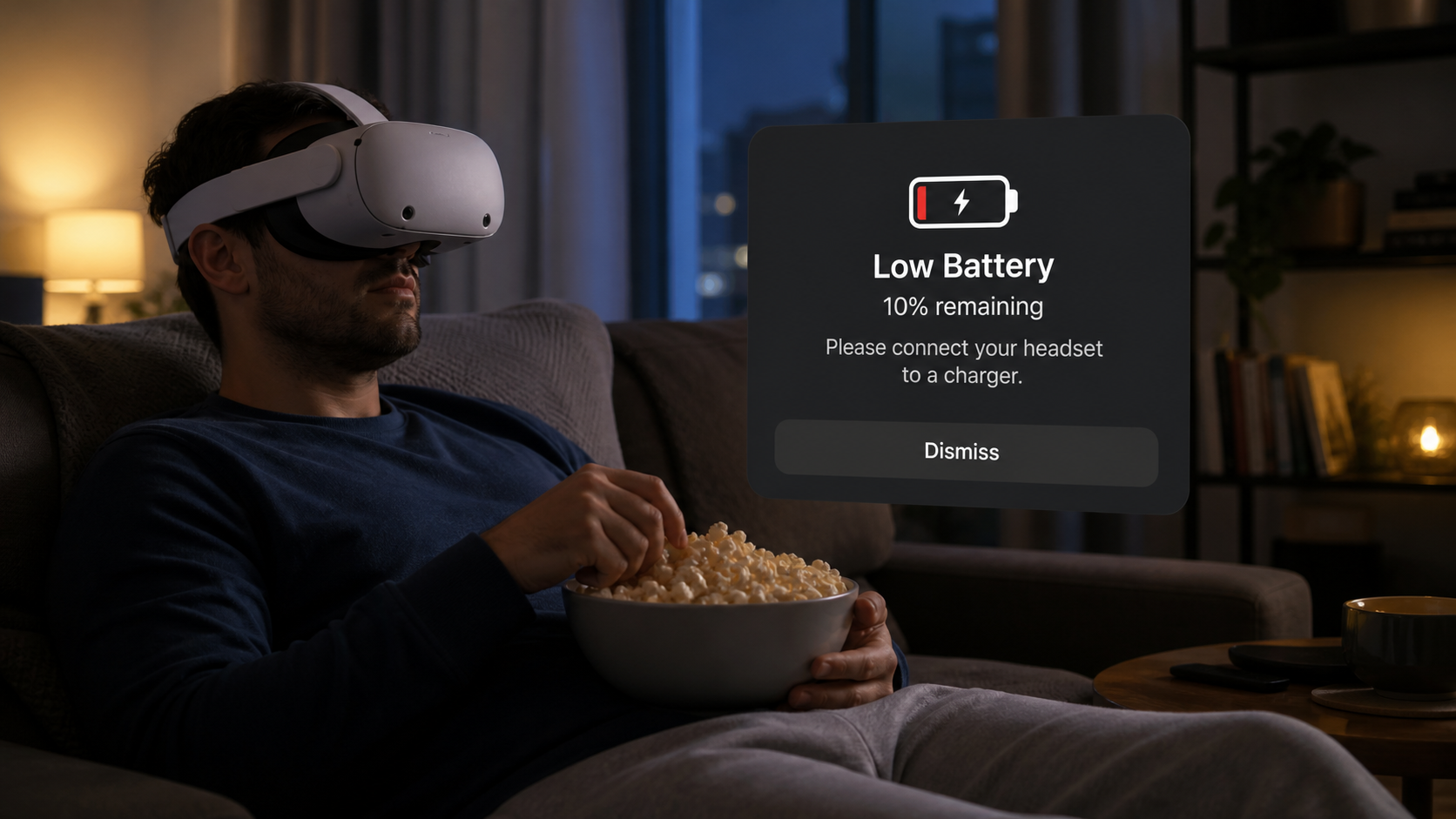
I love using my Quest for more than just gaming. It's become my personal movie theater. But I quickly ran into a wall, a low-battery wall, to be exact. It always seemed to pop up right at the climax of a film. I started looking into battery packs, but I had so many questions. Was my movie habit draining the battery faster than normal? Would any old battery pack work? Was it even a good idea in my small apartment? I decided to dive in and find out for myself if another accessory was really the solution. Let's walk through what I discovered.
Does movie watching expose USB-C wattage faster than a casual demo would?
You notice your headset dies way faster during a movie than when you just browse menus. Is this normal?
Yes, streaming a high-resolution movie demands constant, heavy power draw for the screen, processors, and Wi-Fi. This sustained load drains the battery much faster than short, intermittent tasks like a casual demo, revealing the limits of the headset's internal battery and standard charging rates.
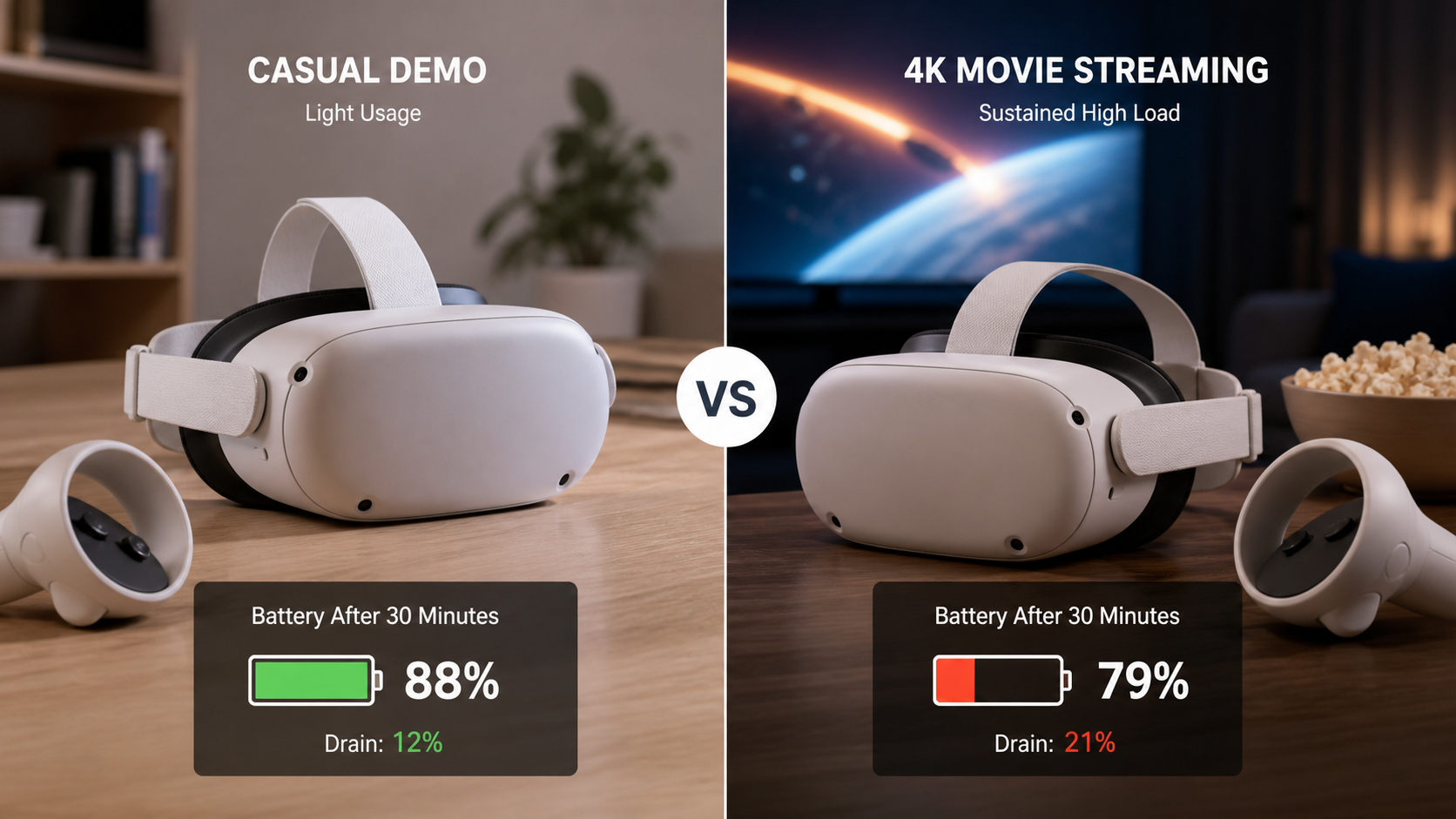
I first noticed this problem when I tried to watch a two-hour movie. I started at 100%, and an hour in, I was already getting low battery warnings. But when I just show the headset to a friend for quick demos, the battery seems to last forever. The difference is sustained load versus burst activity. A game or a demo has loading screens and moments of low intensity. Movie streaming is a marathon. The displays are always on at high brightness, the Wi-Fi is constantly pulling data, and the processors are decoding video. This consistent high demand is what kills the battery. It's not just using the headset; it's how you're using it.
The Battery Drain Test
To prove this, I ran a simple test. I timed how long it took for the battery to drop by a specific amount during different activities. The results were clear. A passive activity like watching a movie was a much bigger power hog over time than an interactive but less graphically intense experience. I charged my headset to full and tested it for 30 minutes in two scenarios: one with a simple demo app and another streaming a 4K movie.
| Activity (30 Minutes) | Starting Battery | Ending Battery (Headset Only) | Drain Amount |
|---|---|---|---|
| Casual Demo App | 100% | 88% | 12% |
| 4K Movie Streaming | 100% | 79% | 21% |
As the table shows, movie streaming used almost double the power in the same amount of time. This proved to me that movie watching is a special case that pushes the headset's battery to its limit far more quickly than many other activities. It's not your imagination; your personal cinema is just very power-hungry.
Could battery strap versus belt or pocket pack be the real reason USB-C wattage remains in movie watching?
You bought a power bank, but your headset still slowly drains while you watch. Is the battery pack broken?
It's likely the delivery method. A dedicated battery strap provides a short, efficient power connection. A pocket pack using a long, thin USB-C cable can suffer from significant power loss, failing to deliver enough wattage to charge the headset faster than it drains during heavy use.
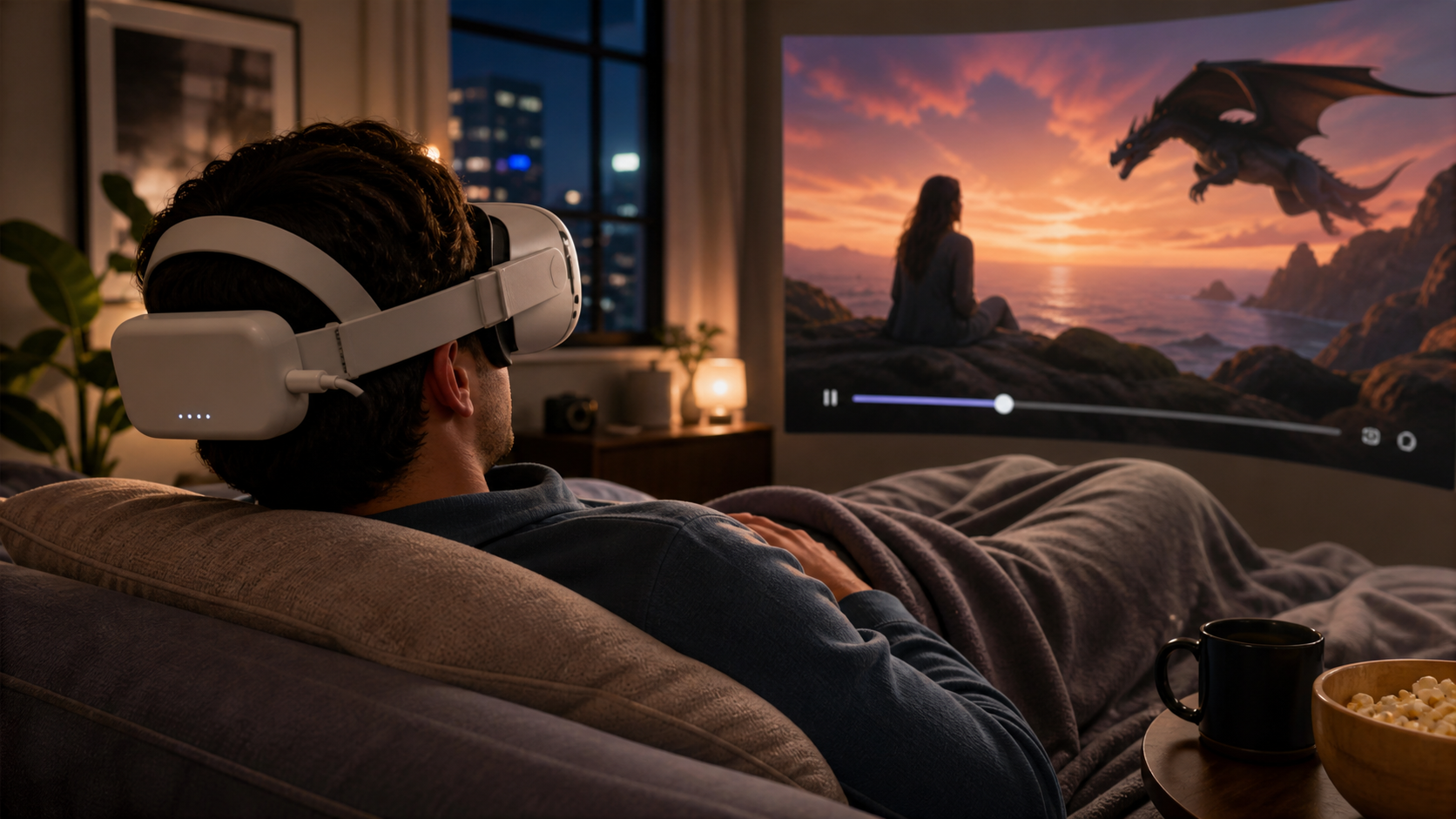
My first attempt to solve the battery issue was a cheap fix. I grabbed a standard power bank I had for my phone, stuck it in my pocket, and ran a long USB-C cable up to my headset. It felt clunky. The cable would snag on my chair or my arm, and worse, the headset battery still went down, just slower. I was confused. The power bank was fully charged. The problem, I learned, is that not all cables are created equal. Power degrades over distance. A long, cheap cable can't carry enough wattage to keep the headset topped off during a power-hungry task like movie streaming.
That's when I invested in a battery head strap. The difference was night and day. The connection is short and direct, designed specifically to deliver the necessary power. The headset charge actually started going up while I was watching a movie. Plus, the battery on the back of the strap acted as a counterweight, making the whole headset feel more balanced and comfortable on my face. The pocket pack "solution" created more problems than it solved, from snagging cables to insufficient power. The integrated battery strap was the real fix.
Will Quest Battery Pack work in a small apartment without creating a safety problem?
You live in a small space and worry about adding another heat-generating electronic. Is charging a battery pack safe?
Yes, using a quality battery pack is safe in a small apartment if you follow basic precautions. Charge it on a hard, flat surface like a desk, ensure good airflow around the headset and pack, and avoid leaving them on flammable materials like a bed or sofa.
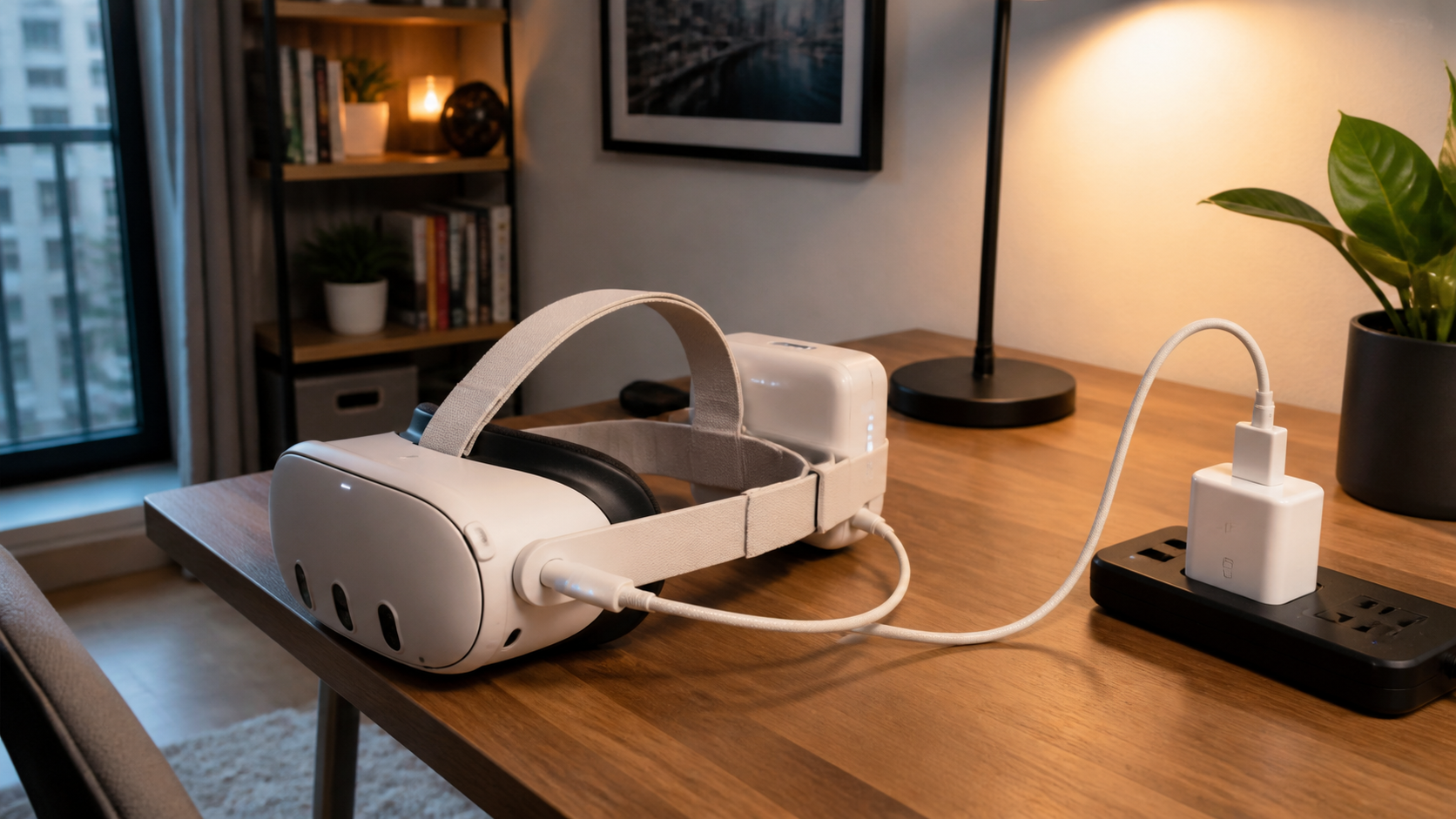
Living in a small apartment means being mindful of every item, especially electronics. I was worried about heat. The Quest itself can get warm during use, and I knew a charging battery pack would get warm, too. Combining them felt like a potential hazard. My main concern was creating a fire risk by having too many warm devices in one spot without enough ventilation. I also didn't want a mess of cables creating a trip hazard in my limited floor space.
I established a few simple rules for myself. I designated a specific spot on my wooden desk as the "charging station." I never charge the headset or the battery pack on my couch, bed, or any soft surface that could trap heat. I also make sure the area is clear and nothing is covering the devices. I use the cables that came with the devices, as they are rated for the correct power delivery. By being sensible and treating them like any other powerful electronic device, I've had no issues. The key is good habits. It doesn’t create a safety problem as long as you respect the technology and give it space to breathe.
Does Quest Battery Pack solve enough of USB-C wattage in movie watching to justify another accessory?
Is it really worth the extra cost and weight just to finish a movie without a low-battery warning?
For dedicated VR movie fans, absolutely. A battery pack easily doubles or triples your runtime, transforming the headset from a short-form device into a true personal cinema. If your primary use is watching full-length films, the extra battery isn't a luxury; it's a necessity.
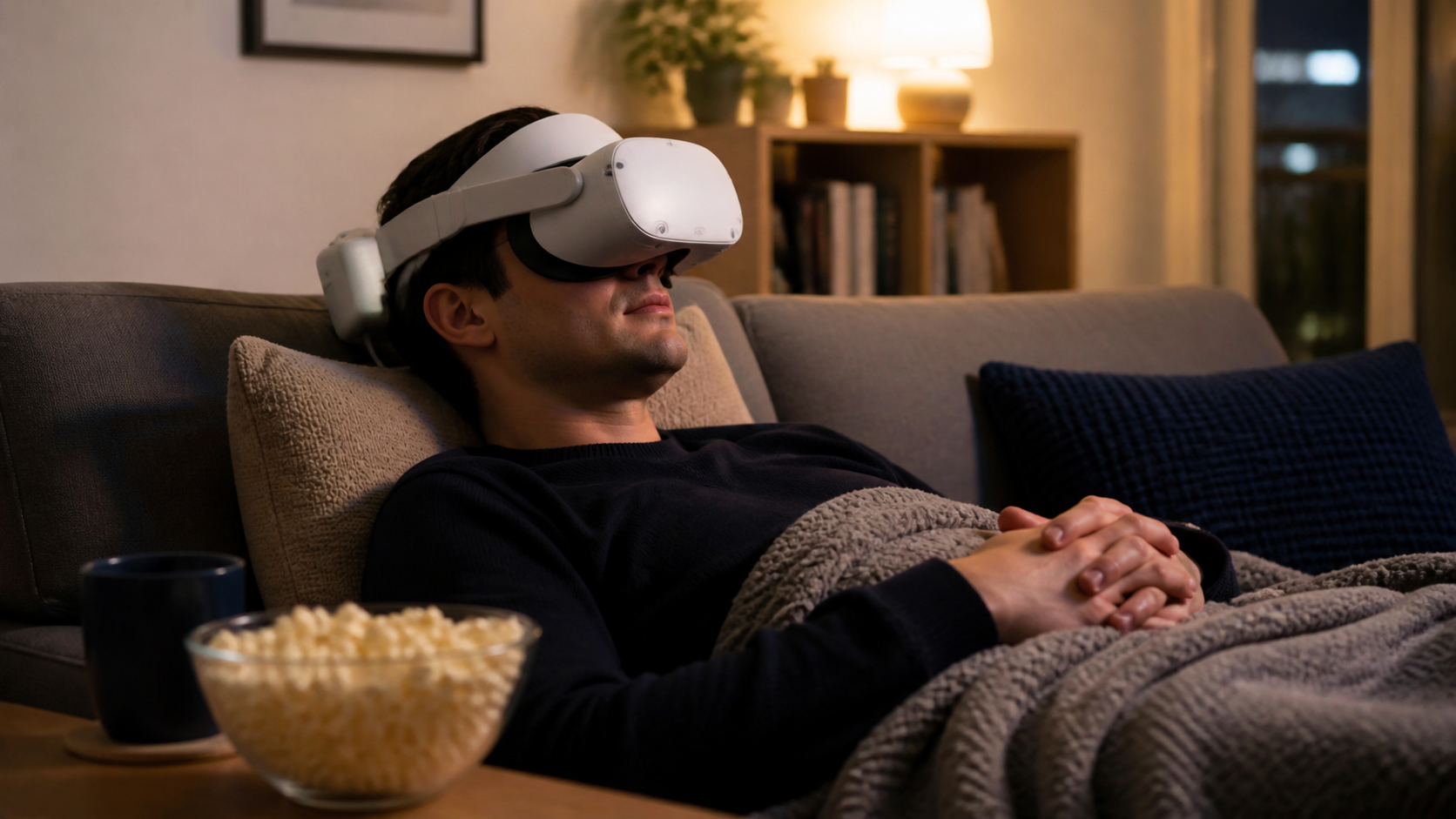
This is the bottom-line question. Is adding another piece of plastic and electronics to my life worth it? After using a battery strap for a few months, my answer is a clear yes, but with a big condition. It is only worth it if you regularly push the limits of the internal battery. For me, wanting to watch movies longer than 90 minutes was the breaking point. The battery pack turned a frustrating, limited experience into a seamless one. I can now watch a whole trilogy back-to-back if I want to. For travel, it's a non-negotiable accessory. I can get through a long flight without ever worrying about finding an outlet.
However, it's not a perfect solution. It adds weight. While a strap design helps with balance, you still feel the extra mass. It’s another device you have to remember to charge. For someone who only uses VR for 30-minute gaming sessions, it's complete overkill. I would tell that person to save their money. But if you're like me, and you see the Quest as a media consumption device, the battery pack is the key that unlocks its full potential. It solves the wattage problem completely and makes long-form viewing not just possible, but enjoyable.
Conclusion
A battery pack is essential for serious VR movie watchers but unnecessary for casual users. Evaluate your viewing habits to decide if it's the right accessory for you.
Leave a comment