



Is a Quest Battery Pack overkill if you only play Quest 3S ownership on Quest Pro Touch Controllers?

Your Quest 3 battery dies too fast, but your Pro controllers don't. Is adding a heavy battery pack to your setup just overkill? It's a fair question.
A battery pack is not overkill for Quest 3S ownership. Even with self-charging Pro controllers, the headset's internal battery is the main bottleneck for long play sessions. A good pack solves the headset's short life, creating a balanced system for uninterrupted immersion in both PCVR and standalone games.
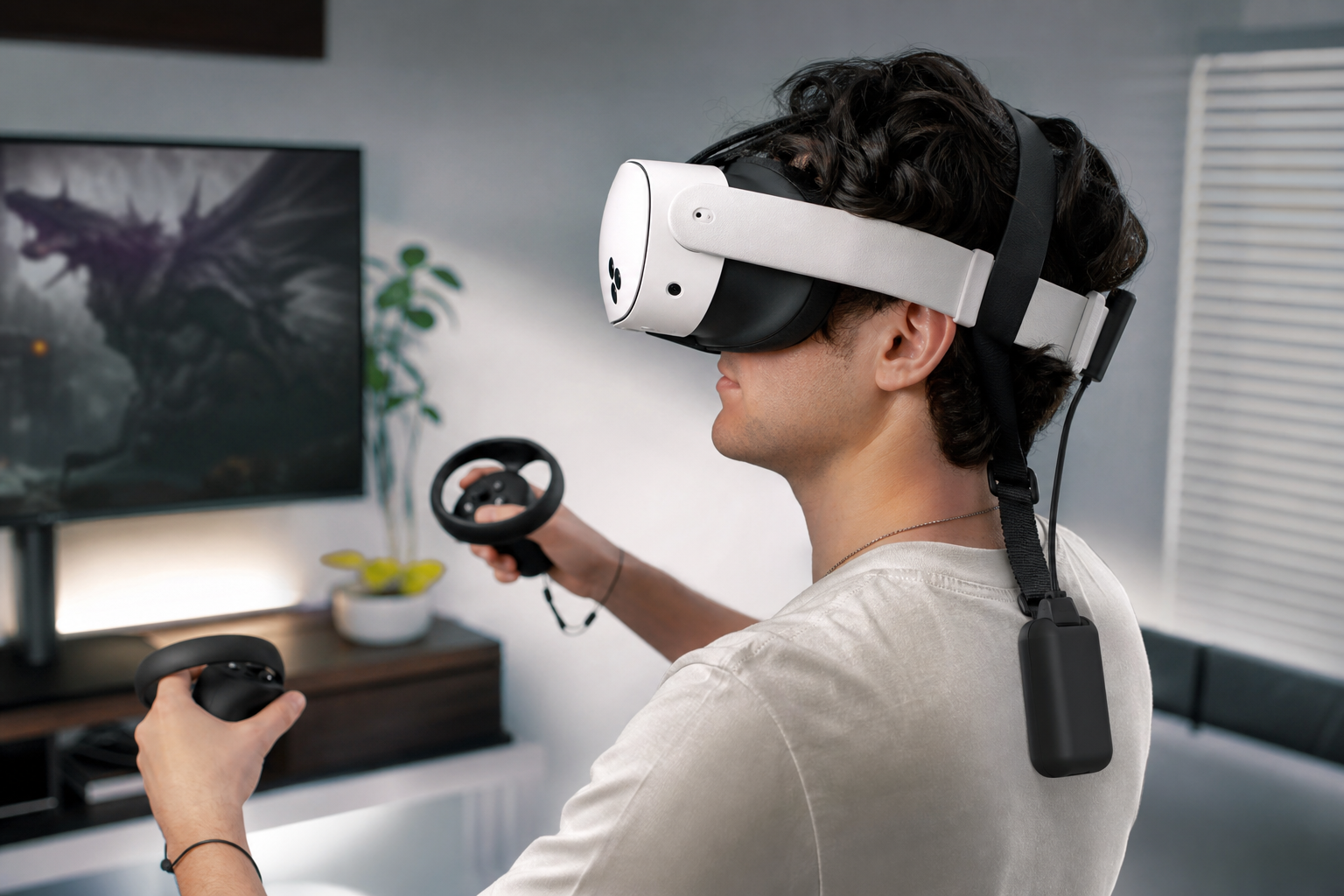
I made the jump to Quest Pro controllers for my Quest 3 because I wanted the best tracking possible, especially for competitive games. The controllers are fantastic and charge themselves on their dock, but my headset was still dying in under two hours. That led me down the rabbit hole of external batteries. I quickly realized that simply buying a battery isn't enough. The type of battery and how you wear it completely changes the experience. I’ve tested battery head straps, belt clips, and simple pocket packs. The goal was to find a solution that extended my playtime without ruining the immersion I bought the Pro controllers for in the first place. Let's walk through what I learned, so you don't have to make the same mistakes I did.
Is charging speed still a problem after adjusting battery strap versus belt or pocket pack?
You bought a huge battery pack, but your Quest 3 still dies mid-game. You feel cheated. Is the battery a dud, or is your setup wrong?
Yes, charging speed is often a problem, and it has nothing to do with where you wear the battery. The real issue is output wattage. Your pack needs to deliver at least 18W (9V/2A) to charge the Quest 3 during intense gameplay. Many high-capacity packs fail here.
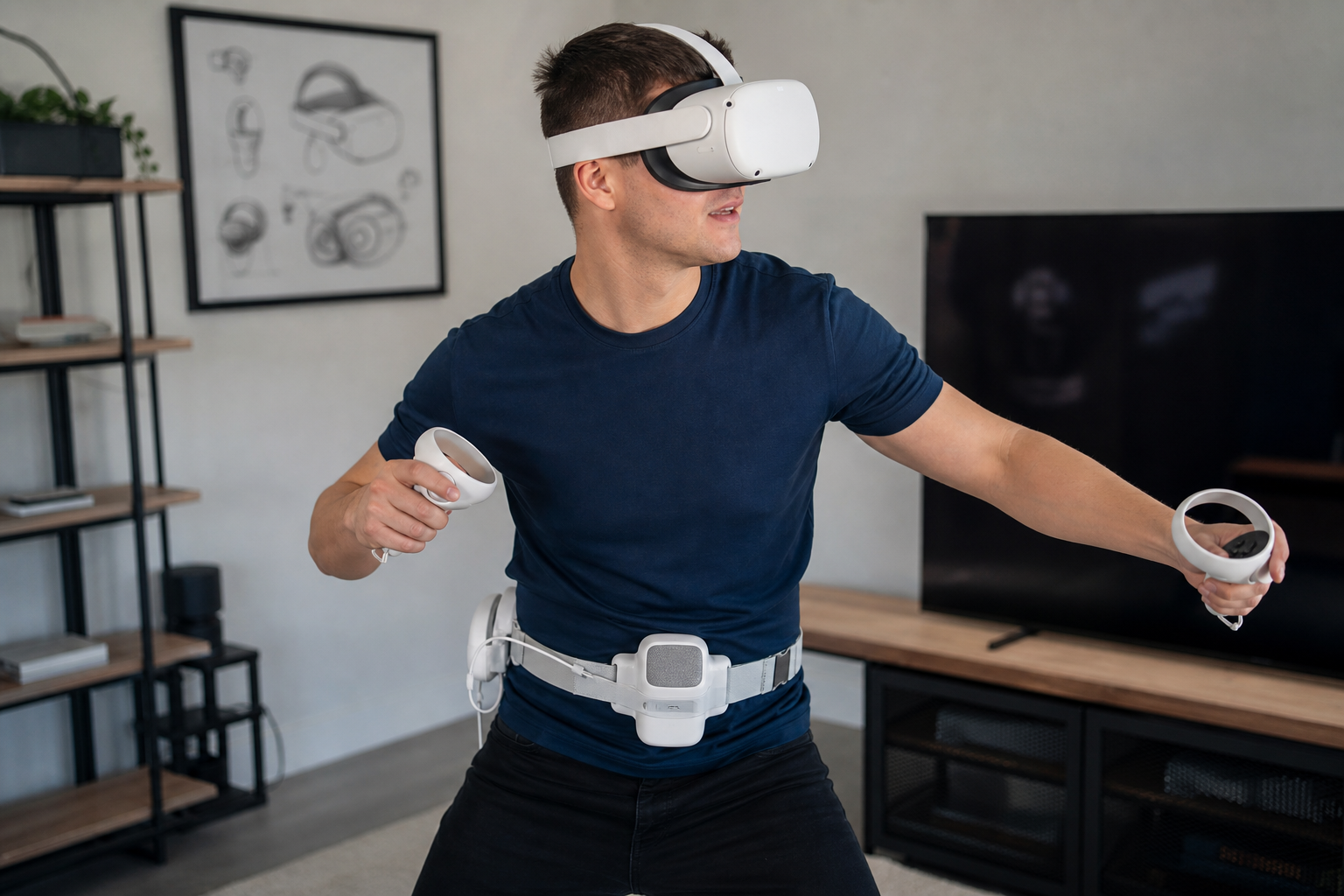
When I first started, I thought bigger (more mAh) was better. I bought a 20,000mAh power bank, put it in my pocket, and jumped into a PCVR session over Air Link. An hour later, my headset was at 40% battery and dropping. I was confused. The pack was huge, but it couldn't keep up. The problem wasn't its capacity; it was its power delivery. It only supplied 10W, while the Quest 3 was using more than that. This is the most important lesson: check the wattage, not just the mAh. An 18W pack with 10,000mAh is far more useful than a 10W pack with 20,000mAh. Where you wear it—on a strap, belt, or in a pocket—is about comfort, not electrical performance. A battery strap adds counterweight but also head fatigue. A pocket pack removes head weight but introduces a dangling cable.
Choosing Your Power Delivery System
Here’s a simple breakdown of the trade-offs I found between different styles.
| Pack Type | Pros | Cons |
|---|---|---|
| Battery Head Strap | - Excellent counter-balance - No loose cables - All-in-one solution |
- Adds significant weight to the head - Can cause neck fatigue in long sessions - Usually lower capacity |
| Belt or Pocket Pack | - Keeps weight off your head - Can use much larger capacity batteries - More versatile (can charge a phone too) |
- Cable can snag or get in the way - Can bounce during fitness games - Requires cable management |
Ultimately, I settled on a belt pack for long PCVR sessions and a battery strap for shorter, more active standalone games. But neither worked until I ensured they both delivered at least 18W.
Can Quest 3 owners reproduce the test without special tools or paid software?
You see online reviews with fancy battery monitoring software. You just want to know if your pack works, but you don't want to buy special apps or gadgets.
Yes, you can easily test your battery pack for free. All you need is your Quest 3. Fully charge both devices, connect them, and play a demanding game for an hour. If the headset’s battery percentage drops below 100%, your pack isn’t powerful enough.
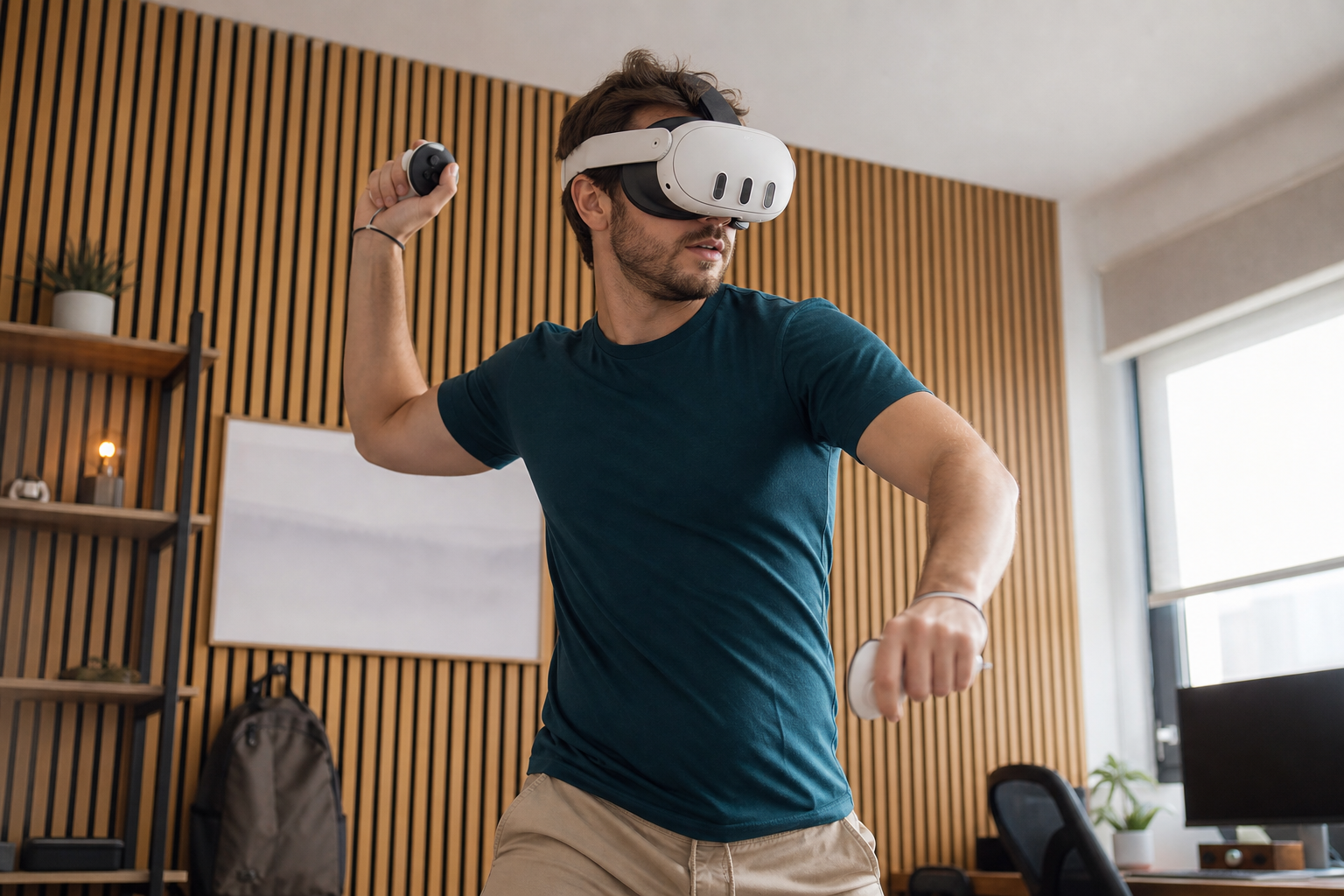
You don't need to be a tech expert to verify your setup. Forget about third-party apps or USB power meters. The only metric that matters is whether your playtime gets extended without interruption. I developed a simple, real-world test that anyone can do in under an hour. First, charge your Quest 3 to 100% and your external battery pack to 100%. Then, connect the pack to the headset's USB-C port. Now, the important part: launch a demanding application. For a standalone test, I use something graphically intense like Asgard's Wrath 2 or Red Matter 2. For a PCVR test, I stream Half-Life: Alyx or Microsoft Flight Simulator at a high bitrate. Play normally for at least 30 minutes, preferably an hour. After you're done, check the headset's battery level in the Quest menu. If it's still at 100%, your battery pack is passing the test. If it has dropped to 95% or lower, your pack cannot supply enough wattage to keep up with the headset's power draw. This simple pass/fail test tells you everything you need to know.
Can bare controllers still feel better for part of Quest 3S ownership?
You have amazing Quest Pro controllers but wonder if adding grips ruins their perfect design. They feel great out of the box. Do you really need accessories on them?
Absolutely. For games that require fast, light, and precise movements like Beat Saber, bare Quest Pro controllers often feel superior. Their built-in ergonomics shine in short sessions. However, for fitness apps or games where you might drop them, grip straps are almost a necessity for security.
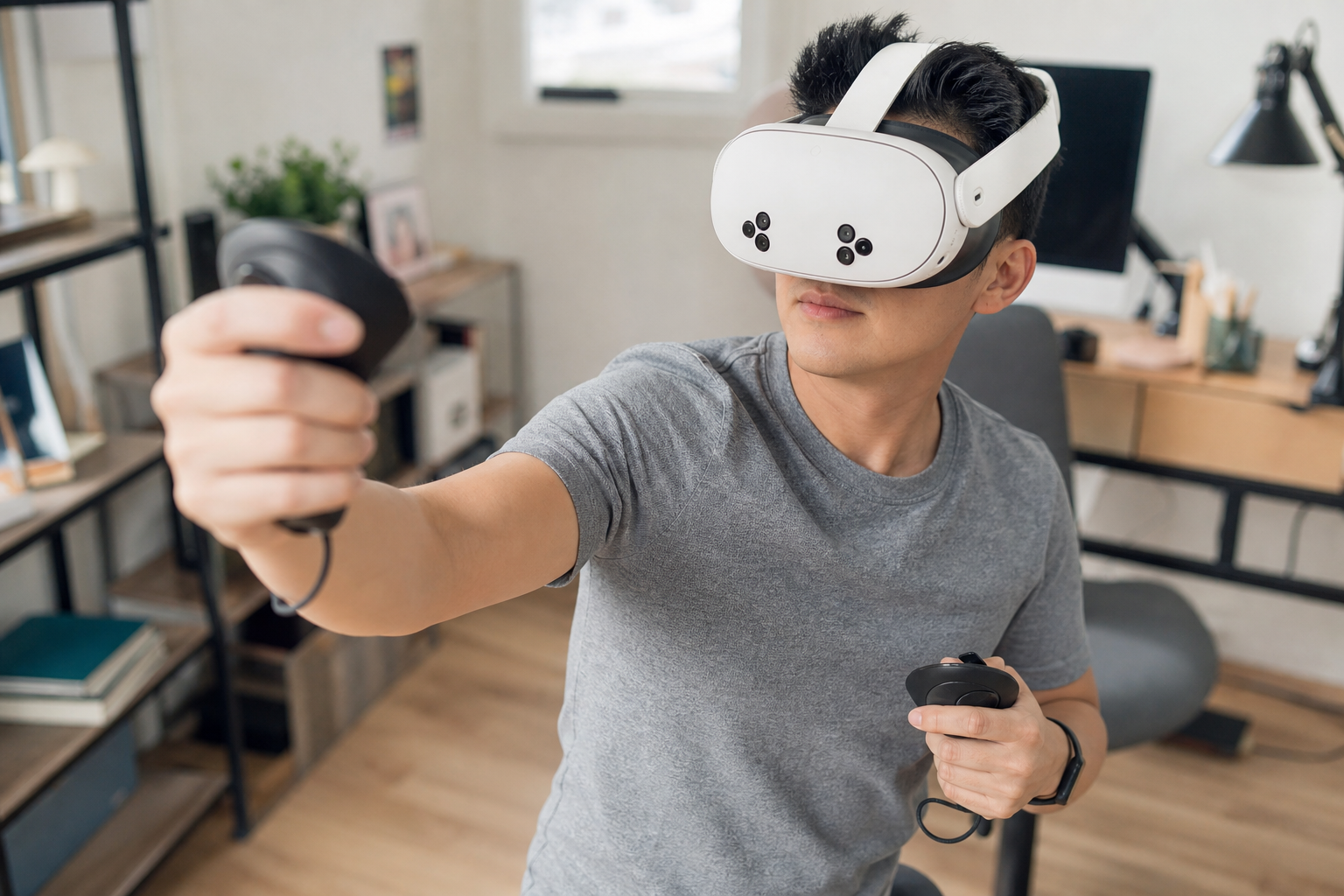
While my main mission was solving battery life, I also tinkered with my controllers. The Quest Pro controllers have a fantastic weight and balance on their own. When I play rhythm games like Pistol Whip or Beat Saber, I prefer them bare. Without any grips, they feel lighter and more like an extension of my hand, allowing for quicker, more fluid motions. The haptics also feel a bit more direct against my palm. However, this changes completely when I switch to a fitness game like Supernatural or a frantic action game like Gorilla Tag. In these high-movement games, the fear of a controller flying out of my sweaty hands is real. That’s where a good set of silicone knuckle straps becomes essential. They let me fully open and relax my hands without dropping the controllers, which reduces fatigue and increases my confidence to move freely. My setup is now modular: I keep my straps nearby and slide them on for intense sessions, but I take them off for more casual, precise gameplay. It's the best of both worlds.
Can the conclusion explain the best and most annoying Quest Battery Pack moments in Quest 3S ownership?
You're about to invest in a battery solution. What is the day-to-day reality? What are the moments of pure joy and the small frustrations that reviews never mention?
The best moment is the freedom of playing for hours without a single battery warning. The most annoying is the constant dance with cables, weight, and heat. You trade battery anxiety for a new kind of physical management—a worthwhile trade-off, but one with daily frustrations.
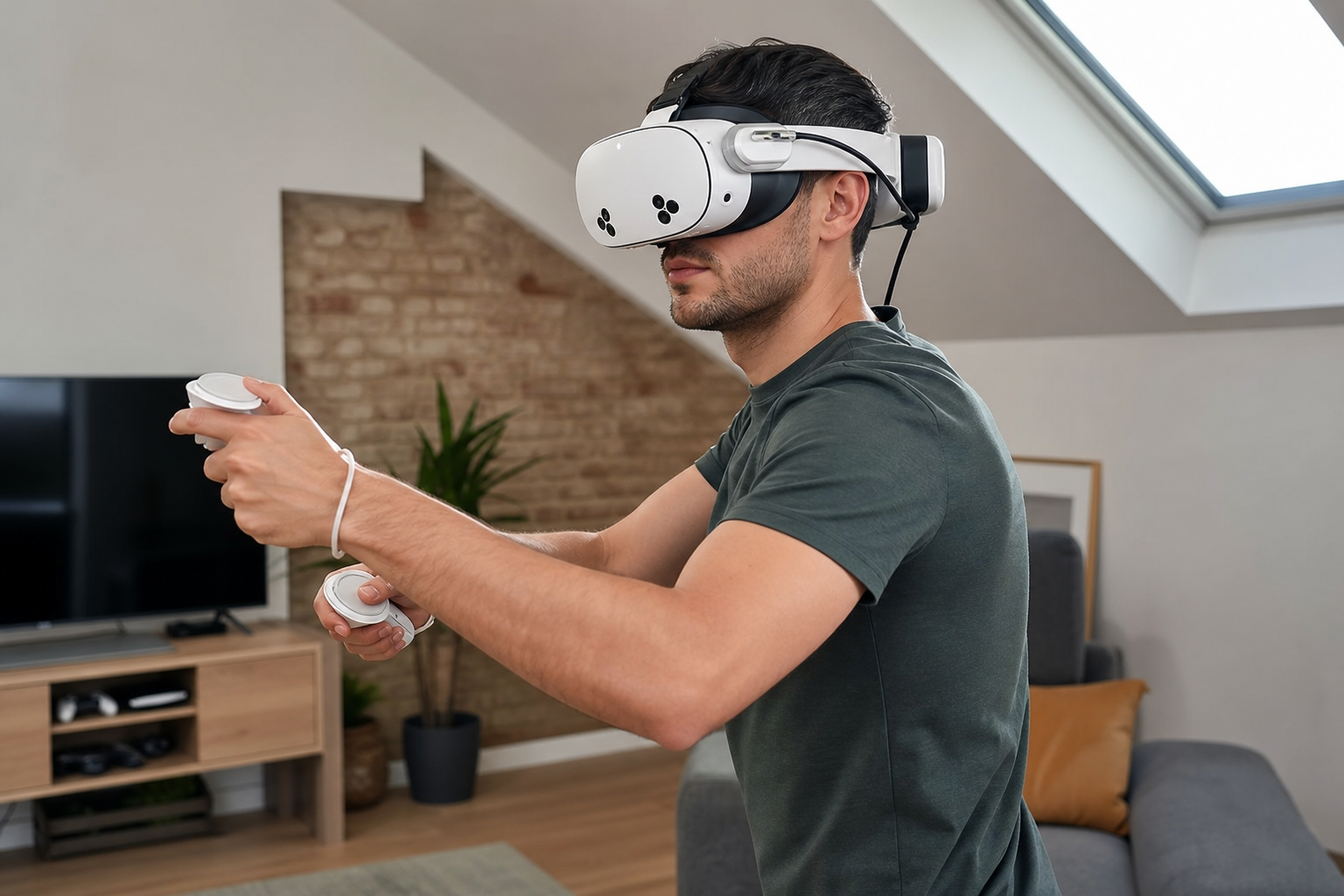
The absolute best feeling was finally playing through a long PCVR game from start to finish over a weekend without once seeing that dreaded "low battery" popup. It was pure, uninterrupted immersion. Another great moment was hosting a VR night with friends and being able to pass the headset from person to person without a two-hour charging break in the middle. The battery pack transformed the Quest 3 from a personal device with a time limit into a true, session-ready entertainment machine.
But it’s not all perfect. The most annoying moments are small but frequent. I hate the feeling of a USB-C cable tugging at the side of my head because it snagged on my shirt. I've been completely pulled out of the moment during a workout because the battery on my belt was bouncing with every squat. And there’s nothing worse than getting all geared up for a long session, only to realize I forgot to charge the external battery pack itself. The added weight of a battery strap, while balanced, still adds pressure that you feel after two hours. You fix one problem (battery life) but create a few smaller ones (weight, cables, heat). For me, the trade is worth it.
Conclusion
A powerful battery pack is essential for any serious Quest 3S user. It solves the headset’s biggest flaw. Just focus on wattage over capacity and prepare for the extra bulk.
Leave a comment