



Does off-hand stability get better after ten minutes with a VR Gunstock, or only at first?

Your shaky hands cost you another match. That perfect shot slips away as your off-hand drifts. A VR gunstock seems like the answer, but will it really help?
Yes, a VR gunstock can improve off-hand stability well beyond the first ten minutes. It’s not an instant fix, though. Lasting stability comes from adjusting the stock to fit your body and building new muscle memory for actions like reloading and aiming.
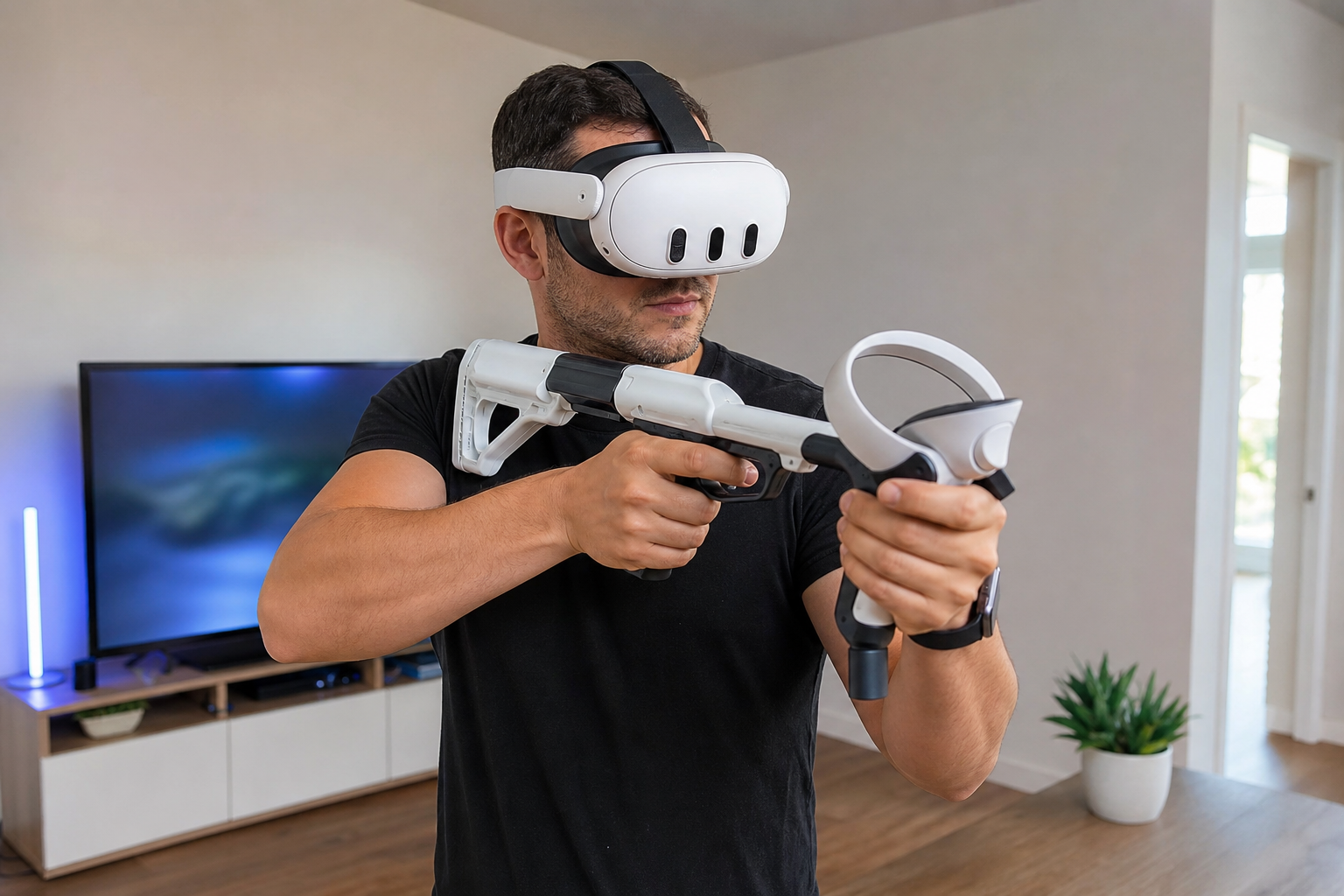
When I first unboxed our VR gunstock, the entire family was excited. It looked cool and felt solid. The promise was simple: connect your controllers to a physical stock and get the stability of a real rifle. My first few minutes in Population: One felt like a revelation. My aim was noticeably steadier, and the physical feedback of shouldering the stock was incredibly immersive. But I had a nagging question in the back of my mind. Was this real improvement, or just the excitement of a new toy? I decided to dig deeper and see if this feeling would last after a few hours of intense gameplay. This is what I found.
When the novelty fades, does VR Gunstock still solve off--hand stability?
That new gunstock feels like a game-changer at first. But after a few rounds, does the clumsiness return? Does it still feel better than holding your controllers freely?
After the novelty fades, a VR gunstock still solves aiming stability. The main benefit shifts from a "cool new toy" feeling to developing real muscle memory. But some actions, like reloading or throwing grenades, feel slower and more restrictive until you've practiced a lot.
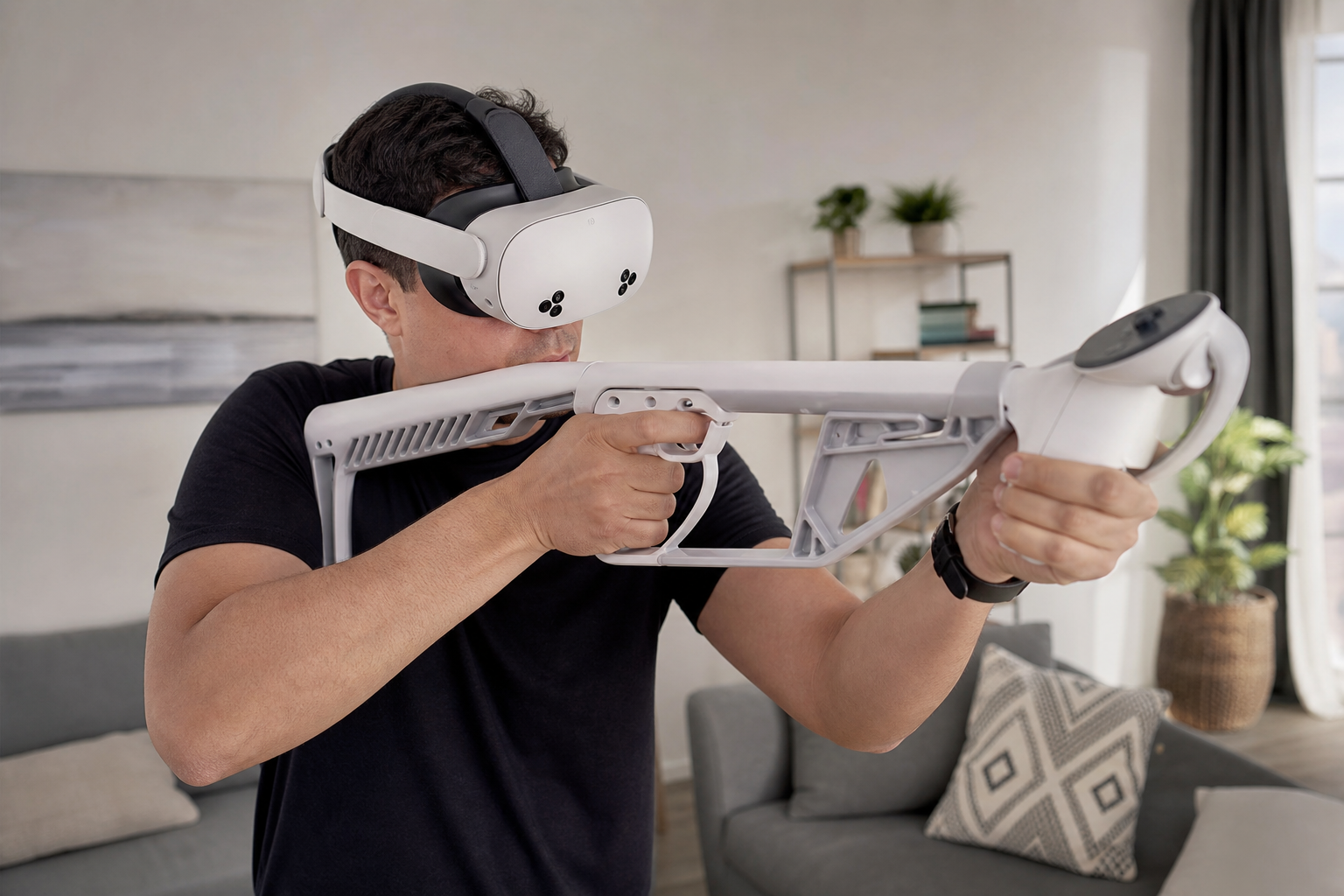
The first ten minutes with the gunstock were pure fun. Every shot with the P90 felt locked on. The problem started when I needed to do anything other than aim. Reloading felt awkward. My hands, now locked into position, couldn't move as freely as I was used to. My son, who is left-handed, had an even harder time. We spent a good ten minutes just adjusting the cup angles for his off-hand before it felt remotely natural for him. This initial frustration is where the novelty can quickly wear off. The key is pushing through it. After about an hour, my brain started to remap the movements. Reloading became smoother, and I started using the stock as a single, solid unit. The long-term benefit isn't just about a steady aim; it's about teaching your body a new, more stable way to move in VR.
First Impression vs. Long-Term Use
The experience changes quite a bit over time. What feels great at first can become a frustration point later, and vice-versa.
| Action | First 10 Minutes | After 1 Hour |
|---|---|---|
| Aiming Down Sights (ADS) | Incredibly stable, feels amazing. | Still very stable, feels natural and automatic. |
| Reloading | Clumsy and slow. My hands felt stuck. | Faster and more fluid as muscle memory develops. |
| Throwing Grenades | Very difficult. Had to unclip a hand. | Still the weakest point, but manageable with practice. |
| General Movement | A bit restrictive, especially when climbing. | Feels less restrictive as I got used to moving with it. |
Does Meta Quest 3 compatibility change the answer for this VR Gunstock question?
The Quest 3 has new, ring-less controllers. Do old gunstock designs still work well? Or do the new ergonomics create different problems for keeping your off-hand steady?
Yes, Meta Quest 3 compatibility is critical. The controller's shape means the gunstock cups must fit perfectly. A loose fit causes the controller to wobble, completely defeating the purpose of the stock and making off-hand stability even worse than with no stock at all.
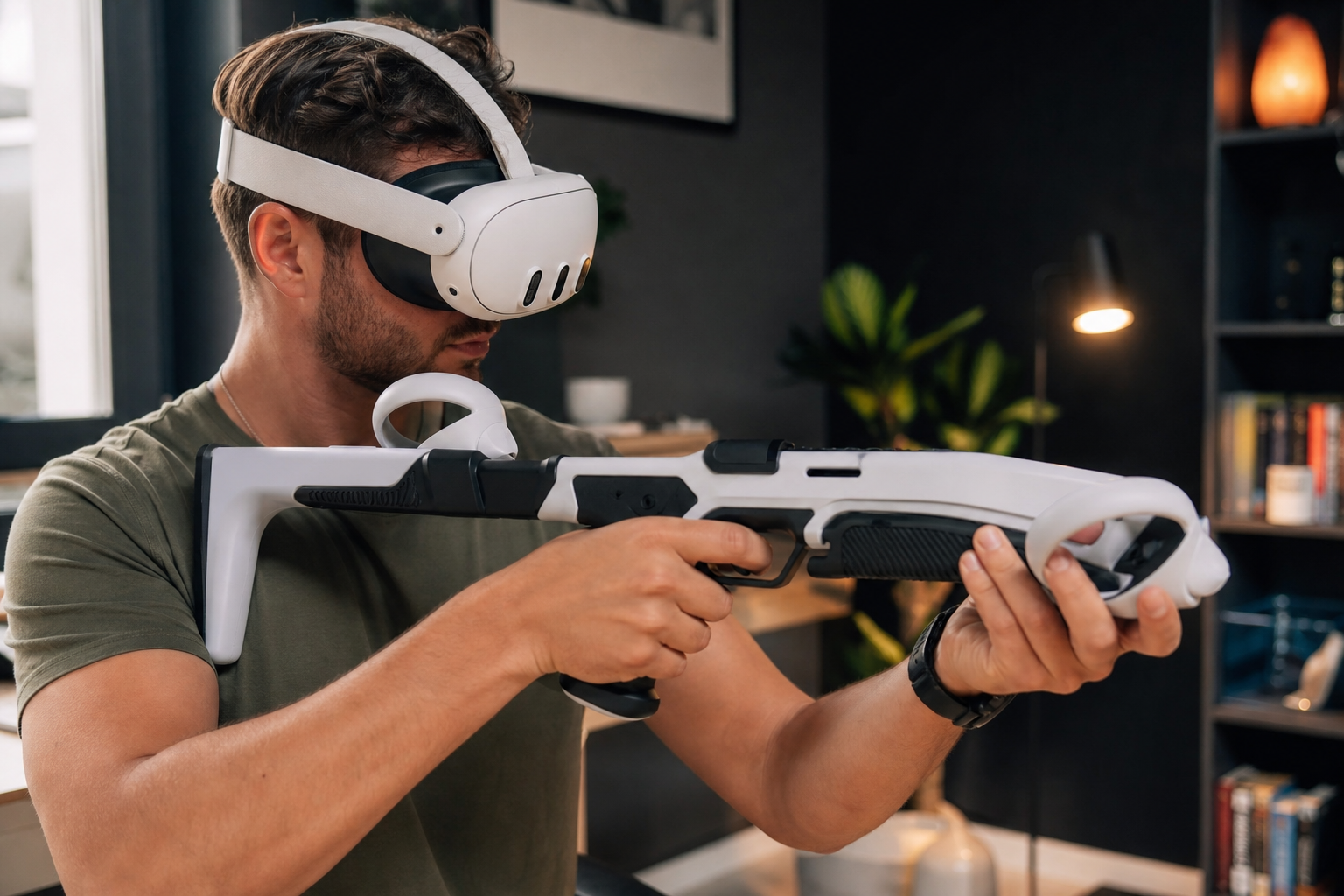
With the older Quest 2 controllers, the tracking ring provided a large surface area for gunstock cups to grip. The Quest 3 controllers are more compact. This is great for ergonomics but creates a challenge for accessory designers. If the cup that holds your off-hand controller isn't molded perfectly, the controller will have room to shift and tilt. Even a millimeter of movement is enough to throw off your aim in a fast-paced shooter. We noticed this with a generic stock we tried first; my controller would slightly twist when I shouldered it quickly, making my aim unpredictable. A stock made specifically for the Quest 3, like ours, has cups that grip the controller body securely. This ensures that the physical connection between your hands is solid, which is the entire foundation for improving off-hand stability. As a taller player with long arms, I also found that the ability to change the angle of the front grip was essential. Without that adjustment, my off-hand felt strained and unnatural.
Would a 20-minute session log covering accuracy and frustration points make the verdict more trustworthy?
Reviews can feel vague. How can you trust a verdict? A simple "it's good" is not enough when you are spending your money on a new accessory.
Absolutely. A 20-minute session log makes a verdict much more trustworthy. It provides clear data on accuracy, successes, and specific frustrations. This turns a simple opinion into a real case study, showing exactly where the gunstock helps and where it gets in the way.
To move beyond just a "feeling," I decided to log a full 20-minute match in Population: One. I noted down what I was doing, how my aim felt, and any moments of frustration. This simple exercise made it incredibly clear where the gunstock shined and where it failed. For example, I won a long-range fight I probably would have lost without the stock because my aim was so steady. But just a few minutes later, I was eliminated because I fumbled a grenade throw. I couldn't get my hand out of the magnetic cup and into a natural throwing position fast enough. This is the kind of specific, honest feedback that a simple review often misses. It shows that the gunstock is a tool with trade-offs, not a magical solution. Looking at the log, the verdict becomes clearer: it's fantastic for medium to long-range combat but can be a liability in close-quarters chaos.
My Population: One Session Log
| Time Stamp | Action / Event | Accuracy Note | Frustration Point |
|---|---|---|---|
| 0-5 min | Looting and initial positioning. | Aim felt locked while scanning the horizon. | Climbing a wall felt a little clumsy with the stock. |
| 5-10 min | Mid-range fight with an AKM. | Very stable. I landed shots easily and got the kill. | Reloading under fire was slower than I'm used to. |
| 10-15 min | Close-range fight with a P90. | Hip-fire was stable and effective. | Switching to my knife felt very slow. |
| 15-20 min | Enemy pushed my building. | Aim was steady as they came through the door. | FAILURE: Fumbled a grenade throw. I couldn't get a good arc because my hand felt locked in place. Got eliminated. |
Can VR Gunstock earn trust for off-hand stability without proof such as a side-by-side clip of the same route with and without the stock?
Words are one thing, but seeing is believing. Can you really trust an accessory review without video proof showing it in action and proving it actually works?
A VR gunstock struggles to earn full trust without video proof. A side-by-side clip is the best way to show the difference in aiming jitter. Short clips of reloads and aiming down sights offer tangible evidence that is much more convincing than words alone.
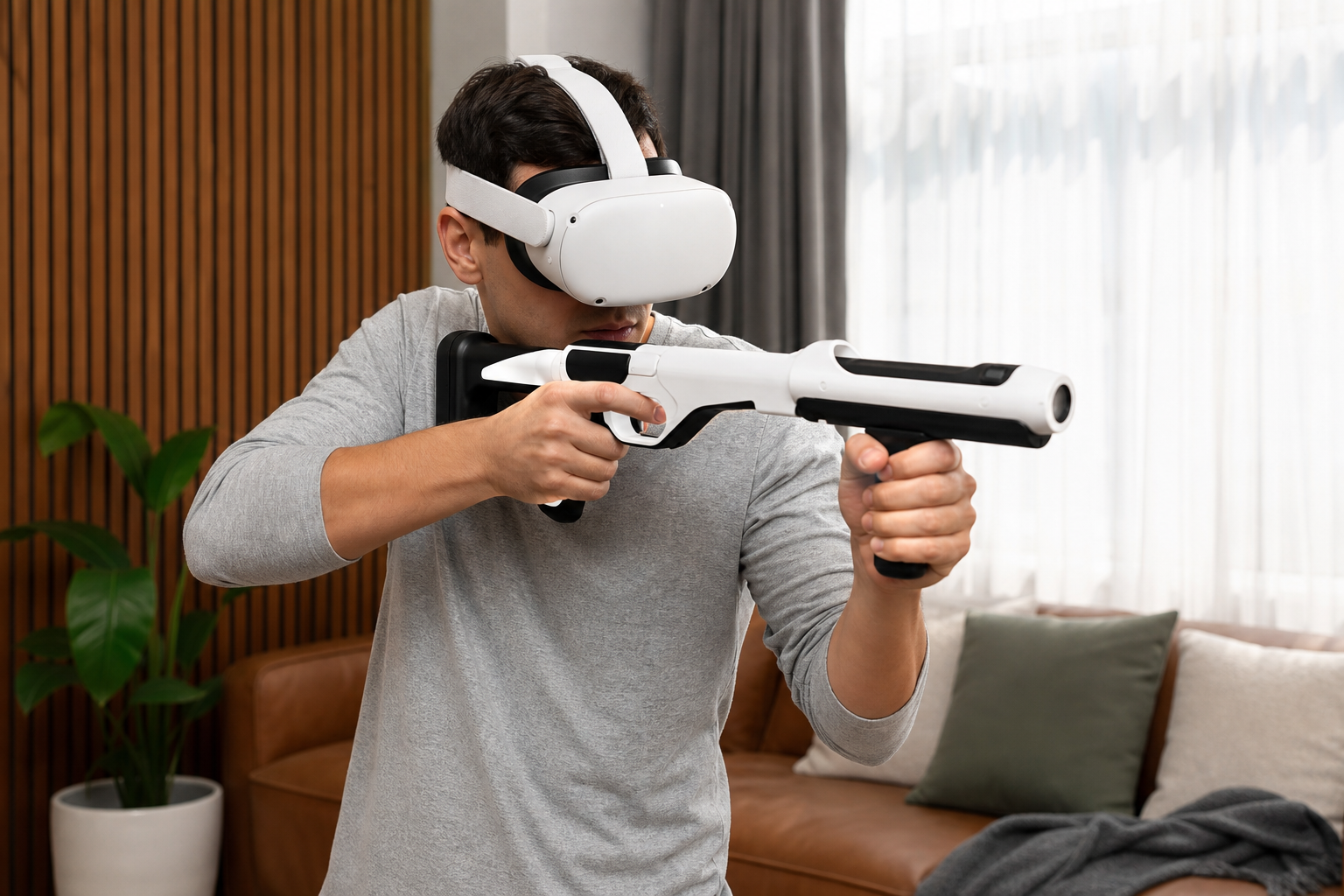
Reading about stability is one thing, but seeing it is another. Without video, you have to take my word for it. But a simple video clip can show you the truth in seconds. We recorded a short clip where I aimed at a distant sign in the Population: One lobby, both with and without the gunstock. The difference was obvious. Without the stock, my reticle had a constant, tiny wobble from my unsupported off-hand. With the stock, that wobble was almost completely gone. The reticle was rock solid. This is the kind of proof that builds trust. A good video should also be honest about the downsides. It should show a smooth reload to demonstrate what's possible with practice, but also include a fumbled grenade throw. This shows a real-world use case, not a perfect marketing reel. It tells a potential buyer, "This will make your aim better, but you will need to practice these other actions." That honesty is more valuable than pretending an accessory is perfect.
Conclusion
A VR gunstock helps off-hand stability, but it's a tool that requires practice. It helps aiming a lot, feels awkward for other actions, and isn't for every player.
Leave a comment