



Does a VR Sword still make sense when the trade-off is cosplay novelty versus daily-use practicality?

That cool VR sword accessory you saw online looks amazing, but will you actually use it? I bought one to find out if the novelty was worth the hassle.
A VR sword accessory is a fantastic novelty for die-hard melee fans with ample space, but its practicality drops for daily use. For rhythm games, small rooms, or shared headsets, the trade-offs in safety and convenience often outweigh the immersive fun.
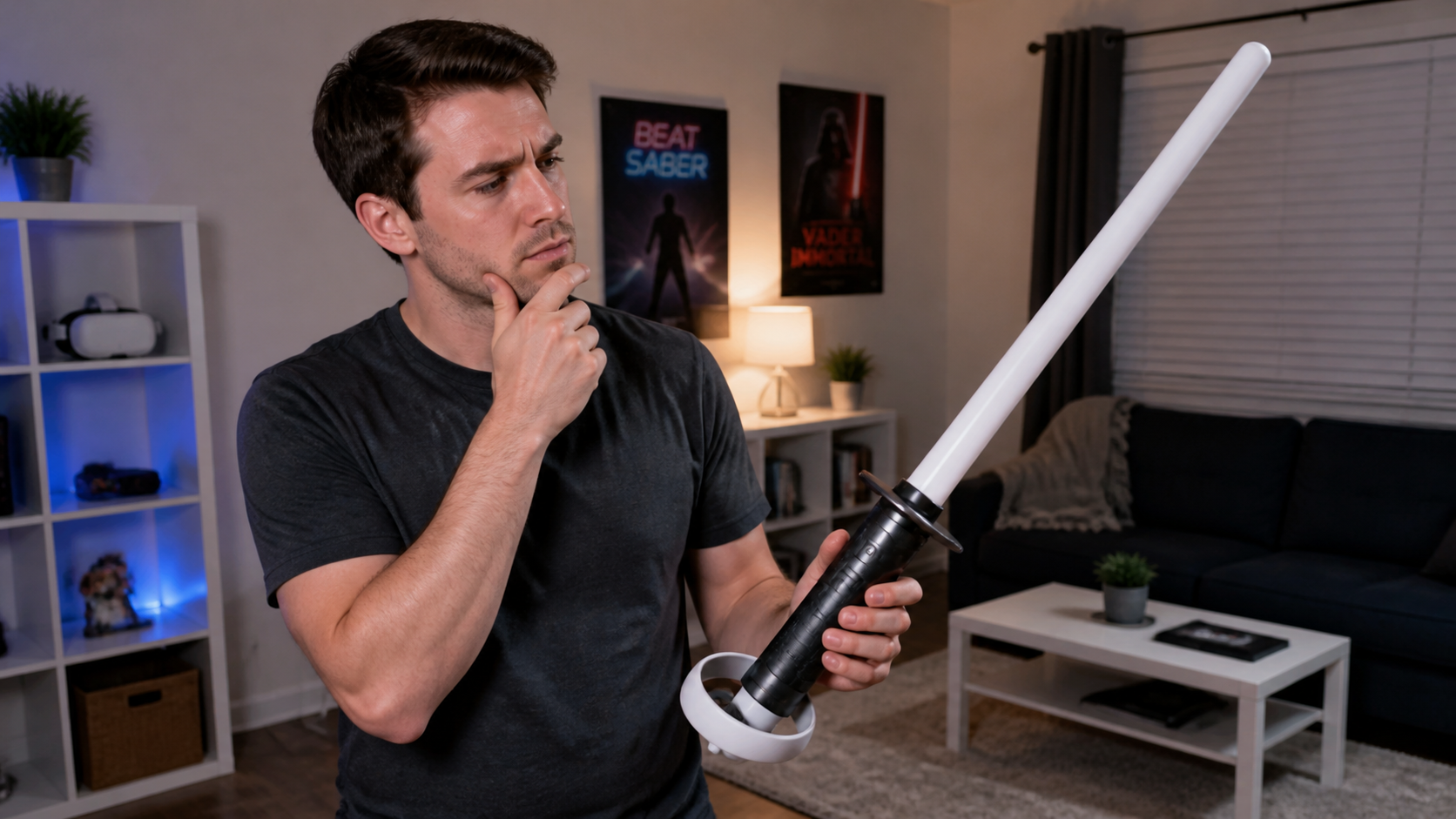
When I first got my Quest Pro, I was blown away by the controllers. The haptics felt incredible. But when I fired up Vader Immortal, holding that little controller didn't feel like I was holding a lightsaber. I saw these sword attachments online and thought, "That's it. That's what I need." But before I clicked "buy," a bunch of questions popped into my head. Was this just a gimmick? Would it be safe in my small apartment? I decided to document my experience as a first-time buyer to help others make the right choice. Let's walk through the real questions I had, starting with the controllers themselves.
Could Quest Pro Touch Controllers users solve haptic feel without buying another accessory?
My Quest Pro controllers already have amazing feedback. I wondered if spending more on a plastic handle was just a waste of money. Was I missing something?
No, Quest Pro Touch Controllers alone cannot replicate the feeling of holding a sword. While their haptics are precise, an accessory is needed to transfer that vibration into a longer handle, creating a more believable and immersive grip for melee games.
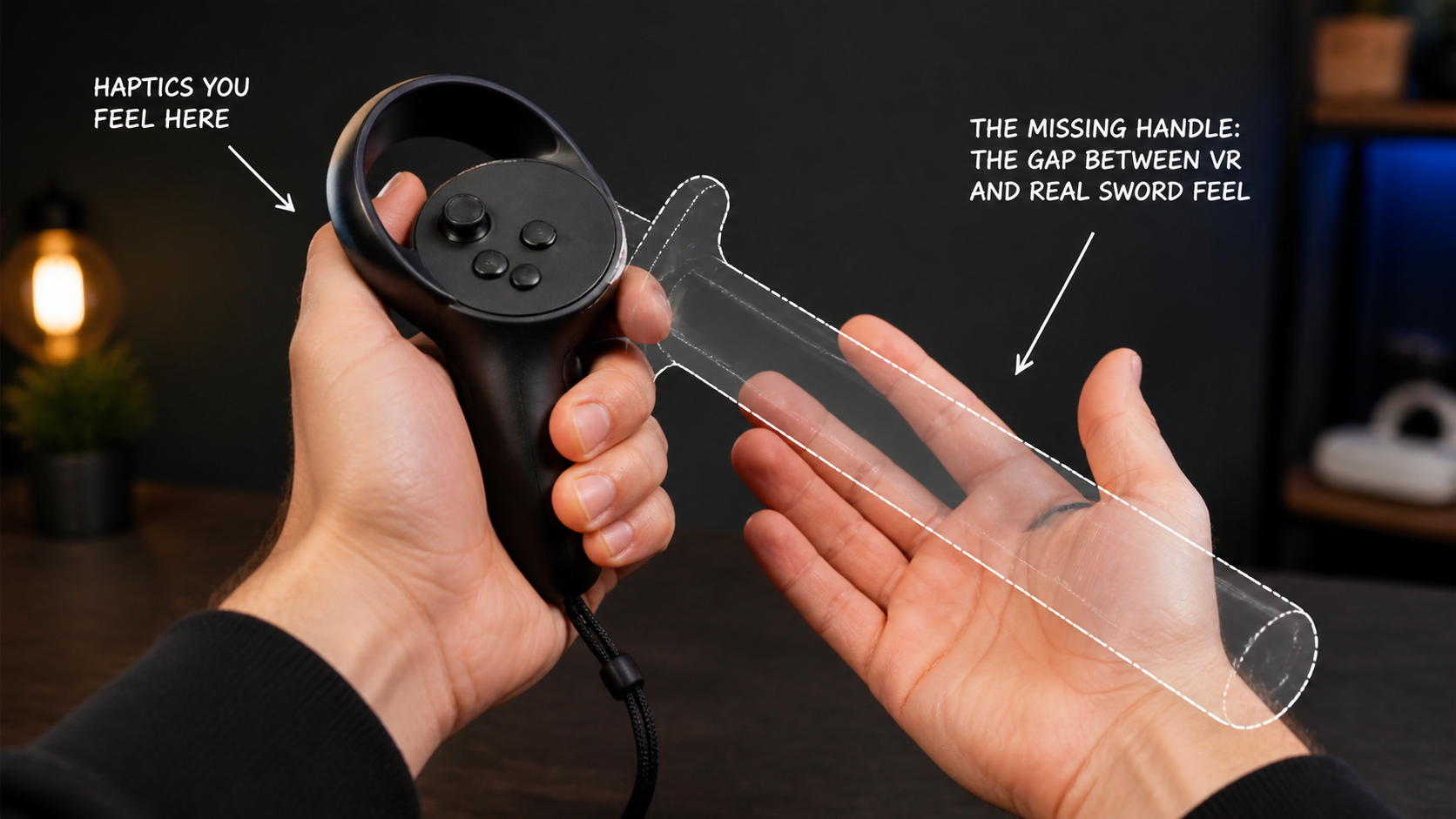
The first thing to understand is that the Quest Pro controllers have what's called TruTouch haptics. They are very detailed. You can feel subtle textures and sharp impacts right in your palm and fingers. But that's the key: the feeling is in your palm. When you play a game like Vader Immortal, you're holding a small, perfectly balanced controller. It doesn't feel anything like a sword hilt, which is longer and has a different weight distribution. A VR sword accessory is basically a hollow piece of plastic shaped like a handle. It doesn't have any electronics. It simply holds your controller at the base, and the vibrations from the controller travel up through the plastic. This changes where and how you feel the haptics, making it a different experience.
Controller Feel: Before and After the Accessory
| Feature | Quest Pro Controller Only | With Sword Accessory |
|---|---|---|
| Haptic Source | Directly in your palm and fingers. | Vibrations travel up the handle from the controller. |
| Grip Feel | A small, modern, ergonomic controller grip. | A longer, cylindrical grip that feels like a sword hilt. |
| Weight Balance | Light and perfectly balanced in your hand. | Longer and slightly top-heavy, mimicking a real blade. |
| Immersion for Melee | Low. Your brain knows you're holding a controller. | High. The grip and balance trick your brain better. |
Does kids' play value versus safety supervision matter more than haptic feel for gift buyers?
I thought about getting this as a gift for my nephew. The "wow" factor would be huge, but then I started worrying about him swinging it around my sister's house.
For gift buyers, especially for children, safety and the need for supervision are far more important than haptic feel. The sword accessory extends a child's reach unexpectedly, increasing the risk of them hitting furniture, pets, or people in the room.
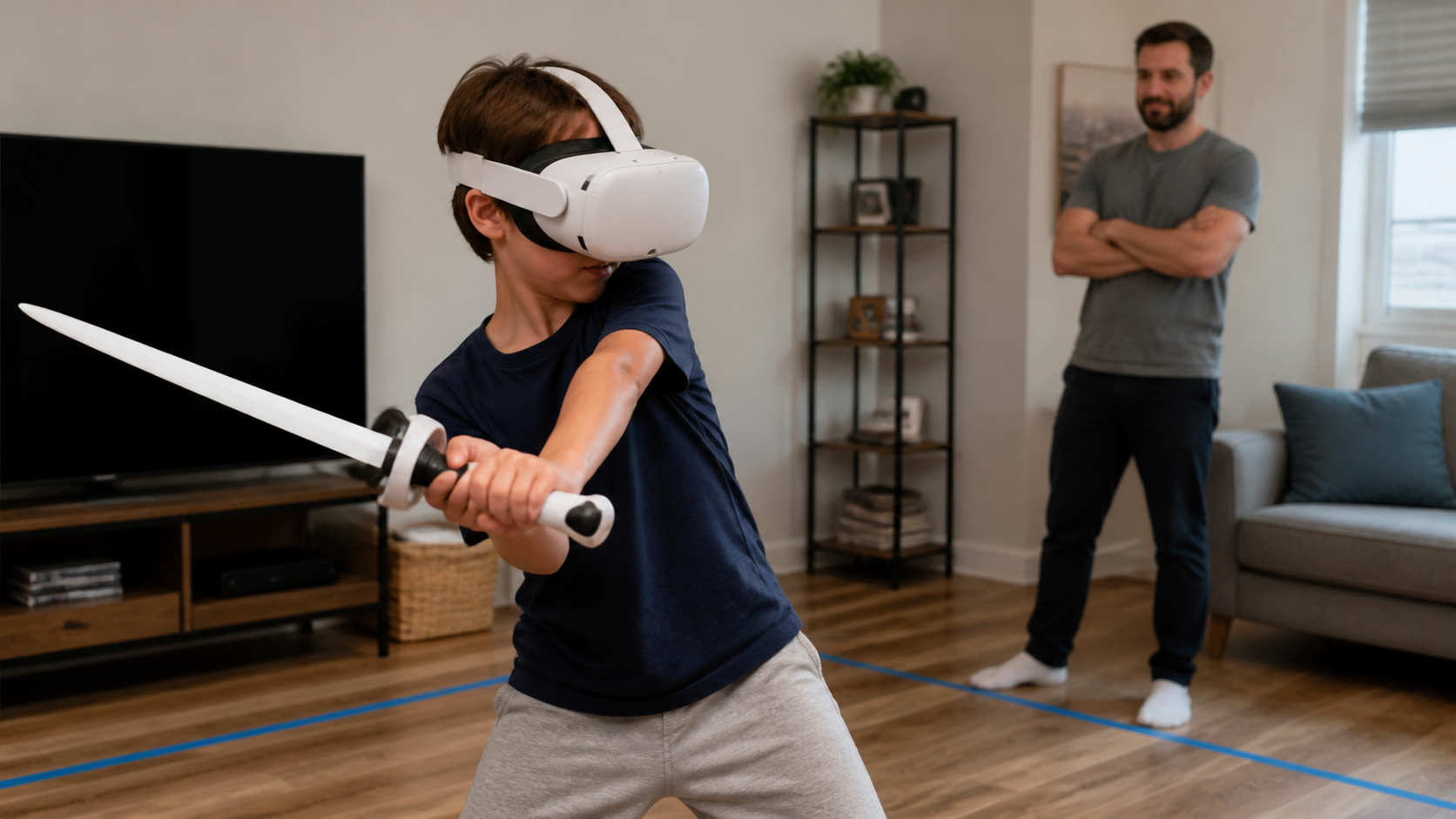
This was the biggest eye-opener for me. As an adult, I'm pretty aware of my play space. But the moment I put the controller into the sword handle, my effective reach grew by almost a foot. I did a few test swings and realized how close I was to my TV and a standing lamp. Now, imagine a kid playing. They get completely lost in the game and forget about the real world. Giving them a longer virtual sword that is also a longer physical object is a recipe for disaster in most living rooms. The play value is definitely there; a kid would feel like a true Jedi Knight. But the "supervision cost" for the parent skyrockets. You can't just let them play. You have to be in the room, actively watching and reminding them of their boundaries. For a gift, that's a big ask. It turns a fun toy into a stressful responsibility for the parent.
Where does haptic feel through the handle show up during real play?
Okay, so the accessory changes the feel. But where does it actually matter? I wanted to know when those vibrations make a real difference during a game.
In Vader Immortal, haptic feedback travels through the sword handle during key moments. You feel it when the lightsaber ignites, when you block a blaster bolt, and most satisfyingly, when your blade clashes against an opponent's saber.
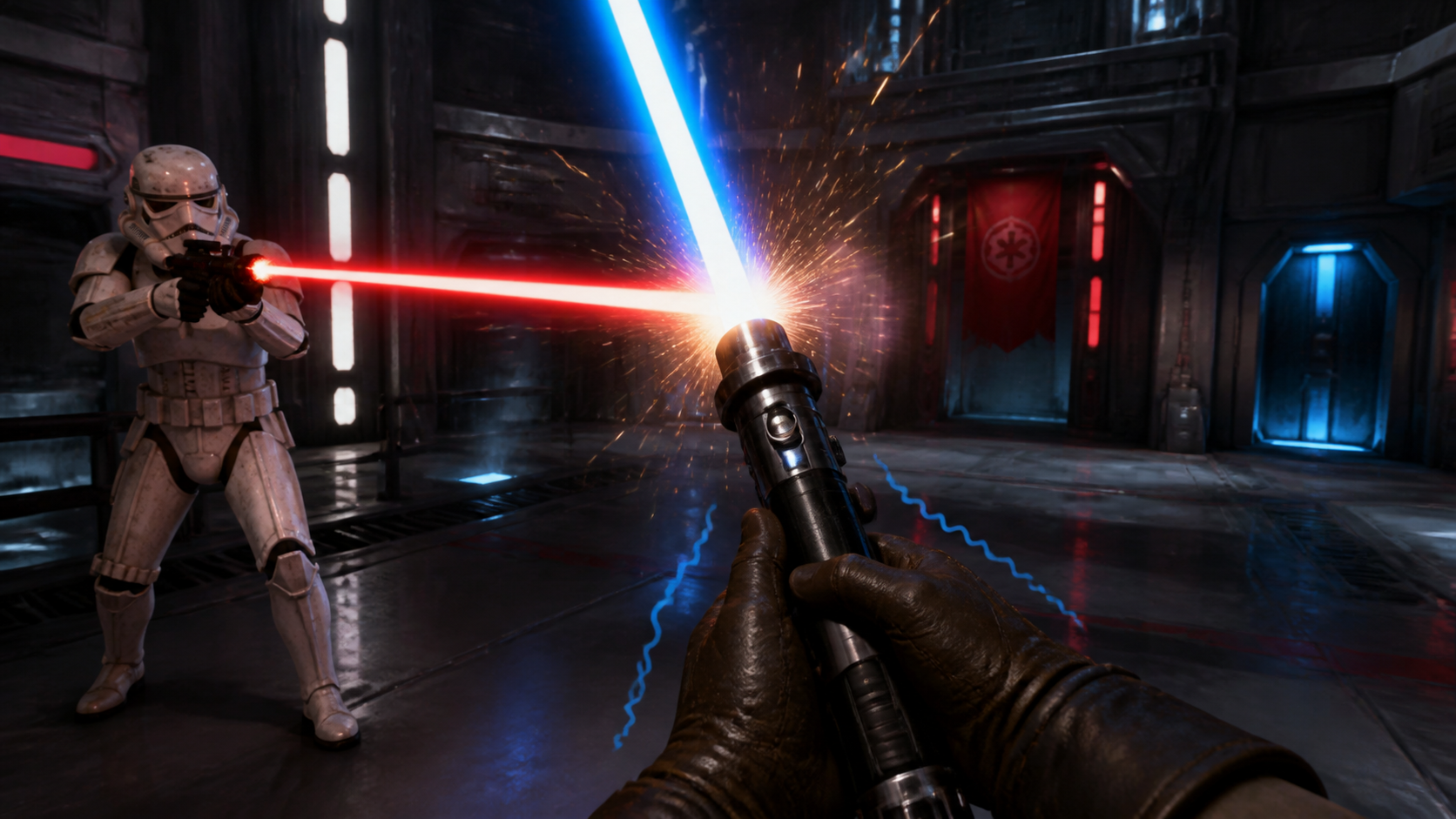
I spent most of my time in the Lightsaber Dojo to test this. The difference is noticeable. When you first ignite the lightsaber, a low humming vibration runs up the handle, which is a really cool effect. Without the accessory, you just feel a buzz in your palm. With it, the entire hilt hums. The best moments are when you are in a duel. Clashing your lightsaber against another one sends a sharp jolt through the plastic handle. It feels much more like a real impact than the isolated buzz from the controller alone. Deflecting blaster bolts also gives a quick, sharp feedback pulse that feels more connected to the action. It's not magic; the vibration is still coming from the same controller. But by changing the shape and length of what you're holding, it tricks your brain into thinking the impact is happening "out there" at the end of the blade, not just in your hand. This simple trick really does boost immersion for this specific type of game.
Does the final advice change for shared headsets, kids, or small rooms during Vader Immortal?
My situation isn't everyone's. I have a small room and I like to play other games besides Vader Immortal. So, does the recommendation change based on these factors?
Yes, the final advice changes drastically. The VR sword is a bad choice for small rooms due to safety risks. It's a hassle for shared headsets because of game switching, and it requires constant adult supervision for kids, making it impractical for many.
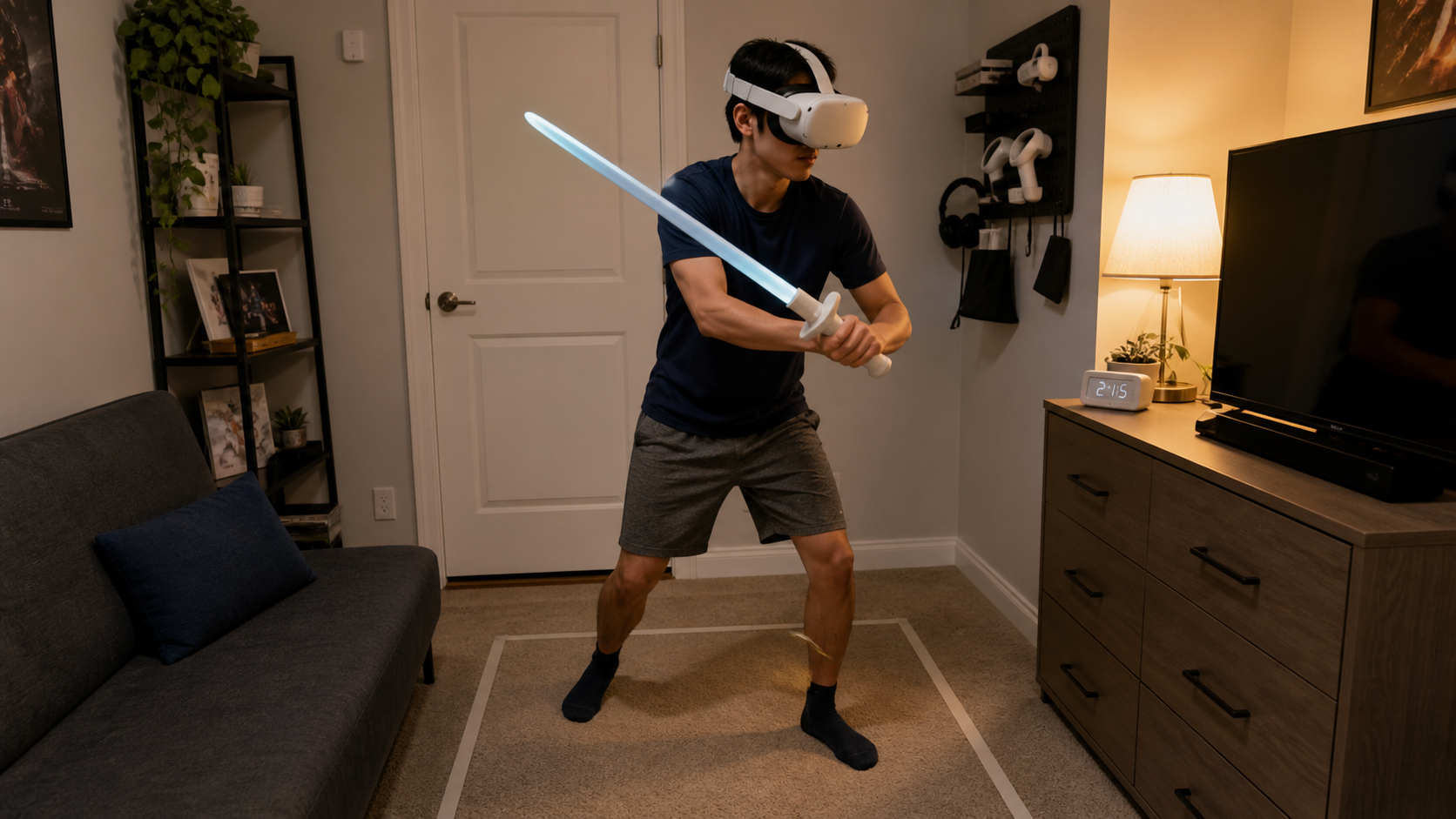
After all my testing, my verdict is split. For a die-hard fan of sword-fighting games like Vader Immortal or Blade & Sorcery who has a dedicated, large play space and doesn't switch games often, this accessory is a great buy. It absolutely increases immersion. For everyone else, it's probably a pass.
For small room users: I had to adopt a stiff, wrist-only fighting style to avoid hitting my walls. This felt unnatural and ruined the fun of big, sweeping motions. The risk of breaking something is too high. My advice: Skip it.
For shared headsets or varied gamers: This was the biggest deal-breaker. The accessory is awesome for Vader Immortal, but it's terrible for Beat Saber. It's too long, heavy, and unbalanced for fast rhythm games. The process of snapping the controller in and out of the plastic shell every time I wanted to switch games was incredibly annoying. My advice: Skip it.
For kids: Unless you can provide a large, empty room and 100% active supervision every single time they play, the safety risk is not worth the novelty. My advice: Skip it.
Conclusion
This VR sword is a fun cosplay item for a specific gamer. But for most people with mixed game libraries, small rooms, or kids, it's more of a hassle than it's worth.
Leave a comment