



Does a VR Gunstock feel better than it performs in Breachers?

You love the immersion of VR shooters, but your aim is shaky. A gunstock promises stability, but you worry it will slow you down in a firefight. I tested one to see.
A VR gunstock feels amazing for aiming stability in Breachers, but its performance suffers during fast reloads and weapon swaps. The added immersion often comes at the cost of speed, creating a trade-off that is not always worth it, especially in close-quarters combat on the Meta Quest 2.
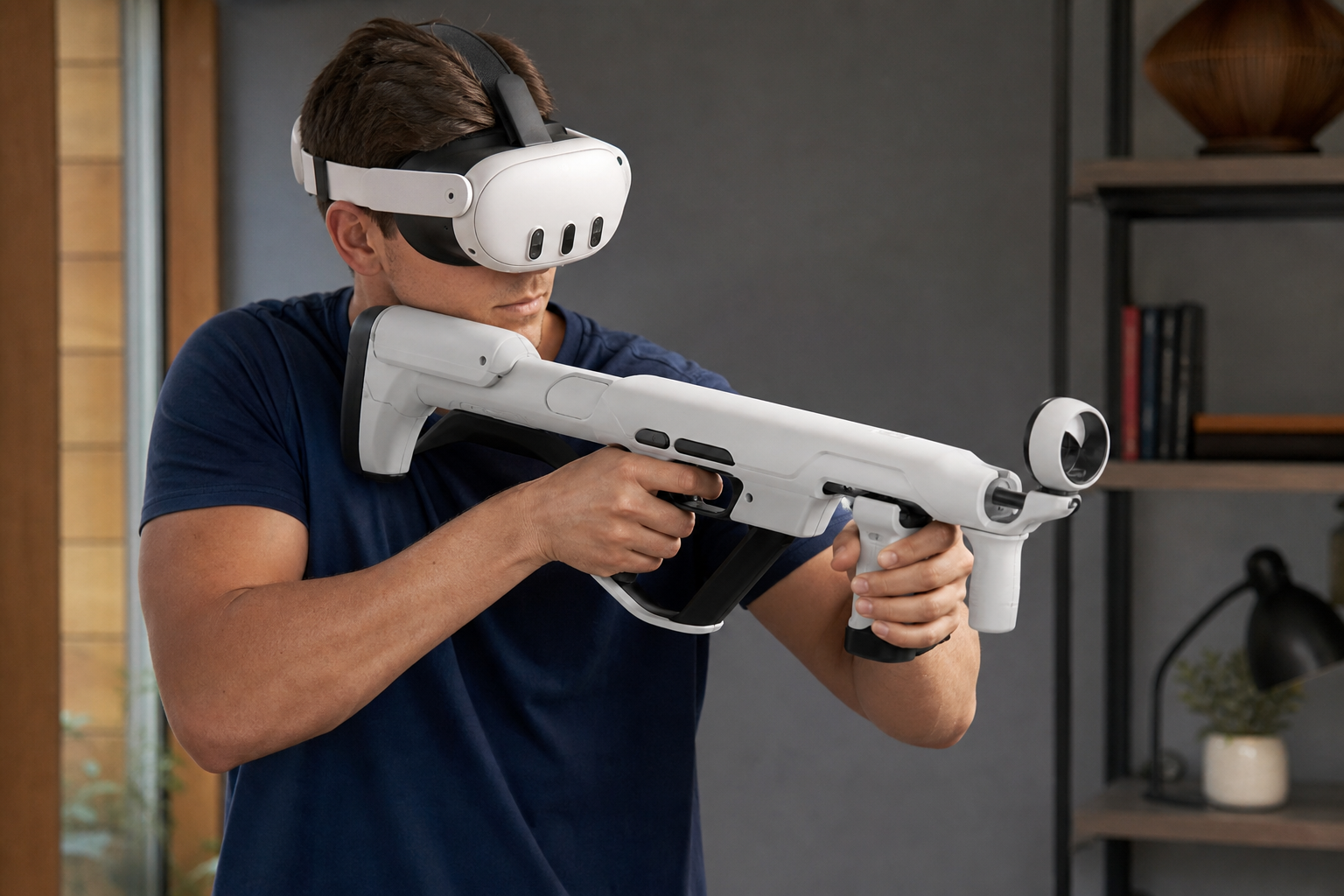
I’ve always struggled with keeping my aim steady in VR. My hands are large, and holding the two controllers out in front of me without any support leads to a slight, but noticeable, shake. It’s frustrating when you have an enemy lined up, but your dot sight is dancing all around them. I heard a VR gunstock could fix this by connecting the controllers and giving you a third point of contact on your shoulder. The idea of rock-solid aim was too good to pass up. I wanted to see if this accessory was the key to improving my game or just another gadget that gets in the way. So, I jumped into Breachers on my Quest 2 for a real test.
If the session lasts 20 minutes, does reload speed become more noticeable?
At first, the gunstock feels great and you land more shots. But after a few frantic firefights, fumbled reloads get you killed. Here’s exactly what happened in my 20-minute test.
Yes, reload speed issues become very noticeable after about 10 to 15 minutes. As fatigue sets in and the pace of the match quickens, the physical act of detaching and reattaching the controller from the magnetic mount for reloading becomes a significant, often frustrating, delay.
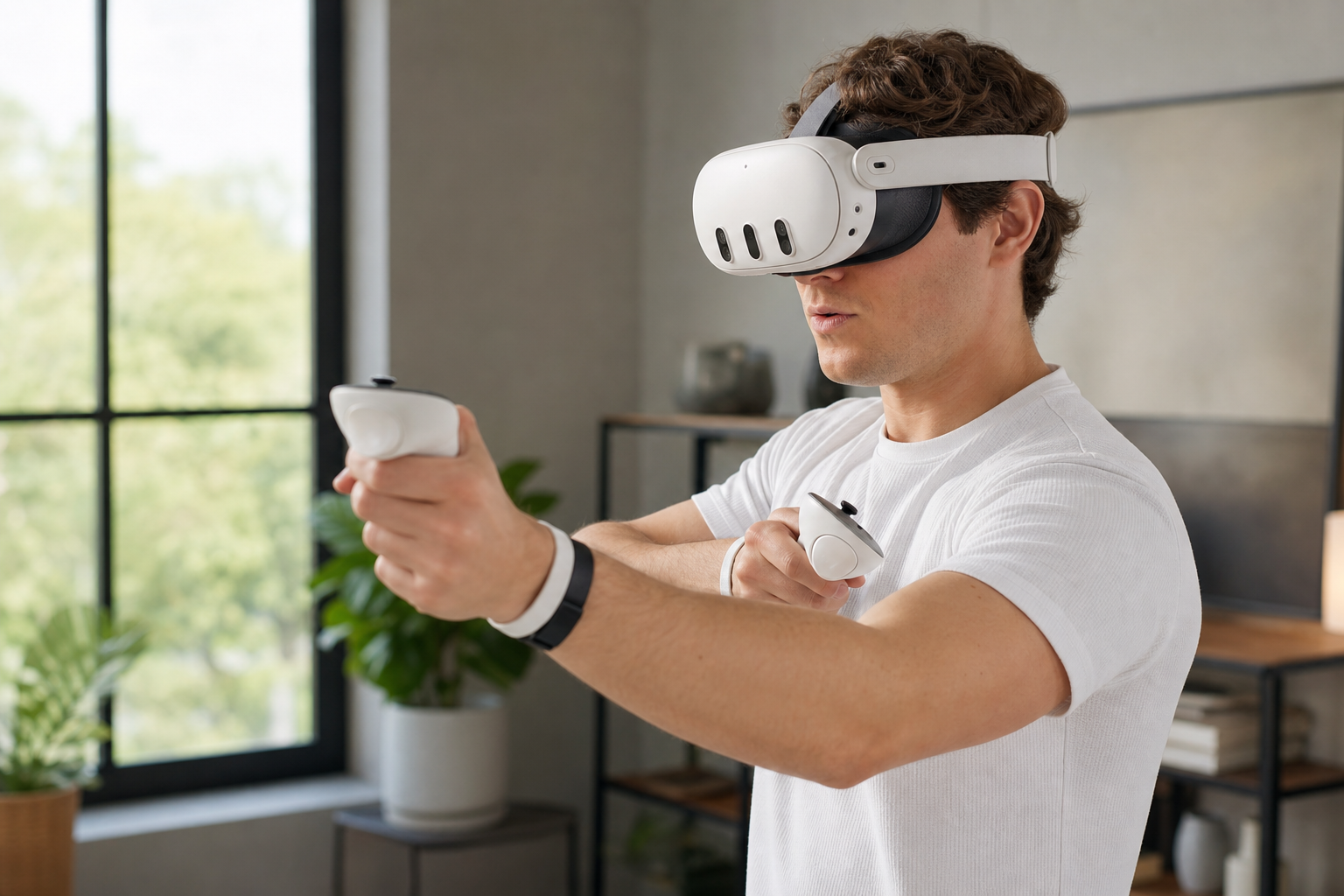
The first five minutes of the session felt like a revelation. My aim was incredibly stable. I was picking off enemies from a distance with a confidence I never had before. The gunstock felt like a natural extension of my body. But then, the match got more intense. We had to push a tight corridor, and everything changed. The initial feeling of power was replaced by a growing sense of clumsiness. My focus shifted from aiming to just managing the hardware in my hands. To show this clearly, I kept a log of my experience.
20-Minute Session Log: Gunstock vs. Bare Controllers
| Time Stamp | Key Action | Gunstock Feeling | Bare Controller Feeling |
|---|---|---|---|
| 0-5 Mins | Long-Range Aiming | Confident, very stable. | Slightly shaky, less confident. |
| 5-10 Mins | First High-Pressure Reload | Awkward. Fumbled detaching the controller. | Automatic. Muscle memory takes over. |
| 10-15 Mins | Throwing a Grenade | Obstructed. The stock blocked my arm's natural throwing motion. | Fluid and natural. No restrictions. |
| 15-20 Mins | Close-Quarters Combat & Reload | Frustrated. Died twice while trying to re-attach the controller. | Fast and efficient. I can reload while moving easily. |
As the table shows, the longer the session went on, the more the gunstock’s drawbacks came to the surface. The stability it offered in calm moments was completely overshadowed by the slowness and physical blocking it caused during fast-paced action. It became clear that the device was optimized for one specific action—aiming down sights—at the expense of everything else.
What would a real VR Gunstock test in Breachers on Meta Quest 2 reveal about reload speed?
Benchmarks and firing range tests don't tell the whole story. Real combat is messy, with sprinting, turning, and surprise enemies. I broke down the reload process step-by-step to see the difference.
A real test reveals that the reload process with a gunstock is a multi-step physical action: detach, grab mag, insert, reattach. Compared to the fluid, muscle-memory motion with bare controllers, it introduces physical gates that add critical milliseconds, especially when aiming down sights after sprinting.
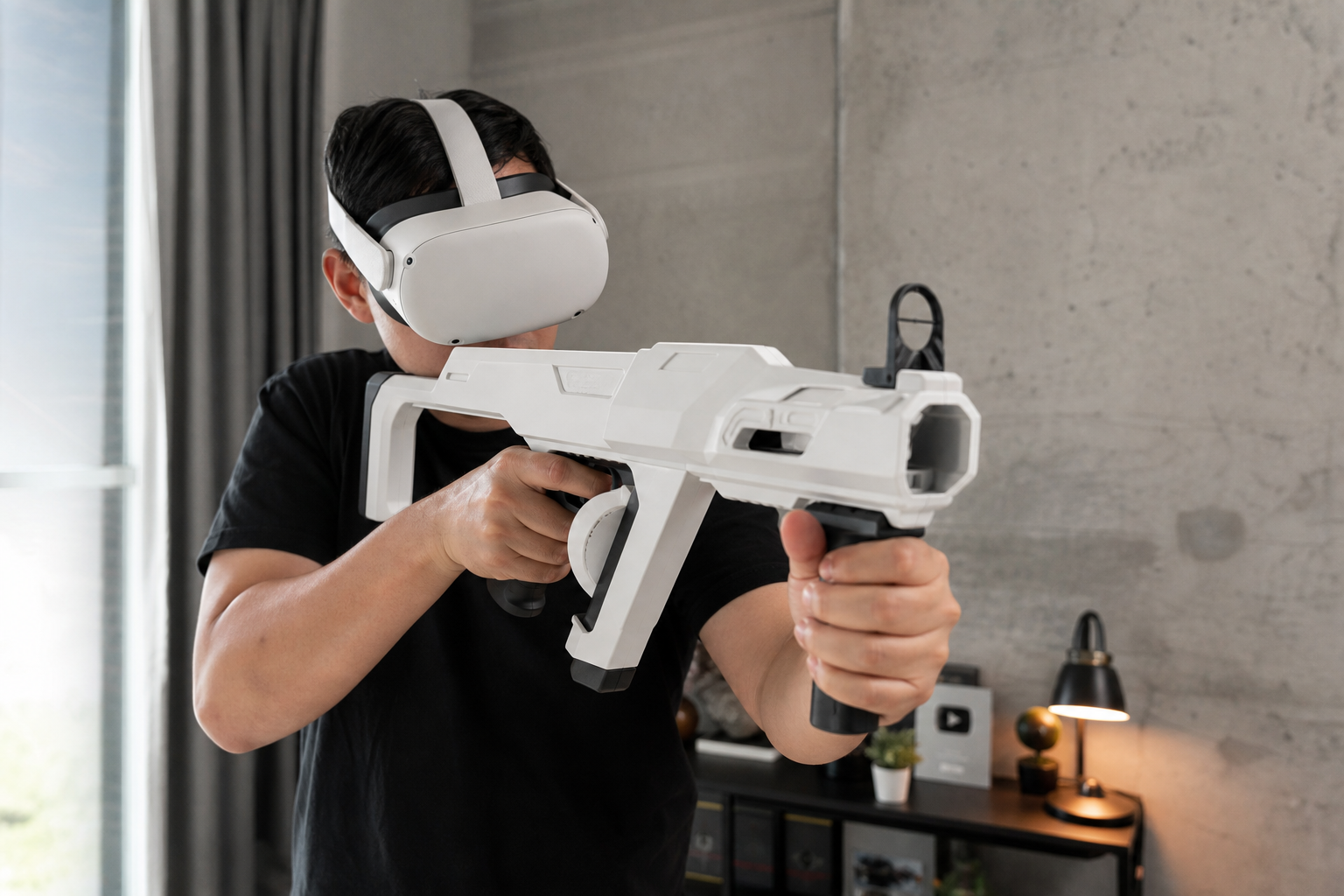
Let’s break down the physical movements. Without a gunstock, reloading is second nature. My hands move independently. My left hand drops to my hip to grab a new magazine while my right hand ejects the old one. It’s a smooth, two-handed motion that I’ve done thousands of times. My brain doesn’t even have to think about it. The whole process is fluid and takes less than a second. I can do it while strafing, peeking a corner, or falling back. My focus stays on the enemy, not on my hands.
With the gunstock, this all changes. The process is no longer fluid; it's a sequence of distinct, mechanical steps. First, I have to consciously pull my left controller off the magnetic mount. With my large hands, I sometimes bump my knuckles on the frame. Second, I perform the reload action in the game. Third, and this is the most difficult part under pressure, I have to find the magnetic cup again and snap the controller back into place. That last step is where everything falls apart. In the heat of battle, looking down to align the controller is not an option. You die if you do that. Trying to do it by feel often results in a missed connection, leaving you with a useless, disconnected setup as an enemy rounds the corner.
Does the accessory still feel good after sweat, heat, or fast motion?
VR gets you moving and sweating. A slippery controller is bad enough, but your hands slipping on a whole gunstock rig is worse. I put it through a high-intensity session to find out.
No, the experience degrades quickly. Sweat makes the plastic gunstock feel slippery and harder to grip firmly. The extra weight and bulk become more noticeable and fatiguing during fast, sweeping motions, turning the immersive tool into an awkward and cumbersome attachment that hinders natural movement.
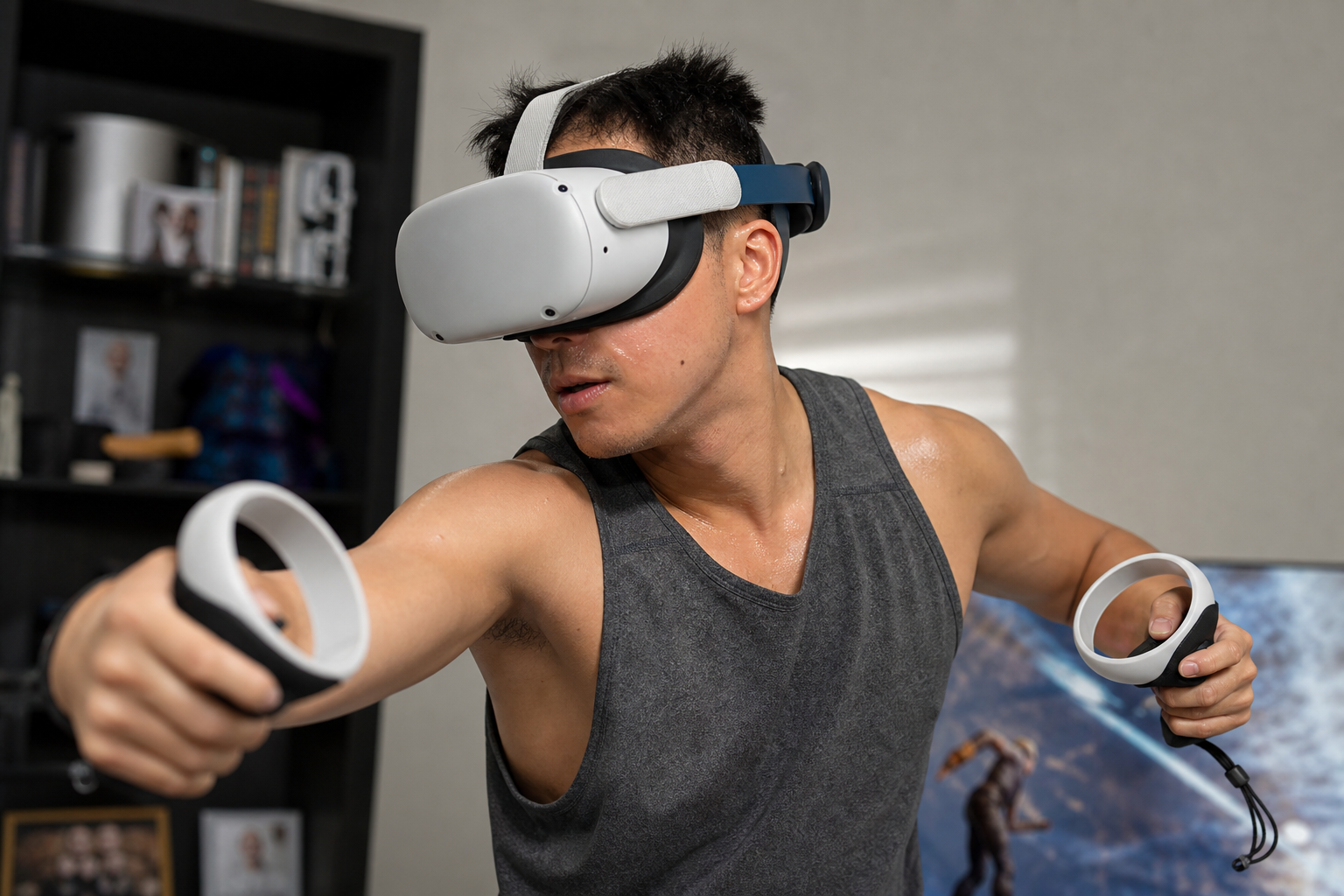
A competitive match in Breachers is a real workout. You are constantly moving, ducking, and turning. This generates heat and sweat. With bare controllers, I use silicone grips that help maintain control even when my hands get sweaty. The gunstock, however, is mostly smooth plastic. As my hands got damp, my grip on the stock became less secure. This was especially noticeable on the forward grip, where my non-dominant hand is responsible for aiming and detaching for reloads. The slippery feeling made me less confident in my movements.
The weight also becomes a factor. The gunstock isn't heavy on its own, but the added mass creates more inertia. When I needed to snap my view 180 degrees to deal with an enemy behind me, the movement felt sluggish. It was like I was fighting against the weight of the accessory. With bare controllers, my movements are quick and direct. With the gunstock, there was a slight but critical delay. This physical drag, combined with the slippery grip, made the accessory feel less like a precision tool and more like a burden as the session wore on. It also made actions like throwing a grenade feel completely unnatural, as the frame of the stock would often get in the way of a smooth overhand throw.
Should the recommendation differ for casual and daily Breachers use when reload speed appears?
So, is the gunstock completely useless? For a hardcore player who values speed, maybe. But what if you just play for fun and immersion? The answer really depends on your goals.
Yes, absolutely. For casual players who prioritize immersion and steady aiming over competitive speed, the gunstock is a fantastic tool. For daily, competitive players, the reload speed disadvantage and physical hindrances make it a liability. The trade-off is immersion for performance.
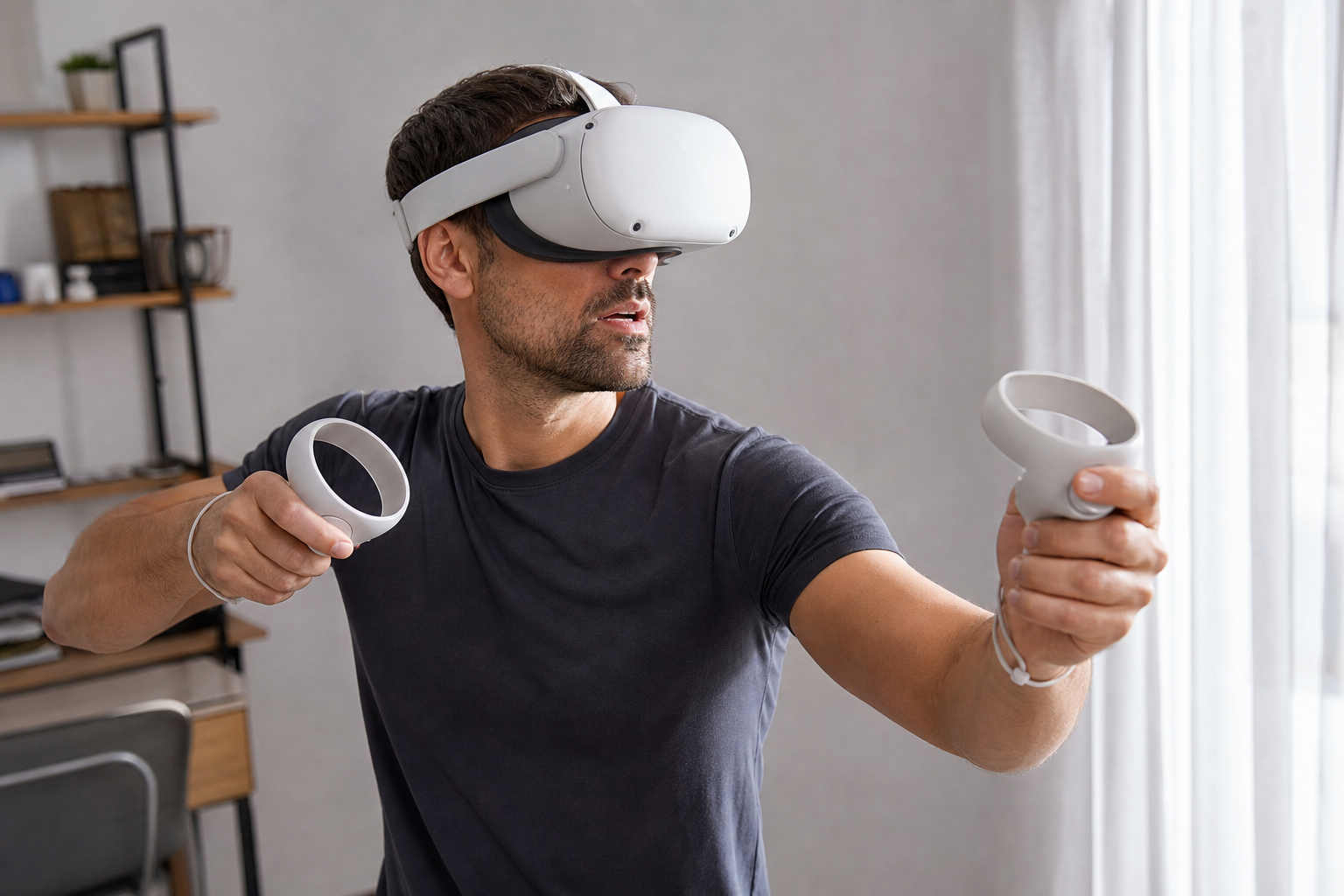
I had to be honest with myself about who this accessory is for. It isn’t for me, a daily player who cares about winning matches and improving my reaction time. For me, the fraction of a second lost on a reload is the difference between winning and losing a round. The inability to throw a grenade quickly and accurately is a deal-breaker. The freedom of movement and muscle memory I have with bare controllers is far more valuable than the aiming stability the stock provides. Competitive players need efficiency above all else, and the gunstock adds too many inefficient steps.
However, if I were a casual player who only jumps into Breachers a couple of times a week, my opinion would be completely different. A casual player’s goal is often to just have fun and feel immersed. They want to feel like an action hero. In that context, the gunstock is a huge success. The feeling of holding a rifle and lining up a perfect, stable shot is incredibly satisfying. The slower, more deliberate reload might even add to the sense of realism. For someone not worried about their kill/death ratio, the gunstock enhances the experience by making it feel more authentic. It's a fantastic immersion toy, but it's not a competitive performance tool.
Conclusion
The VR gunstock boosts immersion and aiming stability but sacrifices crucial reload speed. It's great for casual fun but a disadvantage for competitive players who need every advantage.
Leave a comment