



Does a VR Gunstock create a learning curve in Arizona Sunshine 2?

You spent money on a VR gunstock for better aim, but now you miss every shot. It feels clumsy and slow. Did you just waste your money?
Yes, a VR gunstock creates a short but real learning curve in Arizona Sunshine 2. It forces you to relearn muscle memory for aiming and reloading. But once you push through that initial awkwardness, the stability it provides leads to much more consistent and immersive shooting.
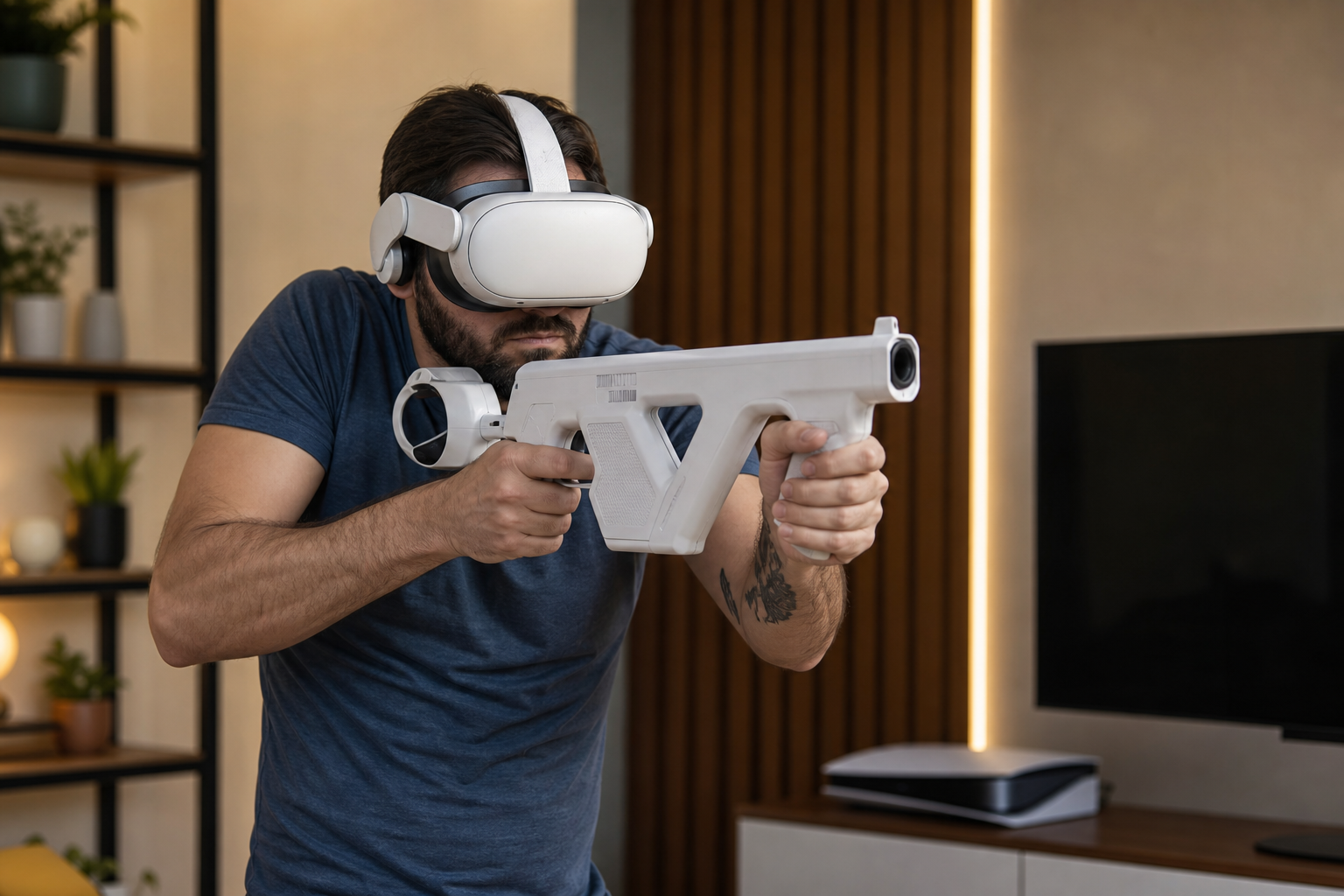
When I first unboxed my gunstock, I was excited. I thought I would immediately become a zombie-slaying expert in Arizona Sunshine 2. The reality was a bit different. My first hour was filled with fumbled reloads, awkward aiming, and a lot of frustration. It felt like a step backward from just using the controllers freely. But I knew there had to be more to it. I decided to treat this like a real case study, documenting my experience as a PCVR player using the Quest Touch Plus controllers. I wanted to answer the questions that every potential buyer has, starting with the biggest fear: will the magnets fail when I need them most?
Does a match clip where pressure exposes the real weakness answer the buyer's main doubt about magnetic cup alignment in Arizona Sunshine 2?
You worry the magnetic cups will pop off during a frantic reload. In a zombie horde, a dropped aim means you are dead. A high-pressure match clip shows exactly why it happens.
Yes, a stressful match clip shows the weakness isn't the magnet, but the player's technique under pressure. When I panicked and twisted my hands sideways instead of pulling straight back, the front controller disconnected. This proved the problem is muscle memory, not faulty hardware.
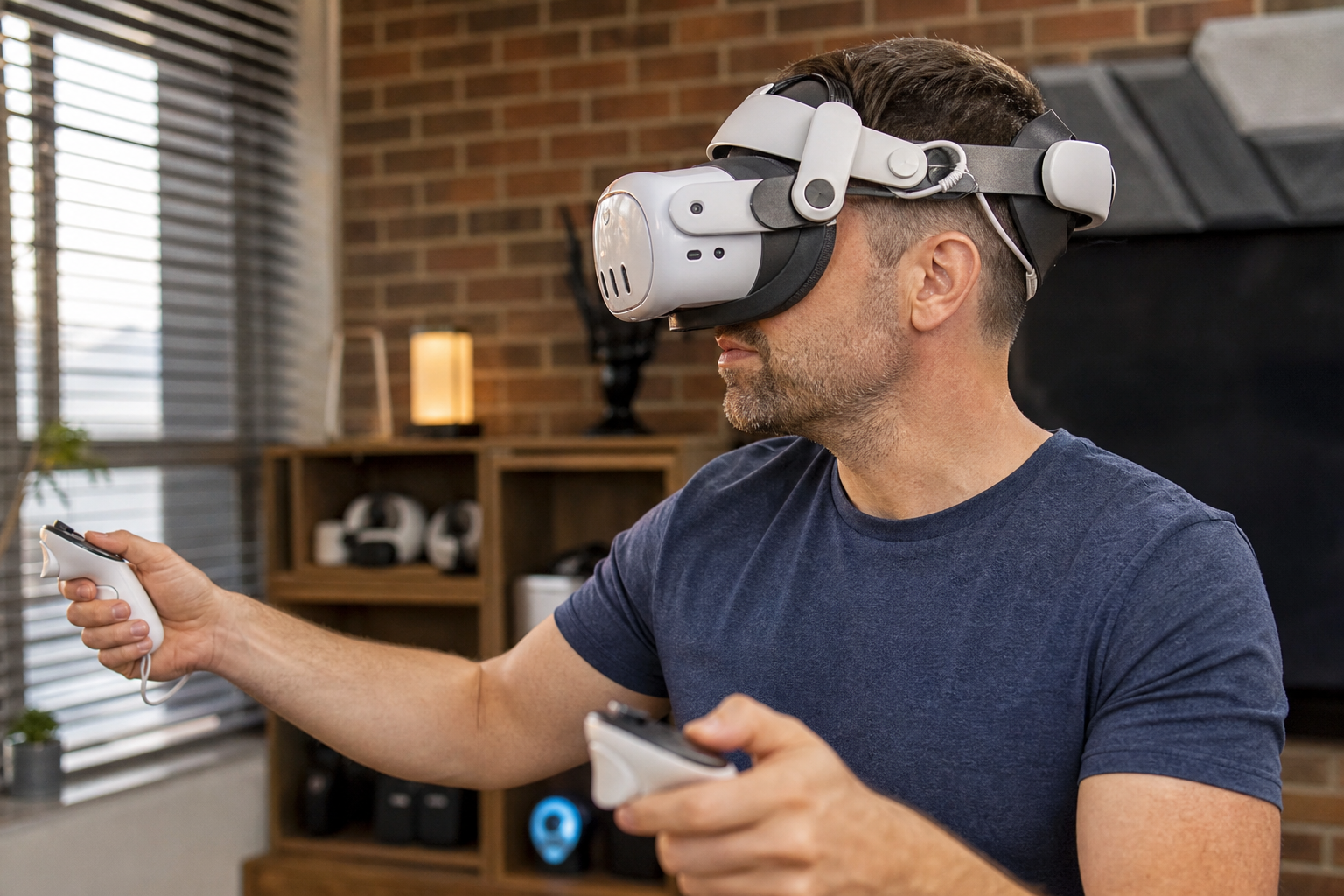
My initial feeling was that the magnets were strong. In the shooting range, I could snap the controller on and off without any issues. But the shooting range has no pressure. The real test is when you have a dozen "Freddies" running at you. So, I jumped into a horde mode match and hit record. For the first few waves, everything was fine. I was calmly picking off zombies, reloading, and feeling pretty good. Then, things got intense. Zombies were coming from all sides. I went to reload my shotgun, but instead of a smooth motion, I just yanked the controller back and to the side. Pop. The front controller detached from the magnetic cup. I got overwhelmed and died. Watching the clip back, it was obvious. The magnets are designed for a straight-line pull. My panicked, sloppy movement was the problem. It answered the main doubt for me: the system works if your technique is good. It punishes bad habits.
Reload Technique Comparison
| Action | Calm Reload (Shooting Range) | Panic Reload (Horde Mode) |
|---|---|---|
| Motion | Deliberate, straight pull-back | Hasty, angled yank |
| Result | Controller detaches cleanly | Controller pops off the magnet |
| Feeling | Smooth and reliable | Frustrating and immersion-breaking |
What would a real VR Gunstock test in Arizona Sunshine 2 on Quest Touch Plus Controllers reveal about magnetic cup alignment?
You want to know if a gunstock actually makes you aim better. Or is it just a gimmick that makes the game more complicated? I did a before-and-after test, and the results were clear.
A real test reveals magnetic cups force aiming consistency. My initial target groupings were worse with the stock. But after an hour of practice, the physical anchor resulted in much tighter shot groups, especially at long range. Reloads were slower at first but became reliably smooth.
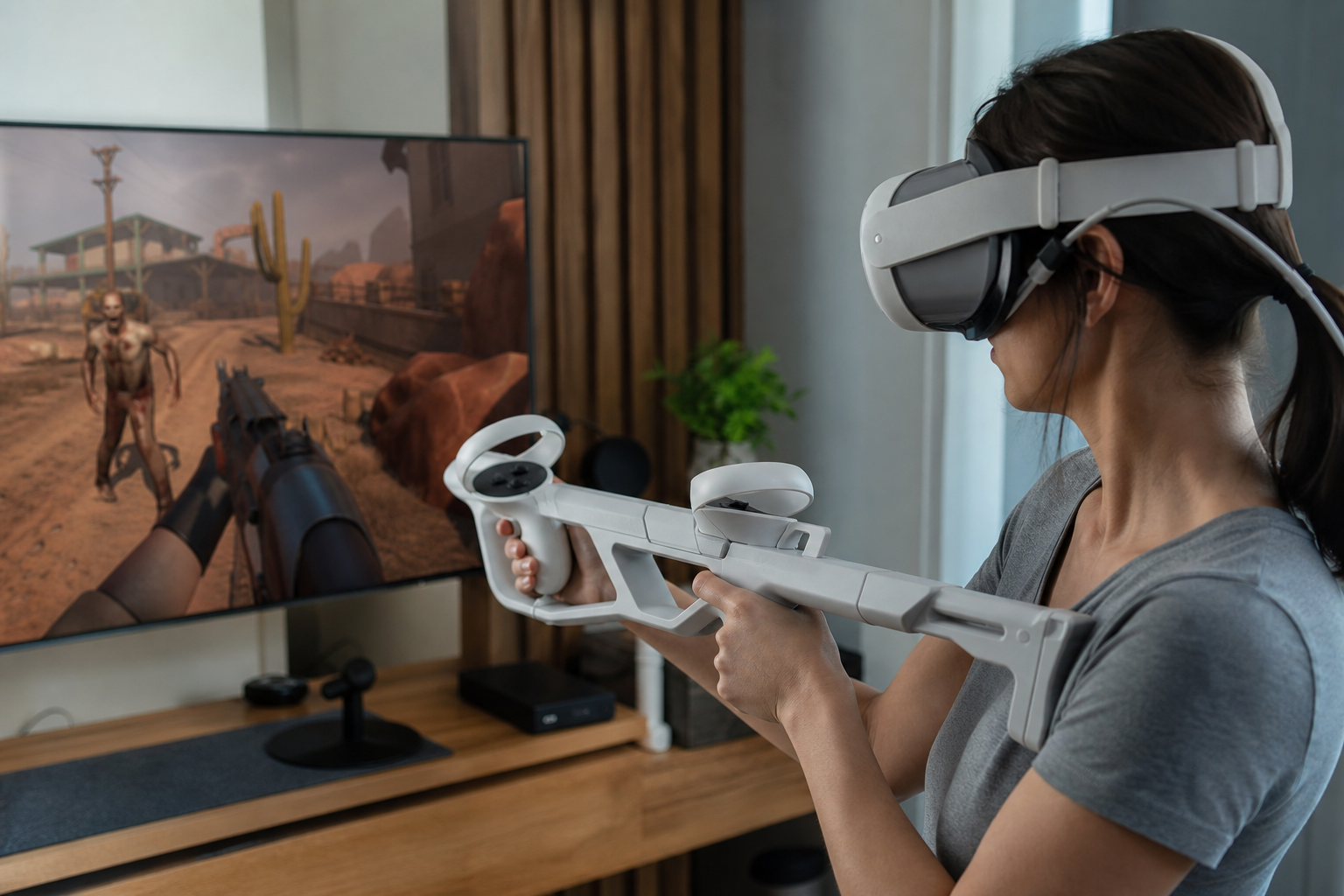
To get some hard data, I went to the shooting range in Arizona Sunshine 2. My setup is a decent PC connected to my Quest 3, using the Touch Plus controllers. First, I spent 15 minutes shooting with just the controllers. My aim was okay, but I noticed a slight wobble, especially when trying to make small adjustments. I took a screenshot of my best rifle and pistol target groupings. Then, I attached the gunstock. It was immediately awful. My shots were all over the place. I was fighting against the physical object in my hands. Reloading felt like a clumsy chore. But I stayed with it. I spent about an hour just getting used to the feel, practicing reloads, and finding the magnetic cups without looking. Then, I tried the target grouping test again. The difference was huge. The rifle shots were clustered in a tight little circle. The stock resting against my shoulder gave me a third point of contact, making my aim rock-solid. The magnetic cups ensured my hands were in the exact same position for every shot, which created incredible consistency.
Does magnetic cup alignment appear immediately or only after the player relaxes into the session?
The gunstock feels awkward and slow when you first use it. You might think you wasted your money on a clumsy accessory. The "click" is mental, and it happens when you stop fighting it.
Magnetic cup alignment feels strange at first. The benefit only appears after you relax and build muscle memory. It took me about 45 minutes of continuous play before I could intuitively snap the controller back into place without fumbling or looking down.
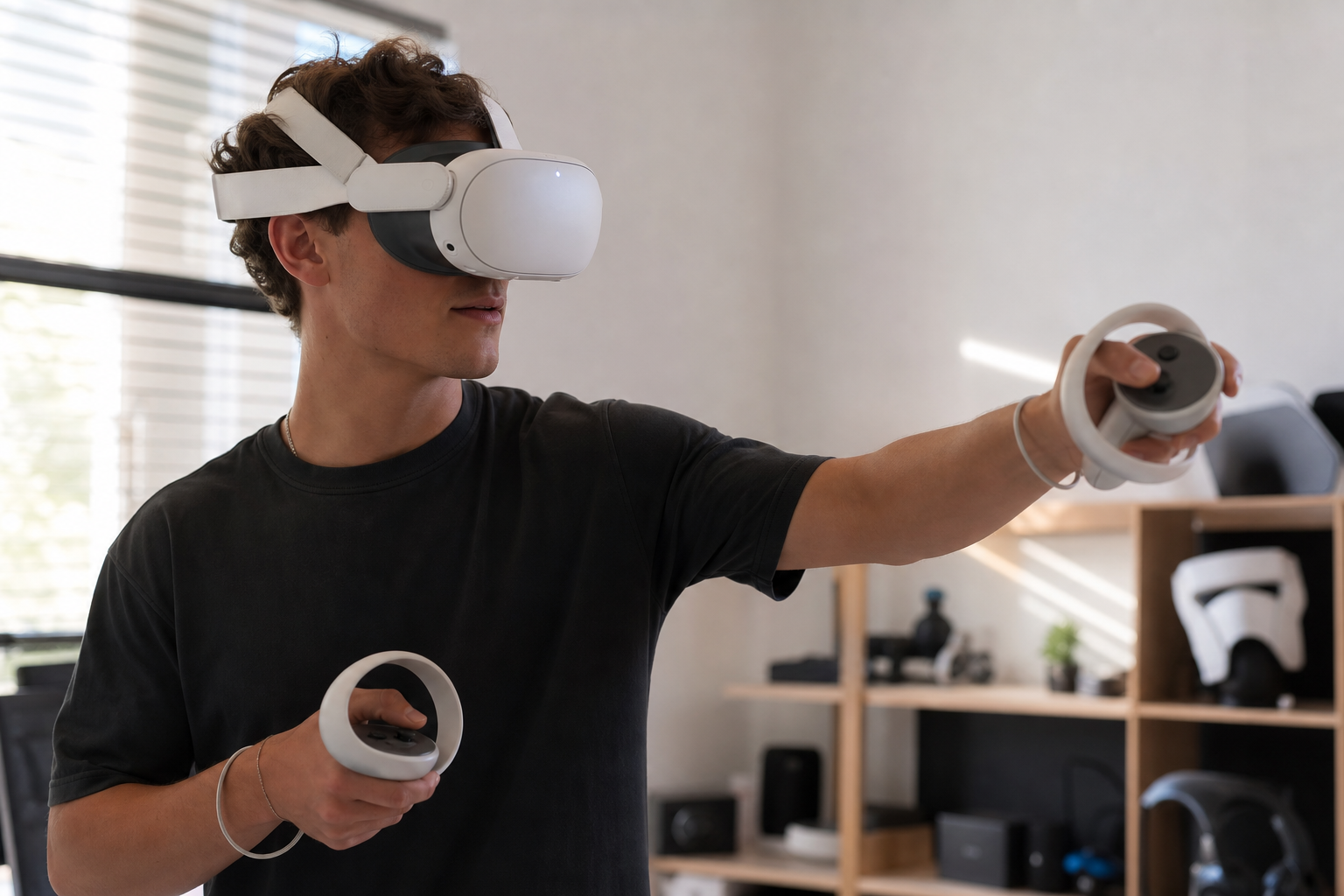
My first half-hour with the gunstock was pure frustration. Every time I had to reload or throw a grenade, I would consciously think, "Okay, now I have to guide my hand back to the little magnetic circle." It completely broke the immersion. I was paying more attention to the accessory than to the game. I was ready to put it back in the box. But I decided to try one more thing. I loaded a campaign level and promised myself I would just play. I would ignore the mistakes and just focus on surviving. As I got absorbed in the game, something changed. I stopped thinking about the gunstock. My body started to learn the motion by itself. The breakthrough moment came when I was crouching behind a truck, frantically reloading the SMG. I did it without a single thought, and my hand just snapped perfectly back into place. Click. That was it. From that point on, it felt natural. The learning curve is about turning a conscious, clumsy action into an unconscious, smooth reflex. It does not happen right away.
Should PCVR players try adjusting whether the stock hits the headset during close aiming before buying VR Gunstock?
You bring the gun up to aim down the sights, and it clanks against your expensive VR headset. This is a huge annoyance that can ruin the entire experience. You can test for this problem before you buy.
Yes, absolutely. Before buying a gunstock, hold your controllers in a rifle grip and aim down the in-game sights. See how close your rear hand gets to your headset. If it already touches, a physical stock will definitely cause interference and require a highly adjustable model.
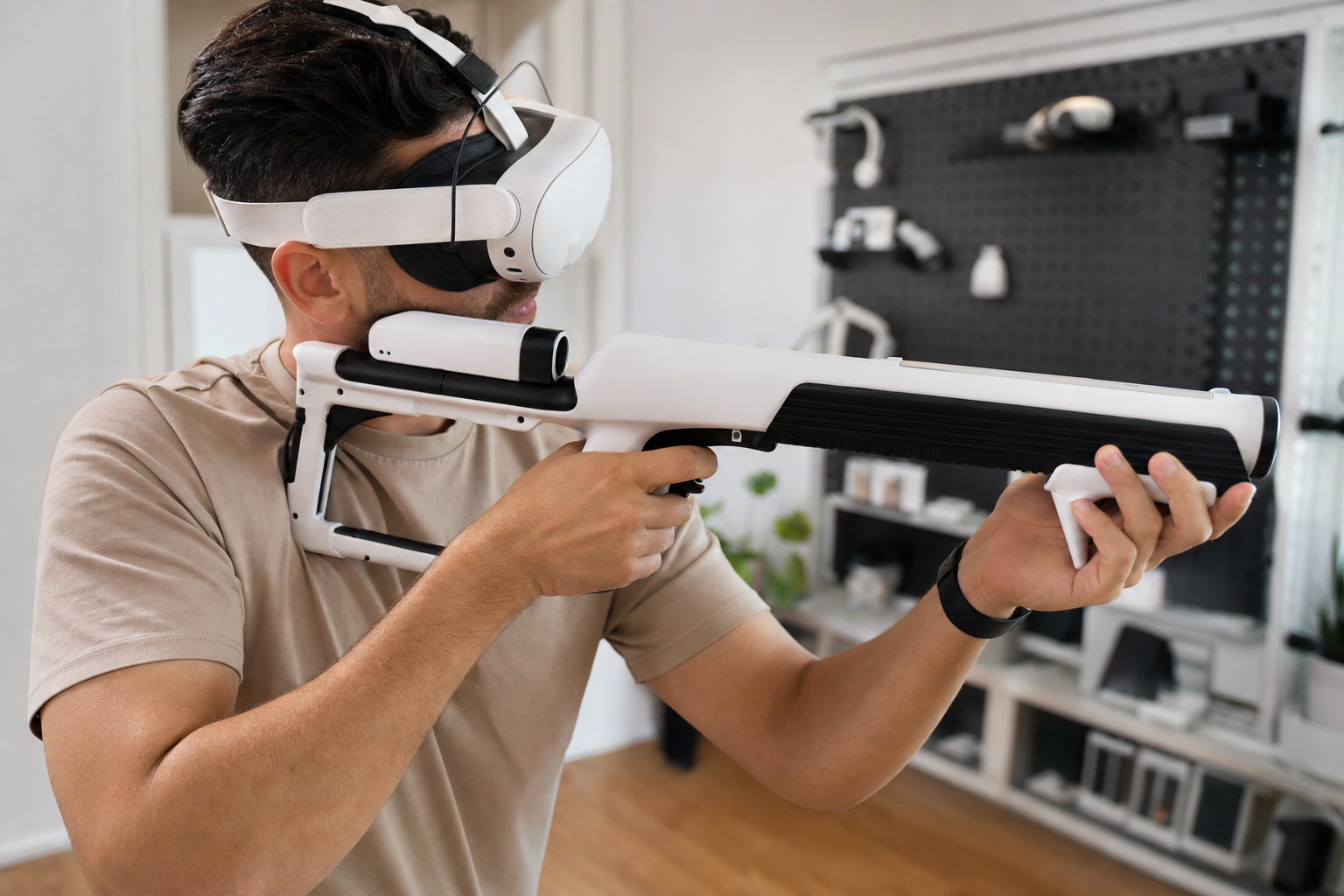
This was a big problem for me. The Quest Touch Plus controllers are great, but they have some bulk. When I used a rifle in Arizona Sunshine 2 and tried to get a good sight picture, the butt of the stock would physically hit the side of my headset. Every. Single. Time. It was jarring and made precise aiming impossible. I had to adjust the stock's length and drop the shoulder rest way down to get the clearance I needed. It made the setup feel a little less like a real rifle, but it was the only way to make it work. You can check for this issue right now. Go into a VR shooter, grab a two-handed weapon, and hold your controllers as if they were on a stock. Now bring the weapon up to your dominant eye. Does your rear hand or controller hit your headset? If it does, you need to be very careful about which gunstock you buy. Look for one with maximum adjustability, especially one that allows you to change the height of the shoulder rest. On a side note, my play space is about 8 feet by 8 feet. The stock never hit my walls or furniture, but the headset collision was the real deal-breaker I had to solve.
Conclusion
A VR gunstock has a definite learning curve but pays off with amazing stability. It is not for casual players, but for immersion seekers, it is a game-changer after you adjust.
Leave a comment