



Does a VR Fishing Rod make reeling motion easier for new users or only for enthusiasts?

You bought a VR fishing rod for the family, but the reeling feels awkward. Is it the accessory, the controller, or just you? Let's figure this out.
A VR fishing rod primarily helps new users by providing a physical object to hold, making the reeling motion more intuitive. For enthusiasts, its fixed handle length can feel restrictive compared to the freedom of just using the controller, especially during long sessions or for advanced techniques.
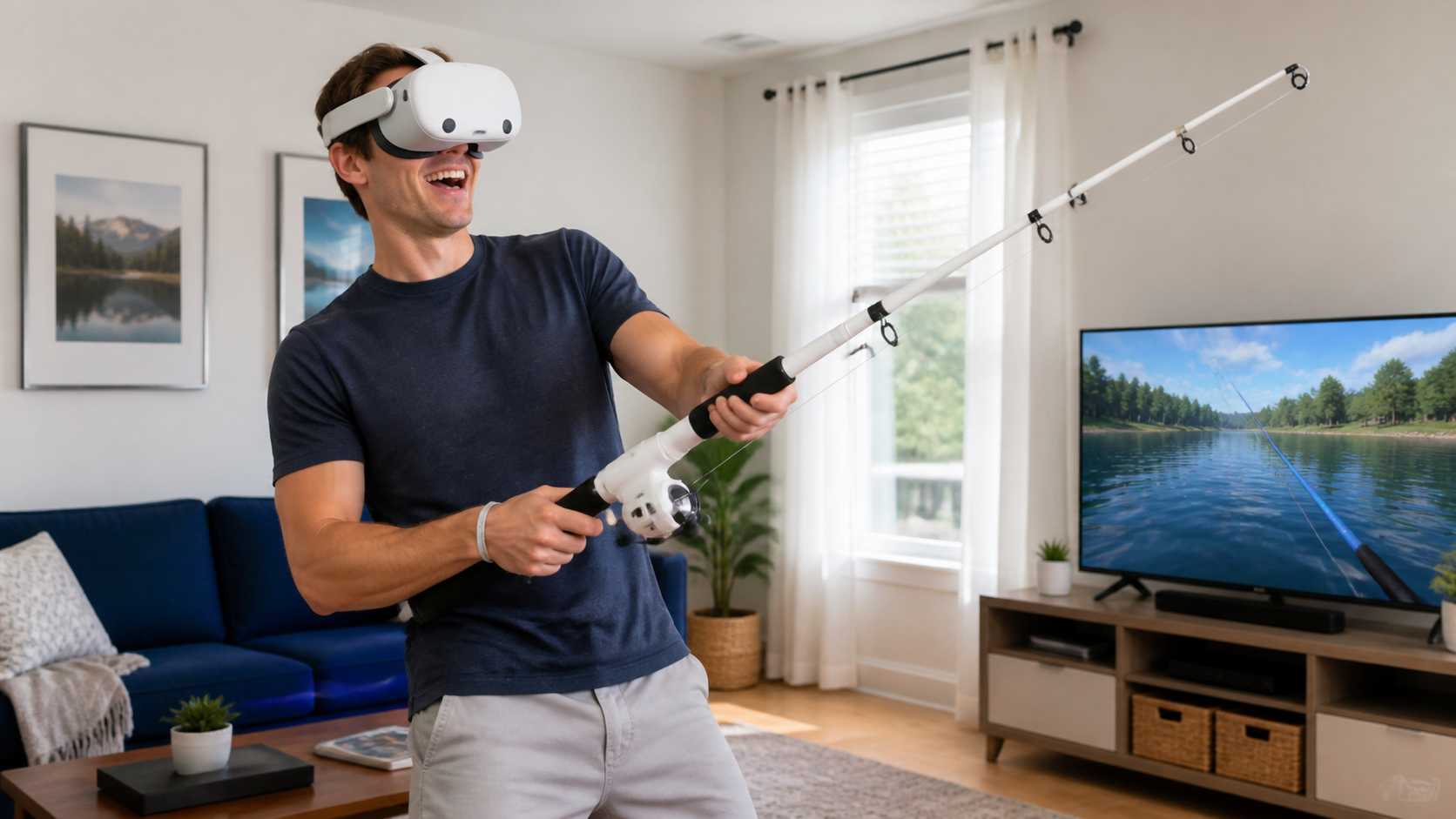
I bought the Meta Quest 3S as a gift for my family. The idea was to find experiences we could all share, and VR fishing seemed perfect. To make it more real, I got a VR fishing rod accessory. The first time we used it, the "wow" factor was huge. It felt like we were really holding a fishing rod. But after a few sessions, I started noticing something was a little off with the reeling motion. It felt cramped. This made me wonder if the accessory was truly helping or just a novelty that wears off. I decided to dig deeper to see if this was a smart purchase or just another piece of plastic collecting dust.
Does handle length come from VR Fishing Rod, Meta Quest 3S, or the way reeling motion is played?
That feeling of a cramped reeling motion is frustrating. You want it to feel natural, but your hand keeps hitting the rod. Where is that limit coming from?
The limited handle length is a combination of all three factors. The Quest 3S controller has a fixed size, the accessory adds a specific grip structure, and your personal reeling style determines how these physical limits impact your movement and comfort during gameplay.
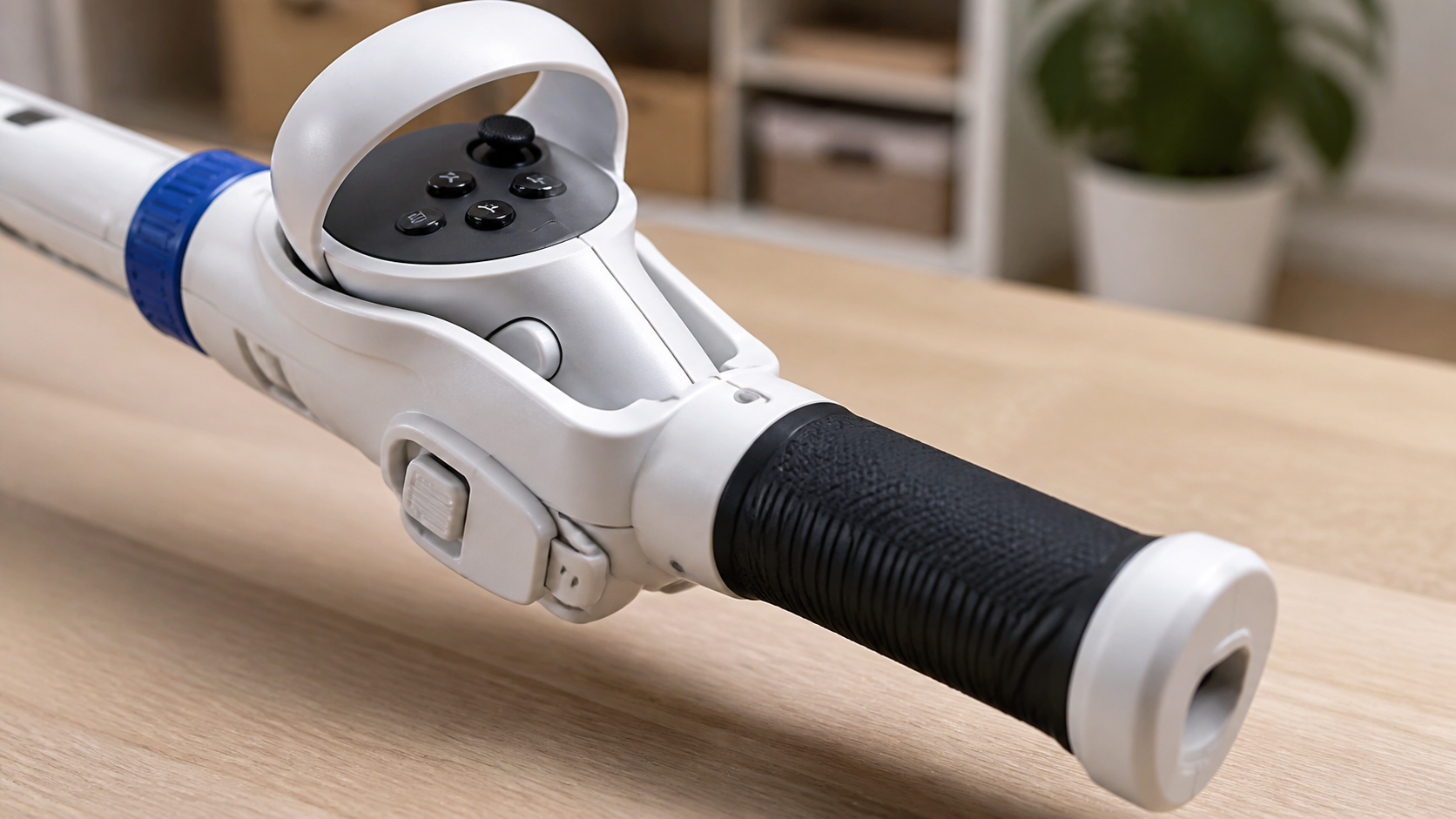
When I first felt the reeling was too short, I blamed the accessory. It seemed like the most obvious cause. But the more I played, the more I realized it wasn't that simple. I started to break down the problem to see where the real issue was. The controller itself has a specific shape and size. The accessory is built around that shape. And finally, the way I hold it and make the reeling circle with my hand plays a huge part. My son, for example, has smaller hands and uses smaller circles when he reels, so he didn't notice the problem as much as I did. This showed me that the experience depends on a mix of the hardware and the player.
Breaking Down the Motion
To get a clear picture, I looked at each component separately. It's easy to blame one thing, but the truth is in how they all work together.
| Source of Limitation | How It Affects Reeling Motion | My Observation |
|---|---|---|
| VR Fishing Rod Accessory | Adds a fixed physical handle that your reeling hand must move around. The design dictates the grip position and available space. | The rod's plastic body is right where my hand wants to be for a big, fast reel. It forces a smaller, tighter motion. |
| Meta Quest 3S Controller | The controller's own bulk and tracking ring sit inside the accessory, taking up space and defining the core shape. | The controller for my reeling hand can sometimes bump into the controller locked into the rod, especially on an aggressive reel. |
| Your Play Style | Everyone reels differently. Some people use their wrist, while others use their whole forearm, creating bigger or smaller circles. | I tend to use a wide, fast motion. This style conflicts with the physical limits of the rod, causing the cramped feeling. |
The accessory definitely makes the limitation more obvious, but it's not the only cause. The way you play is a major factor.
Could VR Fishing Rod feel helpful at first but annoying after repeated use?
You unbox the accessory, and it feels amazing. But an hour later, your arm feels tired and the motion feels clumsy. Is the magic gone already?
Yes, the initial immersion can fade as ergonomic issues appear during longer play sessions. The accessory is great for novelty and short-term fun but can become annoying when repetitive reeling causes fatigue or highlights the handle's restrictive design.
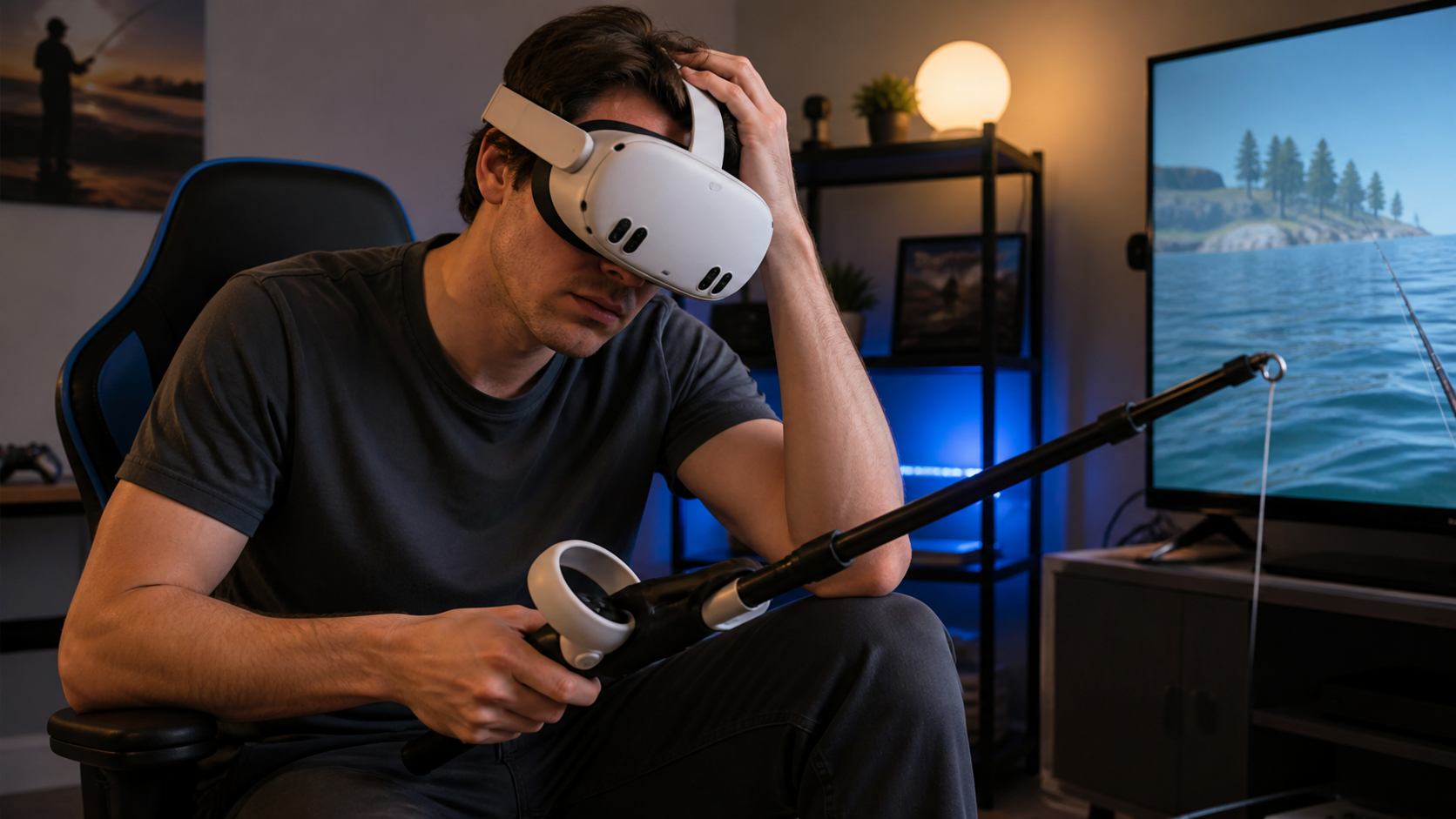
My first cast with the rod felt like a game-changer. It added weight and a sense of realism that just holding a controller couldn't match. For the first 15 minutes, I was completely sold. It was fun, immersive, and felt like a solid upgrade. But then I hooked a big fish that required a lot of reeling. My arm started to ache in a way it never did with just the controller. The fixed grip forced my hand into one position, and the limited reeling circle felt inefficient. The same accessory that created the immersion at first was now breaking it by reminding me of its physical limits. What started as a helpful tool began to feel like a clumsy burden after the initial excitement wore off. I needed to see if this was just my experience or a common problem for long-term play.
To test this, I recorded a continuous clip of me casting and reeling. At first, the motion looks natural. But as the reel continues, you can see my hand adjusting, trying to find a comfortable rhythm within the accessory's constraints. After about 30 seconds of continuous reeling, my motion becomes less smooth. This is where the annoyance kicks in. The accessory is designed for the idea of fishing, but maybe not for the repetitive reality of it. For a quick, fun session, it’s fantastic. For a serious, hour-long tournament, the bare controller starts to look a lot more appealing because it offers freedom of movement that the plastic rod just can't.
Where does family handoff and adjustment speed show up during real play?
You just caught a fish and want your kid to try. Can you hand it over quickly, or is it a clumsy process that kills the fun?
Family handoff is where the accessory's design is truly tested. A good one allows for a quick, secure controller swap without tools. A bad one is slow and flimsy, making it a hassle to share the experience, which defeats the purpose for many gift buyers.
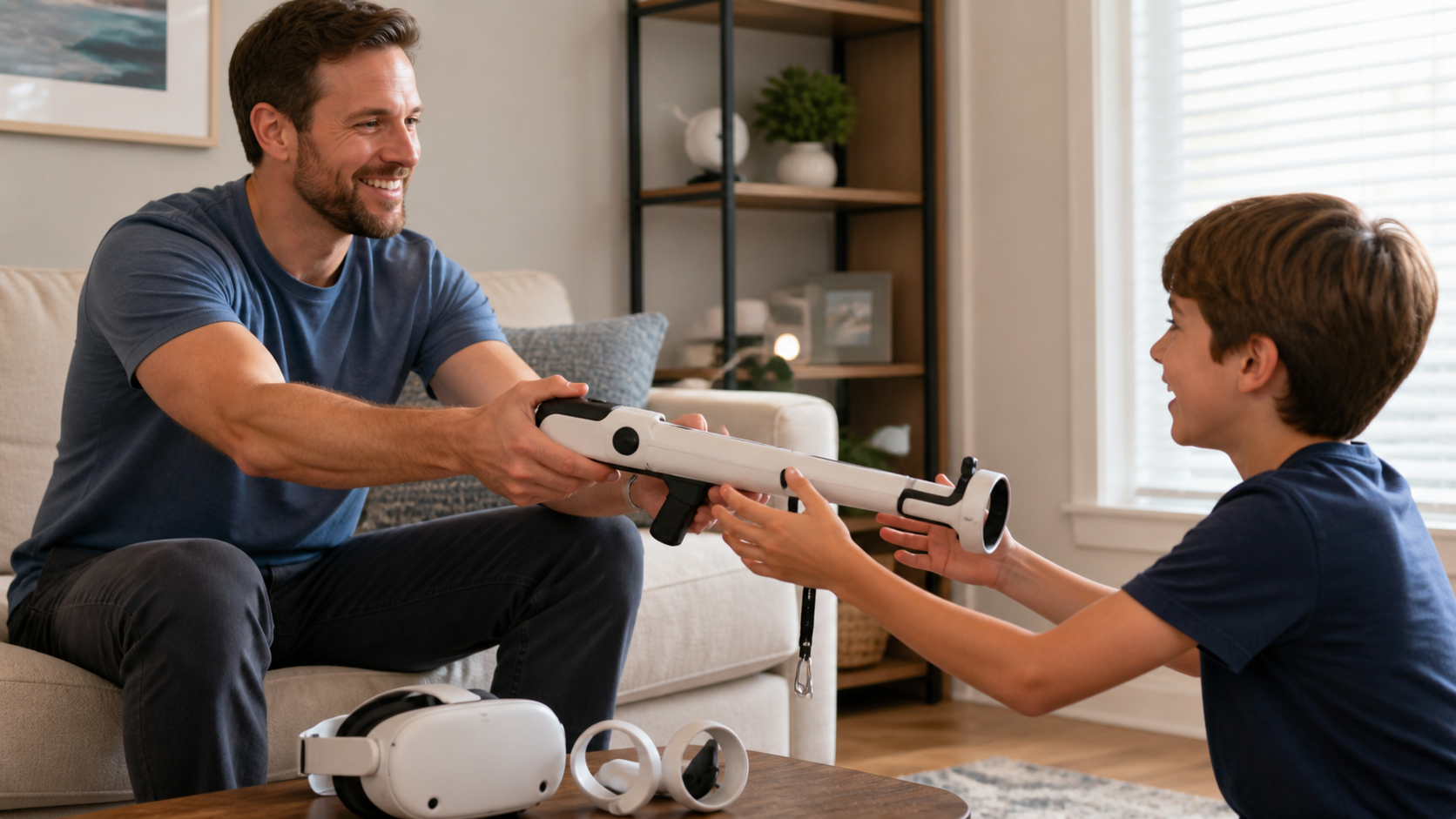
This was the moment of truth for me. I bought this setup for my family to use together. After I landed a fish, my son wanted a turn right away. I needed to swap the controller from my hand to his. The mechanism on our rod was a simple snap-in design. It took about 10 seconds to pop my controller out and secure his. That was fast enough to keep the game's momentum going. More importantly, it felt secure. I wasn't worried he would shake the controller loose and send it flying. This is a huge deal. An accessory that protects the controller while being easy to share is a massive win for a family environment. If it had been a complex system with screws or tight straps, the "let me try" moment would have turned into a "never mind, it's too much trouble" situation. The speed and security of the handoff made it feel like a successful part of our family game night, not a technical interruption.
The true value here isn't just speed, but confidence. When I let my nephew try, who is a bit more careless, I watched how he handled it. He was whipping it around to cast and reeling like a maniac. The controller didn't budge. The accessory acted as a protective shell, which gave me peace of mind. For a family, the accessory is not just about immersion; it's also a safety bumper for a $70 controller. The ease of adjustment means it fits different hand sizes without any fuss, so everyone from me to my youngest kid could get a comfortable grip and join in on the fun instantly.
What final verdict should Meta Quest 3S owners get for VR Fishing Rod when reeling motion is limited by handle length?
So, is this accessory worth your money? The fun is real, but the cramped reeling is too. It's time for a final, honest call on who should buy this.
For casual players, families, and new VR users, the VR Fishing Rod is a great buy. It boosts immersion and protects the controller. For serious fishing sim enthusiasts, the limited handle length will likely become a major annoyance, making the bare controller a better choice.
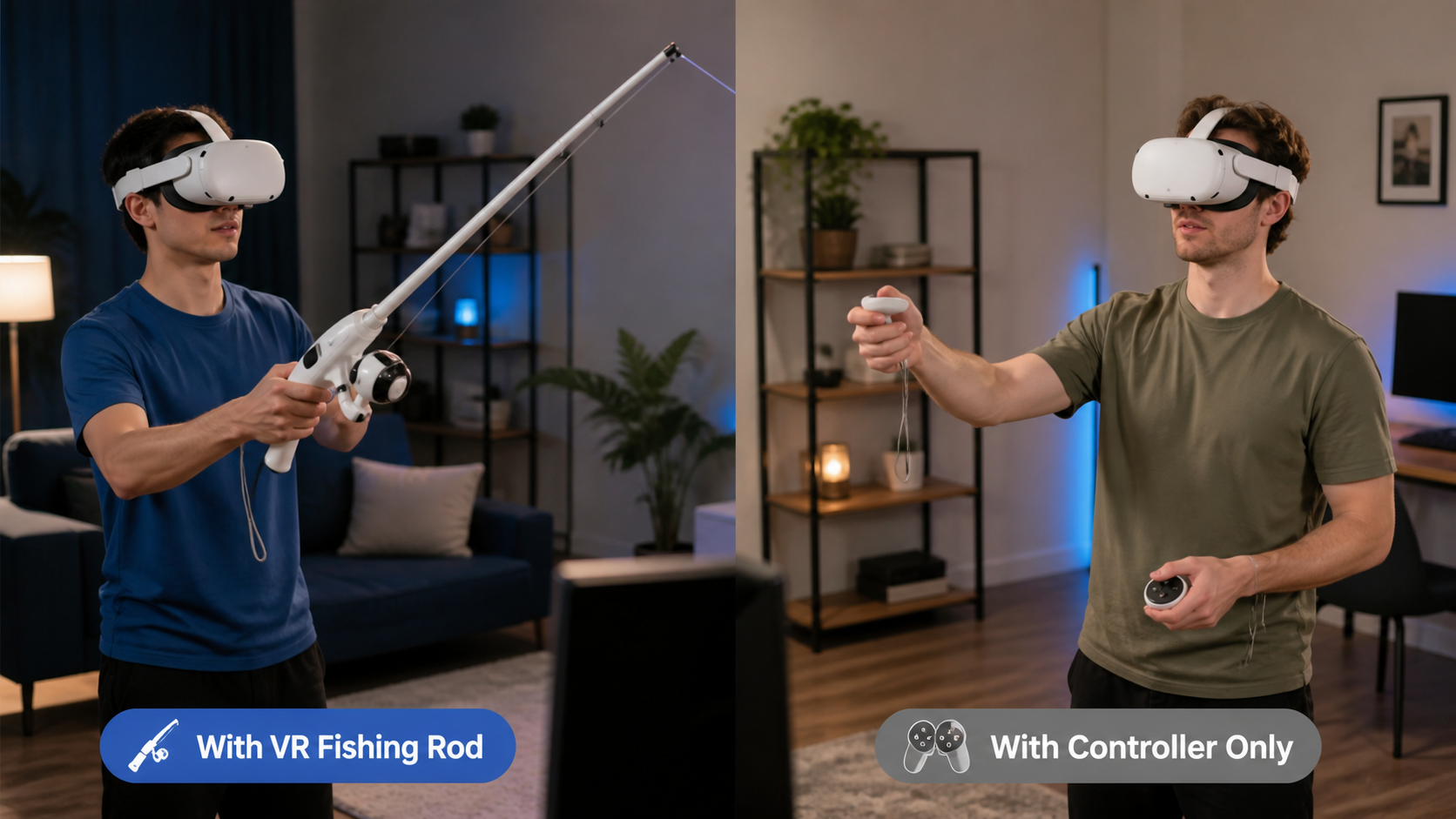
After using the VR fishing rod for a few weeks with my family, my verdict is clear, but it's not a simple "yes" or "no." It completely depends on who you are. If you're like me, someone who bought the Quest 3S for shared family fun, this accessory is a fantastic addition. The joy on my son's face when he held something that felt like a real rod was worth the price alone. It makes the game more accessible and fun for beginners. The controller protection and easy handoff are practical benefits that I really appreciate. The limited reeling motion is a minor issue when you're just playing for 10-15 minutes at a time and laughing together. It makes the game a playful activity.
However, if you are a hardcore VR fishing enthusiast who plays for hours, competes in tournaments, and wants to perfect your technique, I would tell you to skip it. You will absolutely be annoyed by the handle length. Your muscle memory is tuned for efficiency, and this accessory gets in the way of that. You will be faster, more comfortable, and have a greater range of motion using just the controller. The accessory adds immersion at the cost of performance, and for a serious player, that's a bad trade. It's a fun toy, not a pro tool.
Conclusion
This VR rod is best for family fun and new users. Serious players should stick to the controller for better performance and comfort during long sessions.
Leave a comment