



Does a Silicone Head Strap for Meta Quest help with sweat cleanup enough to justify the extra gear?

Sharing a sweaty VR headset after a workout is just plain gross. The original fabric strap soaks up everything, leaving you with a damp, uncomfortable mess that's a pain to clean.
Yes, a silicone head strap significantly helps with sweat cleanup. Its non-absorbent material allows you to wipe it clean in seconds with a simple cloth. This makes it a great accessory for intense fitness workouts or for sharing a headset, justifying the extra gear for hygiene alone.
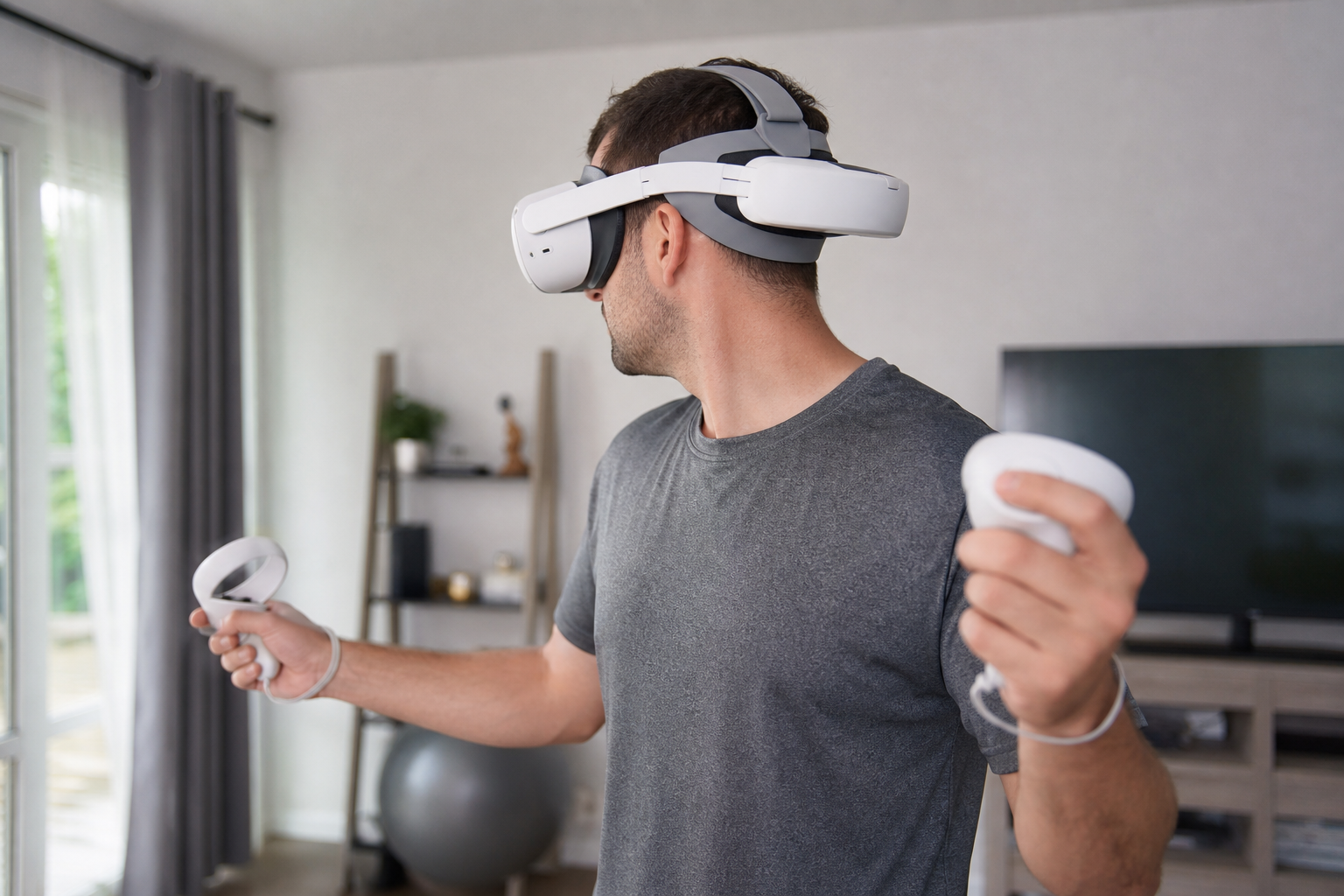
I've spent a lot of time in VR fitness apps, and the post-workout cleanup was always my least favorite part. My family members would refuse to use the Quest 2 after I finished a round of Supernatural, and I couldn't blame them. The stock strap felt like a damp towel. I decided to test a silicone head strap to see if it was just another accessory or a real solution to my sweaty problem. This is a deep dive into my experience as a glasses-wearing VR fitness user, exploring if this simple piece of silicone is worth it. I wanted to find out for myself if the promises of easy cleaning held up under real-world pressure and sweat.
Does sweat cleanup come from Silicone Head Strap for Meta Quest, Meta Quest 2, or the way fitness workouts is played?
You just finished a heart-pounding workout and your headset is dripping. Is the original fabric strap the real problem? Or is this just the unavoidable price of getting fit in VR?
The ease of sweat cleanup comes directly from the silicone head strap's material. The way you play determines how much you sweat, but the silicone material determines how easy it is to clean. Unlike fabric which absorbs moisture, silicone is waterproof and can be wiped dry instantly.
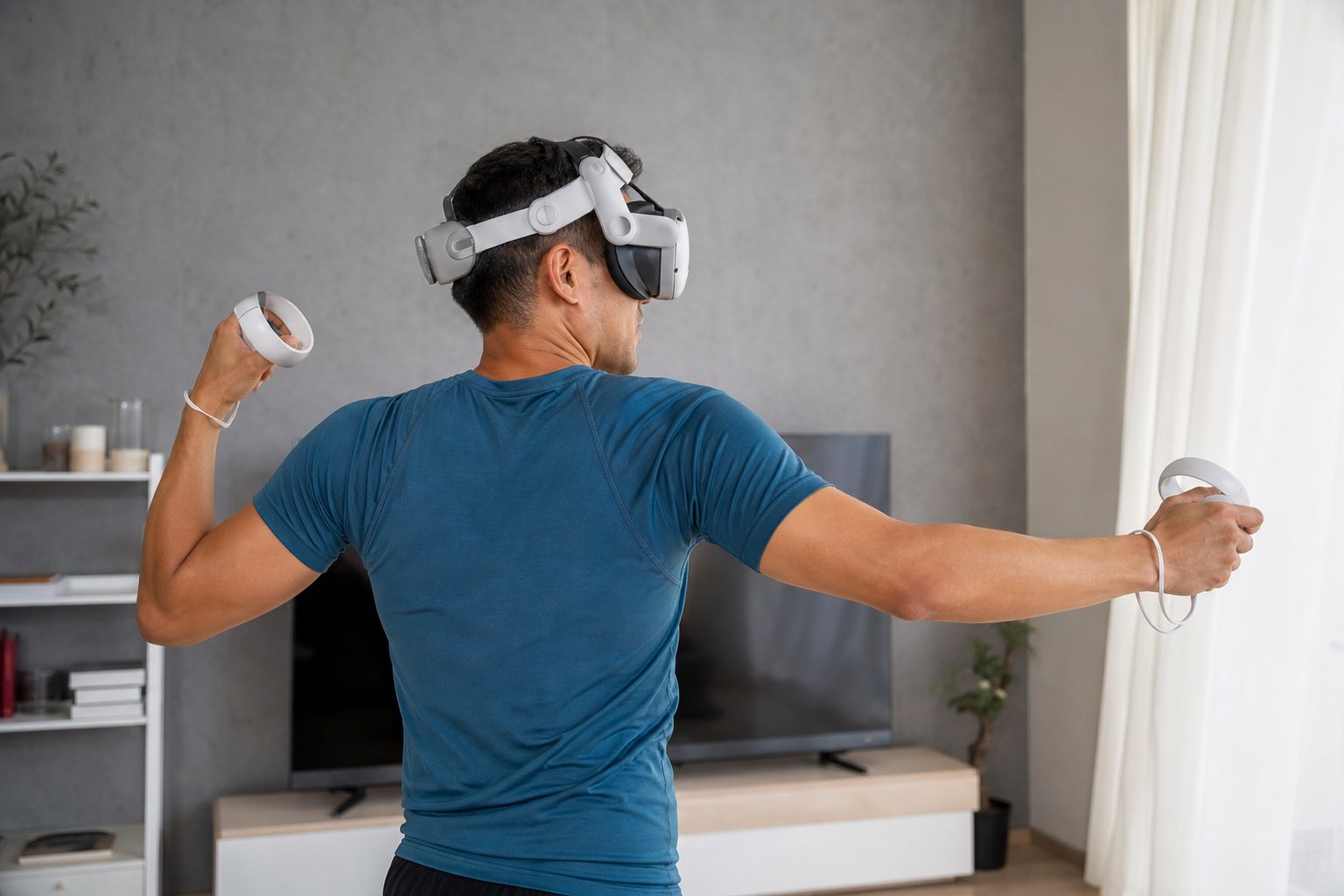
The core of the problem is material science. The standard strap that comes with the Meta Quest 2 is made of a soft, elastic fabric. It’s comfortable for casual use, but during a fitness session, it acts like a sponge. Sweat soaks into the fibers, making it damp, smelly, and difficult to clean quickly. You can’t just wipe it down; you have to let it air dry, which takes time. This is a huge issue if someone else wants to use the headset right after you. A silicone strap, on the other hand, is non-porous. It doesn't absorb anything. Sweat beads up on the surface, so a quick wipe with a microfiber cloth or an antibacterial wipe is all it takes to make it clean and dry for the next person. Your workout intensity will always produce sweat, but the strap material dictates the cleanup effort.
Material Matters More Than Method
To be clear, no head strap will stop you from sweating. A high-intensity game of Beat Saber or Les Mills Bodycombat is going to make you sweat, period. The difference is what happens to that sweat. With the fabric strap, it gets trapped. With the silicone strap, it sits on the surface, ready to be wiped away. Here is a simple breakdown:
| Feature | Standard Fabric Strap | Silicone Head Strap |
|---|---|---|
| Material | Absorbent elastic fabric | Non-porous, waterproof silicone |
| Sweat Interaction | Sponge-like; soaks up sweat | Repels sweat; moisture beads on surface |
| Cleanup Time | Minutes to hours (needs to air dry) | Seconds (wipe and go) |
| Hygiene for Sharing | Poor; remains damp and unhygienic | Excellent; easily sanitized between users |
So while the way you play causes the sweat, the strap itself is the key to solving the cleanup problem. The silicone material is what makes the real, practical difference.
Would glasses wearers describe the difference as comfort, control, safety, or immersion?
As a glasses wearer, adding any new accessory to my headset makes me nervous. Will it add pressure? Will my glasses get pushed into my face? Will the whole thing become unstable?
For glasses wearers, the primary difference is a mix of comfort and control. A good silicone strap provides a secure, non-slip fit that prevents the headset from shifting during fast movements. This stability stops my glasses from being pushed around, which directly improves comfort and my control in the game.
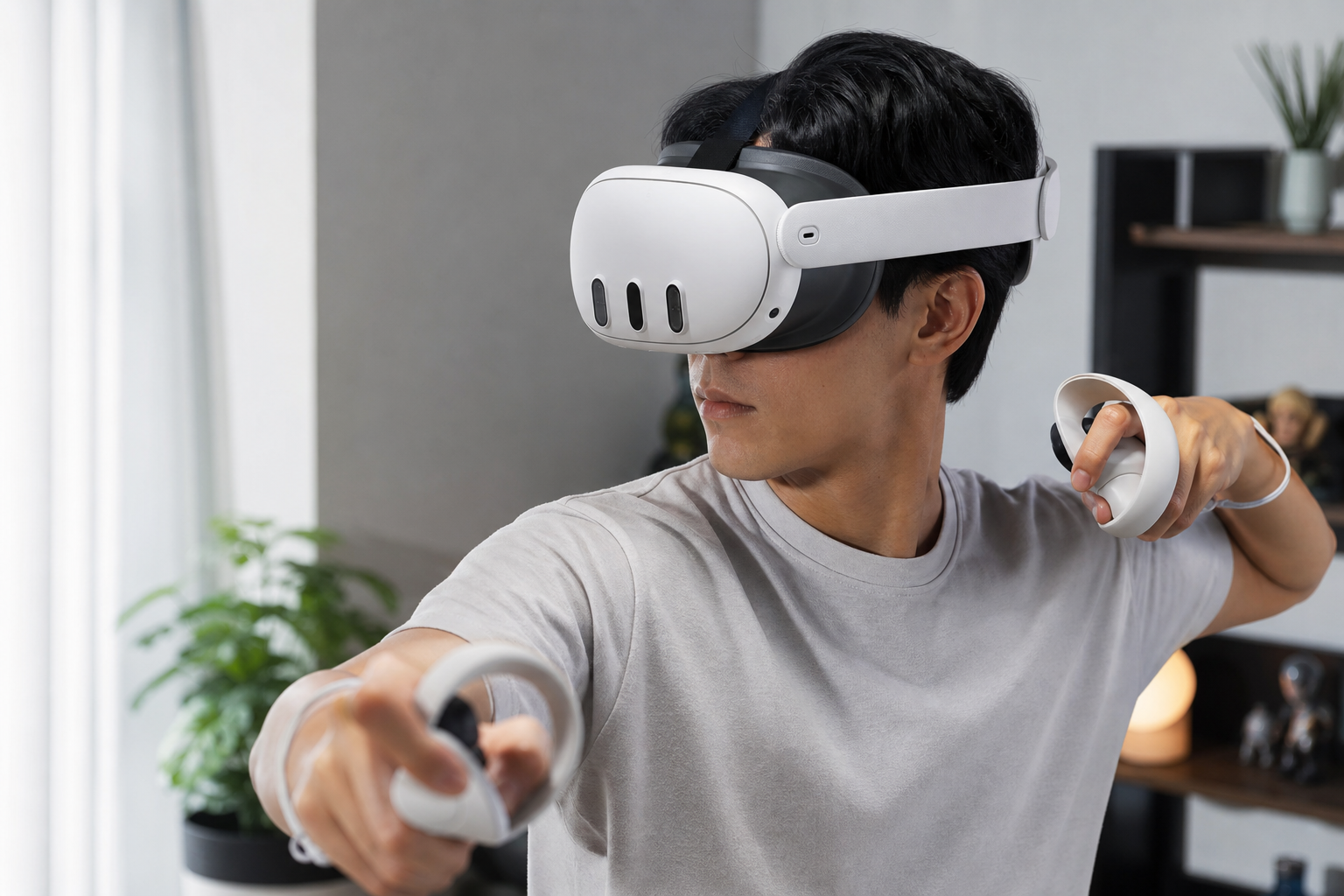
Before trying the silicone strap, my biggest issue during fitness games was headset shift. Every time I ducked or weaved, I could feel the Quest 2 slide slightly, pressing the glasses spacer and my frames against my face. It was annoying and constantly broke my focus. The silicone strap changed this. Its surface has more grip than the smooth fabric, holding the headset in place more effectively. This meant less pressure on my glasses and less need to pause and readjust. For me, this improved comfort was the biggest win. I felt more in control because I wasn't fighting my gear. This also ties into safety; a headset that doesn't move is a headset that's less likely to fly off during an intense session. Immersion naturally follows. When I'm not thinking about my glasses digging into my nose, I can focus entirely on the game.
My 30-Minute Pressure Diary
To test this, I did a 30-minute session of Pistol Whip while wearing my glasses. I paid close attention to pressure points. At the 10-minute mark, everything felt great. The pressure was evenly distributed, and my glasses hadn't moved. By 20 minutes, I noticed a slight pressure on my upper cheeks, but it was from the facial interface, not the strap, and my glasses were still stable. After the full 30 minutes, I felt the expected fatigue, but my glasses had not once been jammed into my face. The strap stayed put. The difference was clear: control led to comfort.
Can a 10-minute video clip show what written specs cannot?
A product page can list dimensions, weight, and material. But can it truly show you how an accessory feels and performs when you're in the middle of a frantic VR workout?
Yes, a 10-minute video clip can absolutely show what written specs cannot. A video demonstrates the strap's real-world flexibility, its grip during rapid head movements, and the satisfying speed of the post-workout cleanup. It brings the user experience to life in a way that a list of features never could.

Written specifications for a silicone strap are pretty boring. It might say "Made from premium silicone" and "Weighs 50 grams." That tells me nothing about the actual experience. A video, however, can show a user quickly putting on the headset and adjusting the strap with one hand. It can show the strap flexing and conforming to their head shape. Most importantly, it can show the headset staying perfectly still while the person ducks, dodges, and looks around quickly in a game. You can see if the silicone looks slippery or grippy. You can watch someone take the headset off, revealing the sweat, and then see them wipe the strap clean in five seconds flat. This visual proof is far more powerful than any marketing claim. It answers the questions that specs can't, like "How flimsy is it?" or "Does it actually stay in place when you're moving fast?" For me, seeing it in action is what convinces me, not reading a bulleted list.
Could a cheaper or simpler setup answer this fitness workouts and sweat cleanup problem just as well?
This accessory costs money, and it’s fair to ask if there's a simpler or cheaper fix. Do you really need a special strap, or could a simple sweatband do the trick?
A cheaper setup like a sweatband or a silicone facial interface cover can help manage sweat, but they don't solve the core problem of a soaked head strap. They absorb sweat at the forehead but leave the strap to become a damp mess. For easy hardware cleanup, the silicone strap is a more complete solution.

I've tried the cheaper options. A workout headband is great for keeping sweat from dripping into my eyes, but the head strap itself still gets soaked from the sweat on my scalp and the back of my head. I’m left with two sweaty things to wash instead of one. A silicone facial interface cover is also useful. It protects the foam padding around the eyes and is easy to clean. But again, it does nothing for the strap. These are partial solutions. They manage aspects of the sweat problem but don't address the hygiene and cleanup of the head strap itself, which is a major pain point for anyone who shares their device. The silicone strap is the only solution I've found that directly makes the hardware itself easy to clean and share immediately after use. It targets the root of the cleanup problem, not just the symptoms.
The Inevitable Failure Case
However, the silicone strap is not a magic bullet. To test its limits, I played an intense 30-minute session of Les Mills Bodycombat. I was sweating heavily. The good news: the strap was easy to wipe clean afterward. The bad news: the strap did nothing to stop sweat from running down the sides of my head and neck. Because silicone doesn't absorb anything, the sweat simply found other paths. Some of it even dripped onto the inside of the lenses, forcing me to pause and clean them. So while the strap solves the cleanup problem, it doesn't solve the sweat problem. You will still get sweaty, and that sweat has to go somewhere.
Conclusion
The silicone strap makes post-workout cleanup incredibly fast, which is a huge win for sharing a headset. It's a convenience upgrade, not a sweat-stopping miracle. It's for you if you hate a damp strap.
Leave a comment