



Does a Quest Battery Pack still make sense when the trade-off is family sharing versus recharge downtime?

Your headset dying mid-game is frustrating. Worse, your family is waiting for their turn, but the headset needs hours to recharge. A battery pack seems like the obvious fix.
A Quest Battery Pack is a great choice for solo users wanting maximum uninterrupted playtime. However, for families sharing one headset, it creates a bottleneck because the entire unit must be charged, making a swappable pocket power bank a more flexible and practical solution for reducing overall downtime.
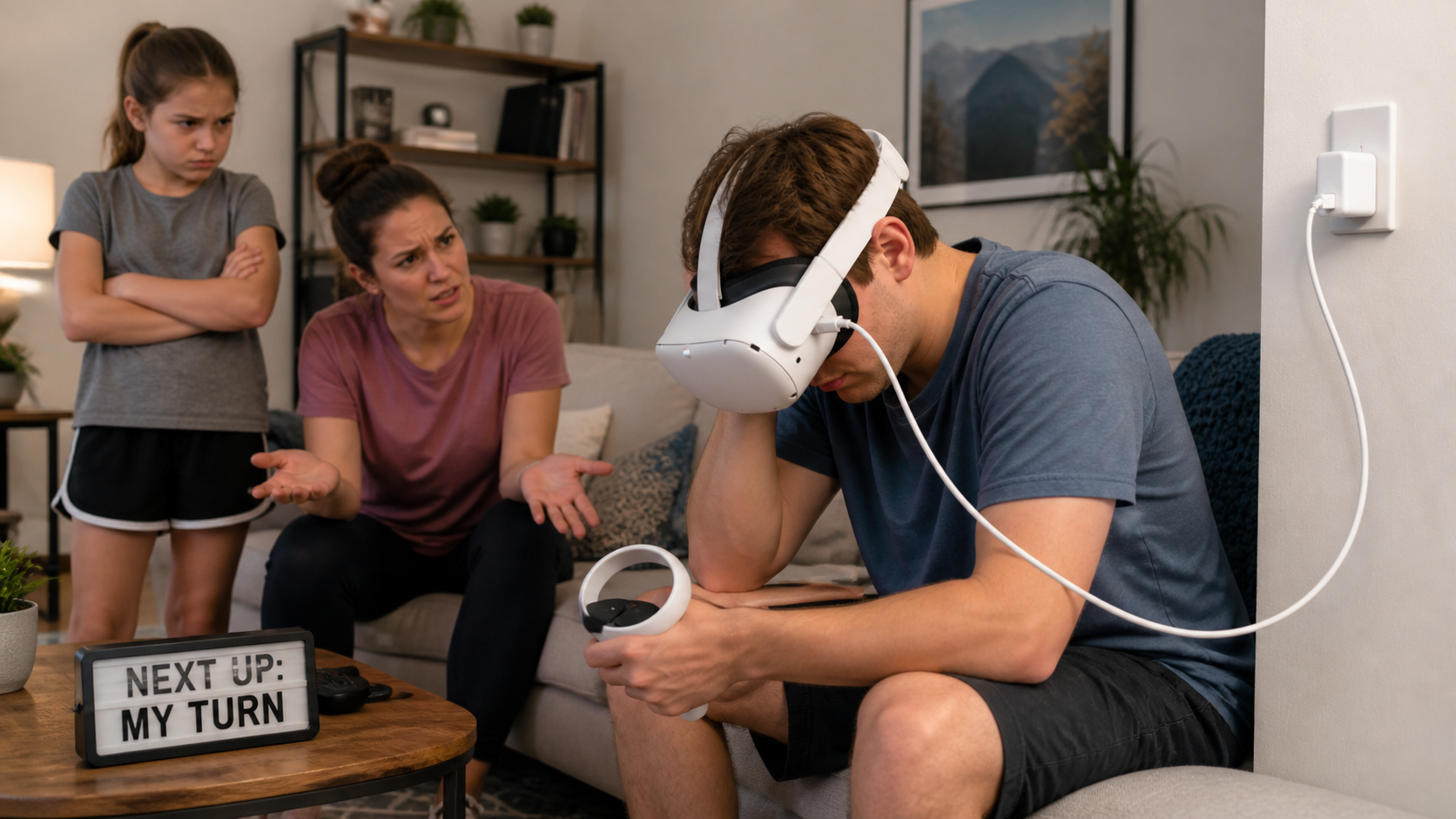
The promise of endless VR is tempting. We bought a Quest 3S and immediately started looking at battery solutions. The ads all shout about "mAh," promising hours of extra gameplay. But our experience as a family quickly showed us that raw battery capacity isn't the whole story. The real test comes when you have multiple people wanting to play, a limited amount of space, and an intense fitness session on the schedule. This isn't a typical accessory review; it's a look at the daily friction we found using a battery pack and how we navigated the trade-offs between playtime, comfort, and keeping everyone in the family happy. It turns out the best solution isn't always the one with the biggest number on the box.
If room space is limited, does Quest Battery Pack still make sense for Quest 3S ownership when mAh claims matters?
You bought a battery strap with a huge mAh number. But now it feels heavy and bulky in your small living room. Is the extra weight really worth the added playtime?
In a small play space, a battery strap's bulk and weight are more critical than its mAh rating. A lighter setup, like a power bank in your pocket, gives you more freedom and safety, even if it offers less total playtime. Comfort often outweighs capacity here.
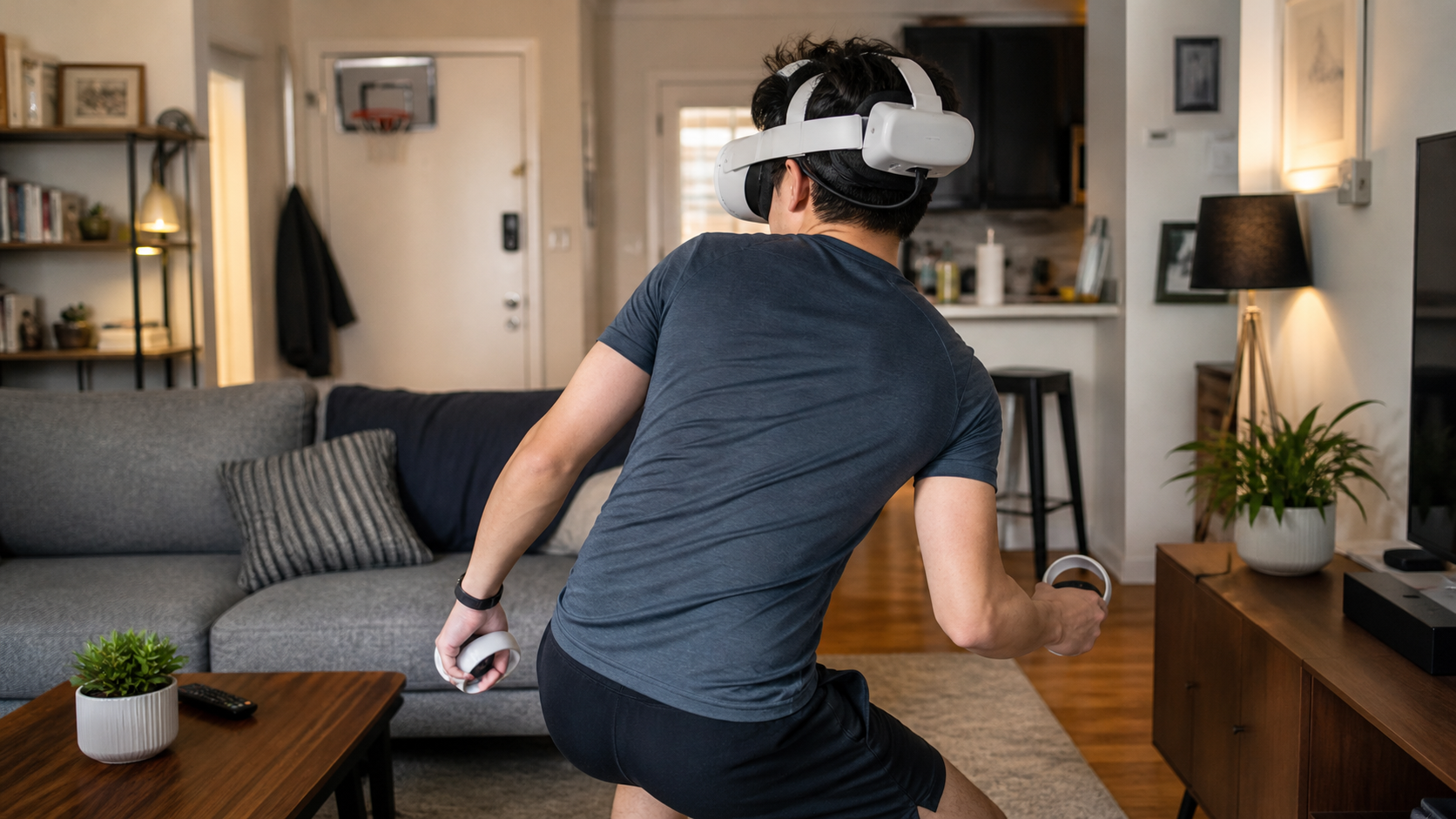
Our main play area is the living room. It’s not a dedicated VR space. This became a problem with a heavy battery strap. During active games, the extra weight creates momentum. When I have to dodge or turn quickly, the headset feels like it wants to keep going. I became more worried about hitting a wall or the coffee table. The high mAh rating didn't matter when I felt less confident moving around.
Weight vs. Playtime
A pocket power bank changed everything. I could use a smaller, lighter bank that didn't promise six hours of gameplay but was enough for a solid session. The weight was on my body, not my head. This made me feel more agile and secure in my limited space. The focus shifted from maximizing a single session's length to improving the quality and safety of the session itself.
The Small Room Test
Here is how the two options felt in our real-world setup. We compared a popular battery strap to a standard pocket power bank.
| Feature | Battery Head Strap | Pocket Power Bank |
|---|---|---|
| Weight Distribution | Adds significant weight to the head | Weight is carried in a pocket, not on the head |
| Momentum in Turns | High; can feel unbalanced during fast movements | Low; head movement feels natural and light |
| Fitness Bounce | Noticeable and distracting during jumping or running | None on the head; minimal if bank is secure |
Could cable routing during active play be the real reason mAh claims remains in Quest 3S ownership?
A dangling cable from your pocket is annoying and can ruin your game. It gets caught on your hands and arms. Good cable management can make a power bank feel almost wireless.
Yes, cable management is a deciding factor. A neatly routed cable from a pocket power bank often feels less intrusive than a heavy, integrated battery strap. This makes the power bank a strong competitor, shifting the focus from pure mAh capacity to practical comfort during active use.
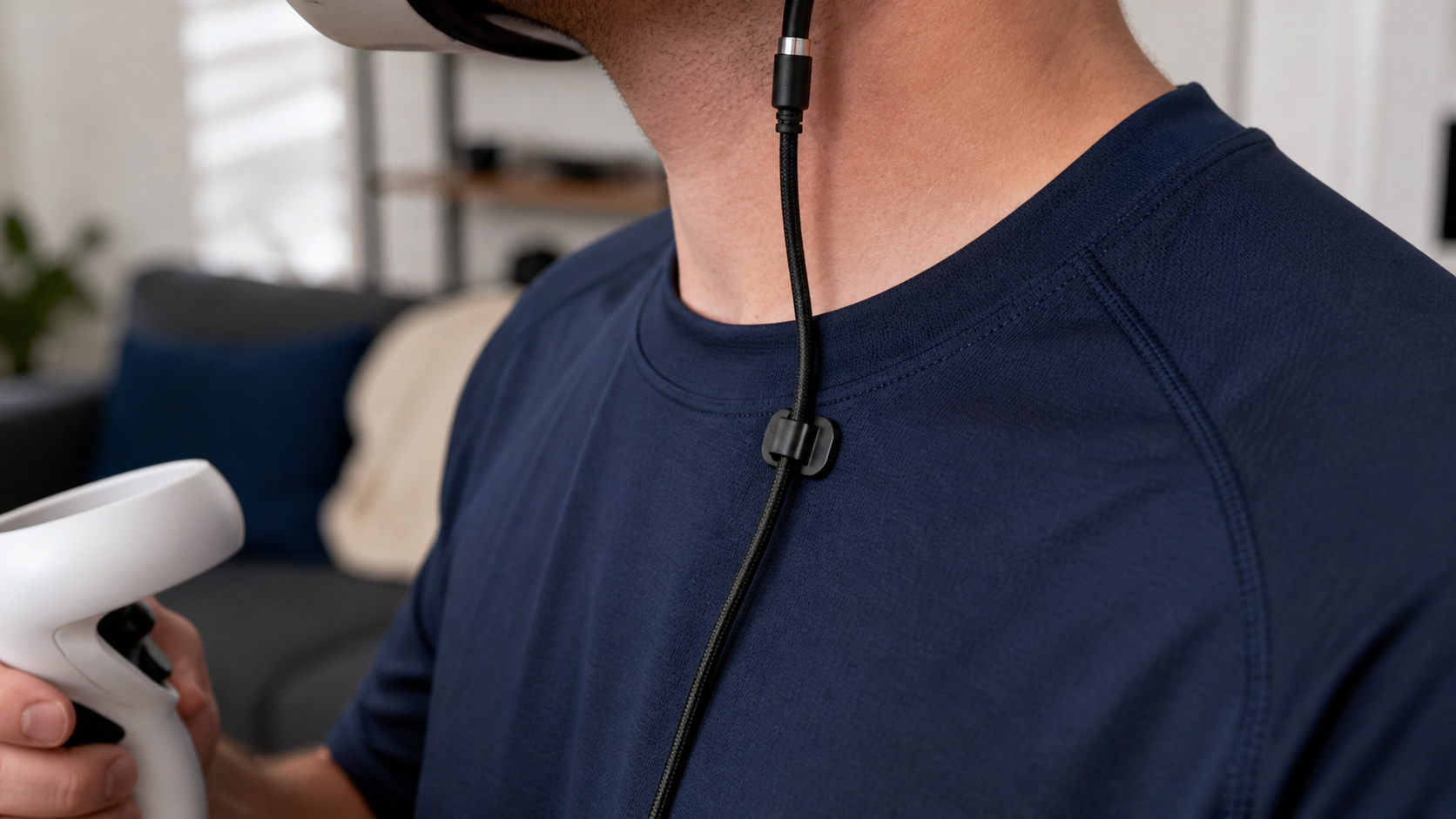
The biggest argument against a pocket power bank is the cable. I thought it would be a dealbreaker. My first try was a mess. The long cable I used kept swinging and getting in the way of my Quest Pro controllers during a round of Beat Saber. But then I tried a few simple tricks. I bought a short, 3-foot USB-C cable with a right-angle connector. This was a game-changer. The right-angle plug sits flush against the headset, so it doesn't stick out. I run the short cable down my back and under my shirt, plugging it into the power bank in my back pocket. It's completely out of the way. I don't feel it or see it. This simple setup gives me the best of both worlds: no weight on my head and no annoying, dangling cable. Suddenly, the integrated battery strap seemed less appealing. It solved the cable problem but created a weight problem. The pocket bank with a managed cable solved both.
Does the same advice apply to Quest 2, Quest 3, and Quest 3S?
You might own more than one Quest headset. Buying unique, expensive accessories for each one is a pain. You need to know which battery advice is universal and which is not.
For the most part, yes. The core debate of a battery strap's convenience versus a pocket bank's flexibility applies to all Quest models. However, the Quest 3 and 3S are more power-hungry, making external power almost necessary, and headset-specific strap fits become more of an issue.
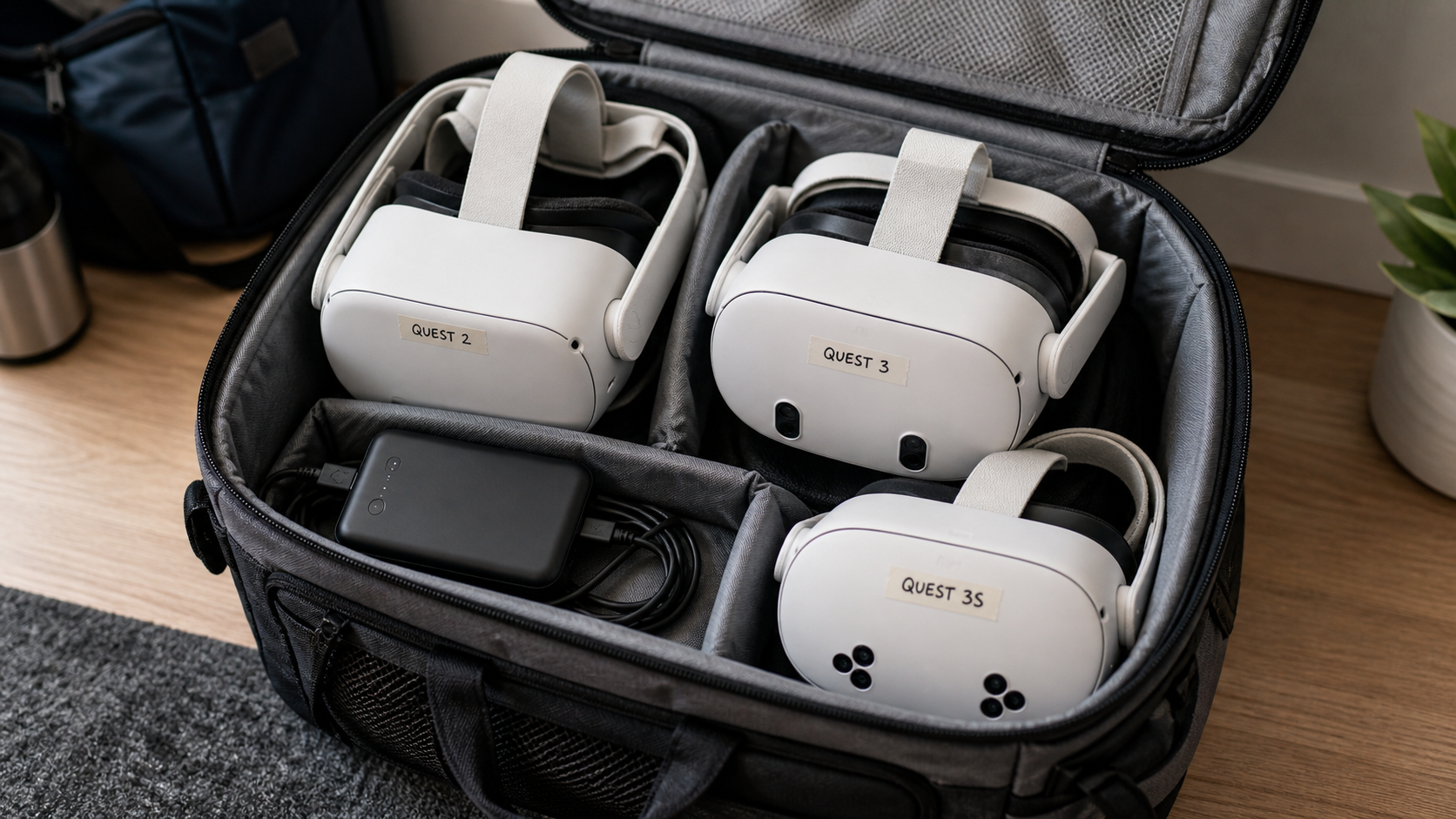
We have a Quest 2 and now the Quest 3S in our home. The Quest 3S drains its battery much faster, especially when using mixed reality apps. While the Quest 2 could last for a decent session on its own, the 3S almost requires an external battery for anything longer than 90 minutes. This makes the battery question more urgent. The core trade-offs, however, remain the same. The physics of weight on your head doesn't change. What does change is cost and convenience. A battery strap is usually designed for one specific headset model. My old Quest 2 strap doesn't fit the Quest 3S. If we had bought a dedicated strap for each, that would be two expensive accessories. A good power bank, on the other hand, works with everything. It charges the Quest 2, the Quest 3S, our phones, and the Quest Pro controllers. When we pack for a trip, taking one power bank is far easier than packing multiple bulky head straps. This universal compatibility is a huge, often overlooked, advantage.
Does Quest Battery Pack deserve a buy, maybe, or skip verdict for Quest 3S ownership when mAh claims is the issue?
You need to make a final choice on a battery solution. There are many options, and marketing slogans about battery life are everywhere. You need a clear verdict based on your needs.
It's a "Maybe." A battery pack is a "Buy" for dedicated solo players who want seamless, long sessions. It's a "Skip" for active fitness users and families sharing a device. For them, a pocket power bank is more flexible and comfortable, making mAh claims less important.
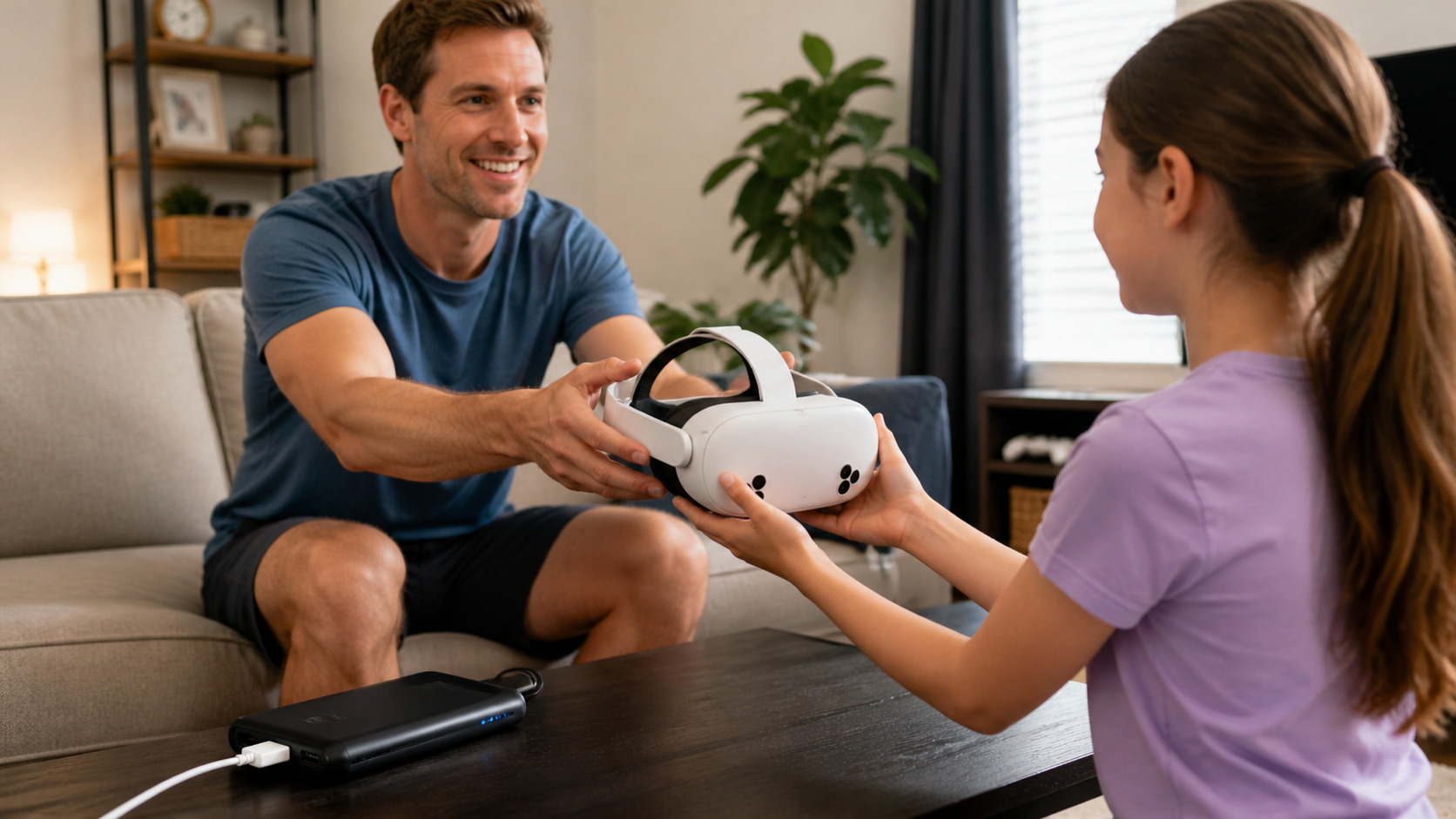
After weeks of testing in our family, the answer isn't simple. The right choice depends entirely on how you use your Quest 3S. The mAh number is just marketing until you weigh it against comfort, convenience, and downtime. Here’s my final breakdown.
Buy a Battery Head Strap if:
You are the only person who uses the headset. You primarily play seated or low-movement games like VR poker or watching movies. You want the simplest "all-in-one" solution and despise managing any kind of cable. For you, the added weight is an acceptable trade-off for pure, uninterrupted convenience.
Skip a Battery Head Strap if:
You share the headset with family or friends. When one person finishes, the whole headset has to be plugged in. With a pocket bank, you can just swap in a fresh one and pass the headset to the next person. Also, skip it if you are a serious fitness gamer. The bounce and extra momentum from a heavy strap are a real problem in games that require you to jump, duck, and move quickly. For you, a lightweight head setup is a top priority.
For us, the pocket power bank won. It keeps the headset light for fitness, and we can cycle through multiple charged banks to eliminate downtime between family members.
Conclusion
A battery pack for your Quest 3S isn't an automatic buy. Think about your play style, your space, and who uses the headset before you even look at mAh numbers.
Leave a comment