



Does a Quest Battery Pack make charging while playing easier for new users or only for enthusiasts?

Your Quest Pro controllers die mid-workout, ruining your flow. A battery pack seems like the answer, but is it just another accessory that adds more problems than it solves?
A Quest Battery Pack makes charging while playing easier for users who prioritize non-stop VR fitness and can manage the extra setup. For new users sensitive to neck strain or complex cable management, it can feel like a solution designed only for enthusiasts, not everyday players.
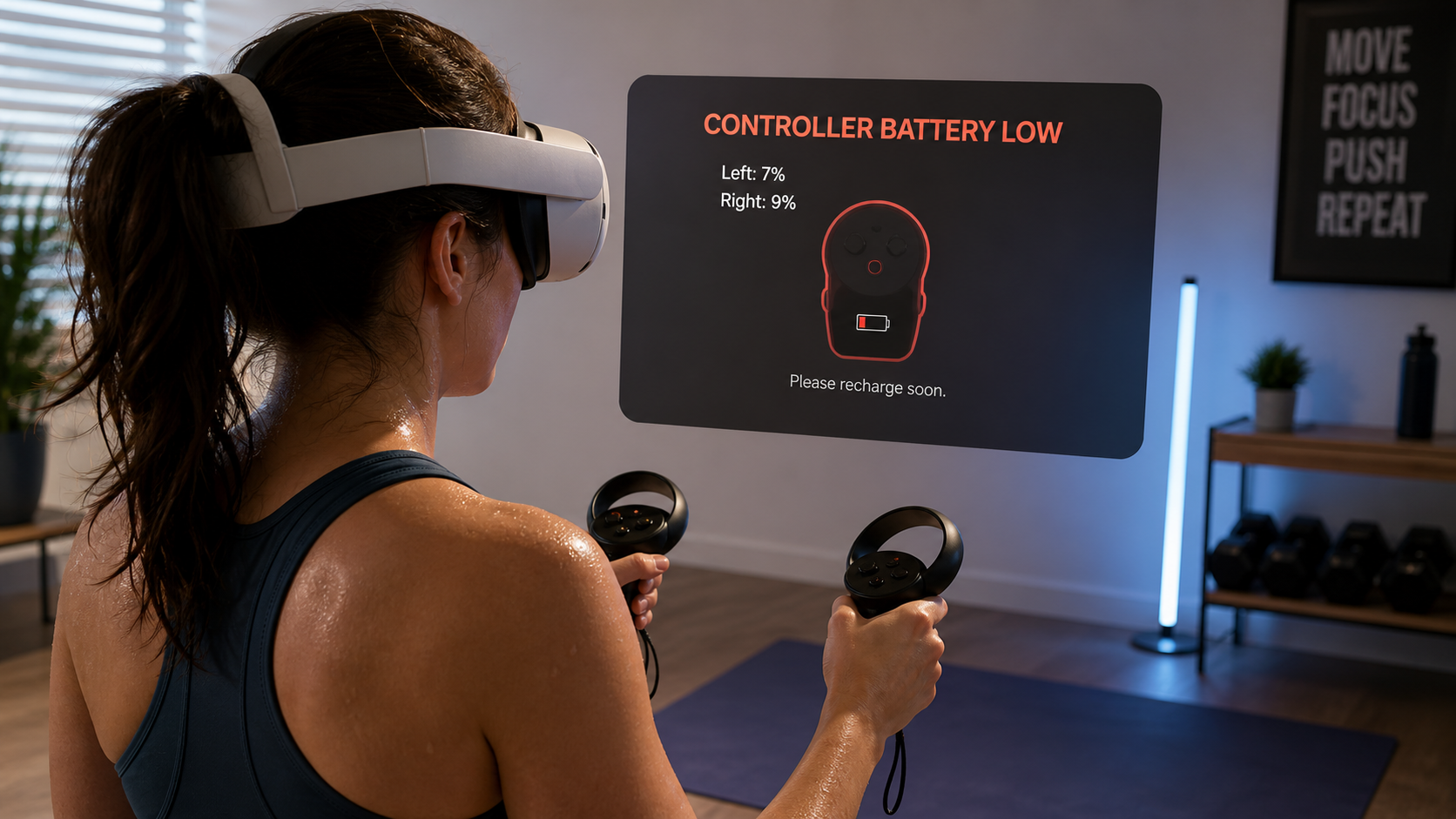
I love my Quest Pro controllers. The tracking is amazing for fast-paced games. But the two-hour battery life is a constant headache. I get into a good rhythm in a fitness app, and then the dreaded low-battery notification pops up. It completely breaks my focus and my workout. I started looking for a solution, and the idea of a battery pack came up. But I was skeptical. Would it just trade one problem for another? This is my journey trying to solve the two-hour battery limit, starting with the simplest solutions first and then seeing if an accessory was truly necessary for someone like me.
Could Quest Pro Touch Controllers users solve two-hour battery life without buying another accessory?
Your controllers die right when you're about to beat your high score. You don't want to buy another gadget, but you also don't want to quit your session.
You can try charging between sessions or using a long USB-C cable from a power bank in your pocket. These options are free but create interruptions or cable snags, making them a poor fit for active VR fitness where movement is constant and immersion is key.
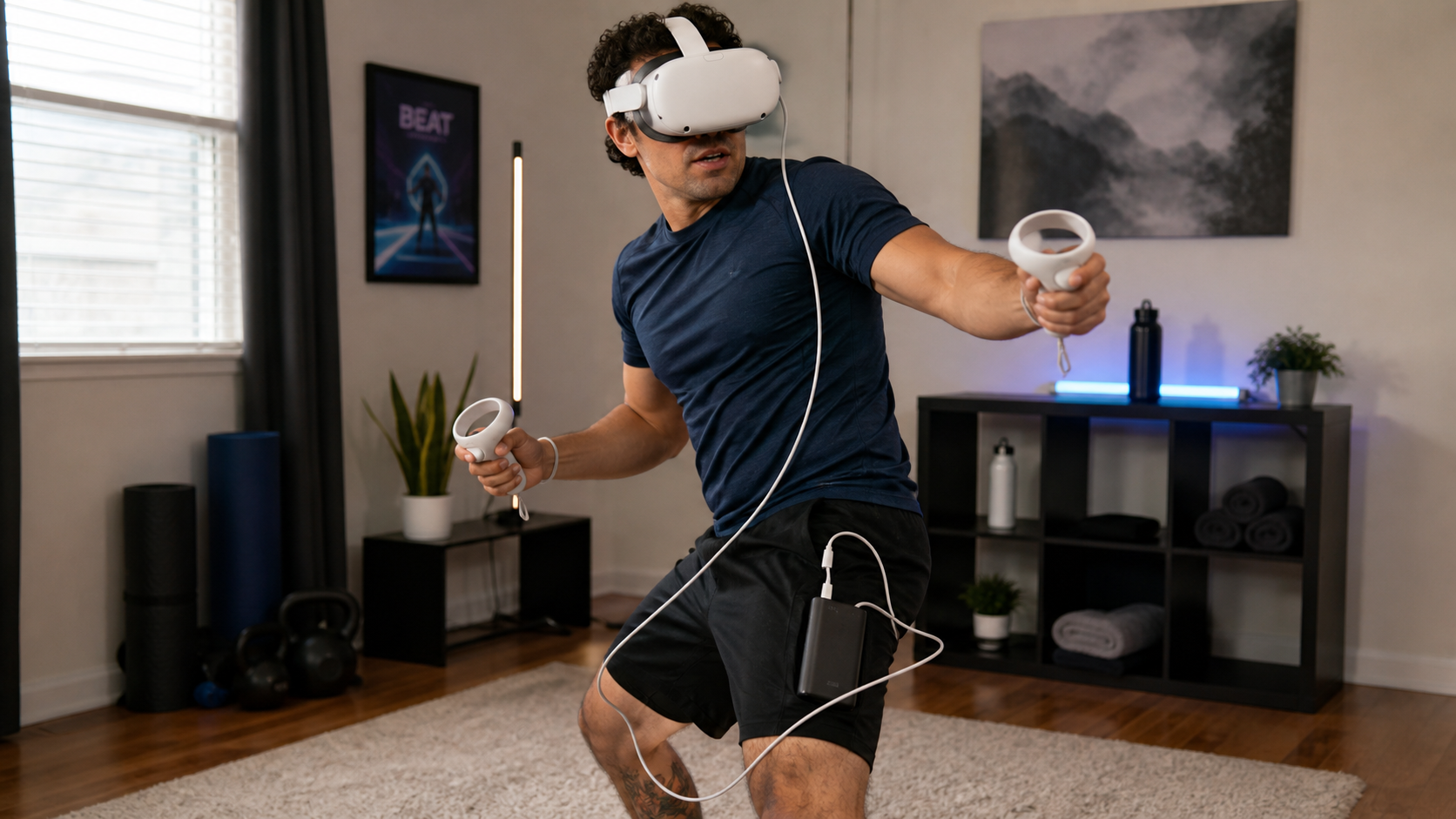
Before spending any money, I tried the obvious solutions. My first attempt was charging the controllers with a long USB-C cable connected to a power bank I kept in my pocket. This worked, but it was a disaster for fitness games. During a round of Supernatural, the cable kept catching on my arm when I was doing wide swings. The constant worry about snagging the wire pulled me out of the experience. It felt clumsy and unsafe. My next idea was to just take more breaks. I would play for 45 minutes, then pause my workout to let the controllers charge for a bit. This was better than the cable, but it destroyed my momentum. A good workout depends on keeping your heart rate up. Stopping every half hour to charge something felt counterproductive. I realized that for casual, seated VR, these methods might work. But for my use case—active, immersive fitness—they were deal-breakers. I needed a solution that let me play without thinking about cables or timers.
Comparing Charging Methods
| Method | Cost | Convenience | Immersion Impact |
|---|---|---|---|
| Charging Between Sessions | Free | Low (frequent interruptions) | High (breaks workout flow) |
| Long Cable to Power Bank | Low | Low (cable management issues) | High (snagging hazard) |
| Dedicated Battery Pack | Moderate | High (uninterrupted play) | Low (if well-designed) |
Could rear weight and neck comfort be the real reason two-hour battery life remains in charging while playing?
You solved your battery problem with a head strap pack. But now, after 30 minutes of playing, your neck aches from the extra weight. This feels like a bad trade.
Yes, absolutely. The added rear weight from many battery packs can cause significant neck strain, turning a solution for battery life into a new problem of physical discomfort. This trade-off is often the biggest reason users give up on charging while playing, especially during active sessions.
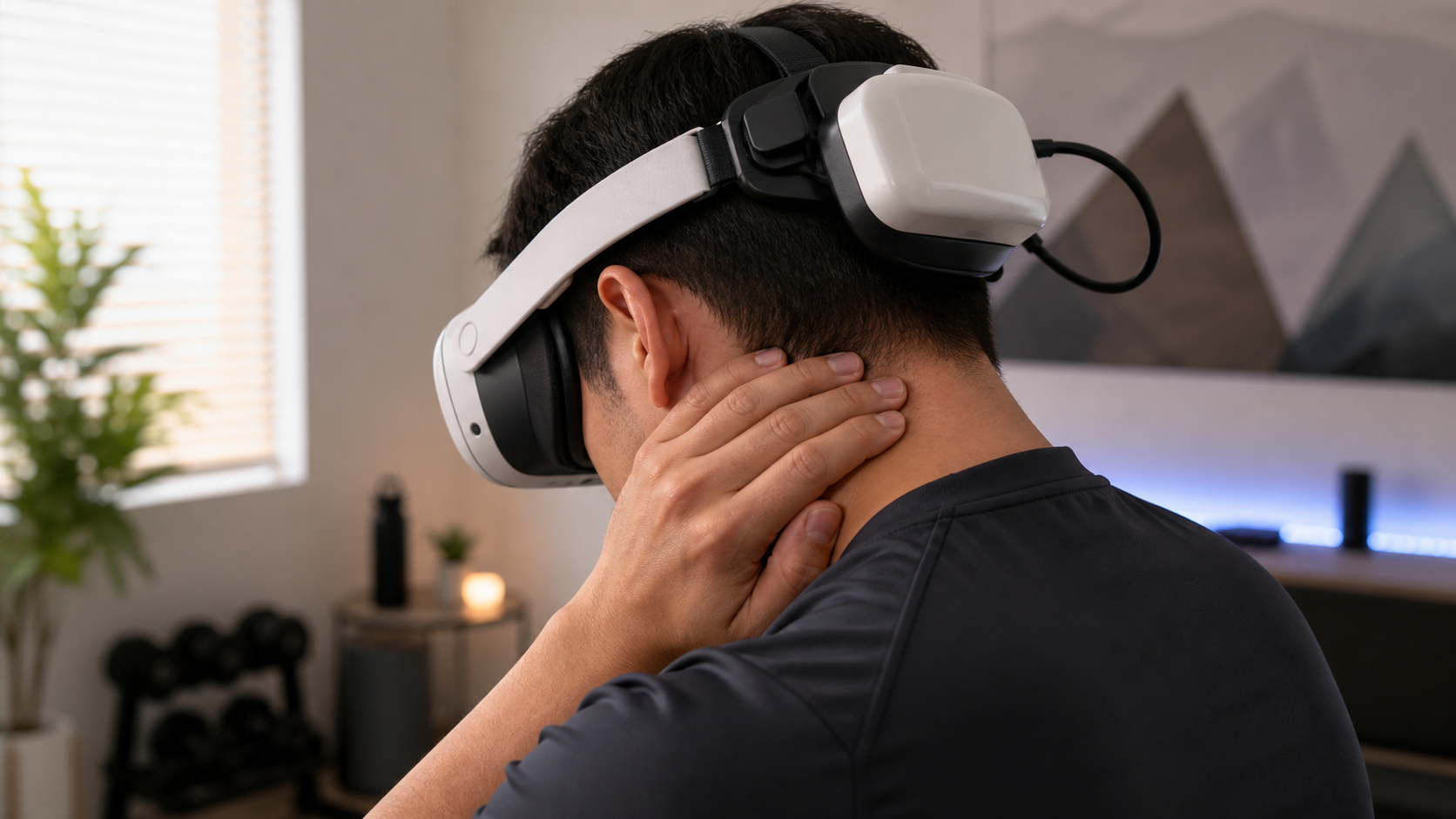
After failing with the accessory-free methods, I decided to test the most common solution: a third-party battery pack strapped to the back of my headset. At first, it felt great. The weight on the back of the strap counter-balanced the headset in the front. For the first ten minutes of a game, I thought I had found the perfect answer. Then I started a high-intensity boxing workout. As my head movements became faster and more sudden, the extra weight became very noticeable. It wasn't just heavy; it had momentum. Every time I ducked or weaved, I could feel the mass pulling on my head and straining my neck. By the 30-minute mark, I had a dull ache at the base of my skull. The battery was full, but I had to stop playing because I was uncomfortable. This made me realize that simply adding more mAh isn't the whole story. The real design challenge is adding power without adding painful, distracting weight. Any solution that causes physical fatigue is not a real solution.
Is the biggest issue setup, fit, safety, or fatigue?
You have the battery pack, but getting it ready is a chore. The cables are a mess, the fit feels off, and you worry about it getting too hot.
Fatigue is the biggest issue, and it's caused by all the others combined. A complicated setup, a poor fit that needs constant adjustment, and safety worries about dangling cables or heat all contribute to mental and physical tiredness that makes VR less fun.
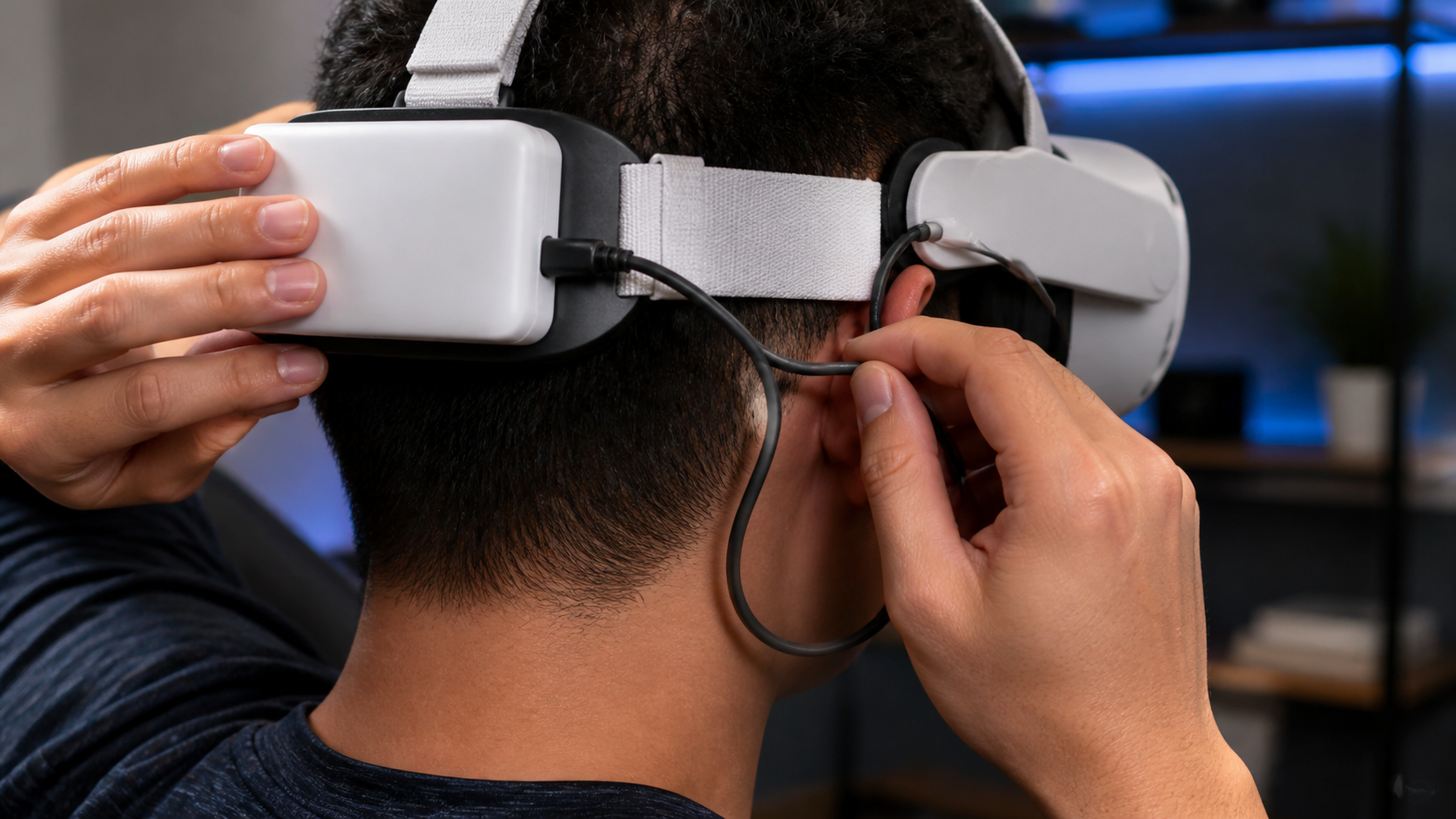
My experience with the battery pack showed me that the problem is more complex than just one thing. It's a chain reaction. The setup was my first hurdle. Attaching the battery and routing the short USB-C cable to the headset port took a few minutes every time. It wasn't hard, but it was one more step between me and my game. Then came the fit. With the new weight, I had to overtighten my head strap to keep it from shifting during my workout, which added pressure to my forehead. This led to the safety concern. Besides the neck strain, I found myself checking the battery's temperature every 20-30 minutes. I was worried about it overheating so close to my head. All these little annoyances—the setup, the constant adjustments, the safety checks—added up. They created a background level of stress that led directly to fatigue. I wasn't just physically tired from the weight; I was mentally tired from managing the accessory. The battery pack was supposed to make things easier, but it felt like it gave me more to worry about.
Can Quest Battery Pack earn trust for two-hour battery life without proof such as a cable-routing photo?
A brand claims their battery pack is comfortable and easy. But their product photos are just glamour shots of the pack itself, with no images of it on a headset.
It's very difficult to earn trust that way. For VR users, proof is in the details. A clear photo showing clean, integrated cable routing is not just marketing; it is evidence that the designers understood and solved a critical user problem. Without it, claims feel empty.
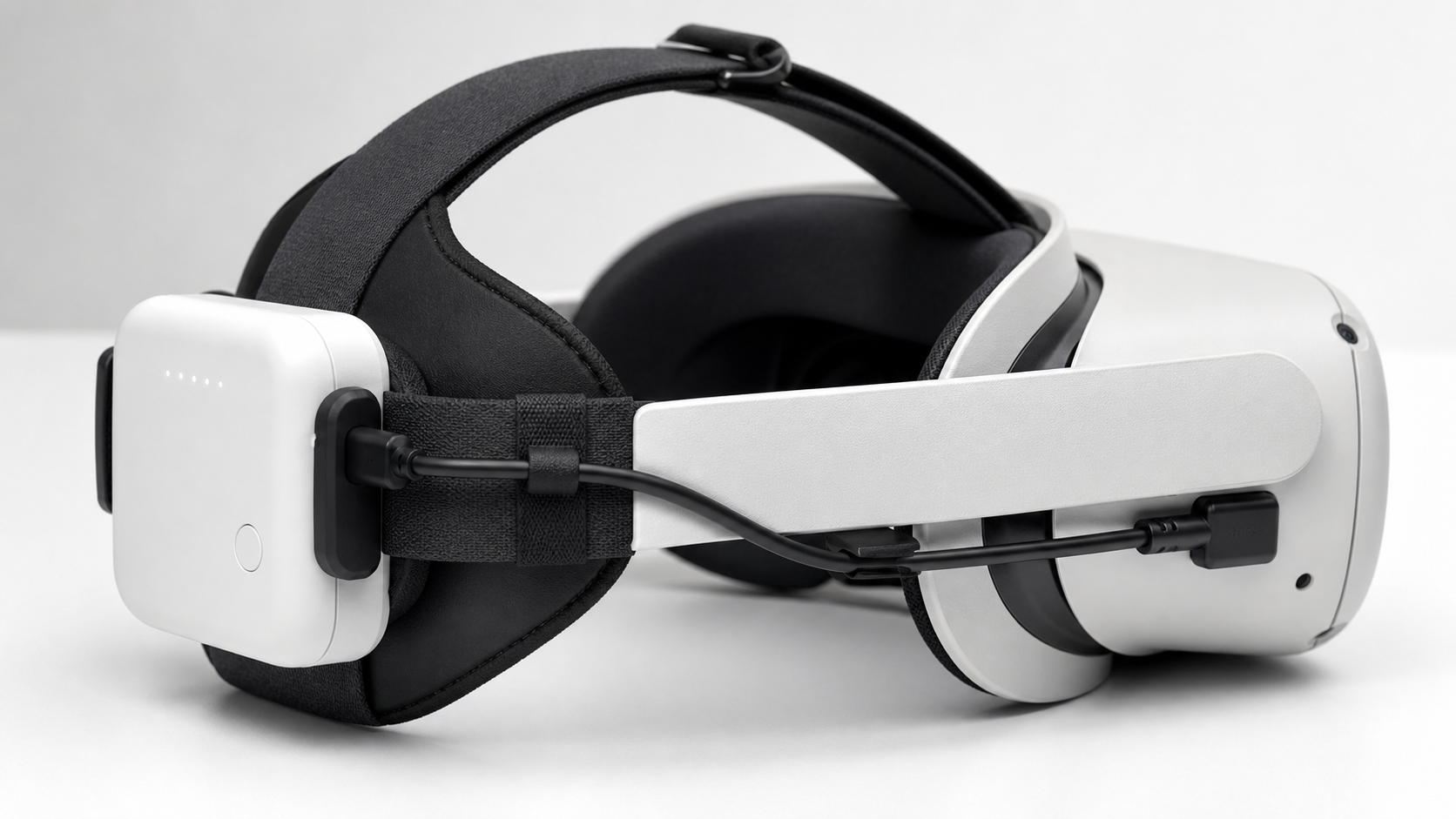
This whole process made me very critical of how VR accessories are marketed. When I see a battery pack for sale now, I ignore the mAh promises and look for one thing: a picture of it installed on a headset with the cable properly routed. If a brand doesn’t show me that, I assume they haven't solved the problem of cable management, which I now know is a major source of annoyance. Trust comes from showing you understand the user's real-world frustration. The best example I found was a system that used hot-swappable batteries. I saw a video demonstration where a user was playing, and when a battery died, they just reached back, magnetically unclipped the empty one, and snapped on a fully charged one in seconds. They never stopped playing. That one feature showed more understanding of a VR user's needs than any spec sheet. It was tangible proof. A simple photo showing a short, custom-molded cable that hugs the headset strap perfectly does the same thing. It tells me the company didn't just make a battery; they designed a complete, thoughtful solution.
Conclusion
A battery pack helps hardcore users who value infinite playtime above all else. But for many, the trade-offs in comfort, setup, and neck strain make it a frustrating compromise.
Leave a comment