



Do Quest Touch Plus Controllers users need a different VR Sword setup for small rooms?

Swinging a VR sword in a small room feels risky. You worry about hitting walls or furniture. A compact sword accessory might seem like the perfect fix for this.
For some games, a shorter VR sword handle can improve safety in small rooms by reducing your total reach. But for games requiring fast movements, the added bulk makes storage and travel worse, and may not be worth the trouble for Quest Touch Plus Controller users.
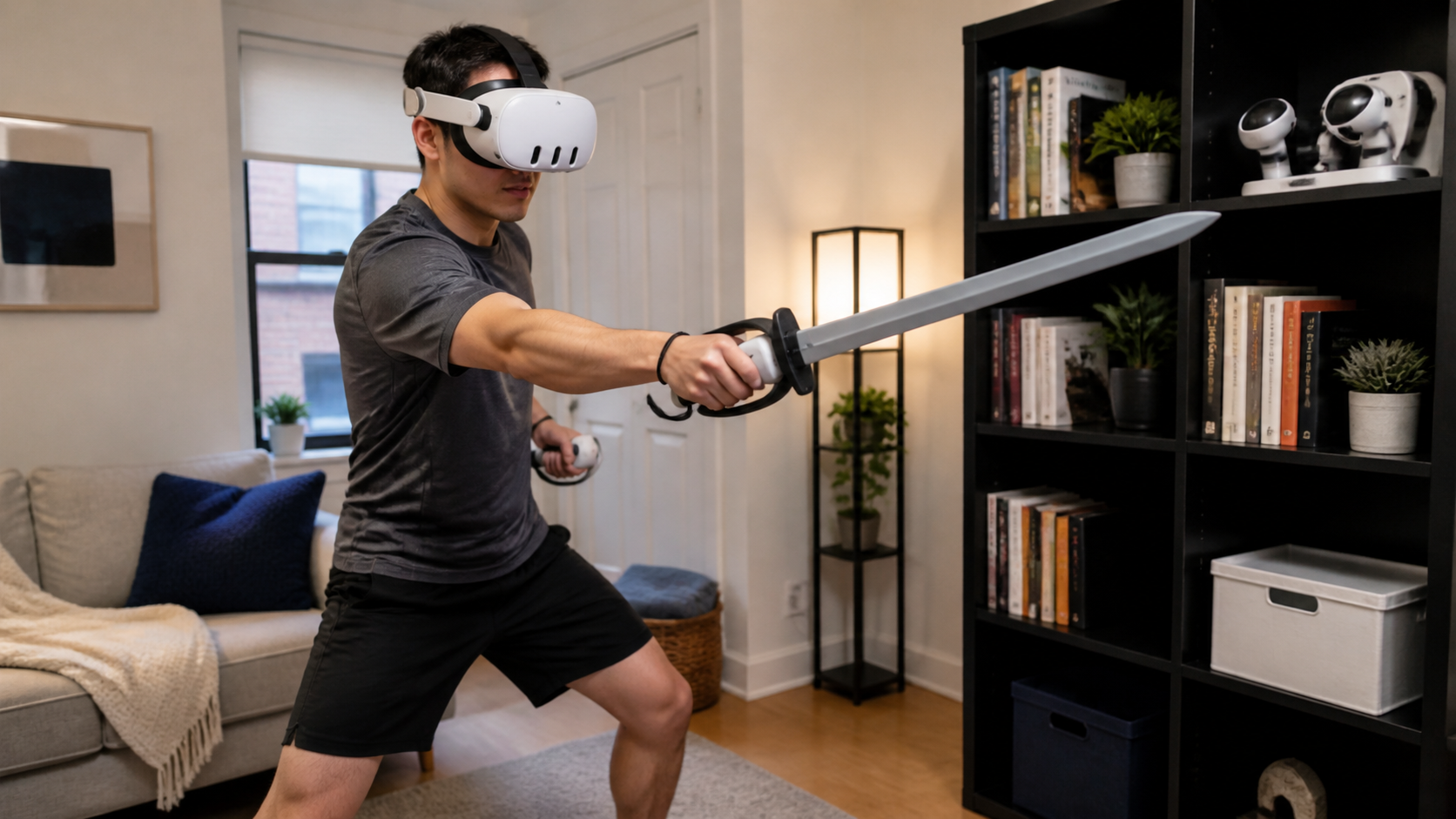
When I upgraded to the Quest 3, I loved the new Touch Plus controllers. They felt sleek and compact without the old tracking rings. But when I played my favorite sword-fighting games, I still felt nervous in my small apartment. My arm's full reach plus a virtual sword felt like an accident waiting to happen. I bought a popular VR sword accessory, hoping it would give me better grip and control without adding too much length. I wanted to see if it really solved the small-space problem or just created new ones, especially when it comes to packing everything up.
Can a real small rooms clip prove whether storage and travel improves?
You want to show off a cool VR moment, but worry the clip will reveal you hitting a wall. An accessory promises to fix this, but does a video show the full story?
A clip can show improved clearance during swings, which is great. But it's more convincing when paired with photos showing how easily the accessory is stored or carried. This proves it solves the whole small-room problem, not just part of it.
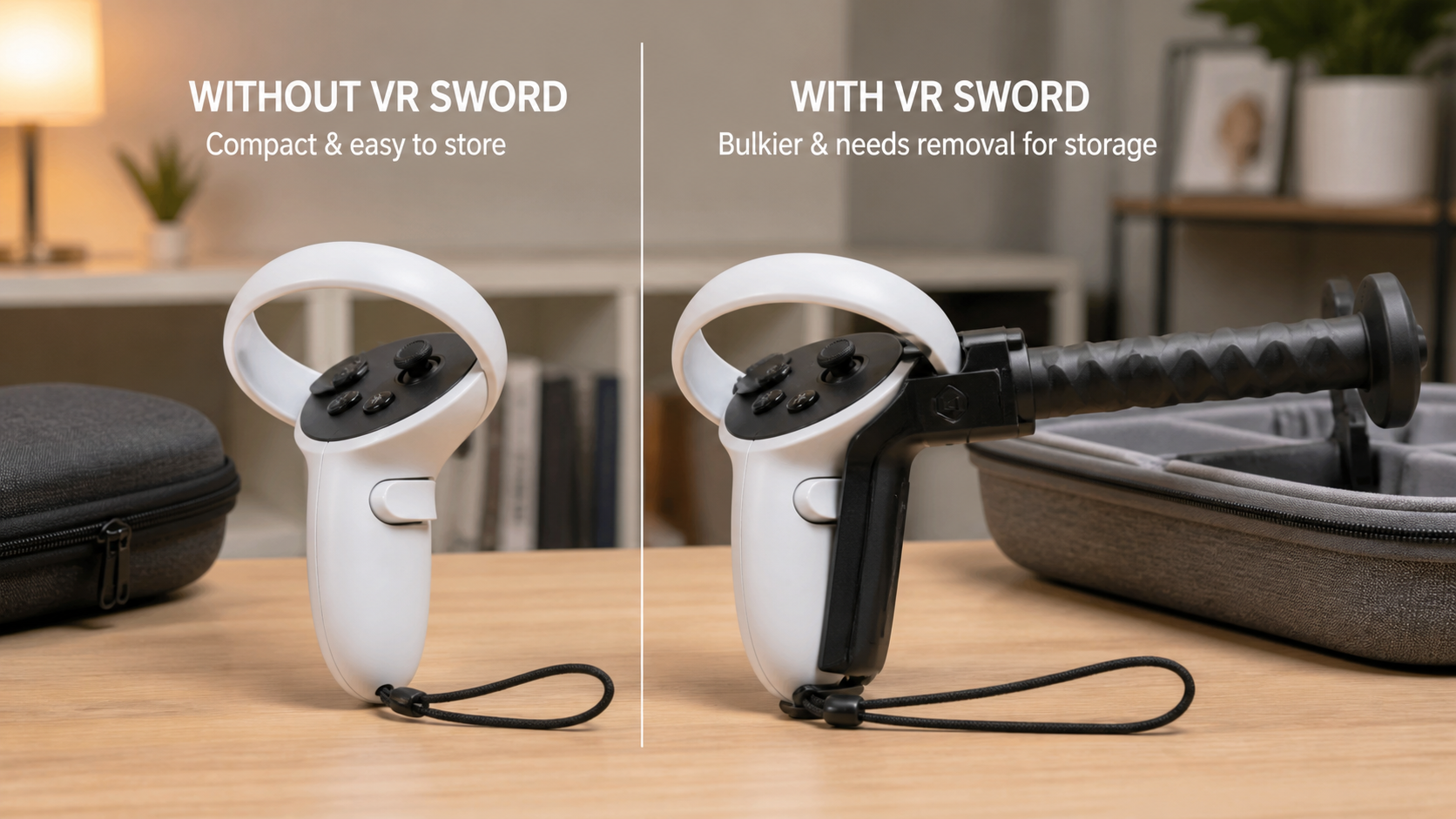
When I first tried the VR sword, I recorded myself playing. The video did show that my swings were a little shorter. I wasn't hitting the bookshelf behind me anymore. But the clip doesn't show the ten minutes before or after I played. It doesn't show me struggling to fit the bulky controller into my drawer. A video is only a snapshot. The real test is how an accessory fits into your entire VR routine.
The Full Picture: Gameplay vs. Real Life
A gameplay clip proves one thing: in-game performance. It doesn't prove convenience. I found that the true test of a small-room accessory is what happens when the headset is off. Does it make my neat setup messy? Can I still put my controllers on their charging dock without taking everything apart? I made a quick table to compare my own experience.
| Factor | Bare Controller | With VR Sword |
|---|---|---|
| In-Game Swing Clearance | Risky near walls | Slightly better |
| Storage in a Drawer | Easy, fits perfectly | Awkward, doesn't fit |
| Putting in a Travel Case | Simple | Must be removed first |
The failure case for me was travel. My compact case was no longer useful. The accessory, while helpful for swings, completely failed the storage and travel test.
What should be measured before claiming VR Sword fixes storage and travel?
Accessory makers love to claim their product is perfect for travel. But how can you really know if it's true before you buy it and get stuck with it on a trip?
First, measure the total swing radius from your body to the sword tip. Second, time how long it takes to attach and detach. Finally, weigh the controller with the accessory to check for added fatigue and balance issues.
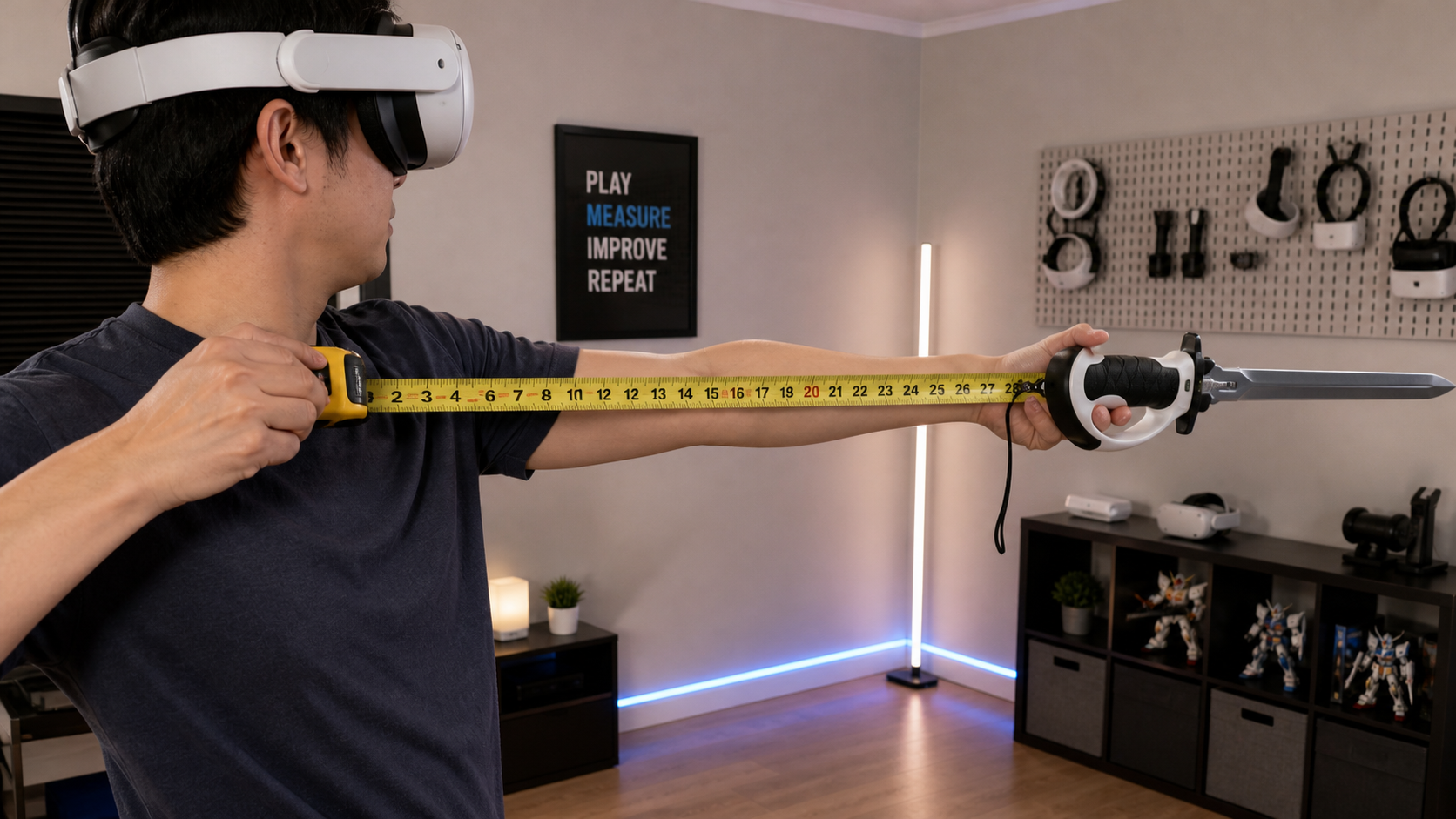
Claims without numbers are just opinions. So I decided to get concrete proof. I stood in the middle of my play space and measured my reach with a bare controller versus the controller with the sword accessory. The accessory only shortened my reach by a few inches. It was an improvement, but not a game-changer. Then I timed myself. It took me about 45 seconds to securely attach the handle and another 30 to take it off. That doesn't sound like much, but it's an annoying extra step every time I want to play. The biggest surprise was the weight. The extra plastic, though light, shifted the balance of the controller. My wrist started to feel tired much faster than usual, which was a deal-breaker for longer sessions. These simple measurements told me more than any marketing description ever could.
Does the product solve the pain for Quest 3 upgraders, or only for a narrower user type?
You just got a new Quest 3. You're excited about the smaller controllers. Do you really need to buy another accessory, or is it just for a different type of player?
This kind of accessory helps Quest 3 users who mainly play sword-fighting games like Blade & Sorcery. But if you switch games a lot, from a sword game to Beat Saber, the accessory becomes an annoying chore to attach and remove.
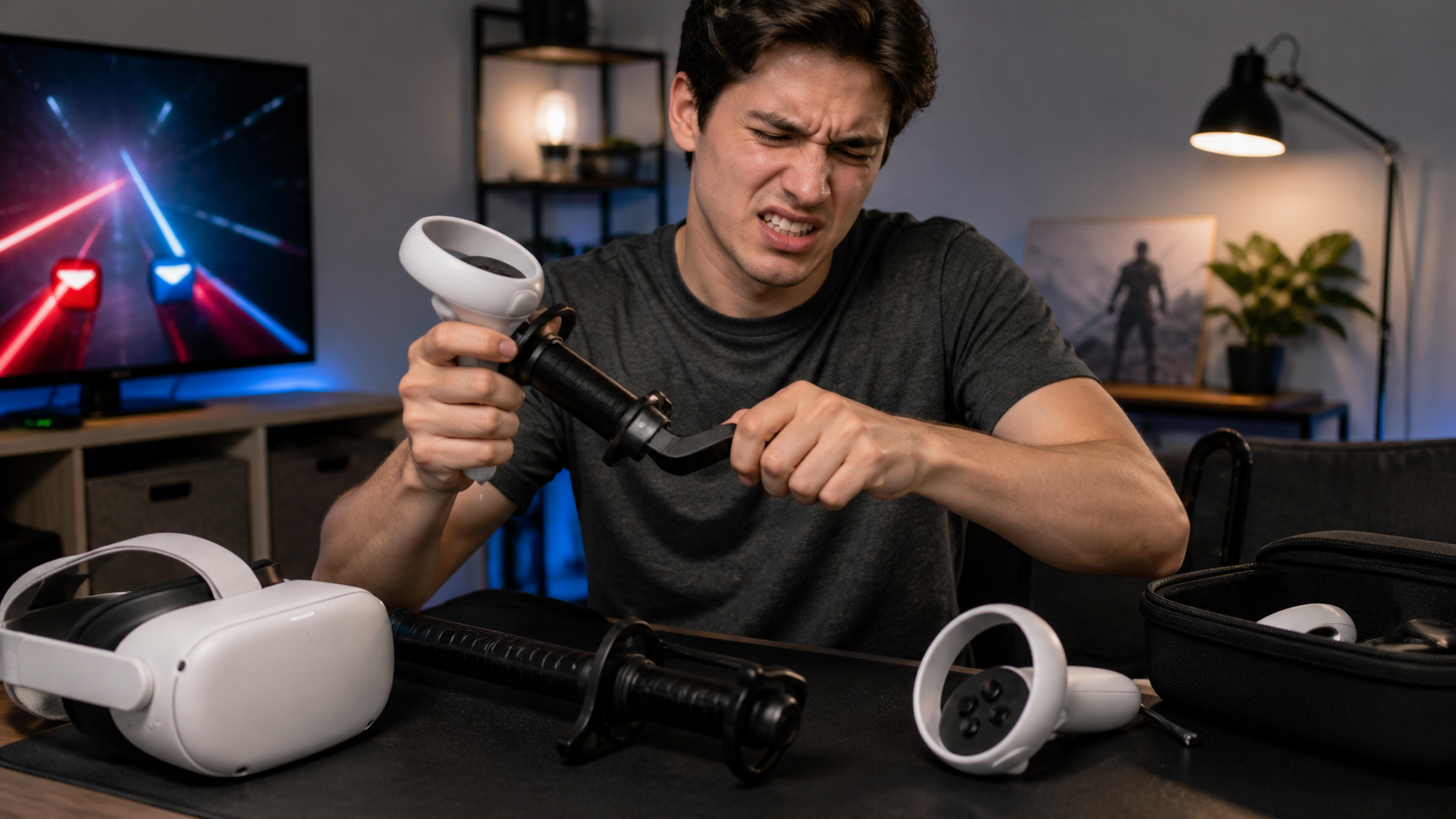
As someone who upgraded from a Quest 2, I love the ring-free Touch Plus controllers. They feel balanced and free. Adding the sword accessory felt like a step backward in some ways. For a game like Blade & Sorcery, the handle did add a nice feeling of holding a hilt. The immersion was a bit better. But then I wanted to play a quick round of Beat Saber. The sword handles were terrible for the fast, precise wrist flicks required. So I had to stop, take them off, and put them aside. Then, when I wanted to play Gorilla Tag, the handles were completely useless. The product seems designed for someone who boots up their Quest 3 and only plays one type of game for hours. For a generalist like me, who hops between different experiences, it created more problems than it solved. The bare controllers are simply more versatile.
Should the recommendation differ for casual and daily small rooms use when storage and travel appears?
You only play VR a few times a week in your small room. Is this accessory still worth the hassle and cost for you compared to someone who plays every single day?
Yes, the recommendation should be very different. For casual users, the setup and storage hassle outweighs the small in-game benefit. Daily players might accept the hassle for better immersion, but only if they don't get wrist fatigue.
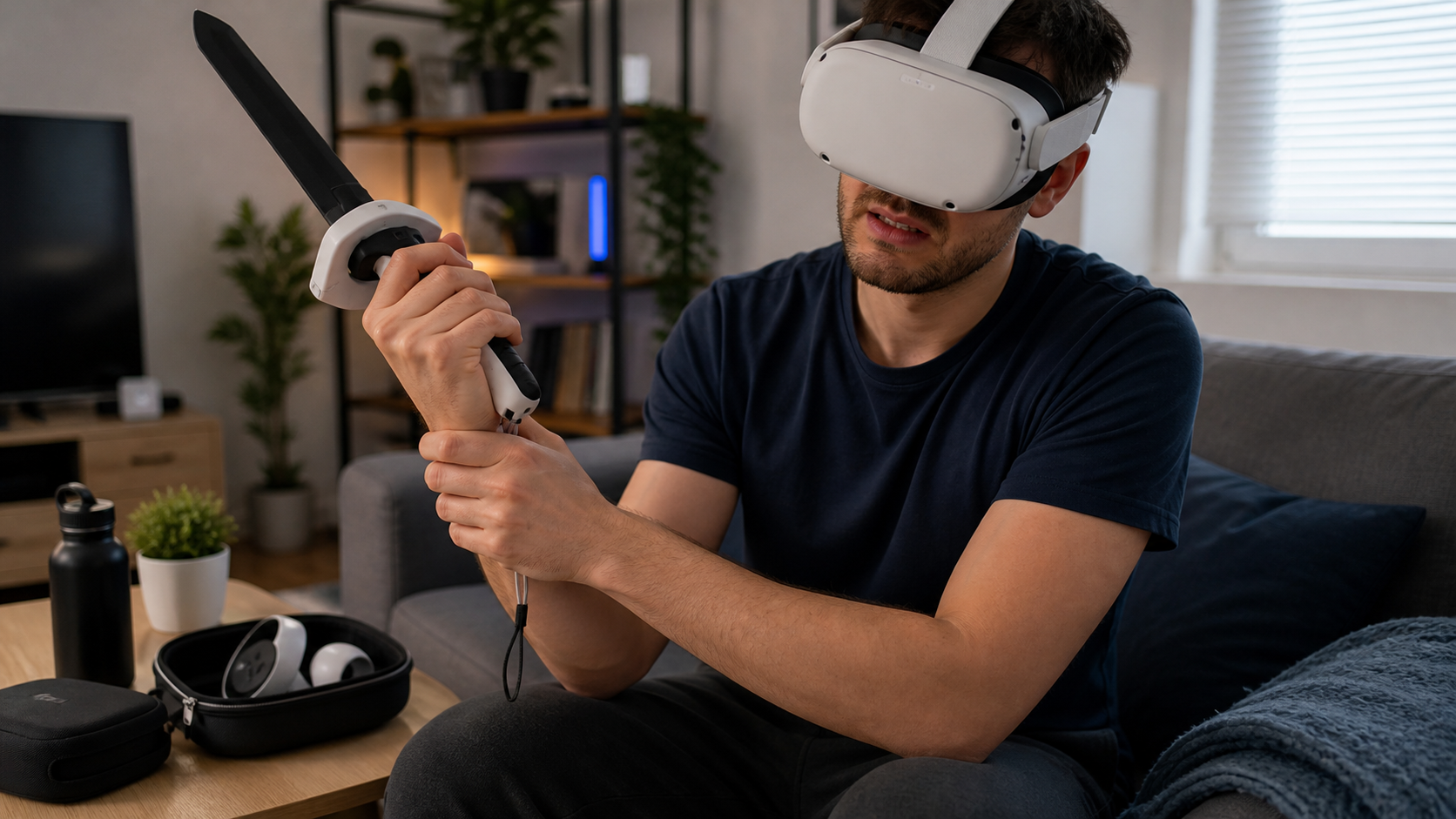
My experience proved this point clearly. When I tried to use the sword accessory for a short, 15-minute session, the setup time felt like a huge waste. By the time I was ready, my motivation to play had already dropped. For a casual player, this friction is a big turn-off. A daily player, however, might be willing to go through the setup ritual for a game they love. But even for them, there's a catch. After just ten minutes of intense sword fighting, I noticed my wrist was getting sore from the extra weight and awkward balance. A daily player who plays for an hour or more would likely find this fatigue to be a serious issue. This was the biggest failure case for me. Even if I ignored the storage problems, the physical discomfort told me this accessory was not a good fit for long or repeated use. It's a niche product for a very specific, and patient, user.
Conclusion
A VR sword can help in small rooms for certain games. But its storage issues and potential wrist fatigue mean it is not the right choice for every Quest 3 user.
Leave a comment