



Do Long Arms for Gorilla Tag fix room safety without slowing down normal controls?

You love Gorilla Tag, but you keep hitting your walls. It breaks the fun and feels unsafe. What if longer arms could give you more reach without forcing you to move?
Yes, Long Arms for Gorilla Tag improve room safety by giving you a buffer, but they introduce a learning curve that affects movement timing. You trade the natural, fast feel of bare controllers for a longer reach that requires practice to master. They don't slow you down forever, but they do at first.
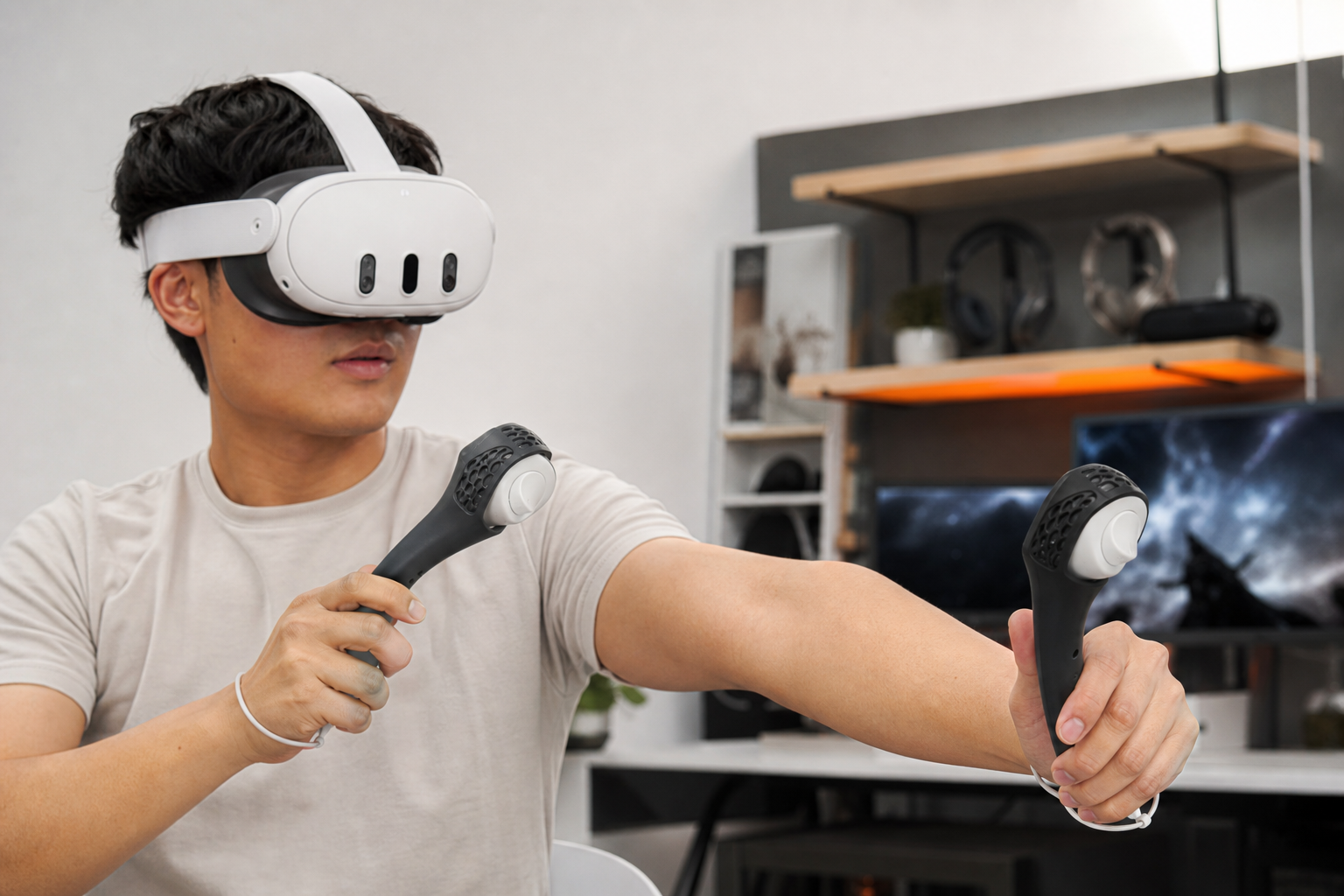
I wanted to find out if these accessories were right for me and my family. We love playing Gorilla Tag on our Meta Quest 3, but our living room isn't huge. The fear of smacking a hand against the coffee table is always there. I decided to test these Long Arms myself, starting in a private lobby to see how they really felt. My goal was to see if the safety benefit was worth changing how I play the game. I followed my own questions to get a clear answer.
If the session lasts 20 minutes, does room safety become more noticeable?
You start a game and feel totally in control. But after a while, you get lost in the action and forget where your walls are. A sudden painful crash reminds you.
Absolutely. The safety benefit of Long Arms becomes much more obvious after 20 minutes of intense play. As you get tired, your awareness of your physical space drops, and the handles act as a crucial buffer, preventing your hands from hitting real-world objects.
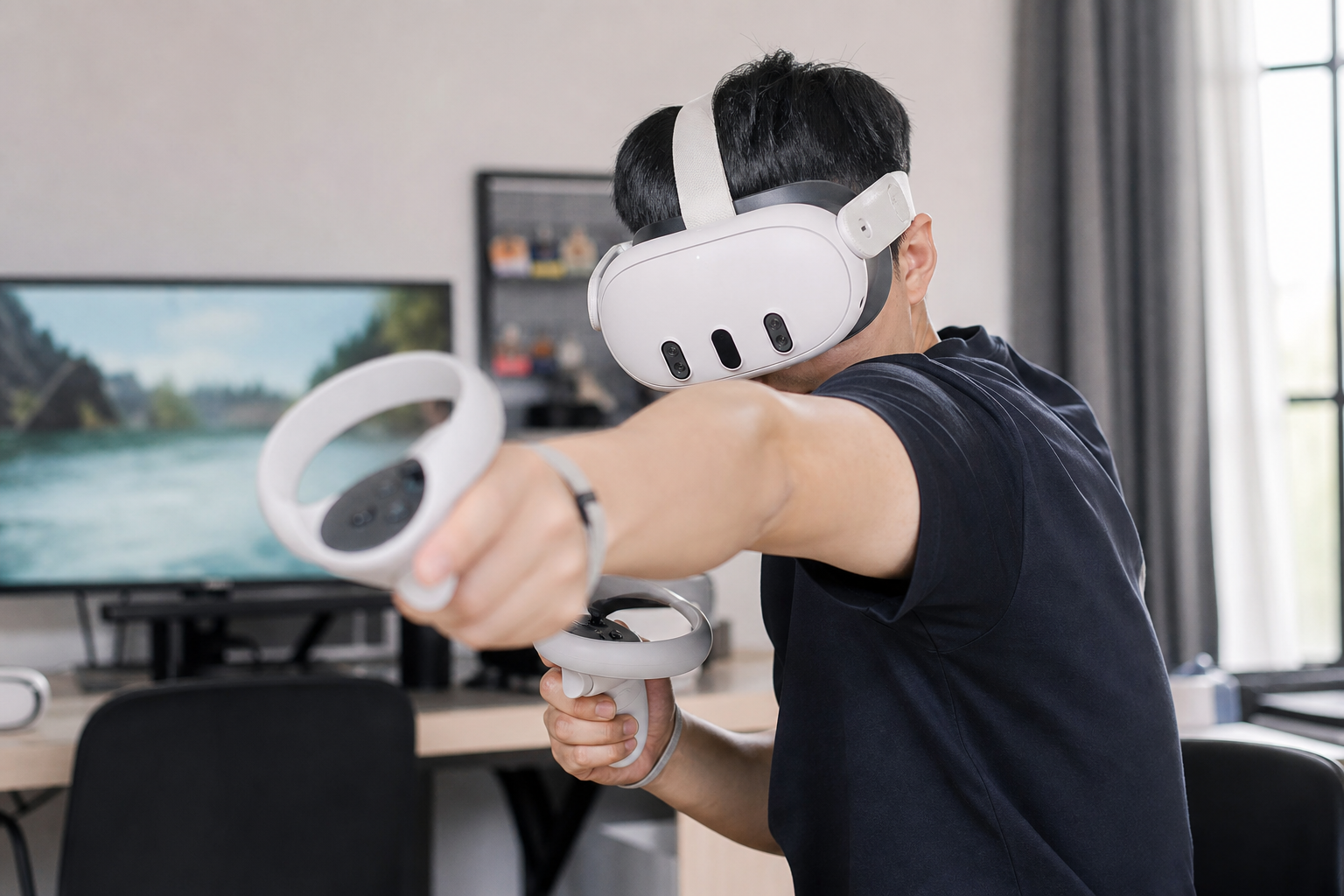
When I first started my session, I was very aware of my room. For the first five minutes, I rarely triggered the guardian boundary, even with bare controllers. My movements were careful. But as I got more into the game, I forgot about my living room. After about 20 minutes of chasing and climbing, I was playing purely on instinct. My arms were swinging wider and faster. This is where the Long Arms made a huge difference. With my bare hands, the guardian would flash constantly, and I had a few close calls with a bookshelf. With the Long Arms, the extra length meant my virtual hand would hit the ground or a wall in the game before my real hand got close to my furniture. It was a built-in warning system.
Awareness Drop-off Comparison
My focus changed a lot as the session went on. The table below shows how my awareness of my room changed over time.
| Time Elapsed | Awareness with Bare Controllers | Awareness with Long Arms |
|---|---|---|
| 5 Minutes | High. I was careful and aware of my space. | Very high. The extra length made me cautious. |
| 10 Minutes | Medium. I was more focused on the game and had a few close calls. | High. The handles kept reminding me of my reach. |
| 20 Minutes | Low. I completely forgot my surroundings and hit the guardian often. | Medium. The handles provided a buffer that stopped me from hitting things. |
After that 20-minute session, I also noticed my hands were sweating. The grips on the Long Arms felt very secure, which was a nice bonus. I never felt like the controller would slip out, even during fast movements. The main benefit, however, was clearly the safety.
Can the article compare Long Arms for Gorilla Tag with bare controllers during Gorilla Tag?
You see accessories that promise to make you better at a game. But you wonder if they just feel strange and make it harder to play.
Yes. Bare controllers give you fast, natural, and precise timing. Long Arms give you a much longer reach. This reach comes at the cost of that natural timing. Movement feels heavier and slower at first, and you have to completely relearn your muscle memory.
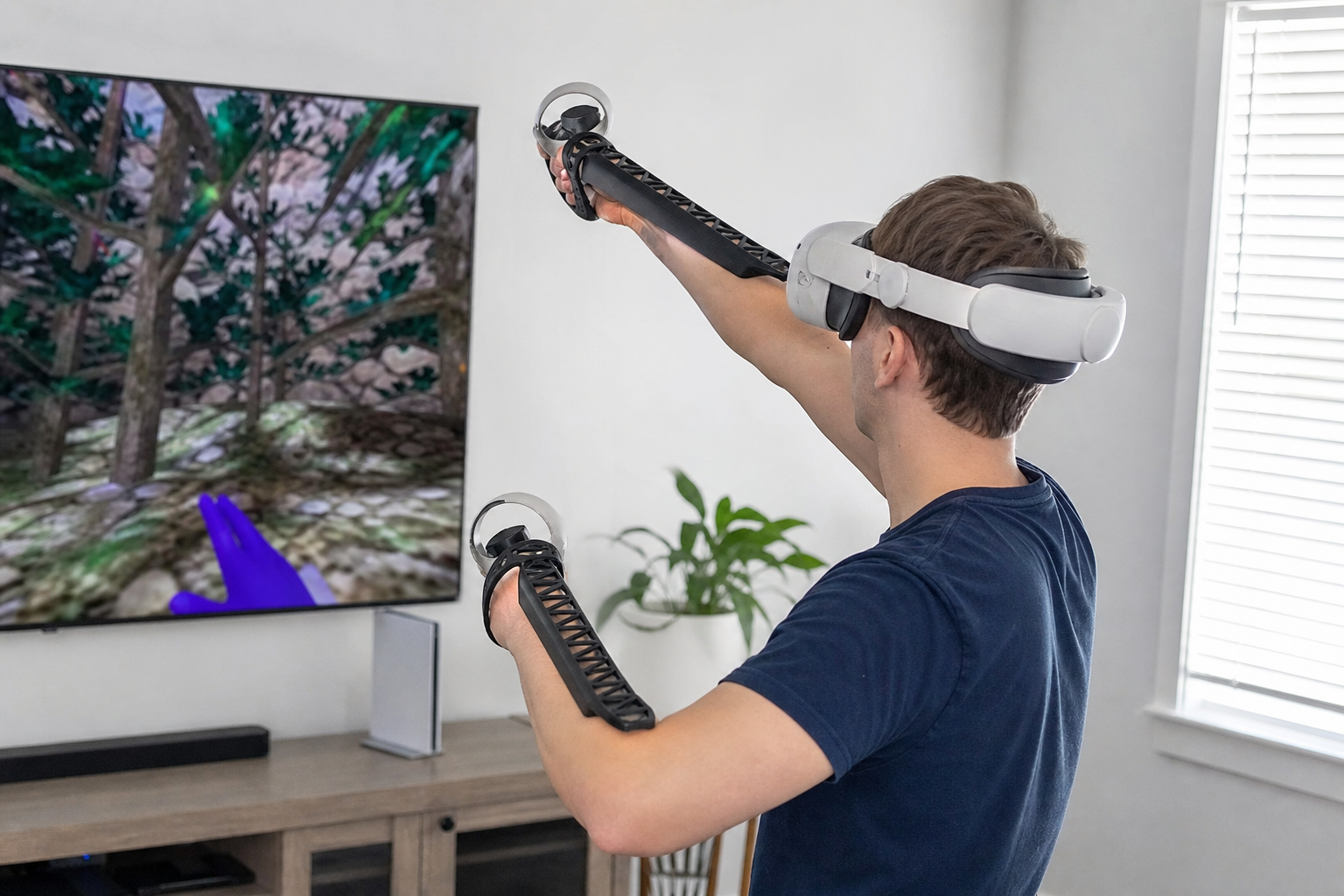
The difference in feel is immediate. With bare controllers, the movement is one-to-one. Your brain knows where your hand is, and the game responds instantly. This is perfect for quick jukes, small adjustments on a wall, or grabbing a tricky branch. Everything feels sharp and responsive.
When I switched to the Long Arms, the entire dynamic changed. It felt like I was swinging weighted bats. A small flick of my wrist created a huge, sweeping arc in the game. This was great for pushing off the ground. I could launch myself forward with very little effort. But when it came to climbing, it was a disaster at first. I kept overshooting my grabs. The timing was all wrong. I felt slow and clumsy trying to do anything that required precision. My brain expected my hand to be in one place, but the virtual hand was a foot further away. This disconnect is the biggest hurdle. The Long Arms are not about making your existing skills better. They are about trading your existing skills for a different set of advantages that you have to learn from scratch.
Would casual players care more about safety than immersion here?
You want to share VR with your family without worrying about broken lamps or hurt hands. Is it better to feel safe than to feel perfectly immersed?
Yes, for most casual players and families, safety is more important than perfect immersion. The fear and frustration of hitting a real-world object instantly ruins the fun. Long Arms provide peace of mind, which makes the game more enjoyable for beginners, even if the movement feels less realistic.
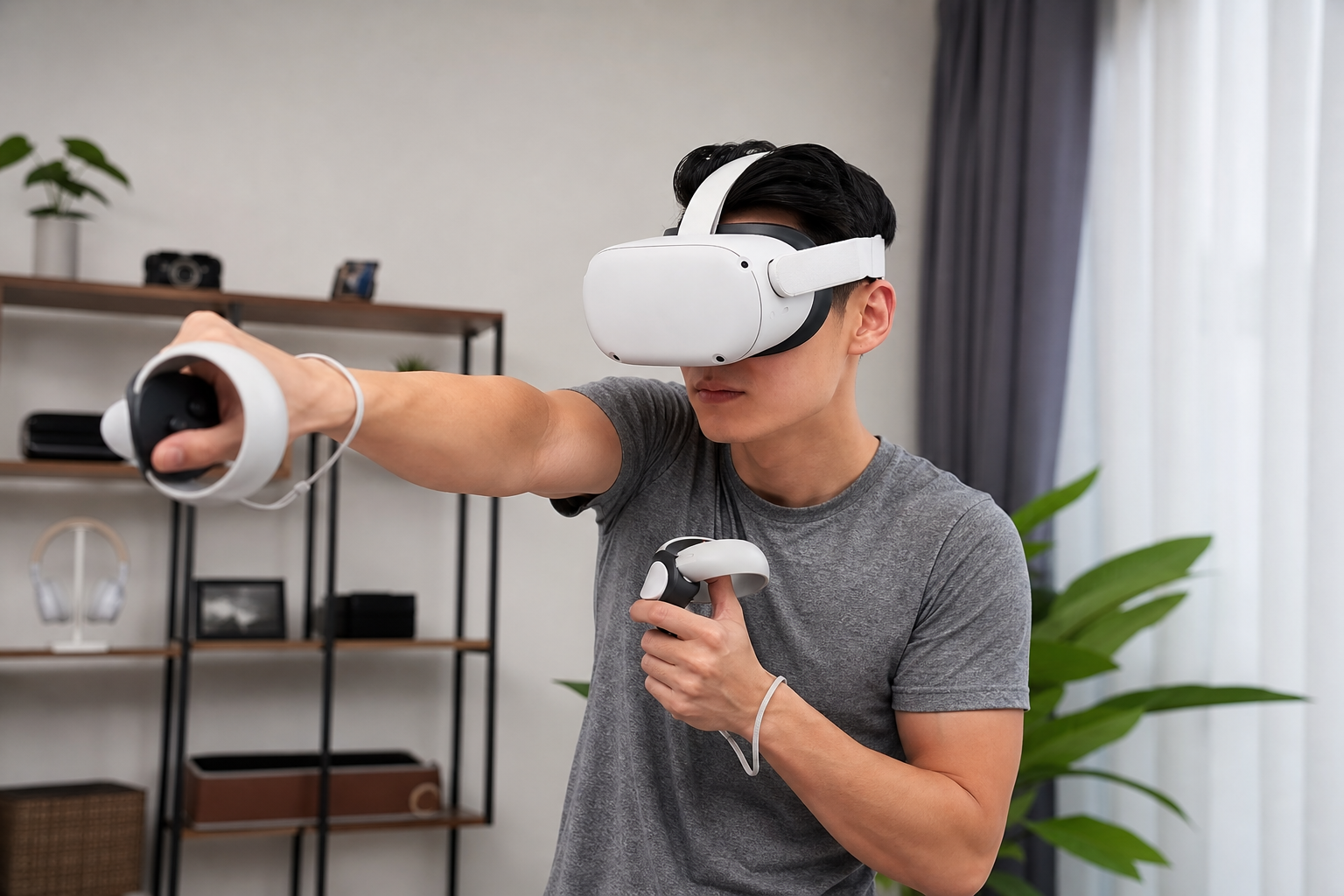
I tested this idea with my nephew. He doesn't play VR very often. I first let him try Gorilla Tag with the standard controllers. Within minutes, he was swinging his arms wildly and getting dangerously close to our TV. I spent the whole time nervously telling him to be careful. It was stressful for both of us. The fun was gone.
Then, I attached the Long Arms and let him try again. His character in the game moved awkwardly. He wasn't climbing trees or doing anything complex. But he was having a blast just running around on the ground. More importantly, he wasn't hitting anything. The extra length kept his real hands safely within our playspace. For him, the "unrealistic" timing didn't matter because he had nothing to compare it to. He was just a kid having fun pretending to be a gorilla. The true immersion-breaker is real-world pain. By preventing that, the Long Arms actually created a better, less stressful experience for a casual player. For families, this is a huge win.
Should Long Arms for Gorilla Tag be recommended for Gorilla Tag only if users accept training practice versus unrealistic movement timing?
You get a new accessory, hoping it will give you an edge. Instead, you feel worse at the game than before. Is the product flawed, or do you need to adapt?
Yes, absolutely. Long Arms should only be recommended to players who are willing to practice. They are not an instant upgrade. You must commit to relearning movement and adjusting your timing. If you expect to be better immediately, you will be very frustrated and should not buy them.
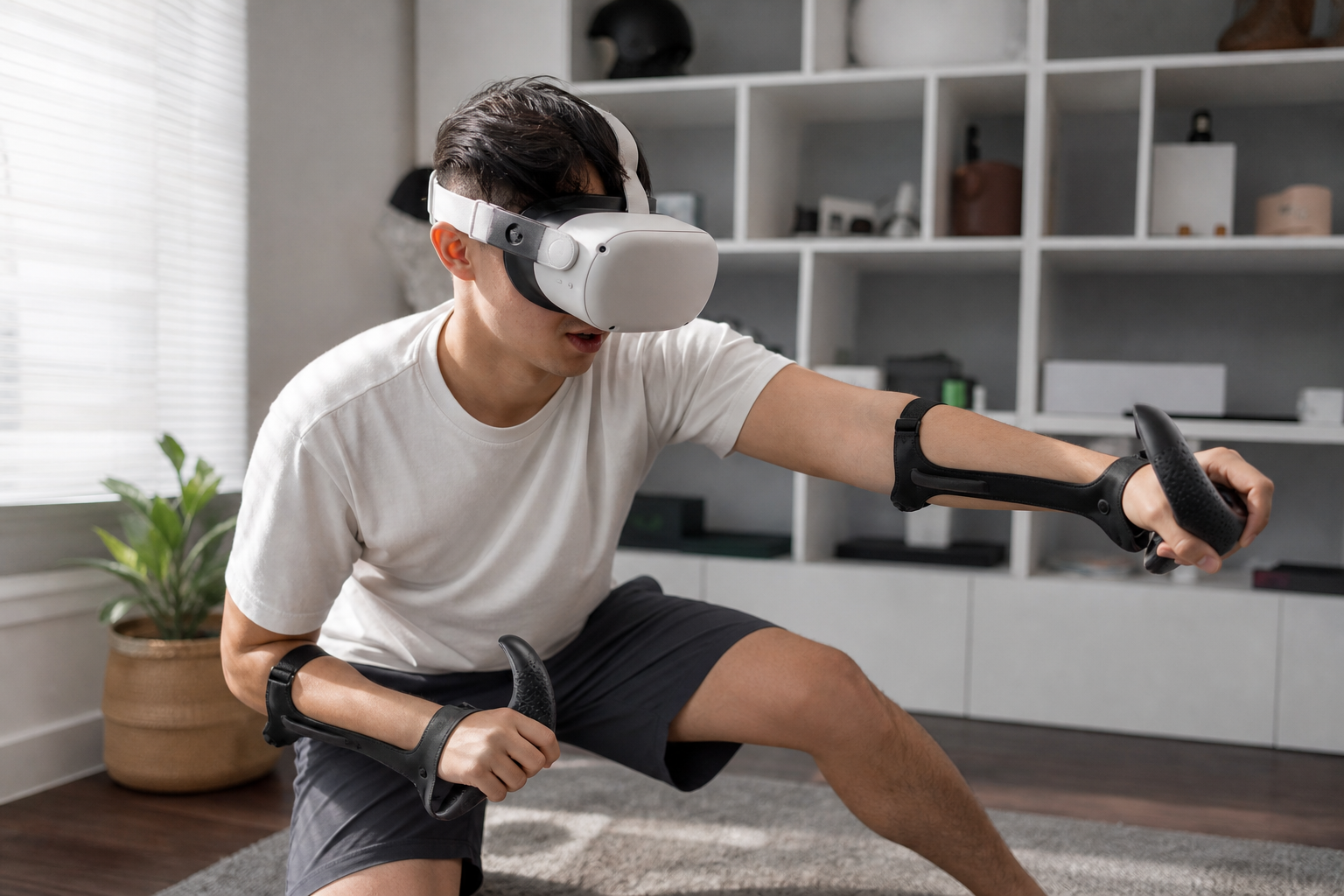
This is the most important point I discovered. These handles are a tool that requires training. My first half-hour with them felt terrible. I was slower, less accurate, and fell constantly. I almost gave up. But I decided to stay in a private lobby and just practice the basics: running, jumping, and pushing.
Slowly, I started to get the hang of it. I learned to start my arm swing a little earlier to make up for the new timing. I began to use the long reach to my advantage, pushing off the ground from farther away to gain more speed. It started to feel less like a handicap and more like a different playstyle. It's like learning a new character in a fighting game. You can't use the same old combos. You have to learn new ones.
So, who should skip these? Competitive players who have perfected their timing with bare controllers will likely hate them. The change is too drastic. But who should try them? Anyone playing in a small room, parents who want a safer option for their kids, or any player who values reach and power over speed and is patient enough to learn a new way to play.
Conclusion
Long Arms offer real safety benefits for players in tight spaces, but at the cost of a steep learning curve. They're ideal for casuals and families, but competitive players should beware.
Leave a comment