



Do Beat Saber Grips feel better than they perform in fast wrist swings for Expert+ Players?

You hit a wall on that Expert+ song again. Your new grips feel great, but your score isn't improving. Is the accessory actually hurting your performance?
For Expert+ players, Beat Saber grips often feel better for comfort and initial control, but their added weight can negatively impact performance during fast wrist swings. This becomes more apparent in sessions over 20 minutes, where fatigue reduces speed and precision on technical maps.
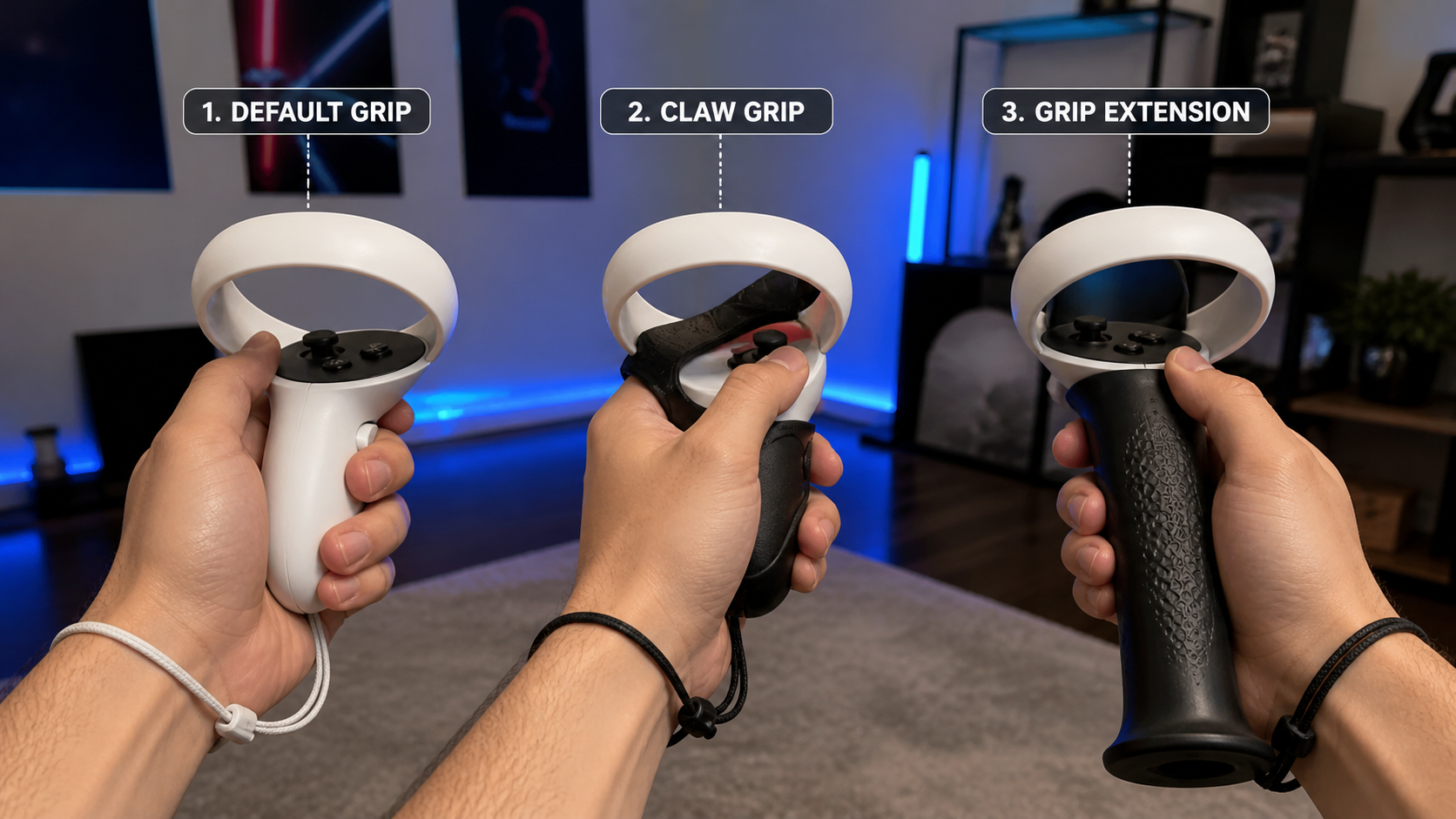
I’ve spent countless hours chasing high scores in Beat Saber, and like many players, I’m always looking for an edge. When I first tried a set of controller grips with handle extensions, I loved the feeling. My hands felt more secure, and the saber-like handle added to the immersion. But as I pushed into the faster, wrist-heavy Expert+ tracks, a nagging thought appeared. The grips felt good, but my performance felt… off. It wasn't until I started paying close attention to my post-session cleanup, wiping the sweat off my gear, that I connected the dots. The difference in fatigue and control between using the default grip, a claw grip, and these new handle extensions was huge, especially when my hands were tired and sweaty. This led me down a rabbit hole of testing to figure out the truth.
If the session lasts 20 minutes, does controller weight become more noticeable?
Your first few songs feel amazing. The new grips give you power and control. But then, your wrists start to ache, and your swings feel sluggish.
Yes, controller weight becomes significantly more noticeable after 20 minutes of intense play. The added mass increases the force needed for rapid wrist flicks, causing fatigue in your forearms that slows down your reaction time and hurts your accuracy on fast-paced songs.
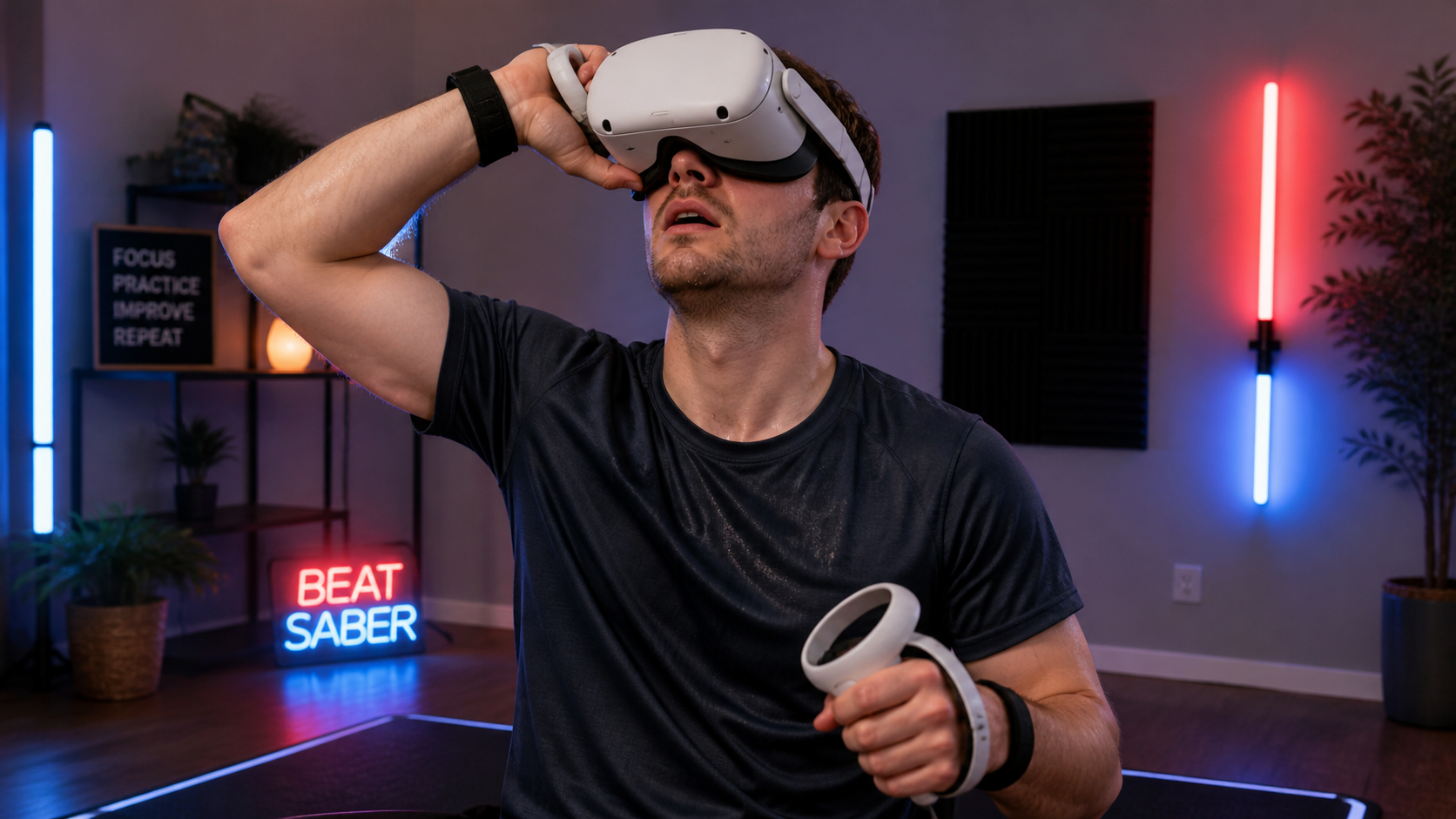
In the first five minutes of a session, the extra weight from a grip extension feels like a benefit. It gives the controller a satisfying heft and stability, making wide, powerful swings feel more intentional. However, this is a short-lived honeymoon. As I push past the 10-minute mark on a fast-paced playlist, that satisfying weight turns into a burden. My wrist, the primary joint for high-level Beat Saber play, has to work much harder to start, stop, and change the direction of the controller. This extra work leads to muscle fatigue much faster than with a standard, lightweight controller. After 20 minutes, I notice a clear drop-off in my ability to hit fast, complex patterns. The weight creates a lag in my movements, and my swings start to feel sloppy.
From Power to Problem: A Timeline of Fatigue
The change is not sudden. It creeps in slowly. Here’s how I felt the difference in perceived effort over a typical 20-minute Expert+ session.
| Time in Session | Effort with Standard Grip | Effort with Handle Grips |
|---|---|---|
| 5 Minutes | Low. Wrists feel fast and snappy. | Low. Swings feel powerful and stable. |
| 10 Minutes | Low to Medium. Still feeling consistent and quick. | Medium. Starting to feel the weight on quick direction changes. |
| 20 Minutes | Medium. Some natural fatigue, but control is still high. | High. Wrists are tired, accuracy drops, and overswings are common. |
What would a real Beat Saber Grips test in fast wrist swings on Meta Quest 2 reveal about controller weight?
You think a grip will help you pass that impossible song. But what if the accessory itself is the reason you keep failing the fast sections?
A real test reveals that added controller weight from grips increases momentum. While this can feel good for slower songs, it hinders the rapid, precise wrist flicks needed for Expert+ levels. It causes overswings and makes it harder to recover for quick, alternating notes.
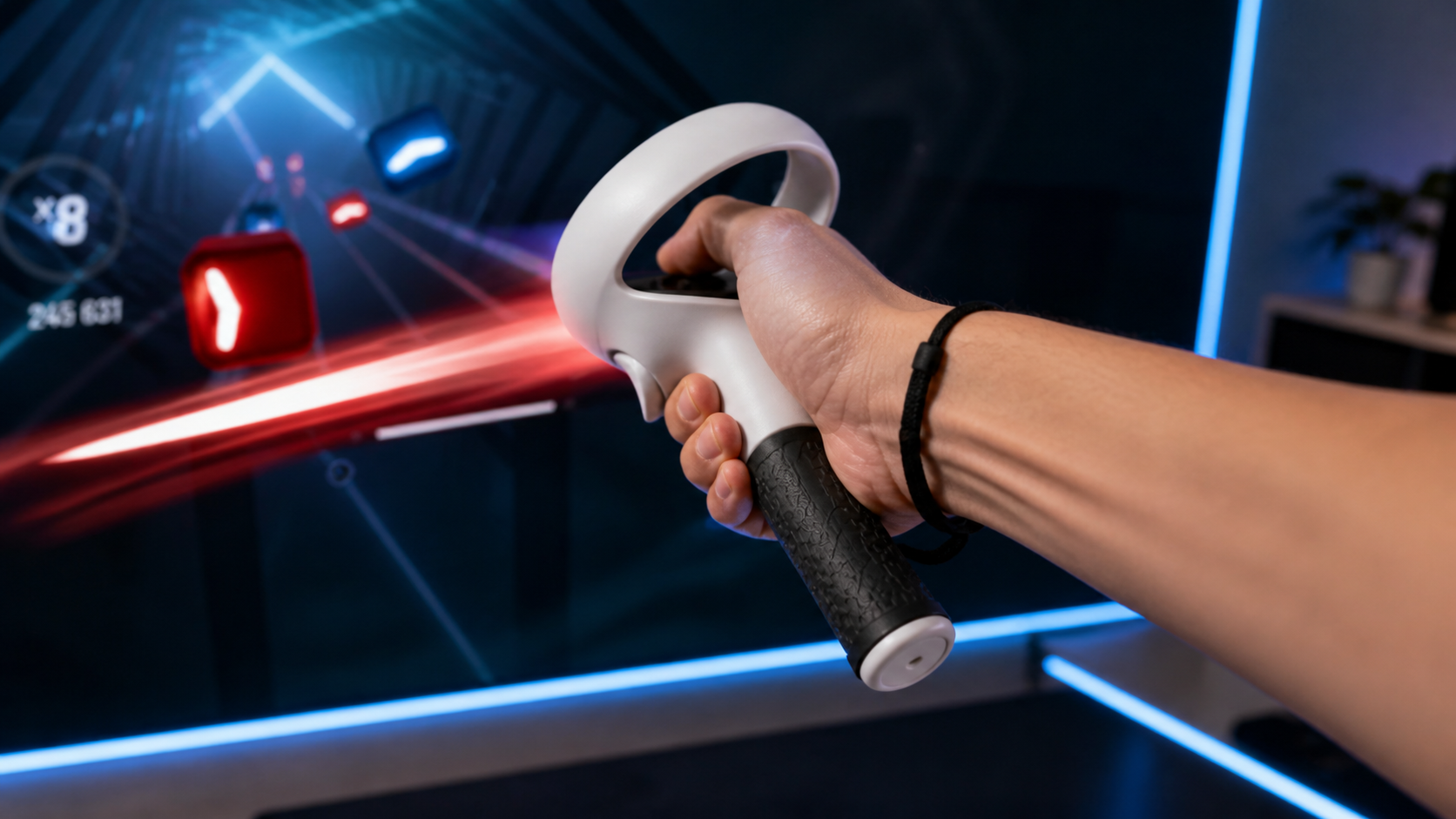
To understand why this happens, I had to look at how I hold the controller. Many top players don’t even use the default grip. We use what’s called a "claw grip." Instead of holding the handle, you grip the controller higher up, with your index finger and thumb around the tracking ring. This shifts the center of gravity closer to your hand, effectively shortening the controller. It feels less like swinging a hammer and more like flicking a pen. This grip minimizes the rotational inertia, allowing for the incredibly fast and snappy wrist movements needed to hit dense note patterns.
When you add a handle extension, you do the exact opposite. You move the weight further away from your hand, increasing the rotational inertia. This means it takes more force to start the swing and, more importantly, more force to stop it. On an Expert+ map with rapid up-and-down notes, my controller with the grip would constantly overshoot the target because the extra momentum carried it too far. I was fighting the weight of the accessory itself, which is a losing battle when notes are flying at you.
Does the accessory still feel good after sweat, heat, or fast motion?
That secure grip felt great when you were dry. But now you are ten minutes into a workout, and the controller is slipping in your sweaty hand.
No, for many players, the accessory feels worse once sweat is involved. Smooth silicone or plastic grips can become very slippery, forcing you to tense your hand to maintain control. This added tension leads to more fatigue and ruins the relaxed grip necessary for precision.
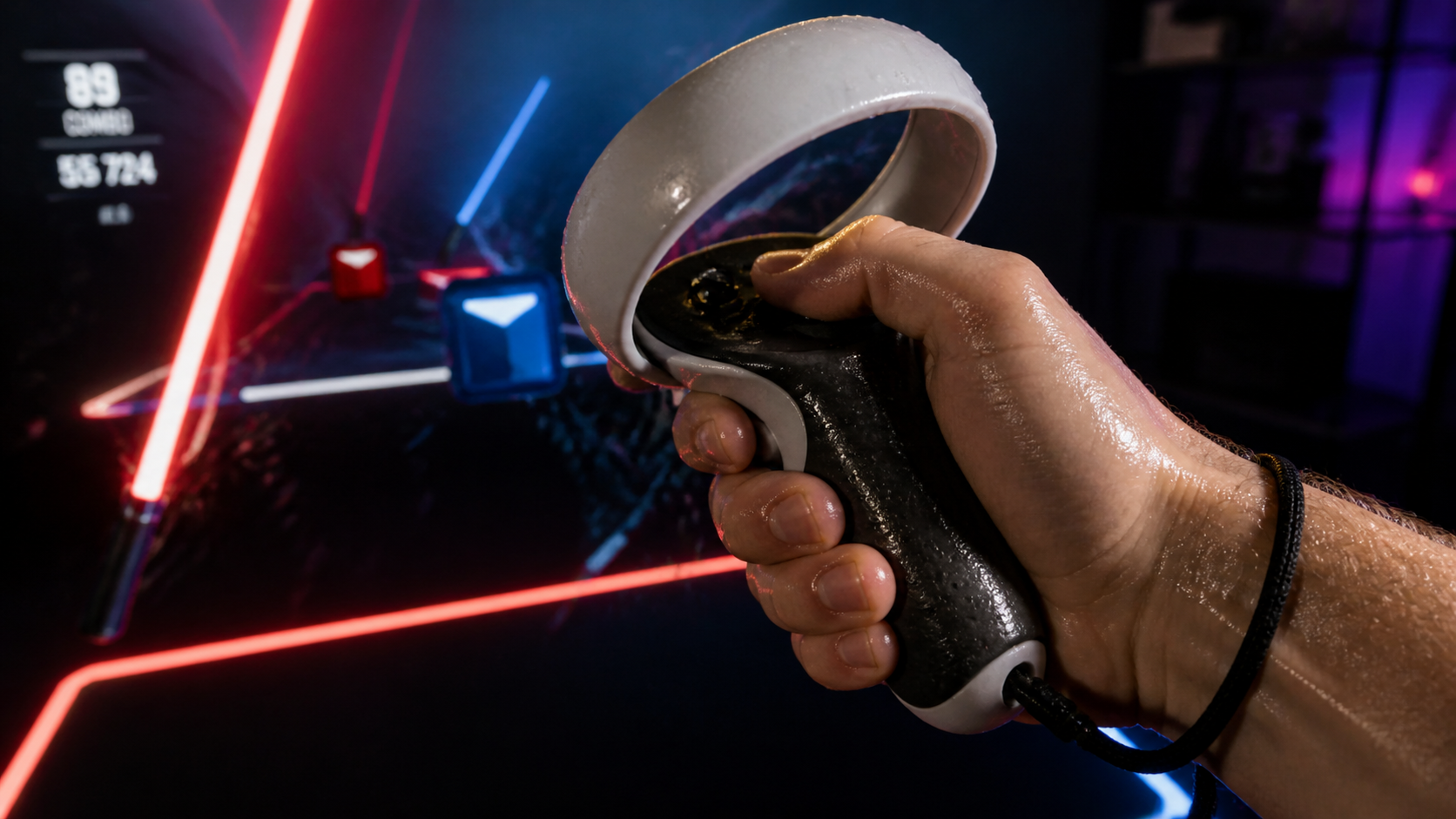
This is one of the biggest disconnects between how a product feels out of the box and how it performs in a real-world scenario. My post-workout cleanup became my lab. Wiping down the gear, I noticed how slick the silicone grip covers had become. During gameplay, this slipperiness was a disaster. Even with knuckle straps holding the controller to my hand, the handle itself would rotate slightly in my palm. I found myself subconsciously squeezing the controller tighter to stop it from shifting.
This constant, low-level tension is poison for high-level play. Fast wrist swings require a relaxed, fluid motion. When you’re death-gripping the controller just to keep it aligned, your movements become stiff and slow. It completely defeats the purpose of the grip, which was supposed to make holding the controller more comfortable, not less. In contrast, the standard textured plastic of the Quest 2 controller, especially with a claw grip where less of my palm is in contact, often provides a more reliable surface when my hands get sweaty. The problem isn't just about comfort; it's about maintaining consistent control when the physical conditions change mid-song.
Should the recommendation differ for casual and daily fast wrist swings use when controller weight appears?
Are Beat Saber grips a universal upgrade for everyone? Or is an accessory that helps a casual player a major liability for a competitive one?
Yes, the recommendation must be different. Grips are excellent for casual players who enjoy immersion and use more arm swings. For daily Expert+ players who rely on fast wrist flicks, the standard lightweight controller, often with a claw grip, is superior for performance.
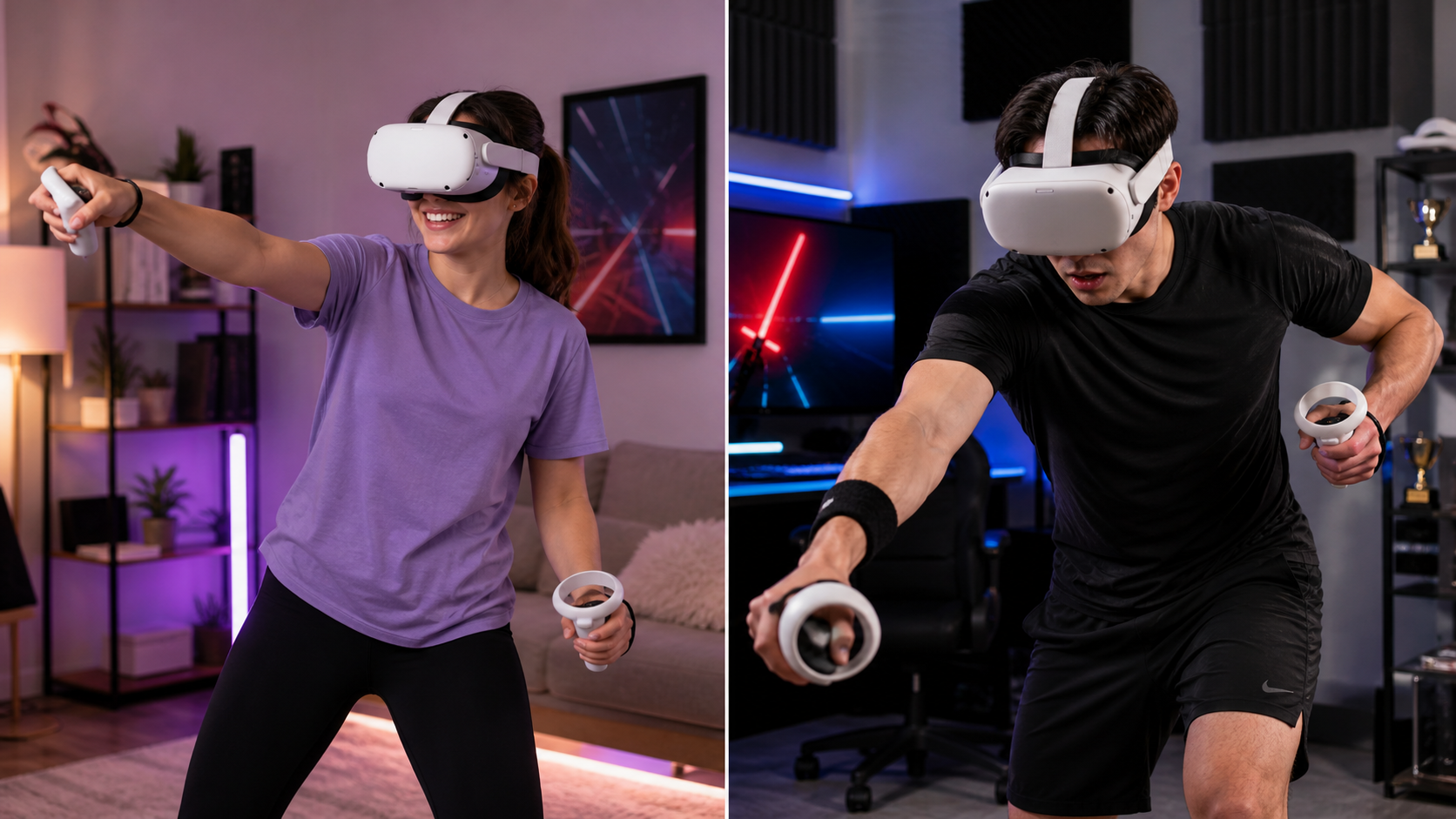
This isn't a simple "good" or "bad" verdict. It's about matching the tool to the task. If you play Beat Saber for fun, for a workout, or on difficulty levels up to Hard or a few Expert songs, I think you'll love these grips. They make the controllers feel more like sabers, the secure fit is comforting, and the added weight is not a major issue on songs that allow for bigger, more deliberate arm movements. For this type of player, the accessory enhances the experience.
However, if you are like me and you spend hours every week trying to full-combo Camellia songs or climb the leaderboards, I would tell you to skip the handle extensions. For us, performance is measured in milliseconds and millimeters. The added weight, the increased momentum, and the slippery-when-wet texture are all direct disadvantages. They introduce variables that work against the core mechanics of high-level play: minimal weight, maximum speed, and perfect precision. The grips felt helpful on slower, flowy maps, but they became an active annoyance on any track that demanded fast, technical wrist work. In the end, the best accessory for me was no accessory at all.
Conclusion
Beat Saber grips can improve comfort for casual play, but the added weight often hurts performance for Expert+ players in long, sweaty sessions requiring fast wrist swings.
Leave a comment