



Do Beat Saber Grips create a learning curve in Quest 3 controllers for Kids?

Your kid loves Beat Saber, but their controllers keep slipping. You worry about a cracked controller or a broken TV. These grips might be the solution you are looking for.
Yes, Beat Saber grips create a small, temporary learning curve for kids using Quest 3 controllers. However, this adjustment period is short. The long-term benefits of improved control, reduced wrist strain, and a more secure hold quickly outweigh the initial awkwardness for most young players.
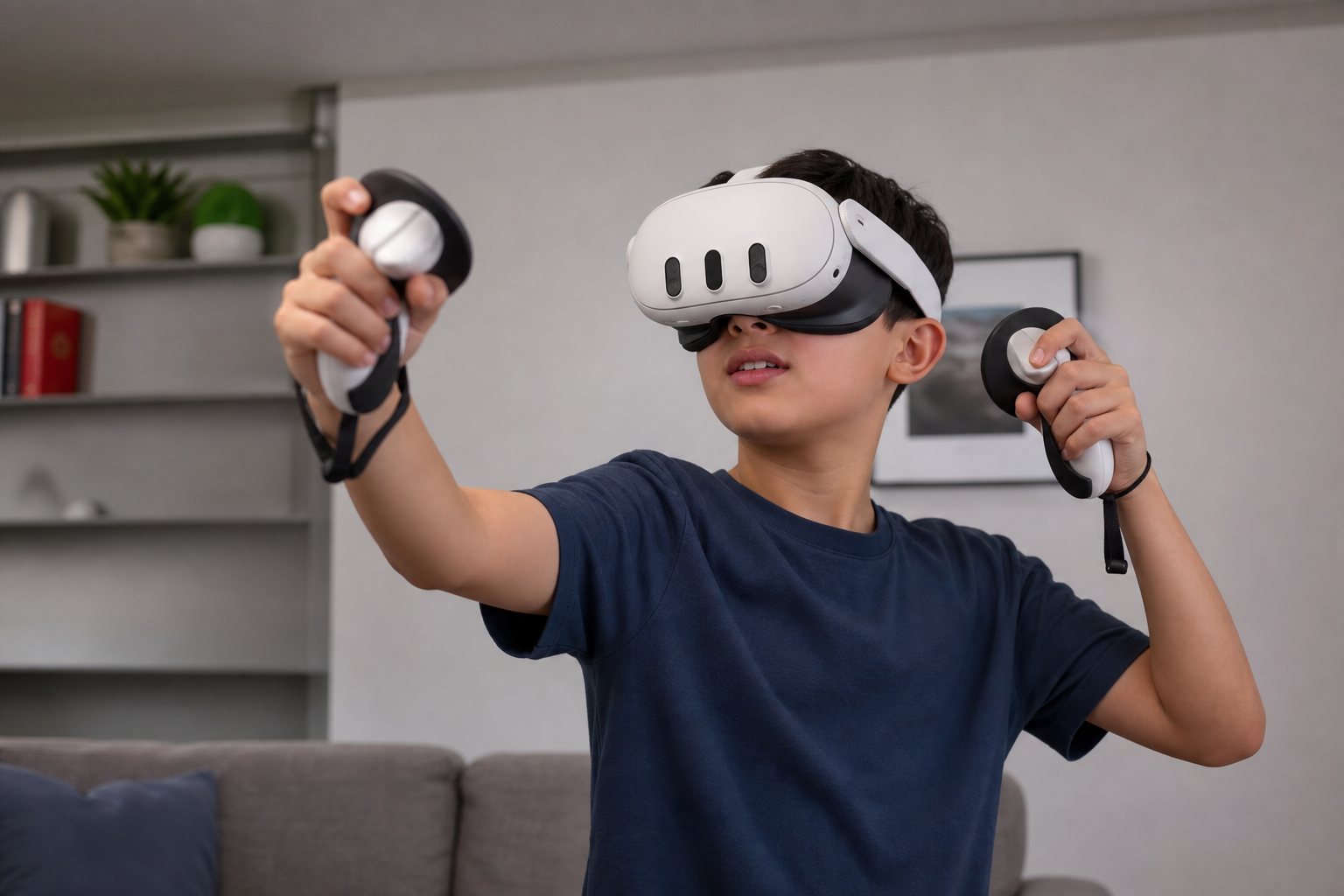
When I first saw these grip extensions, I had the same doubt as any parent. Will this fancy plastic accessory mess up the game my kids love? My son and daughter are obsessed with Beat Saber. They know the feel of the standard Quest Touch Plus controllers. Their muscle memory is dialed in. I worried that changing the controller's shape would throw off their timing and turn fun into frustration. But the thought of them having a better, more secure grip was too good to ignore. We decided to treat it like a science experiment in our living room. We would test them ourselves, on fast songs, and give a completely honest verdict. This is what we found.
Does a close-up of hand position and saber angle answer the buyer's main doubt about grip transition in Quest 3 controllers?
You see the long handle and think it will ruin your aim. This simple change could destroy your high scores and make the game feel wrong. Let's look closer.
A close-up view confirms the grips change your hand position and the in-game saber angle. They encourage a lower hold, making it feel more like a sword hilt. This shift is consistent, not random, allowing players to adapt and potentially improve their swing efficiency and reduce arm fatigue.
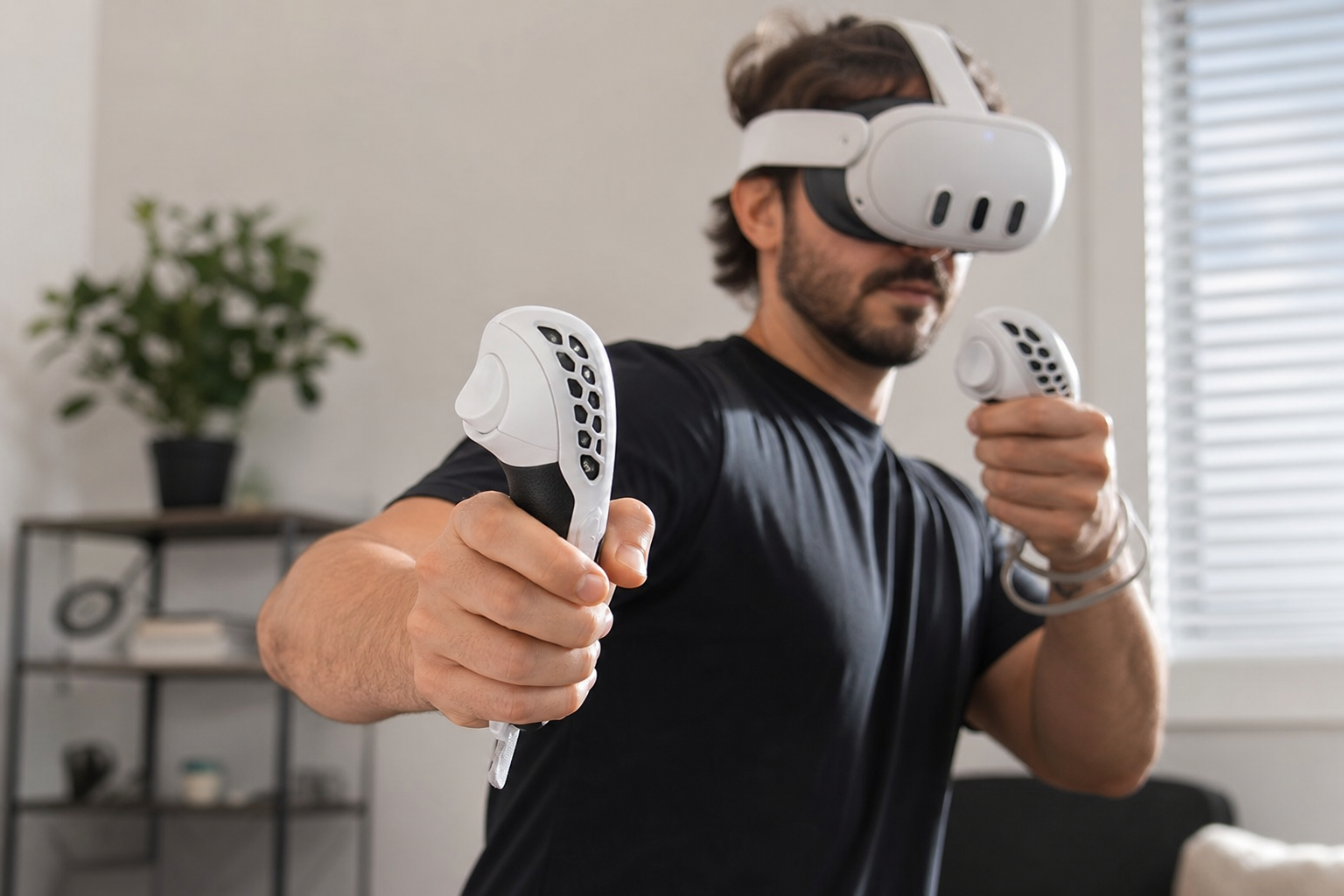
The biggest fear is that the accessory will make the controller feel unnatural. My first step was to just look at how my son held the controller with and without the grip. Without it, his hand wrapped around the body of the controller, his index finger near the trigger. With the grip attached, the extra length naturally guided his hand downward. He was holding the very bottom of the new handle, like you would hold a tennis racket or a small sword. This immediately changed the pivot point for his swing. Instead of moving from the center of his hand, the pivot was now at the base of his palm. This is a significant change, and it's the source of the learning curve.
Hand Position and Angle Analysis
We saw that the angle of the saber in the game was pointing slightly more upward than before. It wasn't a huge difference, but it was noticeable. The controller was no longer an extension of his fist, but an extension of his wrist. Here is a simple breakdown of what we observed.
| Feature | Without Grip | With Grip |
|---|---|---|
| Hand Placement | Centered on the controller body | Lower down on the extended handle |
| Main Pivot Point | Middle of the hand | Base of the wrist |
| In-Game Saber Angle | Neutral, follows forearm | Slightly angled up |
| Swing Motion | More arm and shoulder movement | More wrist-flicking motion |
This table shows the physical difference is real. The key takeaway is that the change is predictable. It doesn't feel random or sloppy. It just feels different, and that's something a player can get used to.
What would a real Beat Saber Grips test in Quest 3 controllers on Quest Touch Plus Controllers reveal about grip transition?
Looking at pictures is one thing. You need to know if they actually work during a fast, chaotic song. Will you miss blocks and lose your combo streak?
Our real-world test showed a brief one-to-two song adjustment period. My daughter initially struggled, missing easy blocks. But once she relaxed, the secure grip allowed for faster, more precise wrist flicks. Her scores improved, and she reported less arm and wrist soreness after a long session.
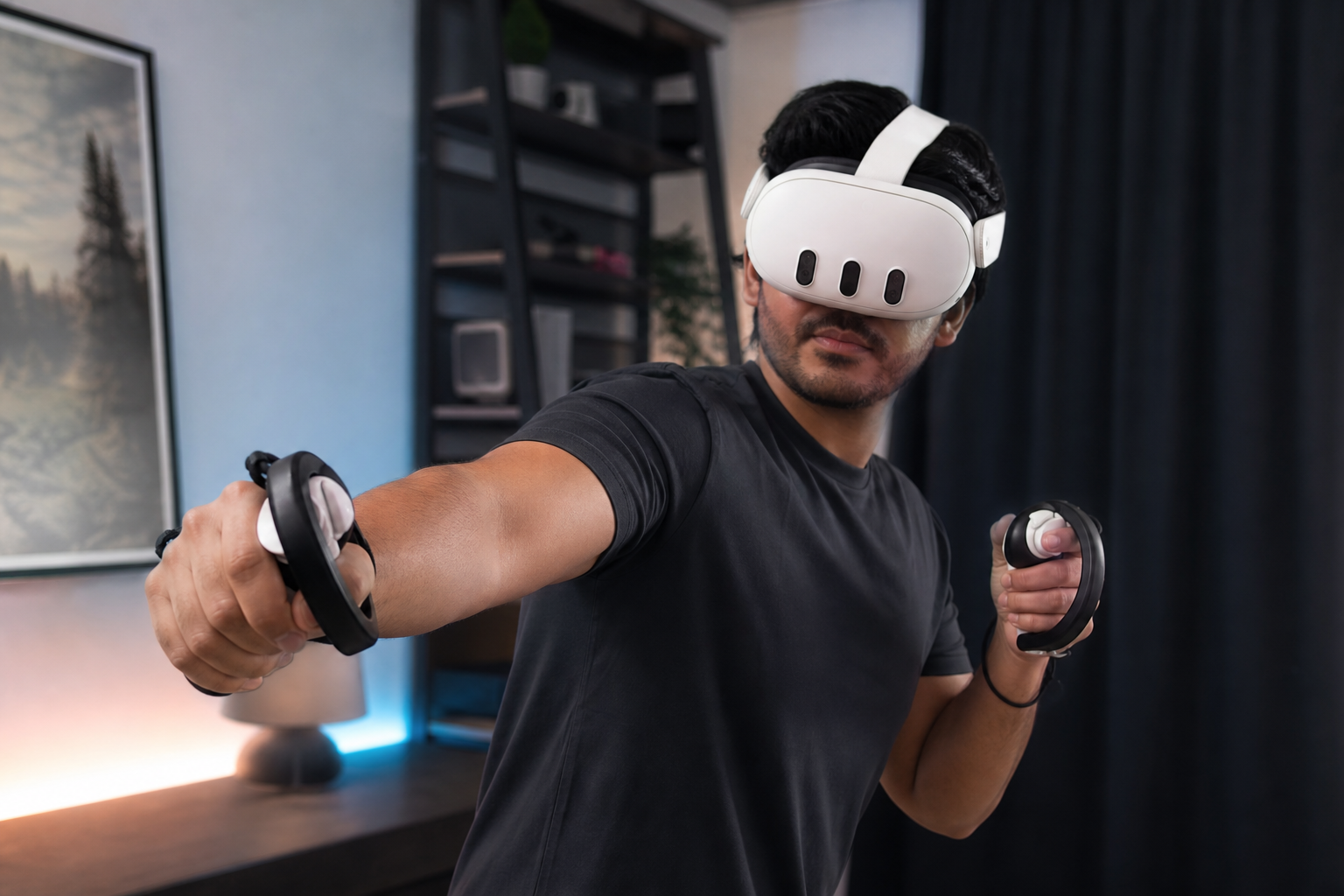
We jumped right into the fire. I had my daughter play one of her favorite high-speed songs, "Overkill" on Expert. The first attempt with the grips was not great. She complained the sabers felt "too long" and her timing was off. She was hitting blocks too early or missing them completely on wide swings. It was frustrating to watch, and I thought my initial fears were coming true. But I told her to play it one more time and to try not to think about the grips so much. On the second playthrough, something changed. She started using her wrists more and her arms less. The swings were smaller but faster. She wasn't fighting the new handle anymore; she was using its length to her advantage. By the end of the song, she had beaten her old high score. The real proof for me was when we compared wrist strain. After playing the same song with and without the grips, she said her wrist felt much less tired with them on. The grip and strap combination meant she didn't have to hold on so tightly, which let her muscles stay relaxed.
Does grip transition appear immediately or only after the player relaxes into the session?
Is the weird feeling there from the start? Or does it sneak up on you when your hands get tired and your form gets sloppy? We paid close attention.
The physical change in grip is immediate, but the mental and performance transition only happens after the player relaxes. The initial feeling is awkward because it fights muscle memory. The real benefit appears after a few songs when the player trusts the grip and stops overthinking their movements.
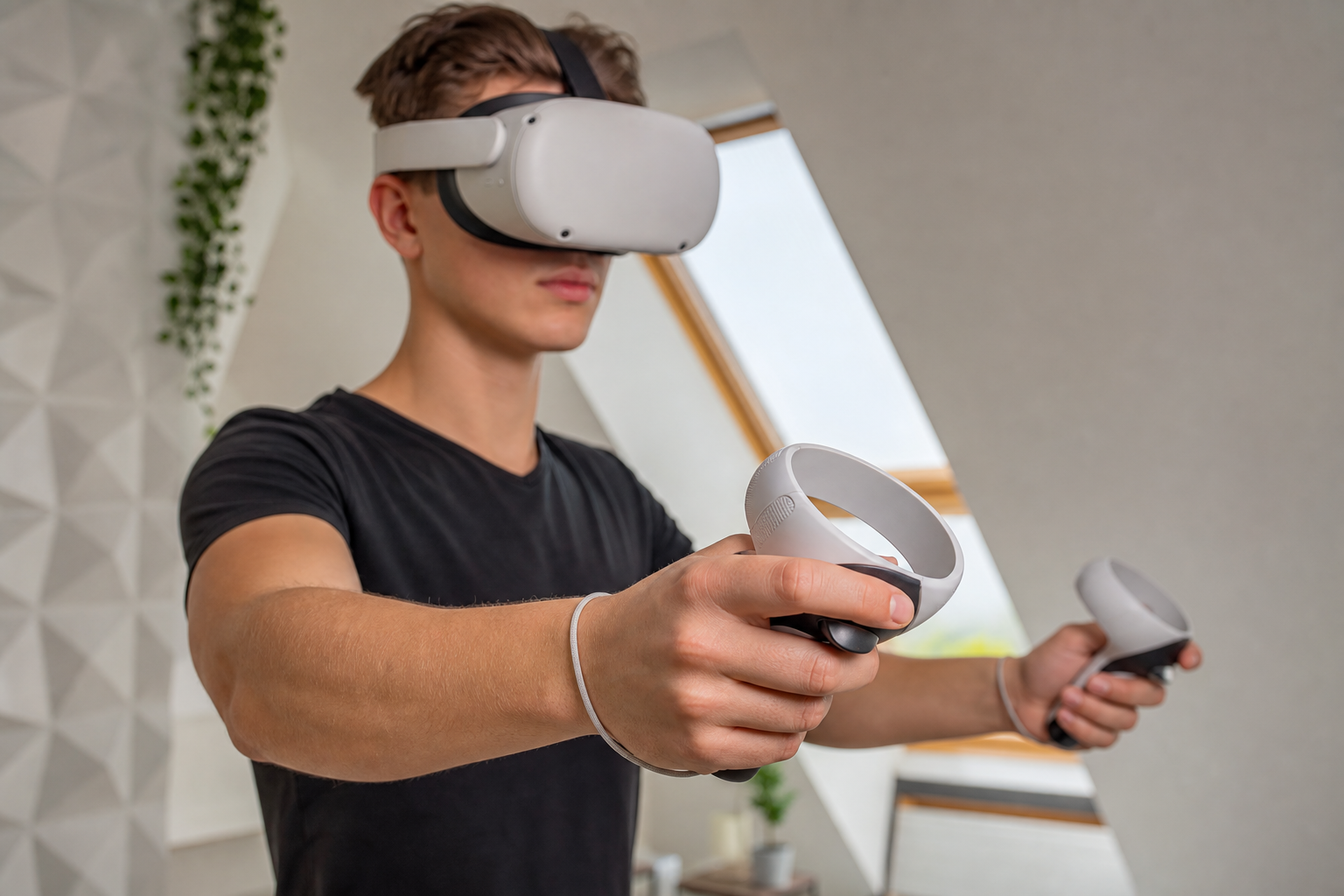
The moment my son picked up the controller with the grip, he said, "Whoa, this feels weird." The change is not subtle. Your hand is in a new spot, and the balance of the controller is different. So yes, the transition appears immediately. For the first few minutes, you could see him consciously thinking about every swing. He was trying to aim differently and time his hits. This is the learning curve in action. It's an active, mental process of overwriting old habits. The magic moment, however, comes when the thinking stops. About halfway through his second song, he was just playing. He was reacting to the blocks without thinking about how he was holding the controller. That's when the grip stopped being an obstacle and became a tool. His movements became more fluid and efficient. The security of the wrist strap meant he no longer had a death grip, which allowed for finer wrist control. The transition is not about the grip changing, but about the player's brain adapting to a new, better way of holding the controller.
Should kids try adjusting tracking during fast cross-body swings before buying Beat Saber Grips?
Controller tracking loss is the ultimate game-killer. If these grips block the controller's sensors during fast movements, they are useless. We had to test this specific scenario.
No, you should not need to adjust tracking settings. The grips are designed to avoid covering the tracking LEDs on the Quest Touch Plus controllers. If your child experiences tracking loss during fast cross-body swings, the problem is likely environmental lighting or reflections, not the grips themselves.
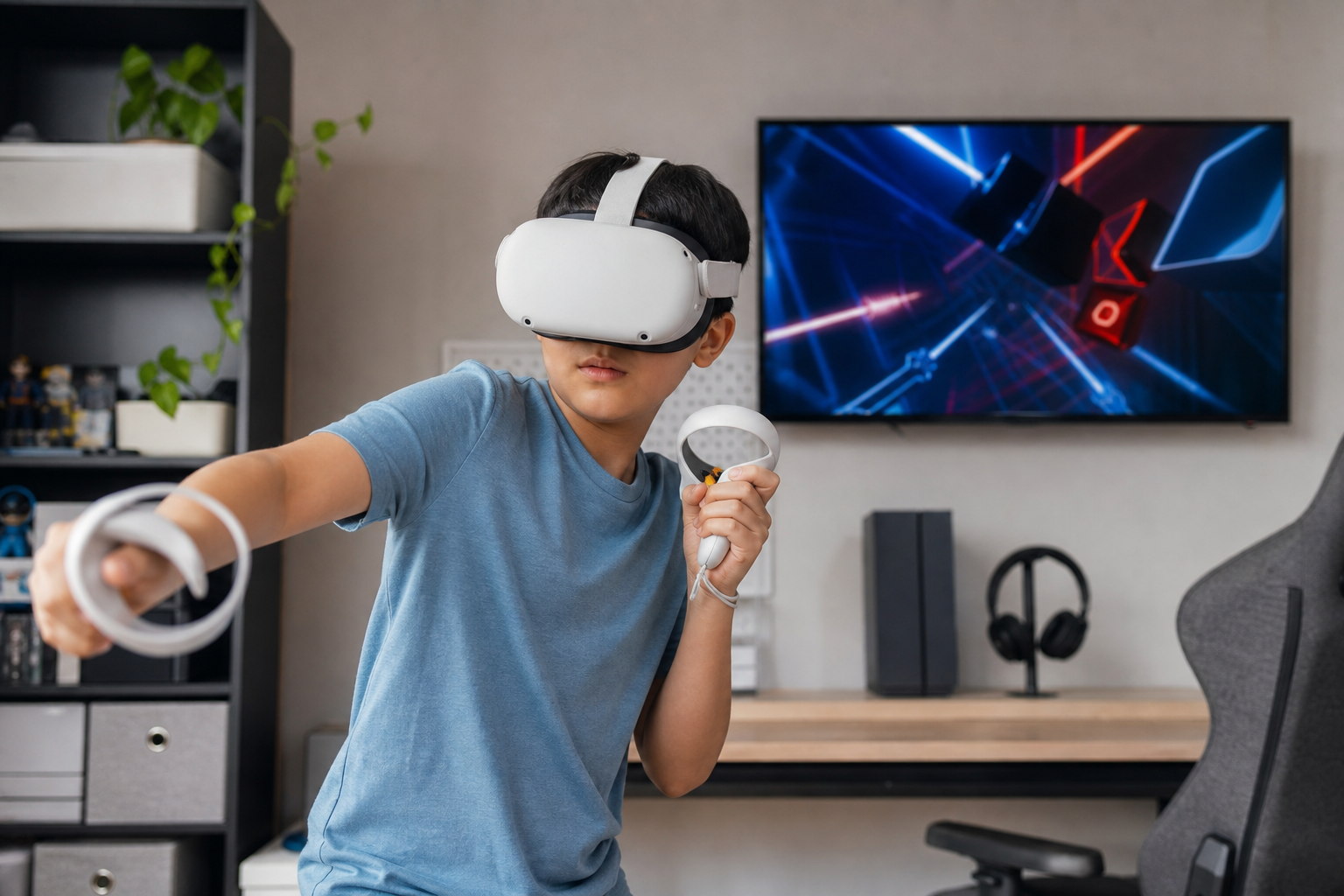
This was a critical test. I worried the added length and the hand strap could somehow interfere with the Quest 3 headset's ability to see the controllers. The Quest Touch Plus controllers rely on inside-out tracking, meaning the cameras on the headset must see the infrared LEDs embedded in the controller rings to know where they are. I had my son do the worst possible movements for tracking: fast, wide, cross-body swings where one controller briefly passes in front of the other. We did this under our normal living room lighting. The result? Perfect tracking. The sabers never once stuttered, floated away, or disappeared. The grips are designed smartly; they attach to the handle and leave the tracking ring completely uncovered. If you are having tracking problems, you should troubleshoot your play area first. Make sure the room is evenly lit but not too bright. Check for mirrors or large glass surfaces that can confuse the cameras. Turn off any other infrared devices, like a TV remote sensor. The grips themselves are innocent. In fact, they might even help, as the secure hold prevents the controller from wobbling in your hand, giving the tracking system a more stable target to follow.
Conclusion
Beat Saber grips have a learning curve, but it is short. They offer better control and reduce wrist strain for kids, which is a big win for long play sessions.
Leave a comment