



Could a VR Mat make thickness and cushioning worse for apartment players?

Living in an apartment with hardwood floors is tough on my feet. After an hour in VR, my knees and heels ache. I wondered if a VR mat was the answer.
For apartment players, a thick VR mat can create a tripping hazard along its edges, making safety worse. However, its cushioning is a significant improvement on hard floors like concrete or wood, reducing foot and knee pain during long sessions, which often outweighs the risk.
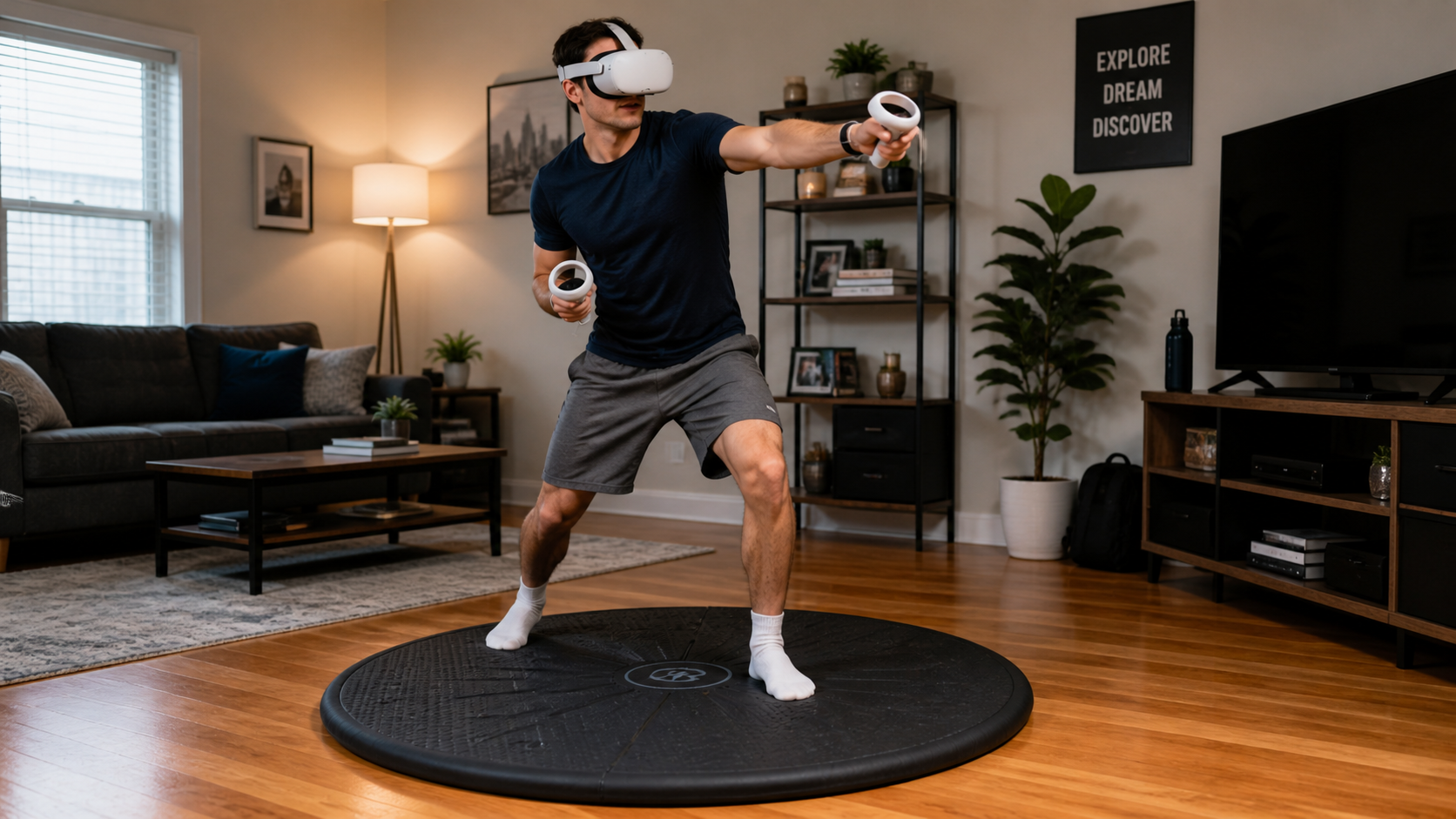
I decided to buy one and test it myself. I use my Quest in my shared living room, so any new accessory has to really earn its spot. I wanted to see if a VR mat was just a novelty or a real solution for people like me. My main concerns were comfort, safety, and whether it was just another piece of gear collecting dust. I tracked my experience over several weeks to see if the initial excitement wore off and what problems popped up over time. This is what I found.
When the novelty fades, does VR Mat still solve thickness and cushioning?
That first week was amazing. The cushioning felt like a cloud. But would I still love it a month later? I had my doubts.
After the novelty fades, the mat's cushioning remains a major benefit, especially for reducing foot fatigue. Its thickness, however, transitions from a feature to a constant spatial awareness challenge, as you must always be mindful of the edge to avoid tripping.
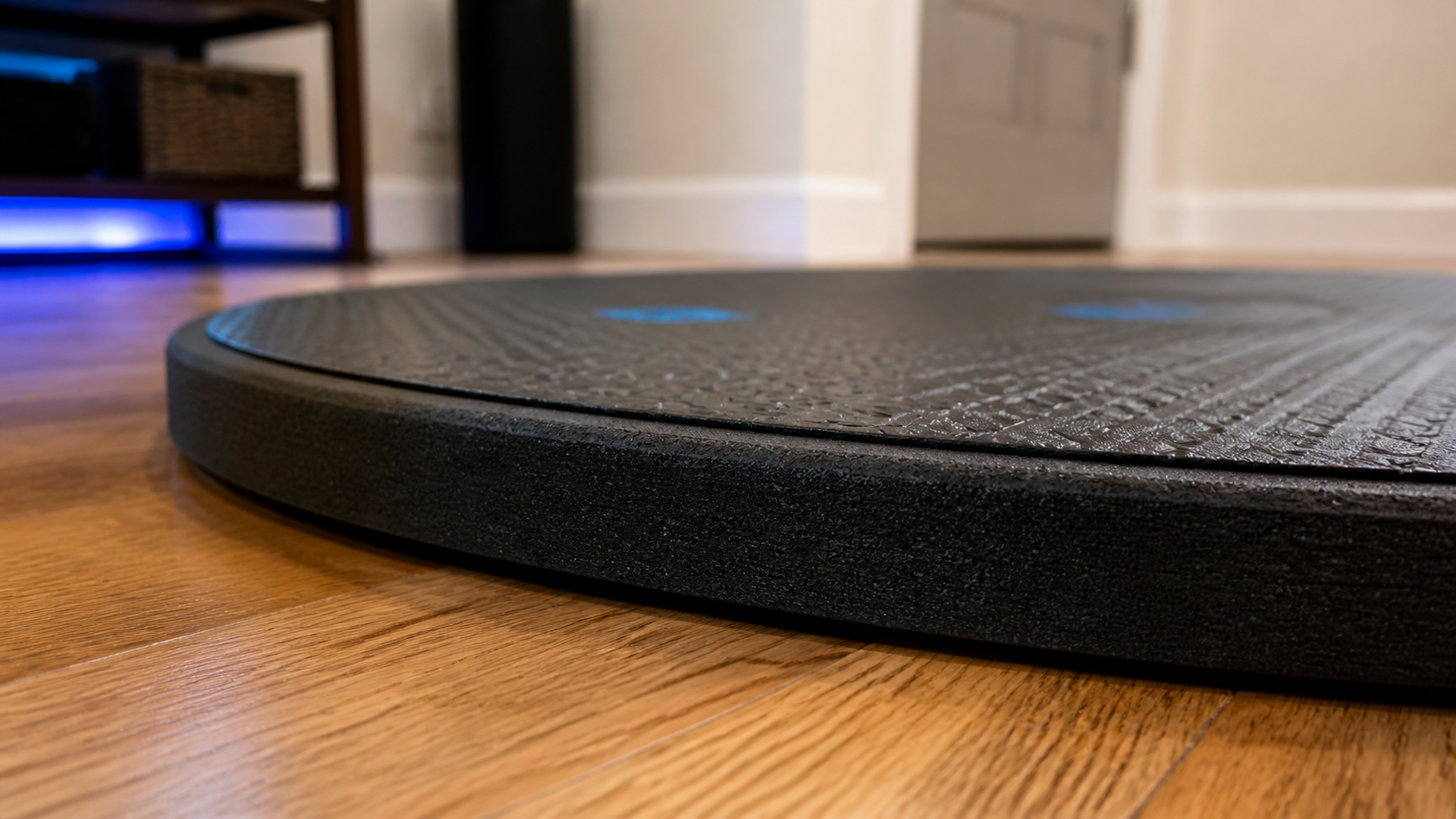
In the beginning, the thickness felt premium. It was a clear sign that I was standing on something designed for comfort. My feet and knees felt so much better after long sessions of Beat Saber. The mat also has these little bumps that help you feel where the center of your playspace is without looking. This was great for my immersion. But after about two weeks, I started noticing the downsides. The thick edge became a mental note I always had to keep. If I took a big step during a boxing game, I'd sometimes catch my heel on the edge. It didn't make me fall, but it broke the immersion. The novelty of the "premium feel" was replaced by the practical reality of navigating a raised surface in my living room.
First Impression vs. One Month Later
Here is a breakdown of how my feelings changed over time.
| Feature | First Impression (Week 1) | Lived Experience (Week 4) |
|---|---|---|
| Cushioning | Feels incredibly soft and supportive. A huge relief for my feet. | Still very comfortable. I can't imagine playing without it on my hard floor. |
| Thickness & Edges | Feels high-quality and creates a clear play area boundary. | The edge is a noticeable trip hazard. I have to be careful during intense movement. |
| Center Markers | Helpful for staying oriented without taking off the headset. | I know my space well now, so I rely on them less. Still nice to have. |
| Storage | Easy to roll up and put in a closet. | Becomes a chore. Often left out, taking up living room space. |
Can apartment players reproduce the test without special tools or paid software?
Product reviews often use fancy tools to measure things. I don't have those. I needed simple ways to see if the mat was actually working for me.
Yes, you can easily test a VR mat's performance without any special equipment. Simple actions like lunging, jumping, and trying to slide the mat with your foot will tell you everything you need to know about its stability, grip, and noise dampening.
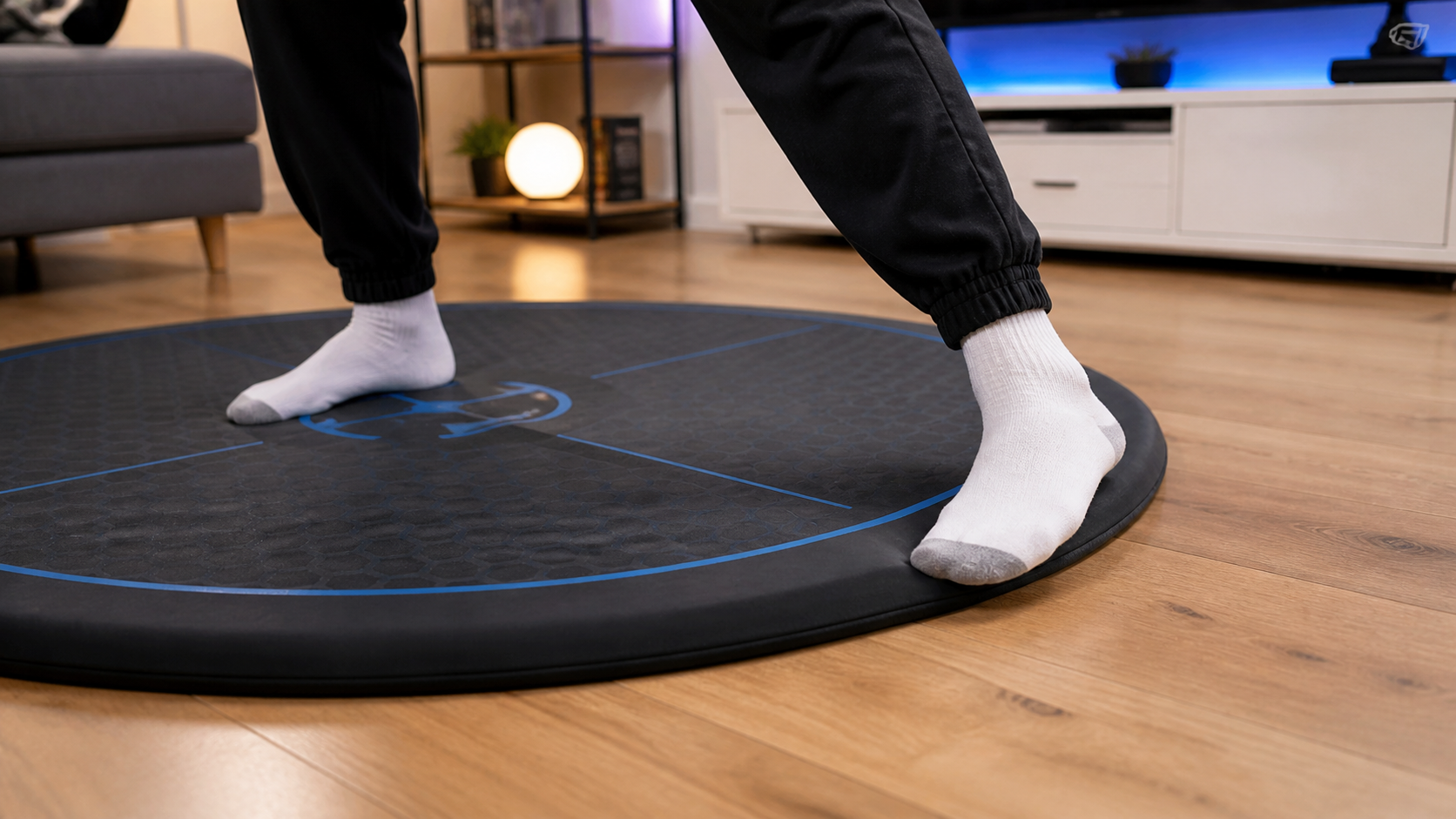
I came up with a few easy tests anyone can do. First was the "Slide Test." I put the mat on my hardwood floor and tried to push it around with my foot. It barely budged, which was a good sign it wouldn't shift during gameplay. Next, I did the "Lunge Test" while playing Thrill of the Fight. I did some quick forward lunges and dodges. My feet didn't slip on the surface, and the mat itself stayed in place. I even took a quick video to confirm it wasn't moving when I wasn't paying attention. Finally, the most important one for apartment life: the "Jump Test." I did a few small jumps, like you might in a fitness game. Then I asked my partner in the next room if they could hear it. They said it was much quieter than when I jumped on the bare floor. These simple, real-world tests gave me all the proof I needed about the mat's performance.
Where does whether shoes, socks, or bare feet change the feel show up during real play?
I don't always play VR the same way. Sometimes I'm in socks, but for fitness games, I wear shoes. I needed the mat to work for all situations.
The difference is most noticeable during fast-paced games. Bare feet offer the best grip and spatial awareness. Socks are comfortable but can slip during quick pivots. Shoes provide maximum cushion but make you less aware of the mat's edges, increasing trip risk.
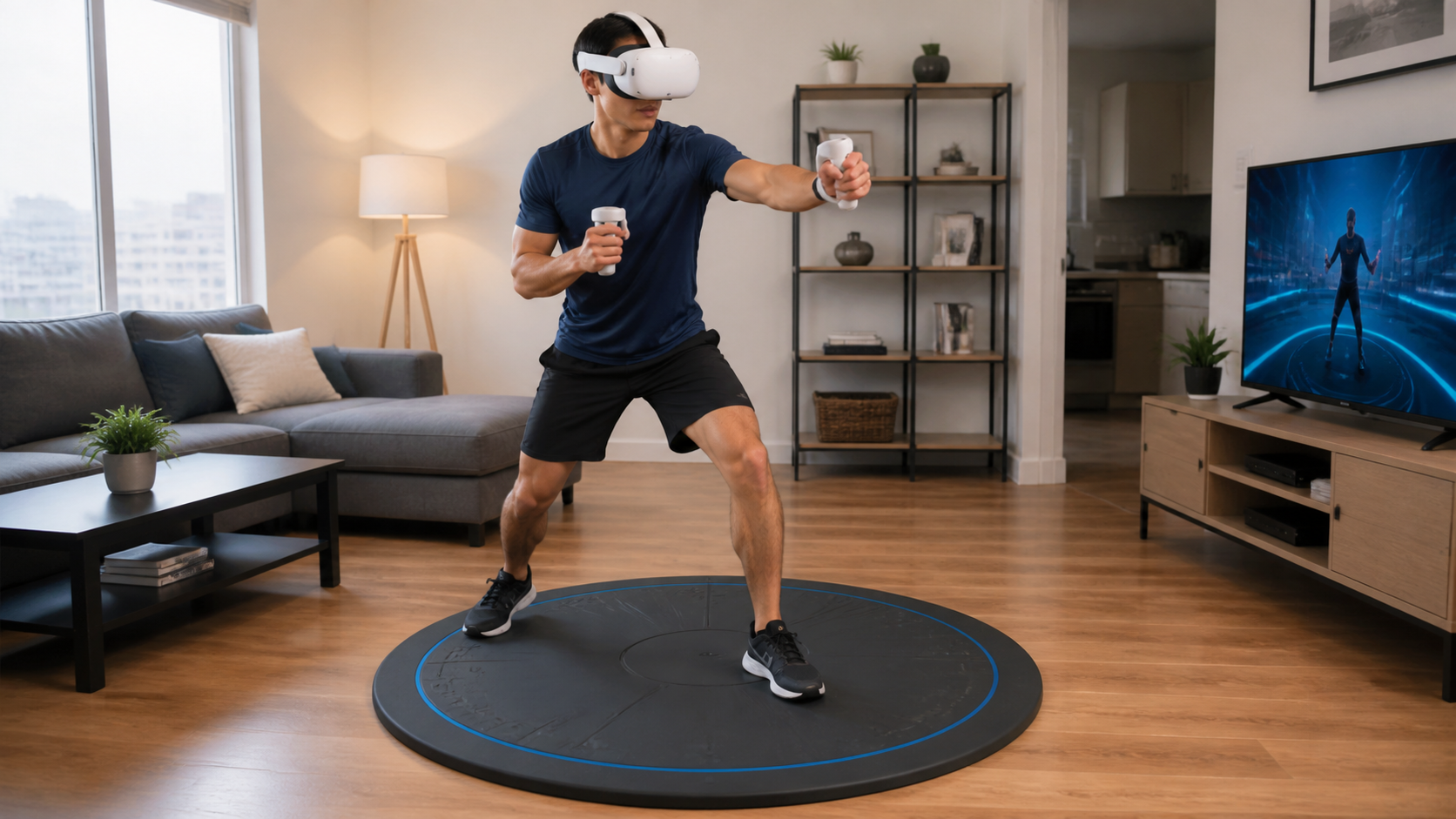
My experience changed a lot depending on what was on my feet. Playing barefoot gave me the best connection to the mat. I could feel the centering bumps easily and had excellent grip for games like Supernatural where balance is key. It felt the safest. Playing in socks was my default for casual games. It was comfortable, but I had one or two close calls where my foot slipped a little during a quick turn in Pistol Whip. You have to be more careful. I tried wearing my training shoes for a session of Les Mills Bodycombat. The combined cushioning of my shoes and the mat was incredible, like working out on a gym floor. But it also raised me up higher, making the edge of the mat an even bigger drop-off. I felt disconnected from the mat's safety features and had to rely purely on my guardian boundary. I also worried my shoes might scuff or damage the mat's surface over time.
Does VR Mat solve enough of thickness and cushioning in shared living rooms to justify another accessory?
My living room isn't huge. Adding a 3-foot wide mat meant giving up floor space. The final question was whether the benefits were worth this sacrifice.
A VR mat justifies itself in a shared living room if you have hard floors and play active games often. The improved comfort and noise reduction are significant. If you have carpet or play seated games, it is an unnecessary accessory that just adds clutter.
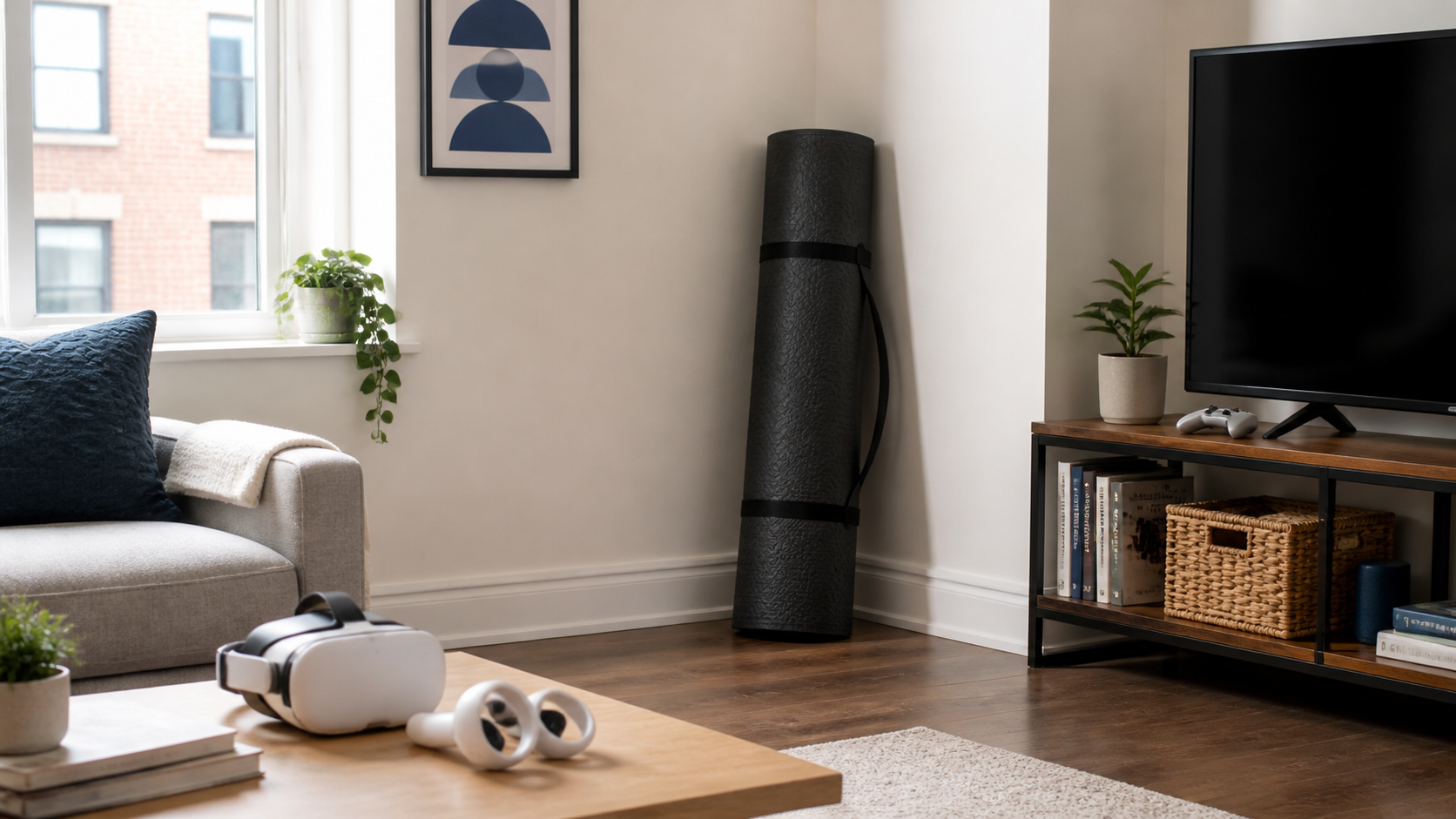
For me, the answer is yes. I play standing VR games several times a week on a very hard floor. The difference in comfort is night and day. My long play sessions are no longer cut short by aching feet. The fact that it dampens the noise of my movements also makes me feel less guilty about playing at night. It solves a real, daily problem for me. However, I would not recommend it to everyone. If my apartment had medium-pile carpet, the mat's cushioning would be redundant. The added thickness would only create a trip hazard without providing much benefit. Also, if I only played seated games like Demeo or watched movies in VR, the mat would be completely useless. It's an accessory for a specific type of player: an active, standing VR user on a hard surface. If that's not you, you should save your money and your floor space. It's helpful, but it's not a magical solution for every setup.
Conclusion
A VR mat is a great tool for apartment players on hard floors. It solves pain and noise. But for carpeted or small spaces, it can create more problems than it solves.
Leave a comment