



Can VR Controller Grips make large hands safer, or does it add another risk?

Having big hands while using Quest Pro Touch Controllers can be a real pain. You’re in the middle of a game, and suddenly the battery door slides open. It's frustrating.
For large hands, VR controller grips can significantly improve safety and comfort by preventing accidental slips and securing the battery door. However, a poorly designed grip can add a new risk by blocking tracking sensors, which is why a careful fit check is essential before your first long session.
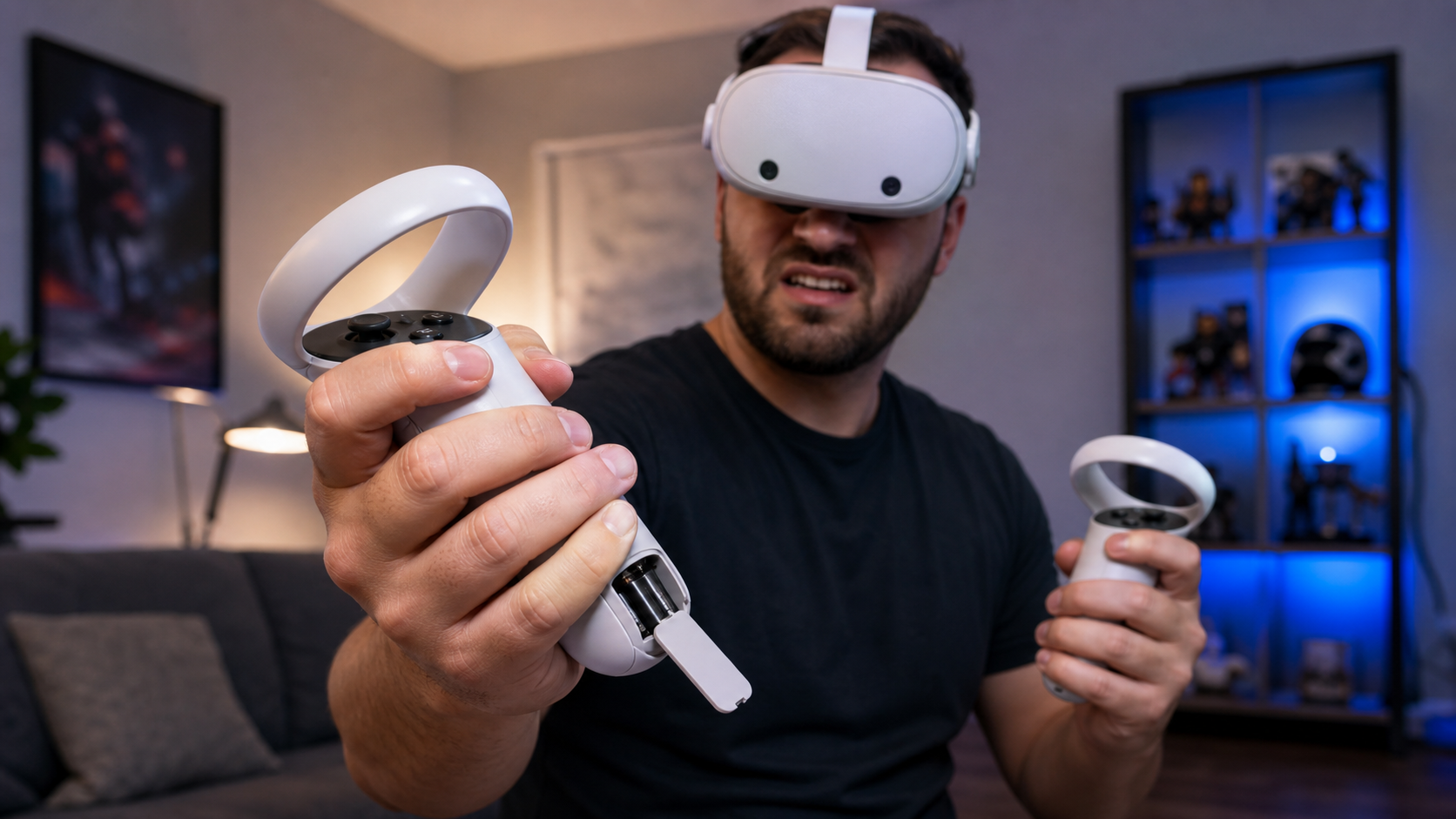
I decided to run a personal case study on this. As a Quest 3 owner who prefers the Quest Pro controllers, my large hands were constantly causing problems. The sleek design of the Pro controllers looks great, but my palm would rest right on the battery door's seam. A tense moment in any game meant I was applying enough pressure to pop it loose. I wanted to see if a simple grip accessory could be the definitive solution or if it would just trade one problem for another. This test isn't a generic review; it's a real-world check focusing on the lived experience of a large-handed user. I’ll walk you through my exact process, from checking the battery door fix to evaluating tracking performance and overall comfort, to help you decide if this kind of accessory is right for you.
Can a real large hands clip prove whether battery door access improves?
Your thumb keeps sliding the battery door open during intense gameplay. It's the last thing you need when you're focused. A controller grip that covers the door seems like an easy fix.
Yes, a clip-on grip provides a physical barrier over the battery door, which completely prevents it from sliding open. My tests showed the cover stayed locked in place, even with direct pressure from my palm, which is a massive improvement over the bare controller.
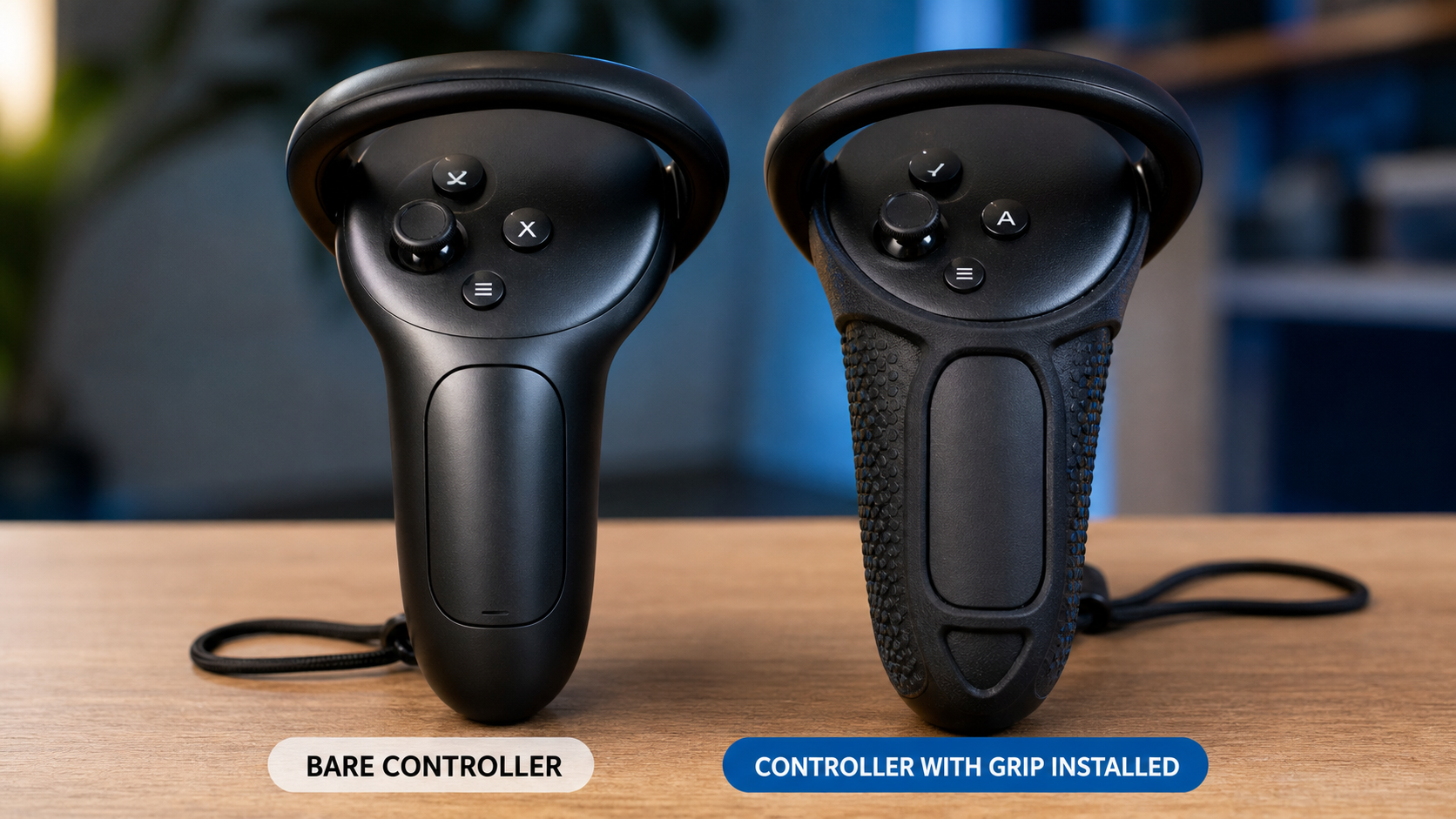
To be sure, I needed to see a direct comparison. The problem with the bare Quest Pro controllers was obvious from the first day I used them. My palm naturally rested on the slick, magnetic battery door, and any sideways pressure would dislodge it. The controller grip I tested completely changed this dynamic. It's a simple piece of silicone that wraps around the controller body, but its most important feature is that it covers the entire battery door. There is no longer a seam for my hand to push against.
The Before and After Test
I put the grip on one controller and left the other one bare to feel the difference in real time. The results were night and day. With the bare controller, I could pop the battery door open with a simple twist of my wrist while gripping it tightly. With the grip-covered controller, that was impossible. The silicone added friction and a protective layer that held everything together.
Here is a breakdown of my experience:
| Feature | Bare Controller (My Experience) | Controller with Grip (My Experience) |
|---|---|---|
| Battery Door Security | Very poor. Slid open constantly during active games. | Excellent. The door is physically covered and cannot be opened by accident. |
| Palm Grip Comfort | Okay, but the smooth surface felt insecure. | Much better. The added texture and bulk filled my hand properly. |
| Accidental Slips | Happened occasionally when my hands got sweaty. | Did not happen. The silicone material provided a reliable grip. |
The proof was undeniable. The grip didn't just slightly improve the battery door issue; it completely eliminated it. For any large-handed user annoyed by this specific problem, the clip-on grip is a direct and effective solution.
Does VR Controller Grips still feel worth it after the test focuses only on battery door access?
You fixed the battery door problem, great. But what if the grip feels bulky, blocks sensors, or just makes the controller uncomfortable to hold? The solution could be worse than the problem.
Yes, for me, it still felt worth it. While the primary win was securing the battery door, the added bulk actually made the controller more comfortable for my large hands. The key is that the cutouts for the tracking sensors must be perfectly aligned to avoid new issues.
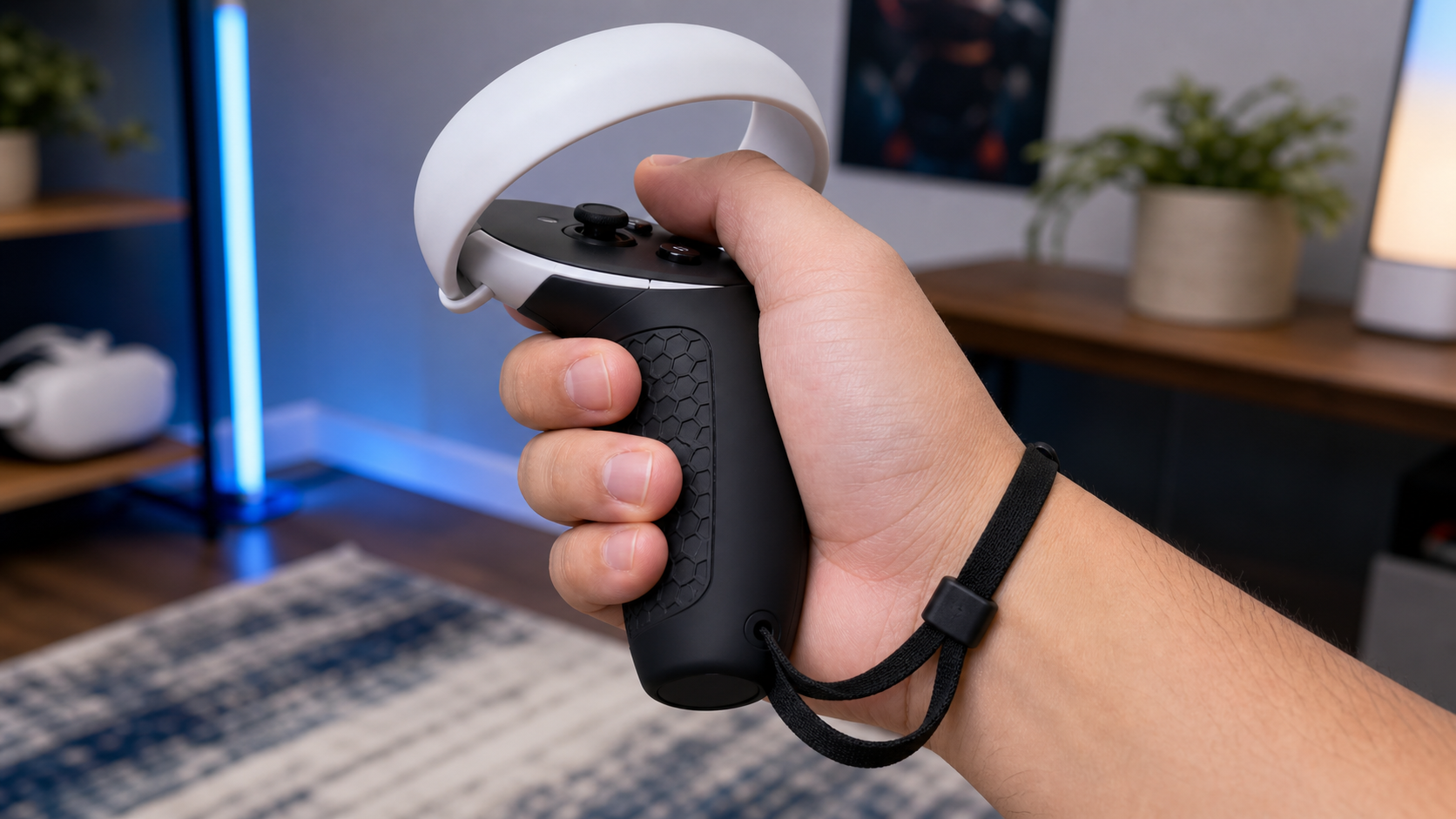
Solving one problem is only half the battle. A VR accessory is only good if it doesn't create new, more annoying problems. After confirming the battery door was secure, I spent my time focusing on two other areas: tracking integrity and long-session comfort. My biggest fear was that the silicone grip would shift during play and cover one of the small, embedded tracking cameras on the controller. This would instantly cause the controller to fly off into virtual space or freeze up. I carefully examined the cutouts in the grip. They seemed to align perfectly with the three camera sensors on each controller.
During a short session, the grips felt great. The added thickness made the controllers feel more substantial, like they were made for my hands. The bare Pro controllers always felt a little too thin, forcing me to clench my hand more than felt natural. With the grips, my hand could relax into a more open and comfortable position. The real test, however, was a long session in a fast-paced game. I found that the silicone didn't shift at all, and the tracking remained flawless. The peace of mind of not having to worry about the battery door, combined with a more ergonomic feel, made the trade-off of a little extra bulk a clear win. It transformed the controller from something I had to be careful with into a reliable tool.
Can Quest Pro Touch Controllers fit checks catch the problem before the first full session?
You just installed your new grips and are excited to play. You jump into a fast-paced game and immediately lose tracking because a sensor is blocked. Now you’re frustrated and have to stop.
Absolutely. A simple two-minute fit check in your VR home environment is the most important step. Before starting a game, you can rotate the controllers in your hands and visually confirm that the tracking is stable and the virtual controllers don't jitter or disappear.
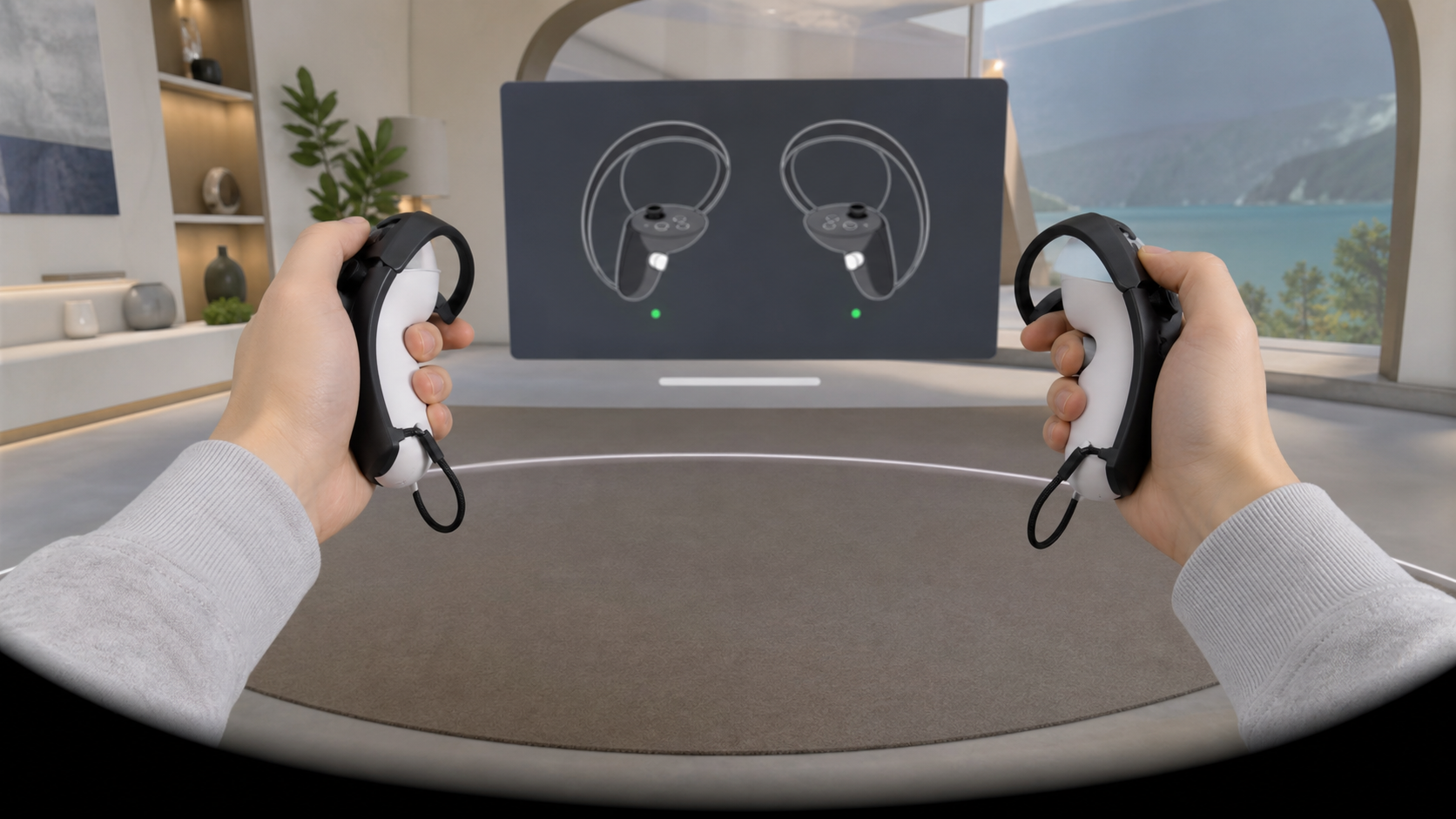
Trust is a huge factor with any accessory that covers your hardware. You need to trust that it won't interfere with the core function of the device. For VR controllers, that function is tracking. I learned quickly that you should never jump straight into a game after installing a new grip. The risk of a badly aligned cutout blocking a sensor is real, and it’s easy to check for. My pre-session ritual is now a standard practice. First, I install the grip, making sure it's seated properly and all the holes line up with the controller's cameras and buttons.
Then, I put on the headset and just stay in the main home area. I hold the controllers out in front of me and slowly rotate them. I turn my wrists all the way around, move the controllers up, down, and to the sides, all while watching their digital twins in VR. If there's a tracking issue, you will see it immediately. The virtual controller might stutter, freeze, or vanish for a second. This simple test shows you if the grip is blocking a sensor under specific angles. If everything looks smooth, I'll do a few quick, fast motions to simulate gameplay. If the tracking holds up during this stress test, I know I'm good to go. This quick check takes almost no time and prevents the game-breaking frustration of discovering a problem mid-session.
Who should avoid this VR Controller Grips setup even if it looks useful for large hands on Quest Pro Touch Controllers?
This grip seems like the perfect solution for big hands. But for some people, it will just feel awkward, get in the way, and ultimately be a waste of money.
Players with small or medium-sized hands should avoid this specific type of grip, as the added bulk will likely make it harder to reach the buttons. Additionally, VR purists who are sensitive to any change in weight or balance should probably stick with the bare controllers.
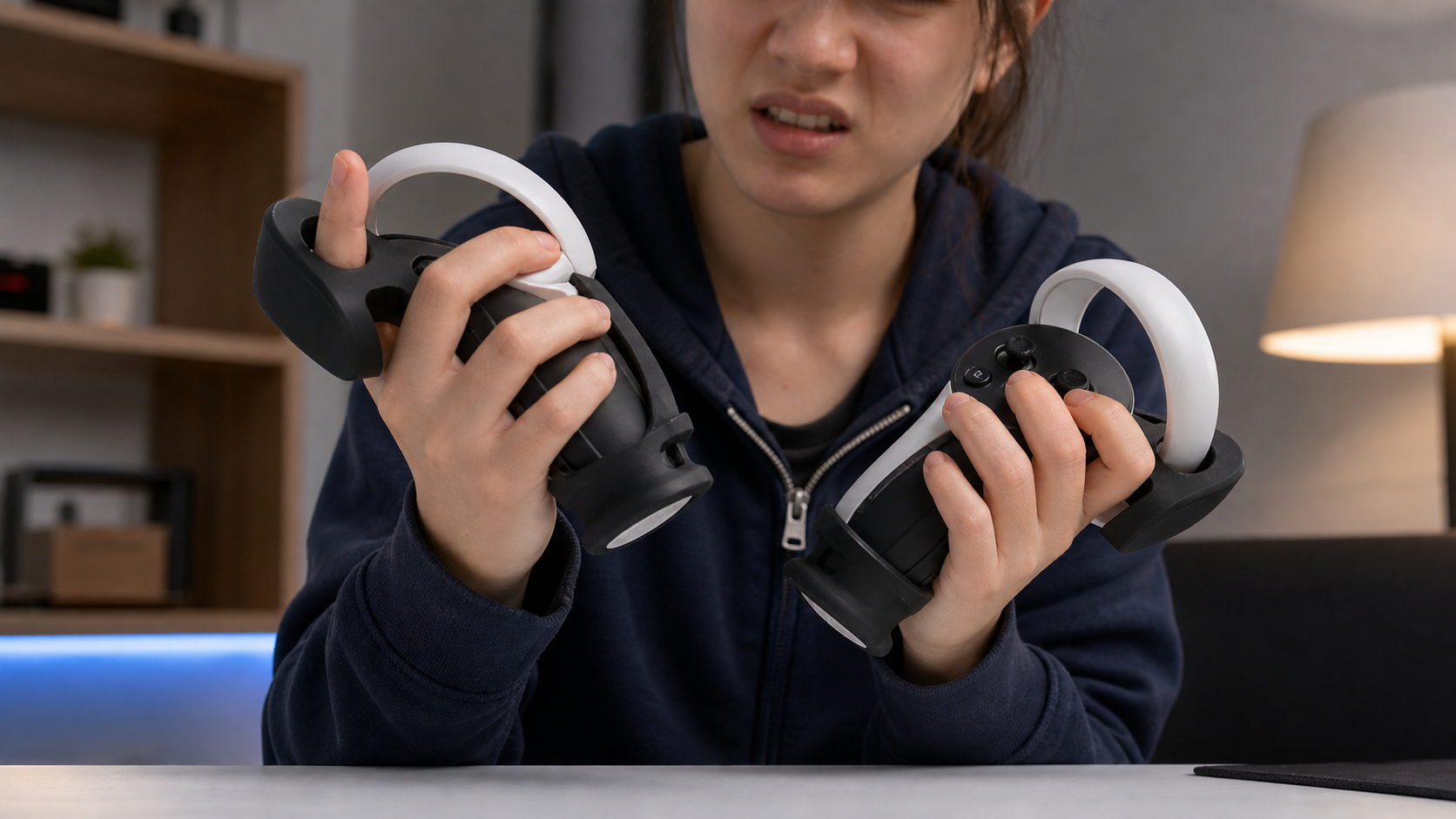
This accessory is a problem-solver, but only if you have the specific problem it's designed to fix. For me, the problem was a large hand overwhelming a small controller. The solution was to add bulk. If you don't have this problem, the solution will feel like a step backward. The most obvious group who should avoid these grips is anyone with small to average-sized hands. The Quest Pro controllers are already well-proportioned for that user group. Adding a thick silicone grip would force them to stretch their fingers to reach the thumbstick and face buttons, leading to fatigue and poor control. It would create a new ergonomic issue where none existed before.
Another group who might not like this setup are the VR purists. These are users who love the precise engineering and design of the original product. They are highly sensitive to small changes in weight distribution, balance, and texture. For them, the bare controller feels exactly as the designers intended. Adding an accessory, no matter how functional, can feel like a clumsy modification that ruins the intended experience. They would rather adapt their grip on the bare controller than change its fundamental shape and feel. Finally, some ultra-competitive players may want to avoid them simply because any change to their setup could disrupt years of muscle memory built for a specific controller shape and weight.
Conclusion
For large-handed users, these grips fix the annoying battery door issue and add comfort. But you must do a quick tracking check first. It's a great trade-off for security, but not for everyone.
Leave a comment