



Can Quest Pro Touch Controllers tracking stay stable when VR Gunstock is used for Superhot VR?

You're in the middle of Superhot VR, enemies closing in. Your aim is shaky, shots go wild. You know a gun stock could help, but will it work?
Yes, Quest Pro Touch Controllers tracking stays stable with a VR gun stock in Superhot VR, but the accessory is a trade-off. It provides excellent stability for aimed shots but can feel clumsy during fast-paced, close-quarters combat or when you need to throw objects.
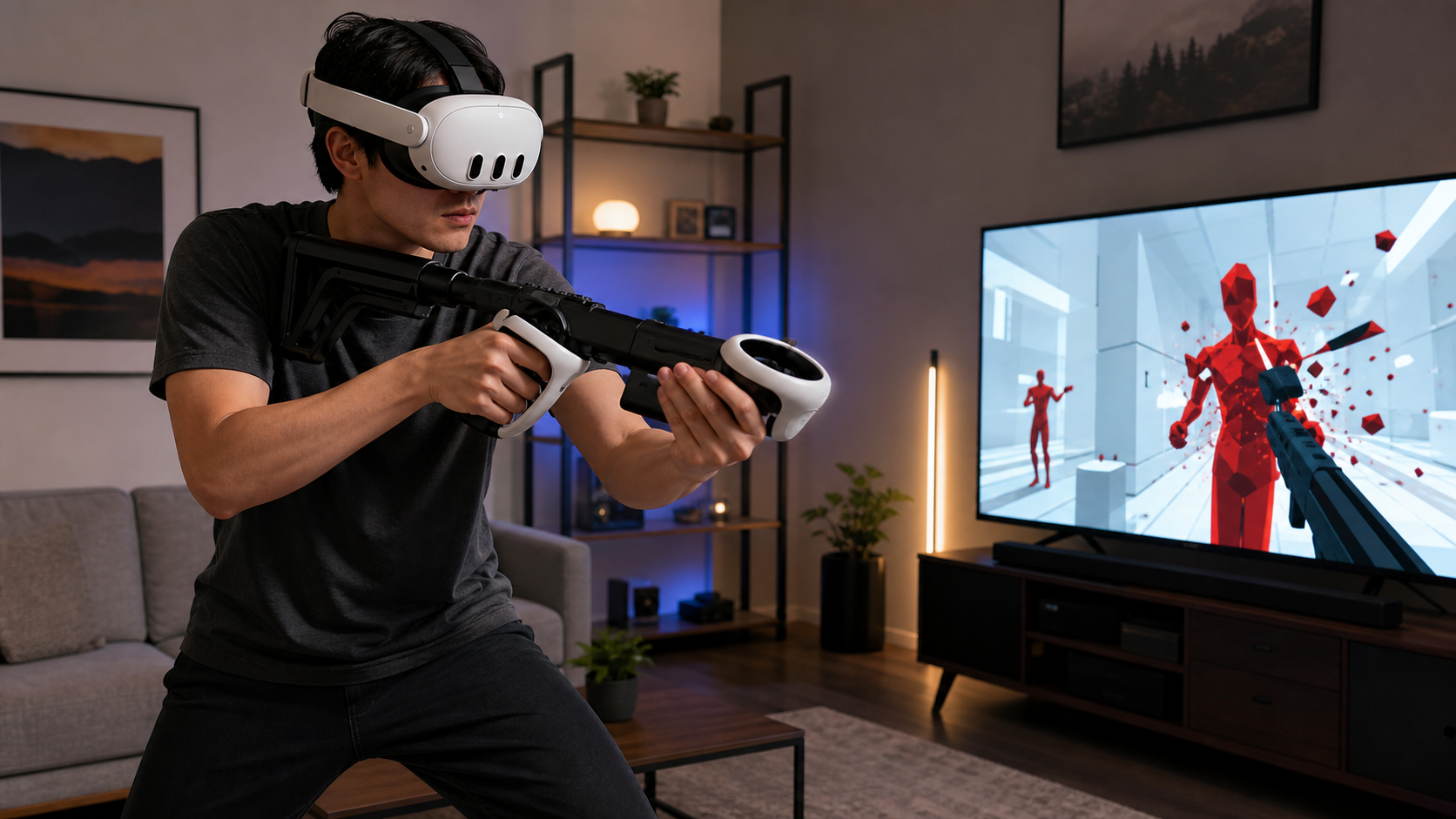
I've spent countless hours in VR shooters, and my family loves to jump in for a quick session. This makes accessories a tough sell. They have to work for everyone, from my pro-level instincts to my cousin's first-time fumbling. I decided to test a gun stock with my Quest Pro controllers, not in a sterile test environment, but in the heat of battle in Superhot VR. I specifically wanted to see what happens when the pressure is on, when you have to spin 180 degrees in a tight space and suddenly need your off-hand. This isn't just a review; it's a field test to see if this tool helps you win or just gets in the way.
Does left-handed setup affect beginners and experienced users in the same way?
You switch to your non-dominant hand in a panic. Suddenly, you feel like a total beginner again. Your aim is gone, and the pressure mounts. It's a frustratingly common problem.
No, a left-handed setup impacts users very differently. Beginners struggle with basic coordination and aiming stability. Experienced players are more affected by the disruption of muscle memory and the loss of fine motor control, especially when switching hands under pressure. A gun stock highlights these differences.
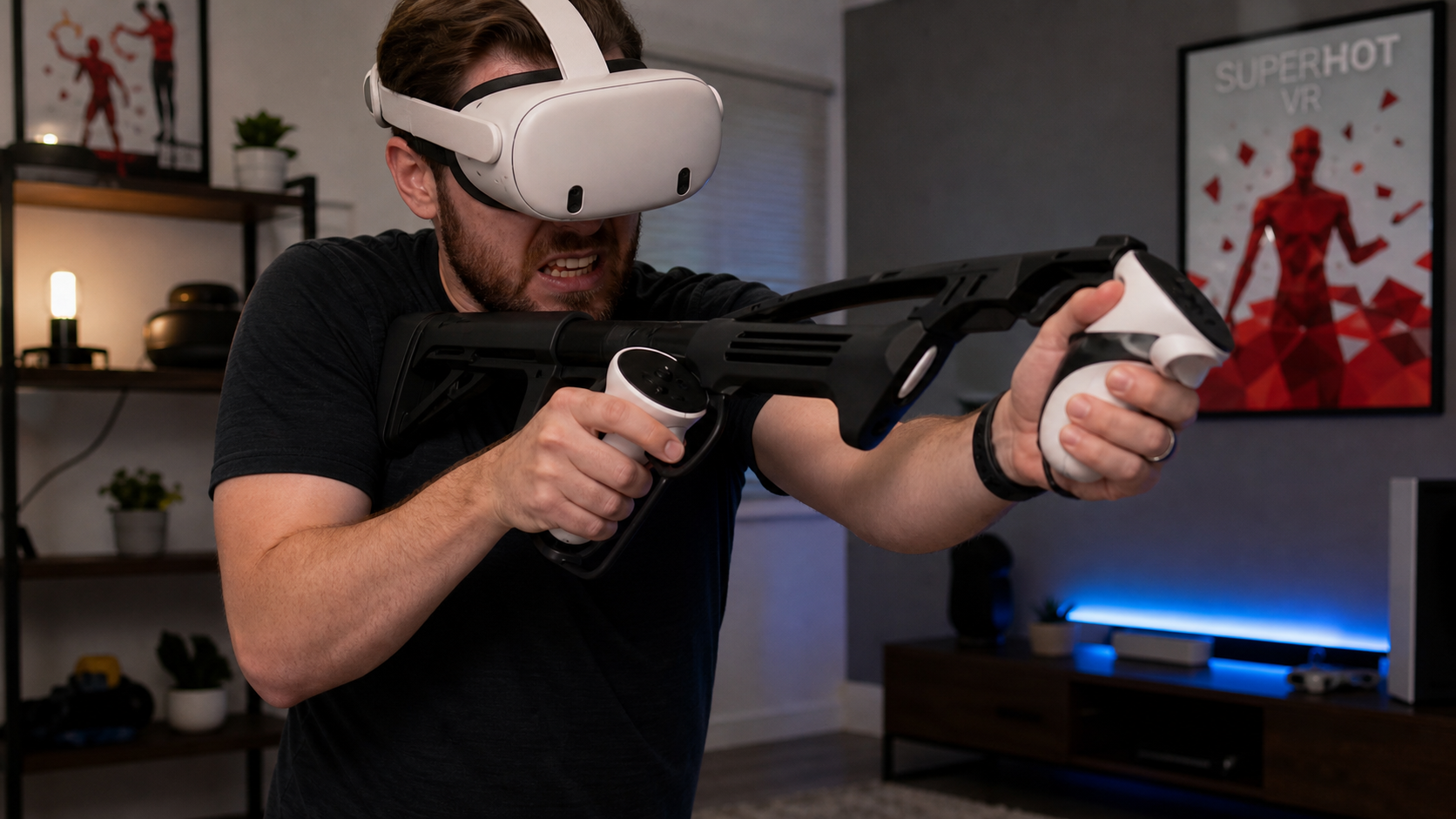
As a long-time player, my right hand knows exactly what to do. My aim is reflexive. When I switched to my left hand, even without the gun stock, everything felt foreign. The gun stock helped stabilize my left hand, but it also made the movements feel even more mechanical and slow. It felt like I was fighting the accessory instead of the enemies. My cousin, who is new to VR, had a different experience. For them, the gun stock provided a solid structure that helped them understand how to hold a two-handed weapon. They struggled with the weight and angle regardless of which hand was dominant. The stock gave them a consistent, if clumsy, foundation. For me, it broke a foundation I had spent years building.
Beginner vs. Experienced User: Left-Handed Challenges
| Factor | Beginner Player | Experienced Player |
|---|---|---|
| Main Challenge | Basic coordination and holding the controller steady. | Disrupted muscle memory and loss of precision. |
| Gun Stock Effect | Provides a helpful physical structure for aiming. | Feels restrictive and slows down reflexive actions. |
| Biggest Frustration | The overall weight and awkwardness of the setup. | The inability to perform familiar actions quickly. |
What should be measured before claiming VR Gunstock fixes left-handed setup?
You bought a gun stock hoping it would finally fix your off-hand aiming. But did it actually work, or does it just feel different? Let's check the real facts.
To know if a gun stock truly fixes a left-handed setup, you must measure more than just simple accuracy. You need to test target acquisition speed, shot consistency under pressure, the time it takes to switch hands, and how it affects non-shooting actions like throwing or grabbing.
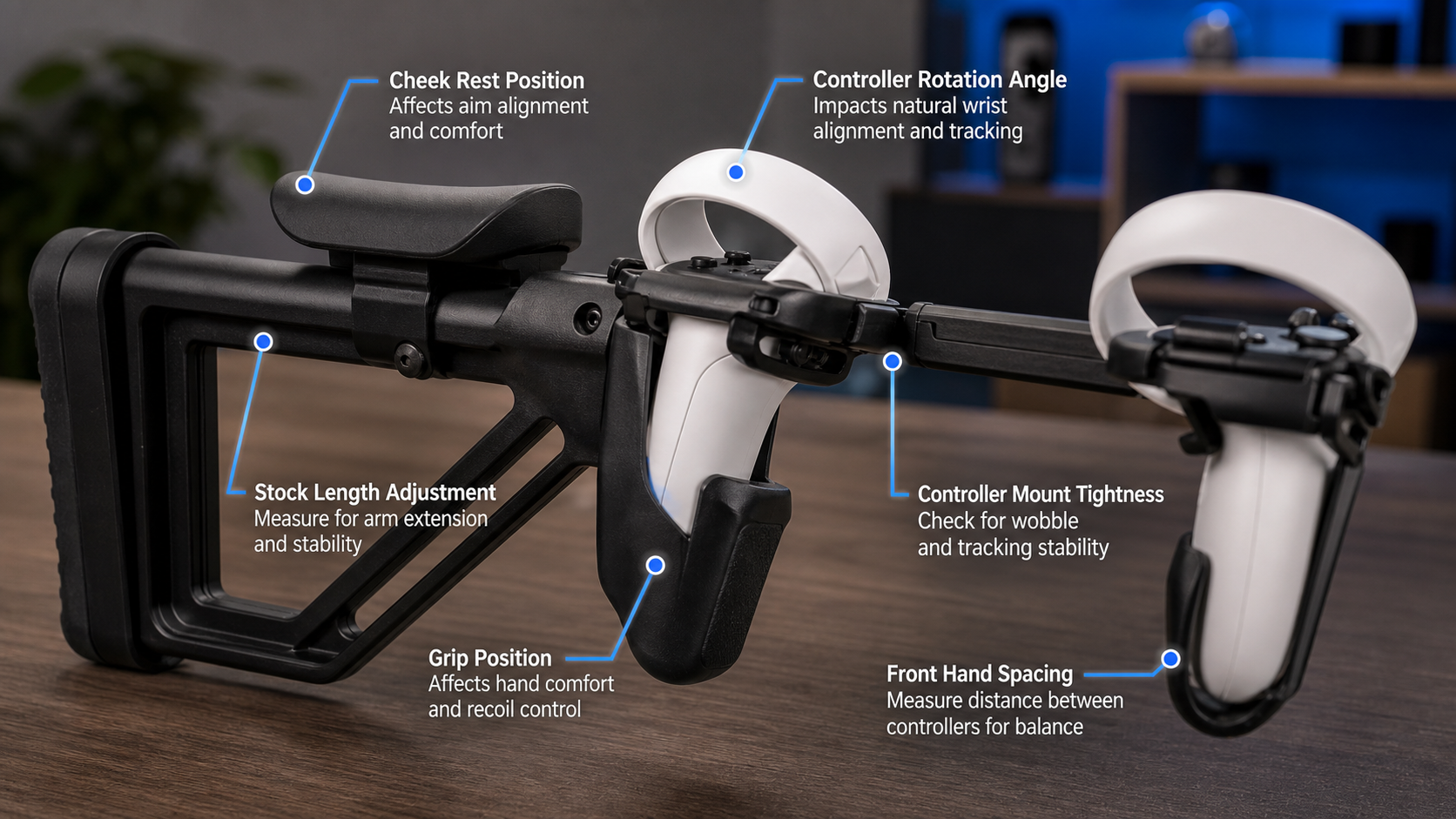
I didn't want to rely on just a "feeling." I wanted data. I ran the same Superhot VR level four times. First, with my dominant right hand, with and without the stock. Then, with my non-dominant left hand, with and without the stock. I timed how long it took me to clear the first three enemies. With my left hand, the gun stock improved my shot grouping on a stationary target. But in the real game, it slowed me down. My time-to-kill was longer because I couldn't snap to new targets as quickly. The stock added a physical delay. It also made me fumble when I had to drop the gun and grab an incoming shuriken. So, while my aim was technically more stable, my overall performance was worse. A gun stock doesn't "fix" an off-hand setup; it changes the problem from shaky aim to slow movement.
Does the accessory make menus, charging, or controller removal harder?
Your new VR accessory is fantastic in-game, but what about the moments before and after? Is it a hassle to set up, charge, or take off? This is a real issue.
Yes, this type of gun stock definitely complicates daily use. It completely blocks the charging port on the right controller, so you have to partially disassemble it to charge. Removing controllers is also slower. Navigating menus feels awkward with your hands locked in a fixed position.
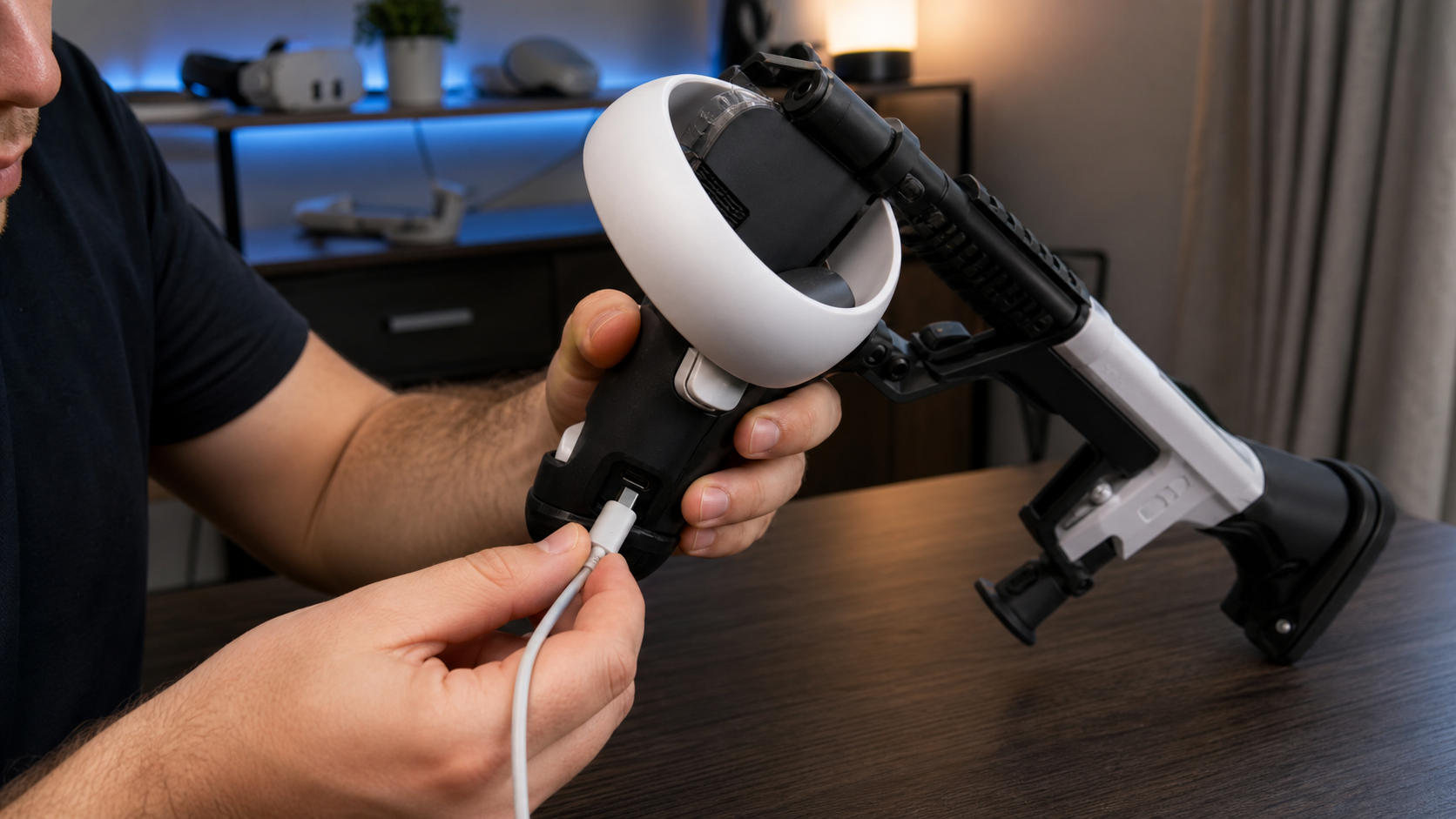
This was one of the biggest annoyances for me. I use the Quest Pro's charging dock, and after a session, I just want to drop the controllers on it and walk away. With the gun stock, I had to unclip the right controller from the magnetic mount every single time. It's not a long process, maybe 20 seconds, but that friction matters. It makes you less likely to jump in for a quick 15-minute game. It turns a simple process into a chore. Menu navigation was another surprise problem. In the Meta Quest home or in-game menus, I'm used to pointing with my hand like a laser pointer. With the stock, you have to aim the entire heavy rig. It's slow and imprecise for simple clicks. It felt like trying to use a rifle to press a doorbell. These small usability issues add up and detract from the overall experience.
What real-life caveat should appear before recommending VR Gunstock for Superhot VR?
You are about to tell a friend they should buy a gun stock for Superhot VR. But hold on. There is a huge catch you need to warn them about first.
The most important caveat is that Superhot VR is not just a shooting game. It involves constant throwing, punching, and grabbing. A gun stock improves aiming but severely limits your ability to throw objects accurately or quickly snatch items from your environment, which are critical survival skills.
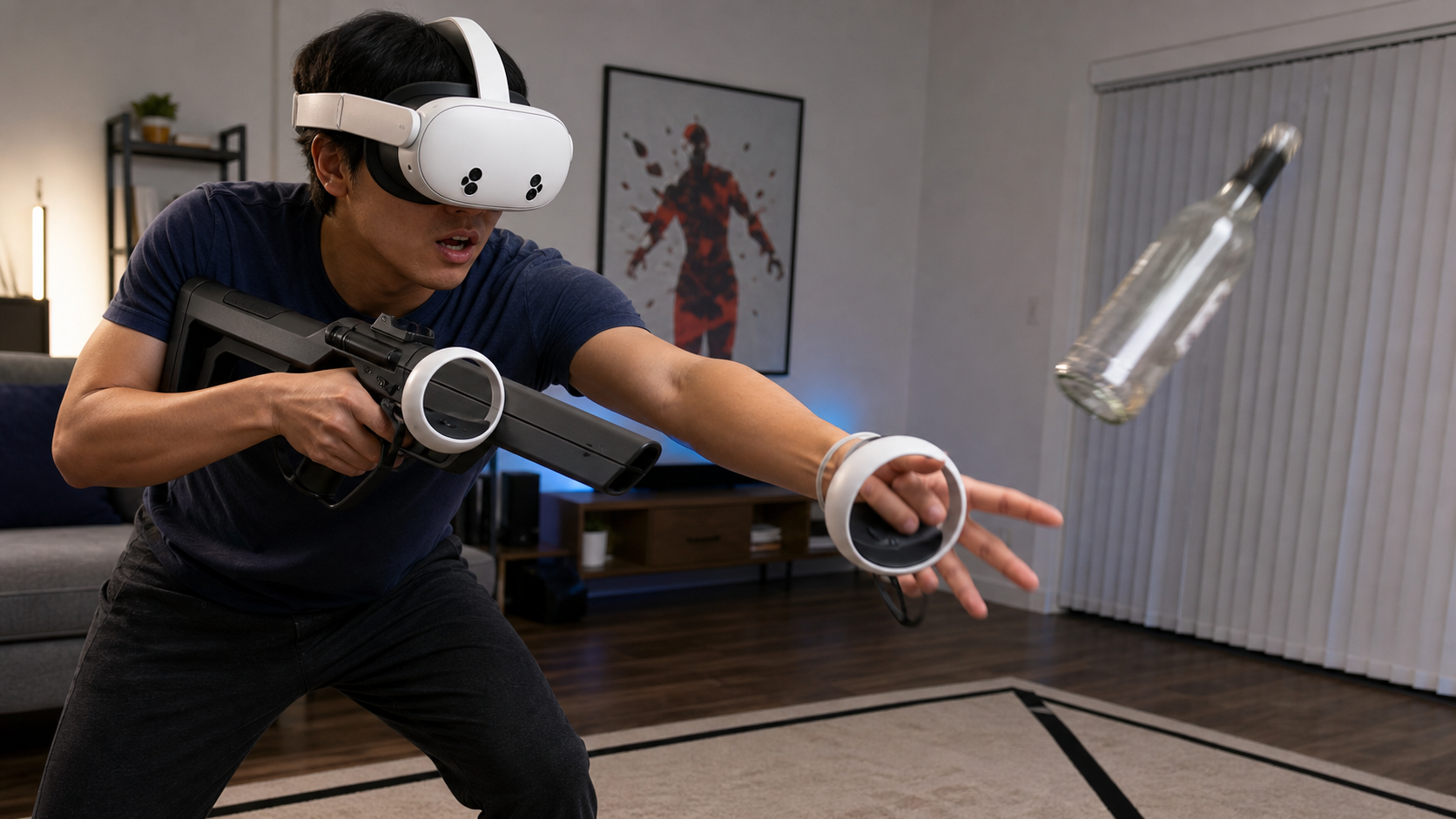
I learned this the hard way. I was in a level with very little ammo. I had a stable two-handed grip on my pistol and was landing perfect shots. But once the ammo ran out, I was surrounded. There was a bottle on a table nearby. Normally, I would snatch it and throw it in one fluid motion. With the gun stock, the motion was a disaster. I couldn't get the right arm angle. The throw was weak and went nowhere near my target. The stock, which had been my best asset just moments before, became a clumsy liability that got me killed. This is the core issue. Superhot VR demands fluid, multi-purpose actions. A gun stock is a single-purpose tool. It's fantastic for tactical shooters like Pavlov, where you are almost always holding a rifle. But for an arcade-style game like Superhot VR, it often gets in the way.
Buy/Skip Verdict by Game Type
| Game Type | Verdict | Reason |
|---|---|---|
| Tactical Shooters (e.g., Pavlov, Onward) | BUY | These games reward stable, two-handed aiming above all else. The gun stock provides a huge advantage in long-range firefights and holding angles. |
| Arcade Shooters (e.g., Superhot VR, Pistol Whip) | SKIP | These games require rapid movement, throwing, and frequent one-handed actions. The gun stock is too restrictive and slows you down when it matters most. |
Conclusion
This gun stock is a specialized tool, not a universal upgrade. It excels at making tactical shooters more immersive but hinders the fast, varied actions needed for arcade games like Superhot VR.
Leave a comment