



Can Expert+ players still play one fast wrist-heavy section and note strain after adding Beat Saber Grips?

My wrists ache after one fast song. The Quest 3 controller nearly flies out of my hand. I need a better grip, but will an accessory make tracking even worse?
For Expert+ players, Beat Saber Grips primarily reduce wrist strain from over-gripping, not directly fix tracking. The added bulk can feel strange at first and requires you to be more aware of your controller spacing during fast crossovers, but the secure hold is a noticeable improvement.
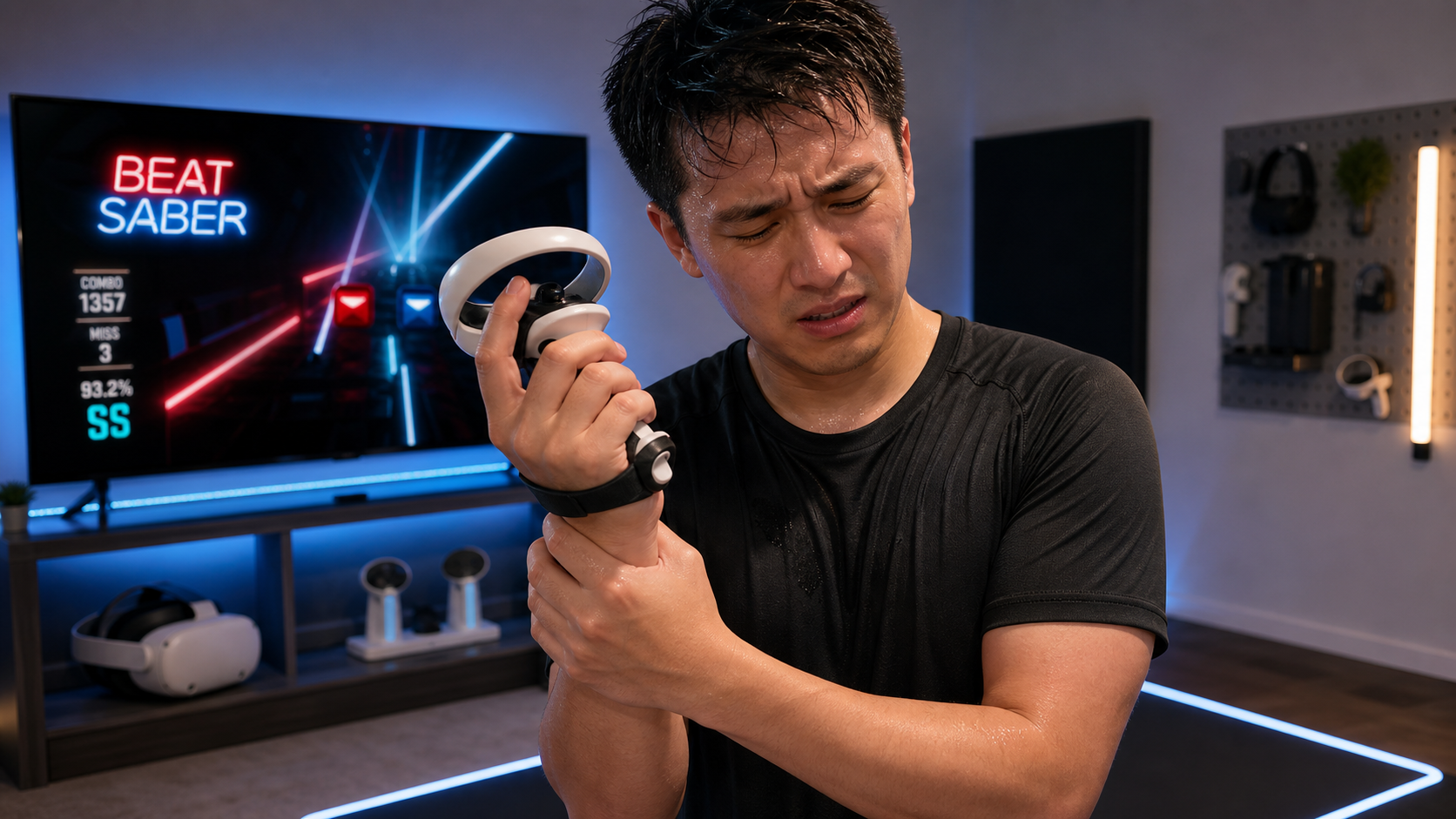
I’ve spent hundreds of hours in Beat Saber, mostly on Expert+ maps that are heavy on wrist flicks and fast patterns. My biggest problem has never been reading the notes; it’s been my controllers. On a good day, I can hit a full combo. On a bad day, my sweaty hands cause the controller to slip just enough to miss a note, or worse, my forearm burns out from gripping too hard. I bought a set of Beat Saber Grips for my Quest 3 controllers hoping for a fix. This is my real experience, not a generic review. I wanted to know if this accessory was a real solution or just another gimmick. The only way to find out was to test it on the fastest, most demanding songs I knew.
When Expert+ players use Beat Saber Grips in Quest 3 controllers, what feeling changes first about tracking consistency?
You strap on new grips, expecting better tracking. Instead, everything feels wrong. Your swings are off, and you miss easy notes. Is the product broken, or is something else happening?
The first thing you feel is a change in the controller's angle and balance, which affects your muscle memory. This makes you more aware of your swing path, especially during crossovers, where the added bulk of the grips brings the controllers closer to each other than you are used to.
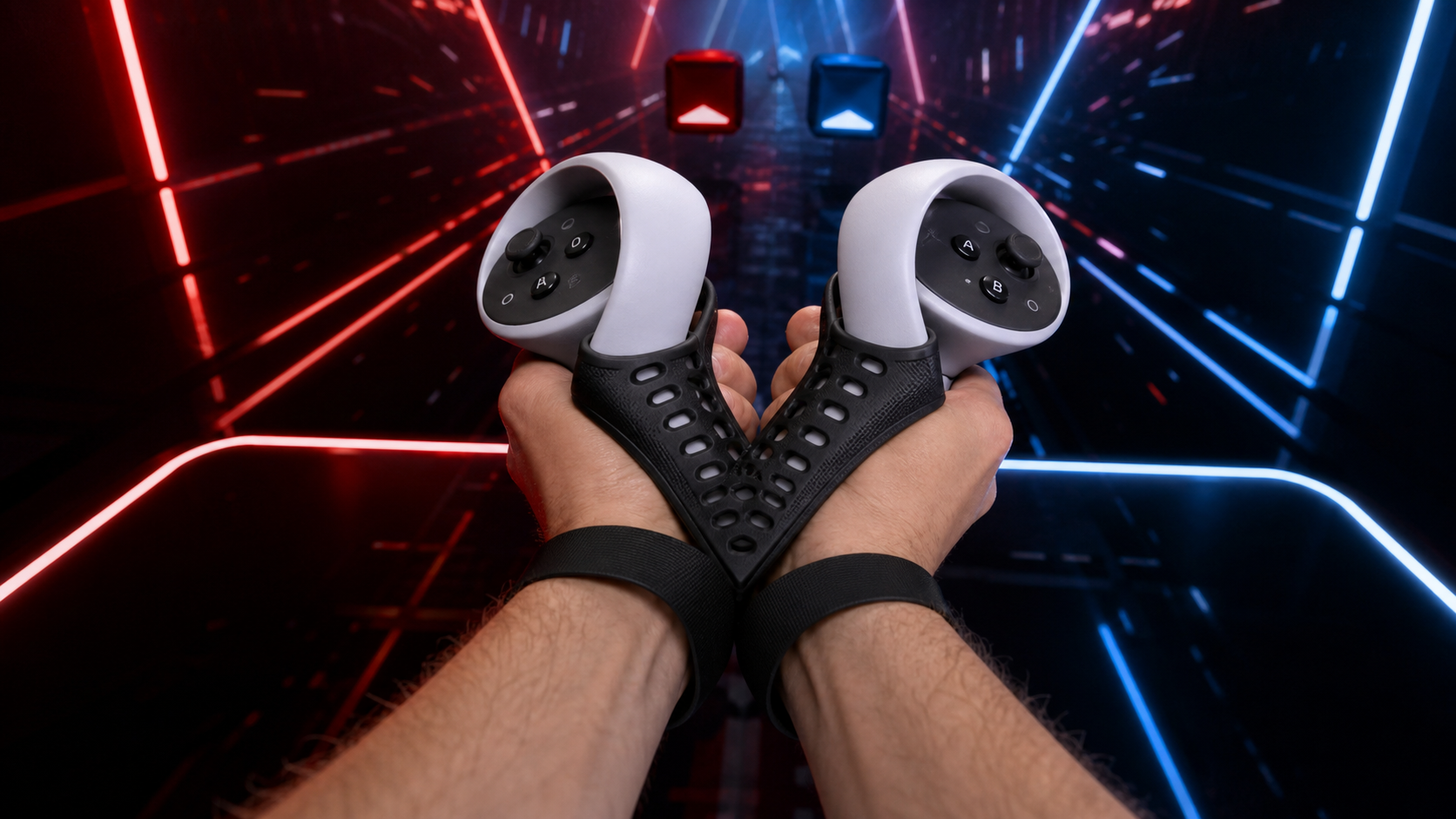
When I first put the grips on, I felt a little disappointed. The controllers felt bulkier, and the angle of my saber seemed slightly off. I jumped into a map I know by heart and my score was worse than usual. My brain kept telling me the tracking was failing, but that wasn't the real story. The problem was my own "room awareness." The grips add a bit of size to the controller. During fast sections with lots of crossovers, my hands were getting too close. The controllers weren't losing tracking because of a hardware issue; they were getting in each other's way. I had to relearn the spacing between my own hands. Once I adjusted, I started to notice the real benefit: I wasn't death-gripping the controller anymore. My hand was relaxed because the strap did all the work.
Initial Feelings Compared
I made a simple table to organize my first impressions. It shows how the feeling changed from a bare controller to one with a grip.
| Feeling | Bare Quest 3 Controller | Controller with Beat Saber Grips |
|---|---|---|
| Grip Security | Slippery with sweat; requires a tight grip. | Very secure; hand can stay relaxed. |
| Swing Angle | Familiar and natural from muscle memory. | Feels slightly different; requires a few songs to adjust. |
| Crossover Awareness | Low awareness; hands can cross very closely. | High awareness; you feel the bulk and must keep hands further apart. |
What should be measured before claiming Beat Saber Grips fixes tracking consistency?
Someone on the internet says an accessory fixed their tracking. You buy it, but it feels the same. You need real data, not just vague feelings, to know if it works.
To properly test tracking, you must measure objective performance and subjective comfort. This includes tracking accuracy scores on repeatable song sections, counting missed notes during crossovers, and rating your own wrist strain on a simple scale before and after using the grips.
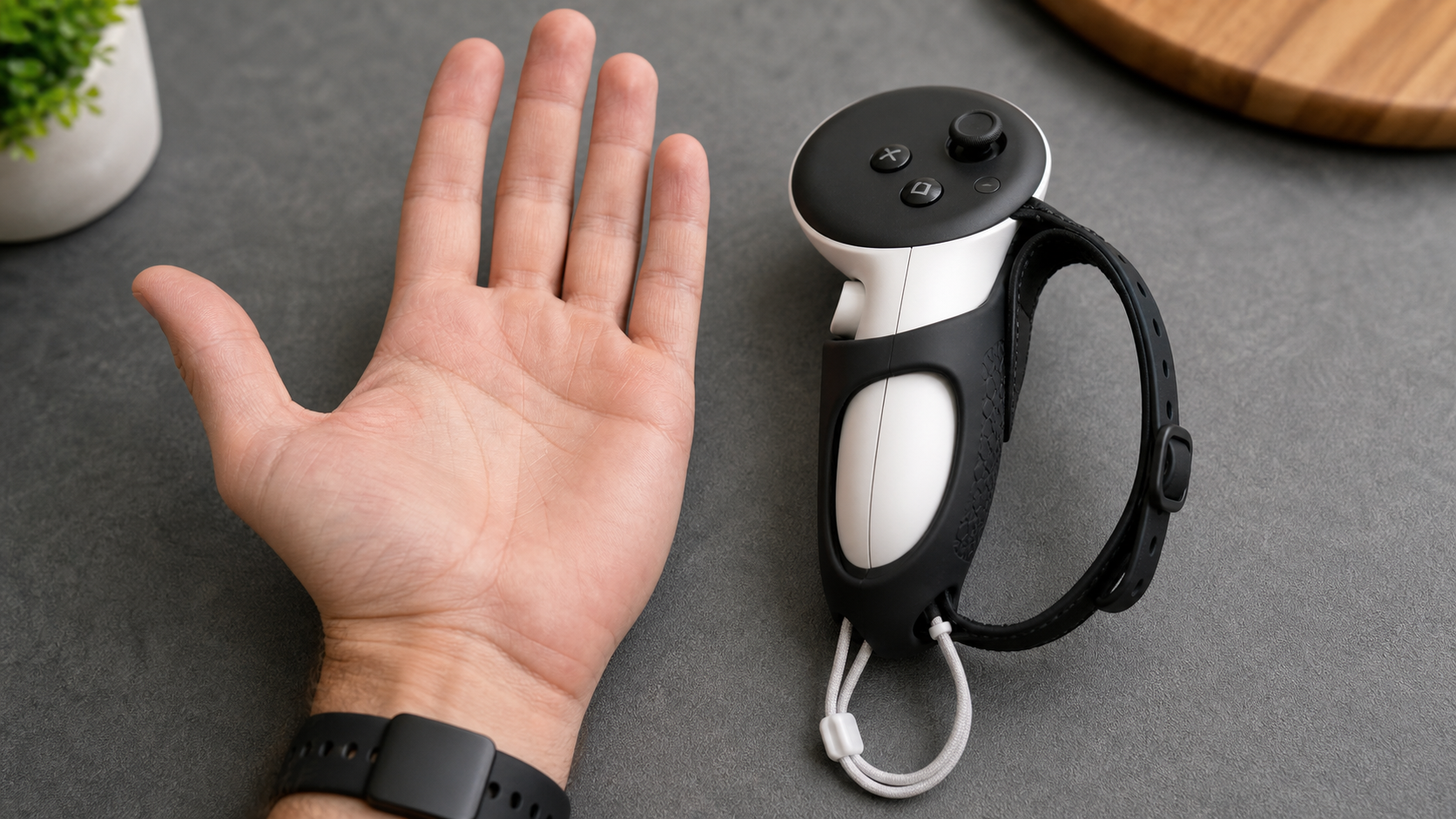
A claim without proof is just an opinion. So, I decided to be methodical. I didn’t want to just "feel" if it was better; I wanted to know. First, I used the Practice Plugin in Beat Saber to isolate a 45-second, wrist-heavy section from a difficult song. I played it ten times with bare controllers and ten times with the grips on, recording my average percentage. Second, I focused on songs full of crossovers and just counted how many times my saber flew away or a note was missed for no clear reason. Third, I measured my own body. After a 30-minute session, I rated my forearm and wrist strain from 1 to 10. The biggest factor I found was hand size. My hands are average-sized, and the grips fit well, which made the controller angle repeatable every time I picked it up. If your hands are very large or small, your experience might be different because the controller might not sit the same way each time.
Is the best comparison a cheaper accessory, a DIY setup, or no accessory at all?
You want better grip, but dedicated accessories are expensive. Maybe some tape or a cheap strap would work just as well. It is hard to know if you are paying for quality or just a brand name.
The most important comparison is against no accessory at all. This gives you a true baseline. Comparing against a DIY setup or a cheaper alternative is useful for judging value, but testing against the bare controller proves if the core problem is actually solved.
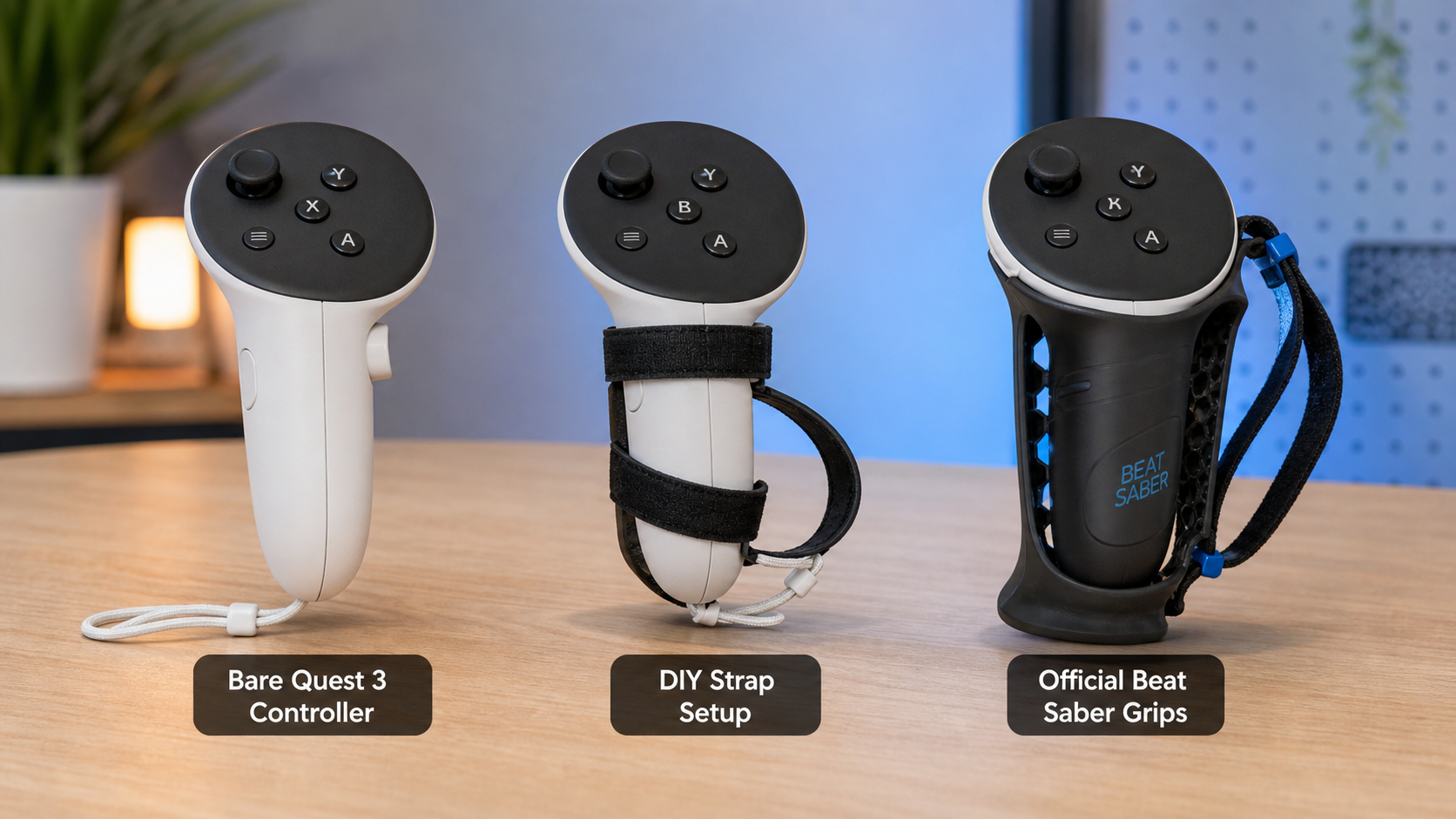
Before I even thought about other products, I needed to confirm the grips were better than nothing. The bare Quest 3 controller is what the developers designed, so that’s the control group. It's lightweight and simple. Its weakness is that it gets slippery and forces you to tense your hand. I also tried a quick DIY solution using some old straps from another console controller. It was cheap, and it stopped the controller from flying across the room, but it felt clumsy. The strap would shift, and it offered no ergonomic benefit for my palm. It was a safety measure, not a performance upgrade. The dedicated Beat Saber Grips were a clear winner over both. They felt like an integrated part of the controller. The security they provided was far better than a simple strap, and the ergonomic shape gave me a much more relaxed grip than the bare controller ever could. The cost is higher, but the quality and feel are in a different league.
What would the reviewer keep using after the Quest 3 controllers test if tracking consistency improves?
The test is over. You have all the data. Now you have to make a choice. Do you go back to how it was, or do you stick with the new accessory for good?
After all my tests, I am keeping the Beat Saber Grips on my controllers. The massive reduction in hand and wrist fatigue outweighs the initial adjustment period. I can play longer and more comfortably, which is more important to me than any small change in tracking feel.
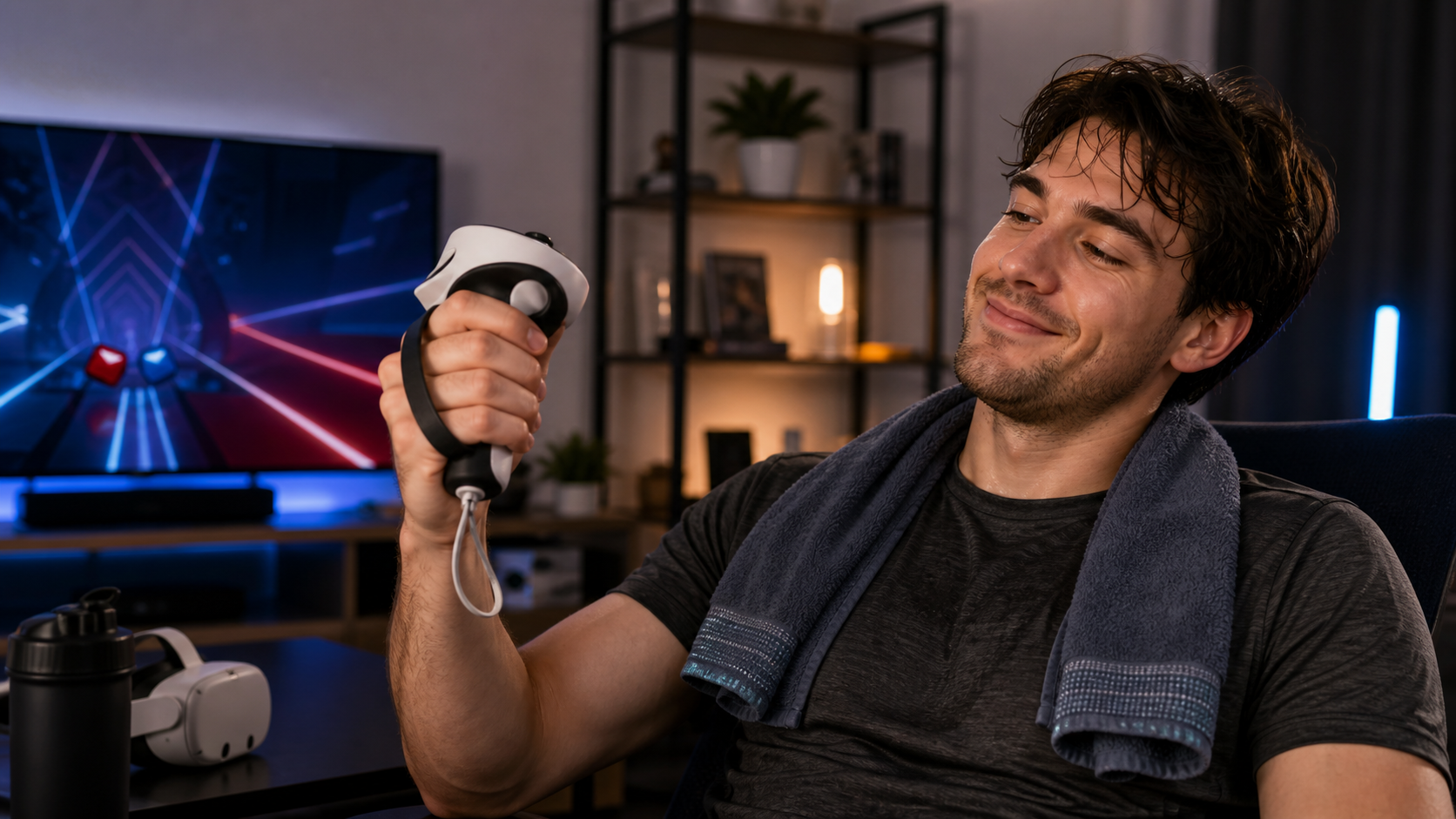
My final decision came down to one simple thing: comfort. The grips didn’t magically make me a better player overnight, and they didn’t fix some imaginary tracking flaw in the Quest 3. What they did was remove a major point of friction for me—literally. I no longer have to grip the controller so hard that my knuckles turn white. The strap holds it to my hand, and my fingers can relax. This was the game-changer. I used to stop playing because my forearms were burning. Now, I stop because I'm just tired. The grips felt a little annoying at first because of the bulk, but the long-term benefit of less strain is a trade-off I am happy to make.
However, I wouldn't recommend them to everyone. If you have very small hands, the extra size might be too much. If you never play for more than 20 minutes at a time, you probably don't experience the kind of fatigue that makes these grips so valuable. But for any Expert+ player who puts in long sessions and is tired of their hands giving out before their skill does, these are worth a serious look.
Conclusion
Beat Saber Grips help by reducing hand strain, which allows for longer, more comfortable play sessions. They require some adjustment but are a worthwhile upgrade for serious players.
Leave a comment