



Can an Open Facial Interface for Quest 3 fix one problem in fitness workouts without creating two more?

Sweating through a VR fitness session is great, until your lenses fog up. You stop, you wipe, you lose your flow. It’s a frustrating cycle.
Yes, an open facial interface for Quest 3 can solve the lens fogging problem in fitness workouts. The design increases airflow, which stops moisture from building up. But, it can create new issues with light leak and stability, which you need to be aware of.
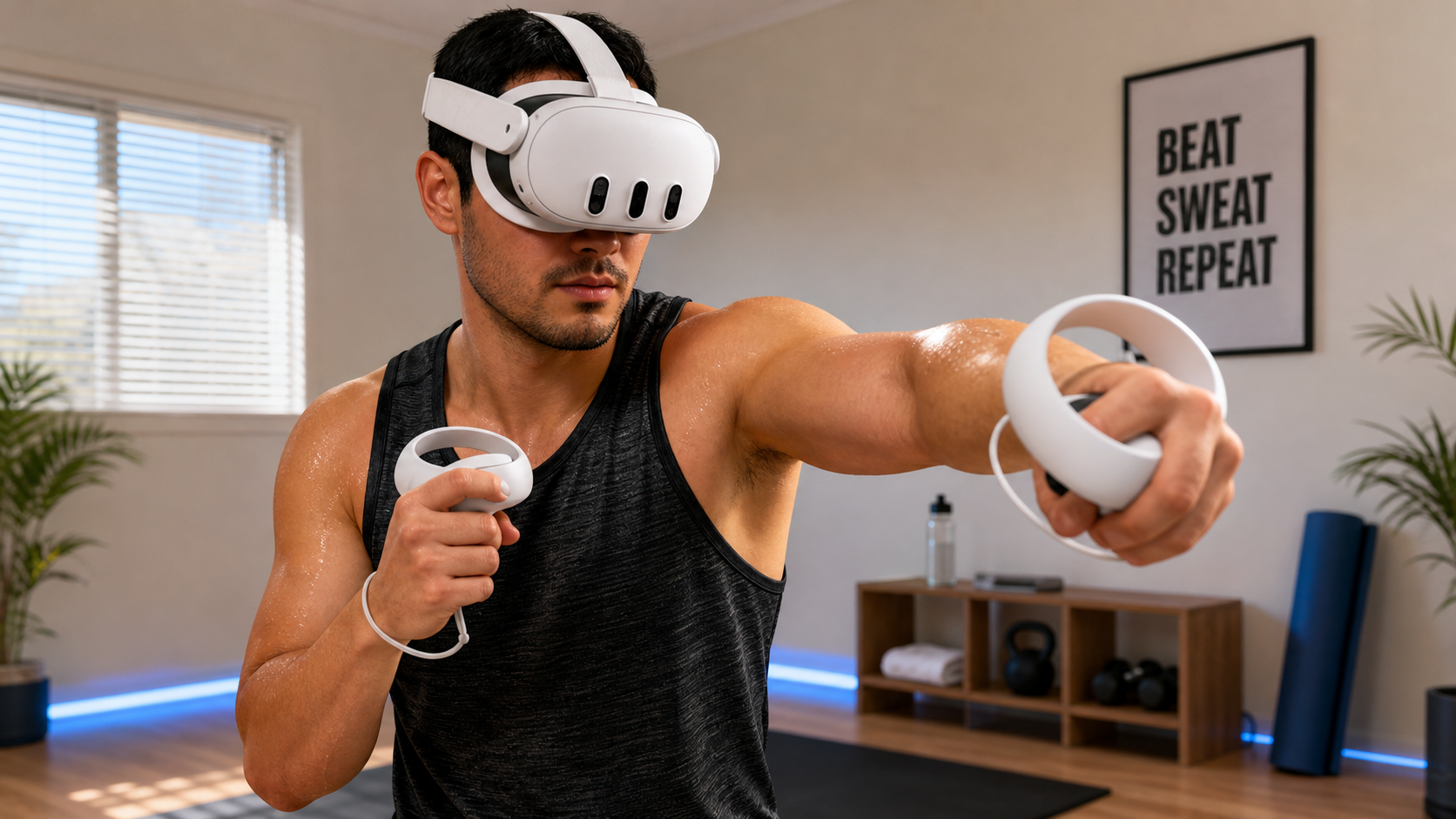
I’ve been using VR for fitness since the Quest 2 days. The biggest problem has always been sweat and fog. When I got my Quest 3, I hoped things would be better, but the issue remained. I decided to try an open facial interface to see if it was the answer. I wanted a real solution, not just another accessory that creates more problems than it solves. My goal was to test it like a real user would: through intense, sweaty workouts over several weeks. I needed to know if it could stand up to the test of real-world fitness sessions, not just a quick five-minute demo. This is my story of what I found, the good and the bad.
When the novelty fades, does Open Facial Interface for Quest 3 still solve lens fogging?
You’re in the middle of a perfect run in Beat Saber, and then it happens. A cloud of fog spreads across your lenses, completely blinding you.
Yes, it consistently solves lens fogging even after weeks of use. The improved airflow from the open design is not a novelty. It's a fundamental change that keeps heat and moisture from getting trapped against the lenses during long, intense workouts.
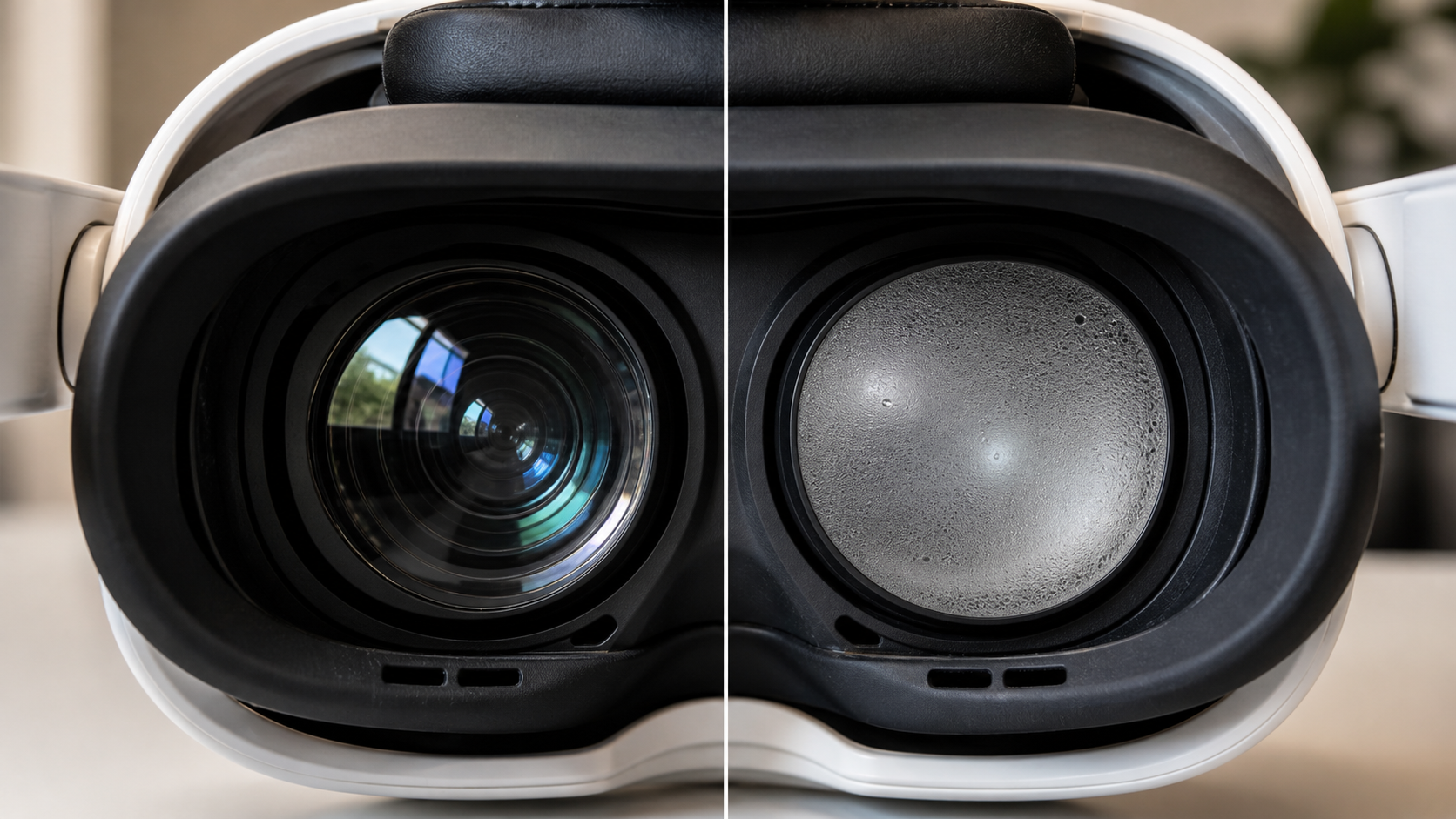
My first session with the open facial interface was a revelation. I played LES MILLS BODYCOMBAT for 30 minutes straight, and I didn't have to stop once to wipe my lenses. The feeling of air moving across my face was strange at first, but the benefit was immediate. I thought, "Okay, this is great, but will it last?" I’ve tried other "anti-fog" solutions that worked for a week and then failed. After a month of daily workouts, the open interface still performs perfectly. The fog is just gone. As a glasses wearer, this is a huge deal. My glasses used to fog up first, then the headset lenses. Now, neither of them do. The open design gives my glasses the clearance they need and the airflow to stay clear.
Short-Term vs. Long-Term Impressions
My initial excitement was all about the lack of fog. But over time, I started noticing the other effects of the design. Here is a breakdown of how my impression changed.
| Feature | First Impression (1-3 Sessions) | Long-Term Impression (4+ Weeks) |
|---|---|---|
| Lens Fogging | Completely eliminated. Feels like magic. | Still completely eliminated. This is its core strength and it holds up. |
| Airflow | Very noticeable. Feels cool and a little distracting. | Feels natural now. I only notice it when I switch back to a standard interface, which feels stuffy. |
| Field of View (FOV) | Seems slightly wider, more open. I feel less closed-in. | The FOV change is minimal. The feeling of openness comes from the airflow and lack of a full seal, not a true FOV increase. |
The key takeaway for me is that the main benefit—solving lens fog—is not a temporary gimmick. It's a real, lasting solution that fundamentally changes the experience of VR fitness.
Would swap pads after a shared session expose the same lens fogging problem?
You share your headset with a friend, they hand it back, and you put it on. The cold face pad instantly fogs the warm lenses. Game over.
Swapping pads on an open interface is much less likely to cause fogging. The constant airflow helps the lens temperature adjust quickly. A huge temperature difference might cause a brief, faint haze, but it clears in seconds instead of minutes.
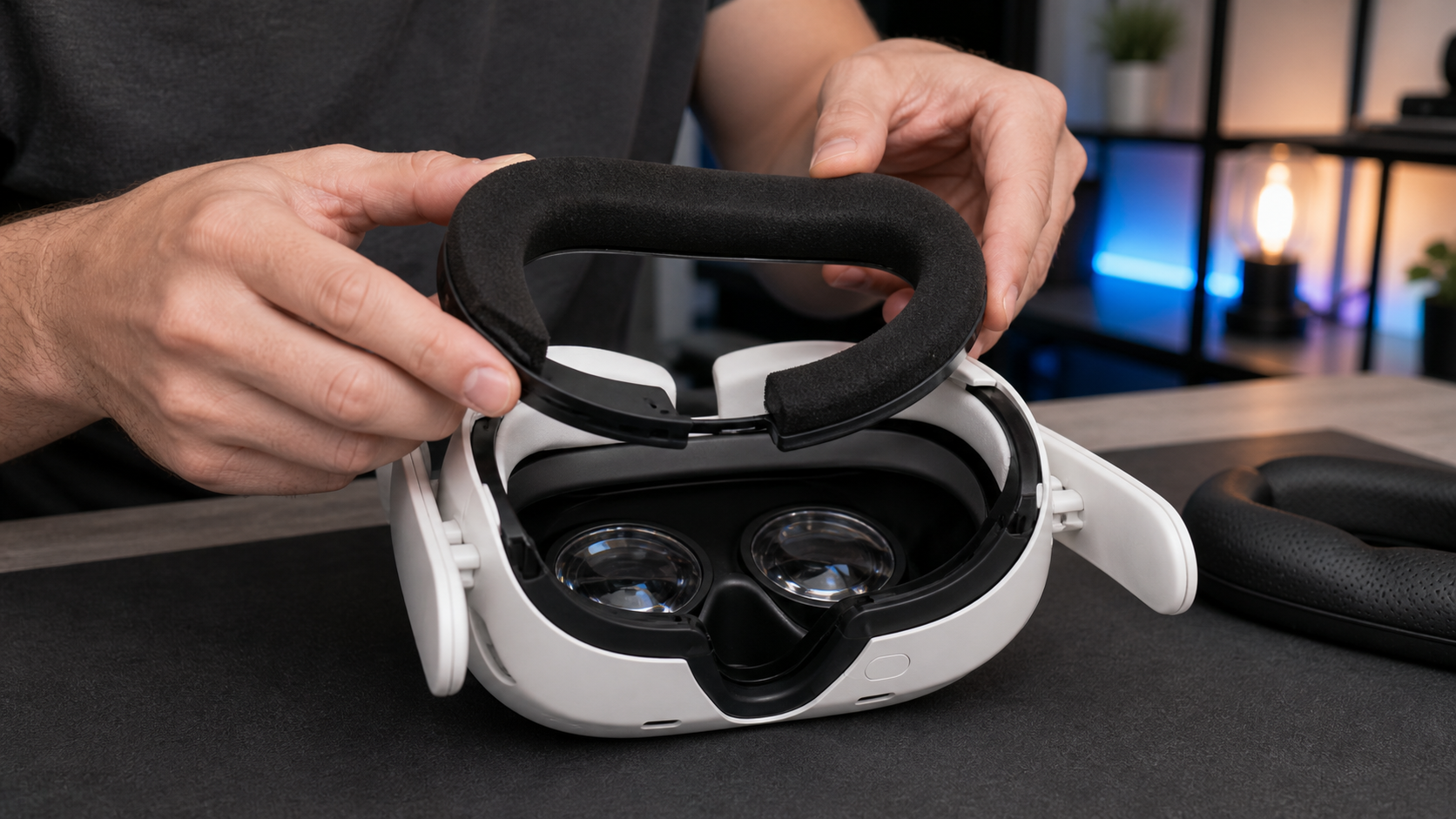
I often have friends over to try VR, and sharing the headset used to be a pain. My friend would finish a sweaty round of Supernatural, and the stock facial interface would be soaked. I’d wipe it down, but when I put the headset on, the temperature difference between my face, the cool pad, and the warm lenses created an instant fog blanket. I tested this exact scenario with the open facial interface. My friend finished their workout. I popped off their sweaty pad, wiped the interface frame, and snapped on my own clean, cool pad. I expected the usual fog. Instead, I saw a tiny bit of haze at the very edges of the lenses that vanished within three seconds. The open frame doesn't trap a pocket of warm, humid air. It lets the air circulate, which means the temperature equalizes almost immediately. This makes sharing the headset a much smoother and more pleasant experience for everyone. It solved a problem I didn't even buy it for.
Can the user recover quickly when the accessory gets in the way?
You're ducking under a bar in a fitness game, but the headset slips down your nose. The distraction makes you miss the move and break your combo.
Yes, you can recover in a second, but you might have to do it more often. The open interface has less surface contact, so it can shift during very fast movements. A quick push is all it takes to fix, but it can interrupt your focus.
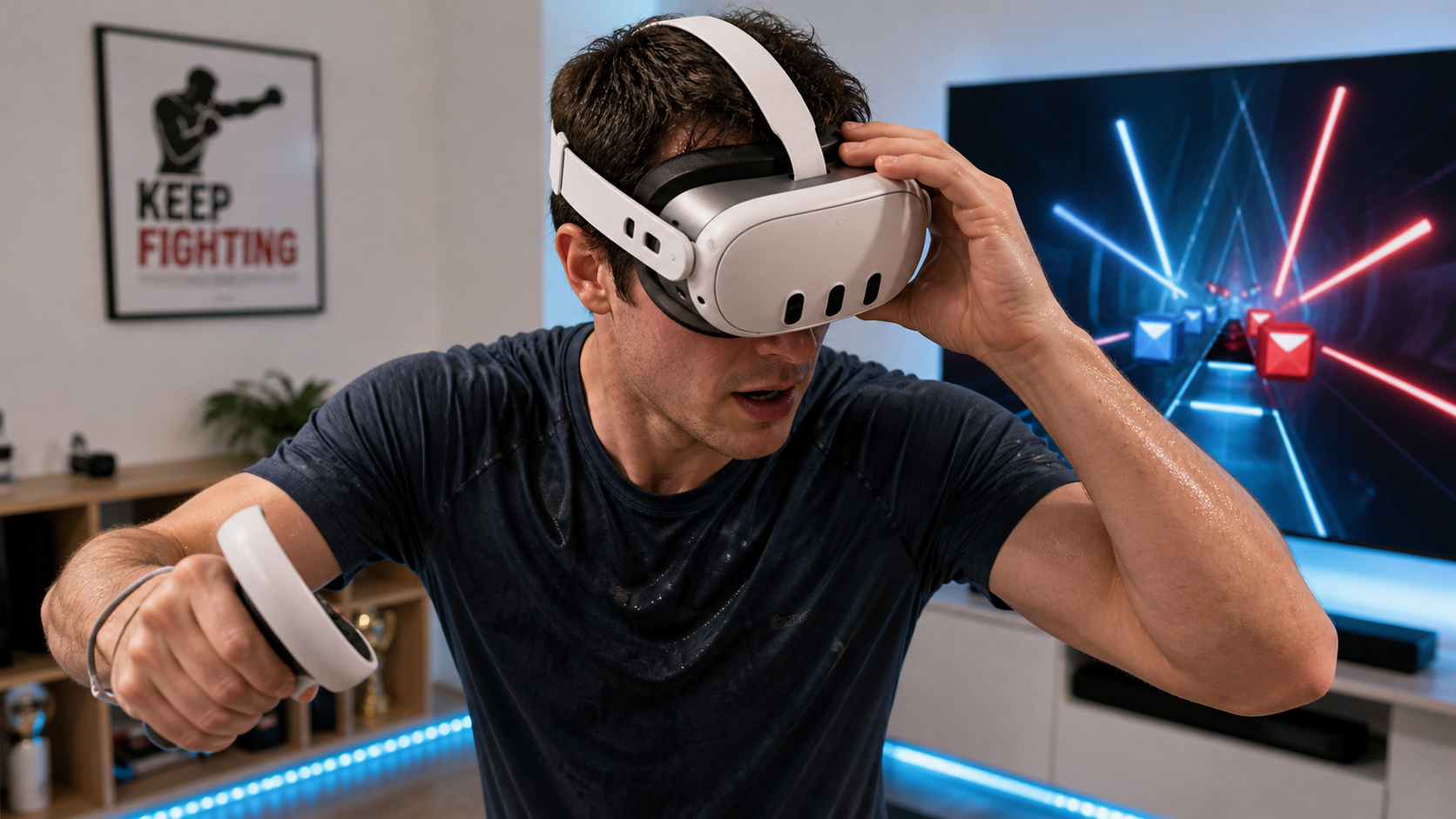
This is where the trade-off really shows up. The open facial interface is amazing for fog, but it is not as secure as the stock interface. The standard one cups your face, creating friction on your brow and cheeks that holds it in place. The open design floats more, with pressure mainly on the forehead pad. When I play games with a lot of bobbing and weaving, like Thrill of the Fight, I can feel the headset shift a little. It doesn't fall off, but it might slide down my nose just enough to blur the image slightly. The good news is that it’s an easy fix. I can just nudge it back into place with one hand without even pausing the game. It takes less than a second. But, it is an interruption. This is the "new problem" created by solving the first one. For slower-paced fitness apps or games where I'm mostly stationary, it's a non-issue. But for high-intensity, high-movement games, it's something I've had to get used to.
Can the conclusion explain the best and most annoying Open Facial Interface for Quest 3 moments in fitness workouts?
You need the honest truth. What are the moments you will love this accessory for, and what are the moments you will absolutely hate it for?
The best moments are finishing a 45-minute, high-intensity workout with perfectly clear lenses. The most annoying parts are the distracting light leak from the sides and the slight instability during rapid head movements, which can break your immersion.
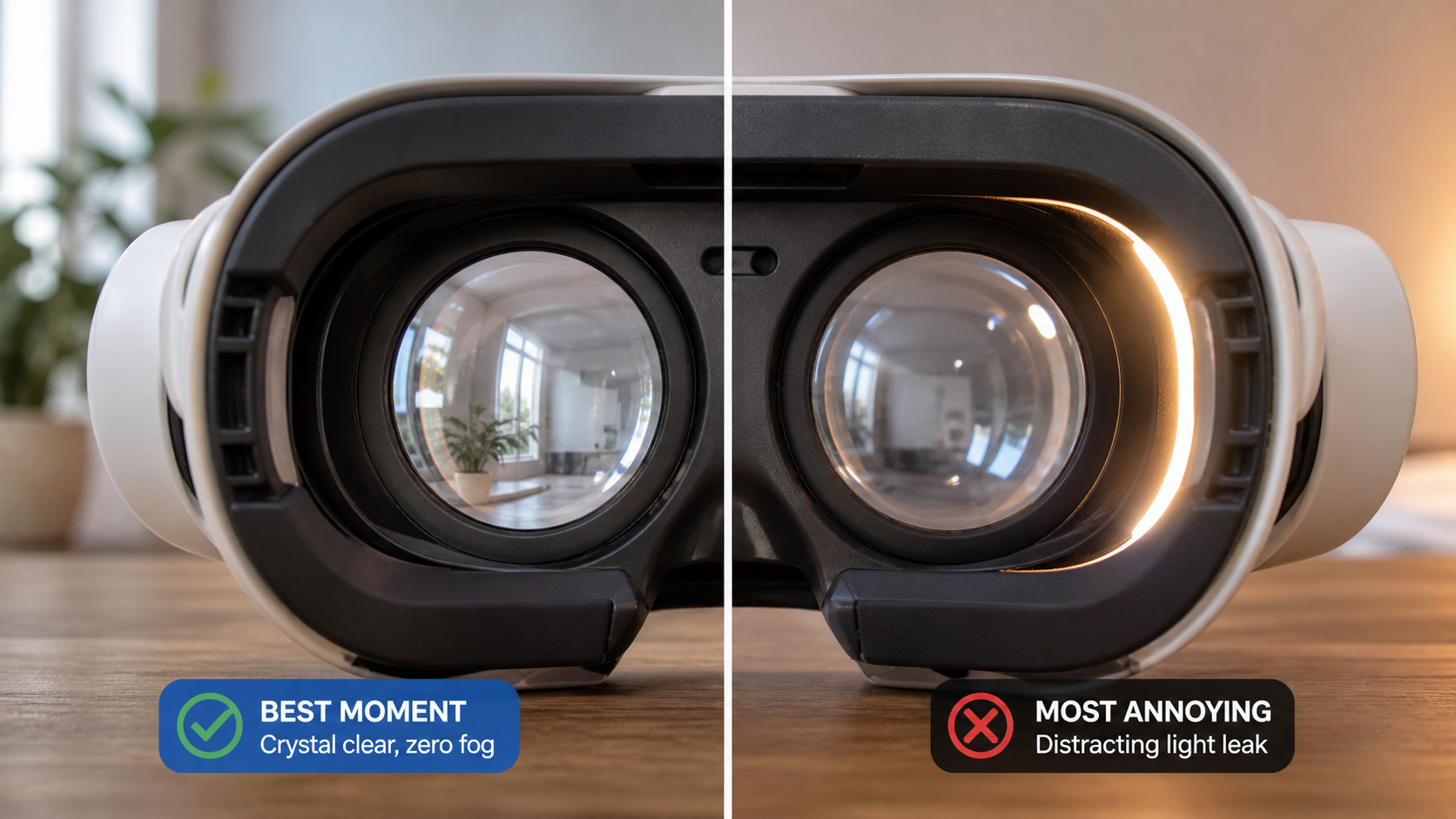
My best moment with the open facial interface is easy to describe. I was deep into a boxing workout, sweat pouring down my face, and I realized I hadn't thought about my lenses once. I finished the entire session, took the headset off, and the lenses were crystal clear. The feeling of cool air on my face during the workout was also a huge bonus. It just feels less claustrophobic and hot. That's the magic of this accessory.
However, the most annoying moment was when I tried to play a darker, more atmospheric game right after my workout. My living room light was on, and light bled in from the open sides of the interface. It was incredibly distracting and ruined the immersion. This accessory is really for fitness in a well-lit room, not for playing horror games in the dark. The other annoyance is the shift I mentioned. When you're in the zone, and you have to readjust the headset, it pulls you out of the experience.
So who should buy it? If your primary use for VR is fitness and you are constantly fighting lens fog, get it. It’s a game-changer. Who should skip it? If you prioritize total immersion, play in rooms with tricky lighting, or rarely break a sweat, the stock interface is probably a better fit for you.
Conclusion
The open facial interface absolutely fixes lens fog during workouts. It introduces minor issues with stability and light leak, but for fitness users, the trade-off is well worth it.
Leave a comment