



Can a VR Gunstock survive a sweaty Ghosts of Tabor session on Meta Quest 2?

Fumbling reloads in a firefight gets you killed. I tested a VR gunstock in Ghosts of Tabor to see if it fixes your aim without slowing you down.
Yes, a VR Gunstock can enhance a sweaty Ghosts of Tabor session by massively improving aim stability. But, for a left-handed player on Meta Quest 2, this comes at a cost: reloads are noticeably slower and riskier, especially when you're under pressure to survive.
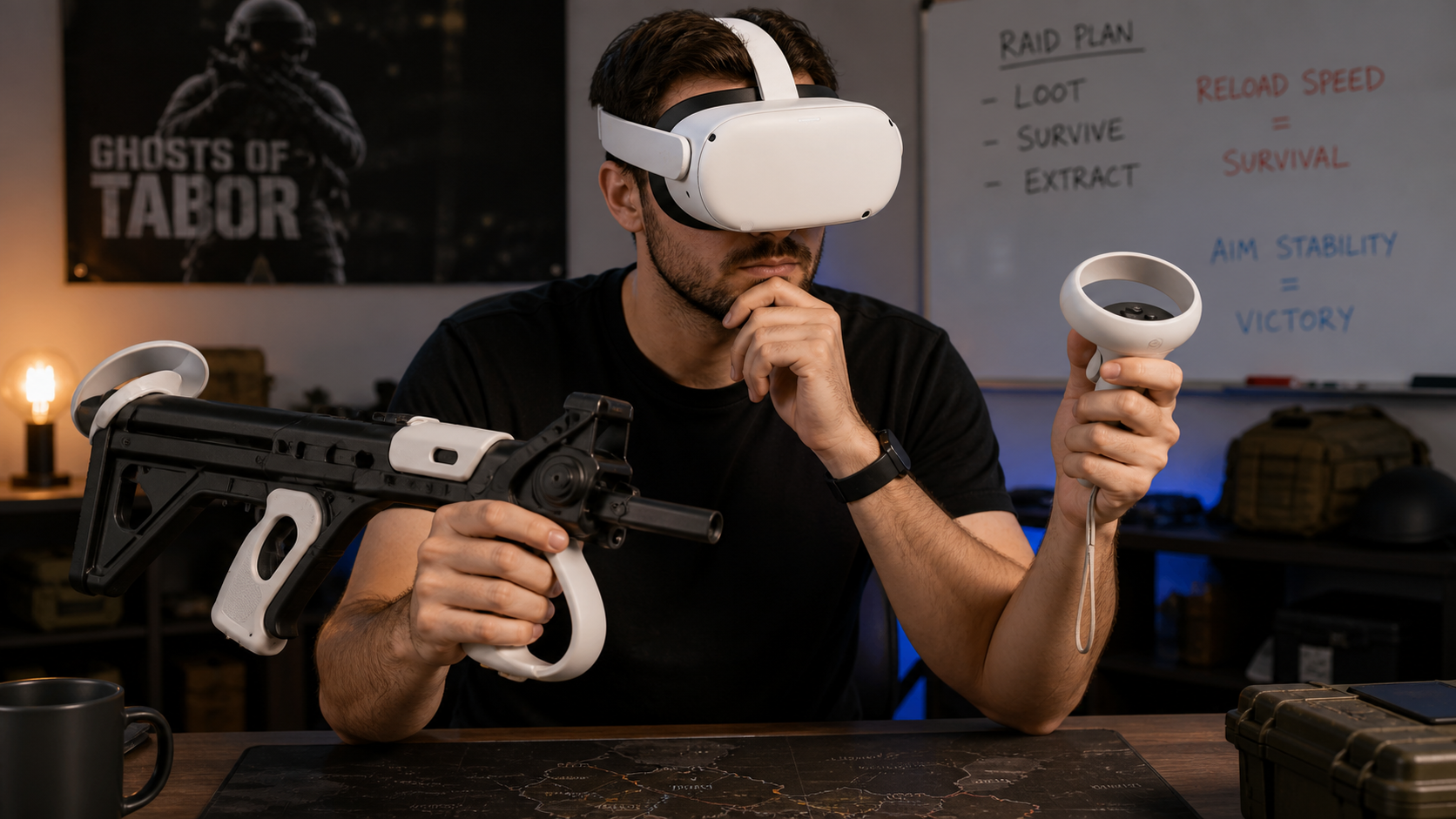
The promise of a VR gunstock is simple: turn your floating controllers into a solid, stable rifle for peak immersion and accuracy. But Ghosts of Tabor isn't just a shooting gallery. It’s a game of sweaty palms, high-stakes looting, and frantic reloads where a single clumsy moment sends you back to your bunker with empty pockets. As a left-handed player, I was skeptical. We often get the short end of the stick with accessories designed for the right-handed majority. So I decided to put it to the test, not in the calm of the training range, but in the heat of real raids. This is what I found out.
In Ghosts of Tabor, when exactly does reload speed show up on Meta Quest 2?
You think your reloads are fast in the safehouse. But in a real firefight, your hands shake, you drop the mag, and it's game over.
Reload speed becomes a life-or-death factor during high-pressure combat, not in the calm of the lobby. When another player is shooting at you, the fine motor skills for a manual reload are tested. Any hesitation or fumbling with a magazine can get you killed.
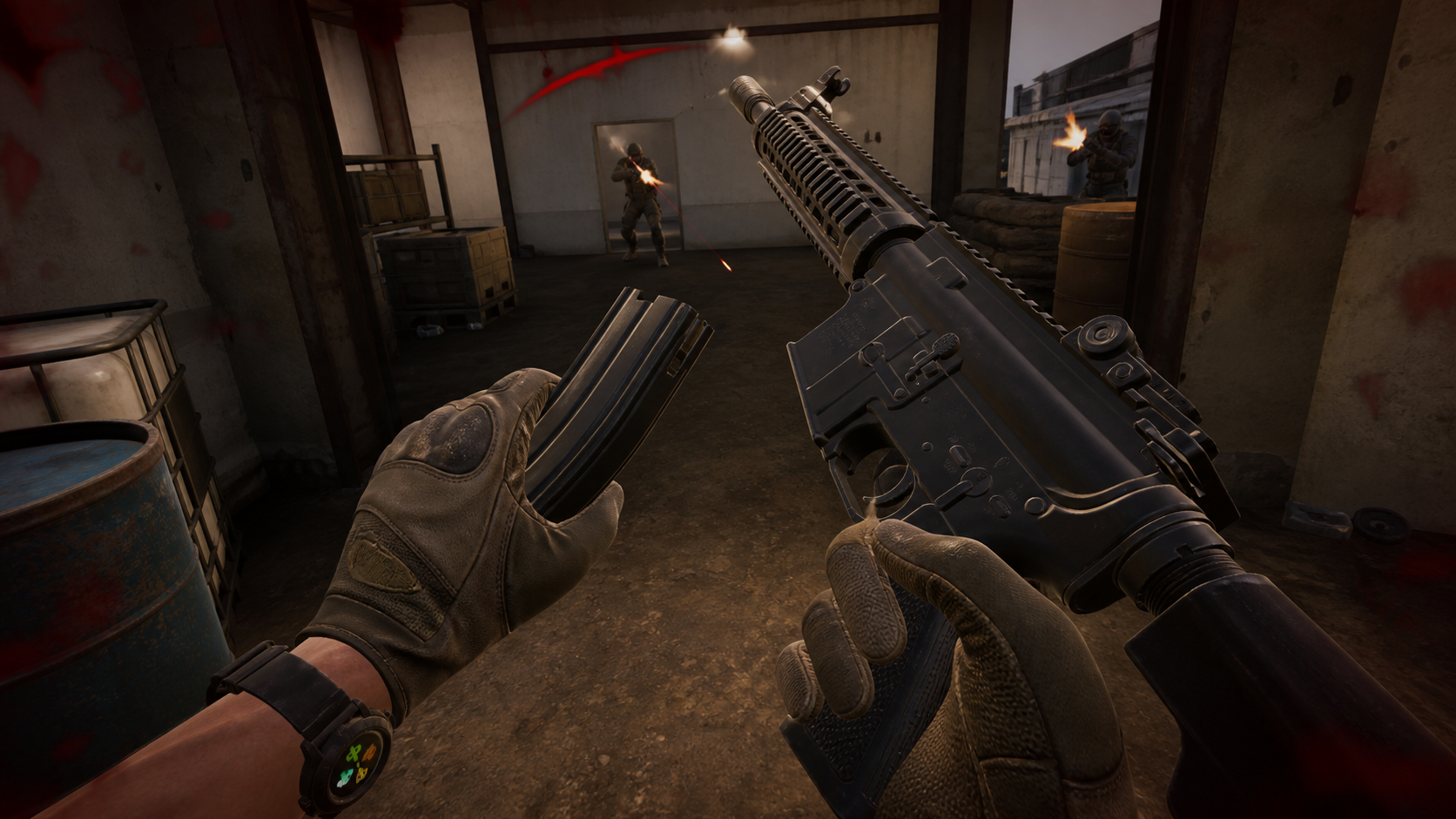
In Ghosts of Tabor, there are two different worlds when it comes to reloading. There’s the training range world, and then there’s the real world. In the safehouse, I can reload an M4 like a pro. I can grab the magazine, eject the empty one, slap the new one in, and charge the bolt with my eyes closed. It’s smooth, it’s practiced, and it feels great. But that’s not where reload speed actually matters. The real test happens when you’re pinned down behind a rusty car on the Island of Tabor, your screen is flashing red, and you can hear footsteps sprinting toward you. That's when your heart rate spikes and your hands forget all that calm practice. Suddenly, the simple act of grabbing a mag from your chest rig feels like threading a needle in an earthquake. This is the moment where the difference between a three-second reload and a five-second reload is everything.
Lobby Practice vs. Live Firefight
The gap between practice and performance is huge. The muscle memory you build in a calm environment is only the foundation. True speed is about executing those movements perfectly when adrenaline is trying to sabotage you.
| Situation | Pressure Level | Primary Challenge | Consequence of a Slow Reload |
|---|---|---|---|
| Safehouse / Lobby | Low | Building basic muscle memory. | None. You just try again. |
| Quiet Looting In-Raid | Medium | Topping off a mag without making noise. | Alerting nearby enemies to your position. |
| Active Firefight | High | Performing complex motions under duress. | Losing the fight, your gear, and your loot. |
What would a real VR Gunstock test in Ghosts of Tabor on Meta Quest 2 reveal about reload speed?
A gunstock promises steady, accurate shots. But does it make your reloads so clunky that you get eliminated while fumbling with your controller? I found out.
A VR gunstock test reveals a major trade-off. Aiming becomes incredibly stable, almost eliminating weapon sway. However, reloading is slower because you must physically detach and reattach your off-hand controller from a magnetic mount, adding extra steps and time to the process.
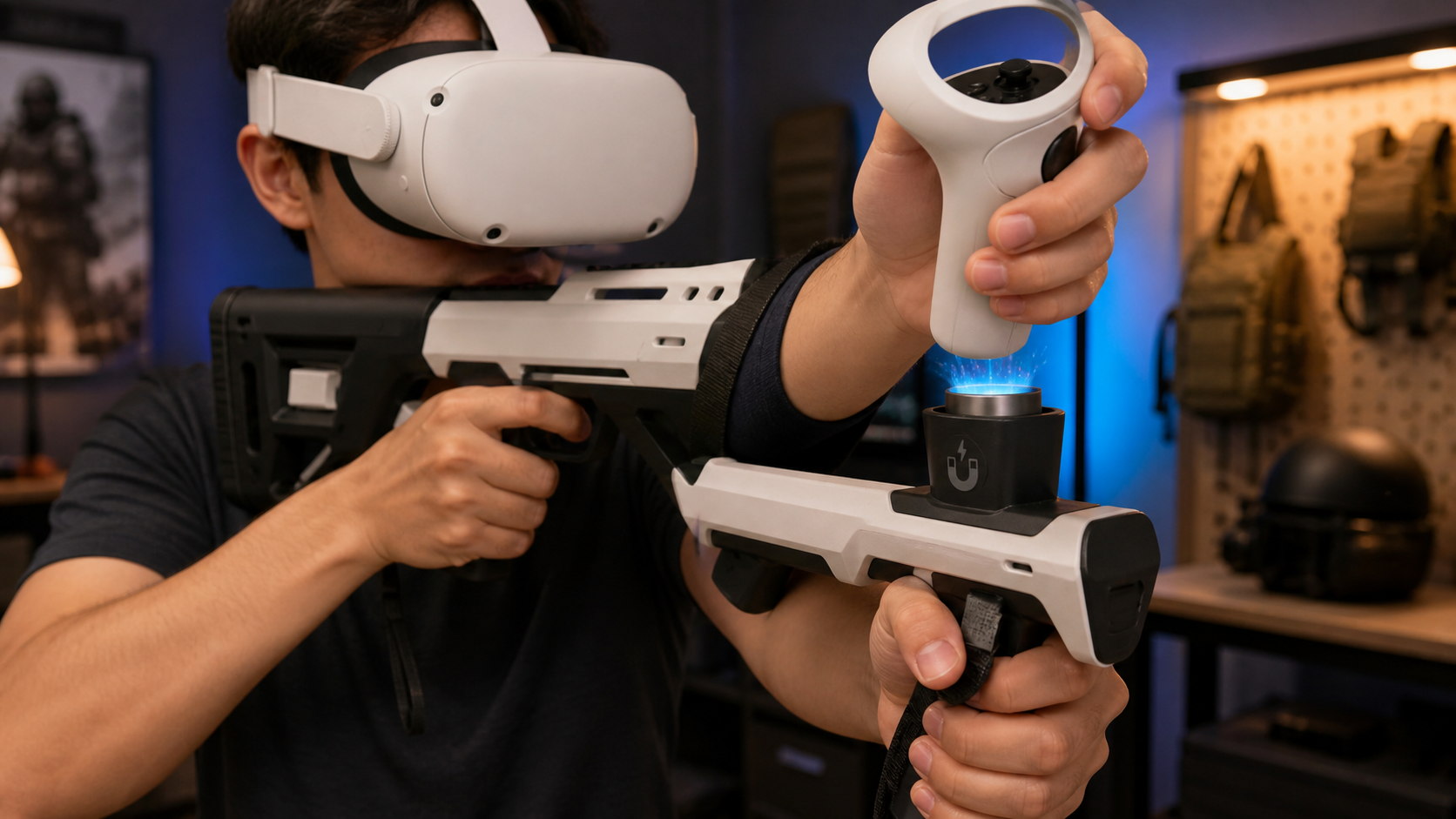
My first raid with the gunstock felt like a revelation. Holding a corner and aiming down a long hallway was a completely different experience. The rifle in my hands felt solid. The slight jitter from holding two separate controllers was gone. I could hold my breath and line up shots with a level of precision that felt impossible before. It was a massive confidence boost. Then I emptied my first magazine. The muscle memory I had built with bare controllers was useless. I had to consciously think: detach right hand, reach for chest rig, grab mag, insert mag, reattach right hand to the gunstock's magnetic mount. That last step was the killer. Finding the magnetic cup without looking, under pressure, was tough. My first few attempts were clumsy. I fumbled the controller, missed the magnetic cup, and wasted precious seconds. Compared to the fluid motion of just bringing my free-floating right controller back to the rifle, the gunstock felt rigid and slow. The steadiness for aiming was undeniable, but the cost was a slower, more deliberate, and less forgiving reload cycle. It forced me to change my playstyle, making sure I was in solid cover before even thinking about a reload.
Would left-handed players care more about safety than immersion here?
Immersion is the goal of VR. But what if that immersive accessory makes you smack your controllers together or punch your headset? That's a real problem.
Yes, left-handed players will likely care more about safety. When detaching the right-hand controller to reload, it can easily collide with the gunstock frame or the left controller. This risk of collision and controller damage can overshadow the feeling of immersion.
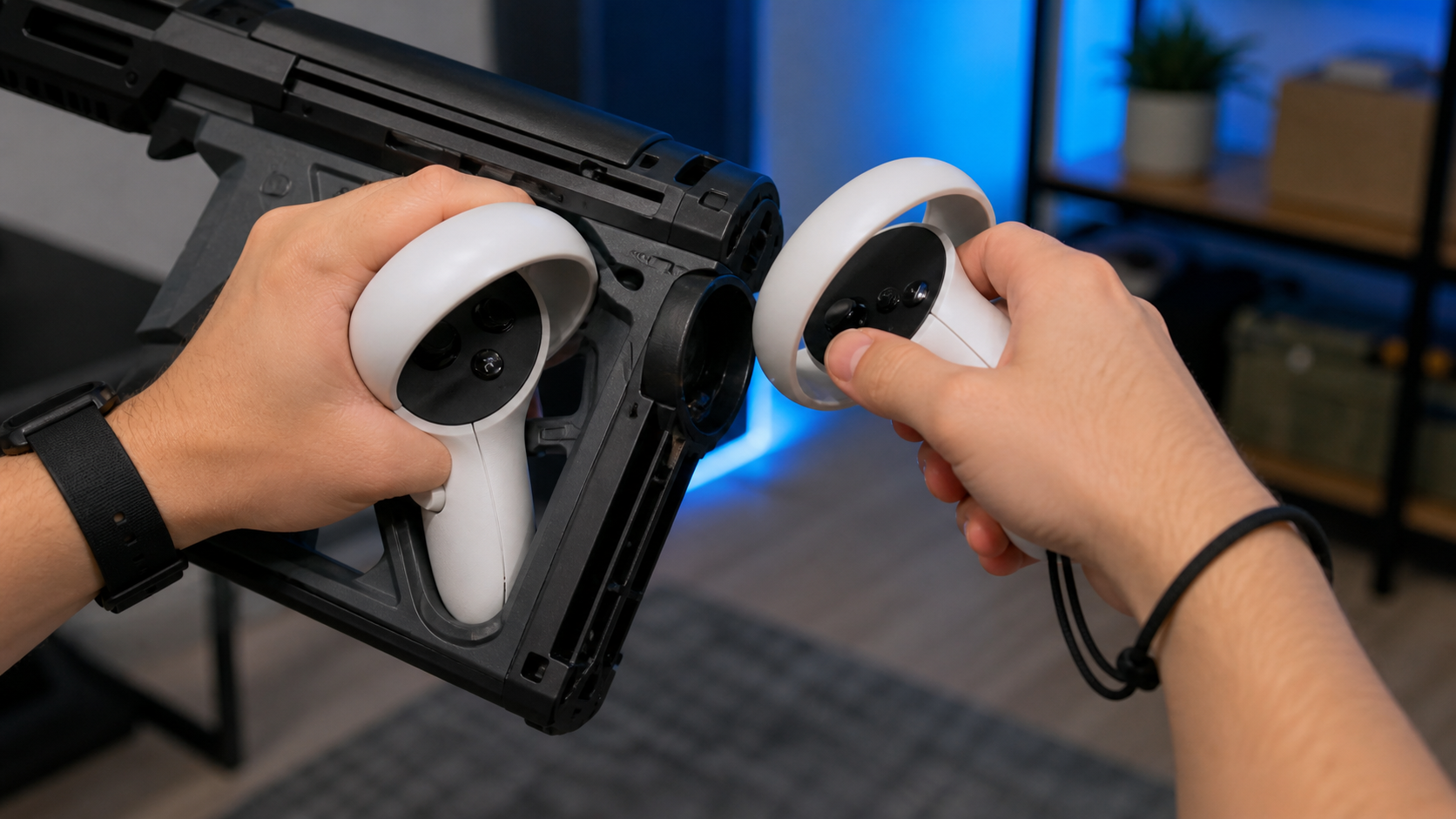
Here's where things get personal for a lefty like me. With my left hand holding the main grip, my right hand is my reload hand. The gunstock is physically anchored to my left controller and my shoulder. When I detach my right controller to grab a new magazine from my vest, my hand has to travel a specific path. But the stock itself is now an obstacle in that path. More than once, in a panic, I brought my right hand back too quickly and smacked it right into the side of my left controller. The sound of plastic hitting plastic is terrifying when you know how much these controllers cost. This isn't just about breaking something. A hard enough knock can make the Quest 2 lose tracking on the controller for a second, which is disastrous in a fight. The magnetic cup on the gunstock I used was well-designed, but it still partially covered some of the LEDs on the controller's tracking ring. While it didn't cause constant problems, I worried that in a fast, jerky motion, the headset cameras might lose sight of the controller. This constant, low-level anxiety about a collision or tracking loss made me more hesitant. The immersion from the stable aiming was fighting against the immersion-breaking fear of damaging my gear. Safety suddenly became a very real factor in my decision-making.
After testing Ghosts of Tabor on Meta Quest 2, should left-handed players buy VR Gunstock for reload speed or skip it?
You're a lefty who wants better aim in Tabor. But you're worried a gunstock will just make you an easy target during reloads. Here's my final verdict.
Left-handed players who prioritize fast, aggressive, close-quarters combat should skip a VR gunstock. The slower reload speed and risk of controller collision are too high a price. However, players who prefer a slower, methodical, long-range playstyle may find the aiming stability invaluable.
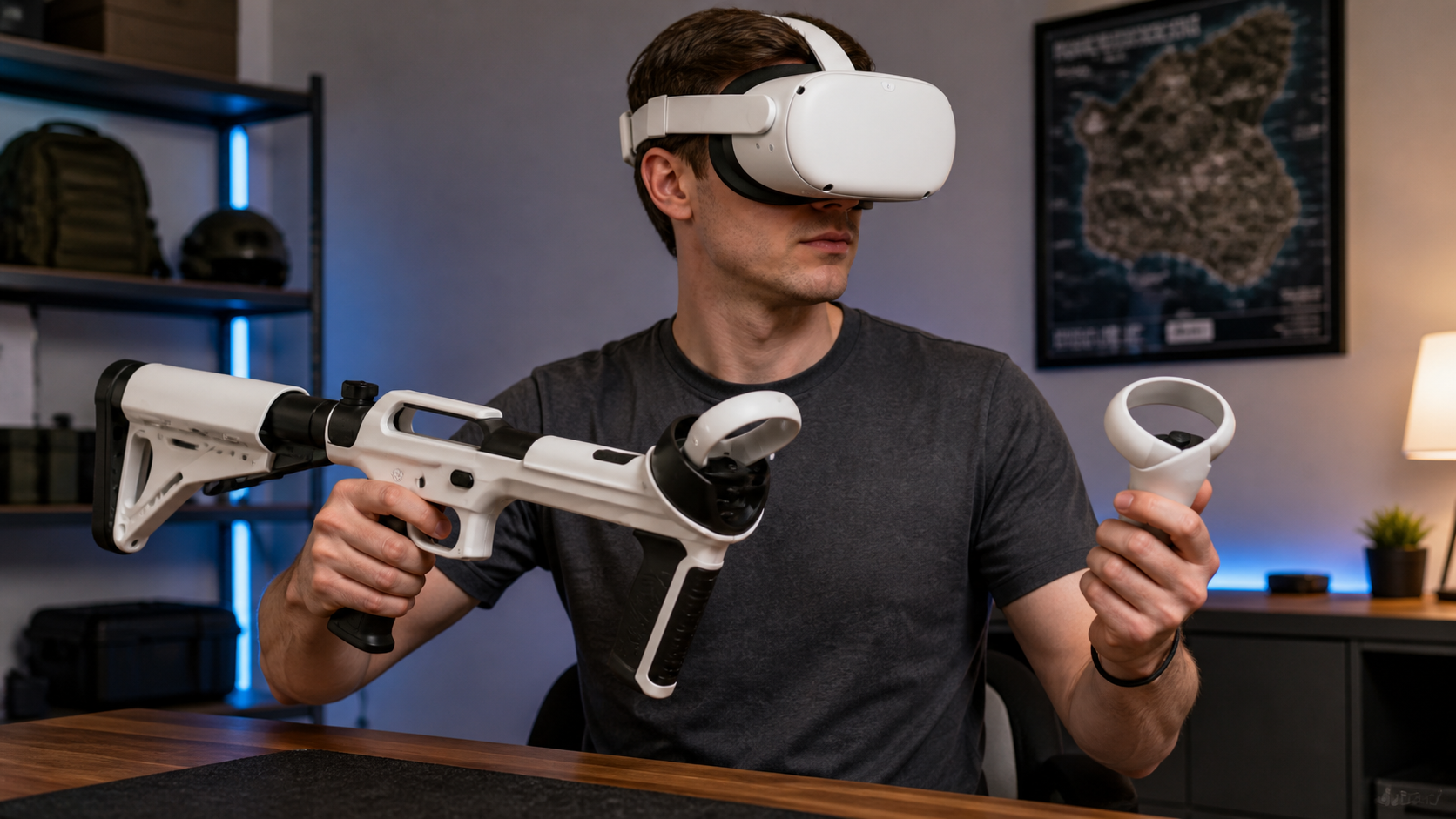
After many sweaty sessions, my conclusion is that a VR gunstock is not a simple "yes" or "no" for left-handed players in Ghosts of Tabor. It's a tool that is amazing for one job and a hindrance for another. If you are a sniper or a support player who likes to hold down long sightlines from a safe position, the gunstock is a game-changer. The stability it provides is unmatched, and you can plan your reloads carefully when you are safely in cover. In these situations, the slower reload is a manageable trade-off for near-perfect accuracy. But if your playstyle is aggressive—if you love to push buildings, clear rooms, and get into close-range fights—the gunstock is a liability. In those frantic moments, you need the fastest reload possible. The freedom of bare controllers, where your hands can move independently and quickly without fear of collision, is far more valuable. You can't afford the extra second it takes to find that magnetic mount when an enemy is about to round the corner. Ultimately, I put the gunstock aside for my typical raids. As a lefty, the risk of controller collision and the slower reload just didn't fit my aggressive playstyle.
Conclusion
A VR gunstock provides incredible aiming stability for patient, long-range players. But for aggressive lefties, the slower reload and safety risks make bare controllers the faster, safer choice.
Leave a comment