



Can a VR Gunstock handle fast movement without creating shoulder comfort?

Sprinting down a hall, you snap your rifle up. Your aim feels floaty, your shoulder aches, and you lose the fight. A gunstock seems like the perfect fix for this.
A VR gunstock can solve shoulder discomfort from holding your arms out, but it’s a trade-off. It provides a stable anchor for long-range shots, reducing muscle strain. However, it can slow down your reaction time in fast, close-quarters combat, making it better for some playstyles than others.
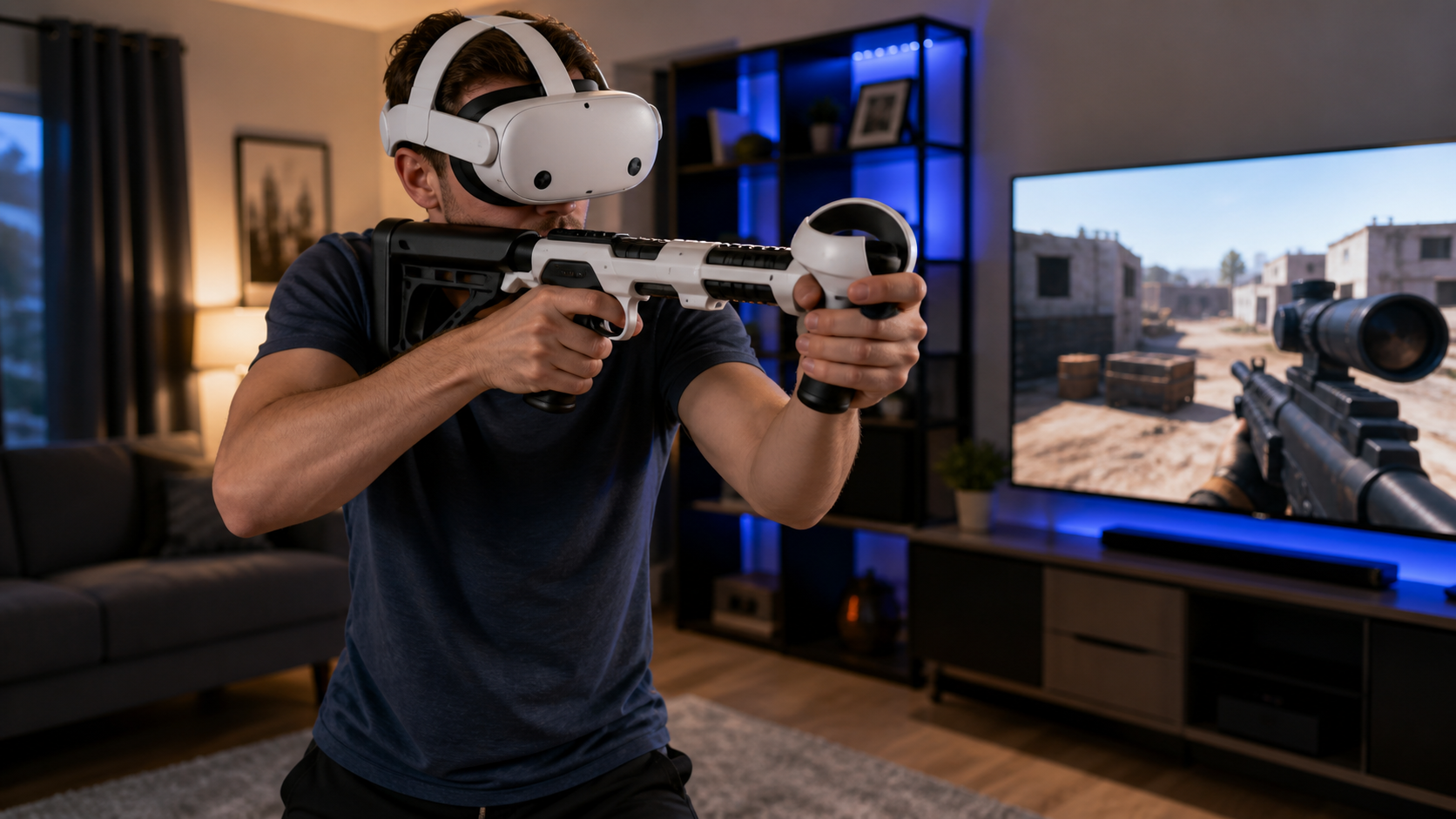
I've spent hours in tactical shooters, and the burn in my lead shoulder is a constant problem. After a long session, holding my aim steady feels impossible. I wondered if a gunstock was the only real answer, or if I was missing something simple. This led me to break down the problem, starting with the most basic question every Quest 3S owner has. Are there ways to fix this without spending more money?
Could Meta Quest 3S owners solve shoulder comfort without buying another accessory?
That constant burn in your shoulder after a long VR session is real. You've tried adjusting your stance, but the ache always comes back. Is this just part of the game?
Yes, you can improve shoulder comfort without an accessory, but only to a point. Better posture and using in-game "virtual stock" settings help reduce strain. But they don't provide physical support, which is where a dedicated gunstock offers a more complete solution for muscle fatigue.
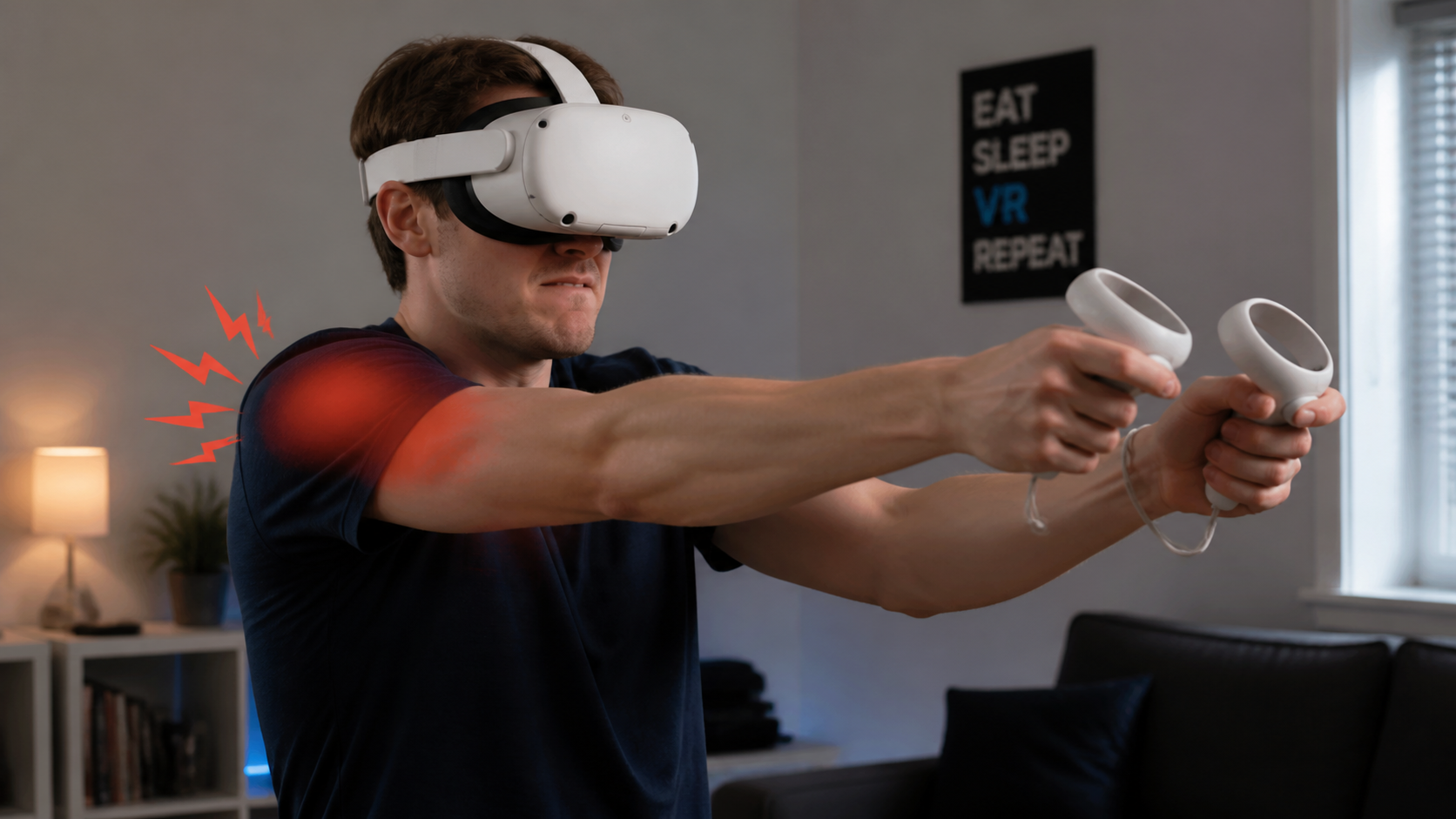
As a Meta Quest 3S user, I noticed a specific problem. The headset's inside-out tracking cameras need to see the Touch Plus controllers. When I aim down sights, my front hand gets very close to the headset. Sometimes, the headset loses sight of the controller for a split second. To avoid this, I naturally hold my arms further out, which puts a lot of strain on my shoulder. This is a hardware reality that good posture alone can't completely fix. I looked at both free solutions and using a gunstock to see how they compared.
Free vs. Accessory Solutions
The table below breaks down the methods I tried.
| Method | How It Helps Your Shoulder | Limitations |
|---|---|---|
| The "Free-Hand Float" | It doesn't. This method relies purely on muscle strength to hold the controllers steady. | Causes the most shoulder fatigue. Aim is less stable, especially after sprinting or playing for a long time. |
| In-Game "Virtual Stock" | This software setting smooths out your aim, so your muscles don't have to work as hard to correct tiny jitters. | It's a software fix, not a physical one. It does not support the weight of your arms, so fatigue still sets in. |
| Physical VR Gunstock | It creates a third point of contact with your shoulder, offloading the weight of the controllers and your arms. | Adds weight, can feel restrictive, and slows down actions like reloading or switching to a sidearm. |
Free solutions help, but they don't solve the core physical problem. A virtual stock in a game like Pavlov or Contractors is great, but my shoulder still got tired. The gunstock was the only thing that let my shoulder muscles actually relax while I was aiming.
Does better long-range shots versus worse close-range reactions matter more than shoulder comfort for competitive players?
You line up a perfect headshot from across the map. It feels amazing. Then, an enemy rushes you in a tight corridor, and you can't turn your gun fast enough.
For a competitive player, the answer depends entirely on your role. If you hold angles and take long-range fights, stability is more important. If you are an aggressive player who clears rooms, quick reactions are everything, and a gunstock can be a liability.
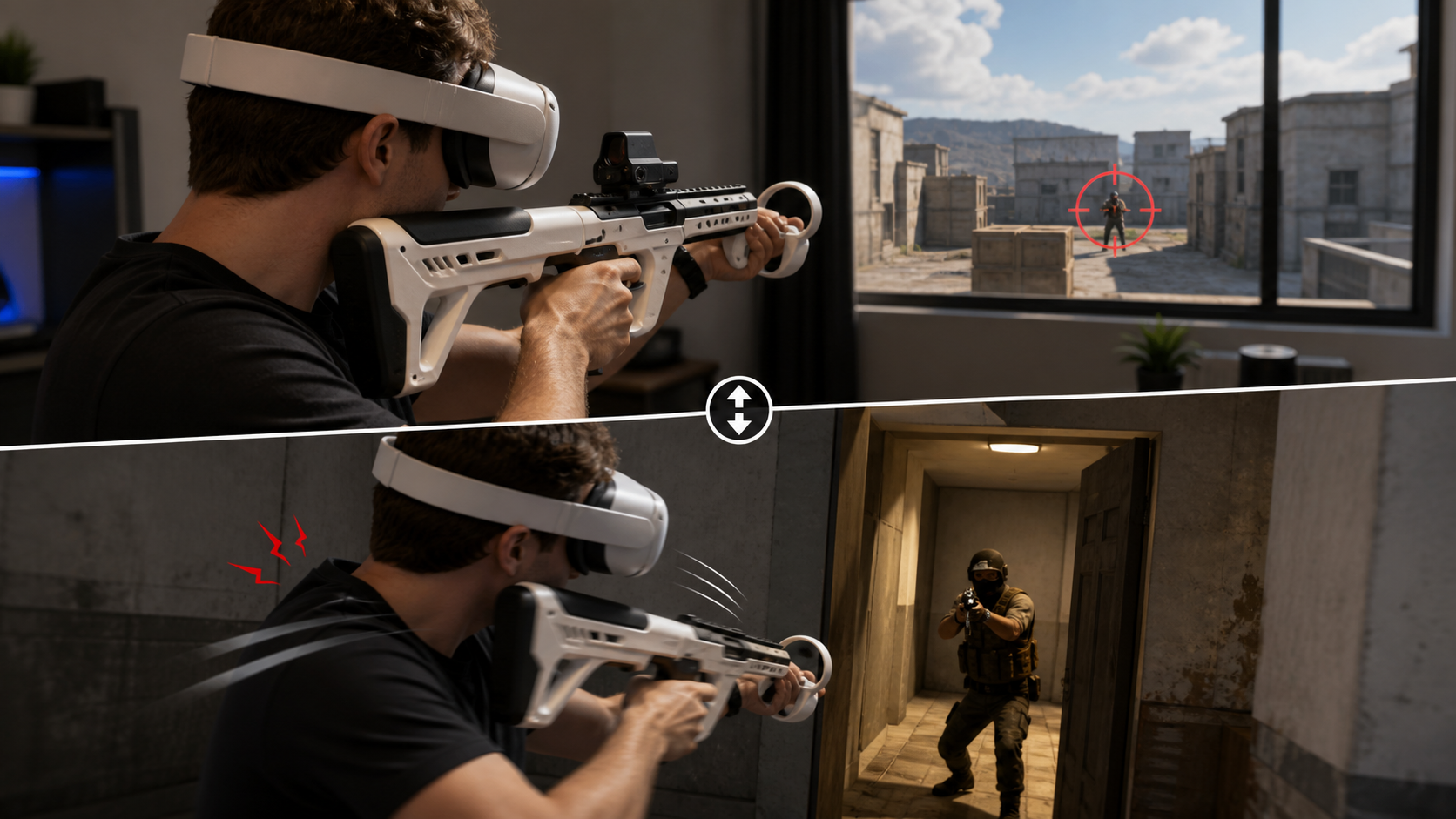
This is the central conflict I faced with the gunstock. I love playing a support role, holding down long sightlines and providing cover fire. For this, the gunstock felt like a superpower. My aim was incredibly steady. I could rest the stock against my shoulder, relax, and just focus on the target. My accuracy at distance went way up. But when the game shifted and I had to push into a building, the gunstock became a problem. Swinging a physical object around corners is much slower than just moving my hands. It felt clumsy. I lost fights I normally would have won because my reaction time was cut in half. To prove this to myself, I logged a typical game session.
20-Minute Session Log in Contractors
| Time | Action | Accuracy Note | Frustration Point |
|---|---|---|---|
| 0-5 min | Defending an objective, holding a long angle. | Got 3 kills at over 50 meters. Aim felt rock-solid. | None. My shoulder felt great. |
| 5-10 min | Pushing into a small building to clear it. | Missed shots on an enemy who surprised me. | Felt too slow trying to swing the rifle around a corner. Lost two 1v1 fights. |
| 10-15 min | In a firefight, needed to reload under pressure. | Accuracy was fine before reloading. | Fumbled the reload. Detaching and reattaching the controller felt clumsy and cost me precious seconds. |
| 15-20 min | Back to defending a wider, open area. | Landed consistent body shots on moving targets. | No frustration here. The gunstock excelled in this situation. |
Can the review separate first-impression excitement from repeat-use value?
You get a new VR accessory, and it feels like it changes everything. The first few hours are amazing. But a week later, it's sitting on your desk collecting dust.
Yes, by looking past the initial "wow" factor and focusing on the small, repetitive actions. The first impression of a gunstock is stability. The long-term value depends on whether reloading, switching weapons, and throwing grenades becomes second nature or stays a constant, annoying friction point.
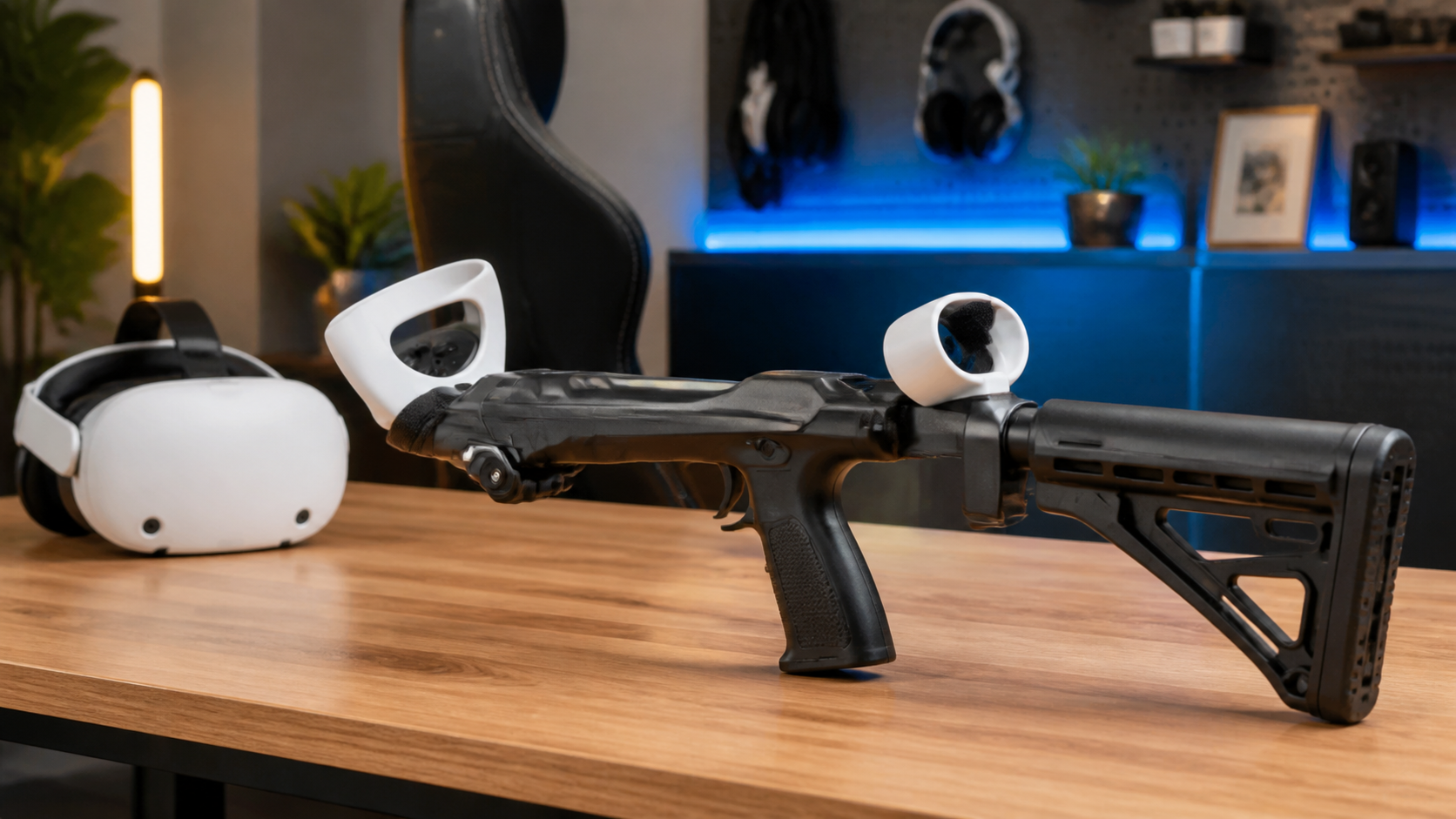
My first hour with the gunstock was awesome. The immersion was on another level. Holding something that felt like a rifle made the game world so much more believable. And my long-range shots were instantly better. I was convinced this was the best accessory I had ever bought. But the initial excitement is not the same as long-term value. After about a week of daily use, the little annoyances started to appear. The extra weight, while small, does add up over a two-hour session. The biggest challenge was reloading. You have to physically detach one controller from its magnetic cup, perform the reload motion, and then perfectly snap it back into place, all while under fire. In the beginning, I fumbled this constantly. This is where I saw the difference between a beginner's approach and an experienced player's setup. Just using the gunstock out of the box isn't enough. I had to spend time in the practice range, adjusting the stock length and the grip positions until it fit me perfectly. I had to practice my reloads over and over until the motion was pure muscle memory. The long-term value isn't a given; you have to work for it.
What would make the reviewer say VR Gunstock is not worth it for shoulder comfort in tactical VR shooters?
You bought a gunstock to fix your shoulder pain, but now reloading is impossible and the tracking keeps glitching. Did you just waste your money?
A gunstock is not worth it if it introduces more problems than it solves. If the design blocks controller tracking, if it's too slow for your aggressive playstyle, or if it's so poorly designed that it's just uncomfortable, you should skip it.
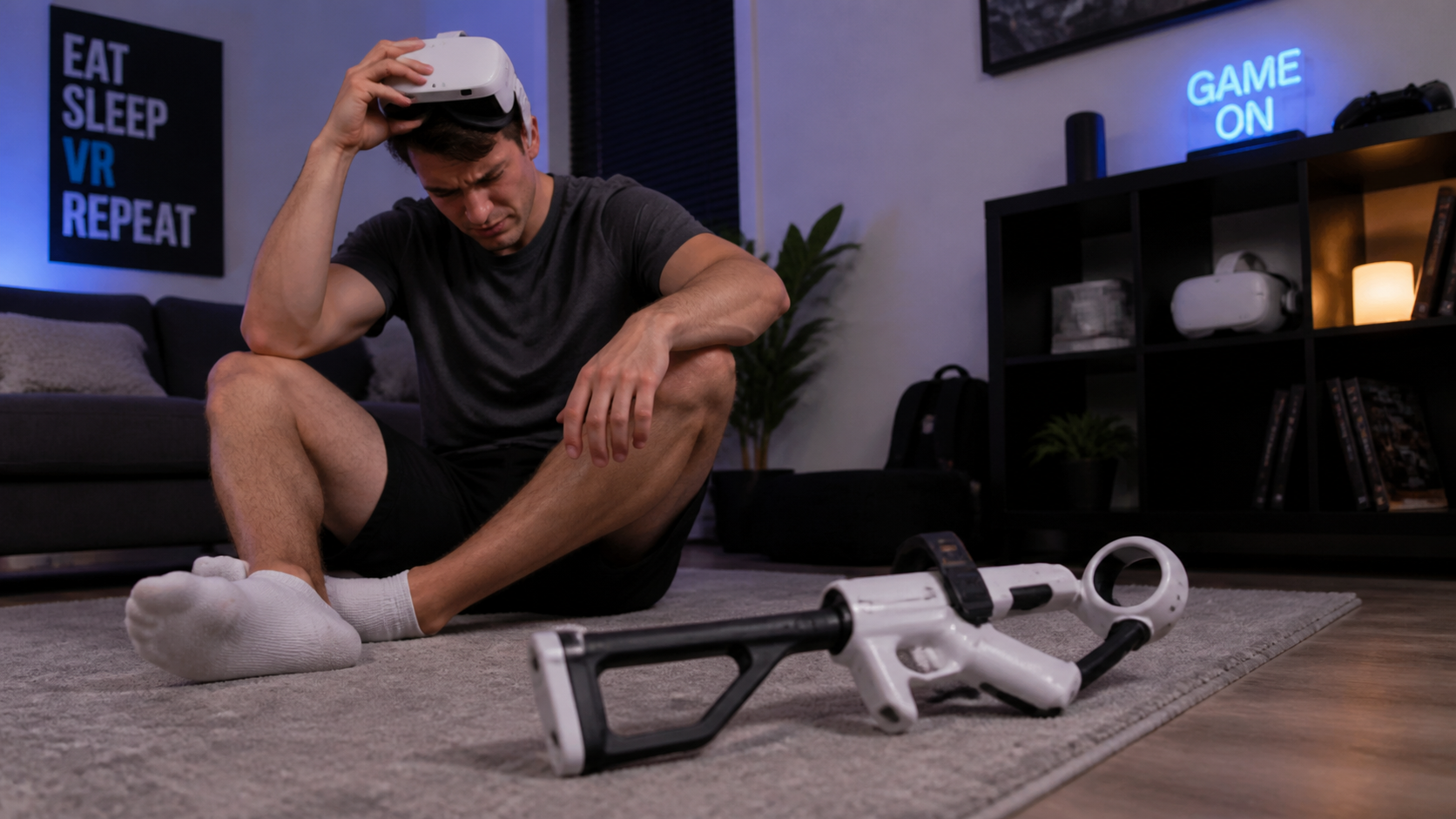
After all my testing, I came up with three specific situations where I would tell someone not to buy a gunstock, even if they have shoulder pain. It just wouldn't be worth the frustration. The first deal-breaker is bad tracking. Some gunstock designs have large cups that can block the Quest 3S headset cameras from seeing the controller's tracking rings. This is a huge problem, especially for your front hand when you aim down sights. If your virtual gun starts floating away in the middle of a fight, the gunstock is useless. The second reason to skip it is a playstyle mismatch. If your game is all about fast-paced, close-quarters combat, a gunstock will feel like running with weights on your ankles. You need to be able to whip your gun around instantly, and the physical frame of a stock prevents that. For these aggressive, entry-fragging players, the freedom of free-hand aiming is more valuable than stability. Finally, some gunstocks just have bad ergonomic design. If it’s too heavy, isn't adjustable to your body, or uses weak magnets that let the controllers fall out, it creates more problems than it solves. The goal is to get rid of shoulder strain, not to trade it for wrist pain or back pain.
Conclusion
A VR gunstock is a specialized tool. It fixes shoulder strain and improves long-range aim, but it slows you down up close. It's perfect for patient, tactical players, not for everyone.
Leave a comment