



Can a VR Golf Club Attachment fix one problem in controller safety straps without creating two more?

Your Quest Pro controller wiggles inside its safety strap during a swing. A golf club attachment promises to fix this. But does it create more problems than it solves?
Yes, a VR golf club attachment can fix the loose fit of a controller safety strap, adding stability and a more realistic feel. However, it also muffles the controller's haptic feedback and can make some buttons harder to reach, creating new trade-offs for comfort and control.
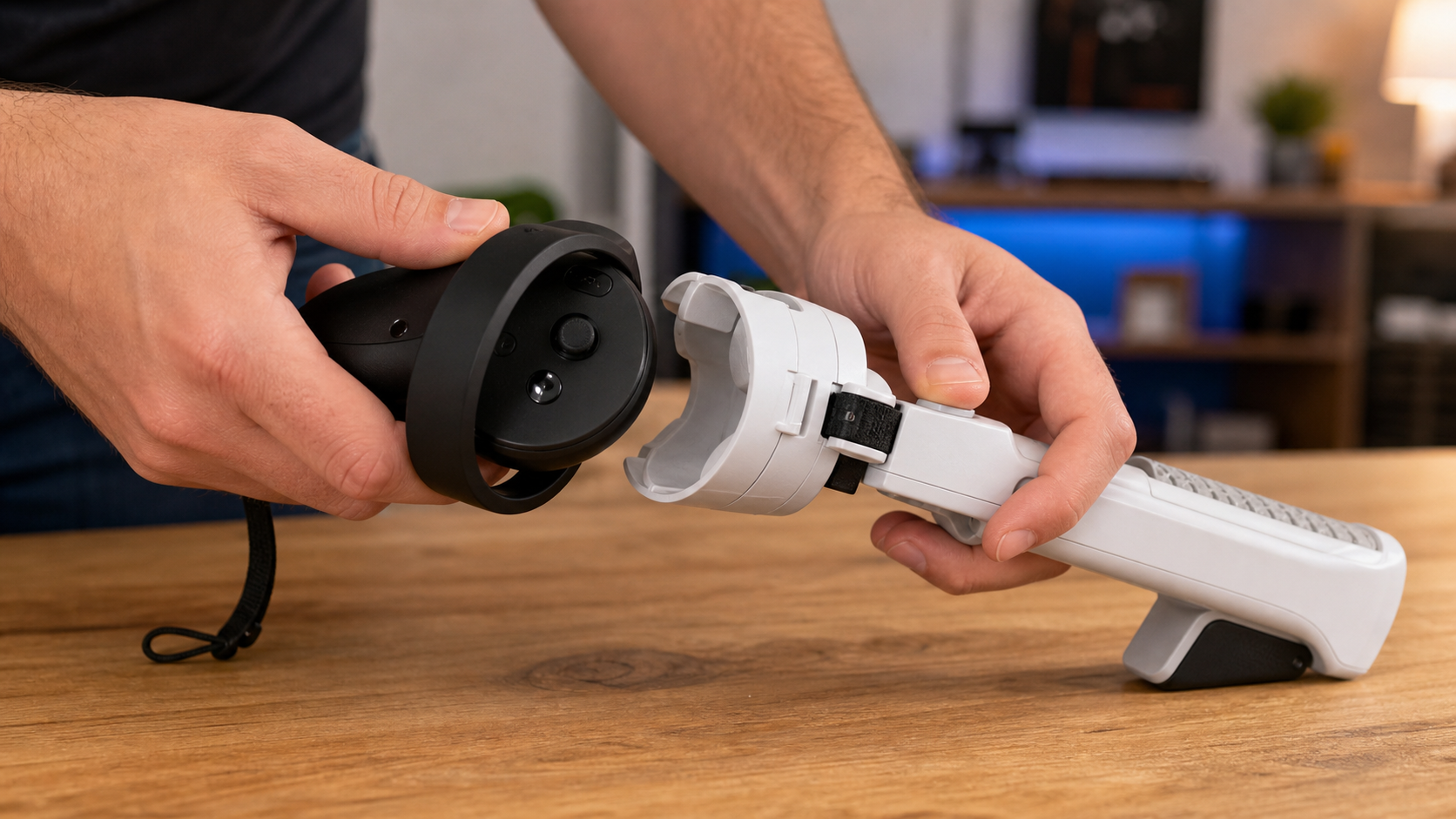
I bought this VR golf club attachment as a gift for a friend, but I had to test it first. My biggest worry was the safety strap on the Quest Pro Touch controllers. It’s a simple string, and the controller can rotate inside it during a fast swing in a game like Golf+. I wondered if this attachment could solve that one specific issue without making the experience worse. The idea was to see if this accessory was a real solution or just another piece of plastic. I decided to document my simple test, a case study from the perspective of a regular user, not a professional reviewer. This way, anyone thinking of buying one can follow my steps and decide for themselves if it’s worth it.
Would gift shoppers describe the controller safety straps change as comfort, control, safety, or immersion when haptic feedback changes?
That perfect "thwack" from a good shot feels great, but a loose strap ruins it. A golf attachment might secure the controller, but does it kill the buzz?
Gift shoppers would likely describe the change as a big improvement in control and safety. The attachment feels much more secure. But the haptic feedback is weaker, which hurts immersion. Comfort is a mixed bag; the grip is better, but button access is worse.
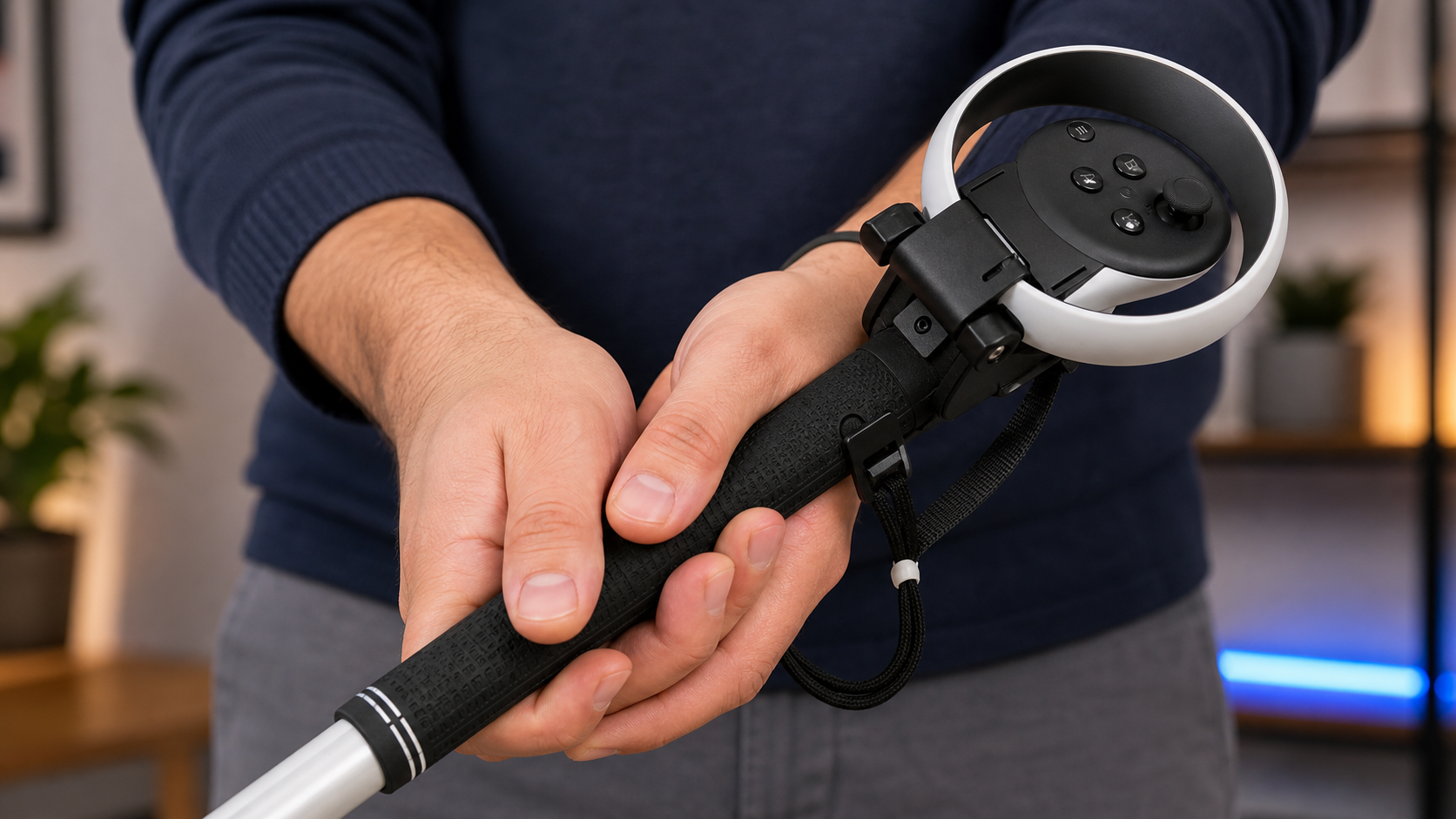
When I first used the attachment, the change was immediate. The controller didn't move at all. This was a huge win for control. My swings felt more consistent because I wasn't subconsciously correcting for a wobbly controller. It also felt much safer. I no longer feared the controller flying out of my hand. The problem was the haptic feedback. The Quest Pro controller has great haptics, but the clamp and grip muffled the vibrations. The satisfying feedback from hitting the ball was now a dull thud. This directly impacted my sense of immersion. It felt less like I was hitting a real golf ball. For left-handed use, the button access became a real annoyance, which made me question the overall comfort.
Haptic Feedback and Grip Comparison
Here's a simple breakdown of how the attachment changed the experience compared to using just the controller with its original safety strap.
| Factor | Bare Controller | With Golf Attachment |
|---|---|---|
| Comfort | Good button access, but the strap can feel flimsy and dig into the wrist. | Ergonomic grip, but awkward button access, especially for off-hand use. |
| Control | Controller can rotate slightly during a hard swing, affecting aim. | Excellent stability. The controller is locked in place for a consistent swing. |
| Safety | The thin strap feels like a minimal safety measure. High risk of slippage. | Very secure. The clamp and grip make it feel impossible for it to fly away. |
| Immersion | Strong, direct haptic feedback on impact. Feels responsive. | Muffled, weak haptic feedback. The feeling of impact is greatly reduced. |
Can gift shoppers reproduce the test without special tools or paid software?
You want to test a VR accessory, but reviews often use special tools you don't have. How can you know if it really works for you at home?
*Yes, anyone can reproduce this test easily. You only need a VR golf game that uses haptic feedback, such as Walkabout Mini Golf or Golf+. No special tools or paid software are needed to feel the difference in stability and haptic strength.*
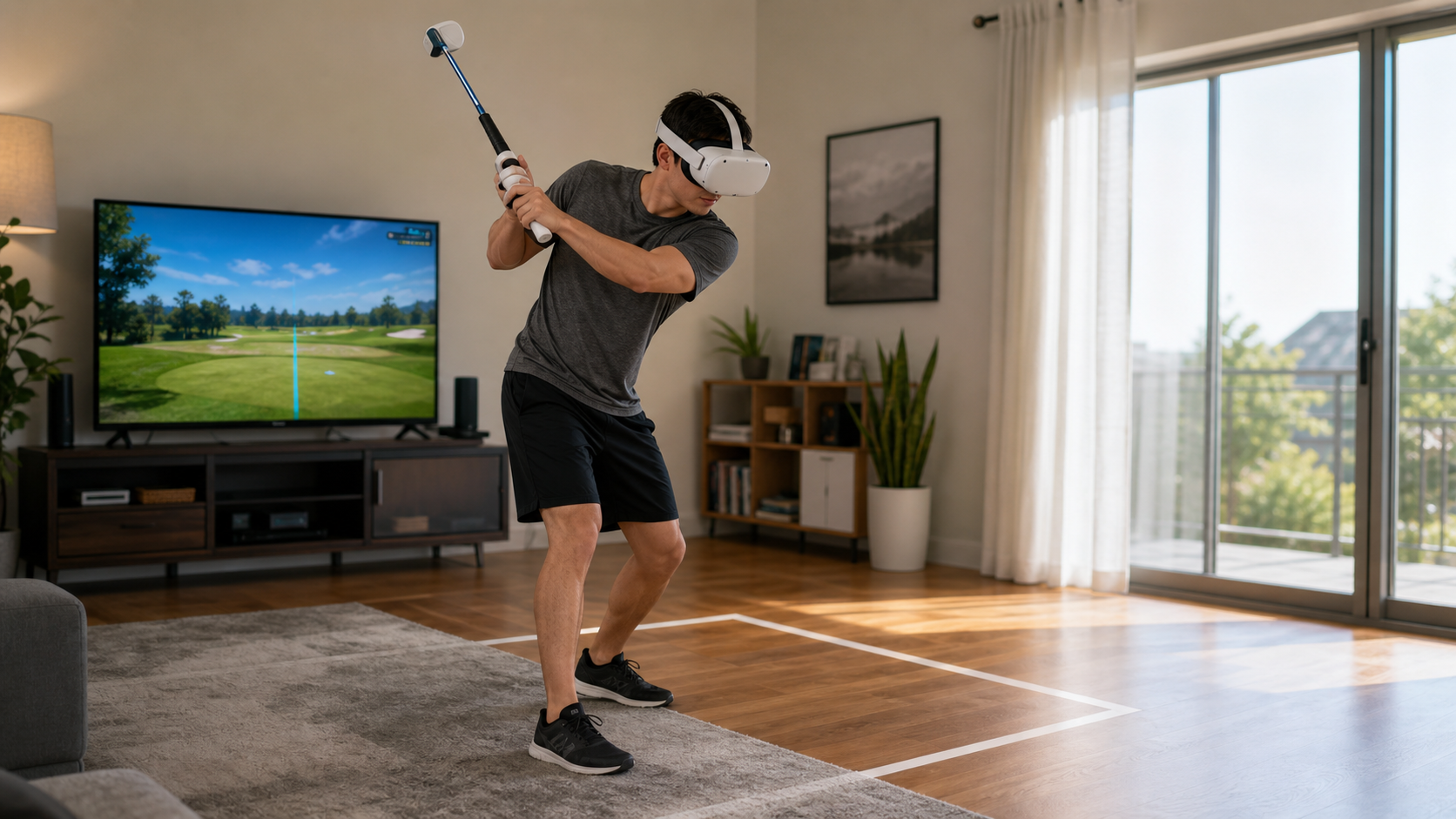
The whole point of my test was to keep it simple. I wanted to see if a normal person could notice the difference without fancy equipment. The answer is a clear yes. My method was straightforward. I played three holes in Golf+ using only the bare Quest Pro controller. I paid close attention to how the controller felt in my hand during the swing and especially the vibration I felt on impact. Then, I attached the controller to the golf club accessory and played the exact same three holes. The difference was not subtle. The increased weight and stability were obvious. The dampened haptics were also immediately noticeable. You don't need a sensor or a program to tell you the vibration is weaker. You just feel it. This is a purely subjective test based on feel, which is exactly what matters for a comfort and immersion accessory.
Can photos prove the fit issue better than a paragraph of explanation?
Someone tells you a controller slips in its clamp, but you can't see it. It's hard to trust a review without proof. How can you show this problem clearly?
Yes, a photo proves the fit issue perfectly. A before-and-after picture of the controller in the clamp shows the slight rotation after a few swings. This visual evidence is much more direct and convincing than a long paragraph trying to describe the small movement.
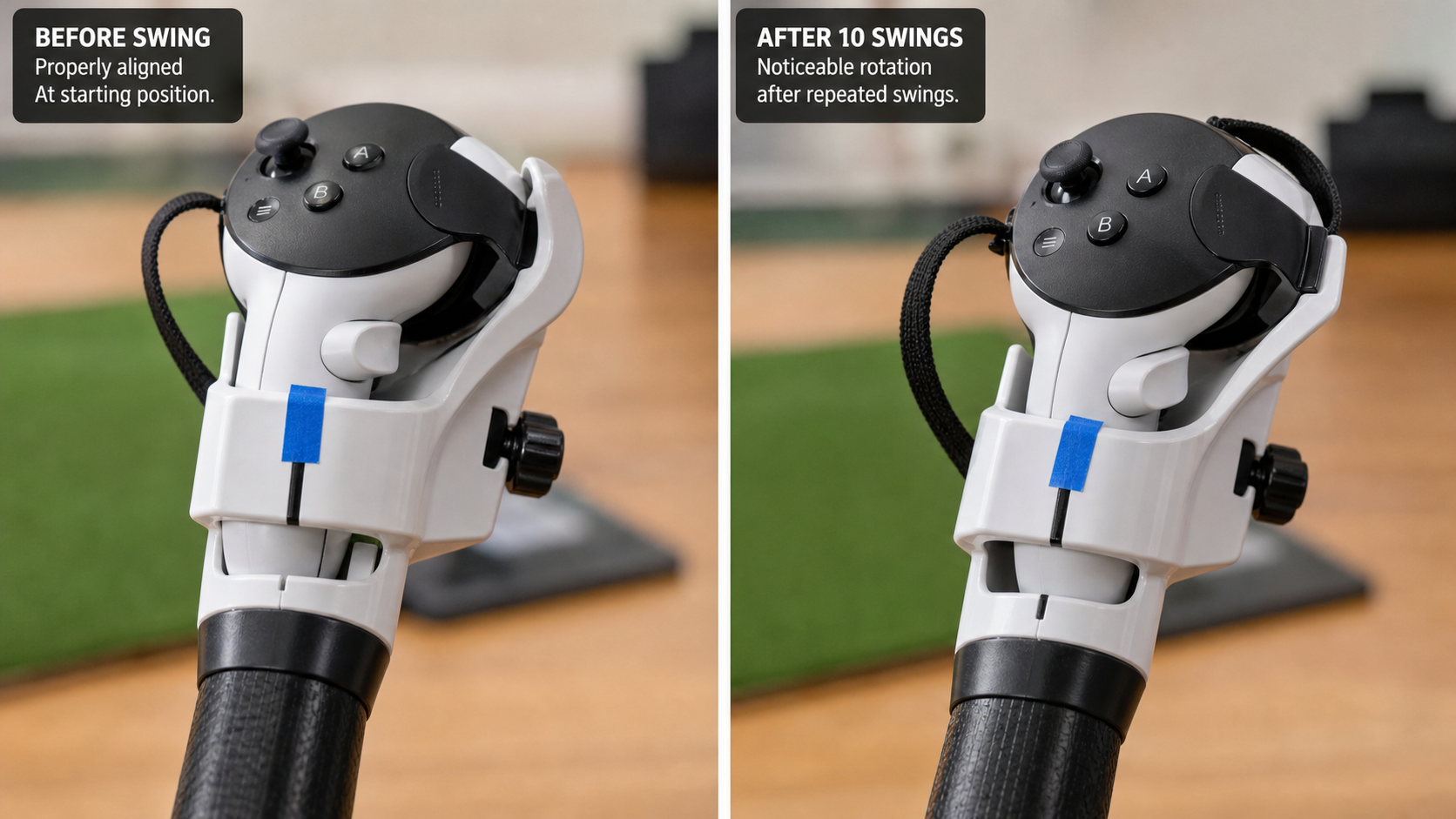
I knew describing the controller slip wouldn't be enough. The movement is small, and words can't capture it well. So, I decided to take pictures. First, I secured the Quest Pro controller in the clamp as tightly as I could. I used a small piece of tape to mark its exact position relative to the clamp. I took a close-up photo. Then, I went into my game and took ten full swings. I didn't hit anything; I just swung hard. After the tenth swing, I carefully brought the attachment back and took another close-up photo from the same angle. The result was clear. The controller had rotated a few millimeters inside the clamp, despite being tight. This tiny shift is enough to throw off your alignment and proves that the clamp isn't a perfect solution. A picture made the problem undeniable in a way that a thousand words could not.
Could a cheaper or simpler setup answer this controller safety straps and haptic feedback problem just as well?
This golf accessory looks useful, but it costs money. Is there a cheaper way to get a better grip without buying a whole new attachment for your controller?
For some people, a simpler setup might work. An upgraded hand strap for the bare controller can improve stability and solve the rotation issue. However, it will not provide the realistic two-handed swing weight and feel that the full golf club attachment offers.
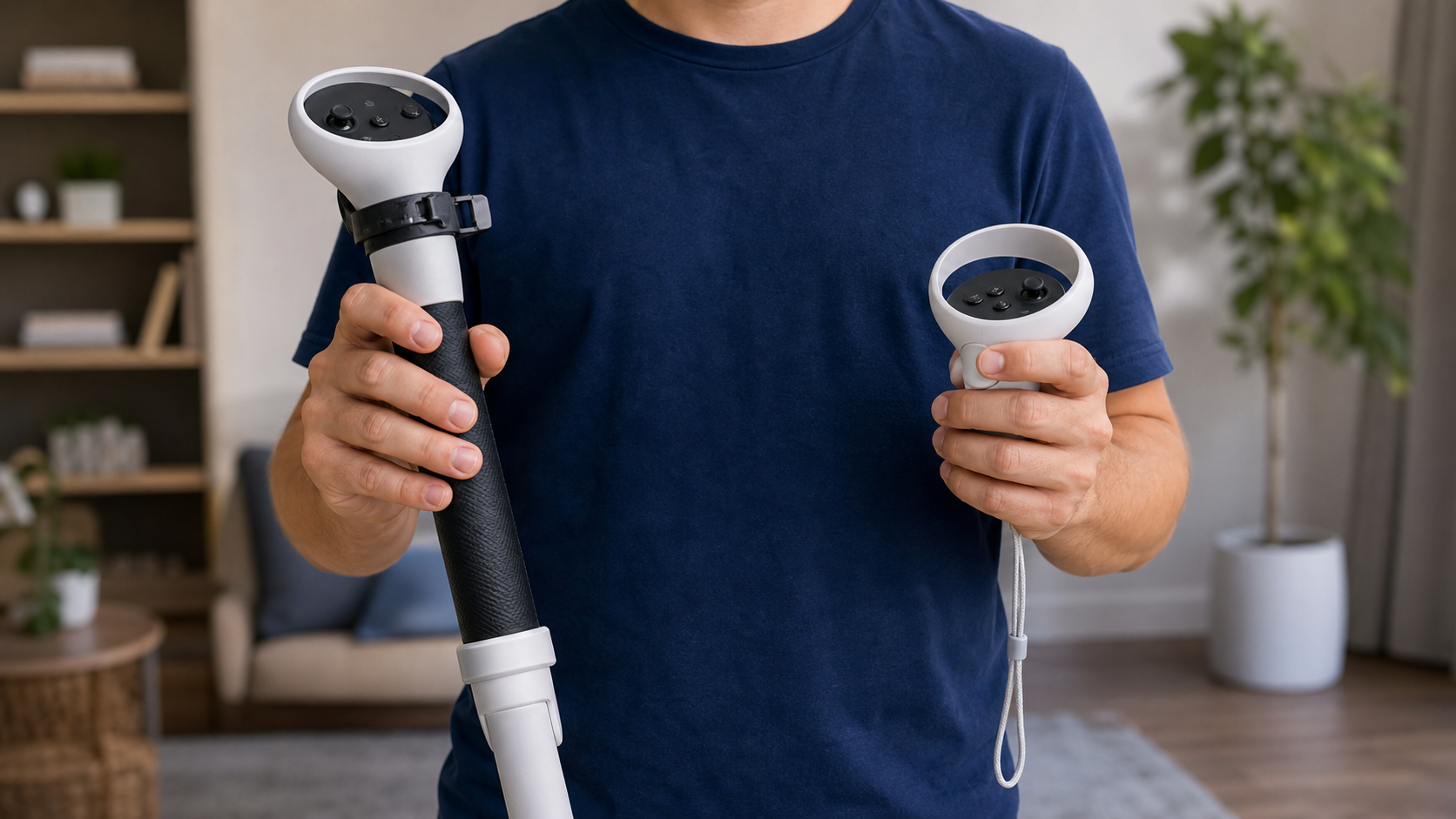
After my test, I asked myself if there was a middle ground. The golf attachment fixed the stability issue but created a haptic feedback problem. What if I just bought a better hand strap, like one of those silicone grips that hold the controller more securely to your hand? This would be cheaper and more versatile for other games. A good strap would stop the controller from rotating, solving my original problem. It would also leave the haptics untouched. The downside is that you lose the feeling of holding a real golf club. The attachment's weight, length, and two-handed grip are its main selling points for immersion. So, the choice depends on your goal. If you only want to fix the wobbly controller strap, a better grip is a smarter, cheaper choice. If you want a more realistic golf simulation, the full attachment is the only way to get that feeling, even with its flaws.
Conclusion
The golf club attachment fixes the strap problem, improving control and safety. But it weakens haptics and can be annoying. It is a niche tool, not a perfect solution for everyone.
Leave a comment