



Can a VR Fishing Rod handle fast movement without creating handle length?

Tired of your controllers clacking together while reeling in a big fish? This clumsy collision breaks the immersion. A VR fishing rod accessory promises to fix this, but does it?
A VR fishing rod accessory can handle fast movements by locking your controllers into a fixed position, which stops them from hitting each other. However, this creates a new problem: its fixed handle length can feel awkward and get in the way, especially for casual or seated players.
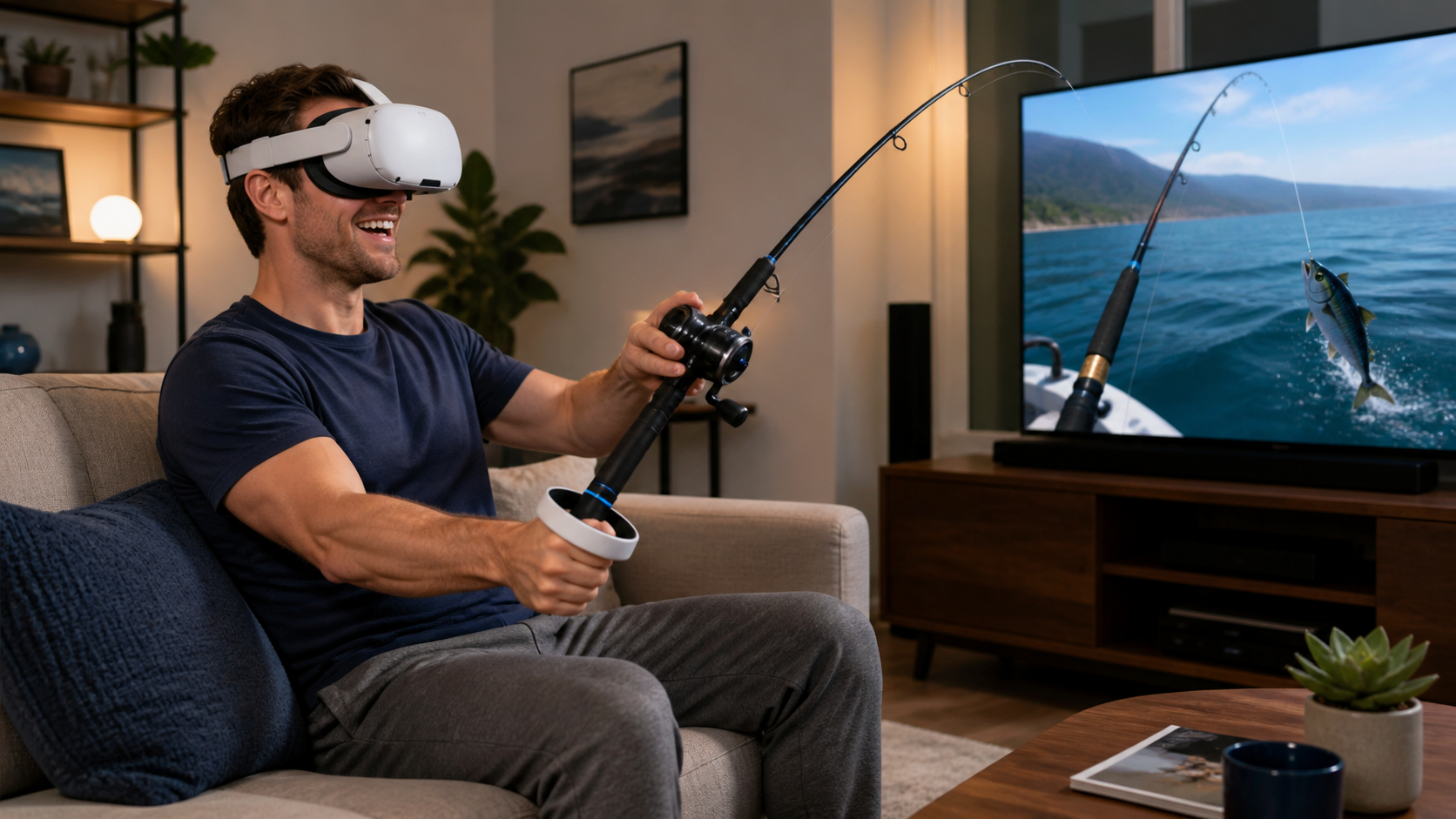
I love relaxing with a casual fishing game in VR, but I always wondered if an accessory could make it better. The idea of a realistic rod sounds great, but I'm not a hardcore simulation player. I care more about comfort and just having fun without a complicated setup. I decided to test a VR fishing rod with my Quest Pro controllers to see if it actually helped or just got in the way. I wanted to answer some real questions that casual players like me have. Does it feel better, or is it just another piece of plastic to store? This is what I found out.
Would casual gamers notice handle length in casual fishing games before they notice comfort or setup?
You want to jump into a game and relax. You don't want to spend five minutes clipping controllers into a big accessory. Is the extra hassle really worth it?
Yes, casual players will almost always notice comfort and setup issues first. Things like wrist strain, a complicated locking mechanism, or even just how clean the accessory feels are immediate concerns. Handle length only becomes an issue once you are actually playing and trying to reel quickly.
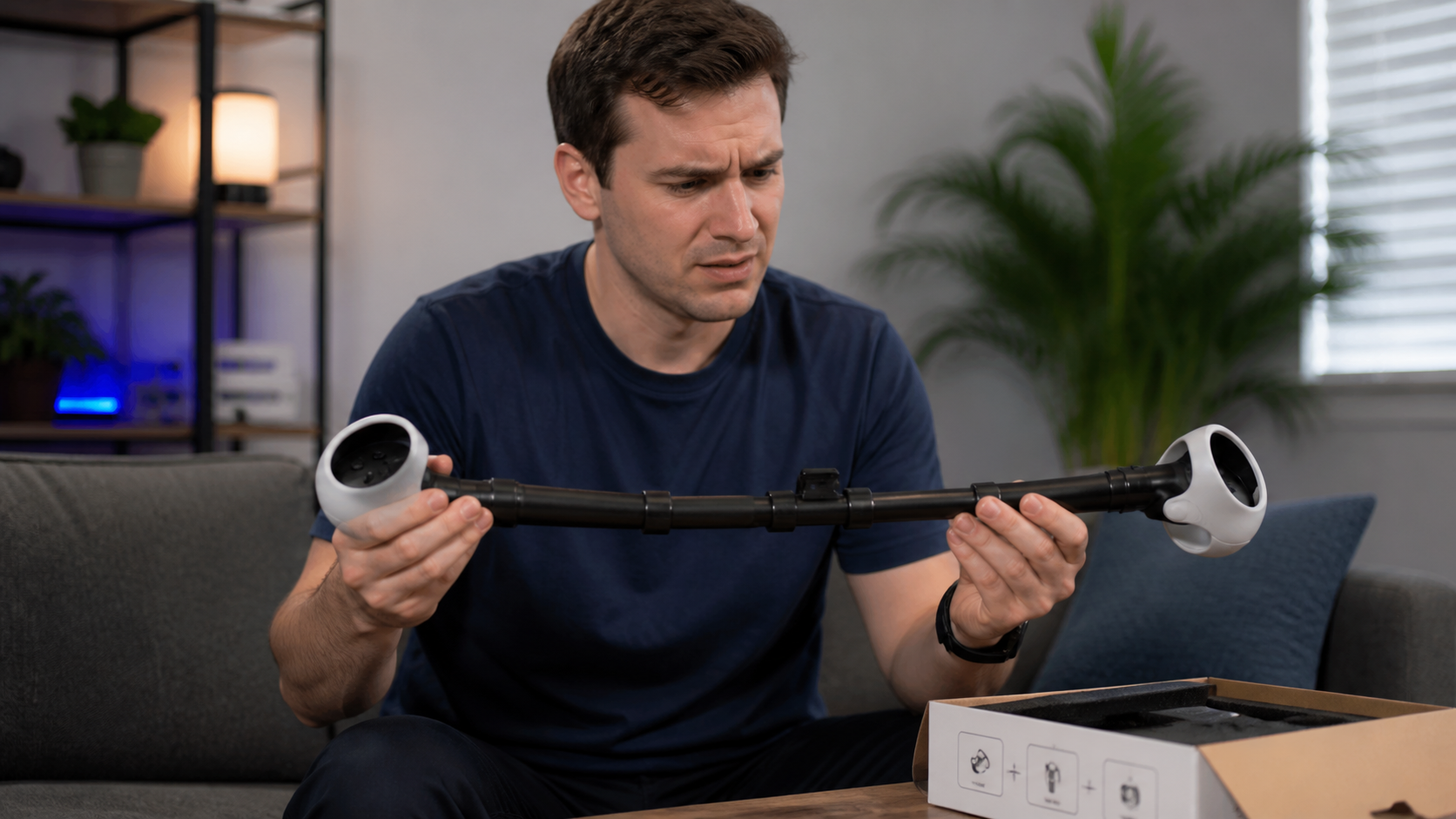
Before I even started a game, my first thoughts were practical. As someone who sometimes shares my headset, the idea of hygiene is a real thing. Is this accessory easy to wipe down? Then, I picked it up. How does it feel in my hand? Is it heavy? Does it put weird pressure on my wrist? The setup process was the next barrier. I had to carefully align each Quest Pro controller and click it into place. It wasn't hard, but it was an extra step between me and the game. For a casual session, any friction matters. The actual length of the handle didn't even cross my mind until I was already playing. These initial comfort and convenience hurdles are what determine if I'll even bother using an accessory regularly. If it's not comfortable and easy to start, I'll probably just use my bare controllers.
Player Priorities: Accessory vs. Bare Controllers
| Factor | VR Fishing Rod Accessory | Bare Controllers |
|---|---|---|
| Setup Time | 1-2 minutes to attach controllers | Instantaneous |
| Initial Comfort | Depends on weight and grip design; can cause wrist strain | Familiar and ergonomic; designed for comfort |
| Hygiene | Another surface to clean; shared grip concerns | Just the controllers, which I already clean |
Can the writer show the exact moment handle length appears in casual fishing games?
You're in the game, and things are going smoothly. You cast your line, and then you get a bite. Suddenly, the accessory feels clumsy. When did it change?
Yes, the exact moment the handle length becomes a problem is when you hook a large, fighting fish and need to reel very quickly. Your reeling hand must make a wide circle, and the rigid handle often bumps into your lap, your body, or your chair.
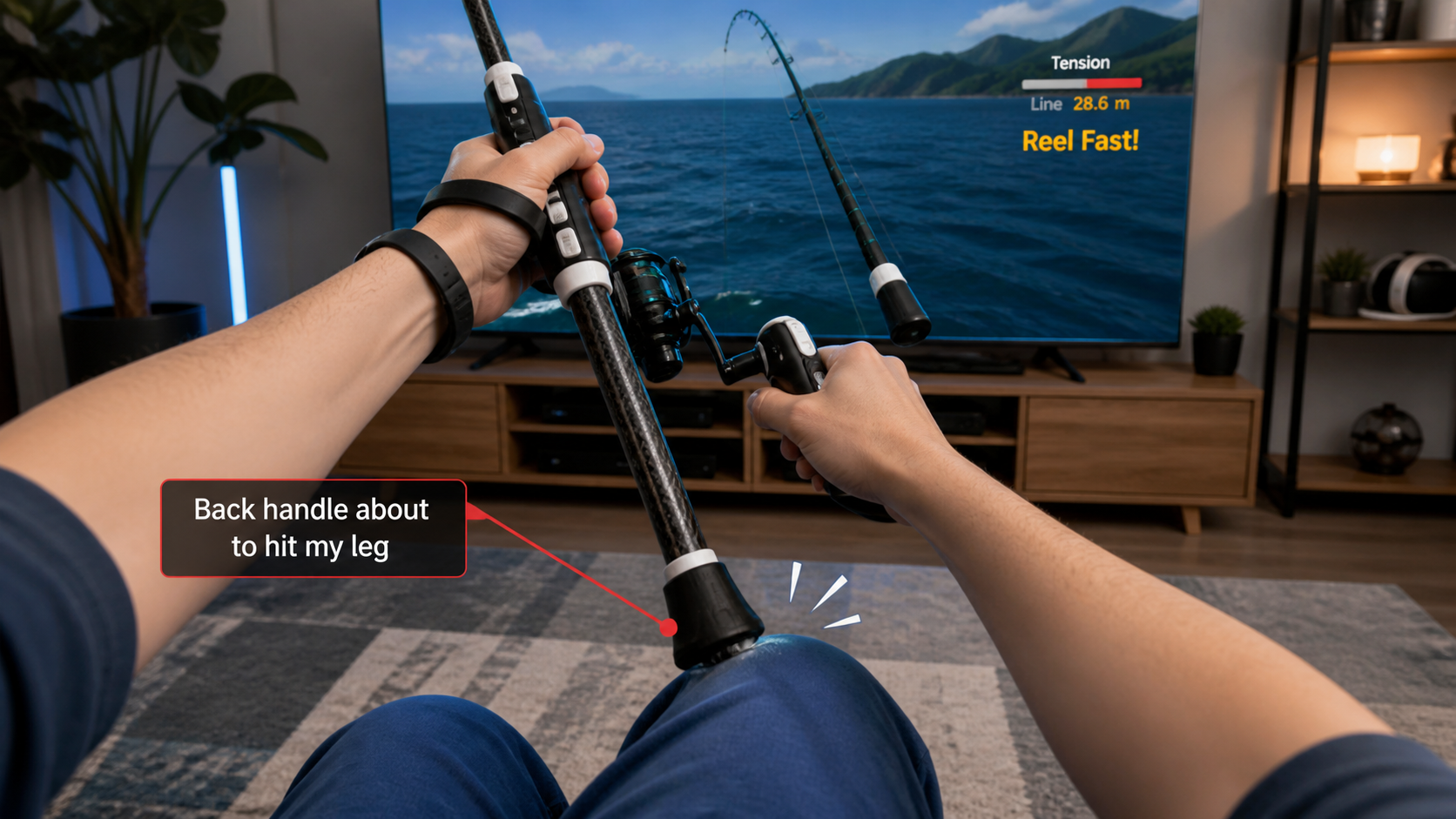
I can pinpoint the moment perfectly. I was playing Real VR Fishing, sitting comfortably on my couch. Casting with the rod accessory felt great. It added a nice sense of weight and realism. I waited for a bite, feeling pretty immersed. Then, I hooked a big tuna. The game told me to reel fast. With bare controllers, I'd make small, quick circles with my wrist near my body. But the accessory forced my hands apart. My front hand held the "rod" steady, while my back hand had to make a huge circle to "reel" the second controller. On the first rotation, the bottom of the controller hit my leg. I had to awkwardly lift the entire rod up and away from my body to keep reeling, which felt completely unnatural. The fixed distance between the controllers, designed to feel like a real handle, was the very thing causing the problem.
Can the user recover quickly when the accessory gets in the way?
The rod just smacked the arm of your chair. The fish on the line is about to escape. Can you adjust and save your catch, or is the moment ruined?
No, recovery is very slow. When the rigid accessory gets in the way, you have to stop your motion and physically reposition the entire rod. By the time you adjust, you've likely lost the tension on the line, and the fish gets away. It breaks immersion completely.
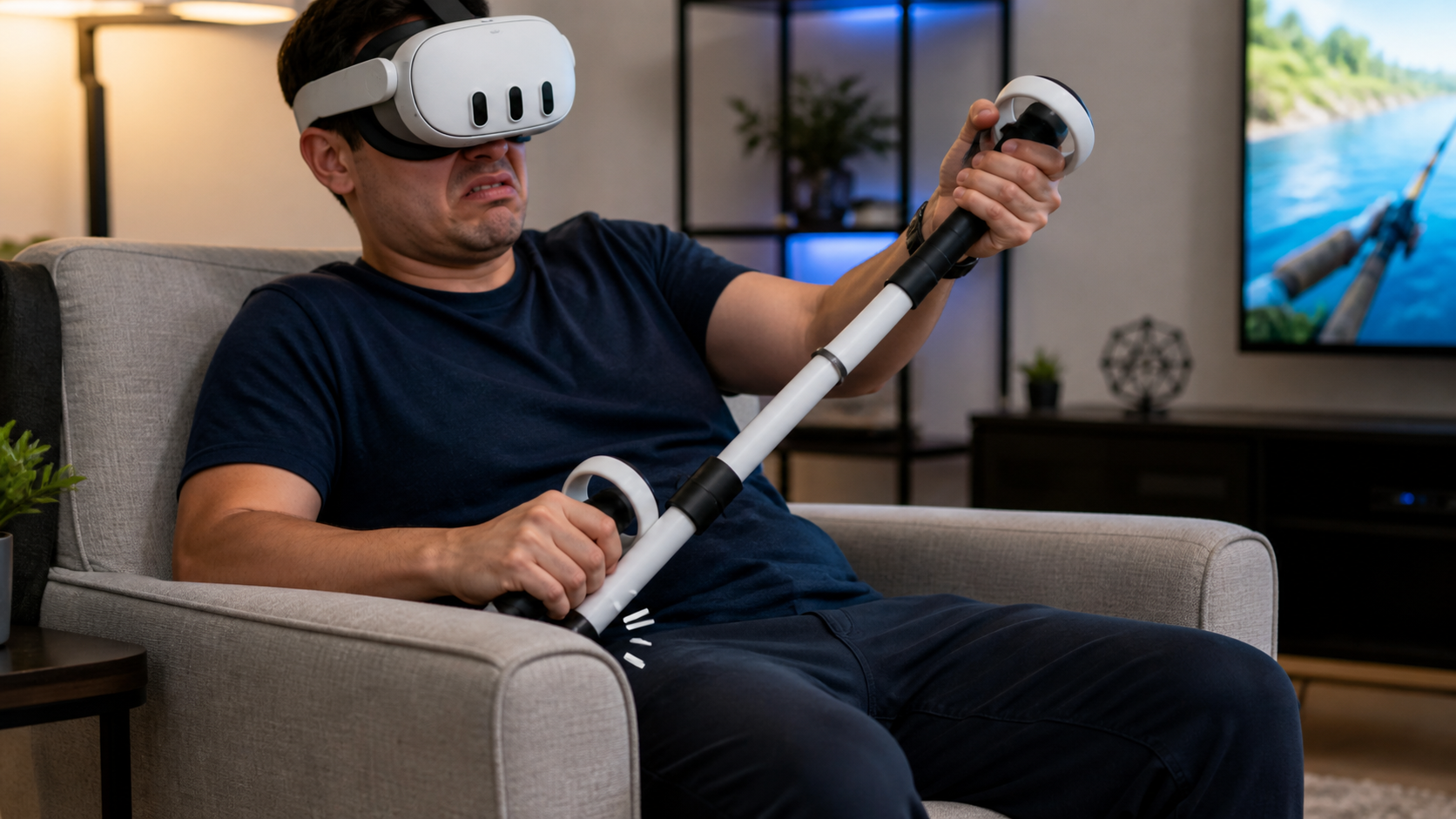
This was the most frustrating part of the experience. When the rod handle hit my leg or my chair, my brain had to switch from "playing a game" to "solving a physical problem." I couldn't just move one hand. The controllers are locked together. I had to stop reeling, physically lift the entire accessory into a new position in the air, and then try to start reeling again. In a fast-paced moment, that hesitation is fatal. The fish was gone. Compare that to using bare controllers. If my hands get too close and the controllers tap each other, it’s a minor annoyance. I can instantly adjust their position without thinking and keep reeling. The recovery is immediate. With the fishing rod accessory, a physical bump is a full-stop error that yanks you right out of the game. It made me feel clumsy and restricted, which is the opposite of what an immersion tool should do.
Could a cheaper or simpler setup answer this casual fishing games and handle length problem just as well?
You want a better experience without buying more gear that creates new problems. Is there a better way? Could the answer be to use nothing extra at all?
Absolutely. For casual, seated play, just using your bare controllers is often a better and cheaper solution. It completely avoids the handle length problem, requires no setup, and offers more freedom of movement, leading to a more comfortable and less frustrating experience.
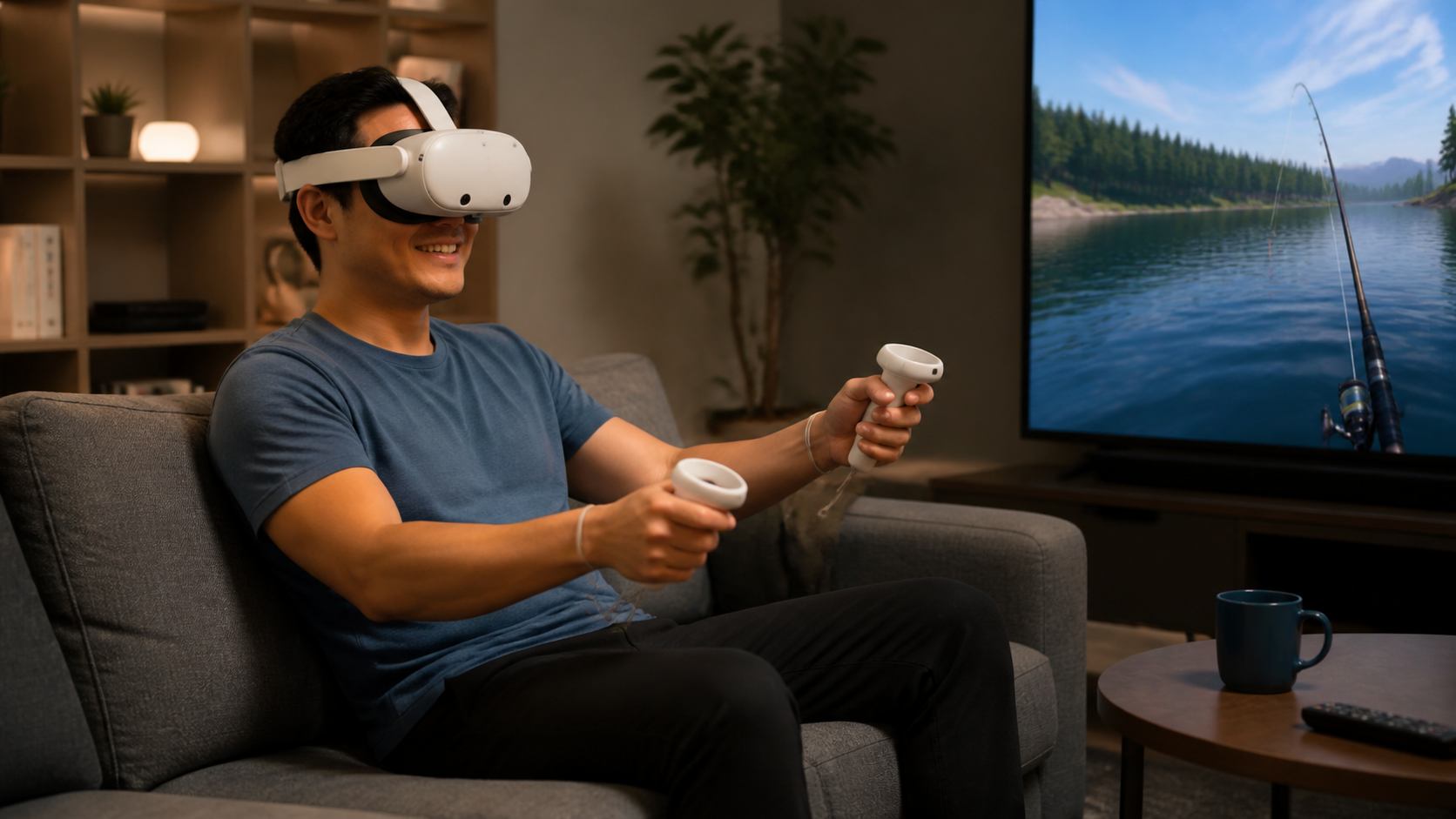
After several sessions of getting frustrated with the fishing rod accessory, I went back to just using my Quest Pro controllers by themselves. The difference for seated play was night and day. My hands could be wherever they felt most comfortable. When I needed to reel quickly, I could make tight, efficient circles with my wrist, keeping my hands close to my body. I never had to worry about hitting myself or my chair. While I lost the feeling of holding a "rod" during casting, I gained so much more in comfort and fluid gameplay. I wasn't fighting the accessory anymore; I was just playing the game. For a player who stands up and has plenty of space, the rod might add some fun. But for someone like me who plays casually from the couch, the simplest setup—the one I already owned—was easily the best one.
Conclusion
A VR fishing rod is great for immersion if you play standing up. For casual, seated players, the fixed handle length causes more trouble than it's worth. Bare controllers often provide a smoother experience.
Leave a comment