



Can a Quest Battery Pack solve battery strap comfort for Meta Quest 3S owners without extra settings?

Your battery strap is uncomfortable, digging into your head after an hour. A simple clip-on battery pack seems like an easy fix, but will it actually solve the problem?
Yes, the Meta Quest Battery Pack can solve some comfort issues by acting as a simple counterweight, balancing the headset without complex straps. However, its effectiveness is limited by play style and room size, making it a poor choice for active users with limited space due to cable snag.
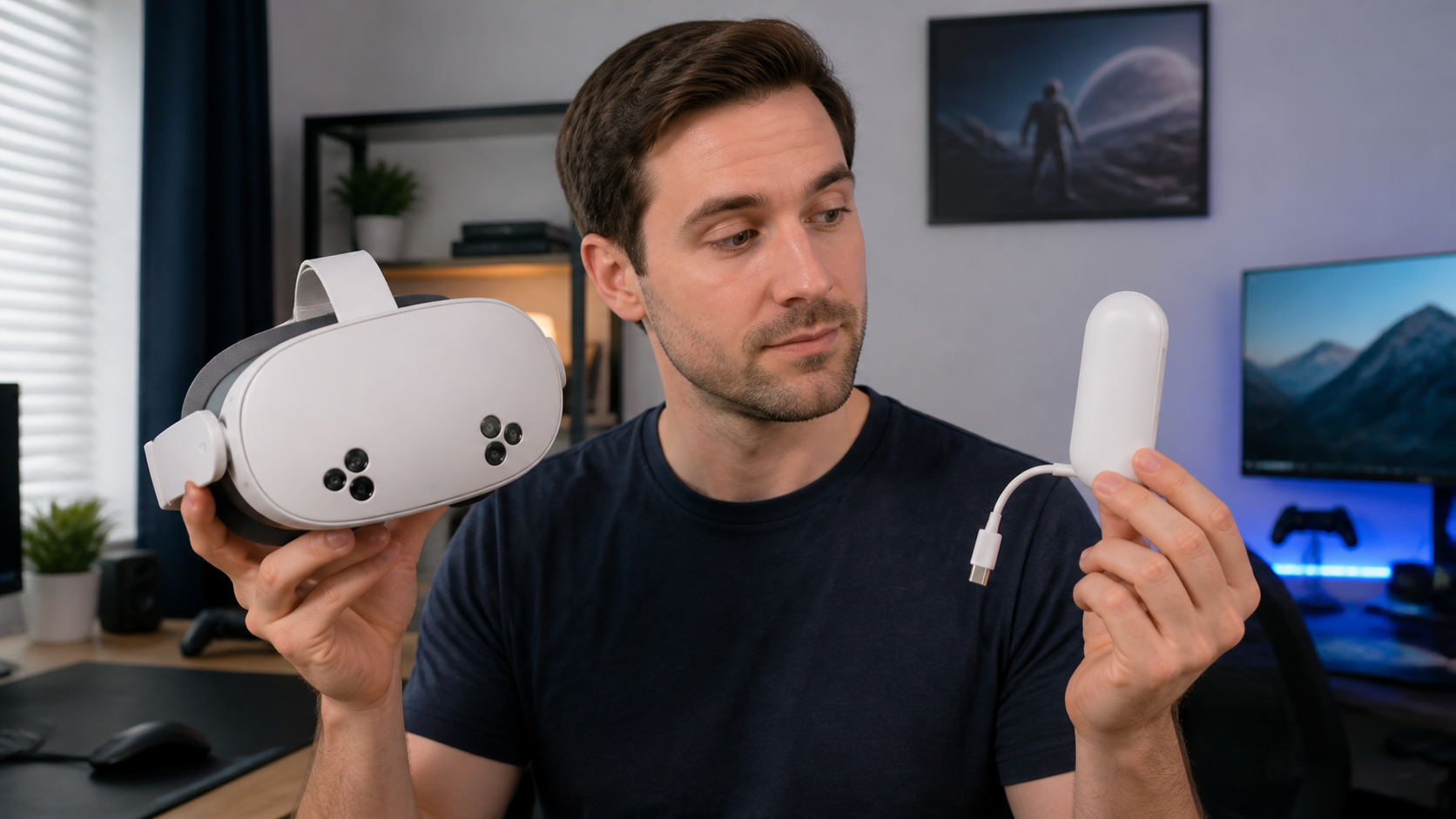
I spend most of my time in PCVR, so battery life isn't my main problem. My real issue is comfort. The stock strap on the Quest 3S, just like previous models, makes the headset feel front-heavy. This pressure on my face becomes distracting long before the battery dies. I looked at full battery head straps, but they seemed like overkill. They add bulk and settings I don't want to deal with. I just wanted a simple counterweight. The official Quest Battery Pack looked like the perfect solution: clip it on and go. But as I quickly learned, the real test of a battery accessory isn't just about power; it's about how it feels when you actually move. The experience forced me to ask some hard questions about who this accessory is really for.
If room space is limited, does Quest Battery Pack still make sense for Quest 3S ownership when battery strap comfort matters?
Your small room is already full of things to bump into. Adding a dangling cable from your head feels like a bad idea, creating a new problem while solving another.
In a small room, the Quest Battery Pack is a mixed bag. It can be a snag hazard for active games, catching on chairs or desks and pulling on your head. It works best for seated or stationary play but can introduce new comfort issues for room-scale experiences.
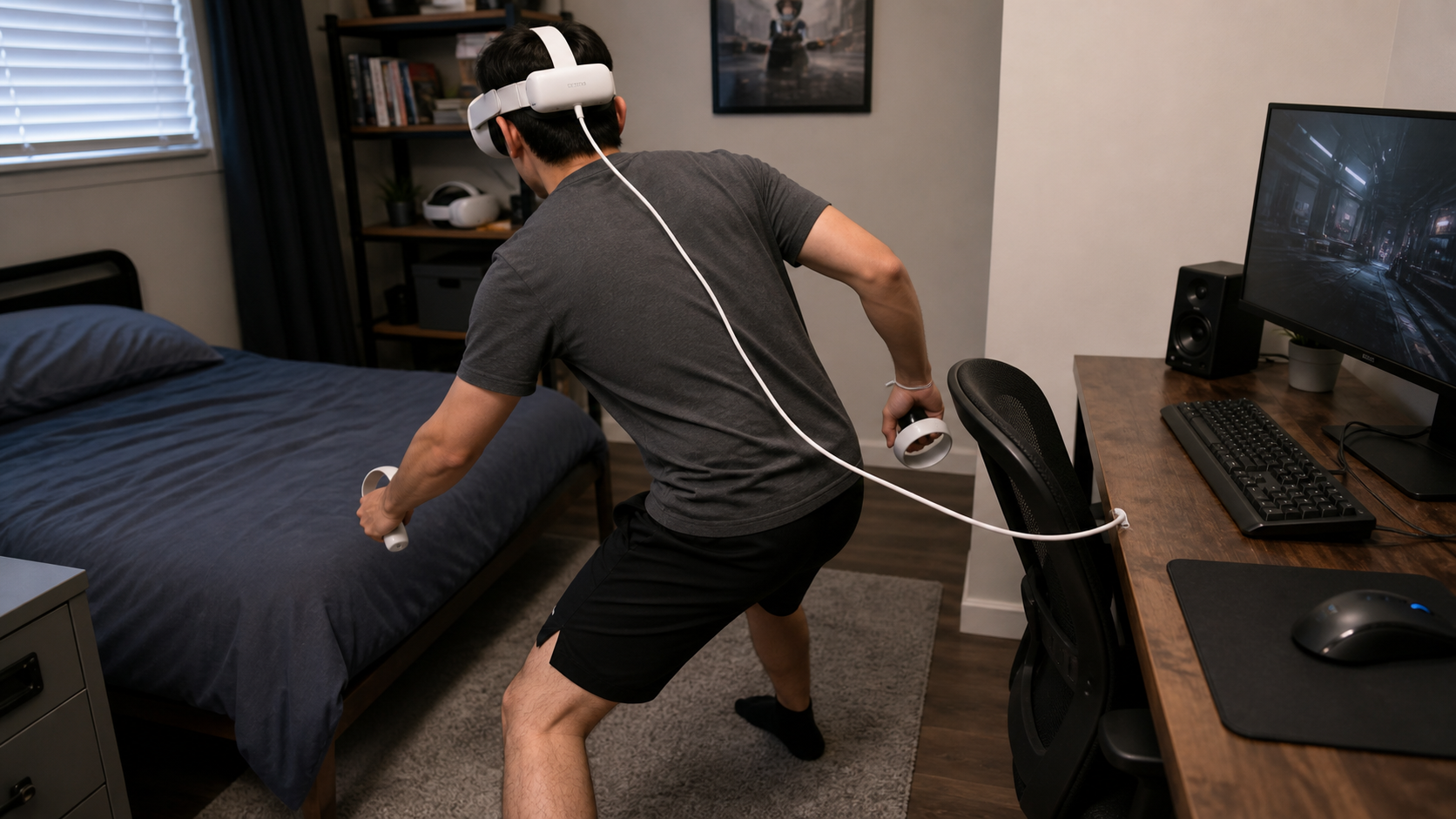
My play space is also my home office, which means I'm always a few feet away from my desk, a chair, or a bookshelf. When I first clipped on the Quest Battery Pack, the counterweight effect was immediately noticeable. The pressure on my face eased, which was great. But the moment I started a game that required me to turn around or duck, I felt the cable. It’s not long, but it’s just long enough to be a problem. It brushed against the back of my chair and once caught on the corner of my desk. That little tug on the back of my head was jarring and instantly broke my immersion. For active games, this became a constant, low-level anxiety. I compared this experience to using a standard power bank I just put in my pocket.
Comparing On-Strap vs. In-Pocket Power
To figure this out, I tested the official pack against a simple 10,000 mAh power bank I kept in my pocket. The differences were clear.
| Feature | Quest Battery Pack (On Strap) | Pocket Power Bank |
|---|---|---|
| Cable Snag Risk | Medium. Short cable can catch on nearby objects. | High. Long cable can trip you or snag easily. |
| Weight Distribution | Good. Acts as a direct counterweight. | Excellent. No extra weight on the head at all. |
| Freedom of Movement | Fair. You feel tethered by the short cable. | Poor. The long cable is a major restriction. |
| Heat | Some warmth on the back of the head. | No heat on the head, but warms your pocket. |
The official pack is better as a counterweight, but the pocket bank removes all weight from your head. In my small room, neither felt perfect. The official pack’s cable was a constant annoyance, while the long cable from my pocket bank felt like a serious safety hazard. The Quest Battery Pack only makes sense if you are playing seated and just need to rebalance the headset.
Could mAh claims versus real session length be the real reason battery strap comfort remains in Quest 3S ownership?
You bought a battery pack expecting hours of extra play. Instead, you get a little more time, but your head and neck start to hurt from the extra weight.
Yes, the gap between advertised battery capacity (mAh) and actual extra playtime is a core comfort problem. A heavy battery that only adds 90 minutes feels worse than no battery at all, because the physical strain outweighs the small benefit, making the discomfort more noticeable.
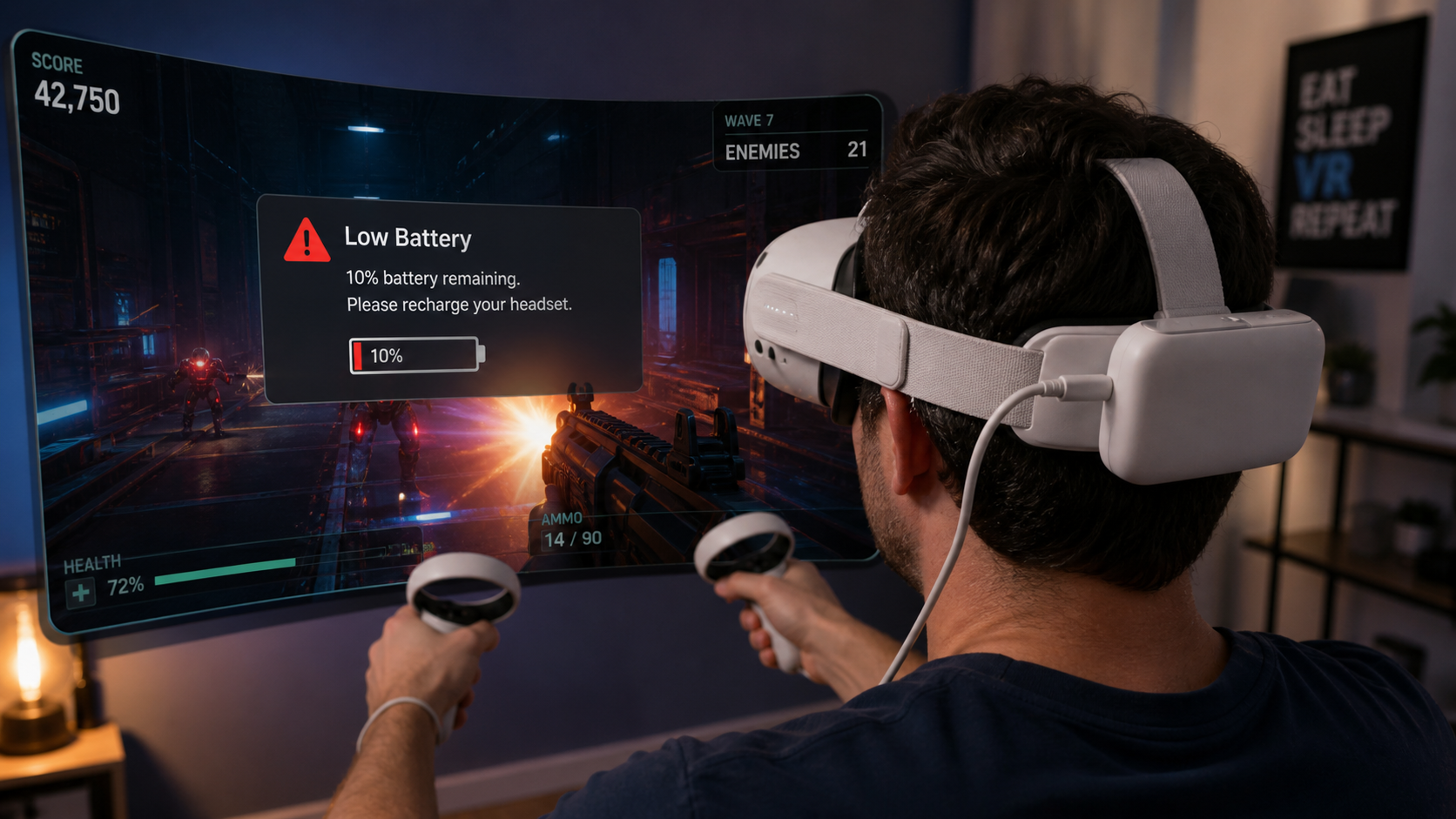
The official Quest Battery Pack has a 2,330 mAh capacity. Meta claims this gives you "up to 2 hours" of extra playtime. In my testing, that felt generous. While playing a demanding standalone title, I got closer to 90 minutes. When connected to my PC for PCVR, where the headset draws less power, I got a bit more, but it never hit the two-hour mark. This is where the comfort math gets tricky. The pack adds a noticeable weight to the back of the strap. That weight is only worth it if the added playtime is significant. For just an hour and a half, the trade-off feels questionable.
This problem gets worse with larger, third-party batteries. I’ve tried 10,000 mAh straps that promised over six hours of gameplay but delivered closer to four. The entire time, the heavy weight was pressing down, making me feel the strap more, not less. The real goal shouldn't be infinite power; it should be balanced power. The comfort-to-runtime ratio has to make sense. If an accessory makes the headset feel worse for 100% of the session just to extend it by 50%, it has failed. The Quest Battery Pack is light, so it avoids the worst of this, but the small time extension it provides makes you wonder if the added bulk and cable are truly worth it.
Does the title need a warning for people with small rooms or shared spaces?
You're in the middle of a game, and you move quickly. The battery cable catches on a doorknob, yanking the headset and almost causing you to fall over.
Yes, a warning is crucial. In small or shared spaces like a living room, the short cable of the Quest Battery Pack presents a real snag and safety hazard. It can easily catch on furniture, pets, or even other people, turning a comfort accessory into a liability.
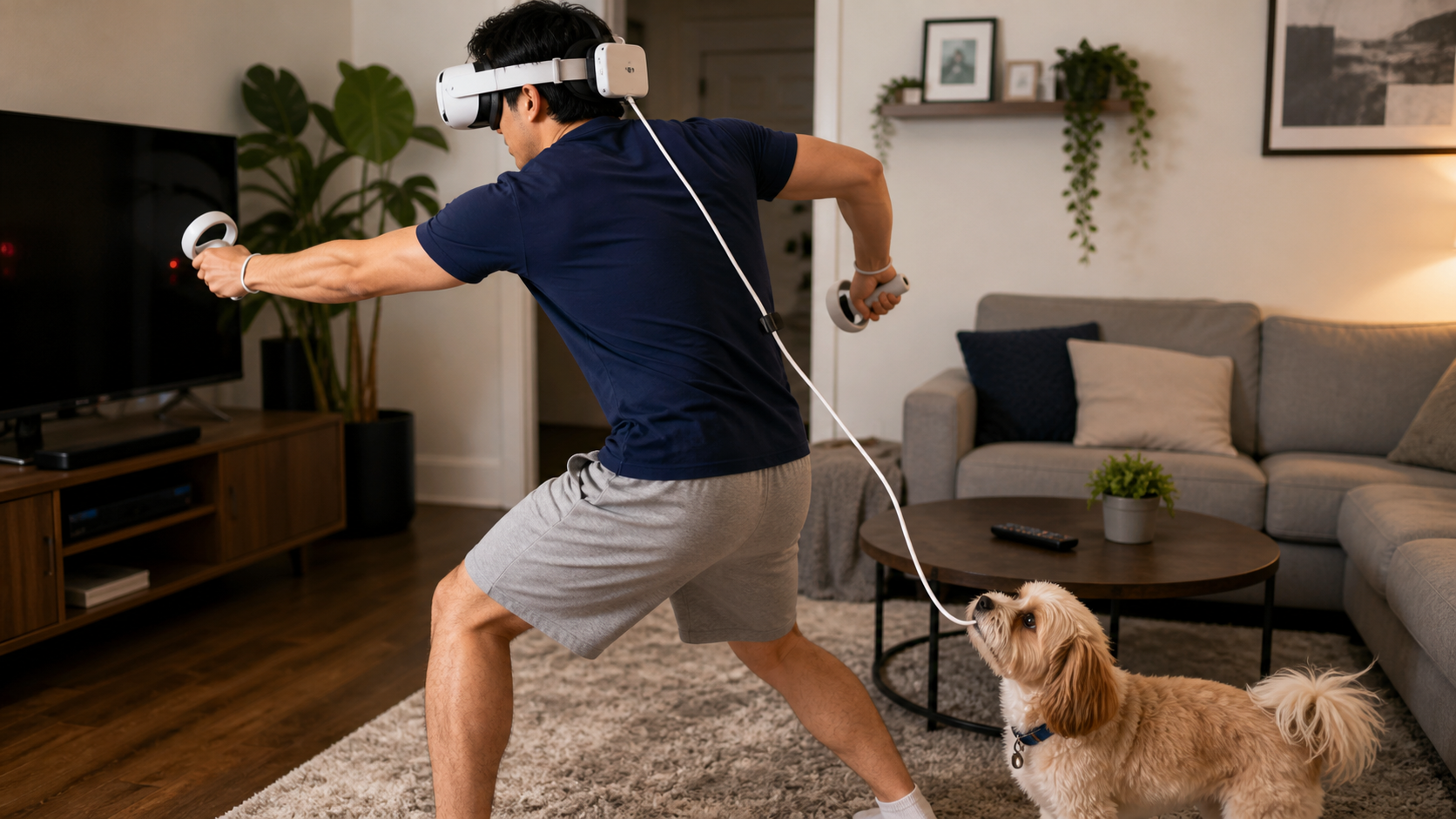
A warning is more than just a good idea; it’s a matter of practical safety. My experience was in a small office, but I also tested it in my living room where my family walks around. The dynamic changes completely. You’re not just worried about bumping into a desk; you’re worried about the cable snagging on a person walking by. I had to be constantly aware of where the cable was, which is the opposite of what you want in VR. You want to forget about the real world, not worry about it more. For fitness users, the problem is even worse. I tried a few rounds of Beat Saber, and the pack bounced with every movement. It wasn't just distracting; it felt insecure. The slight but constant motion and the dangling cable made me feel less stable.
This lived experience is what’s missing from most reviews. An accessory has to work in a real home, not just a wide-open, empty studio. The Quest Battery Pack, by its very design, introduces a tether. It's a short one, but it's there. For anyone playing in a high-traffic area, a small bedroom, or with kids or pets around, this tether is a risk. It’s a risk of breaking your headset, knocking something over, or even tripping yourself. A dedicated battery strap with no external wires is a much safer, more integrated solution for these environments.
Does Quest Battery Pack deserve a buy, maybe, or skip verdict for Quest 3S ownership when battery strap comfort is the issue?
You’re tired of weighing the pros and cons. You just want to know if this thing is worth your money to make your headset feel better.
The Quest Battery Pack is a definite Maybe. It’s a ‘buy’ for seated gamers who want a simple, official counterweight and a bit more power. It’s a ‘skip’ for active, room-scale players in tight spaces, who will find the cable and bounce a constant irritation.
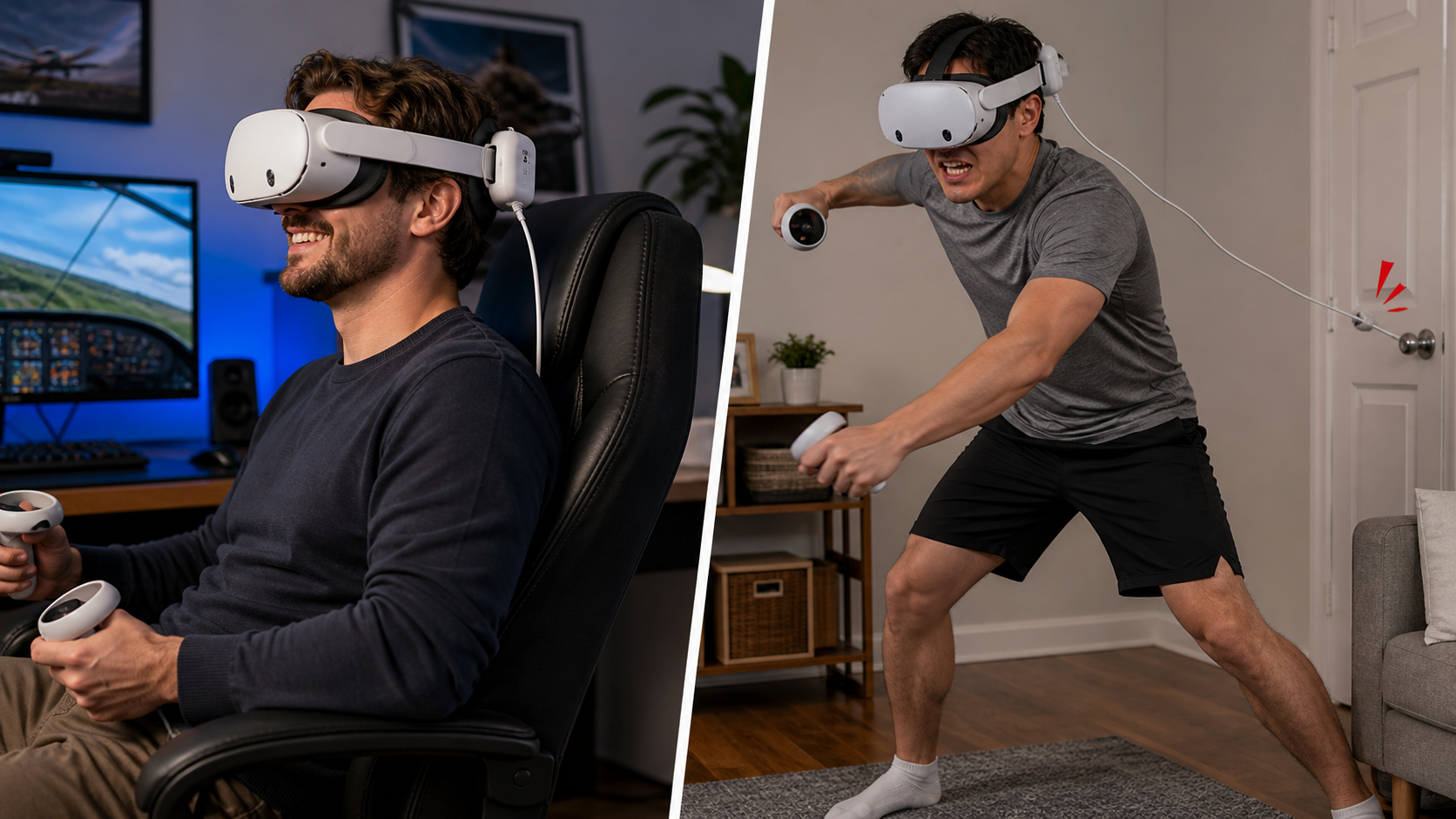
After spending a lot of time with the Quest Battery Pack, my verdict comes down to how you play. It's not a one-size-fits-all solution, and it fails for the very users who need comfort accessories the most: active players. Here’s how I break it down for different people.
You should BUY it if:
Your main use for VR is seated experiences like Microsoft Flight Simulator or other PCVR racing and sim games. In this case, you’re not moving around, so cable snag is not an issue. The pack works perfectly as a simple counterweight to relieve facial pressure, and the extra 90+ minutes of battery is a nice bonus. You also prefer official, first-party accessories and don't want to mess with a complex third-party strap.
You should consider it (MAYBE) if:
You play a mix of seated and stationary room-scale games, like puzzle games or standing shooters where you don't move your feet much. You are very aware of your surroundings and can manage the cable so it doesn't get in the way. The comfort from the counterweight is your main goal, and the battery is secondary.
You should SKIP it if:
You are a fitness gamer or play highly active, room-scale games like Beat Saber, Gorilla Tag, or anything that involves fast turning and ducking. The bouncing pack and snag-prone cable will drive you crazy and could even be a safety hazard. You are better off with a fully integrated battery head strap that has no loose wires.
Conclusion
The Quest Battery Pack is a good counterweight for seated players. But for active users in small rooms, its dangling cable creates more problems than it solves, making it a frustrating accessory.
Leave a comment