



Can a Quest Battery Pack help travelers feel more confident with Quest 3S ownership?

My Quest 3S battery dying mid-flight is a recurring travel nightmare. This anxiety followed me everywhere. Could a simple battery pack really be the solution to that feeling?
Yes, a Quest battery pack absolutely helps travelers feel more confident. It effectively doubles or triples your playtime, freeing you from constantly searching for an outlet. For me, it transformed the headset from a short-term distraction into a reliable long-haul travel companion, eliminating battery anxiety completely.
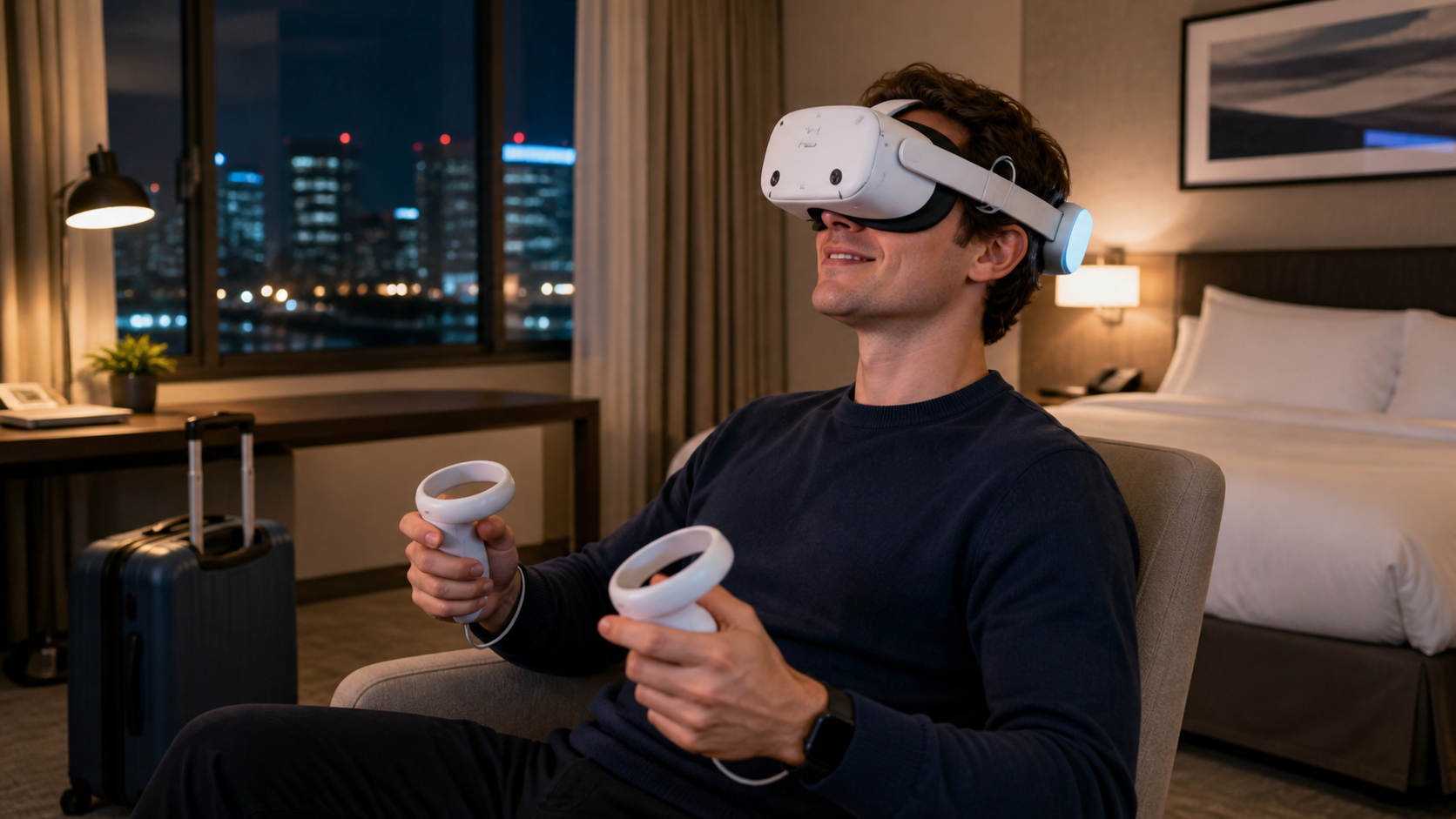
As a long-time Quest 2 user who now travels with a Quest 3S, I had a lot of practical questions. My biggest fear wasn't just about battery life, but about the whole experience. Would adding an accessory create new problems? I was worried about hygiene, comfort during long sessions, and whether a bulky battery would just be another thing to break in my luggage. I decided to treat this like a personal case study, focusing on the real-world issues that spec sheets never mention. I needed to know if this was a genuine upgrade for a traveler or just another gadget. This is what I found.
Is cable management still a problem after adjusting long-term battery health expectations?
A dangling cable during a workout is infuriating. It catches on your arms and yanks your head, ruining the game. Is a battery pack just another cable problem?
Cable management is a huge improvement but not a completely solved problem. A good battery head strap with an integrated short cable mostly fixes it. The cable stays tucked away. But you still have to be mindful of how it sits, especially when you sweat during a fitness session.
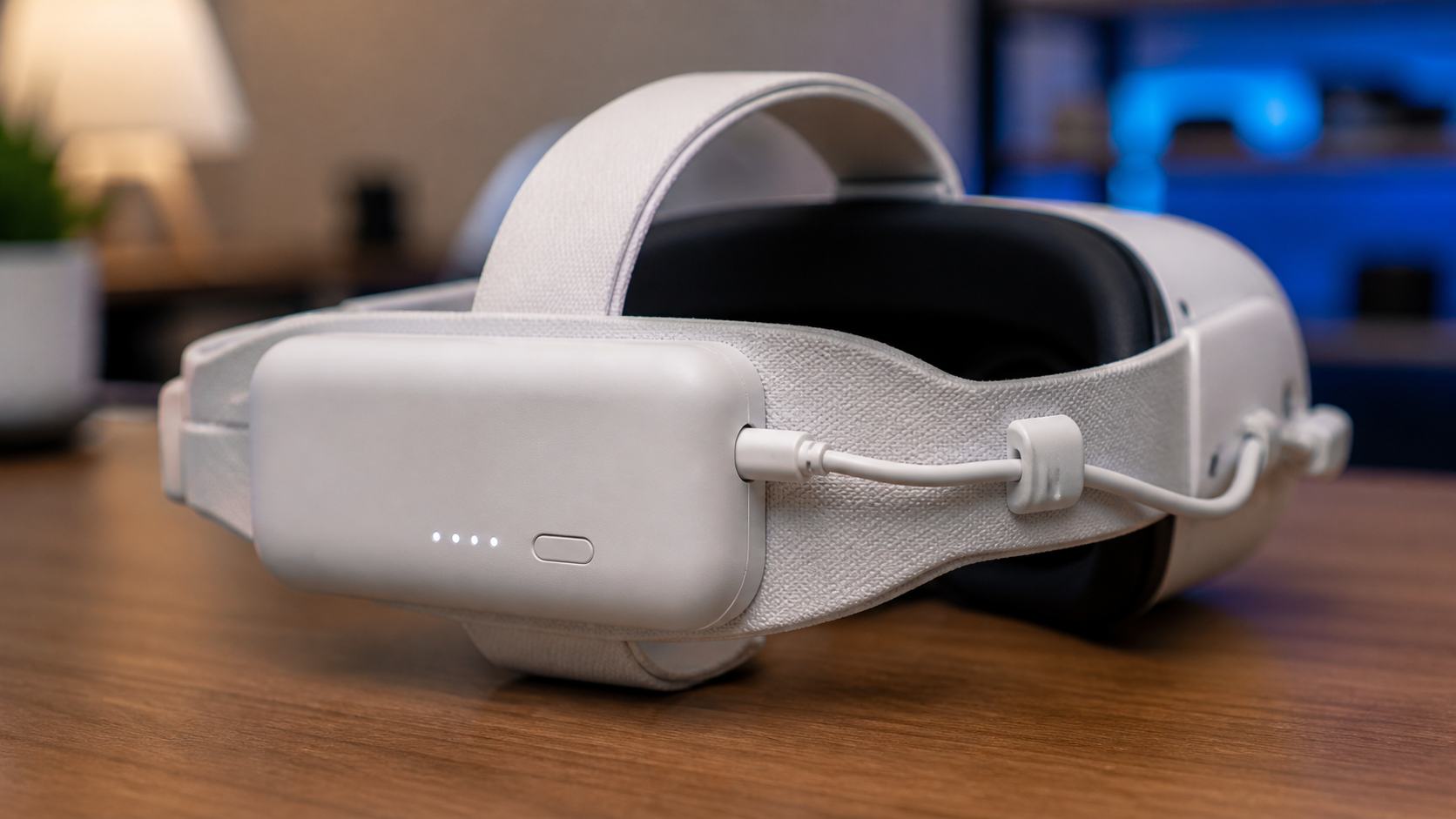
My first concern was about the headset's own battery. I’ve read that keeping a lithium-ion battery at 100% all the time can reduce its long-term health. But I had to be realistic. As a traveler, my priority is having the headset ready when I have a two-hour window to use it, not preserving its battery for five years from now. I accepted that trade-off. The immediate, more pressing issue was the user experience. For fitness apps, a battery pack has to pass the “bounce test.” It can’t wobble or shift. A dangling cable is an instant failure. It gets sweaty, sticks to your neck, and pulls at the port. This is where a dedicated battery strap shines over a battery pack in your pocket. The integrated design keeps everything compact and clean.
Cable Management Approaches
| Accessory Style | Pros | Cons |
|---|---|---|
| Battery Pack in Pocket | Removes weight from your head. Uses any power bank. | Long cable is a major snagging and hygiene hazard. |
| Strap-on Battery Pack | Adds a counterweight. Uses a short cable. | Can feel bulky. Cable still needs to be clipped down. |
| Integrated Battery Strap | Best balance and clean look. No loose cable to manage. | If the cable or battery fails, the whole strap is useless. |
I found the integrated strap was the best for my travel and fitness needs. The short, fixed cable meant I could forget about it, which is the whole point.
Can travelers reproduce the test without special tools or paid software?
Tech reviewers show charts and graphs from special software. I don't have that. I worried I couldn’t get a real answer without it. How can a regular person test this?
Yes, anyone can run a conclusive test with just the headset, the battery, and a timer on their phone. The most important question is simple: does the headset's percentage drop while plugged into the pack? You don't need any special software to find that out.
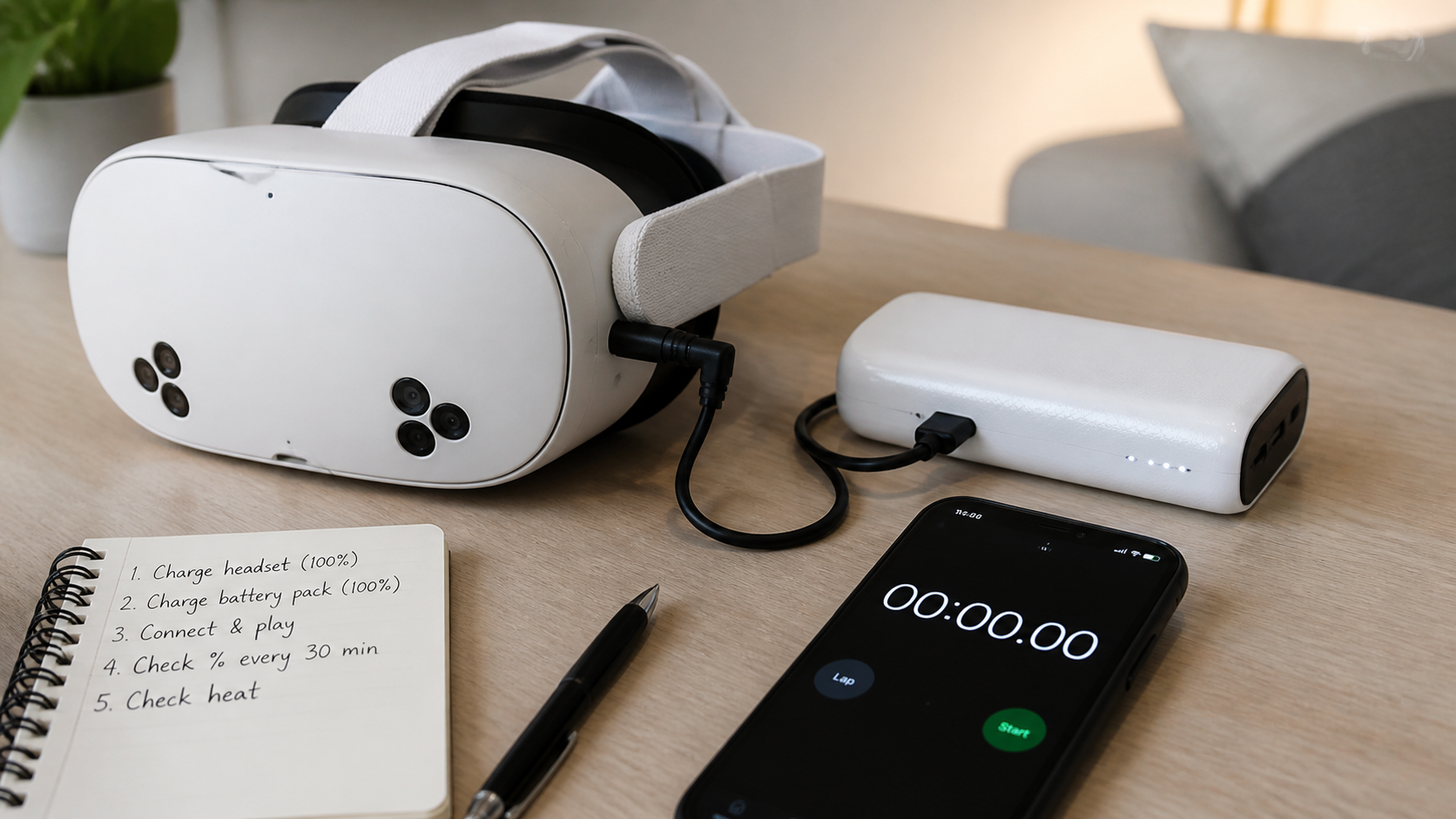
I wanted a simple, repeatable test that reflected how I actually use the headset. Here’s exactly what I did. First, I charged both the Quest 3S and the battery pack to 100%. Then, I connected them and put on the headset. I launched a demanding mixed-reality game because I know it uses the cameras and processors heavily, draining the battery faster.
I set a timer on my phone and started playing. Every 30 minutes, I paused to do two things. I checked the headset's battery percentage in the menu. I also took the headset off and touched both the battery pack and the front of the Quest 3S to check for heat.
My results were clear. The headset's battery stayed at 100% for the entire first 90 minutes of gameplay. The external pack was doing all the work. Here are my heat notes:
- 30 Minutes: The pack and headset were both slightly warm to the touch. It was barely noticeable.
- 60 Minutes: Both were noticeably warmer, but not uncomfortably hot. It felt like a smartphone after watching a long video.
- 90 Minutes: The battery pack was quite warm, but the headset itself was only moderately warm. It never felt dangerous or too hot against my head.
This simple test proved the battery pack could outpace the headset's power draw, which was all I needed to know.
Can a 10-minute video clip show what written specs cannot?
A product page says "5,000 mAh" and "ergonomic design." These words mean almost nothing. They don’t tell me how it feels when I’m dodging obstacles in a game.
A video shows everything specs can’t. It reveals the wobble and bounce during intense movement. It shows if the cable snags on your shoulder. It makes the abstract ideas of balance and comfort feel real. A spec sheet can’t show you if an accessory is actually annoying to use.
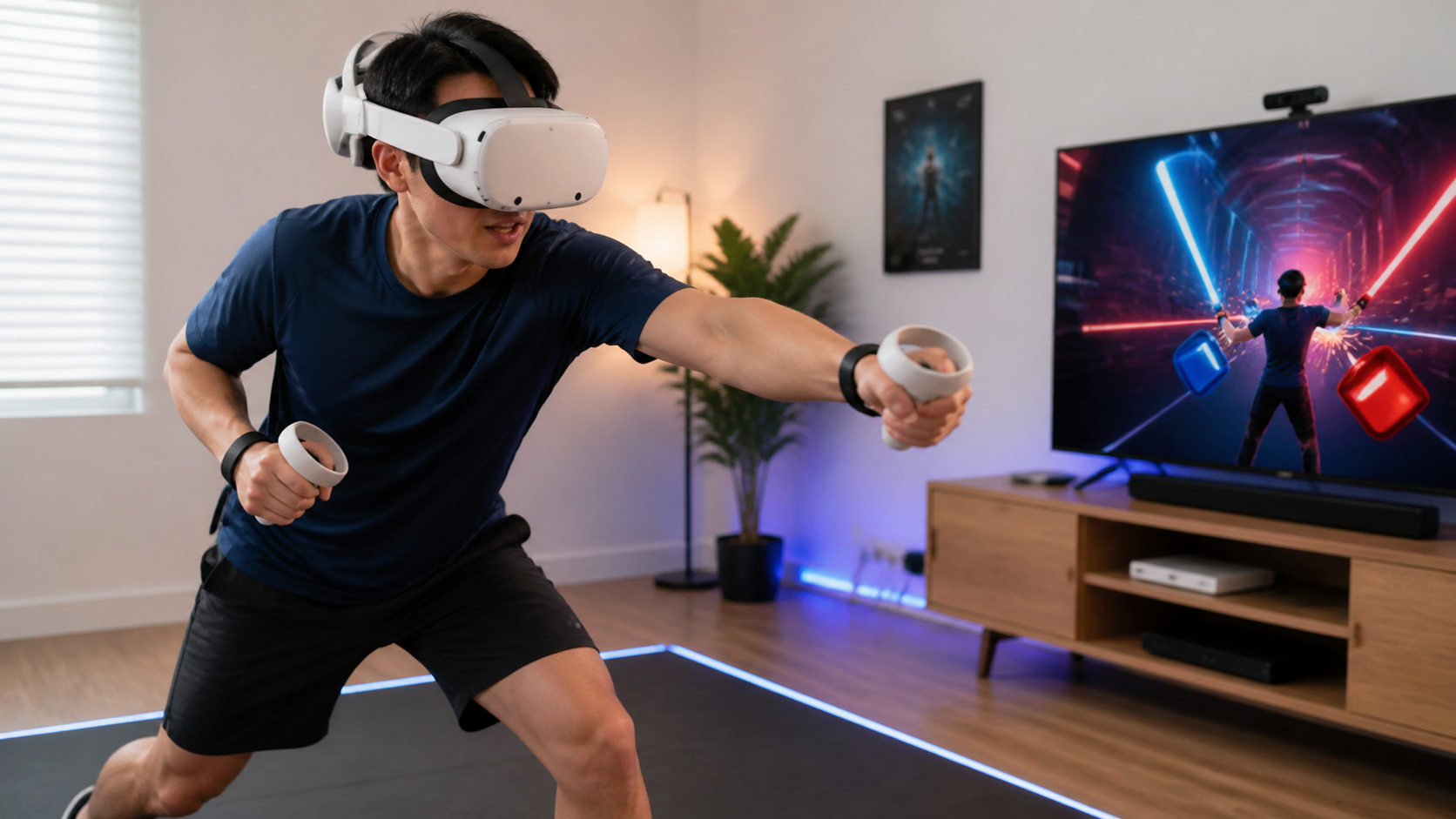
After doing my timed tests, I wanted to understand the physical experience better. Numbers on a page don’t describe the feeling of weight and balance. I decided to record myself playing a fast-paced fitness game for about 10 minutes. I set up my phone to capture my movement from the side.
Watching the video back was an eye-opener. I could see things I didn't consciously feel while playing. The battery pack, which I thought was perfectly still, had a very slight bounce when I was jumping. It wasn't enough to be distracting, but it was there. I also saw the short cable flex and move with my head, confirming it never got close to snagging on my shirt or arms.
Most importantly, the video showed me how the battery acted as a counterweight. My head posture looked more natural. I wasn't unconsciously tilting forward to compensate for the headset's front weight. A spec sheet can tell you the weight in grams, but seeing the effect on posture in a video is far more convincing. It proves whether the "ergonomic" claim is real or just marketing. This quick video test told me more about the accessory's real-world comfort and stability than any product description ever could.
Can the conclusion explain the best and most annoying Quest Battery Pack moments in Quest 3S ownership?
Every product has good and bad sides. Reviews that are only positive feel fake. I wanted to be honest about the actual experience, including the frustrating parts.
Absolutely. The best moment is finishing a two-hour movie on a plane and still having a full charge. The most annoying moment is fumbling to retighten the strap mid-game because the extra weight made it slip. It's a trade-off between infinite playtime and minor physical annoyances.
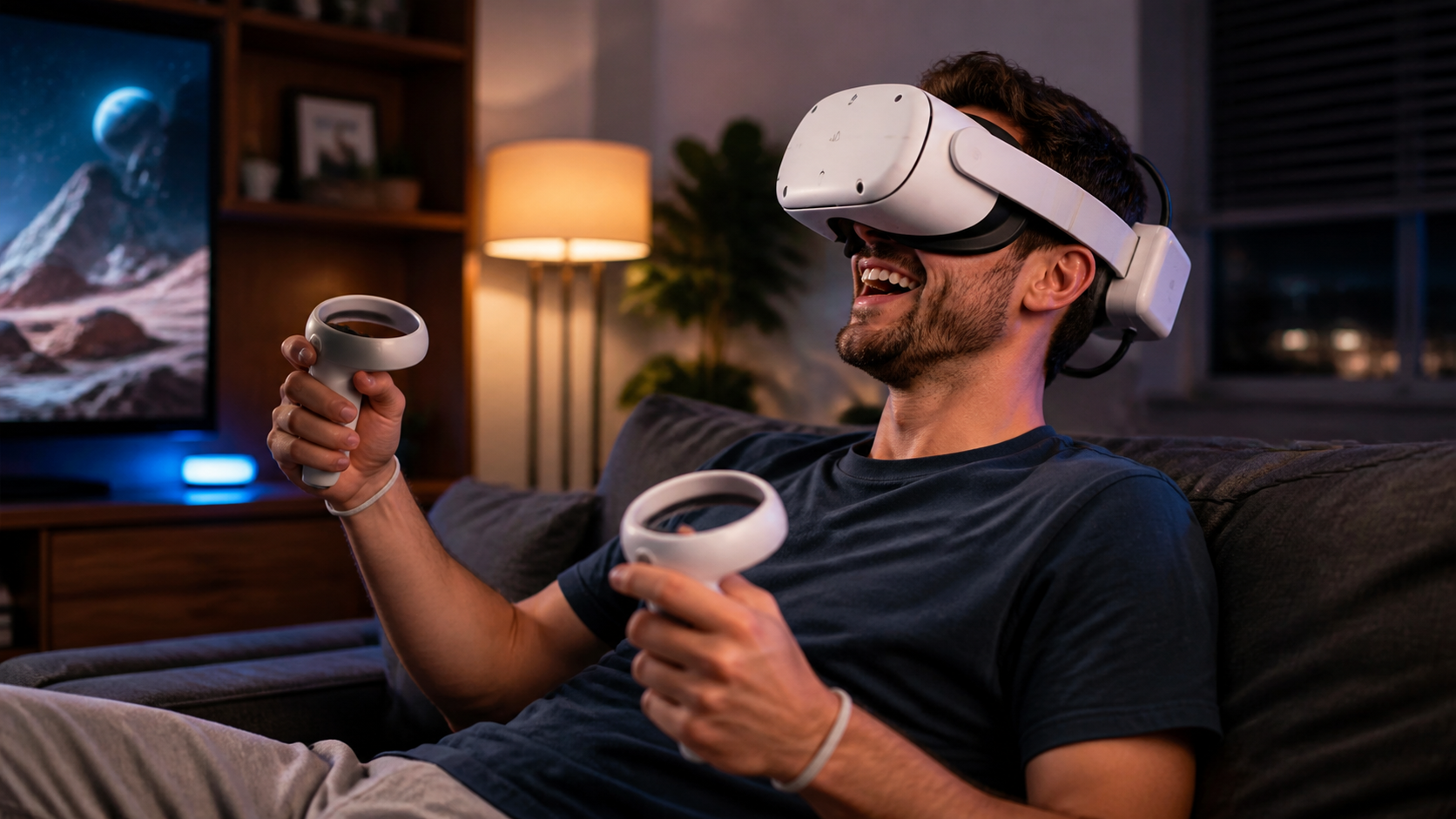
Living with a battery pack has been a mix of amazing and mildly irritating moments. The single best experience was on a long train trip. I put on the headset, settled in, and watched a full movie in my own private theater. When it was over, I checked the battery. It was still at 100%. The feeling of freedom from battery anxiety was incredible. I didn’t have to ration my power or worry about the headset dying before I arrived.
However, it’s not perfect. The most annoying moment came during my first session with a high-intensity fitness game. About ten minutes in, I could feel the entire headset start to slip down my face. The added weight of the battery, even as a counterweight, requires the strap to be tighter than the default strap. I had to pause the game, take it off, and readjust everything. It completely broke the immersion.
Another small annoyance is the mental checklist. Now, before I travel, I have to remember to charge two devices: the headset and the pack. It's a small thing, but it's one more cable and one more task.
So, who should skip it? If you only use your Quest for short 30-minute sessions and you're always near an outlet, the extra bulk and cost probably aren't worth it. But for me, a frequent traveler, it’s not even a question.
Conclusion
A battery pack solves the biggest weakness of the Quest 3S for travelers. It replaces constant battery anxiety with the freedom to use your headset whenever and wherever you want.
Leave a comment