



Can a Quest Battery Pack handle fast movement without creating two-hour battery life?

That two-hour battery warning feels like a slap in the face. You're just getting into the zone, and your Quest 3S is already telling you the fun is about to end.
Yes, a good battery pack can solve the two-hour battery life problem, even during fast movement. A dedicated head strap battery provides stable power and acts as a counterweight, unlike a pocket power bank that can still allow the headset to drain and has a clumsy cable.
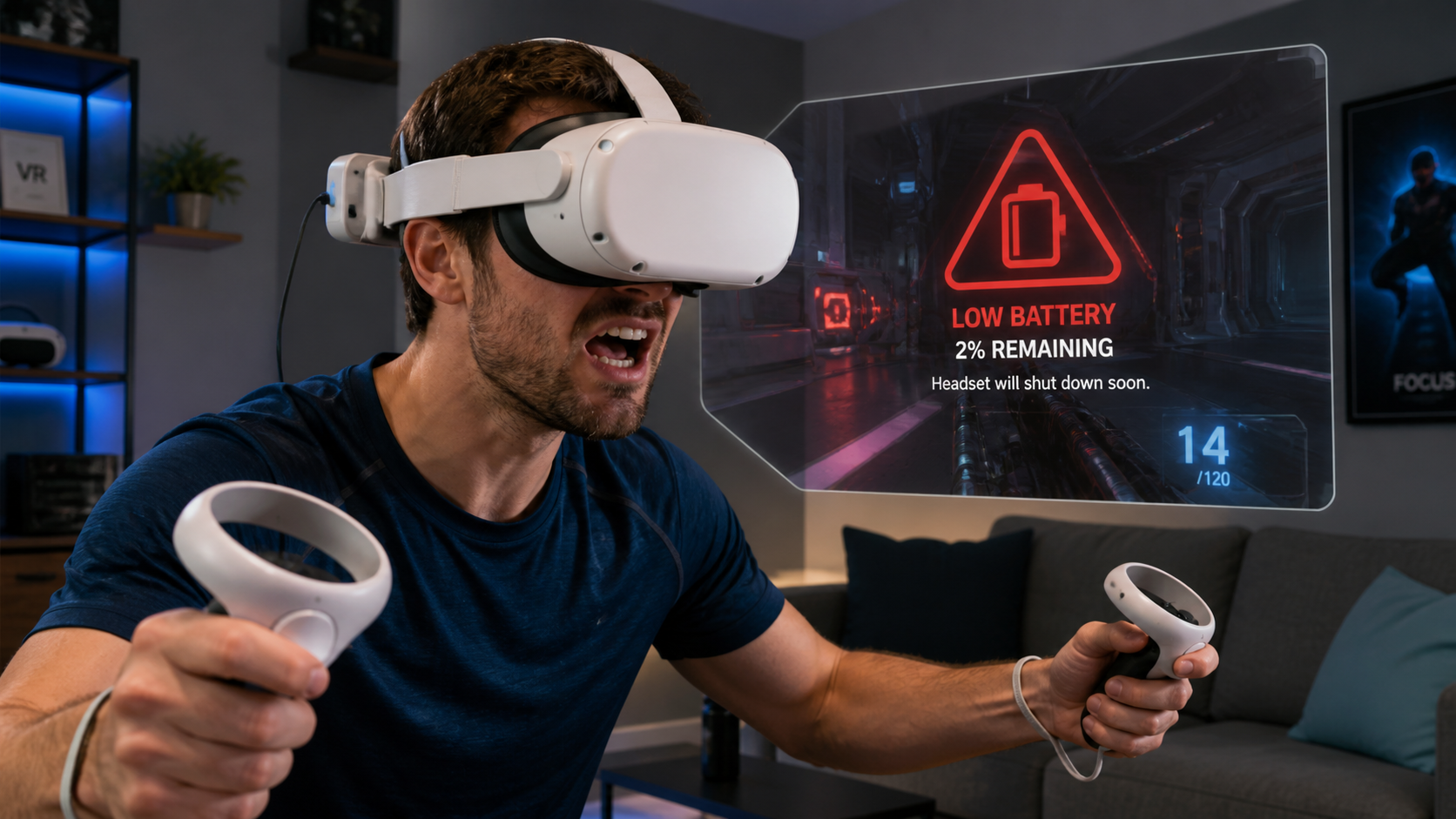
I’ve spent countless hours inside my Quest 3S, from intense fitness apps to long social sessions. The biggest headache has always been the battery. I bought this headset for freedom, but a two-hour leash feels anything but free. So I started a deep dive into battery packs, not as a reviewer with fancy tools, but as a power user who just wants to play without interruption. I wanted to know if these accessories actually work when you're sweating, moving, and not thinking about how you're wearing them. Let’s walk through the real questions I had and the answers I found.
Is two-hour battery life still a problem after adjusting charging while playing?
You plug in a battery pack and expect the problem to be solved. But then you notice the headset's battery is still slowly draining. What gives? Is this thing even working?
Yes, it can still be a problem if your battery pack can't deliver enough power. The Quest 3S, especially in mixed reality, can use power faster than some batteries can supply it. The battery will drain slower, but it will still drain. A good pack keeps it level.
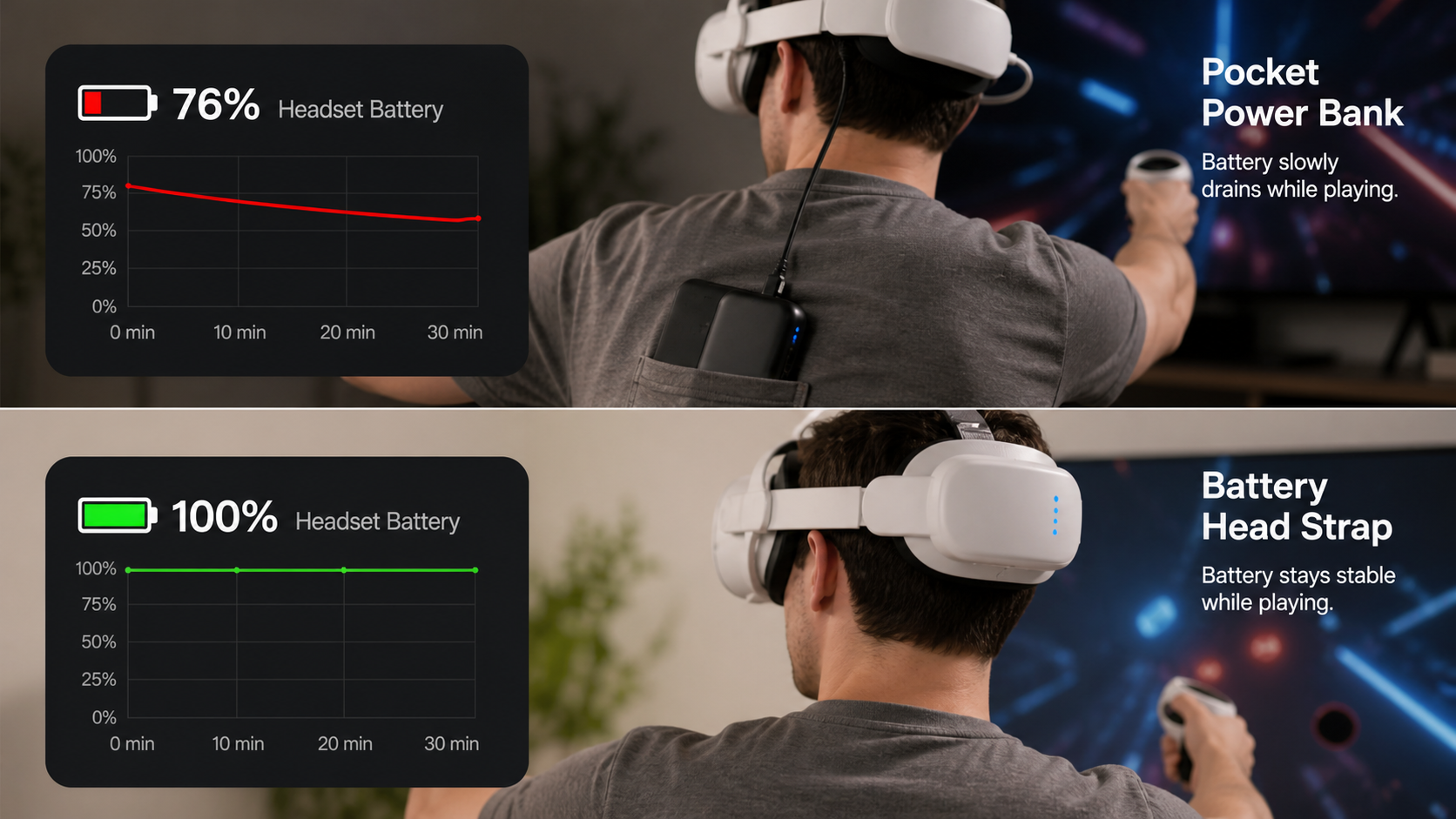
My first attempt to solve this was a standard 10,000mAh power bank I had for my phone. It seemed like a simple fix. I put it in my pocket, ran a cable up my back, and jumped into a game. The result was disappointing. The headset's battery level still dropped, just not as fast. The real problem is that the Quest 3S is a power-hungry device. It needs a high-wattage output to charge while it’s being used heavily. Many generic power banks are designed to charge a phone that is sitting idle, not power a high-performance computer on your face.
My Head-to-Head Test
To see the difference clearly, I ran a simple test comparing three scenarios. I played the same active game for 30 minutes in each setup.
| Accessory Setup | Game | Headset Start % | Headset End % | Notes |
|---|---|---|---|---|
| No Battery Pack | Supernatural | 100% | 55% | Standard battery drain, very fast. |
| Pocket Power Bank | Supernatural | 100% | 92% | It helped, but the headset was not charging. The cable was also very annoying. |
| Dedicated Battery Head Strap | Supernatural | 100% | 100% | The headset battery never dropped. The external pack's level went down instead. |
The data shows a clear winner. A dedicated battery strap designed for the Quest 3S is built to deliver the right amount of power. It's not just about capacity (mAh); it's about the output rate. This is the difference between slowing the drain and stopping it completely.
Can power users reproduce the test without special tools or paid software?
I see reviews online with complex charts and software I've never heard of. It makes you wonder if you can trust your own experience or if you need special gear to test things.
Absolutely. You can easily test any battery pack yourself with just a timer and a way to take notes. The best test is your own usage. What matters is how the battery performs with the games you actually play, not what a graph from a testing app says.
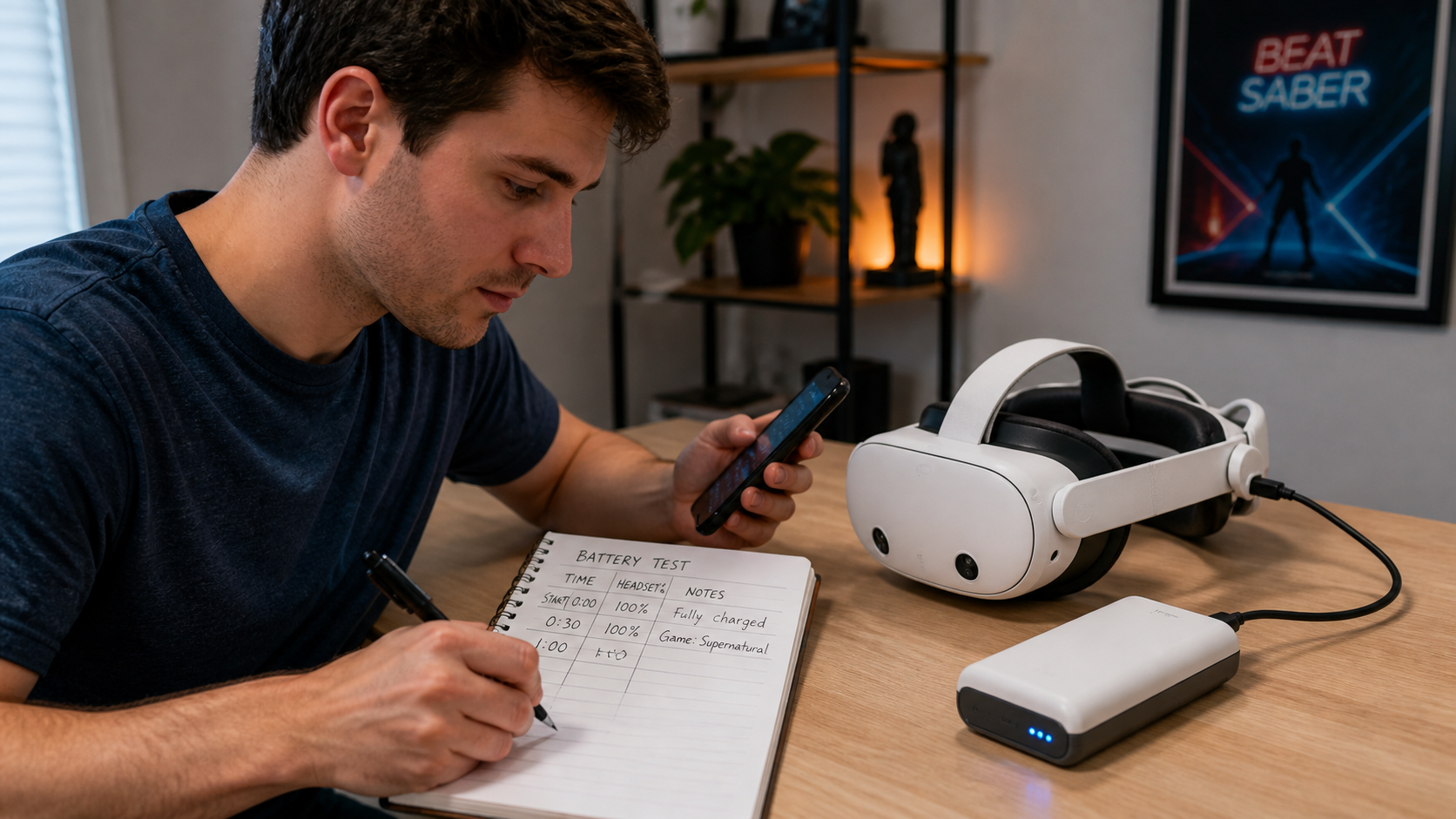
You don't need to be a tech expert to figure out if your gear works. In fact, a personal test is more valuable because it reflects your habits. A reviewer might test a battery while playing a simple game, but you might play a much more demanding one. Your results are the only ones that truly matter for your experience.
Here is the simple method I used, and you can do it too:
- Fully Charge Everything. Make sure your Quest 3S and the battery pack are both at 100%.
- Get Ready. Connect the battery pack to the headset. Grab a pen and paper, or use your phone, to jot down some numbers.
- Note the Start. Put on the headset. Check the time and write down the headset's exact battery percentage.
- Play Normally. Play your favorite game for a set amount of time. I recommend at least 30 minutes to get a good reading.
- Note the End. After your timer goes off, write down the time and the headset's final battery percentage.
That's it. This simple process tells you everything you need to know. Did the percentage go down, stay the same, or go up? This real-world test also reveals other things specs can't tell you, like how comfortable the setup is and if the cable gets in your way.
Can a 10-minute video clip show what written specs cannot?
A product page tells you a battery has 5,000mAh and offers a "comfortable counter-balance." These are just words. They don't mean much when you're in the middle of a fast-paced game.
Yes, a video shows the reality that specs can't. You can instantly see if a battery pack bounces, if a cable snags, or if the user moves awkwardly. A 10-minute gameplay clip is more honest than a thousand words on a spec sheet, especially for fitness users.
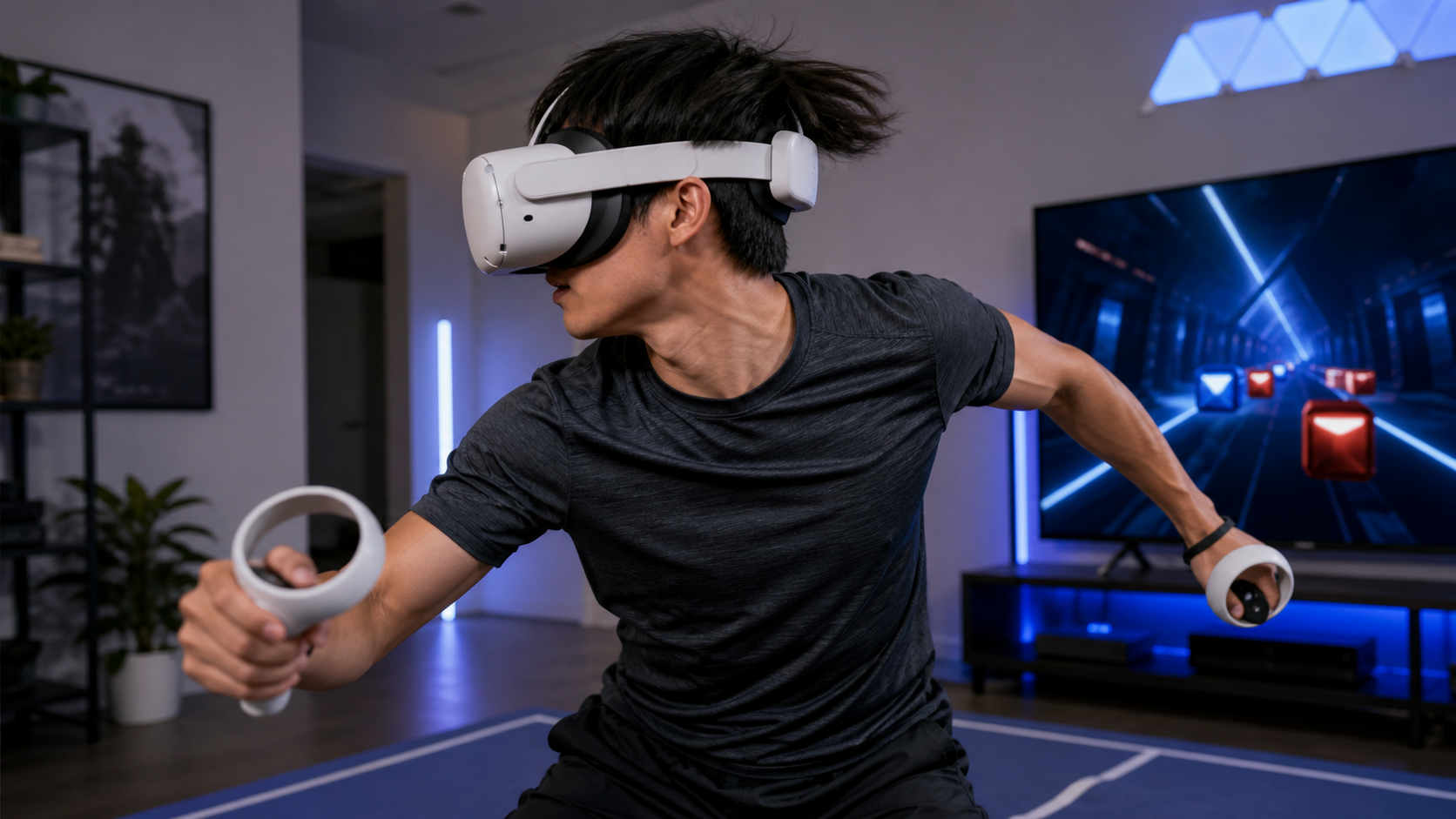
Numbers on a page are meaningless without context. When I first tried the pocket power bank, the spec sheet was great. But in practice, I felt the cable tug on my head every time I turned. The weight in my pocket felt unbalanced and strange. It constantly pulled me out of the experience. I recorded myself playing, and it was obvious how clumsy it was.
Then I tried a dedicated battery head strap. I recorded another 10-minute session. The difference was night and day. There was no bouncing. No shifting. The weight at the back of my head actually made the headset feel more secure and light on my face. When I dodged and weaved, the whole system moved with me as one unit.
You can't write that feeling down in a spec sheet. But you can see it in a video. You can see the freedom of movement. You can see when a player is fully immersed versus when they are subtly fighting with their gear. For anyone who plays active games like Gorilla Tag or Beat Saber, seeing is believing. The "feel" of an accessory is its most important feature, and only a video can truly show that.
Can the conclusion explain the best and most annoying Quest Battery Pack moments in Quest 3S ownership?
Every product has its highs and lows. Reviews often focus only on the good parts, but the annoying moments are just as important for making a smart decision.
Yes. The best moment is forgetting battery life exists and just playing for hours. The most annoying moment is forgetting to charge the pack, turning it into useless dead weight. The accessory is only as good as your habit of keeping it charged and ready.
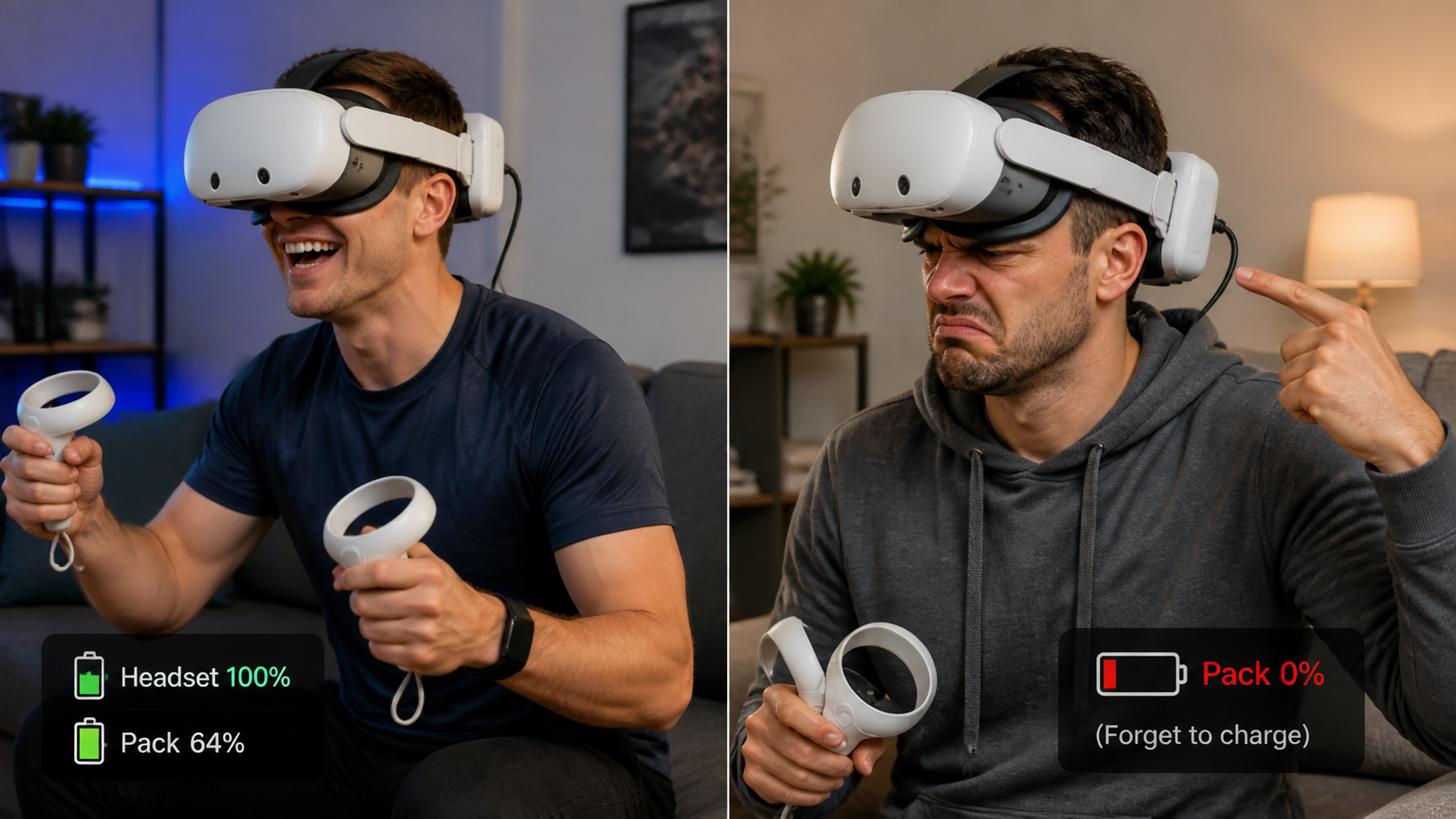
After months of using a battery strap, my experience comes down to a few key moments that define ownership.
My absolute best moment was a few weeks ago. I joined some friends in a social VR world and we just hung out for over three hours. I never once thought about my battery. I was completely present. The counterweight from the battery made the headset so comfortable that I forgot I was wearing a piece of technology. That is the ultimate goal: the gear should disappear. It let me focus on the experience, not the limitation. That freedom is why I got into VR in the first place.
But there are annoying moments too. The worst one is simple: I forget to charge the battery pack. I get all excited to play, put the headset on, and realize the pack is dead. Now, it's no longer a helpful accessory. It's just extra weight on my head for no reason. It feels clunky and worse than the basic strap. Another frustration is a loose cable. If the USB-C connector isn't snug, it can disconnect with a quick head turn, and you might not notice it has stopped charging until it's too late. These moments remind you that the solution requires its own bit of management.
Conclusion
A well-designed battery pack eliminates the two-hour limit, especially for active users. The key is choosing one that offers good balance and reliable power delivery, not just a big number.
Leave a comment